

Top 10 Iconic Buildings by Zaha Hadid
Discover the most famous Zaha Hadid buildings worldwide, including her iconic works in the UK, Miami, and New York City. From the London Aquatics Centre to One Thousand Museum, explore how Hadid's visionary architecture style — defined by fluid curves, parametric design, and bold experimentation — reshaped contemporary architecture across four continents.
 Begum Gumusel13 December 20259 Mins read451

Table of Contents Show
Zaha Hadid transformed contemporary architecture by challenging conventional ideas of form, gravity, and structure. As the first woman to win the Pritzker Architecture Prize in 2004, Hadid designed more than 30 famous buildings across four continents during her prolific career. Her work is instantly recognizable for its fluid geometries, dynamic movement, and sculptural presence, often made possible through advanced parametric design techniques. Rejecting rigid orthogonality, Hadid envisioned buildings as landscapes in motion—spaces that flow seamlessly between interior and exterior. The following ten iconic projects highlight how her visionary approach reshaped global architecture and established her legacy as one of the most influential architects of the 21st century.
| # | Building | Location | Year Completed | Building Type | Total Area | Key Feature |
|---|---|---|---|---|---|---|
| 1 | Heydar Aliyev Center | Baku, Azerbaijan | 2012 | Cultural Center | 57,500 m² | Seamless white flowing surface with no sharp angles |
| 2 | Guangzhou Opera House | Guangzhou, China | 2010 | Performing Arts | 70,000 m² | Two irregular volumes inspired by river stones |
| 3 | MAXXI Museum | Rome, Italy | 2010 | Museum | 27,000 m² | Layered concrete ribbons with interwoven walkways |
| 4 | London Aquatics Centre | London, UK | 2012 | Sports Facility | 15,950 m² | Wave-like roof echoing the motion of water |
| 5 | Wangjing SOHO | Beijing, China | 2014 | Mixed-Use (Office & Retail) | 521,265 m² | Three flowing towers up to 200 m tall |
| 6 | Vitra Fire Station | Weil am Rhein, Germany | 1993 | Fire Station / Exhibition | 852 m² | Hadid’s first built project — sharp angular planes |
| 7 | Dongdaemun Design Plaza | Seoul, South Korea | 2014 | Cultural & Exhibition Hub | 86,574 m² | 45,000 uniquely shaped aluminum facade panels |
| 8 | Phaeno Science Center | Wolfsburg, Germany | 2005 | Science Museum | 9,000 m² | Hovering structure on sculptural concrete cones |
| 9 | BMW Central Building | Leipzig, Germany | 2005 | Industrial / Office | 25,000 m² | Flowing ramps uniting admin, manufacturing & circulation |
| 10 | Galaxy SOHO | Beijing, China | 2012 | Mixed-Use (Office & Retail) | 332,857 m² | Four interconnected dome volumes with zero corners |
1. Heydar Aliyev Center, Baku — Zaha Hadid’s Most Famous Building
The Heydar Aliyev Center stands as one of Hadid’s most celebrated works—and is widely regarded as what is Zaha Hadid’s most famous building. Defined by its sweeping white surface that rises fluidly from the ground, the building rejects traditional angles, creating a continuous form that symbolizes openness and cultural renewal. Completed in 2012, its seamless envelope unites roof, walls, and plaza into a single architectural gesture, making it a global reference for expressive parametric architecture. The center won the London Design Museum‘s Design of the Year award in 2014, becoming the first project from the architecture category to receive the honor.

2. Guangzhou Opera House, Guangzhou
Inspired by natural erosion processes, the Guangzhou Opera House is composed of two irregular volumes shaped like river stones. The building’s fractured geometry responds to its riverside context while creating dramatic interior performance spaces. Advanced digital modeling enabled the complex structural system, resulting in a landmark that blends architecture, landscape, and urban movement. Opened in 2010 along the Pearl River, this Zaha Hadid architect building demonstrates how she drew inspiration from natural landscapes to shape her design philosophy.

3. MAXXI Museum, Rome — Famous Zaha Hadid Building in Europe
The MAXXI National Museum of 21st Century Arts introduced Hadid’s futuristic language into Rome’s historic fabric. Characterized by layered concrete ribbons, the building emphasizes circulation and spatial flow over static gallery boxes. Its interwoven paths and suspended walkways redefine how visitors experience exhibition space, reinforcing Hadid’s interest in movement-driven architecture. The museum earned Hadid the prestigious RIBA Stirling Prize in 2010—the first of two consecutive wins for the architect.

4. London Aquatics Centre — Zaha Hadid Buildings in the UK
Designed for the 2012 Olympic Games, the London Aquatics Centre is one of the most prominent Zaha Hadid buildings in the UK. The structure features an undulating roof that echoes the motion of water, combining expressive form with functional clarity while housing Olympic-scale swimming facilities. Its adaptable design allowed post-Olympic transformation into a community swimming pool, proving Hadid’s ability to balance sculptural ambition with long-term usability. Located at Queen Elizabeth Olympic Park, this building remains a strong civic landmark and is among the most visited Zaha Hadid architect buildings in England. Other notable Zaha Hadid buildings in the UK include the Investcorp Building at Oxford’s St Antony’s College, the Evelyn Grace Academy in Brixton, the Riverside Museum in Glasgow, and the Serpentine Sackler Gallery in London.

5. Wangjing SOHO, Beijing
Wangjing SOHO consists of three smooth, flowing towers that reshape Beijing’s business district skyline. The project avoids sharp edges, using continuous curves to guide both pedestrian movement and visual perception. These interconnected forms exemplify Hadid’s approach to high-rise architecture as a dynamic urban system rather than isolated vertical objects.

6. Vitra Fire Station, Weil am Rhein — Building Zaha Hadid’s Reputation
As Hadid’s first built project, the Vitra Fire Station announced her radical architectural vision and played a crucial role in building Zaha Hadid’s career. Completed in 1993 after 14 years of unbuilt designs, this structure composed of sharp, angular planes captures a sense of frozen motion and controlled tension. The exposed concrete walls and pointed roof reflect the early deconstructivist principles that would evolve into her later curvilinear style. Although more linear than her subsequent works, it remains a key project that established her reputation for pushing conceptual boundaries into built form. Today, it serves as an exhibition space for Vitra’s furniture collection.


7. Dongdaemun Design Plaza, Seoul
The Dongdaemun Design Plaza redefined urban space in Seoul through its continuous metallic surface and flowing geometry. Integrating exhibition spaces, event halls, and public plazas, the project blurs boundaries between architecture and landscape. Its parametric façade system responds to both functional needs and urban connectivity, making it a cultural hub within the city. The building’s 45,000 aluminum panels were each uniquely shaped using computational design—a hallmark of how Zaha Hadid designed her buildings using technology.

8. Phaeno Science Center, Wolfsburg
The Phaeno Science Center appears to hover above the ground on sculptural concrete cones, creating a sense of mystery and anticipation. Its dramatic geometry encourages exploration, aligning perfectly with the building’s educational mission. The interior spaces unfold dynamically, demonstrating Hadid’s ability to translate complex forms into engaging public environments. Completed in 2005, it was one of the largest and most complex self-compacting concrete structures in Europe at the time.

9. BMW Central Building, Leipzig
Designed as the heart of BMW’s production facility, this building unites administration, manufacturing, and circulation within a single continuous space. Flowing ramps and bridges connect workers and processes, embodying efficiency through spatial movement. The project showcases Hadid’s capacity to apply her design language to industrial architecture without compromising functionality. It remains one of the most significant examples of how Zaha Hadid architect buildings can serve complex programmatic needs beyond cultural institutions.

10. Galaxy SOHO, Beijing
Galaxy SOHO consists of four interconnected volumes linked by fluid bridges and courtyards. The absence of corners and the emphasis on smooth transitions create a futuristic urban environment. This large-scale mixed-use project exemplifies Hadid’s vision of architecture as an immersive spatial experience shaped by continuous movement.

Zaha Hadid Buildings in Miami and New York City
Beyond the ten buildings above, Hadid’s presence extends to two of America’s most iconic cities. In Miami, the One Thousand Museum (also known as the Scorpion Tower) stands at 1000 Biscayne Boulevard as a 62-story hyper-luxury residential skyscraper. This striking Zaha Hadid building in Miami features an undulating exoskeleton of glass-fiber reinforced concrete panels and was her first tower in the Western Hemisphere. Completed in 2019, it includes 84 residences and a rooftop helipad—the only residential one on the East Coast.
In New York, the Zaha Hadid apartment building at 520 West 28th Street—often called the Zaha Hadid building on the High Line—is her only completed residential project in the city. This 11-story condominium in Chelsea’s gallery district features interlocking steel chevrons and 39 distinctive residences. Known as one of the most recognizable Zaha Hadid buildings in New York City, it sits alongside the elevated High Line park and reflects the layered urban history of its neighborhood. Together, these two projects represent Hadid’s limited but impactful footprint among Zaha Hadid buildings in NYC and Miami.
| Feature | One Thousand Museum (Miami) | 520 West 28th Street (New York) |
|---|---|---|
| Year Completed | 2019 | 2017 |
| Address | 1000 Biscayne Boulevard, Miami, FL | 520 West 28th Street, Manhattan, NY |
| Height / Floors | 215 m (707 ft) / 62 stories | 41 m (135 ft) / 11 stories |
| Building Type | Hyper-luxury residential skyscraper | Luxury residential condominium |
| Number of Residences | 84 residences | 39 residences |
| Signature Design Element | Undulating GFRC exoskeleton | Interlocking steel chevrons |
| Notable Amenity | Rooftop helipad (only residential on East Coast) | Skylit swimming pool, IMAX theater |
| Neighborhood Context | Across from Museum Park on Biscayne Blvd | Adjacent to the High Line, Chelsea gallery district |
| Significance | Hadid’s first tower in the Western Hemisphere | Hadid’s only completed residential project in NYC |
Zaha Hadid Architecture Style: How Did She Design Her Buildings?
Understanding how Zaha Hadid designed her buildings requires looking at her unique creative process. Unlike most architects, Hadid often began her projects with abstract paintings and architectural drawings rather than conventional blueprints. Influenced by Russian Suprematism and the work of Kazimir Malevich, her Zaha Hadid architecture style evolved from angular, fragmented deconstructivism in the 1990s to the flowing parametric forms that became her signature.

The Zaha Hadid architecture style is defined by several core principles: the rejection of 90-degree angles, fluid curvilinear forms that mimic natural landscapes, seamless transitions between interior and exterior, and the use of advanced computational design tools. As Hadid herself described: “The idea is not to have any 90-degree angles. In the beginning, there was the diagonal.” Working closely with partner Patrik Schumacher and her firm Zaha Hadid Architects, she harnessed emerging software and engineering techniques to bring forms into reality that were once considered impossible to build.
| Period | Style Phase | Design Characteristics | Primary Materials | Representative Building |
|---|---|---|---|---|
| 1983–1993 | Unbuilt / Visionary | Abstract paintings, fragmented geometries, angular deconstructivism | Conceptual (paper/canvas) | The Peak (Hong Kong, unbuilt, 1983) |
| 1993–2003 | Early Deconstructivism | Sharp angular planes, frozen motion, intersecting axes, controlled tension | Exposed reinforced concrete | Vitra Fire Station (1993) |
| 2003–2010 | Transitional Fluidity | Complex curvilinear forms, self-compacting concrete, organic volumes | Concrete, glass, steel, granite | Phaeno Science Center (2005), Guangzhou Opera House (2010) |
| 2010–2016 | Mature Parametricism | Fully parametric surfaces, computational facades, seamless building-landscape fusion, zero corners | Aluminum panels, GFRC, glass fiber, unitized glass | Heydar Aliyev Center (2012), Galaxy SOHO (2012), Dongdaemun Design Plaza (2014) |
Where Are Zaha Hadid Buildings Located?
Zaha Hadid buildings are located across more than 40 countries on four continents. Her most famous buildings span Azerbaijan (Heydar Aliyev Center), China (Guangzhou Opera House, Galaxy SOHO, Wangjing SOHO), Italy (MAXXI Museum), the UK (London Aquatics Centre, Investcorp Building, Riverside Museum, Evelyn Grace Academy), Germany (Vitra Fire Station, Phaeno Science Center, BMW Central Building), South Korea (Dongdaemun Design Plaza), the United States (One Thousand Museum in Miami and 520 West 28th Street in New York), and many more locations including Austria, Belgium, and the Middle East. With Zaha Hadid Architects continuing her legacy with over 950 projects in 44 countries, her influence on global architecture remains unmatched among 21st-century architects.
| Country | City | Building Name | Year | Building Type |
|---|---|---|---|---|
| Germany | Weil am Rhein | Vitra Fire Station | 1993 | Fire Station / Exhibition Space |
| Wolfsburg | Phaeno Science Center | 2005 | Science Museum | |
| Leipzig | BMW Central Building | 2005 | Industrial / Office | |
| United Kingdom | London | London Aquatics Centre | 2012 | Sports Facility |
| Glasgow | Riverside Museum | 2011 | Transport Museum | |
| Oxford | Investcorp Building | 2015 | Academic / Library | |
| China | Guangzhou | Guangzhou Opera House | 2010 | Performing Arts |
| Beijing | Galaxy SOHO | 2012 | Mixed-Use (Office & Retail) | |
| Beijing | Wangjing SOHO | 2014 | Mixed-Use (Office & Retail) | |
| Italy | Rome | MAXXI Museum | 2010 | Contemporary Art Museum |
| Azerbaijan | Baku | Heydar Aliyev Center | 2012 | Cultural Center |
| South Korea | Seoul | Dongdaemun Design Plaza | 2014 | Cultural & Exhibition Hub |
| United States | Miami, FL | One Thousand Museum | 2019 | Luxury Residential Tower |
| New York, NY | 520 West 28th Street | 2017 | Luxury Residential Condo | |
| Belgium | Antwerp | Port Authority Building (Havenhuis) | 2016 | Government Office |
| France | Marseille | CMA CGM Headquarters | 2011 | Corporate Headquarters |
| Austria | Innsbruck | Hungerburgbahn Stations | 2007 | Transport / Funicular Stations |
| Year | Award / Milestone | Significance |
|---|---|---|
| 1979 | Founded Zaha Hadid Architects (ZHA) in London | Established her independent practice |
| 1983 | Won The Peak competition (Hong Kong) | Gained international recognition with unbuilt design |
| 1993 | Vitra Fire Station completed | First built project after 14 years of practice |
| 2004 | Pritzker Architecture Prize | First woman to receive architecture’s highest honor |
| 2010 | RIBA Stirling Prize (MAXXI Museum) | UK’s most prestigious architecture award |
| 2011 | RIBA Stirling Prize (Evelyn Grace Academy) | Won the Stirling Prize in two consecutive years |
| 2014 | Design of the Year (Heydar Aliyev Center) | First architecture project to win the London Design Museum award |
| 2015 | RIBA Royal Gold Medal (2016 medal, announced 2015) | First woman to receive this honor in her own right |
| 2016 | Passed away on March 31, aged 65 | Left a legacy of 950+ projects in 44 countries through ZHA |
Zaha Hadid’s buildings challenge static notions of space, replacing them with fluid systems shaped by motion, technology, and imagination. From her Zaha Hadid buildings in the UK to her landmark towers in Miami and New York, these iconic projects demonstrate how her architecture transcended aesthetics to influence how people move through, interact with, and experience the built environment. Her legacy continues to inspire architects worldwide, proving that bold experimentation can redefine architectural possibility.
- building zaha hadid
- how did zaha hadid design her buildings
- how many buildings has zaha hadid designed
- Top 10 Zaha Hadid designs
- where are zaha hadid buildings located
- Zaha Hadid architectural masterpieces
- zaha hadid architecture drawings
- zaha hadid buildings new york city
- Zaha Hadid famous works
- Zaha Hadid iconic buildings


1 Comment

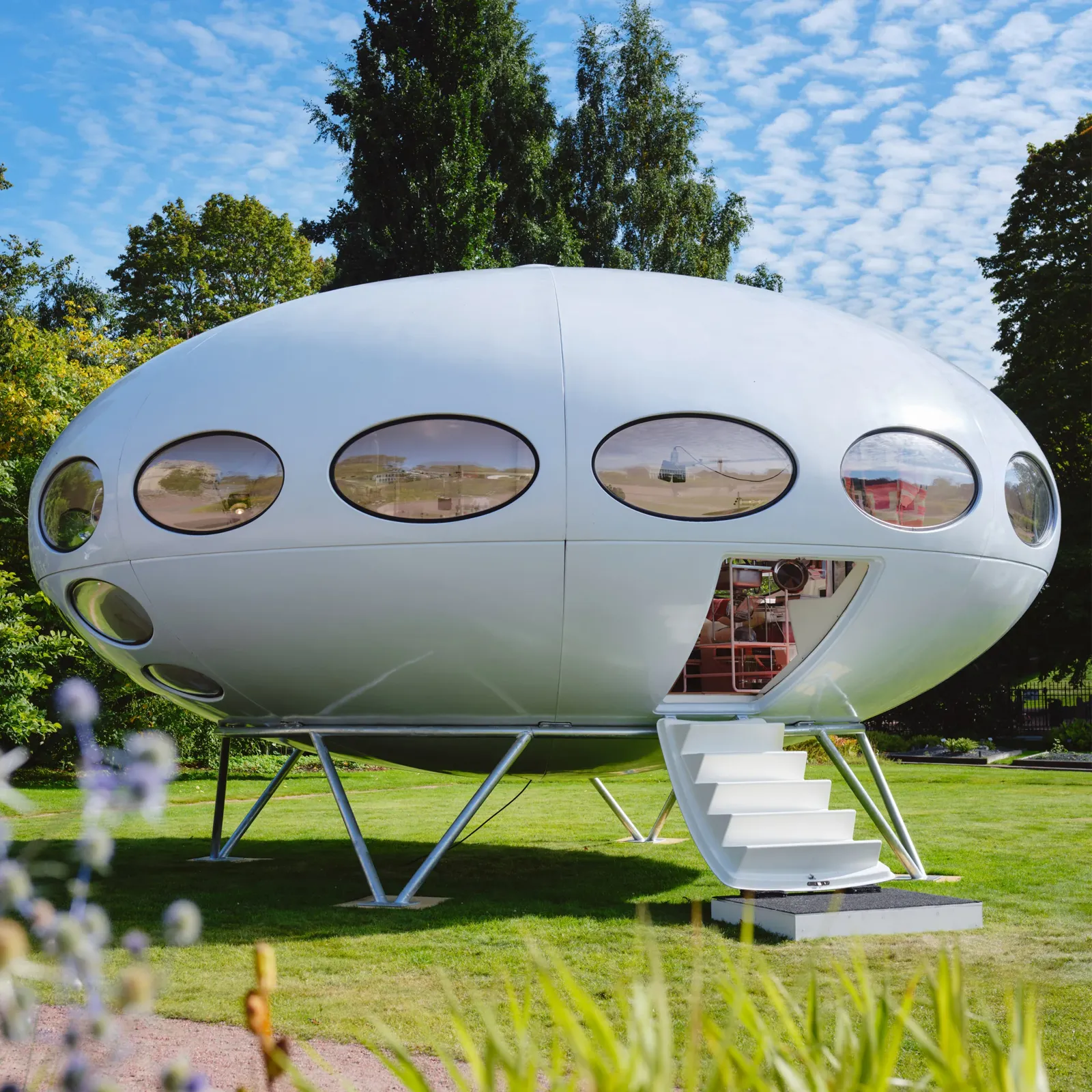
Futuro House Production Revived in Finland After Decades-Long Hiatus
A Facebook listing for abandoned moulds led to the first new Futuro...
 illustrarch Editoral Team3 Mins read
Building Your Dream Home in NSW: What You Should Know About Montgomery Homes
Montgomery Homes has been building across Sydney, Newcastle, the Hunter, Wollongong and...
illustrarch Editoral Team4 Mins read
Designing a Home Theater: Where Drapery Fits Into the Plan
In a media room the curtains are a performance layer, not decoration....
illustrarch Editoral Team3 Mins read
Oscar Niemeyer’s Cathedral of Brasília: The Hyperboloid Concrete Hymn
The Cathedral of Brasília reads as a single gesture, yet it stood...
 Furkan Sen7 Mins read


I think Zaha Hadid’s buildings look different. They have unique shapes, but I’m not sure if I really like them or not.