

Daily Habits to Boost Your Design Thinking as an Architecture Student
Building strong design thinking habits as an architecture student goes beyond studio hours. This article covers seven practical daily habits including sketching routines, precedent study, cross-disciplinary observation, journaling, and mindful site analysis that improve creative output and conceptual depth over time.
 Furkan Sen10 April 202613 Mins read193

Table of Contents Show
Daily habits to boost design thinking as an architecture student are not about adding more hours to an already packed studio schedule. They are about building small, repeatable practices that train the mind to observe, question, and generate ideas more fluently, so that when you sit down at the drafting table or in front of a model, the thinking is already warmed up and ready to work.
Why Design Thinking Habits Matter More Than Raw Talent
Architecture school often gives the impression that design ability is something you either have or you develop through sheer studio time. Research tells a different story. A 2021 systematic review published in Buildings journal found that creative thinking in the design studio is an ability that can be trained and developed over time through structured associative thinking strategies, not just innate talent or accumulated hours. The implication for students is significant: the habits you build outside the studio matter just as much as the work you produce inside it.
Design thinking for architecture students is built on a foundation of observation, iteration, and cross-referencing ideas from multiple disciplines. Students who develop consistent daily habits tend to arrive at critique with more developed concepts, stronger spatial reasoning, and a broader vocabulary of references to draw from. None of that happens by accident.
📌 Did You Know?
A 2021 academic study analyzing 208 engineering and design students found that creative self-efficacy (belief in one’s own creative ability) was the strongest predictor of creative output, outperforming both raw creative thinking scores and psychomotor skill. Students who practiced creative tasks regularly showed higher self-efficacy and, as a result, higher design performance over time (ScienceDirect, 2021).
Habit 1: Sketch Every Day, Even When You Have Nothing to Design

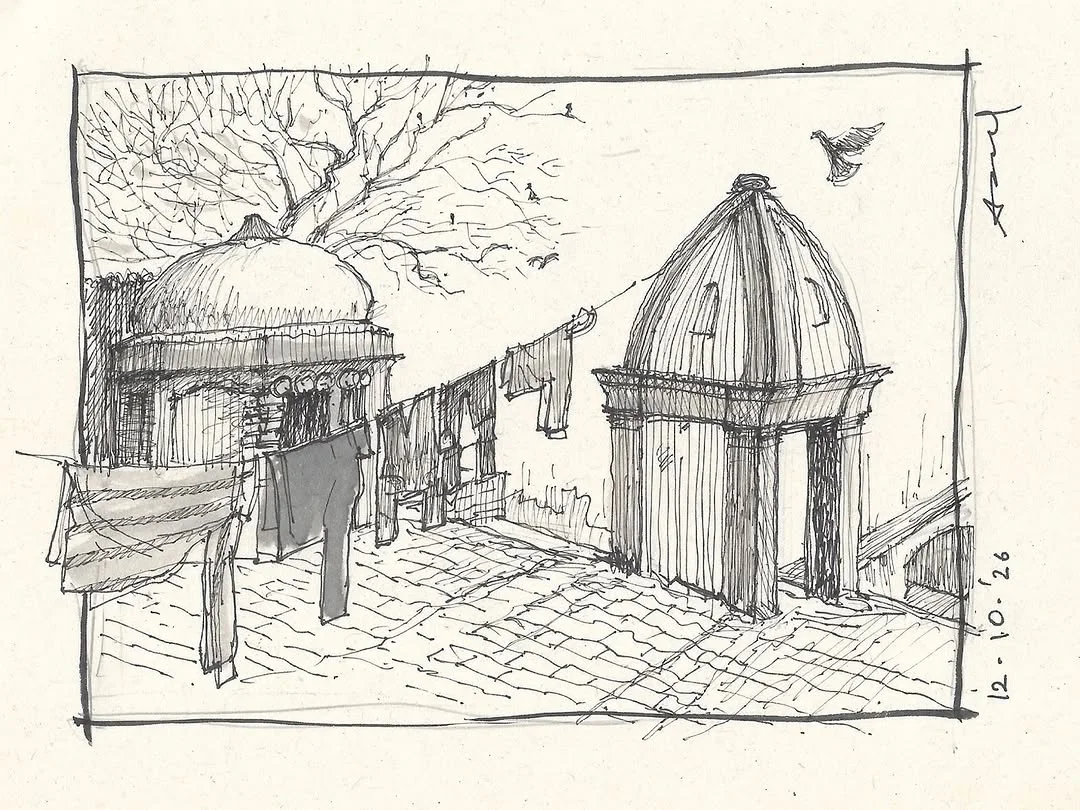
Daily sketching is the single most cited habit among architecture educators and practitioners for good reason. Sketching is not just a communication tool; it is a thinking tool. The act of drawing forces the hand and mind to work together in ways that digital tools do not replicate. When you sketch regularly, you build what researchers call visual fluency: the ability to move from an idea in your head to a mark on paper without the hesitation that kills early-stage design exploration.
The goal is not producing finished drawings. Allocating 20 to 30 minutes each day to sketch buildings you pass, spaces you inhabit, or proportional studies from memory builds spatial awareness steadily without overwhelming your schedule. Some days focus on perspective; others on shadow and material texture. The variety matters. For more on building a consistent practice, the guide on how to improve your architectural sketching skills covers structured techniques that pair well with a daily routine.
💡 Pro Tip
Keep your sketchbook in your bag, not in your studio locker. The best sketching habit is one of opportunity, drawing the coffee shop corner you wait in, the canopy above a bus stop, the way light falls across a tiled floor. Students who restrict sketching to formal sessions miss most of the available practice time. Those unremarkable moments are where observational precision gets built.

Habit 2: Study One Precedent a Day in Depth

Looking at architecture is not the same as studying it. Scrolling through Instagram or Pinterest provides visual exposure, but it does not build design thinking. Studying a single building or project each day with genuine analytical attention is a different practice entirely. This means reading the concept behind the project, tracing the plan, understanding how the section relates to spatial experience, and asking why the architect made the specific decisions visible in the drawings.
Resources like ArchDaily and Dezeen publish project narratives that explain original concepts and how they shaped the built result. The habit of reading those texts, not just viewing the images, is what separates students who accumulate references from students who actually use them. If you cannot explain why a building is interesting beyond “it looks good,” the analysis has not gone deep enough.
A useful structure for daily precedent study: note the concept in one sentence, identify three specific design moves that express it, and write one question the building raises for you. That process takes roughly fifteen minutes and builds a personal reference library that accelerates design thinking in studio and during critiques.
🎓 Expert Insight
“Study how established architects translated an abstract idea into spatial form. Pay attention not only to the final building, but also to the diagrams, sketches, and models that reveal the design thinking behind it.”
Architecture educator guidance, widely cited in design studio pedagogy
Precedent study is not about copying solutions. It is about internalizing the logic behind spatial decisions so that your own design moves carry intent. Students who skip deep precedent analysis often produce work that looks inventive on the surface but lacks conceptual grounding when interrogated in critique.
How Do You Build Better Observation Skills as an Architecture Student?
Strong observation skills are built through deliberate attention to the built environment, not casual familiarity with it. The difference is intentionality. Walking through a building while thinking about ceiling height, material transitions, natural light direction, and acoustic quality activates a different kind of attention than simply moving through it. Architects describe this as “reading” a building rather than just occupying it.
A practical daily habit is to choose one environment you pass through regularly, a corridor, a plaza, a transit station, and spend five minutes actively analyzing it. What spatial experience does it create? What does the proportion of window to wall say about the designer’s priorities? How does the material weather over time? This kind of focused observation, done consistently, builds what experienced architects call spatial memory: an internalized catalog of how spaces actually feel, not just how they look in photographs.
Cross-disciplinary observation strengthens design thinking further. Architecture students who engage with film, music, or product design regularly tend to develop a broader design vocabulary because they encounter different approaches to the problem of human experience. Watching how a film director uses framing and light to create spatial atmosphere is directly relevant to how an architect thinks about section and fenestration.
⚠️ Common Mistake to Avoid
Many architecture students confuse collecting images with developing design thinking. Saving hundreds of references to a Pinterest board does not improve creative output unless those images are actively analyzed. Passive accumulation builds familiarity; active analysis builds thinking. The test is simple: if you cannot explain why a project is in your reference folder or how it connects to your current work, it has not been studied, only saved.
Habit 3: Write About Your Design Ideas Before You Draw Them

Writing is not a natural first instinct for most architecture students, but it is one of the most powerful design thinking habits available. Writing forces clarity. When you try to write one clear sentence that describes the concept behind your project, you immediately discover whether the concept is actually clear in your mind or still vague. Vague writing reveals vague thinking, and catching that early saves significant studio time.
This does not mean producing formal essays. A daily five-minute practice of writing what you are trying to explore in your current project, what spatial question interests you, or what you observed that day that sparked an association, keeps the conceptual thread active between studio sessions. Over a semester, these entries become a design journal that documents how your thinking evolved, which is genuinely useful for portfolio presentations and final critiques.
Students who develop strong writing habits alongside their visual practice also tend to perform better in academic writing tasks because they have practice moving between spatial and verbal modes of thinking. That flexibility is a mark of mature design thinking.
Habit 4: Engage With Architecture Outside Your Curriculum
Architecture school curricula are necessarily selective. They introduce canonical works, regional traditions, and contemporary practice within the constraints of a program’s scope. What they cannot do is cover everything relevant to your creative thinking habits in architecture. Students who supplement their formal education with independent reading, building visits, and following architectural discourse develop faster than those who rely on the curriculum alone.
This habit does not require significant time. Reading one architectural text per week, from a monograph chapter to a critical essay on a contemporary project, keeps your thinking in conversation with ideas beyond the studio. The essential architecture books for students in 2026 list offers a practical starting point, with texts ranging from theory to practice to philosophy of space.
Visiting buildings physically rather than studying them through photographs provides something no image can replicate: the experience of proportion, material, light, and sequence over time. Even modest local buildings teach you things about spatial quality that international projects in photographs cannot. When you do visit, give yourself time to experience a space before reaching for your camera. The first ten minutes of unmediated encounter with a building are often the most informative.
Habit 5: Develop Your Concept Through Physical Models, Not Just Digital Files

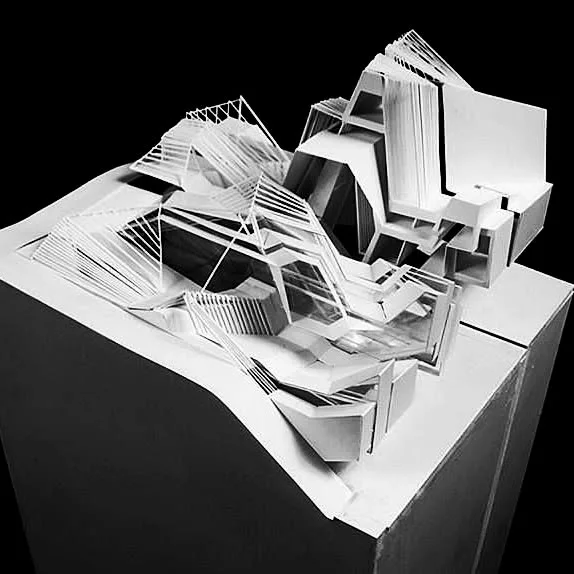
Digital modeling tools have transformed what is possible in architectural design, but they have also introduced a cognitive limitation: the screen creates a fixed frame and a consistent level of resolution that can foreclose early exploration. Physical sketch models, by contrast, are fast, ambiguous, and revisable in ways that encourage design thinking habits in architecture rather than premature resolution.
Research on sketch model use in architectural education, including a 2024 study published in Cogent Arts and Humanities, found that physical sketch models function as cognitive mechanisms that generate unexpected design ideas. They suggest spatial qualities not explicitly stated in the model itself, allowing architects to discover design moves through making rather than planning. Building rough cardboard models of massing options, spatial sequences, or structural ideas is a design thinking exercise, not just a presentation task.
The habit is not to build polished presentation models regularly. It is to build quick, exploratory models as a thinking tool. Ten minutes with cardboard and tape can resolve a spatial question that an hour of 3D modeling might not. For a deeper look at how concept development connects to physical representation, the article on understanding architectural concept addresses this in practical terms.
💡 Pro Tip
When making early-stage sketch models, use the same cheap material every time, cheap foam board or corrugated cardboard works well. The consistency prevents you from treating the model as precious, which is exactly the point. A model you are willing to cut apart and reassemble three times in an afternoon is doing real design thinking work. A model you spent two days finishing is a presentation artifact.
What Design Thinking Exercises Work Best for Architecture Students?
The most effective design thinking exercises for architecture students share a common structure: they impose a constraint, require a spatial response, and can be completed quickly. Constraints are generative because they force decisions that open-ended prompts do not require. Designing a small shelter for a single person using only one material, in fifteen minutes, teaches more about spatial thinking than a semester-long project with unlimited options.
Other exercises that experienced architecture educators recommend include: tracing a plan from memory to test how much spatial information you have genuinely absorbed; designing the same space three times with three different structural systems to understand how structure shapes space; and drawing the same street corner from three different distances to understand how scale changes spatial reading.
These exercises work best when they are done regularly rather than occasionally. The students who improve their project concepts most consistently are those who treat design thinking as a discipline practiced through structured daily habits, not a talent deployed intermittently. The American Institute of Architects (AIA) consistently emphasizes lifelong learning and creative discipline as core professional attributes for exactly this reason.
Habit 6: Ask Better Questions During and After Critique

Critique sessions are one of the most valuable learning environments in architecture school, and most students underuse them. The common error is treating critique as a performance to survive rather than a design thinking exercise to engage. Students who arrive at critique with genuine questions about their work, not just a polished presentation of resolved decisions, extract far more value from the process.
The habit of formulating one honest question about your current project before every critique, a question you genuinely do not know the answer to, changes how you listen to feedback. It orients attention toward the specific dimension of your design thinking that needs development, rather than distributing attention across all feedback equally.
After critique, writing down the three most useful observations within an hour, before they blur into the general memory of the session, is equally important. Processing feedback actively rather than passively receiving it is what converts critique time into genuine improvement in how you improve design skills as an architecture student.
Habit 7: Protect Time for Unfocused Thinking

Architecture school culture tends to reward visible productivity: time in the studio, work on the wall, models on the table. This creates pressure to be constantly producing, which is counterproductive for design thinking. Some of the most important work in design happens in the gaps between production sessions, when the mind is not actively working on a problem but processing it in the background.
Walking, drawing without an objective, reading outside architecture, sleeping on a problem: these are not procrastination. They are part of the creative process. Research on creative professionals across fields consistently identifies incubation as a necessary stage between initial problem engagement and generative insight. Students who never stop working often find their design thinking stalls at a certain depth because they have not allowed the processing that incubation enables.
Building regular unstructured time into your week, time not scheduled for a specific deliverable, is one of the most counterintuitive and effective daily habits architecture students can adopt. The back-to-school tips for architecture students address this balance between studio intensity and sustainable creative practice in useful terms. The RIBA’s guidance on professional development similarly notes that reflective practice, not just productive practice, underpins long-term design capability.
✅ Key Takeaways
- Daily habits to boost design thinking work best when they are small, consistent, and layered over time rather than intensive and occasional.
- Sketching every day, even briefly and without a project goal, builds the visual fluency that makes early-stage design exploration faster and less hesitant.
- Studying one precedent in analytical depth each day, reading the concept and tracing the plan, builds a design vocabulary that passive image-collecting does not.
- Writing about design ideas before drawing them reveals conceptual clarity or vagueness early, saving significant studio time during project development.
- Physical sketch models remain one of the most effective design thinking tools in architecture, particularly for exploring spatial ideas that digital tools tend to resolve too quickly.
- Protecting time for unfocused thinking, walks, open-ended reading, and deliberate pauses, supports the incubation stage that creative problem-solving requires.
Frequently Asked Questions
How long does it take to improve design thinking as an architecture student?
Design thinking improvement is gradual and cumulative rather than sudden. Students who practice daily habits consistently over a semester typically notice clearer conceptual thinking and more confident spatial decisions within eight to twelve weeks. The gains often appear most visibly at critique, when peers and instructors observe stronger conceptual depth relative to earlier project stages.
What is the best daily habit for architecture students who are short on time?
If only one habit is possible given schedule constraints, daily sketching offers the highest return for time invested. Even ten to fifteen minutes of observational drawing builds spatial awareness, visual memory, and hand-eye coordination that directly supports design work. It requires no preparation, no materials beyond a sketchbook and pen, and can be done in any environment.
Can creative thinking habits in architecture actually be learned?
Yes. Multiple studies in architectural education research confirm that creative thinking is a trainable skill rather than a fixed trait. Research published in the Buildings journal found that metacognitive strategies, structured associative thinking, and regular design exercises all produced measurable improvements in creative design output among architecture students. The idea that creativity is innate and cannot be developed is contradicted by evidence from design studio pedagogy research.
How does design thinking in architecture differ from other fields?
Design thinking in architecture involves a specific integration of spatial reasoning, material knowledge, structural understanding, and human experience that distinguishes it from design thinking in product or service contexts. Architectural design thinking must hold multiple scales simultaneously, from the detail to the city, and must account for how spaces perform over time, not just how they appear at a single moment.
Should architecture students focus on digital tools or analog habits to improve design thinking?
Both matter, but analog habits such as sketching, physical modeling, and observational drawing tend to build the foundational design thinking capacities that digital tools then extend. Students who develop strong analog skills first generally find that digital tools enhance rather than replace their thinking process. Students who rely on digital tools from the start often struggle with the ambiguity that early-stage design exploration requires. The most effective approach is to build analog and digital fluency in parallel, using each for what it does best.
- "daily habits to boost design thinking architecture student
- boost design thinking architecture
- creative thinking habits architecture
- daily habits architecture students
- design thinking exercises architecture students "
- design thinking for architecture students
- design thinking habits architecture
- design thinking tips architecture student
- how to improve design thinking architecture
- improve design skills architecture student







What Architecture Students Should Know About Structural Glass and Guardrail Code
Glass guards look minimal, but structural behavior, safety glazing, connections and guardrail...
 illustrarch Editoral Team6 Mins read

Futuro House Production Revived in Finland After Decades-Long Hiatus
A Facebook listing for abandoned moulds led to the first new Futuro...
illustrarch Editoral Team3 Mins read

Building Your Dream Home in NSW: What You Should Know About Montgomery Homes
Montgomery Homes has been building across Sydney, Newcastle, the Hunter, Wollongong and...
illustrarch Editoral Team4 Mins read

Designing a Home Theater: Where Drapery Fits Into the Plan
In a media room the curtains are a performance layer, not decoration....
illustrarch Editoral Team3 Mins read


Leave a comment