

How Party Wall Surveys Protect Architectural Projects in Urban Settings
Party wall surveys are essential in urban architectural projects to ensure compliance with the Party Wall etc. Act 1996 and to manage the impact on neighboring properties.
 Muhammad Abdullatef - Tifa Studio15 June 20262 Mins read128
Table of Contents Show
In dense urban areas, most residential buildings share at least one wall, floor or boundary with a neighbouring property. For architectural projects in these settings, the Party Wall etc. Act 1996 is rarely an optional consideration, and a party wall surveyor often becomes part of the project team alongside the design.
Terraced housing, mansion blocks and converted properties are particularly likely to trigger the Act, since structural changes in one property can directly affect the stability and condition of the one next door.
Why Urban Projects Are More Exposed
In a detached property with generous boundaries, foundations and structural work can often be kept well away from neighbouring buildings. In an urban terrace, this is rarely possible. New foundations for an extension, a basement dig, or steelwork built into a party wall will almost always be close to, or directly touching, the neighbouring structure.
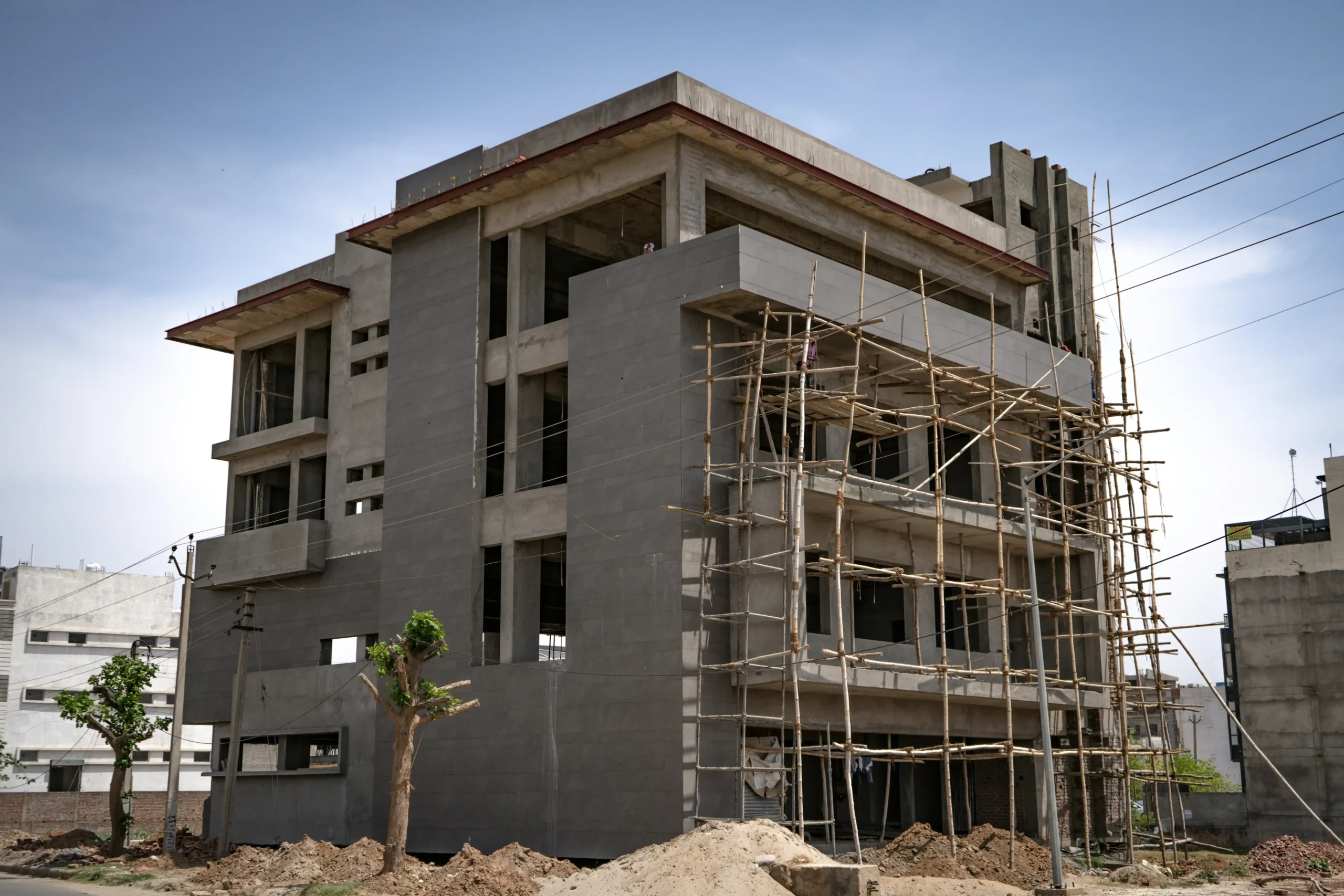
This proximity increases the likelihood that excavation or structural alteration falls within the scope of the Act, whether through work to the party wall itself or through excavation within the specified distances of a neighbour’s foundations.
Integrating Party Wall Considerations Into Design
For architectural projects, party wall requirements are best considered alongside the structural design, not after it. Decisions such as where new steel beams will bear on a party wall, or how deep a basement excavation needs to go, directly determine whether notices are required and what they need to cover.
Architectural technologists working on urban schemes will often map out these touchpoints early, identifying which neighbouring properties are likely to be affected and what type of notice each element of the design will trigger.
Schedules of Condition in Practice
In urban settings, schedules of condition are particularly valuable because many neighbouring buildings already show signs of age, settlement or previous repairs. Without a clear record of the existing condition, it can be very difficult to separate pre-existing issues from anything caused by new works.
A thorough schedule of condition, often including photographs of cracks, uneven floors or existing repairs, gives both parties a fair starting point. This reduces the likelihood of disputes escalating, since both sides can refer back to the same record.
Managing Multiple Neighbours
Urban projects often involve more than one adjoining owner. A mid-terrace property, for example, may share walls with neighbours on both sides, and a basement excavation might affect properties to the rear as well.
Each affected owner needs to be served notice, and in principle each could appoint their own surveyor. Managing this process efficiently, often by working toward agreed surveyors where possible, helps keep the overall timeline manageable on projects with several interested parties.
Supporting Smooth Delivery
For architects and architectural technologists, party wall surveys are not simply a legal formality sitting alongside the design process. They directly inform decisions about structure, sequencing and programme.
By building party wall considerations into the design stage, urban projects can move from planning approval to site start with the legal groundwork already in place. This reduces the risk of delays once contractors are appointed, and helps maintain good relationships with the neighbours who will be living alongside the works for the duration of the build.







Futuro House Production Revived in Finland After Decades-Long Hiatus
A Facebook listing for abandoned moulds led to the first new Futuro...
 illustrarch Editoral Team3 Mins read

Building Your Dream Home in NSW: What You Should Know About Montgomery Homes
Montgomery Homes has been building across Sydney, Newcastle, the Hunter, Wollongong and...
illustrarch Editoral Team4 Mins read

Designing a Home Theater: Where Drapery Fits Into the Plan
In a media room the curtains are a performance layer, not decoration....
illustrarch Editoral Team3 Mins read

Oscar Niemeyer’s Cathedral of Brasília: The Hyperboloid Concrete Hymn
The Cathedral of Brasília reads as a single gesture, yet it stood...
 Furkan Sen7 Mins read


Leave a comment