

Architecture in Geometry: From Basic Shapes to Complex Forms
Geometry gives architecture its order. This breakdown shows how basic shapes like circles, squares, and triangles grow into the curved, parametric forms of modern design, and why geometric rules still shape how buildings stand and feel.
 Furkan Sen3 July 20267 Mins read193
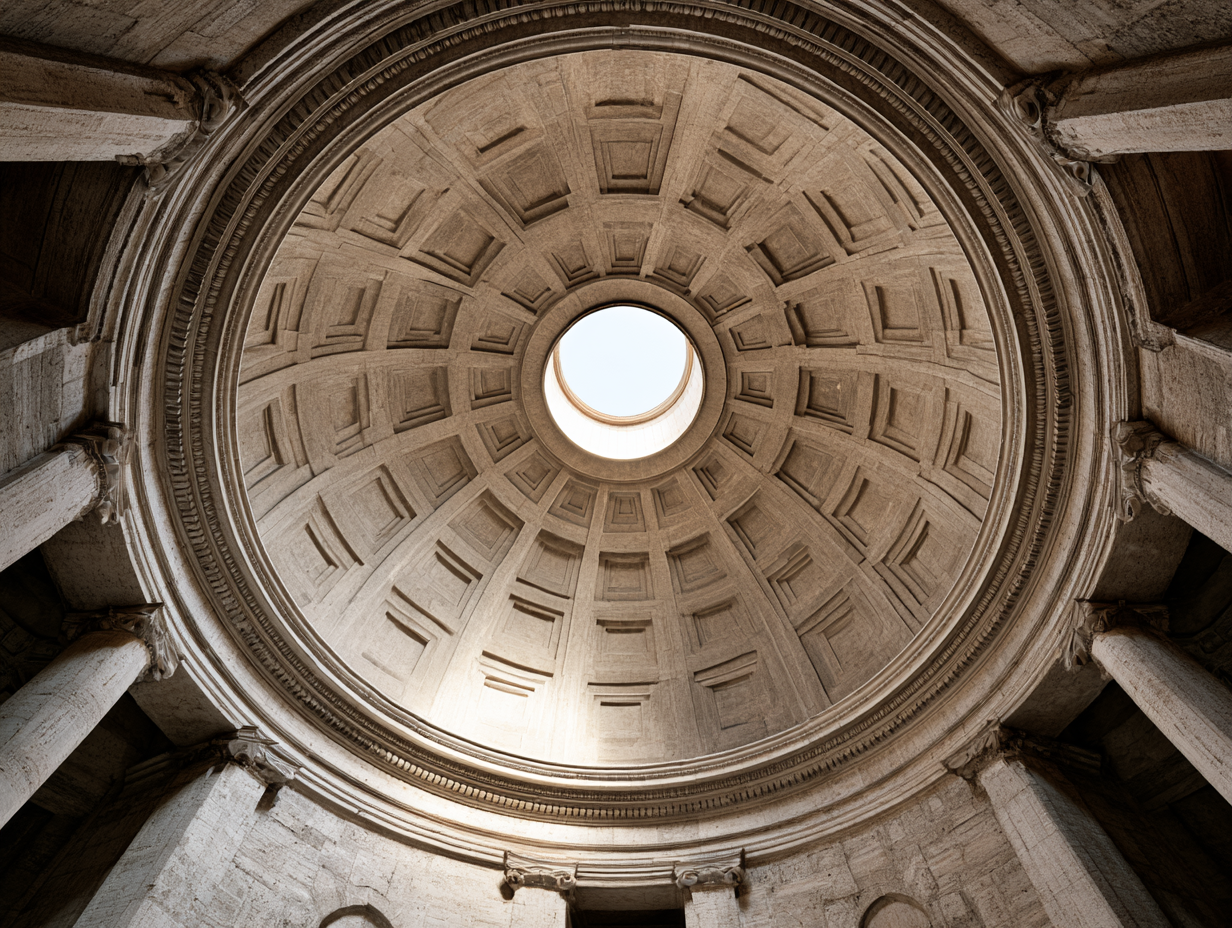
Table of Contents Show
Architecture in geometry describes how buildings are shaped by geometric principles, from simple squares and circles to the curved, computer-generated surfaces of modern design. Architects apply geometry to control structure, proportion, and how people move through space, which makes it one of the oldest and most practical tools in the field.
Every building starts as geometry. Before a single material is chosen, a design exists as lines, angles, and shapes arranged in space. A doorway is a rectangle, a dome is part of a sphere, a roof truss is a chain of triangles. Geometry in architecture is the system that turns these shapes into something a person can walk through, lean on, and live inside. This piece looks at the basic shapes that hold buildings up, how geometry moves from flat plans into three dimensions, and how the same rules now produce forms that would have been impossible to draw by hand a generation ago. The connection between math in architecture and built form runs through all of it.
What Does Geometry Mean in Architecture?
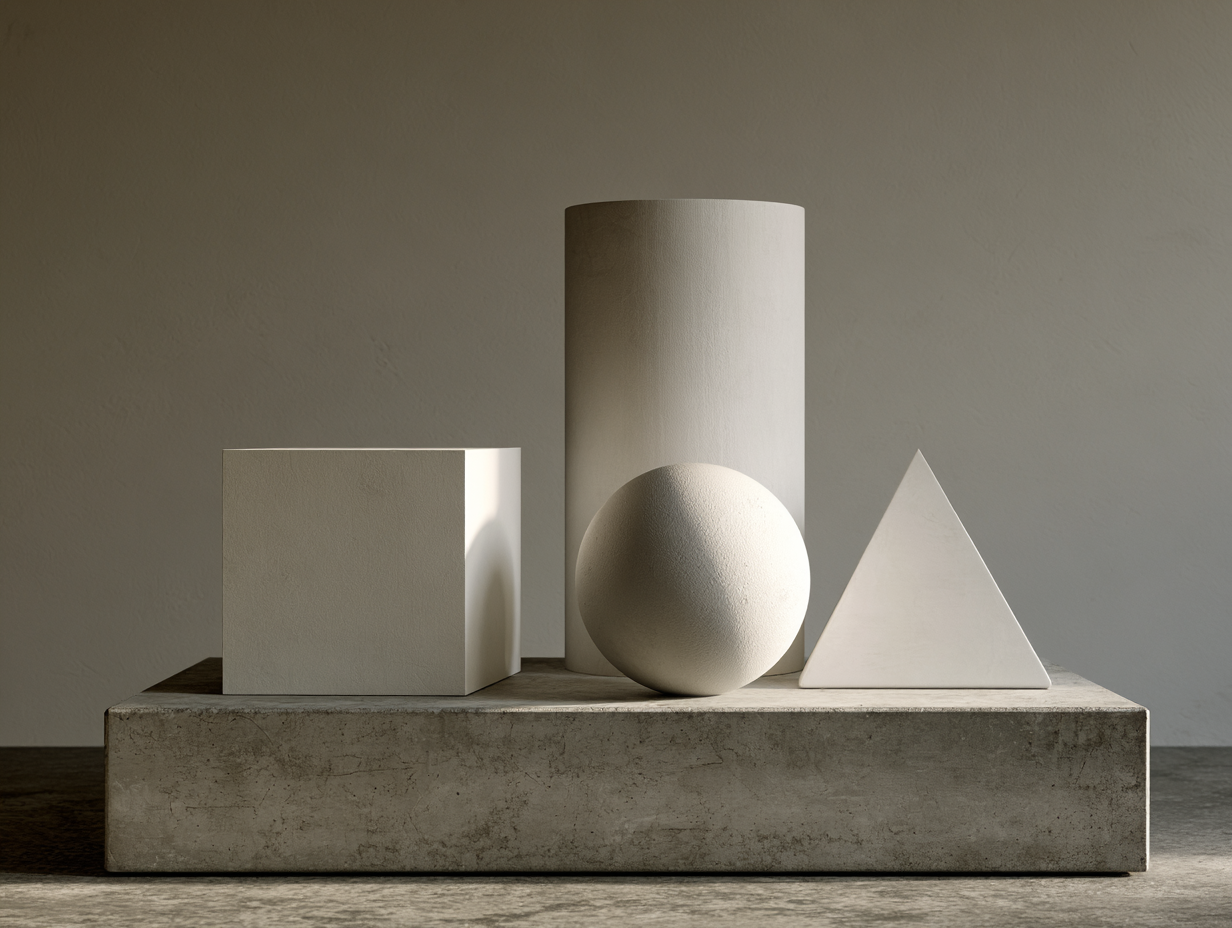
Geometry in architecture is the use of shapes, proportions, and spatial relationships to plan and construct buildings. At its simplest, it covers the measurable properties of a design: lengths, angles, areas, and volumes. At a deeper level, it is a language for organizing space so that a structure feels coherent rather than random.
Architects have relied on this language for thousands of years. The builders of the Egyptian pyramids set out near-perfect square bases using rope and basic right-angle geometry. Greek temples used ratio and symmetry to make stone feel balanced. Islamic craftsmen filled walls with tiling patterns that repeat without gaps. In each case, geometry solved two problems at once. It kept the building standing, and it gave the design a sense of order that people could read.
🎓 Expert Insight
“Geometry is the language of man.”
Those words come from Le Corbusier in his 1923 book Towards a New Architecture. He treated geometric form as a shared language that any culture could read, which is why clear shapes and proportion sit at the center of his idea of good design rather than acting as surface decoration.
The Basic Geometric Shapes Behind Buildings
Most architecture, even the most unusual, can be traced back to a small set of primitive shapes. Understanding architecture in geometry really means understanding what each of these shapes does, structurally and spatially. That single idea explains a surprising amount about why buildings look and behave the way they do.
The Square and the Grid
The square and rectangle are the workhorses of building. They stack, tile, and repeat without wasted space, which is why floor plans, windows, bricks, and city blocks default to right angles. The grid that comes from repeating squares gives architects a simple way to keep a building ordered across many floors and rooms.
💡 Pro Tip
When you start a massing study, block the form out using only primitive solids, such as cubes, cylinders, and spheres, before adding any detail. Working from clean shapes keeps proportions under control and makes it obvious when a form has drifted away from its underlying grid or axis.
The Circle, the Arch, and the Dome
Circles and their three-dimensional relatives carry load in a very different way. An arch turns the downward pull of gravity into outward thrust that masonry handles well, which let medieval builders span wide openings without steel. A dome is a circle rotated into three dimensions, spreading weight evenly around its base. The Roman use of the circle and the arch shaped European building for centuries.
The Triangle and Structural Stability
The triangle is the only basic shape that cannot be deformed without changing the length of one of its sides. Push on a square frame and it collapses into a parallelogram. Push on a triangle and it holds. This single property is why trusses, bracing, and geodesic structures rely on triangulation to stay rigid.
How Basic Shapes Translate Into Buildings
The table below maps the most common geometric shapes to what they do in a building and where you can see them at work.
| Shape | Key Geometric Property | Architectural Role | Example |
|---|---|---|---|
| Square / Rectangle | Tiles and stacks without gaps | Floor plans, grids, windows, walls | Seagram Building, New York |
| Circle / Arch | Redirects load outward | Spanning openings, domes, rotundas | Pantheon, Rome |
| Triangle | Rigid, cannot deform under load | Trusses, bracing, space frames | Eiffel Tower, Paris |
| Hexagon | Tiles a plane with minimum perimeter | Efficient cellular shells, paving | Eden Project, Cornwall |
| Sphere / Dome | Encloses maximum volume per surface | Roofs, planetariums, geodesic forms | Spaceship Earth, Florida |
How Is Geometry Used in Architecture?
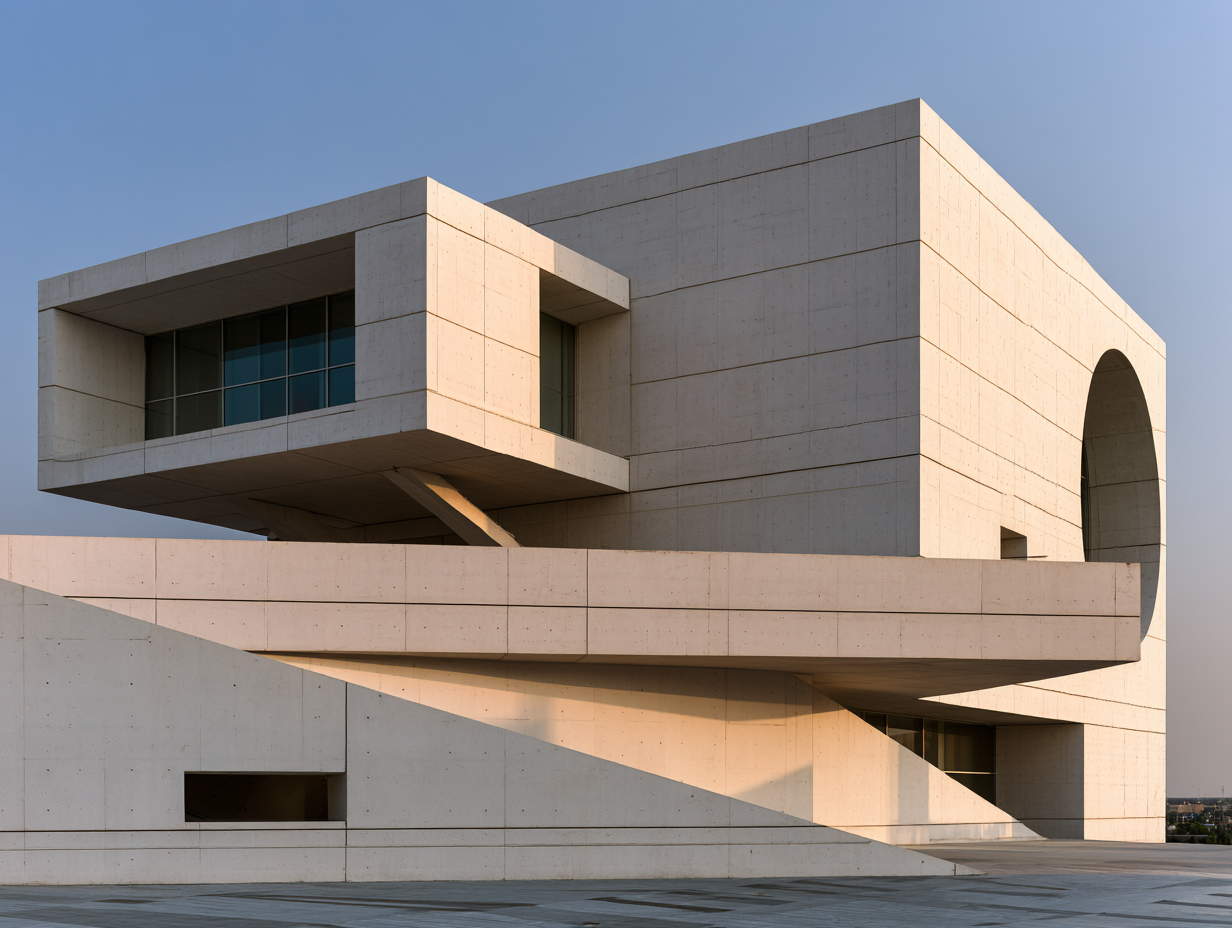
Geometry is used in architecture in three main ways: to keep structures stable, to organize interior space, and to control how a building looks. These roles overlap in every project, but separating them shows how much weight a few shapes carry.
On the structural side, geometry decides whether a building stands. Engineers model how forces travel through a frame using the angles and lengths of its members, and a well-triangulated structure can carry far more load with less material. For organizing space, geometry sets the proportion of rooms, the width of corridors, and the lines of sight that guide people through a building. Geometry also governs how architects represent three dimensions on a flat page, through methods like axonometric projection. For appearance, repeated shapes create rhythm across a facade, while symmetry and ratio make a composition feel resolved.
🏗️ Real-World Example
The Pantheon (Rome, c. 126 AD): The interior is built around a perfect sphere. The diameter of the rotunda equals the height from the floor to the top of the dome, roughly 43 meters in each direction, so a complete sphere would fit exactly inside the space. The circular opening at the top, the oculus, completes the geometry and remains the building’s only source of daylight.
Sacred Geometry in Architecture
Sacred geometry in architecture refers to the use of specific shapes and proportions that carry symbolic or spiritual meaning. Across many cultures, certain ratios and forms were believed to reflect a deeper order, so builders used them to connect a structure to ideas larger than the building itself.
The best known example is the golden ratio, an irrational proportion close to 1.618 that appears when a line is divided so the whole relates to the larger part as the larger part relates to the smaller. Designers have used the golden ratio in architecture for centuries to set proportions that feel balanced, and its presence has been claimed in everything from the Parthenon to modern facades. You can read the full mathematical definition of the golden ratio for the precise geometry behind it.
📌 Did You Know?
The first known written definition of the golden ratio appears in Euclid’s Elements, written around 300 BCE. Euclid described it as the division of a line into “extreme and mean ratio,” centuries before the proportion became linked to art and architecture.
Different traditions pursued sacred geometry in their own directions. Islamic builders developed tiling patterns that extend without a center or an edge, standing for the infinite. Gothic cathedrals used proportional systems and pointed arches to pull the eye upward. The contrast between Islamic and Gothic sacred geometry shows how the same mathematical thinking can serve completely different spiritual goals.
Antoni Gaudí pushed this further at the Sagrada Família, where hyperboloids, helicoids, and catenary curves act as both structure and symbol. Gaudí’s sacred geometry at the Sagrada Família treats mathematical surfaces as a spiritual language built into the stone itself, anticipating the structural form-finding that digital tools handle today.
Geometry in Nature and Architecture
Some of the most interesting geometry in architecture comes from copying nature. Natural forms follow geometric rules of their own, and architects borrow them because they tend to be efficient and visually familiar. The branching of a tree, the spiral of a shell, and the hexagons of a honeycomb all solve structural problems with very little material.
Fractal geometry is a clear case. A fractal repeats the same pattern at every scale, the way a fern leaf echoes the shape of the whole frond. When a building uses fractal geometry across its massing and its details, it tends to feel ordered and organic at the same time. The link between architecture and geometry in nature also drives biomimicry, where designers study how natural structures hold up and apply the same logic to buildings.
From Basic Shapes to Complex Forms
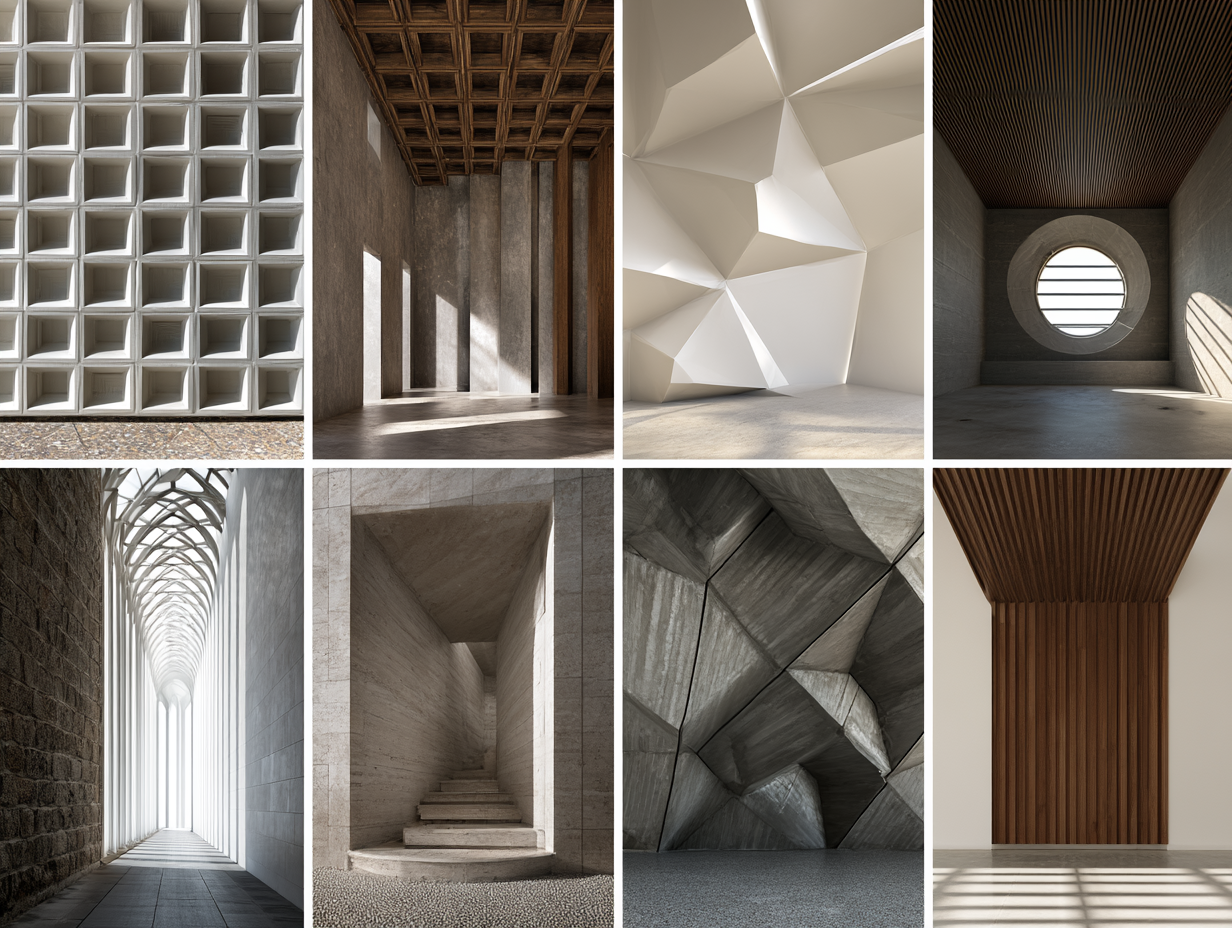
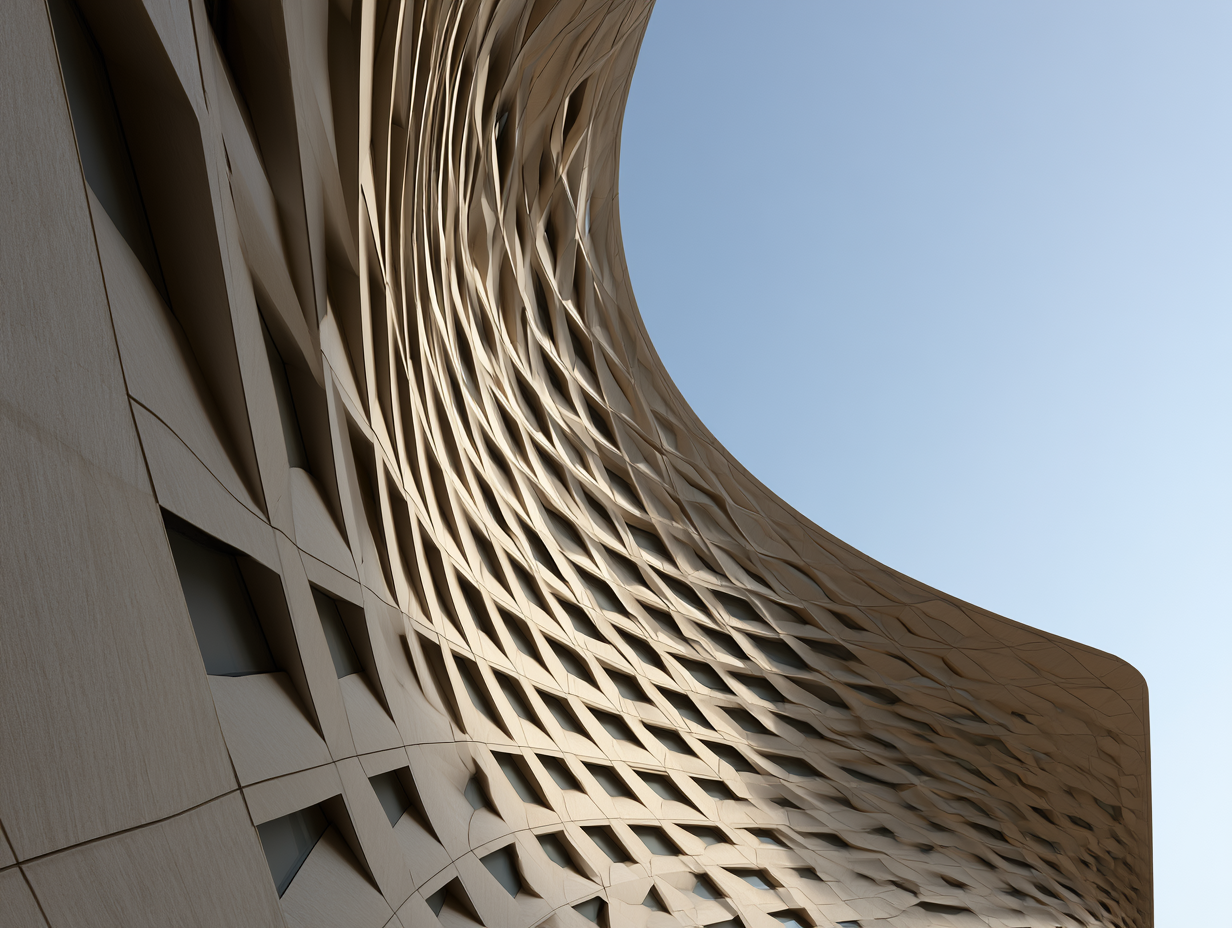
For most of history, architects were limited to shapes they could draw and calculate by hand, so the history of architecture in geometry is partly a history of which forms were buildable at the time. Computers changed that. Today a designer can describe a building as a set of rules rather than fixed lines, and the software generates the geometry, a method known as parametric design.
In parametric work, changing one input updates the whole model. A facade can be divided into thousands of unique panels that each respond to sun angle or structural load, something traditional drafting handles badly. This shift is what allows the flowing, curved buildings produced with parametric design tools like Grasshopper, and it sits at the core of the work by Zaha Hadid Architects, whose buildings treat complex geometry as a design method rather than a finishing touch.
Frank Gehry’s curved forms took a related path, using aerospace software to translate hand-built models into buildable surfaces. His titanium-clad shapes only became possible once geometry could be described mathematically and broken down into fabrication instructions.
The study of these methods has its own field. The biennial Advances in Architectural Geometry conference, running since 2008, brings together architects, engineers, and mathematicians to solve the geometric problems behind complex shapes, from how to panel a curved surface to how to fabricate it without waste.
Geometry in Art and Architecture
The line between geometry in art and architecture has always been thin. Painters, sculptors, and architects draw on the same shapes and proportions, and movements in one field tend to influence the others. Cubism’s fractured planes fed into modern architecture, and the abstract geometry of artists like Kazimir Malevich shaped how some architects think about space and form.
Treating geometry in architecture and design as a shared visual language explains why a building can feel like a sculpture and a painting can feel architectural. Both work by arranging shapes so they hold together as a single composition, balancing order against surprise.
The Bigger Picture
Geometry is easy to overlook because it sits underneath everything else in a building. Yet the same square that orders a floor plan and the same curve that shapes a shell connect a simple house to the most ambitious landmark. As tools keep changing which shapes are buildable, the basic question stays the same. How do you arrange form in space so that it stands up, works, and means something. That question has kept architects returning to geometry for thousands of years, and it shows no sign of being settled for good.






Building Your Dream Home in NSW: What You Should Know About Montgomery Homes
Montgomery Homes has been building across Sydney, Newcastle, the Hunter, Wollongong and...
 illustrarch Editoral Team4 Mins read
Oscar Niemeyer’s Cathedral of Brasília: The Hyperboloid Concrete Hymn
The Cathedral of Brasília reads as a single gesture, yet it stood...
Furkan Sen7 Mins read
What Technology Does a Modern Workplace Need?
A modern workplace needs more than fast computers. A framework covering network,...
illustrarch Editoral Team8 Mins read
How Do You Choose Durable Shutters That Suit Your Budget?
Shutters can look identical in a showroom and perform very differently after...
illustrarch Editoral Team8 Mins read


Leave a comment