

21-24 Nikkakjøkken Restaurant by OFFICE INAINN
21-24 Nikkakjøkken Restaurant by OFFICE INAINN redefines adaptive reuse through a lightweight timber insert placed within a preserved historic envelope. Rather than rebuilding, the project introduces a demountable core that delivers the restaurant programme while maintaining the legibility of the original structure. Through calibrated openings, precise detailing, and an economy of means, the intervention balances contemporary use with long-term stewardship of the existing fabric.
 Begum Gumusel4 February 20263 Mins read158


Table of Contents Show
Located within an existing historic structure, 21-24 Nikkakjøkken Restaurant by OFFICE INAINN proposes a nuanced architectural strategy: function as an insert, not a rebuild. Rather than transforming the building through heavy intervention, the project operates as a carefully calibrated spatial insertion. The original envelope is preserved in its entirety, while a lightweight timber core delivers the full restaurant programme within it. This approach allows the new use to coexist with the old structure without erasing its identity.
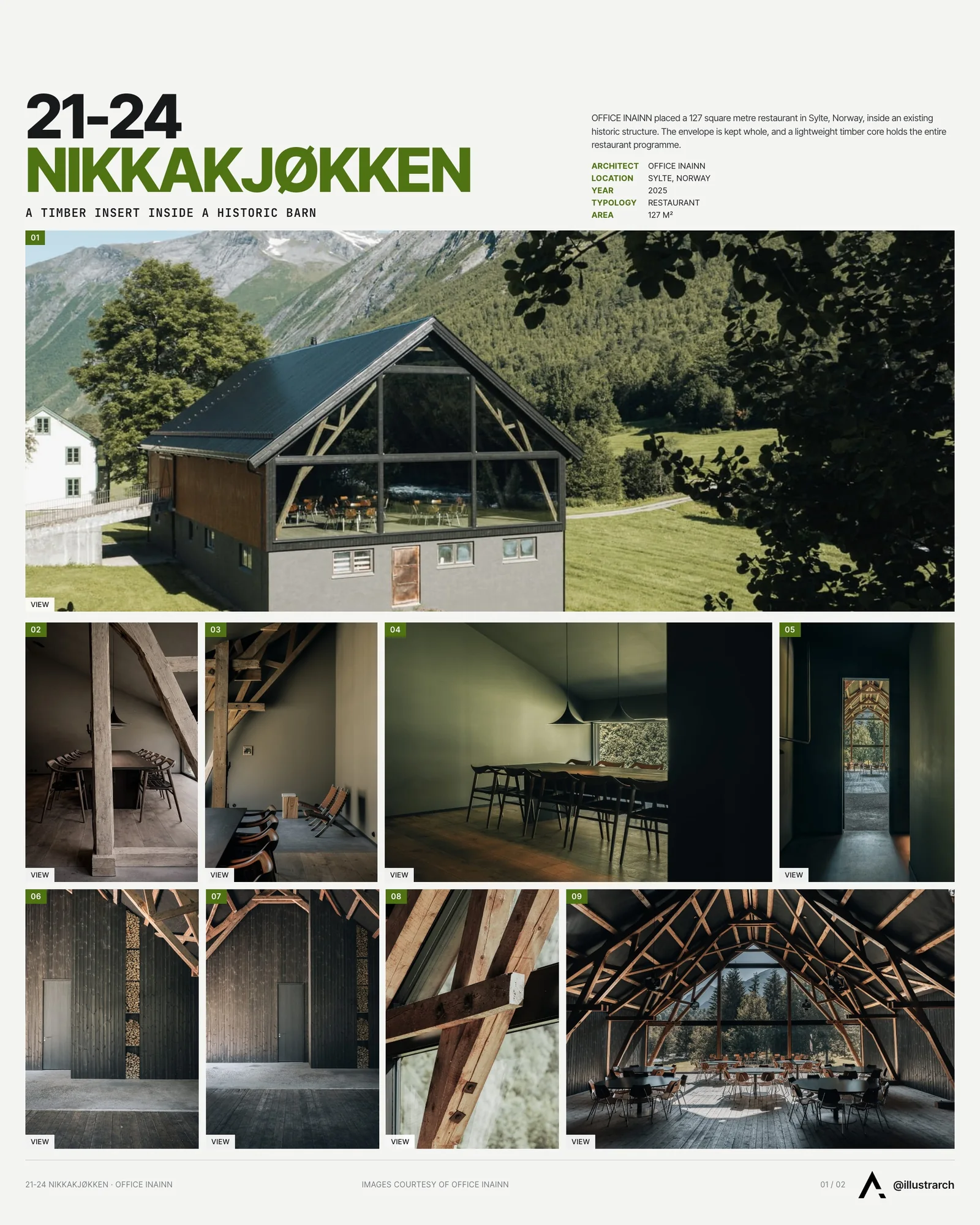
The insert is conceived as an independent architectural module. While it is not designed to be immediately reversible once installed, it is deliberately detailed for future disassembly. This ensures that the historic shell can remain intact over time, protecting its material character while allowing the restaurant programme to evolve or relocate if necessary. In this sense, the project reflects a contemporary understanding of adaptive reuse: one that prioritizes stewardship, longevity, and architectural humility over spectacle.
Preserving the Existing Envelope and Legibility of Structure
One of the most critical decisions of the project is the commitment to leave the building’s external silhouette unchanged. From the landscape, the restaurant appears almost untouched, preserving the continuity of its historical presence. Openings are not expanded or dramatized; instead, they are carefully calibrated, ensuring that light and access are introduced without undermining the architectural integrity of the envelope.
Internally, this restraint allows the existing structural system, particularly the roof truss, to remain fully legible. The design avoids visual clutter and unnecessary partitions, emphasizing spatial clarity beneath the truss. Services, storage, and all back-of-house functions are compactly integrated within the timber insert itself. This organizational strategy keeps the primary span open, reinforcing the experiential quality of the original structure while accommodating contemporary functional requirements.
Timber as Structure, Strategy, and Ethos
All new construction within the project is executed in timber. This material choice is not merely aesthetic but conceptual and ecological. Timber allows the insert to read as a secondary layer, visually distinct yet harmonious with the existing building fabric. Its dry construction methods also enable a cleaner, more reversible intervention, minimizing wet trades and reducing the risk of damage to the historic shell.

The timber core functions almost like a building within a building. It organizes circulation, defines service zones, and supports the operational requirements of the restaurant without competing with the host structure. The clarity of this relationship, the old as container, the new as occupant, creates an architectural dialogue rooted in respect rather than dominance.
This approach also supports a broader sustainability strategy. By reusing the existing building fabric and limiting new construction to what is strictly necessary, the project significantly reduces embodied carbon. The insert’s demountable logic further extends the lifecycle of materials, allowing components to be reused or adapted in the future.
Detail as a Tool for Continuity
The success of the project lies largely in its attention to detail. Rather than treating old and new as separate visual systems, OFFICE INAINN carefully orchestrates moments of continuity. One of the most telling gestures is the new timber floor, which is set out according to the irregular widths of the existing planks. This subtle strategy creates a continuous field where historic material and contemporary intervention interlock seamlessly.
Thresholds, ventilation lines, and junctions are resolved with precision. They appear as fine, almost imperceptible lines within the space, allowing attention to remain focused on the exposed structure and the spatial rhythm beneath the truss. These details do not seek to announce themselves; instead, they reinforce the project’s ethos of architectural restraint.
The interior atmosphere that results is calm, tactile, and grounded. Timber surfaces, exposed beams, and the preserved structure work together to create a dining environment that feels both contemporary and deeply rooted in its material context.
Economy of Means and Long-Term Stewardship
The project’s conceptual rigor is matched by its pragmatic intelligence. OFFICE INAINN adopts an economy of means approach, recognizing that architectural longevity is often dependent on maintainability as much as design quality. By limiting new construction, relying on dry assembly, and aligning technical solutions with local capacities, the project ensures that the building can be cared for over time without requiring specialized resources.
This strategy also acknowledges the social dimension of adaptive reuse. Preserving the identity of the existing structure supports continuity within the local context, allowing the building to evolve in use while remaining recognizable in collective memory. The restaurant does not overwrite the building’s history; it inhabits it.
Adaptive Reuse as Architectural Ethic
21-24 Nikkakjøkken Restaurant stands as a compelling example of how contemporary architecture can operate through precision rather than transformation. It demonstrates that adaptive reuse does not need to be visually loud to be conceptually strong. Through restraint, clarity, and respect for the existing fabric, OFFICE INAINN creates a project that is both deeply contextual and quietly radical.
The restaurant insert becomes an architectural instrument for extending the life of a historic structure without compromising its integrity. It proposes a future-oriented model of intervention, one where buildings are treated not as static artifacts nor as blank canvases, but as living frameworks capable of accommodating new programs through care, intelligence, and material sensitivity.
Photography: Courtesy of OFFICE INAINN




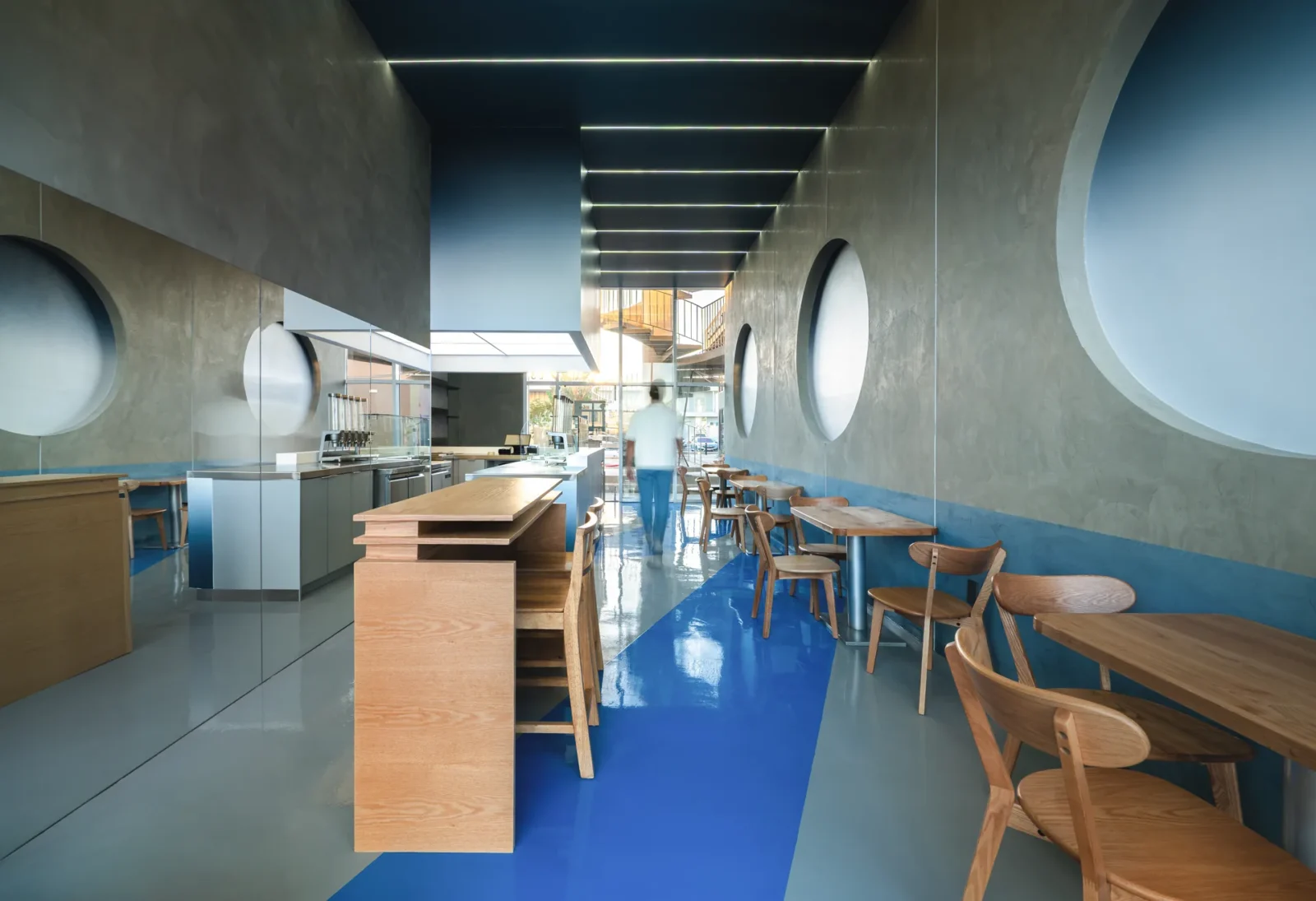
Good Habits Smoothie Bar by XN32 Studio
XN32 Studio turns a 55 m² smoothie bar in Mexicali into a...
 illustrarch Editoral Team3 Mins read
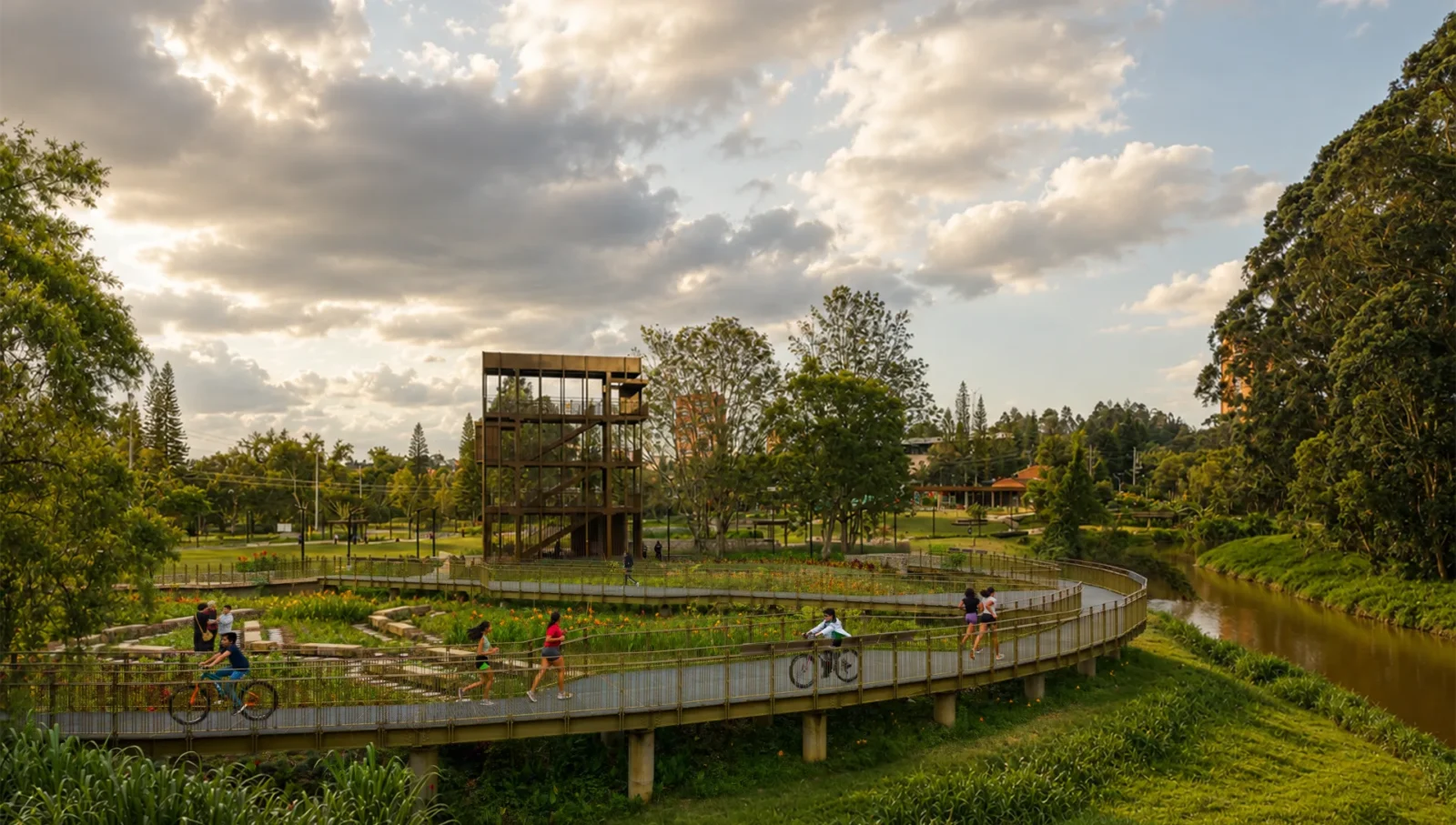
Café del Río by TAP Arquitectura
On a flood-prone stretch of the Río Negro in Rionegro, Colombia, a...
illustrarch Editoral Team2 Mins read

Origin Cafe and Roasters Jax by S.DA
S.DA turn a JAX District warehouse in Diriyah into a cafe, roastery...
illustrarch Editoral Team2 Mins read
Basics Coffee by archicraft
Basics Coffee approached us to build a café chain brand from scratch....
illustrarch Editoral Team2 Mins read


Leave a comment