

Tiny House Legal Guideline USA: Zoning Laws & Key Rules
Find out where tiny houses are legal in the USA with this state-by-state guide. Covers zoning laws, building codes, legal dimensions, THOW rules, and how to legally build or park your tiny home.
 Muhammad Abdullatef - Tifa Studio1 January 202618 Mins read1.1k
Table of Contents Show
Tiny houses have captured our imaginations with their promise of simplicity, affordability, and sustainability. But as more of us consider downsizing into these compact dwellings, navigating the tiny house legal guideline framework becomes crucial. Are tiny houses legal? The answer depends on where you live. Zoning laws, building codes, and local ordinances vary widely across the United States, creating a complex web that tiny house enthusiasts must untangle. Whether you are exploring a modern tinyhouse on wheels, a portable micro home, or a permanent tiny wood house in the USA, understanding the legal requirements is the essential first step toward making your small homes USA dream a reality.
In some areas, tiny houses on wheels are classified as RVs, while others see them as accessory dwelling units (ADUs). This classification can significantly impact where we can park or build our tiny homes. From the tiniest house in the world to full-sized tiny homes in the United States, understanding these legal nuances not only helps us avoid potential pitfalls but also empowers us to advocate for more inclusive housing policies. Let’s dive into the legal intricacies and discover how we can make our tiny house dreams a reality.
Understanding the Tiny House Legal Guideline Framework in the USA
Understanding the tiny house legal guideline framework is crucial for anyone considering this lifestyle in the United States. As the tiny house movement continues to grow, with tiny houses of America gaining mainstream acceptance, the regulatory landscape is evolving rapidly. This section delves into zoning laws and building codes that significantly impact tiny house USA living, including rules for portable micro homes and small portable houses.
Zoning Laws Impacting Tiny Houses
Zoning laws dictate where tiny houses can be built or parked. These regulations vary significantly between municipalities. In some areas, tiny houses are classified as accessory dwelling units (ADUs), making them permissible in residential zones. Conversely, areas without ADU provisions may restrict tiny houses entirely, confining them to recreational vehicle (RV) parks or campgrounds. State-specific examples include California, which often allows ADUs, and states like Georgia where restrictions are tighter. Understanding local zoning ordinances ensures compliance and helps plan accordingly.
As of 2026, states such as California, Oregon, Texas, Colorado, and Florida have adopted more progressive stances toward tiny house living. For example, California’s ADU law updates now allow movable tiny homes on wheels to be classified as accessory dwelling units in many municipalities. Spur, Texas, remains the first American town to remove minimum size regulations for tiny homes, while tiny house communities continue to emerge across progressive regions. If you are considering a tiny home in the USA, always contact your local planning office before purchasing land or a structure.
Building Codes and Standards for Tiny Housing
Building codes impose certain standards that tiny houses must meet. These codes affect everything from structural integrity to utilities like plumbing and electricity. For instance, the International Residential Code (IRC) provides appendices specifically for tiny houses under 400 square feet. Adherence to these rules ensures safety and legality. In Colorado, some localities adopt IRC Appendix Q, while others may not, adding another layer of complexity. Checking both state and local building regulations can prevent legal issues and streamline the approval process.
IRC Appendix Q is particularly important because it addresses key requirements unique to tiny dwellings, including reduced ceiling heights in lofts, alternative stairway designs (such as ladders), and emergency escape windows. As of 2026, a growing number of states, including Wyoming, Delaware, Connecticut, and Washington, have adopted Appendix Q at the statewide level, giving tiny homes on foundations clear legal standing. Washington state has been especially active, with cities like Olympia, Seattle, and Spokane creating local ordinances that align with IRC Appendix Q to support tiny house development. For tiny homes on wheels, RVIA (Recreational Vehicle Industry Association) or NOAH certification provides a recognized path to compliance, which is essential for both insurance and legal placement.
Legal Tiny House Dimensions
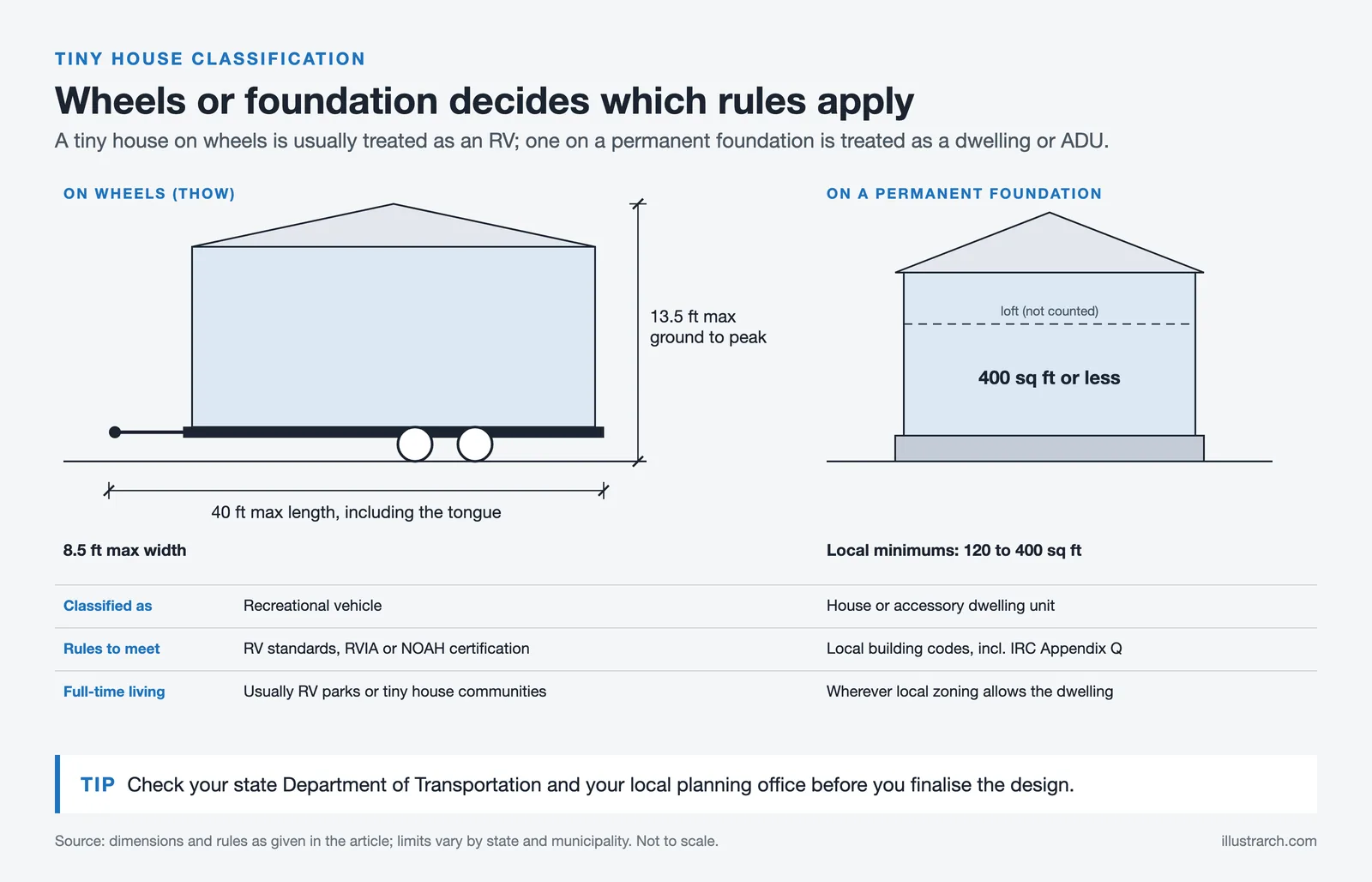
Understanding legal tiny house dimensions is critical before you start building or buying. Most building codes define a tiny house as a dwelling unit of 400 square feet or less, excluding lofts. The legal tiny house size for foundation-based homes is typically governed by local zoning minimums, which can range from 120 to 400 square feet depending on the municipality.
For a road legal tiny house on wheels, federal and state transportation regulations set the maximum legal dimensions. In most states, a THOW must not exceed 8.5 feet wide, 13.5 feet tall (from ground to roof peak), and 40 feet long including the trailer tongue. Some states allow slightly larger dimensions with special permits, but staying within these limits ensures your tiny home can be towed legally on public roads without an oversize load escort. Always check your state’s Department of Transportation guidelines before finalizing your THOW design.
Tiny House Classifications: On Wheels vs. On Foundation
One of the most important tiny house legal guideline distinctions is how your tiny home is classified. The classification directly determines which codes, permits, and zoning rules apply. Understanding the difference between a tiny house on wheels (THOW) and a tiny house on a permanent foundation is essential for anyone planning to pursue the tiny house lifestyle in the United States.
Tiny Houses on Wheels (THOWs) and Portable Micro Homes
Tiny houses on wheels, often called portable micro homes or little portable houses, are typically classified as recreational vehicles. This classification means they must comply with RV standards rather than traditional building codes. While this offers flexibility in terms of mobility, it also limits where you can legally live full-time. Most states do not allow full-time residency in an RV unless it is located in a designated RV park or a tiny house community. THOWs certified by RVIA or NOAH are easier to register, insure, and legally place. These small portable houses appeal to digital nomads, retirees, and minimalists who value the freedom to relocate their home.
Tiny Houses on Permanent Foundations
A tiny house built on a permanent foundation is legally treated as a standard residential dwelling or an accessory dwelling unit, depending on local zoning. Foundation-based tiny homes must meet local building codes, including those covered by IRC Appendix Q. These structures are subject to property taxes, just like traditional homes, but they benefit from greater legal protections, easier financing, and clearer insurance pathways. Many tiny house communities across the USA are designed specifically for foundation-based tiny homes, with shared amenities and community governance.
How to Legally Build a Tiny House
Knowing how to legally build a tiny house starts with research and planning. The permit process and legal requirements for tiny houses differ based on whether your home is on wheels or on a foundation, and regulations can change from one county to the next. Here is a step-by-step overview to help you get started.
First, identify the zoning classification for the land where you plan to place your tiny home. Contact your local planning or zoning office to confirm whether tiny houses are permitted in that zone, either as primary residences, ADUs, or as RVs in designated areas. Second, determine which building codes apply. For foundation-based tiny homes, you will likely need to comply with IRC standards and possibly Appendix Q if your state or municipality has adopted it. For THOWs, obtain RVIA or NOAH certification to meet RV standards.
Third, apply for the required building permits. This typically involves submitting floor plans, structural details, and proof of code compliance. Fourth, schedule and pass all required inspections during construction, including foundation, framing, electrical, plumbing, and final inspections. Finally, once construction is complete and inspections are passed, obtain a certificate of occupancy (for foundation homes) or register your THOW with your state’s DMV. Understanding how to legally live in a tiny house also means checking local rules about utilities, sewage connections, and minimum lot sizes before you commit to a location.
Where Can You Legally Park a Tiny House?
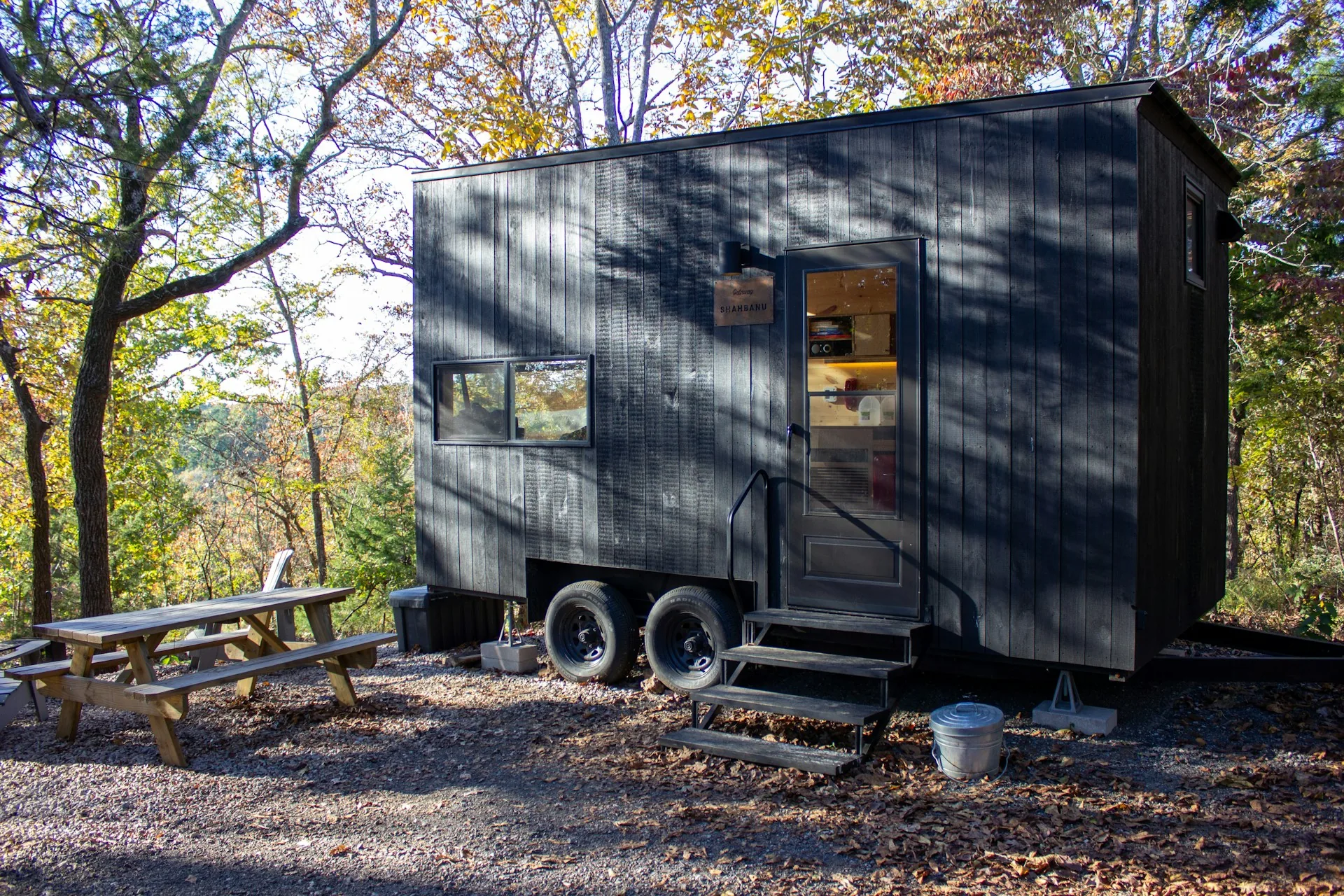
Where can you legally park your tiny house? The answer depends on your home’s classification and local regulations. For THOWs, the most common legal parking options include designated RV parks, legal tiny house communities, and private land where the local zoning code permits RV or tiny home placement. Some municipalities allow THOWs as ADUs in residential backyards, though this requires a permit and utility hookups.
Foundation-based tiny homes follow standard residential placement rules, meaning you need a lot that is zoned for residential use and meets any minimum size requirements. Legal tiny house communities, such as Orlando Lakefront in Florida, Escalante Village in Durango, Colorado, and various tiny house communities across Oregon and California, offer pre-approved sites with shared infrastructure and community support. Always verify that your chosen location allows full-time occupancy, as some areas only permit tiny homes for temporary or seasonal use.
Challenges Facing Tiny House Owners
Tiny house owners face numerous challenges in the legal landscape across the USA. Understanding these challenges helps in navigating state regulations and advocating for necessary reforms.
Legal Hurdles in Different States
Legal hurdles vary significantly from state to state. In California, statewide ADU law is supportive, but local zoning standards and building codes can still restrict tiny house placements. Local jurisdictions may classify tiny houses differently, creating inconsistencies. These houses might be considered ADUs or RVs, depending on the city.
In Georgia, some jurisdictions are more lenient, allowing tiny houses in certain areas. However, other counties implement strict zoning laws, limiting opportunities for tiny house owners. Variability in classifications and local ordinances adds to the complexity.
In Oregon, regulations favor tiny house growth, making it relatively easier to comply with zoning laws and building codes. Yet, constraints are evident in denser urban areas where stricter rules prevail. States like Maine have been particularly progressive, passing statewide legislation that explicitly supports tiny home living and recognizes them as viable housing. Meanwhile, some Midwest and Southern states, including Wisconsin, Alabama, and Arkansas, maintain restrictive minimum size requirements and foundation mandates that make legal tiny house living more difficult.
Financing, Insurance, and Legal Disputes
Beyond zoning, tiny house owners in America face challenges with financing and insurance. Traditional mortgage lenders often do not recognize tiny homes, especially those on wheels, as eligible properties. Specialized lenders and personal loans fill this gap, but often at higher interest rates. Insurance can also be difficult to obtain; however, companies that insure RVs and specialty dwellings are increasingly offering policies tailored to tiny homes in the US. Legal disputes, including the anchored tiny homes lawsuit and other cases involving community placement conflicts, highlight the importance of thorough legal research before committing to a tiny house purchase or build. Understanding tiny house taxes, including property taxes for foundation-based homes and registration fees for THOWs (typically $50 to $300 per year), is equally important for prospective owners.
Advocacy and Legal Reforms
Advocacy plays a crucial role in driving legal reforms for tiny houses. Organizations like the American Tiny House Association lobby for clearer regulations, aiming for uniform standards across states.
Efforts focus on integrating tiny houses into local zoning laws to provide more placement options. By collaborating with city planners and legislators, advocates work to expand the definition of affordable housing to include tiny houses.
Successes in states like Maine, where laws have evolved to support tiny house living, illustrate the impact of persistent advocacy. The Tiny Home Industry Association (THIA) continues to work alongside local governments and builders to create consistent certification standards. Continued efforts seek to eliminate ambiguities in zoning laws, ensuring that tiny house communities can thrive.
By understanding these legal barriers and engaging in advocacy, tiny house owners can better navigate the complex regulatory environment and promote inclusive housing solutions.
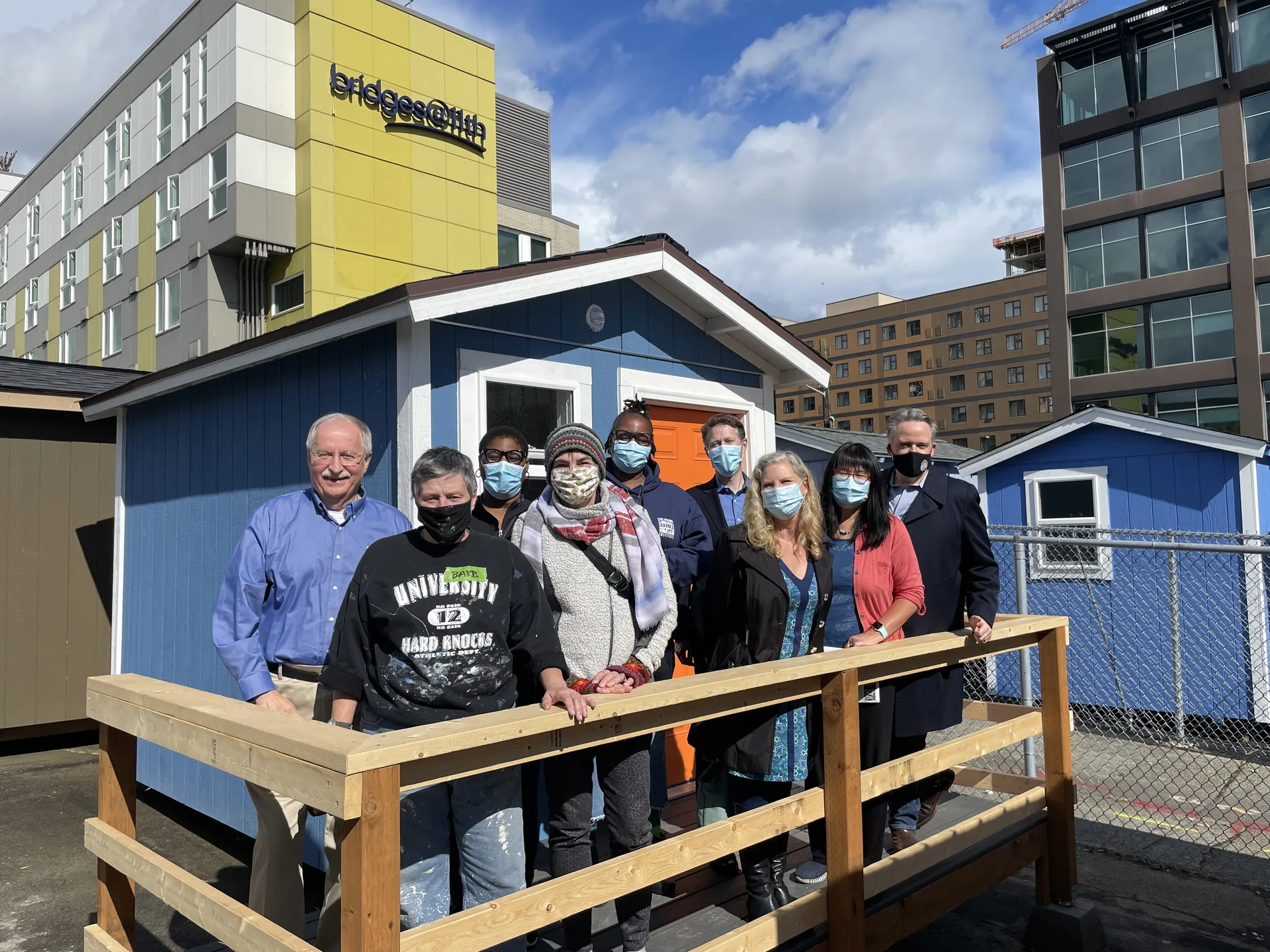
States Where Tiny Houses Are Legal: State-by-State Tiny House Legal Guideline Overview
Because tiny house laws vary so dramatically by state, understanding the regulatory climate in your target location is essential. Below is a summary of the most tiny house-friendly states and what makes them stand out for tiny homes in the US.
California: One of the most progressive states for tiny house USA living. Fresno was the first US city to approve tiny houses on wheels as secondary dwelling units. California’s ongoing ADU law updates expand where and how small homes can be built, including inspiring tiny house designs for both urban and suburban lots.
Texas: Austin permits tiny houses of any size provided they are built on a foundation. Spur, Texas, stands as the nation’s first tiny house-friendly city, having eliminated minimum size requirements entirely.
Oregon: Known for progressive housing policies, Oregon allows tiny houses in many municipalities and has even created tiny house hotels. Portland’s pilot programs for alternative housing include special zoning classifications for tiny dwellings.
Colorado: Several localities have adopted IRC Appendix Q, and Colorado Springs maintains clear regulations for tiny houses on wheels. The state waived stairway regulations and reduced minimum square footage requirements in several counties.
Florida: Popular for its tiny living hotels and RV park communities, Florida offers a welcoming environment for portable little houses and mobile tiny homes. The Orlando Lakefront community exemplifies the state’s embrace of the movement.
Maine: A leader in tiny house reform, Maine has passed statewide legislation explicitly supporting tiny house living, making it one of the best states for small houses in the country. The state requires municipalities to allow tiny homes in certain residential zones, setting a model for other states to follow.
Washington: Washington state has emerged as a strong supporter of tiny house living. Cities including Olympia, Seattle, and Spokane have adopted ordinances aligned with IRC Appendix Q, and the state recognizes tiny homes as a tool for addressing its housing affordability crisis.
Tiny House Legal Overview by State
The following table provides a quick reference for tiny house legal status across key states. Use this as a starting point, but always verify with your local planning office before making decisions.
| State | THOWs Allowed? | Foundation Tiny Homes | Appendix Q Adopted? | Key Notes |
|---|---|---|---|---|
| California | Yes (as ADUs in many cities) | Yes | Varies by city | Fresno first city to approve THOWs as secondary units |
| Texas | Varies by city | Yes | Some localities | Spur eliminated minimum size requirements |
| Oregon | Yes (many municipalities) | Yes | Yes (statewide progress) | Portland pilot programs for alternative housing |
| Colorado | Yes (Colorado Springs, others) | Yes | Yes (several localities) | Reduced minimum sq ft in several counties |
| Florida | Yes (RV parks, communities) | Yes | Varies by county | Orlando Lakefront is a model community |
| Maine | Yes | Yes | Yes | Statewide legislation requires municipalities to allow tiny homes |
| Washington | Yes (select cities) | Yes | Yes (statewide) | Olympia, Seattle, Spokane have supportive ordinances |
| Georgia | Limited | Varies | No (statewide) | Tighter restrictions; varies by county |
| Wyoming | Varies | Yes | Yes (statewide) | Adopted Appendix Q statewide |
| Delaware | Varies | Yes | Yes (statewide) | Adopted Appendix Q statewide |
| Connecticut | Varies | Yes | Yes (statewide) | Adopted Appendix Q statewide |
Benefits of the Tiny House Movement
Tiny houses offer numerous benefits that attract many individuals and communities looking for more sustainable and affordable living options. From cool little houses with Scandi-inspired aesthetics to modern mini house designs, the tiny house movement addresses key housing challenges facing Americans today.
Environmental and Financial Advantages
Tiny houses significantly reduce environmental footprints. Their compact design requires fewer resources during construction and maintenance. For example, tiny homes typically use sustainable and budget-friendly materials and energy-efficient systems, lowering consumption rates. Downsizing from a 2,500-square-foot home to a 400-square-foot tiny house can cut energy usage by up to 45%, directly translating to fewer greenhouse gas emissions. Financially, tiny houses cost less to build and maintain, averaging between $30,000 and $60,000 compared to over $300,000 for traditional homes. The decrease in size translates to lower utility bills (averaging about $50 per month) and less money spent on upkeep. Owners often enjoy reduced debts and increased savings, making tiny houses a practical alternative to conventional housing.
Increasing Growth and Community Support
The tiny house movement continues to grow, gaining robust community support. Many organizations, such as American Tiny House Association (ATHA) and Tiny Home Industry Association (THIA), advocate for legal reforms that support tiny living. Communities that embrace tiny homes often foster a sense of unity and shared values centered on simplicity and sustainability. These supportive networks provide resources, advice, and advocacy, making it easier for individuals to join the movement and navigate the accompanying legal and logistical challenges. The popularity of the tiny house tour format, where owners open their homes for public viewing, has also helped build awareness and acceptance across the United States.
Tiny House Design Trends Shaping the Legal Landscape
The design and origin of tiny houses increasingly influence how they are regulated. As new styles and manufacturing approaches emerge, local governments are adapting their codes to accommodate the diversity of the tiny home market.
Modern Tinyhouse and Mini House Modern Designs
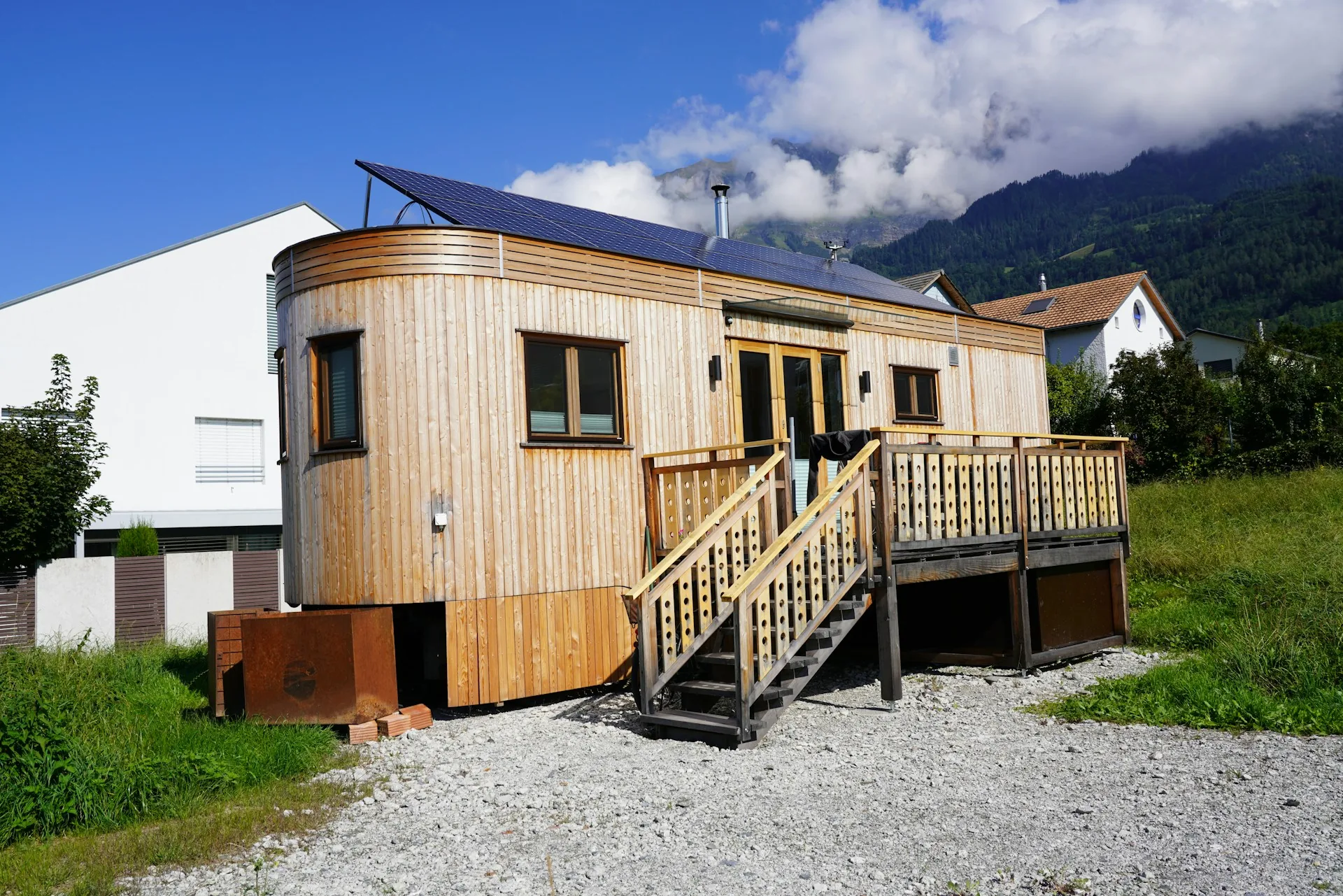
The modern tinyhouse trend emphasizes clean lines, smart technology, and energy-efficient systems. These mini house modern designs often integrate solar panels, smart thermostats, and composting toilets, making them highly self-sufficient. From a legal standpoint, homes that incorporate renewable energy systems may qualify for additional incentives and streamlined permitting in certain jurisdictions. The rise of the tiny mansion, a compact dwelling with luxury finishes and high-end amenities, is also pushing regulators to reconsider what constitutes a viable residential structure.
Scandi Tiny House, Japanese Tiny Homes, and International Influences
International design philosophies are profoundly shaping the tiny house movement in the USA. The scandi tiny house style, rooted in Scandinavian minimalism, prioritizes natural materials, abundant light, and functional simplicity. Japanese tiny homes take this further with micro-spatial efficiency, modular elements, and a philosophy of living with less. Tiny homes from China and other Asian markets are entering the US through prefabricated portable micro home solutions, raising questions about import regulations, safety certification, and building code compliance. Brands and builders responding to these trends, such as those inspired by the Volferda tinyhouse model, must ensure their products meet local US standards, including RVIA or IRC Appendix Q requirements.
Portable Micro Homes and Tiny Homes for Sale USA
The market for tiny homes for sale in the USA has expanded dramatically. Buyers can now choose from a wide range of options, including portable little houses designed for mobility, prefab tiny homes shipped directly to a site, and custom-built tiny wood house USA designs. Amazon and other online retailers have also entered the market with small prefab structures and kits. When purchasing any tiny home, it is critical to verify that the unit meets local building codes, has the appropriate certification (RVIA or NOAH for THOWs), and is compliant with the zoning laws of the intended placement location. The emerging Tesla tiny house concept, integrating Tesla solar and Powerwall systems, represents the cutting edge of self-sufficient tiny home design, though prospective buyers should verify that such configurations comply with their local electrical and building codes.
Future of Tiny Houses in Legal Terms
The future of tiny houses in the USA hinges on evolving regulations and changing societal attitudes toward alternative housing. We explore possible legislative changes and predictions for tiny house acceptance in this section.

Possible Legislative Changes
Legislative changes for tiny houses are expected to focus on zoning laws and building codes. Some states, like California and Oregon, are already introducing more flexible regulations to accommodate tiny houses. These changes aim to make it easier to place tiny houses within residential areas by adjusting minimum size requirements and allowing accessory dwelling units (ADUs) on single-family lots.
Several bills under consideration may also address financing and insurance options for tiny house owners. If passed, these will provide clearer pathways for securing loans and insurance, which are currently significant barriers for many prospective tiny house owners.
The introduction of nationwide standards for tiny house construction and placement is another possible change. Uniform standards can simplify the legal process and encourage more people to embrace tiny living. Advocacy groups like ATHA and THIA continue to push for these changes by lobbying state and federal governments. Emerging 2026 regulations are also expected to address off-grid tiny home living more explicitly, including rules for solar power systems, composting toilets, and rainwater harvesting in tiny houses in the country.
Predictions for Tiny House Acceptance
Predictions suggest growing acceptance of tiny houses as viable housing solutions across the USA. As urban areas become denser and housing affordability remains a concern, tiny houses offer a practical alternative. Public awareness campaigns and success stories from states like Maine contribute to changing perceptions, showcasing benefits like sustainability and cost-effectiveness.
Market research indicates an increasing demand for tiny houses, particularly among millennials and retirees. This demographic shift pressures local governments to adapt their regulations to meet the needs of these communities. The growing popularity of creative furniture solutions for tiny homes and the mainstream visibility of tiny house tours on social media and television are accelerating this cultural shift.
We foresee a rise in tiny house communities supported by local governments and private developers, fostering more inclusive and sustainable living environments. The positive reception of tiny houses in progressive regions sets a precedent that encourages broader acceptance nationwide. Tiny homes in England and across Europe are also providing models that American legislators may adapt, particularly around planning permission frameworks for small portable houses.
Conclusion
The tiny house legal guideline landscape in the USA shows significant progress, albeit unevenly across states. Advocates push for change where restrictive zoning laws exist, aiming for more inclusive housing regulations. As urban density increases and housing affordability remains a top concern, local governments receive continuous pressure to adapt.
Our analysis indicates that success stories in states like Maine, California, Oregon, and Texas set precedents, motivating others to follow suit. Legislative changes centered on zoning laws and building codes promise a more tiny house-friendly future. Areas projecting higher demand, driven by millennials and retirees, may lead the charge in updating these regulations.
Financing and insurance options for tiny houses remain crucial. As these markets expand, we expect more tailored products to emerge, making ownership more accessible. Companies already offer policies specifically for tiny houses, signaling growing acceptance.
Sustainable tiny house communities present another positive trend. With support from local governments and private developers, such projects illustrate the viability of tiny houses as practical, long-term housing solutions. Encouraging outcomes in progressive regions could spur broader acceptance and inspire nationwide reforms. Whether you are drawn to a micro house, a portable micro home, or a permanent small home in the country, the legal path forward is becoming clearer every year.
Amid ongoing challenges, the trajectory for tiny houses in the USA appears promising. Legal adaptations will likely continue evolving to meet the demands of modern urban living and diverse housing needs. The Tiny House 2025 Architecture Competition and similar initiatives reflect the architectural community’s growing investment in this movement, signaling that small-scale living is here to stay.
The legal landscape of tiny houses in the USA continues to evolve. By staying informed, connecting with advocacy organizations, and researching your local tiny house legal guidelines thoroughly, you can confidently pursue the tiny house lifestyle and contribute to a housing future that values simplicity, sustainability, and innovation.
Frequently Asked Questions About Tiny House Legal Guidelines
Are tiny houses legal in the United States?
Yes, tiny houses are legal in many parts of the United States, but the rules vary by state, county, and city. Some states like California, Oregon, Texas, Maine, and Colorado have adopted progressive zoning laws and building codes that support tiny house living. Other states have stricter minimum size requirements or do not yet classify tiny houses clearly under their zoning codes. Always check with your local planning office for the most current regulations.
What states are tiny houses legal in?
As of 2026, states with the most supportive tiny house regulations include California, Texas, Oregon, Colorado, Florida, Maine, and Washington. Several other states, such as Wyoming, Delaware, and Connecticut, have adopted IRC Appendix Q at the statewide level, which gives foundation-based tiny homes clear legal standing. Regulations continue to evolve, so it is worth checking for updates in your target state.
How can I legally live in a tiny house?
To legally live in a tiny house, you need to ensure your home meets local zoning requirements and building codes. For tiny houses on foundations, this means obtaining building permits, passing inspections, and getting a certificate of occupancy. For tiny houses on wheels (THOWs), you typically need RVIA or NOAH certification, a legal parking location (such as an RV park, tiny house community, or permitted backyard placement), and DMV registration. Researching your specific municipality’s rules is essential before you commit.
Where can you legally park a tiny house on wheels?
You can legally park a tiny house on wheels in designated RV parks, approved tiny house communities, and on private land where local zoning permits RV or tiny home placement. Some cities also allow THOWs as accessory dwelling units in residential backyards with the proper permits and utility hookups. Full-time occupancy rules vary, so verify whether your chosen location allows year-round living.
What are the legal dimensions for a tiny house?
Most building codes define a tiny house as 400 square feet or less (excluding lofts). For road legal tiny houses on wheels, federal and state transportation rules generally limit dimensions to 8.5 feet wide, 13.5 feet tall, and 40 feet long including the trailer tongue. Foundation-based tiny homes must meet local minimum square footage requirements, which can range from 120 to 400 square feet depending on the jurisdiction.


4 Comments




Tiny House Water Systems: Your Complete Guide to Plumbing, Rainwater Harvesting and Off-Grid Solutions
A practical guide to designing a tiny house water system, covering PEX...
 Bahattin Duran14 Mins read
Off-Grid Tiny House Living: Complete Setup Guide for Beginners
This guide walks you through every stage of setting up an off-grid...
Bahattin Duran15 Mins read
Tiny House with Loft: Design Ideas, Plans and Building Tips for Vertical Living
A complete guide to designing and building a tiny house with loft,...
Bahattin Duran15 Mins read
8+ Best Tiny Home Communities in Michigan: Great Lakes Tiny Living Guide
Explore tiny home communities in Michigan. Great Lakes lifestyle, affordable land, and...
Bahattin Duran18 Mins read


I absolutely love everything about the tiny house movement. I retired a year ago and am finding it difficult to afford to stay in my home. This could be the answer to this issue for all the seniors so they could finish their years out in their own place. I wish this movement had started 20 years ago. I would be living in mine right now. Small enough to clean and maintain and a place to be proud of. Illinois needs to help all its struggling seniors by loosening the laws and approving tiny homes to be installed on the… Read more »
This article talks about tiny houses and their legal issues. It’s interesting how laws change from place to place. I didn’t know there were so many rules about where you can put them.
I found the article informative. It talks about tiny houses and the laws around them. The legal issues seem complicated, but it’s nice to see some places making progress.
This article talks about tiny houses and their legal issues. It’s interesting how different places have different rules for them. I think tiny houses are a good idea for some people, but the laws can be confusing.