

Major Frank Gehry Retrospective Opens at Serralves in 2026
A major Frank Gehry retrospective will open at the Serralves Foundation in Porto in May 2026, presenting iconic projects, drawings, models, and insights into the architect’s revolutionary design approach.
 Elif Ayse Sen1 January 20263 Mins read236

Table of Contents Show
Serralves Foundation in Porto has revealed its ambitious 2026 program, positioning architecture as a key pillar of its cultural agenda. Throughout the year, the foundation will host exhibitions, film programs, architectural presentations, and large-scale public events across its museums and expansive 18-hectare park. Alongside projects by international figures such as Jenny Holzer, Lee Ufan, Anri Sala, and Alice Neel, architecture will take on a particularly prominent role, with one exhibition standing out as the program’s centerpiece.

A Comprehensive Look at Frank Gehry’s Creative Legacy
The highlight of the 2026 season will be a major retrospective dedicated to Frank Gehry, one of the most influential architects of the late 20th and early 21st centuries. Organized in collaboration with Gehry Partners and the Getty Research Institute, the exhibition will bring together an extensive selection of materials that reveal Gehry’s design thinking and experimental approach.
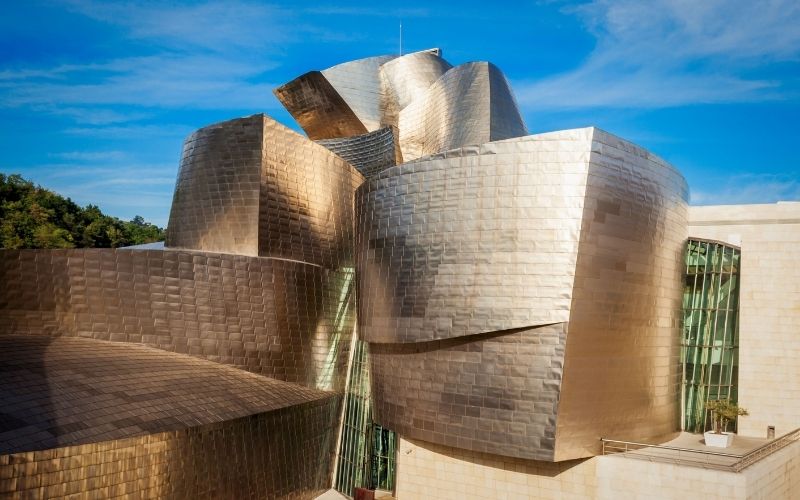
The retrospective will examine 26 key projects, tracing Gehry’s evolution from early residential work, such as the radical Gehry House in Santa Monica, to globally recognized cultural landmarks including the Guggenheim Museum Bilbao. Through architectural models, hand drawings, photographs, furniture pieces, and sculptural studies, visitors will gain insight into how Gehry challenged conventional ideas of form, structure, and materiality.
Beyond Iconic Forms: Understanding Gehry Architecture
Rather than focusing only on finished buildings, the exhibition emphasizes Gehry’s process-driven practice. His architecture is known for fragmented geometries, expressive use of materials, and an almost sculptural treatment of buildings as inhabitable art. From corrugated metal and chain-link fencing in his early work to complex titanium-clad forms made possible by advanced digital tools, Gehry’s career reflects a continuous exploration of how architecture can evoke movement, emotion, and urban identity.
The retrospective also highlights Gehry’s lasting impact on contemporary architecture, showing how his experimental methods influenced generations of architects and reshaped expectations for museums, concert halls, and civic buildings worldwide.

Reinforcing Portugal’s Role in Architectural Culture
Speaking about the program, António Choupina, Director of Architecture at the Serralves Foundation, described 2026 as a pivotal year for strengthening Portugal’s presence in global architectural discourse. The Gehry retrospective, he noted, aims to establish Serralves as an international platform for dialogue, education, and critical reflection on architecture, design, and landscape architecture within a rich artistic setting.
Exhibition Dates
The Frank Gehry retrospective will be on view from May through October 2026, offering architects, students, and the wider public a rare opportunity to engage deeply with the work and legacy of one of architecture’s most transformative figures.
Why the Serralves Setting Matters
Hosting a Frank Gehry retrospective at the Serralves Foundation is meaningful in itself. The foundation’s contemporary art museum was designed by Pulitzer Prize winning architect Alvaro Siza, whose work is known for its calm, precise modernism and careful relationship to landscape. Placing Gehry’s expressive, fragmented forms inside Siza’s restrained spaces creates a productive contrast between two very different but equally influential architectural sensibilities. The surrounding 18-hectare park and historic Art Deco villa give the program room to combine architecture, art, and nature across a single campus.
The Buildings That Defined a Career
By tracing 26 key projects, the exhibition is set up to show how Gehry moved from modest, provocative beginnings to global landmarks. His own house in Santa Monica, wrapped in chain-link and corrugated metal, announced that ordinary materials could be reworked into something radical. Decades later, the Guggenheim Museum Bilbao, completed in 1997, became a turning point for the entire profession, often credited with sparking the so-called Bilbao effect in which a single building reshapes a city’s economy and identity. Seeing these works together helps visitors understand the through-line in Gehry’s thinking rather than treating each building as an isolated icon.
Process Over Product
One of the most valuable aspects of a process-driven retrospective is what it reveals about method. Gehry is famous for starting with quick, gestural sketches and physical models, then using digital tools, notably software adapted from the aerospace industry, to translate those freeform shapes into buildable geometry. The exhibition’s models, hand drawings, and material studies let visitors follow that journey from idea to structure. For students and practicing architects, this offers a rare look at how intuition and technology can work together rather than against each other.
What to Watch for in 2026
The Gehry retrospective anchors a wider 2026 program that also features artists such as Jenny Holzer, Lee Ufan, Anri Sala, and Alice Neel, along with film and public events across the campus. For anyone planning a visit, the architecture exhibition is worth pairing with time in the park and the Siza-designed museum to experience the dialogue between the two architects firsthand. As one of the first major surveys of Gehry’s work since his passing, the show is positioned to be a significant moment for reassessing his legacy and lasting influence on contemporary architecture.



Restorers Uncover 16th-Century Murals Hidden by Nuns in Villa Silvestri Rivaldi
Conservators in Rome are uncovering 16th-century murals hidden for 300 years inside...
 illustrarch Editoral Team3 Mins read

A New Book Records the 1970s Interiors of Ebony and Jet’s Chicago Headquarters
820 Ebony/Jet collects Barbara Karant's photographs of the empty Johnson Publishing Company...
illustrarch Editoral Team2 Mins read

A 2,500-Year-Old Solar Observatory in Puebla Is the First Group E Complex Found Outside the Maya Area
Archaeologists working for Mexico's INAH have confirmed that two platforms at Teteles...
illustrarch Editoral Team2 Mins read

India Art, Architecture & Design Biennale 2026: Ministry of Culture Opens Delhi Monuments
Delhi's monuments, including Purana Quila and the Red Fort, will host the...
illustrarch Editoral Team2 Mins read


Leave a comment