

Table of Contents Show
Draft Models

Materials

Cutting Tools

Choosing the Right Scale
Scale decisions shape what your model communicates. Larger scales such as 1:50 or 1:20 suit detail studies, interior layouts, and facade articulation, while smaller scales like 1:200 or 1:500 are better for massing studies and site relationships. Pick a scale that fits both your message and the physical space you have for display. A consistent scale across all elements keeps proportions honest and prevents the model from reading as visually confused. When in doubt, build a small test piece first to confirm that windows, stairs, and structural members will remain legible once cut.
Building the Base and Context
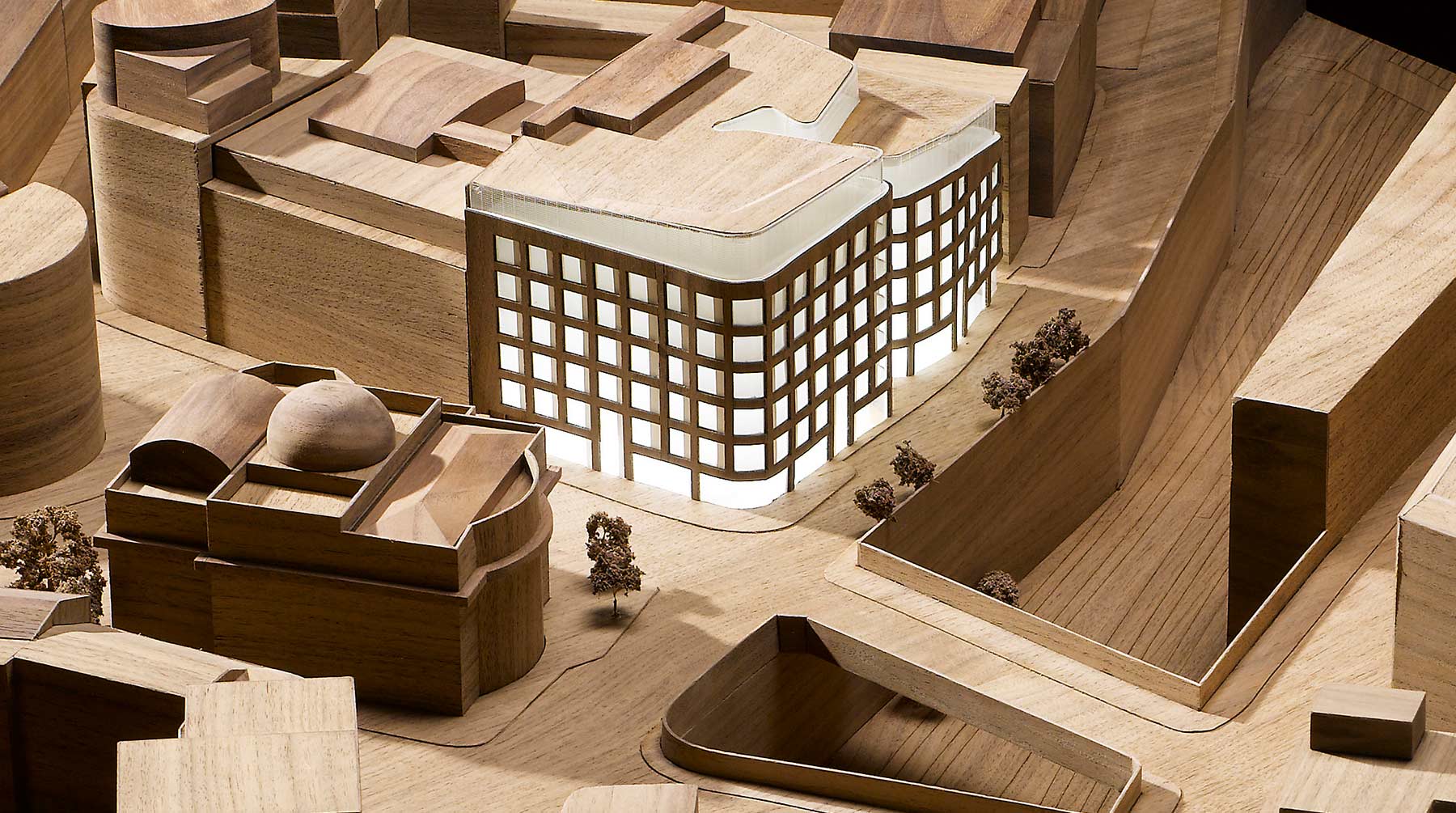
A strong base anchors the model and tells the story of the surrounding environment. Use a rigid material such as MDF, foam board, or layered cardboard so the base does not warp under the weight of the building. Topography can be shown with stacked contour layers, and adding simple massing blocks for neighboring structures helps viewers read the site context. Keep the base finish neutral so it does not compete with the building itself. Leave a clear margin around the design so the eye has room to settle on the main subject.
Lighting and Presentation
How you present a finished model matters as much as how you build it. Natural side lighting reveals depth, casts useful shadows, and emphasizes the relief of facades and roof forms. If you photograph the model for a portfolio, shoot at eye level with a plain backdrop to mimic how a person would experience the building. Small details such as a consistent entourage of trees or scale figures give viewers an immediate sense of size. Avoid over decorating; restraint usually reads as more professional and keeps attention on the architecture.
Common Mistakes to Avoid
Several recurring errors weaken physical models. Mixing too many materials and colors makes the design look busy rather than resolved. Rushing cuts leaves rough or angled edges that undermine an otherwise careful build. Using too much glue creates visible smears and warps thin sheets. Skipping a draft model often leads to costly mistakes in the final version. Finally, ignoring scale figures and context can leave a model feeling abstract. Working slowly, testing joints before committing, and keeping spare material on hand will save time and protect the quality of your final result.
Frequently Asked Questions
What is the best material for beginners? Cardboard and foam board are forgiving, affordable, and easy to cut by hand, making them ideal while you build skill before moving to balsa or plexiglass. How long does a physical model take? It depends on scale and complexity, but allowing several days for a detailed presentation model is realistic once you include drafting, cutting, and assembly. Do digital renders replace physical models? They complement rather than replace them, since a physical model offers tactile understanding of form and space that screens cannot fully convey.
- 3D model building tips
- Architectural Model
- architectural model building
- Architectural Model Tips
- Architecture Student Models
- best practices in model building
- Build Physical Models
- DIY physical models
- how to build a model
- how to make scale models
- model building for students
- model building guide
- model building techniques
- model building tutorials
- model construction tips
- model making advice
- model making for beginners
- Model Making Materials
- model making process
- model making tools
- Physical model building
- physical model examples
- Physical Model for Architects
- scale model making
- step-by-step model building
- tips for creating models








How to Study Ancient Architecture: Tips and Resource
A practical guide to studying ancient architecture across Egyptian, Greek, and Roman...
 Elif Ayse Sen10 Mins read

10 Common HVAC Mistakes in Architecture to Avoid
Learn the most common HVAC mistakes in architectural design and how to...
 Begum Gumusel6 Mins read

8 Tips for Designing a Productive Garden Studio
Transform your outdoor space into a productive sanctuary. Learn essential design principles...
Begum Gumusel6 Mins read

7 Tips for Designing a Kid-Friendly Creative Corner
Learn how to design the perfect kid-friendly creative corner with these 7...
Begum Gumusel5 Mins read


Leave a comment