

Archaeologists Uncover Troy’s Oldest Agora Near Its Southern Gate
Archaeologists at Troy uncovered a 2,800 year old agora by the southern gate, showing the city was resettled soon after the Bronze Age.
 illustrarch Editoral Team26 October 20263 Mins read1
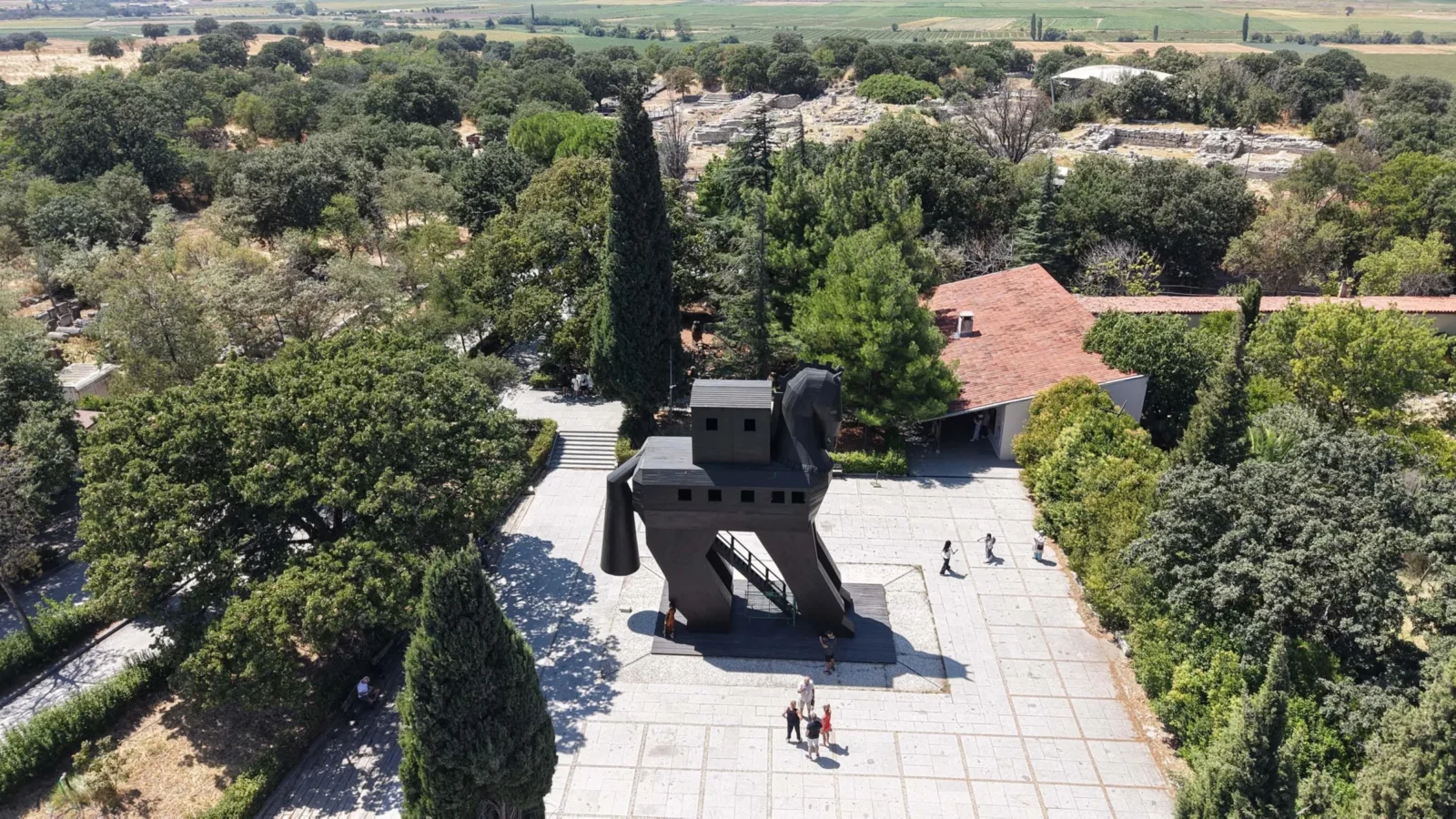
Archaeologists working at the ancient city of Troy, in Türkiye’s northwestern Çanakkale province, have identified Troy’s oldest agora, a 2,800 year old marketplace just outside the southern gate of Troy VI, the fortified settlement most closely tied to Homer’s account of the Trojan War. The find is the latest result of a detailed excavation campaign that began in 2014 and is led by professor Rüstem Aslan, head of the Troy Excavations Committee, working under permits from Türkiye’s Ministry of Culture and Tourism in coordination with Çanakkale Onsekiz Mart University.
Professor Reyhan Körpe, deputy head of the excavations and a faculty member in the university’s history department, said the dig has been narrowly focused on a single question since it started: how the Bronze Age city connects to the later settlement known as Ilion. “This is the area in front of the southern gate belonging to Troy VI. Since 2014, we have been trying to understand the connection between Bronze Age Troy and Ilion of the Archaic and Classical periods,” Körpe said.
Troy’s oldest agora
According to Körpe, the excavated ground functioned as a marketplace in the Late Bronze Age, and evidence at the site suggests people returned to build on it roughly 80 to 90 years after the settlement was abandoned. “We can say that the area we are excavating is Troy’s oldest agora,” he said.
Excavators found that stretches of the old Troy VI fortification walls were reused during the Early Archaic period, with new houses built directly on top of them, indicating that the old marketplace kept serving the same purpose for the people who resettled there. The team has also uncovered a paved road and an entrance running from the lower city toward the southern gate, alongside architectural remains of the agora itself and fragments of amphorae and other pottery dated to the Early Iron Age.
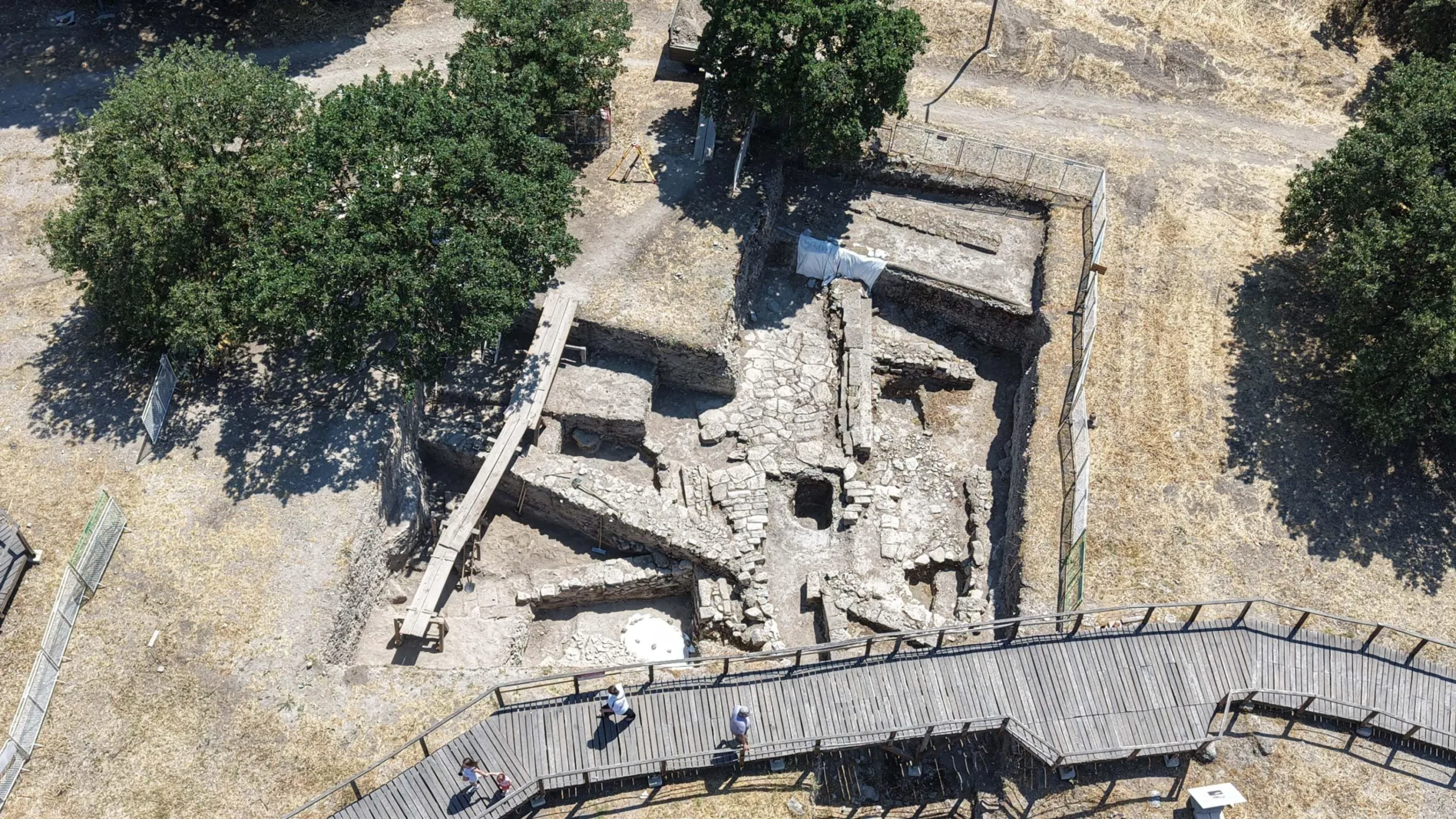
“These findings show that Troy was not abandoned for a long period after the Bronze Age,” Körpe said, adding that the newcomers effectively renamed and rebuilt the settlement as Ilios, or Ilion, on a site earlier known as Wilusa. “In a sense, they ensured that Troy continued to live on as Ilion,” he said. Körpe noted that some of the confusion around the site’s layered history stems from the damage done during the 19th century excavations launched by Heinrich Schliemann, and said current work is deliberately slower and more confined so the connection between the two eras can be mapped properly. “Excavations in this area will continue in the coming years, and we will try to better understand this connection,” he said.
A city rebuilt across centuries
Troy has been recognised as a UNESCO World Heritage Site since 1998 and draws large numbers of visitors each year, particularly from East Asia, to a site whose occupation Daily Sabah’s report describes as spanning roughly 5,000 years of destruction and rebuilding by war, fire and earthquake.
In earlier remarks to the state-run Anadolu Agency, reported by Hurriyet Daily News, Körpe described how later rulers repeatedly reshaped Troy’s fortunes long after the Bronze Age. He said Alexander the Great, who carried a copy of the Iliad on campaign, was moved by the city’s decline when he visited in 334 BC. “He promised to revive this place when he returned from the expedition, but he could not return from the expedition. Later his generals came and changed this city. They built new temples and structures and renewed the city walls,” Körpe said.
He said the Roman leader Caesar made a similar promise after linking his lineage to the Trojan hero Aeneas, but did not live to keep it: “He was unable to fulfill this promise because he was killed.” It was Augustus, Körpe said, who finally gave Troy renewed status, funding temples and an Odeon where excavators later found statues of Augustus himself and of the emperor Hadrian. “During his time and afterward, large temples, large structures and an Odeon were built,” he said, describing how the city became a Roman tourist destination on a par with Egypt, Athens and Antioch, largely on the strength of its mythic connection to Aeneas.
Körpe said Troy’s economy in that era rested less on farmland or trade than on visitors: “Just as it is today, it was one of the most significant tourist centers of the ancient world.” The excavation team’s stated plan, in Körpe’s words, is to keep working the southern gate area in the coming seasons to trace how directly Bronze Age Troy fed into the Ilion of later centuries.



MVRDV Designs Barcode, a Modular Concrete Street Furniture Collection for Escofet
Three concrete modules, Tribune, Dune and Desk, share one height and width,...
illustrarch Editoral Team1 Mins read
Espace Riopelle by FABG Opens at Québec’s MNBAQ With a Circular Gallery for a 40-Metre Triptych
The Musée national des beaux-arts du Québec has opened the Espace Riopelle,...
illustrarch Editoral Team2 Mins read
Google Unveils New Renderings for Chicago’s Thompson Center Overhaul
Google's new renderings show a reworked atrium, staircase and public art for...
illustrarch Editoral Team2 Mins read
Pearce+ Builds a Guerrilla Shading Pavilion in Camden From Reused Timber
Made from timber reused from earlier projects, Pearce+'s hexagonal Guerrilla Shading Pavilion...
illustrarch Editoral Team1 Mins read


Leave a comment