

MVRDV Designs Barcode, a Modular Concrete Street Furniture Collection for Escofet
Three concrete modules, Tribune, Dune and Desk, share one height and width, so cities can line them up as a long strip or group them into compact islands.
 illustrarch Editoral Team25 October 20261 Mins read1

Architecture studio MVRDV has created Barcode street furniture for Escofet, the Barcelona manufacturer of urban furniture. The collection is built from coloured concrete pieces that can be pushed together into seating landscapes, and it was presented at the Barcelona Pavilion by MVRDV co-founder Jacob van Rijs, who led the design, Dezeen reports.
Three modules behind Barcode street furniture
The system rests on just three base units. Tribune is a run of wide steps that people can climb or sit on. Dune is a smooth incline meant for lying back. Desk pairs a table with two benches, so a group can eat or work outdoors. Planters and other accessories can be attached to the units.
Because every module has an identical width and height, the pieces join into one unbroken surface. Placed in a long row they recall the stripes of a barcode, which gave the range its name; set two by two they form small islands instead. Counting all the variants, MVRDV puts the number of available elements at 72.
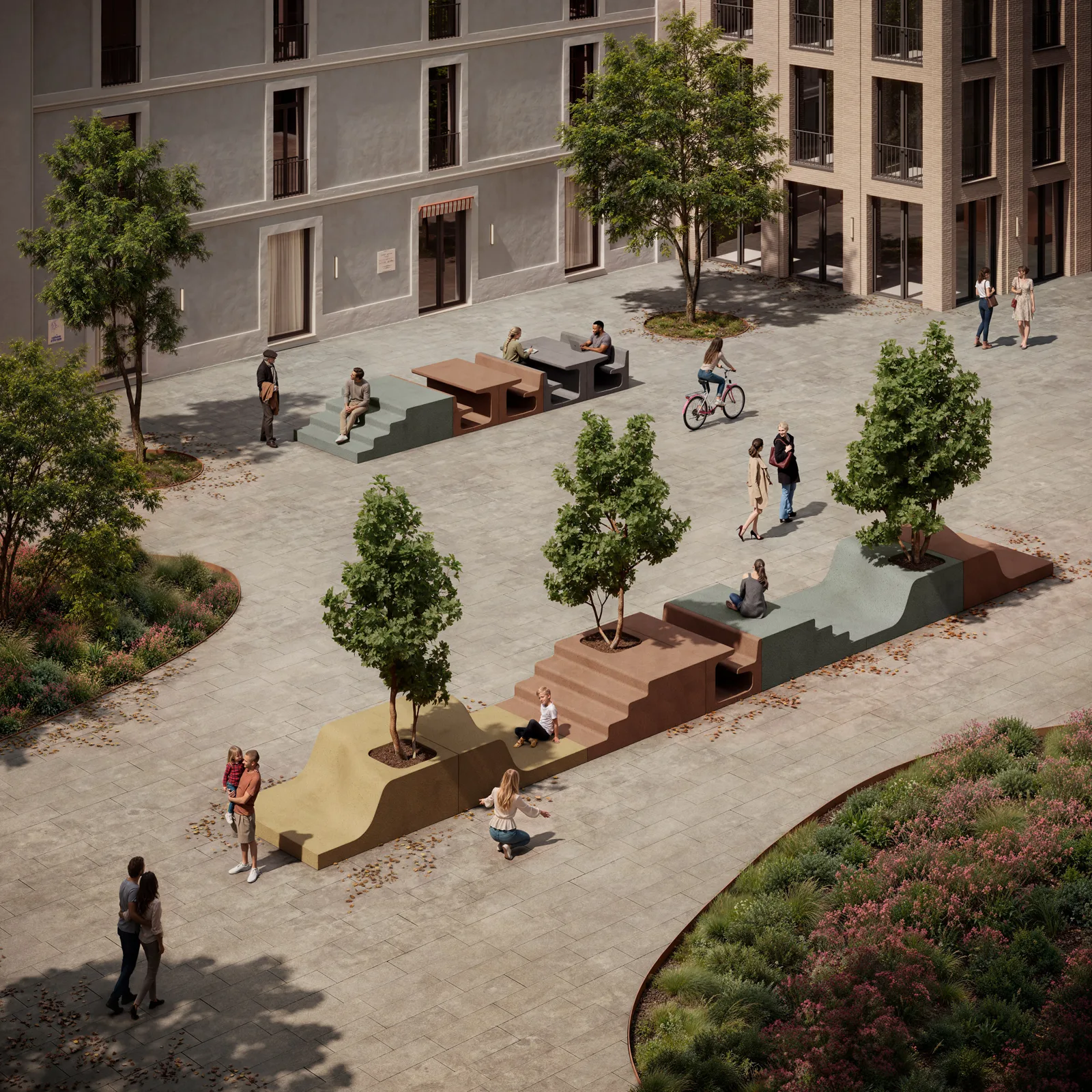
Escofet produces the pieces in all eight of its concrete colours. Brighter options such as red, green and yellow sit alongside quieter grey, white, beige and black.
Seating that the public completes
For Van Rijs, the point is to let people decide how a square or street is used. He criticises the habit of choosing benches from a catalogue and leaving them “in the most predictable places”. With Barcode, he argues, the urban designer sets out an arrangement, but the people who sit, climb and gather on it shape how it actually works.
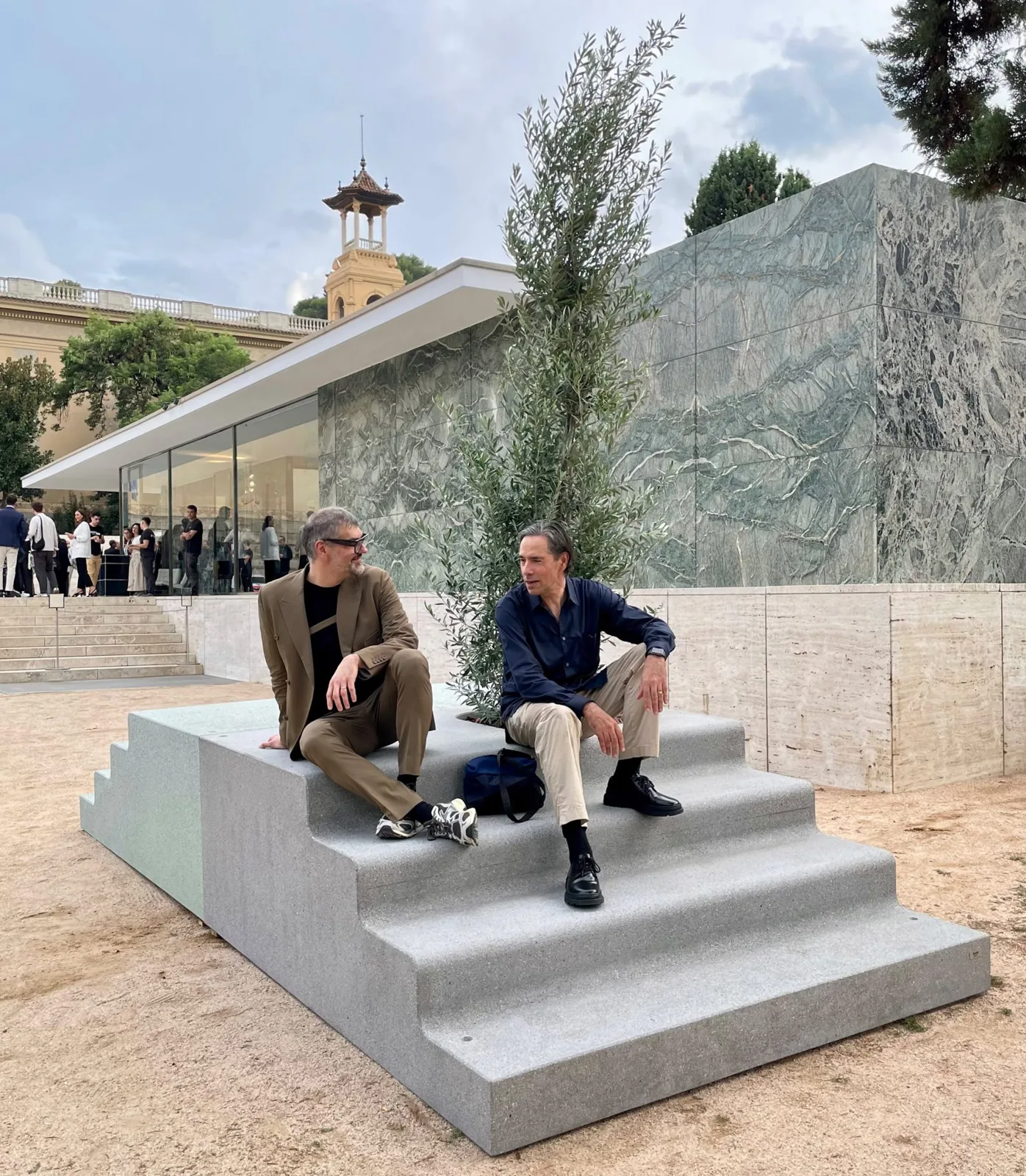
MVRDV was founded in 1991 by Van Rijs with Winy Maas and Nathalie de Vries. The office has worked on public furniture before: a huge woven mat that served as seating during Bangkok Design Week, and bright blue play areas along a 200 metre park under a flyover in Mumbai.




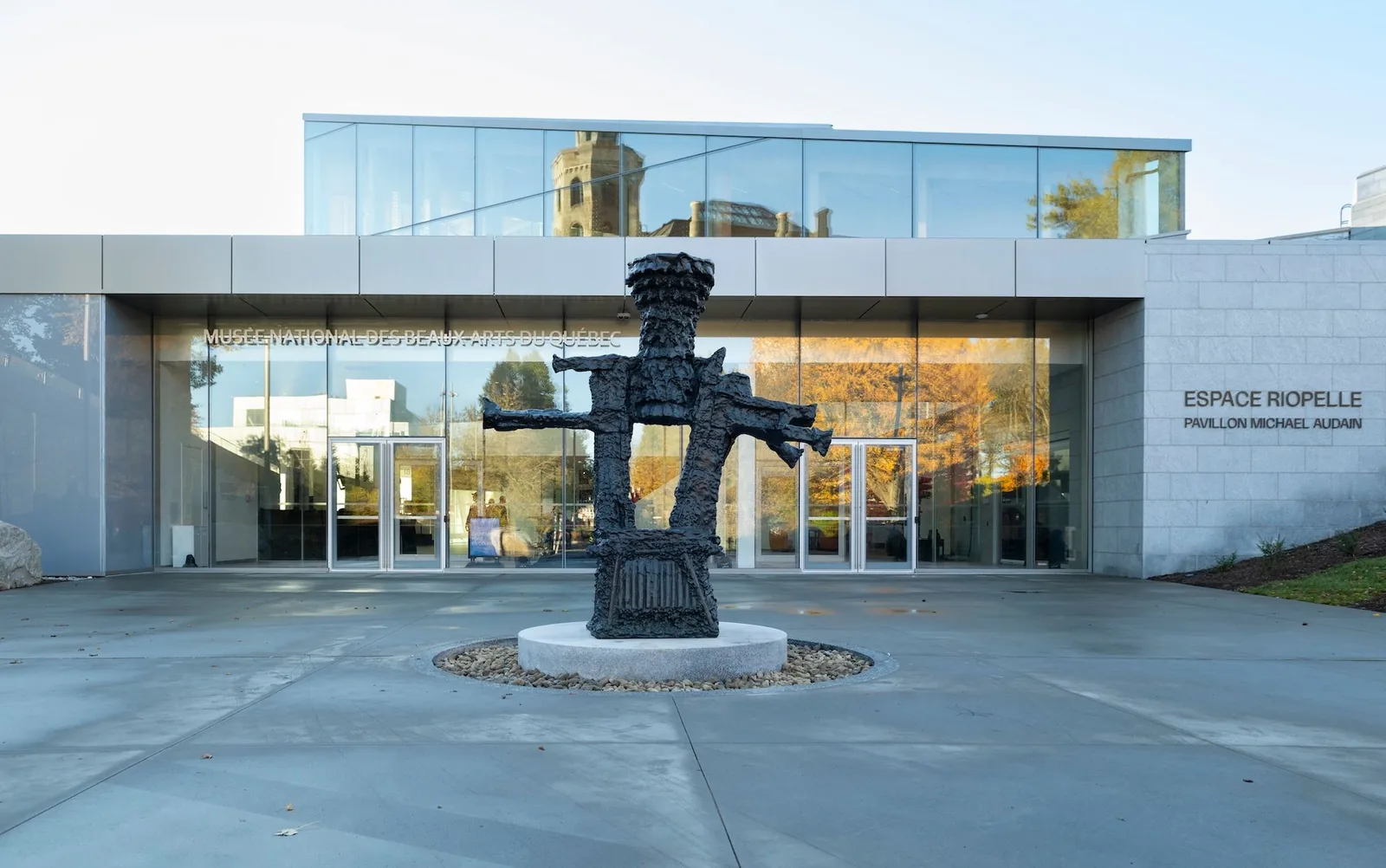
Espace Riopelle by FABG Opens at Québec’s MNBAQ With a Circular Gallery for a 40-Metre Triptych
The Musée national des beaux-arts du Québec has opened the Espace Riopelle,...
illustrarch Editoral Team2 Mins read
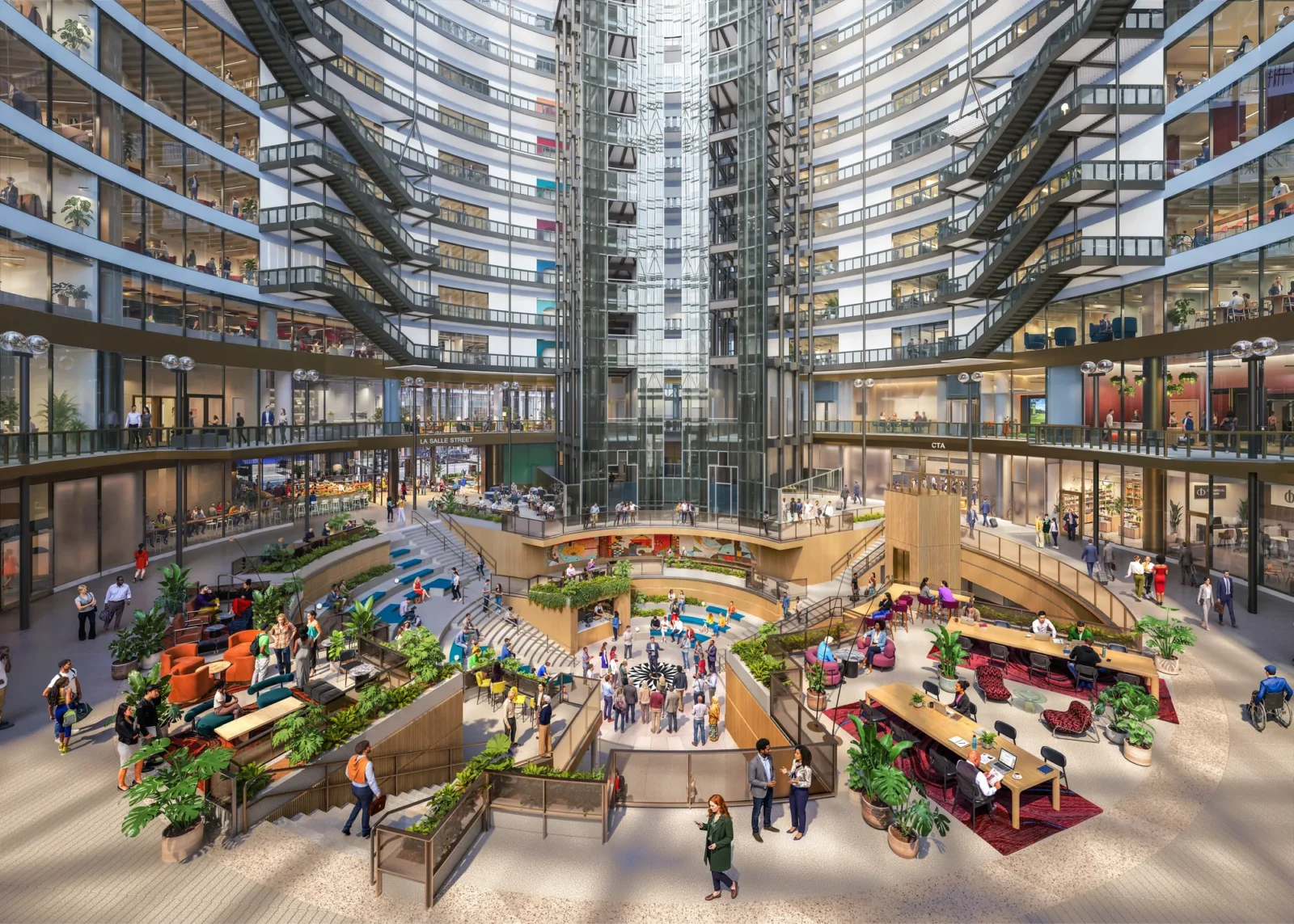
Google Unveils New Renderings for Chicago’s Thompson Center Overhaul
Google's new renderings show a reworked atrium, staircase and public art for...
illustrarch Editoral Team2 Mins read
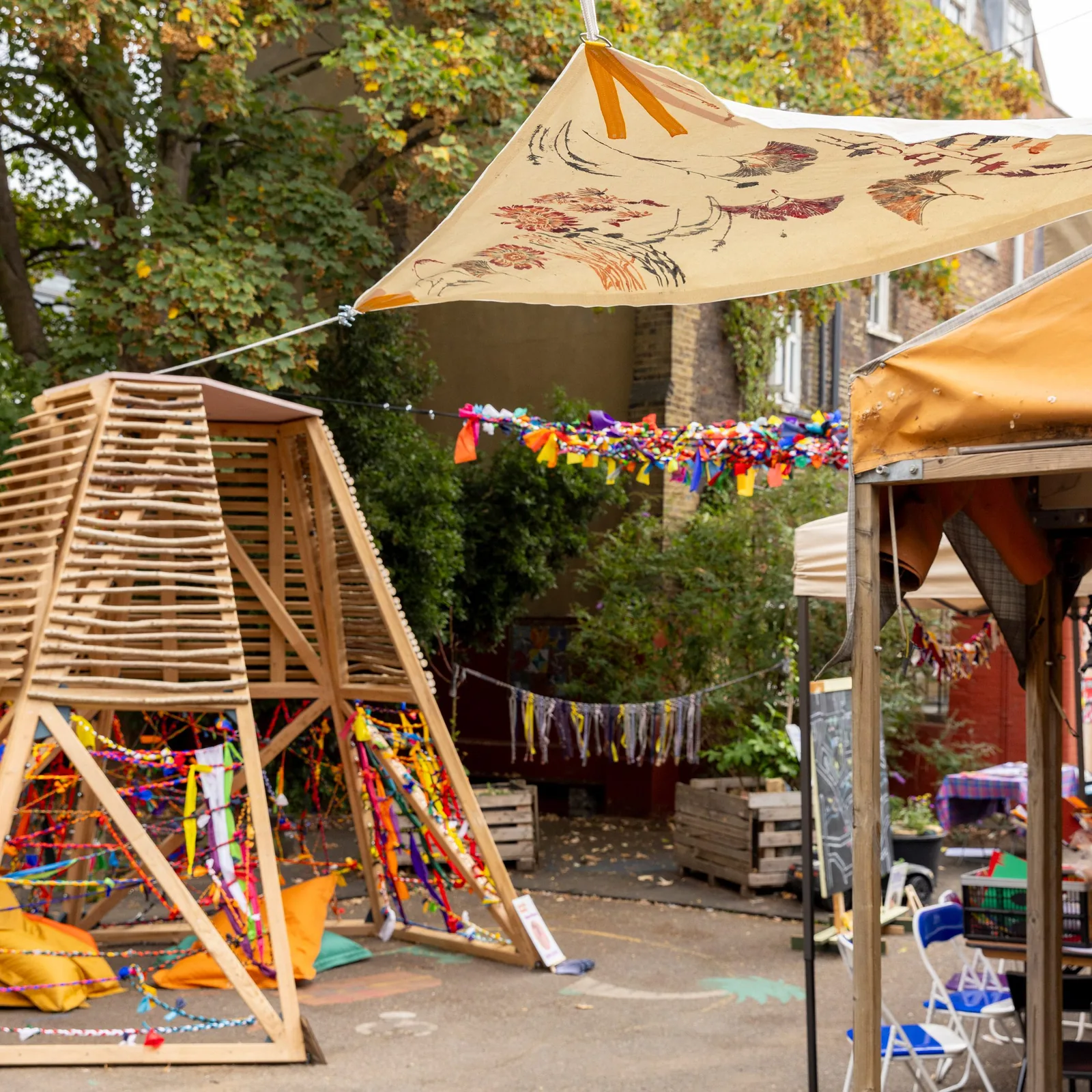
Pearce+ Builds a Guerrilla Shading Pavilion in Camden From Reused Timber
Made from timber reused from earlier projects, Pearce+'s hexagonal Guerrilla Shading Pavilion...
illustrarch Editoral Team1 Mins read

Jean Prouvé’s 1944 6×6 Demountable House Becomes a Japanese Tea Pavilion at Design Miami.Paris
Galerie Patrick Seguin has assembled Jean Prouvé's 1944 6x6 Demountable House in...
illustrarch Editoral Team2 Mins read


Leave a comment