

Table of Contents Show
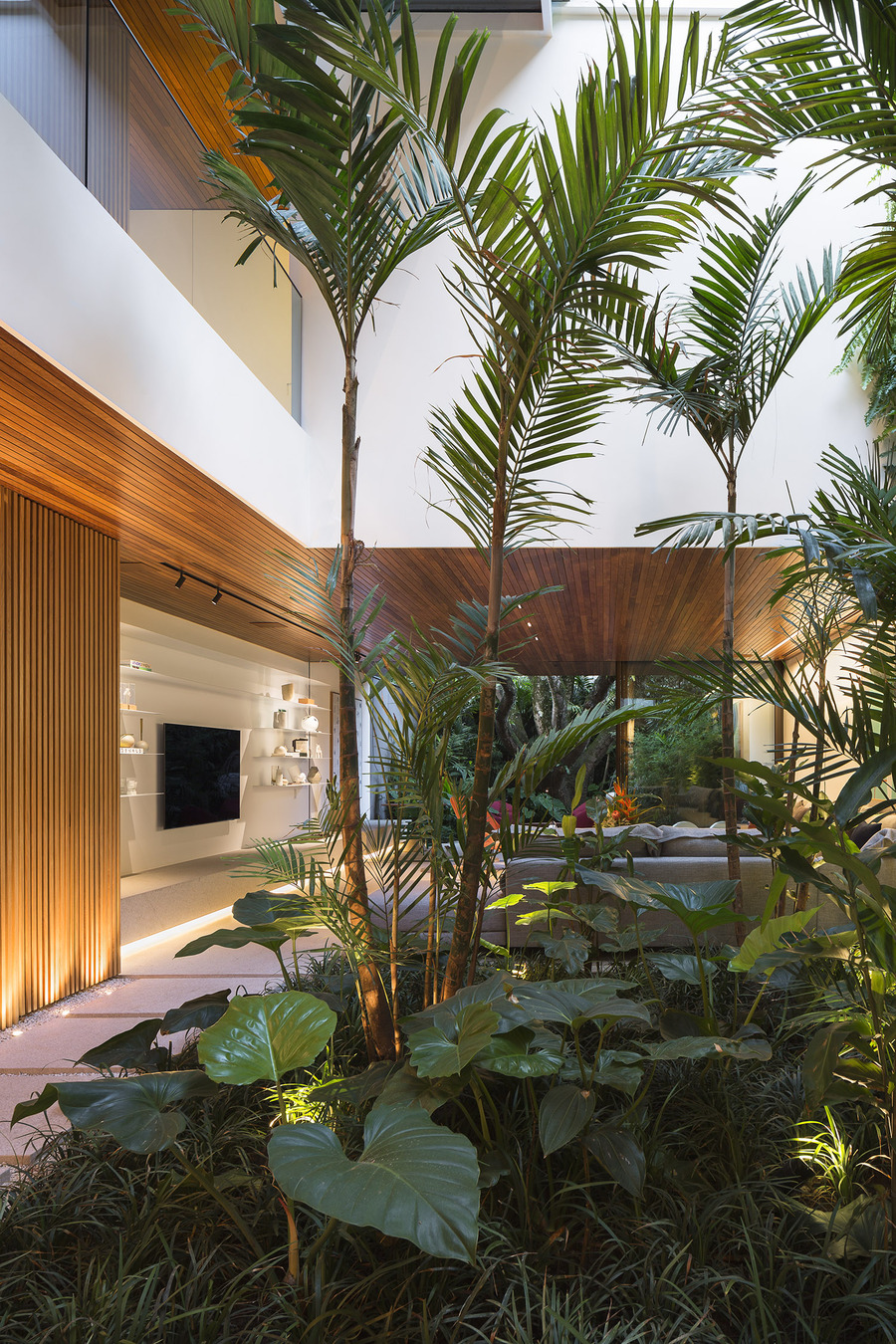
 The residence is developed around a central garden, which creates a spatial dynamic between the floors, as well as bringing natural light and ventilation to the rooms. The social areas are concentrated on the ground floor, connected to another garden at the back of the lot. In this space, the integration of all environments was prioritized, eliminating any barrier that could impede the continuity of the layout, such as the existing frames that isolated the internal garden.
 Right at the entrance, the kitchen is fully integrated with the dining area, but wooden panels allow the space to be isolated if the residents choose this configuration. On the second floor, three suites are arranged around the central void, which also accommodates a work area, a requirement of the residents.
 The house’s rooftop features a gourmet terrace with a solarium and a jacuzzi clad with Indonesian stones. In this area, the landscaping included fruit trees such as jabuticaba, pitanga, lemon, and a vegetable garden.
 Both on the veranda and in the corridor between the dining area and the living room, the flooring was arranged with gravel, enhancing the garden-like atmosphere of these spaces.


Designing Around a Central Garden
The decision to organize Casa RFD around an internal courtyard reflects a long tradition in tropical residential architecture. A central garden acts as a passive climate device, drawing daylight deep into rooms that would otherwise sit in shadow and encouraging cross ventilation as warm air rises and escapes through upper openings. In a humid climate like São Paulo, this strategy reduces reliance on mechanical cooling and keeps interior spaces fresh throughout the day. The void also becomes a visual anchor, allowing residents on the second floor to maintain a sightline to the planting below and to one another across the home.
The Role of Landscape in the Architecture
Collaboration between an architecture studio and a dedicated landscape practice, as seen here with Jacobsen Arquitetura and Rodrigo Oliveira Paisagismo, tends to produce gardens that feel integral rather than decorative. The choice of tropical species and edible plantings such as jabuticaba, pitanga, and lemon ties the rooftop terrace to Brazilian horticultural culture and gives the household a productive outdoor space. Fruit trees and a vegetable garden also support local pollinators and add seasonal change to the elevation, so the building reads differently across the year.
Material Choices and Spatial Flexibility
Several details in the project reward closer reading. The wooden panels that allow the kitchen to be sealed off from the dining area show a flexible approach to open-plan living, letting the family expand or contain the social zone as needed. Gravel flooring on the veranda and in the corridor blurs the threshold between built space and garden, a tactile cue that you are moving through a landscape rather than simply between rooms. Indonesian stone cladding around the rooftop jacuzzi adds texture and connects the wellness area to the broader material palette of the home.
Lessons for Compact Urban Lots
Casa RFD offers transferable ideas for anyone designing a family home on a constrained city plot. Concentrating social functions on the ground floor and stacking private suites above keeps the footprint efficient while preserving privacy. Using the section, the vertical relationship between floors, to bring in light and air is often more effective than widening windows on a tight site. Finally, treating an existing feature such as the mature mango tree as the organizing element rather than an obstacle can give a project both character and a sense of place that new planting alone cannot replicate.






Top Rated Landscape Architecture Schools in the US, Europe, and Beyond
From Harvard GSD and UC Berkeley to Wageningen University in Europe, the...
 Sinan Ozen10 Mins read

Top 10 Landscape Architecture Books Every Modern Designer Should Explore
Landscape architecture combines creativity, ecological science, and human experience. For designers seeking...
 Bahattin Duran6 Mins read

7 Powerful iPad Apps for Modern Landscape Architecture & Garden Design
In 2025, iPad-based workflows have become essential for landscape architects and garden...
Bahattin Duran10 Mins read

The United States’s Most Beautiful Parks and Gardens: Our Essential Guide
Discover the United States’s Most Beautiful Parks and Gardens with expert picks,...
Sinan Ozen4 Mins read


Leave a comment