

Lumion vs Enscape vs Twinmotion: Best Renderer for Architects in 2026
A side-by-side comparison of Lumion, Enscape, and Twinmotion covering pricing tiers, CAD and BIM integration, render output quality, asset libraries, VR support, and hardware requirements, with practical guidance on matching each renderer to specific architectural workflows and firm sizes.
 Elif Ayse Sen15 June 20269 Mins read512
Table of Contents Show
Lumion vs Enscape vs Twinmotion are the three most widely adopted real-time rendering tools in architectural practice today. Lumion is a standalone application built for polished exterior scenes and animations, Enscape is a plugin that renders directly inside your CAD environment, and Twinmotion runs on Unreal Engine with a free tier for firms under $1M in revenue. Each one handles the same job differently, and the best choice depends on your workflow, team size, and budget.
What Sets These Three Renderers Apart?
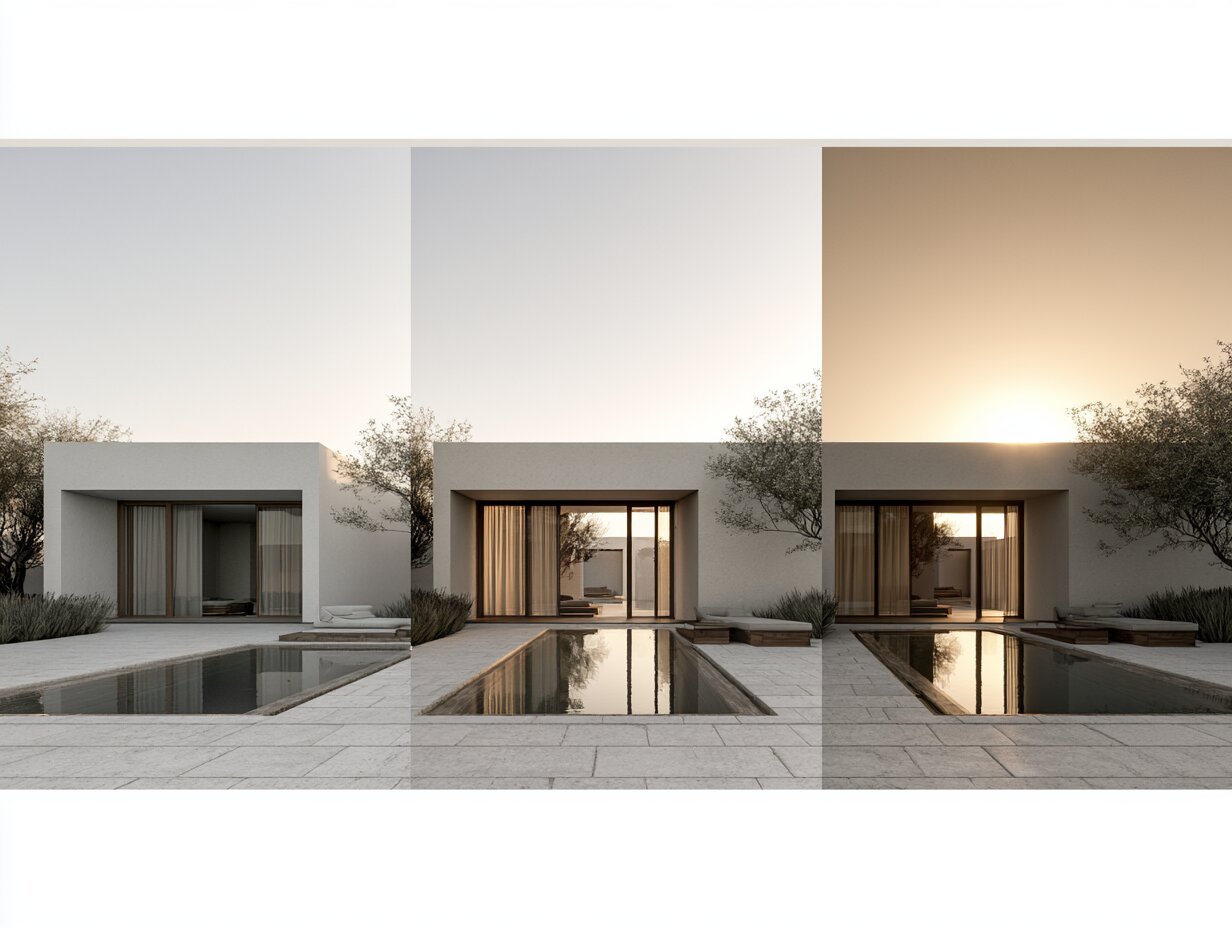

All three of these tools produce real-time architectural visualizations. They all support live model syncing with popular CAD and BIM software. They all ship with built-in asset libraries. And yet, using one for a week feels nothing like using the others. The differences come down to where the software lives in your workflow, how it handles lighting, and what it costs to keep running.
Lumion is a standalone application. You export your 3D model from SketchUp, Revit, Rhino, ArchiCAD, or another supported tool, then import it into Lumion’s own environment. From there, you build your scene using Lumion’s library of over 10,000 assets, apply effects, position cameras, and render. The LiveSync plugin keeps your model linked so changes in the modeling software update in Lumion, but the rendering itself always happens inside the Lumion window. This separation gives you more control over scene composition and cinematic output, but it adds a layer to the process.
Enscape takes the opposite approach. It is a plugin for your modeling software, not a separate application. Click one button inside Revit, SketchUp, Rhino, ArchiCAD, or Vectorworks, and a rendered 3D view opens alongside your design workspace. Every geometry or material change you make appears in the Enscape window within seconds. There is no export step. According to Chaos (Enscape’s developer), the tool is used by 85 of the top 100 architecture firms worldwide, largely because of this zero-friction workflow.
Twinmotion sits between the two. Built on Unreal Engine by Epic Games, it functions as a standalone application but maintains direct sync connections with Revit, SketchUp, Rhino, and ArchiCAD through Datasmith plugins. It benefits from the same rendering technology used in film and game production, which gives it a particular edge in animated walkthroughs and interactive client presentations. The most significant distinction is pricing: Twinmotion is free for firms earning under $1 million annually, with no watermark and no feature restrictions.
How Each Renderer Fits Into an Architectural Workflow
Lumion: Standalone Power for Visual Storytelling
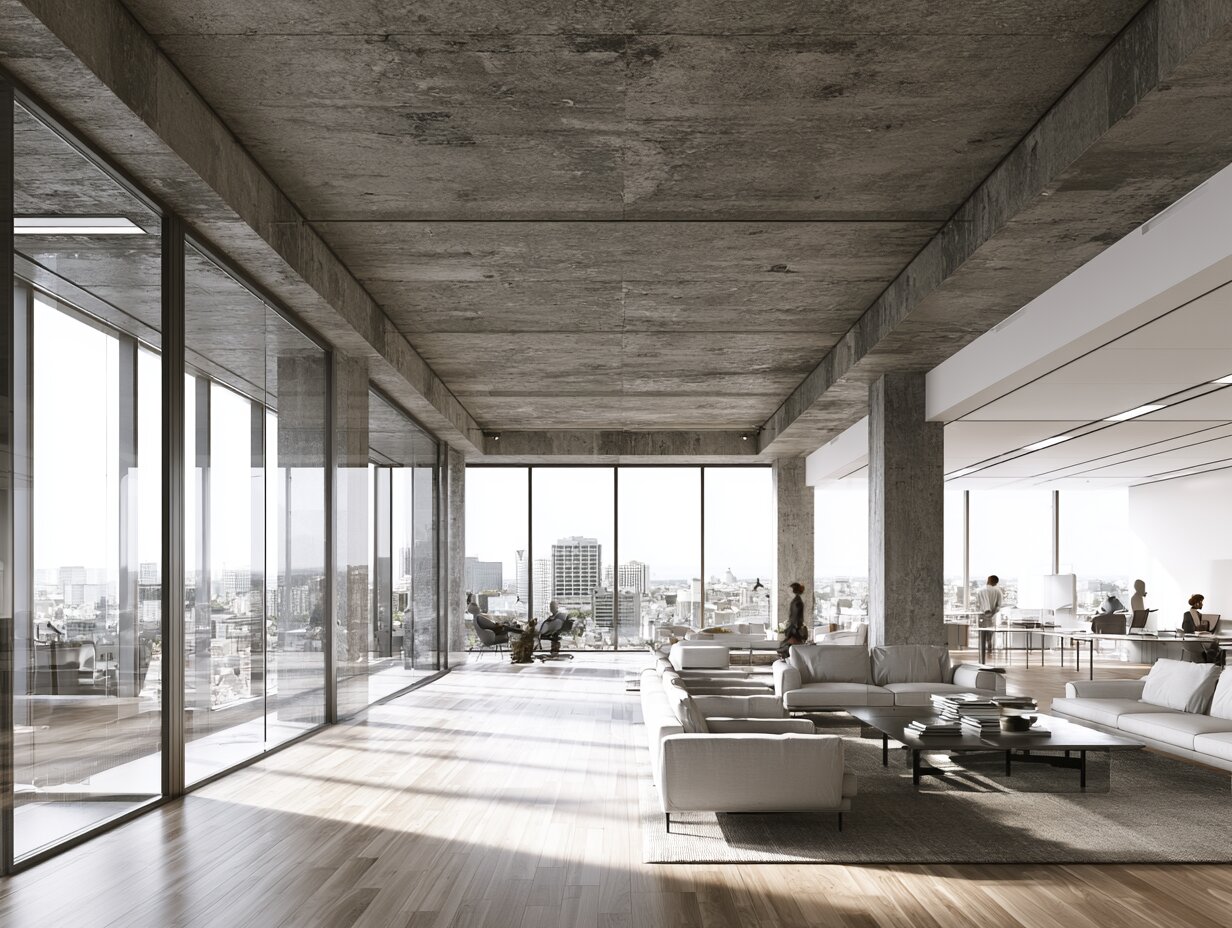
Lumion excels at producing polished, presentation-ready images and videos where the surrounding context matters as much as the building itself. Its asset library is the largest of the three, covering vegetation, people, vehicles, furniture, weather effects, and atmospheric conditions. Lumion Pro 2025 introduced an AI-powered 8K upscaler, ray-traced water and volumetric lighting, and a Scene Inspector for organizing complex scenes. These features make Lumion especially strong for final deliverables: competition panels, client presentations, and marketing materials where visual quality is the primary concern.
The tradeoff is speed during the design phase. Because Lumion is standalone, the feedback loop between a design change and a rendered preview is slower than what you get with a plugin-based tool. If you are iterating on massing studies and need instant visual feedback at every step, Lumion introduces friction that the other two options avoid.
💡 Pro Tip
If you use Lumion primarily with SketchUp, set up LiveSync before you start placing assets. Material assignments made in SketchUp carry over more reliably than those applied in Lumion, which means fewer manual fixes when the model updates. Experienced visualization studios keep a SketchUp template with pre-assigned Lumion-compatible material names to avoid repeated setup on every new project.
Enscape: One-Click Rendering Inside Your CAD Tool
Enscape’s biggest advantage is that you never leave your design environment. Open Revit, click Start, and a rendered view appears. Move a wall, swap a cladding material, or adjust a window size, and the render updates live. This makes Enscape the fastest option for design-phase visualization, where the goal is not a final polished image but quick visual confirmation that a design decision works. It supports Windows and Mac (Mac for SketchUp, Rhino, ArchiCAD, and Vectorworks), and its asset library includes over 4,000 models and a growing PBR material collection.
Enscape also offers one-click VR export. If your firm presents designs in virtual reality during client meetings, this is one of the simplest pipelines available. However, Enscape’s output ceiling is lower than Lumion or Twinmotion for heavily styled hero shots. It produces clean, accurate renderings quickly, but the atmospheric effects, lighting drama, and cinematic camera work that define award-winning visualization are easier to achieve in the other two tools.
⚠️ Common Mistake to Avoid
A frequent mistake when comparing Enscape to Lumion or Twinmotion is judging all three on final image quality alone. Enscape is designed as a design-phase tool, not a post-production engine. Firms that adopt Enscape expecting it to replace a dedicated visualization pipeline are often disappointed, while firms that use it for rapid design iteration and then switch to another tool for final deliverables get the most value from their license.
Twinmotion: Unreal Engine Muscle at a Lower Price
Twinmotion is built on the same engine that powers AAA games and virtual production in film. This gives it two rendering modes: Lumen for real-time global illumination during the design phase, and Path Tracer for noise-free, physically accurate final images. The Path Tracer produces output that rivals offline renderers, though it is currently not available on Mac.
Access to Quixel Megascans, the same photogrammetry-scanned texture library used in Hollywood productions, is included with every Twinmotion license. This gives architects access to thousands of high-resolution materials and environmental assets without additional cost. Twinmotion’s PBR material workflow and free downloadable assets make it particularly strong for landscape architecture, urban design, and masterplan presentations where environmental context is critical.
The learning curve is steeper than Enscape but shallower than Lumion. If your team has any familiarity with Unreal Engine, the transition is straightforward. For teams with no game engine experience, expect a week or two of adjustment before the interface feels natural.
Lumion vs Enscape vs Twinmotion: Feature Comparison

The following table breaks down the key differences across the features that matter most for architectural visualization work.
| Feature | Lumion Pro | Enscape | Twinmotion |
|---|---|---|---|
| Type | Standalone application | Plugin (inside CAD/BIM) | Standalone with live sync |
| Engine | Proprietary | Proprietary (Chaos) | Unreal Engine 5 |
| Supported CAD/BIM Software | SketchUp, Revit, Rhino, ArchiCAD, AutoCAD, Vectorworks, BricsCAD | Revit, SketchUp, Rhino, ArchiCAD, Vectorworks | Revit, SketchUp, Rhino, ArchiCAD (via Datasmith) |
| Platform | Windows only | Windows and Mac | Windows and Mac |
| Asset Library Size | 10,000+ objects, 6,300+ materials | 4,000+ objects, growing PBR library | Quixel Megascans + built-in library |
| Ray Tracing | Ray-traced reflections, water, fog | Real-time ray tracing | Lumen (real-time) + Path Tracer (offline quality) |
| VR Support | Yes (panoramas, VR mode) | Yes (one-click VR walkthrough) | Yes (VR walkthrough, BIM data overlay) |
| Max Output Resolution | 8K (with AI upscaler) | Up to 16K panoramas | Up to 8K (Path Tracer) |
| Animation & Video | Full cinematic animation tools | Basic video walkthroughs | Advanced animation with Unreal Sequencer |
| Annual Cost (Commercial) | $1,149/year (Pro, as of October 2026) | $574.80/year (Solo) | Free under $1M revenue; $445/year above |
🎓 Expert Insight
“Good architecture rendering software is judged on integration with the tools architects actually use, iteration speed, and asset coverage relevant to the built environment. A renderer that lacks a stable plugin for Revit or SketchUp is a non-starter for most firms, regardless of how beautiful its final output is.” — CGarchitect, 2024-25 Architectural Visualization Rendering Engine Survey
This observation from the industry’s largest visualization survey highlights why workflow fit matters more than raw image quality when choosing between these three tools. The right renderer is the one that fits how your team already works.
Render Quality: How Do the Results Stack Up?
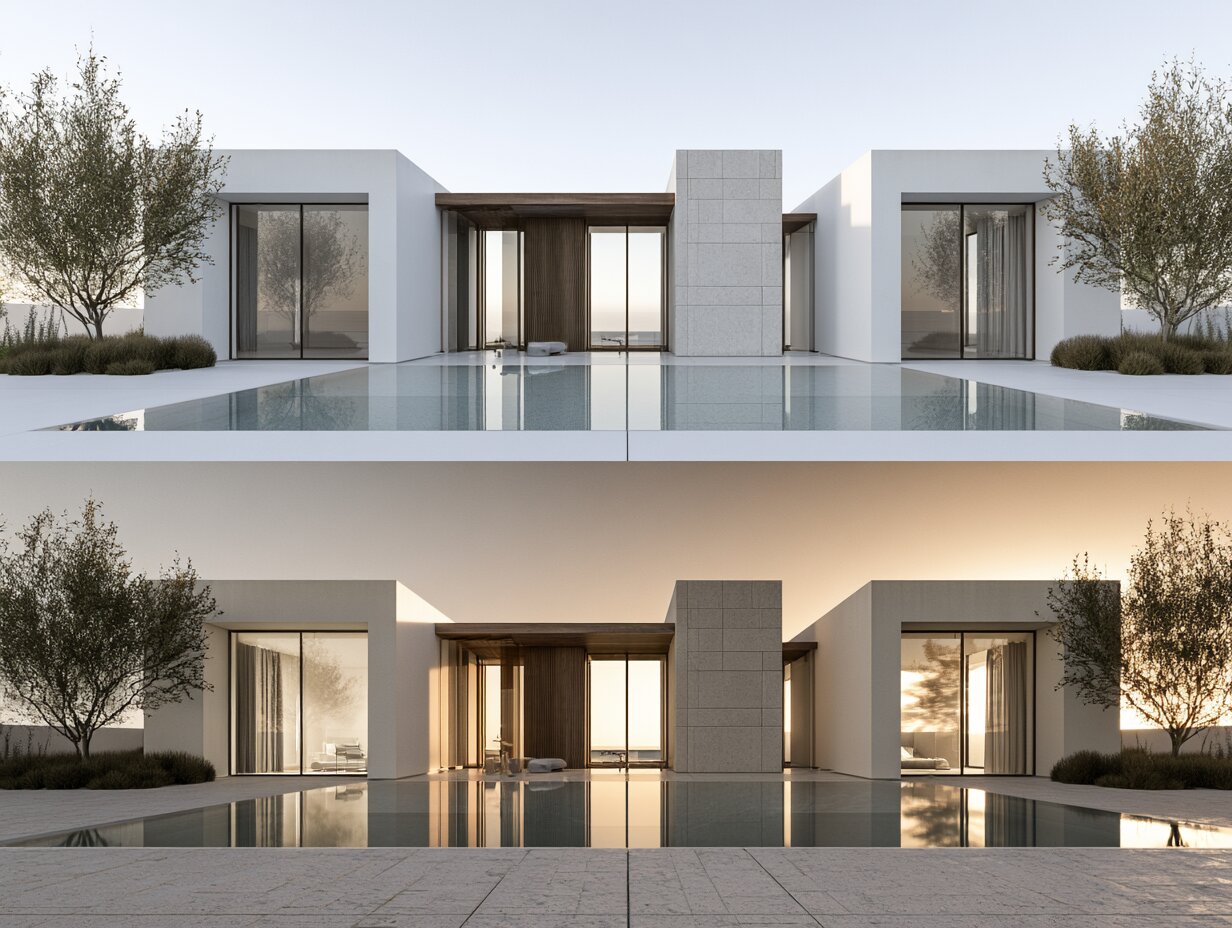
In a twinmotion vs lumion vs enscape comparison focused purely on output quality, each tool has a distinct character. Lumion produces the most stylistically controlled results. Its effects pipeline, including volumetric fog, lens flare, precipitation overlays, and depth of field, allows you to build a specific mood into every image. Exterior scenes with dramatic skies and lush vegetation are where Lumion has historically been strongest, and the 2025 updates with ray-traced water and volumetric lighting widened that lead.
Enscape produces clean, accurate images that closely represent what the building will actually look like under normal lighting conditions. The output style is professional and neutral, which makes it well suited for design review meetings, planning submissions, and internal presentations where accuracy matters more than atmosphere. The lack of heavy post-processing options is a limitation for marketing-quality visuals, but it is a strength for documentation-level renderings.
Twinmotion’s Path Tracer, available since version 2023, produces the most physically accurate results of the three when given enough render time. The Lumen global illumination system handles real-time lighting convincingly enough for design iteration, and the jump to Path Tracer for final output gives you near-offline quality without switching to a separate application. For firms working on projects that need both quick design feedback and polished final deliverables, this dual-mode approach is a strong selling point.
💡 Pro Tip
Before committing to any of these three tools, render the same project in all three using their free trials. Use a mid-complexity model with interior and exterior views, mixed materials, and at least one glazed facade. This 15-minute test on a real file reveals differences in material handling, lighting response, and workflow speed that no feature list can communicate.
How Much Does Each Renderer Cost?
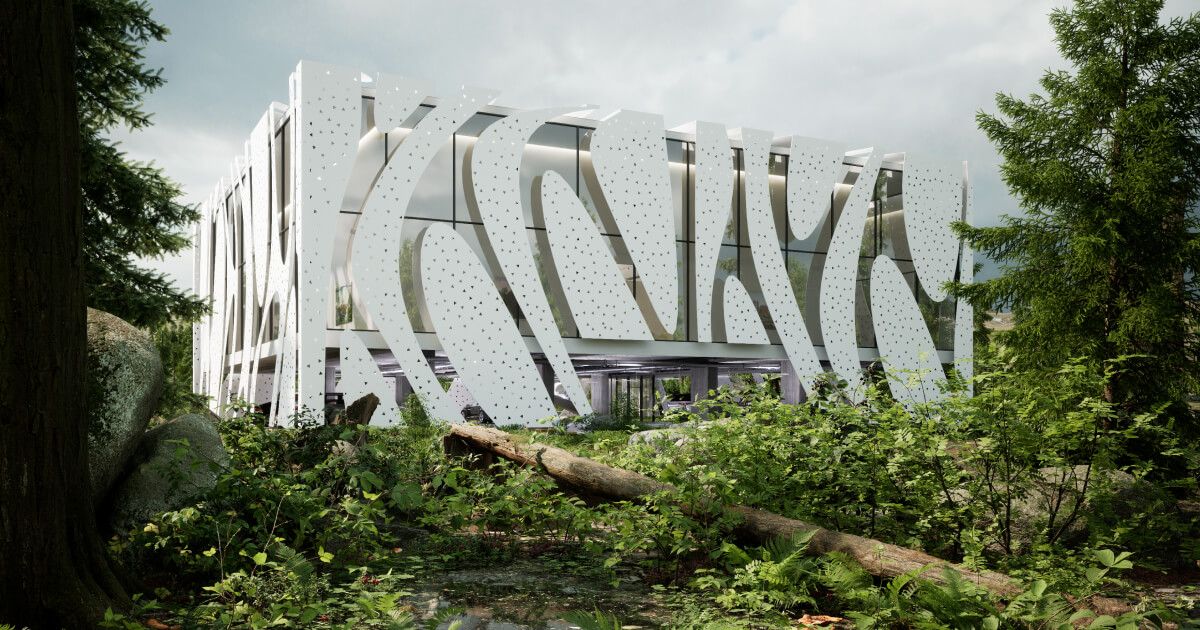
Pricing is one of the sharpest dividers in the enscape vs lumion vs twinmotion comparison, and it has changed significantly across all three tools in the past two years.
Lumion Pro costs $1,149 per year for a named-user subscription and $1,499 per year for a floating license, as of October 2026. Lumion Studio, which bundled Pro with a floating license and Lumion View (a lightweight SketchUp plugin), was discontinued on July 27, 2026. There is no perpetual license option for new users. Students and educators get free access, though renders from the educational edition carry a watermark. Lumion is the most expensive option of the three for a single commercial seat.
Enscape Solo is priced at $574.80 per year for a named-user license. Enscape Premium, which adds the Veras AI integration, costs $670.80 per year as of October 2026. Floating licenses for Premium run $994.80 per year, which is useful for firms where multiple team members share access. Chaos discontinued perpetual licenses, so subscription is the only path.
Twinmotion is free for individuals and companies with annual gross revenue under $1 million. This is not a trial, not a limited edition, and not watermarked. It is the full application with no feature restrictions. For firms above that threshold, a seat costs $445 per year. Students and educators also have free access regardless of institutional revenue. This pricing structure makes Twinmotion the clear winner for small practices, freelancers, and architecture students who need professional-quality rendering at zero cost.
🔢 Quick Numbers
- 56% of architectural visualization professionals now integrate AI tools into their rendering workflow (CGarchitect 2024-25 Survey)
- Enscape is used by 85 of the top 100 architecture firms globally (Chaos, 2024)
- Lumion Pro supports over 10,000 built-in assets and 6,300+ materials (Lumion, 2025)
- Twinmotion is free for firms under $1M in annual revenue, with no feature or resolution limits (Epic Games, 2024)
Software pricing referenced above is approximate and may vary by region and licensing model. Always verify current pricing directly with the vendor before purchasing.
Which Renderer Is Best for Your Practice?

The best rendering software for architects is not the one with the highest image quality or the longest feature list. It is the one that fits your existing workflow, handles your typical project types, and stays within your budget. Here is how to match each tool to specific practice types.
Best for Small Firms and Freelancers
Twinmotion is the strongest option for small firms and independent practitioners. The free commercial license removes a line item from your overhead entirely, and the output quality is high enough for client presentations, planning applications, and portfolio work. If your revenue exceeds $1 million, Enscape Solo at $574.80 per year offers the lowest paid entry point with the fastest workflow for design-phase rendering.
Best for BIM-Heavy Studios
If your practice is centered on Revit and BIM coordination, Enscape is the most natural fit. The plugin architecture means your rendering workflow lives inside the same environment as your documentation and coordination work. Changes to BIM data, materials, or geometry appear in the render view immediately. No other tool in this real-time rendering software comparison matches Enscape’s depth of Revit integration.
Best for Visualization Studios and Competition Work
Lumion remains the go-to choice for firms that produce high-end architectural renderings as a primary deliverable. Its asset library, atmospheric effects, and cinematic animation tools give visualization specialists the most control over the final image. For competition entries and marketing materials where every shadow angle and lens effect matters, Lumion’s standalone workflow is an advantage rather than a limitation.
Best for Large-Scale Masterplans and Landscape
Twinmotion’s Unreal Engine foundation and access to Quixel Megascans give it an edge for landscape architecture, urban design, and masterplan visualization. The engine handles large, open scenes with dense vegetation and complex terrain more efficiently than the other two tools. Its interactive presentation mode, where clients can walk through a design in real time while the software adjusts lighting and atmosphere, is especially effective for projects where spatial experience matters as much as the image.
✅ Key Takeaways
- Lumion is a standalone renderer with the largest asset library and the strongest cinematic tools, priced at $1,149/year for Pro as of October 2026.
- Enscape is a CAD plugin that renders directly inside Revit, SketchUp, Rhino, ArchiCAD, and Vectorworks, starting at $574.80/year.
- Twinmotion is built on Unreal Engine 5 and is completely free for firms earning under $1 million annually.
- For BIM-centric workflows, Enscape’s one-click integration with Revit is difficult to match.
- Twinmotion’s Path Tracer produces near-offline render quality without leaving the real-time environment.
- The right choice depends on whether you prioritize workflow speed (Enscape), visual storytelling (Lumion), or budget flexibility (Twinmotion).
Final Thoughts
The lumion vs enscape vs twinmotion decision is not about which tool produces the “best” rendering. All three are capable of professional-quality output. The real question is where rendering fits in your design process. If you need instant visual feedback without leaving your modeling tool, Enscape is the answer. If you need cinematic control and a massive asset library for hero shots, Lumion earns its higher price. And if you need a capable, full-featured renderer without the budget to match, Twinmotion’s free tier is hard to argue against.
Many firms end up using two of these tools: one for design iteration and another for final presentations. That is a valid strategy, and understanding the strengths covered in this comparison should help you pick the right pair. For a broader look at how these three fit alongside offline renderers like V-Ray and Corona, see our full guide to 3D rendering software for architects.







From SketchUp View to Client-Ready Render: A Hands-On Look at Vizbase
Vizbase co-founder Mikus Zarāns shows how the browser-based AI renderer turns SketchUp...
 illustrarch Editoral Team4 Mins read
Notion Alternatives for Architects: 7 Tools That Fit Studio Work
Notion works until a studio needs fee tracking, phase budgets and timesheets....
 Furkan Sen7 Mins read

Why Every Practice Ends Up With Five Versions of the Same Revit Family
Let’s learn why Revit family libraries accumulate duplicates, break schedules and slow...
illustrarch Editoral Team5 Mins read
Visualizing Renovation Projects From Photographs: A Workflow for Existing-Building Work
Photo-based visualization turns a photograph of a building that already exists into...
illustrarch Editoral Team7 Mins read


Leave a comment