

Re-Imagined Relics
Re-Imagined Relics transforms a Brutalist structure into adaptable living spaces, emphasizing the potential of adaptive reuse to redefine architectural meaning and function.
 illustrarch Editoral Team24 October 20192 Mins read389


Re-Imagined Relics asks a quiet but radical question: what if a building meant nothing, so that the people who use it could decide what it means? Conceived in 2019 by architect Suyash S, the project takes a Brutalist relic and adapts its heavy, weathered volumes into living spaces, then crowns them with a sinusoidal lattice roof that reads as the next chapter in the structure’s life.

The starting point is an honest observation. Deserted spaces and decaying walls are some of the greatest storytellers, because they record the passage of time. The doctrine that “form follows function” has guided builders for more than a century, yet even a perfectly functioning building can find itself crumbling under declining relevance. Suyash S treats that decline not as failure but as opportunity, allowing a once-rigid structure to loosen its grip on a single fixed purpose.
Adaptive Reuse and the Afterlife of Brutalism
Working with an existing concrete shell places this project firmly within the tradition of adaptive reuse, where designers extend the life of a structure rather than demolish and rebuild. That approach carries real weight today, since reusing the embodied carbon already locked into concrete is often kinder to the planet than starting over. The challenge is practical as much as poetic. Existing load paths, fixed openings, and dense material have to be respected even as new uses are introduced, so the architect must read the old building carefully before adding anything.
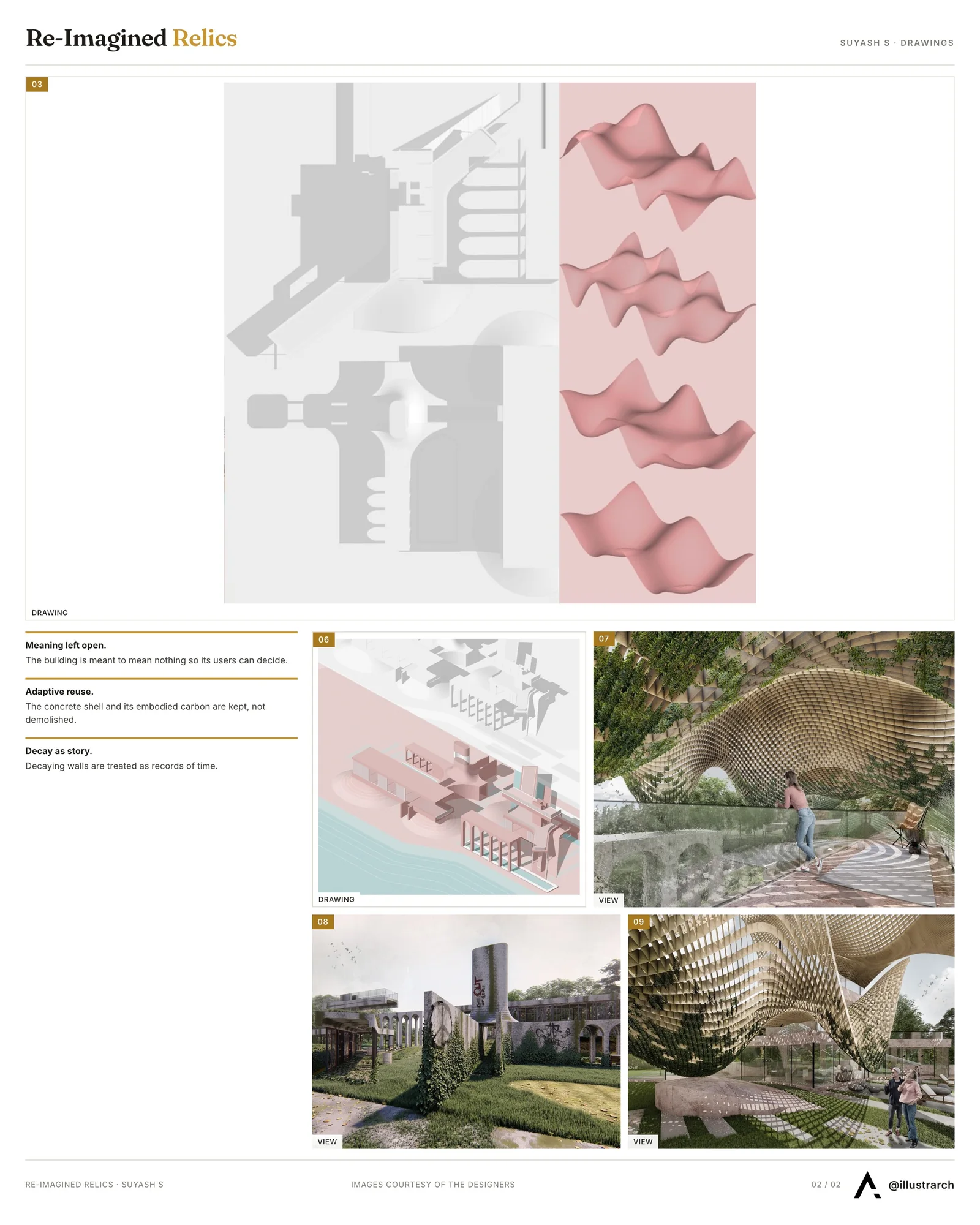
Brutalist architecture is an unusually generous host for this kind of work. Its raw concrete surfaces, exposed structure, and monumental volumes age into something sculptural, and they accept new insertions without losing their character. By converting these volumes into homes, the design tests whether a style once associated with institutions and monuments can hold the intimacy of daily domestic life.
The sinusoidal lattice roof is where the idea becomes visible. Spanning across the brutalist masses, its rolling geometry contrasts with the solid blocks below and suggests motion against permanence. The dialogue also turns on material, since the heavy reinforced concrete of the original shell meets the lightness of the new span. For Suyash S this contrast is the point, an interpretation of how the evolution of function can generate a democratic space, one whose meaning is not handed down but built up by the people who gather under it. Read this way, the relic is less a ruin to mourn than a foundation waiting to be reinhabited.



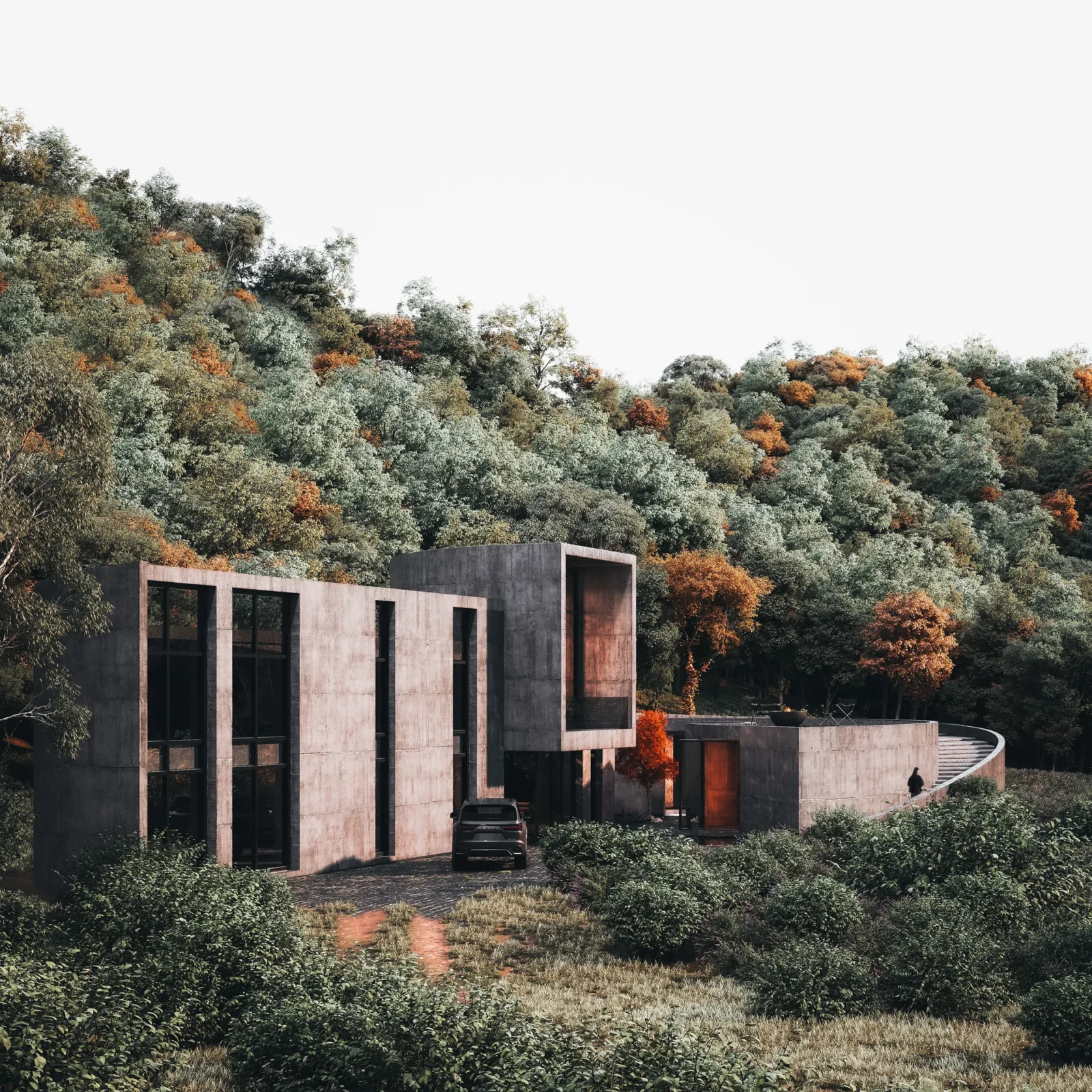
Savan House by Nobico Studio
Savan House is Nobico Studio's unbuilt concept for a forested hillside in...
illustrarch Editoral Team3 Mins read

Renaatus Irumathi
Renaatus Irumathi Residence features 69 spacious apartments designed with contemporary aesthetics, maximizing...
illustrarch Editoral Team2 Mins read
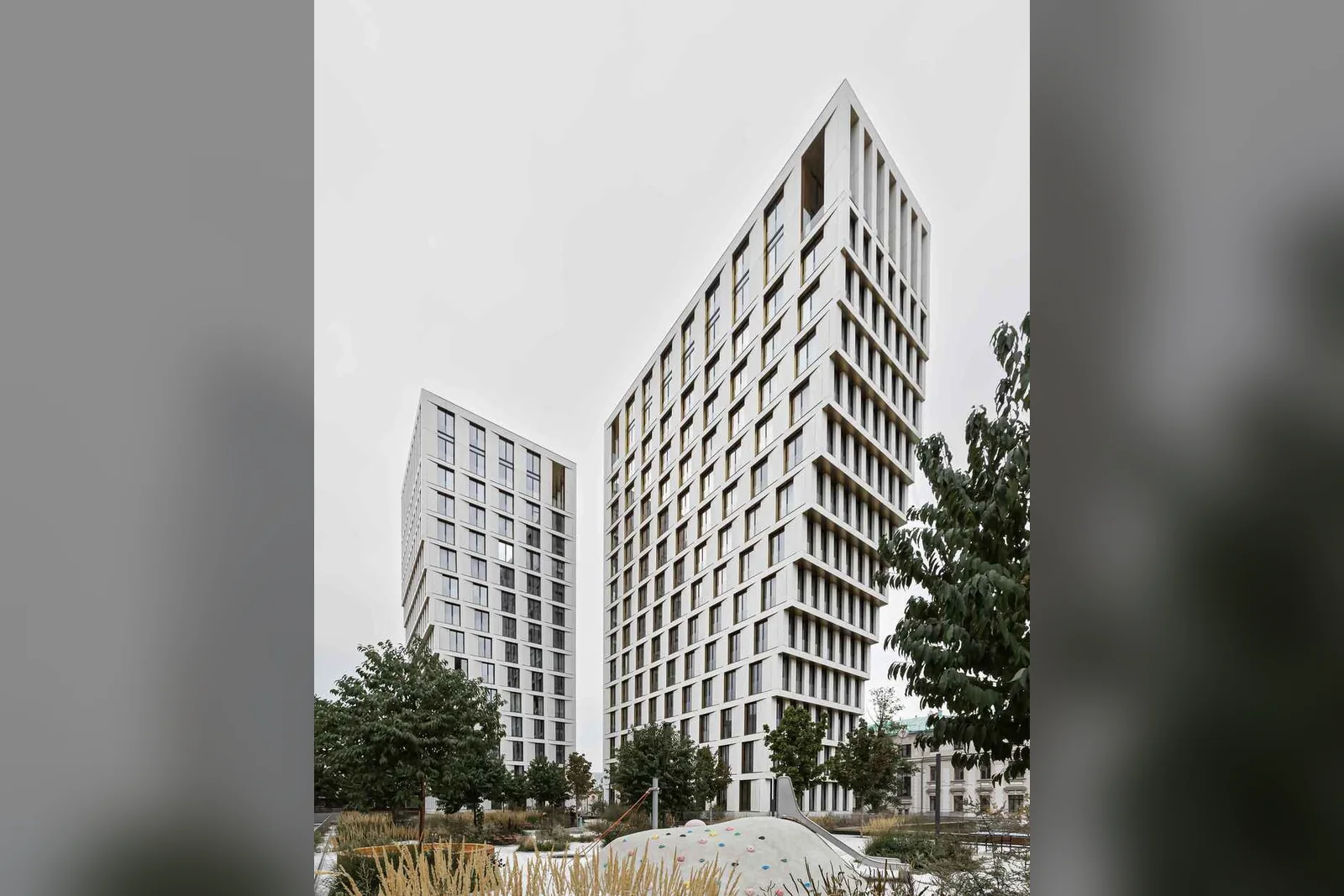
White Khamovniki
White Khamovniki is a residential tower project in Moscow that combines urban...
illustrarch Editoral Team1 Mins read
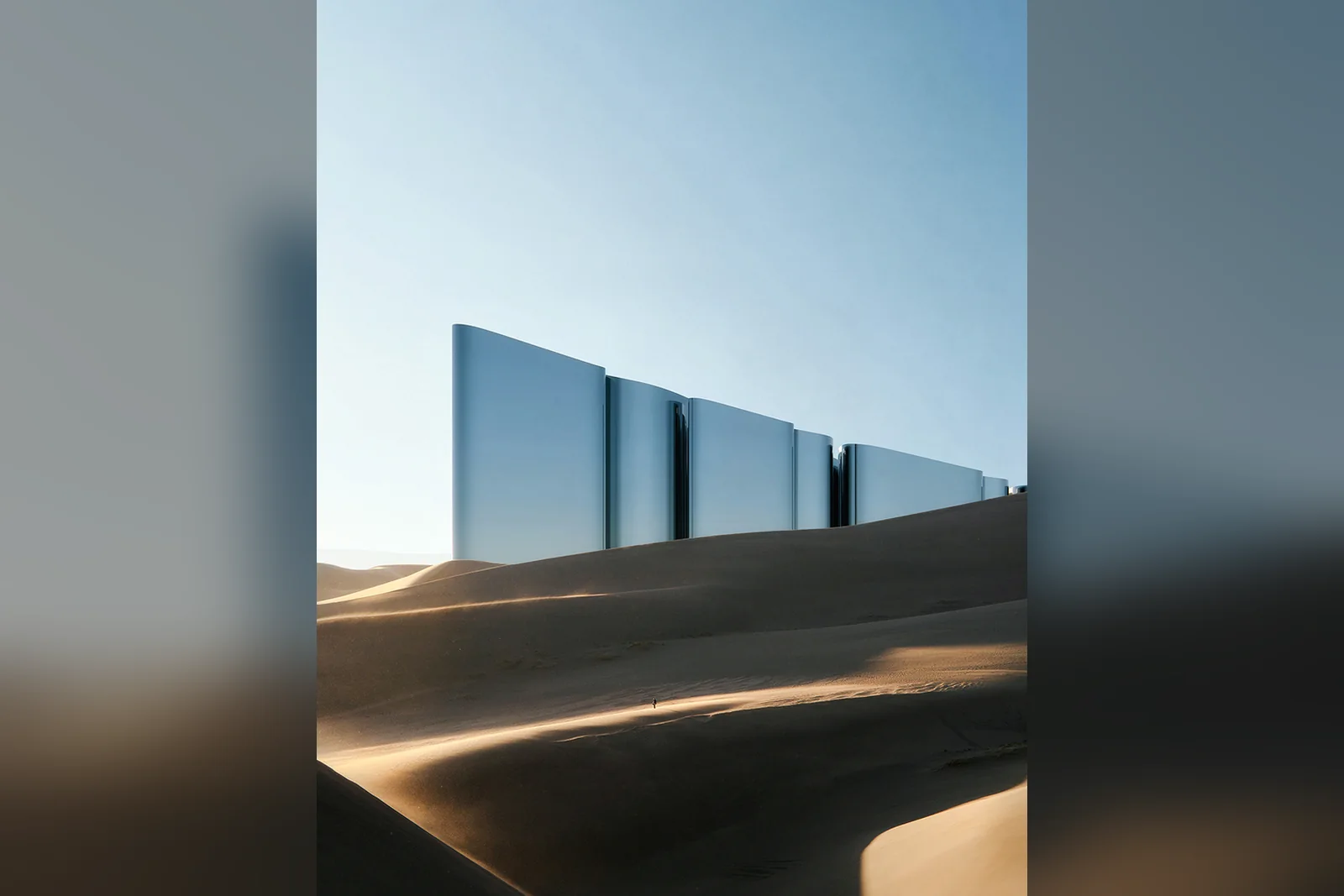
Millennium Horizon
Millennium Horizon is an innovative architectural project in the UAE that uses...
illustrarch Editoral Team2 Mins read


Leave a comment