

The Most Iconic Houses Designed by World-Famous Architects
Seven of the most iconic houses designed by world-famous architects, from Frank Lloyd Wright's Fallingwater to Tadao Ando's Row House in Sumiyoshi. Each entry covers the design story, structural choices, and lasting influence on residential architecture.
 Sinan Ozen13 June 20266 Mins read246
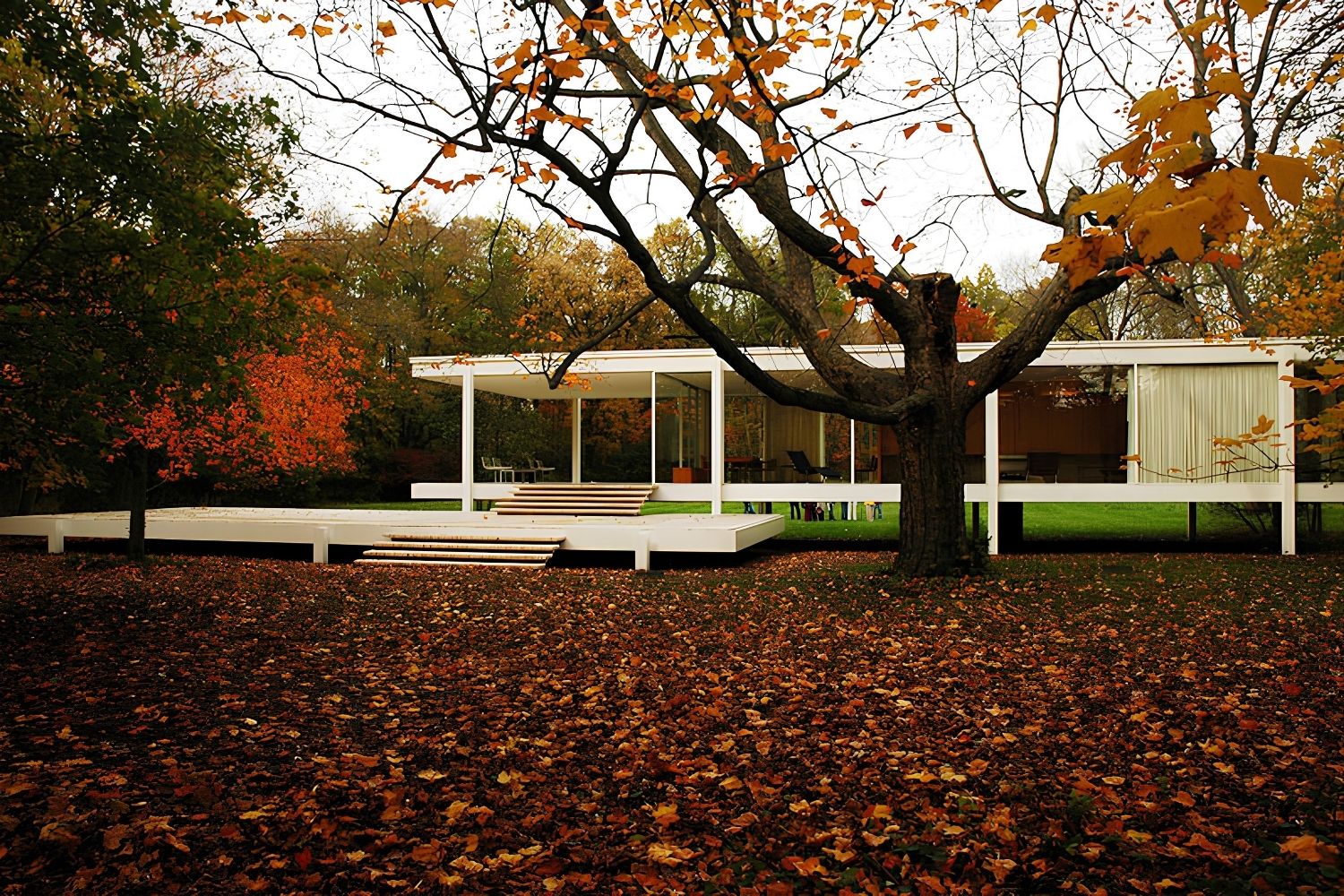
Table of Contents Show
Iconic houses designed by world-famous architects are more than private residences. They are built arguments for how people should live, tested at full scale in steel, glass, concrete, and stone. The seven houses on this list each introduced a structural or spatial idea that went on to shape entire movements in residential architecture.
Some of the most studied buildings in the world are not museums or skyscrapers. They are houses. A handful of residential projects, built between the 1920s and the 1970s, became reference points that architecture students, practicing designers, and historians return to again and again. Each one was shaped by a specific architect’s philosophy, and each one challenged the assumptions of its era about what a home could be. Below are seven iconic houses by famous architects that still define the conversation around residential design.
Fallingwater by Frank Lloyd Wright (1935)
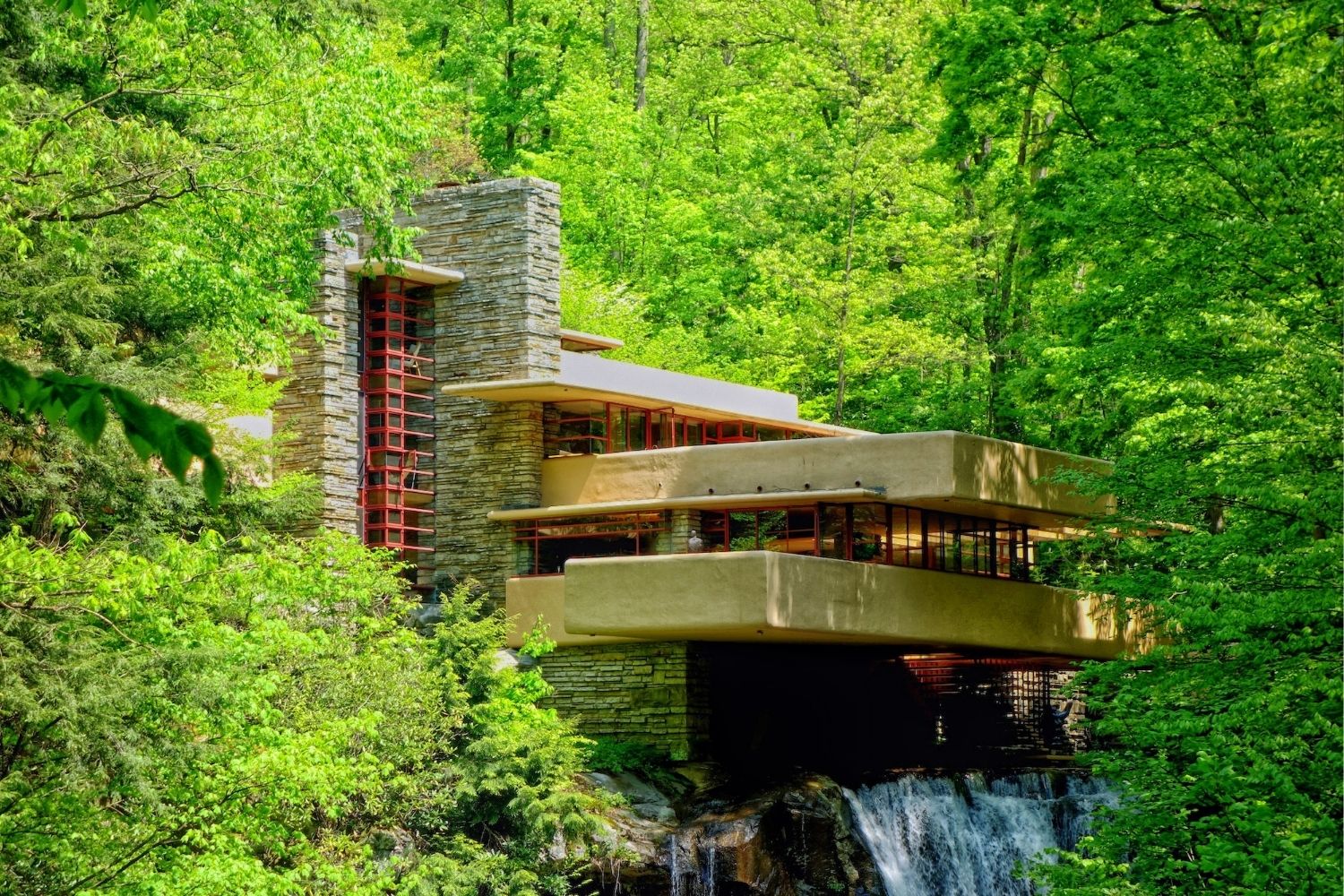
Fallingwater sits over a waterfall on Bear Run in Mill Run, Pennsylvania, and it remains one of the most recognized buildings on the planet. Frank Lloyd Wright designed it as a weekend retreat for the Kaufmann family, owners of a Pittsburgh department store. Rather than placing the house across the stream with a view of the falls, Wright anchored the structure directly above the water using cantilevered reinforced concrete terraces. Native sandstone walls rise from the site’s existing boulders, and the sound of falling water fills every room.
The American Institute of Architects once named Fallingwater the best all-time work of American architecture. Wright’s idea of organic architecture reached its clearest expression here: the building appears to grow from the rock ledge rather than sit on top of it. In 2019, Fallingwater was added to the UNESCO World Heritage List as part of a group of eight Wright-designed structures.
📌 Did You Know?
Wright reportedly designed Fallingwater’s floor plans in just two hours when Edgar Kaufmann made a surprise visit to Taliesin in September 1935. According to apprentices present at the time, Wright had done no preliminary sketches before that morning, yet produced a near-complete plan that closely matched the final built version.
Villa Savoye by Le Corbusier (1931)
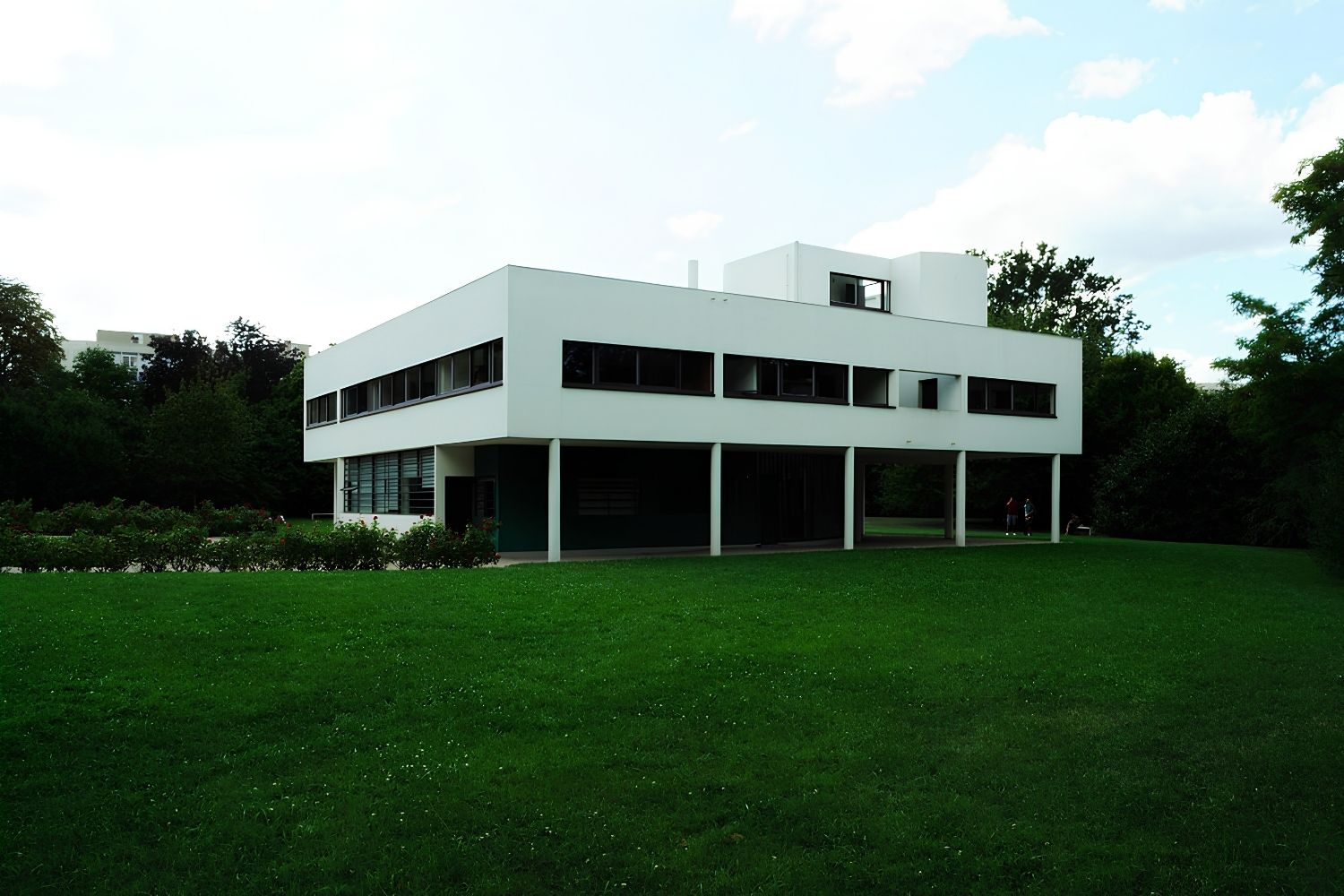
Villa Savoye, located in Poissy on the outskirts of Paris, is the most direct demonstration of Le Corbusier’s Five Points of Architecture. Thin concrete columns (pilotis) raise the white box off the ground. Ribbon windows wrap the facades. The roof doubles as a garden terrace. Interior walls move freely from the structural grid, and the facade is no longer load-bearing.
Designed as a weekend house for the Savoye family, the villa was rarely used and fell into disrepair by the 1950s. It nearly faced demolition before being classified as a French historic monument in 1965. Today it is a UNESCO World Heritage Site and one of the most visited modernist buildings in the world. Le Corbusier’s statement that “the house is a machine for living” finds its purest architectural form in Villa Savoye’s ramp, which creates a continuous promenade through the interior from ground to rooftop.
The Glass House by Philip Johnson (1949)
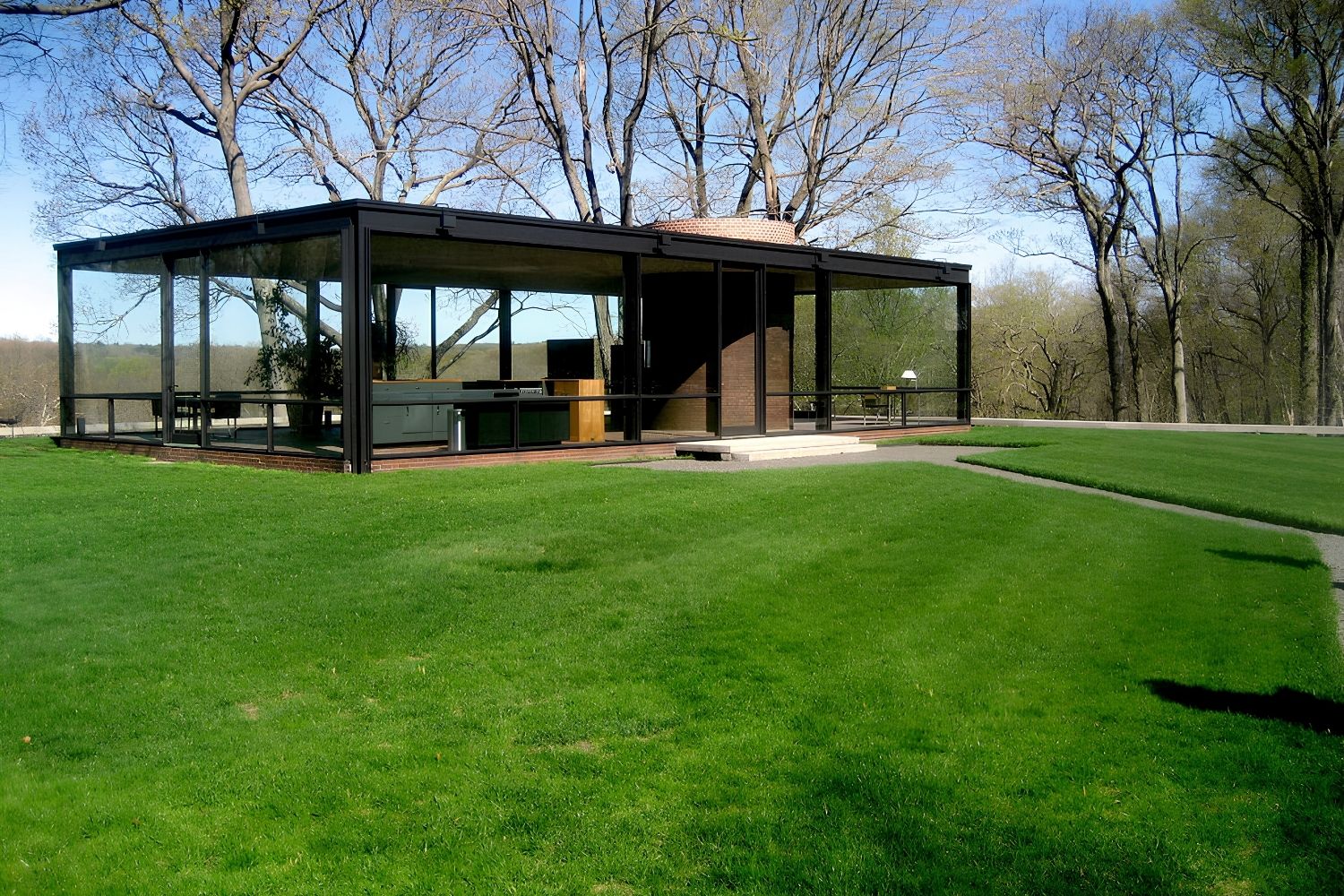
Philip Johnson built his Glass House in New Canaan, Connecticut, as his own weekend residence, and he lived there for nearly six decades. The structure is a simple 32-by-56-foot rectangle with floor-to-ceiling glass walls on all four sides, supported by a black-painted steel frame. The only enclosed space is a brick cylinder that contains the bathroom.
Johnson openly acknowledged the influence of Mies van der Rohe’s Farnsworth House, which was still under construction at the time. But while Mies treated transparency as a philosophical ideal, Johnson turned it into a theatrical experience: the house and its 49-acre estate became a stage for art, landscape, and light. The Glass House is now a site of the National Trust for Historic Preservation and draws thousands of visitors each year.
Farnsworth House by Mies van der Rohe (1951)
The Farnsworth House in Plano, Illinois, pushed residential architecture to an extreme: a single room enclosed entirely in floor-to-ceiling glass, raised above the Fox River floodplain on white-painted steel columns. Mies van der Rohe designed it as a weekend retreat for Dr. Edith Farnsworth, and the project became both a landmark and a cautionary tale.
The house’s beauty is undeniable. Eight wide-flange steel columns support two horizontal planes (floor and roof), and the glass walls offer uninterrupted views of the wooded site in every direction. But the relationship between architect and client collapsed over cost overruns, leading to a bitter lawsuit. Dr. Farnsworth also found the house impractical: it lacked privacy, had no bug screens, and overheated badly in summer. Despite these problems, the Edith Farnsworth House remains one of the most important works of 20th-century architecture and draws roughly 10,000 visitors annually.
💡 Pro Tip
If you are studying famous architect houses for a studio project, pay close attention to what went wrong as well as what worked. The Farnsworth House teaches as much about thermal comfort, client relationships, and livability as it does about proportion and transparency. The most useful lessons in iconic residential architecture often come from the gap between design intent and daily experience.
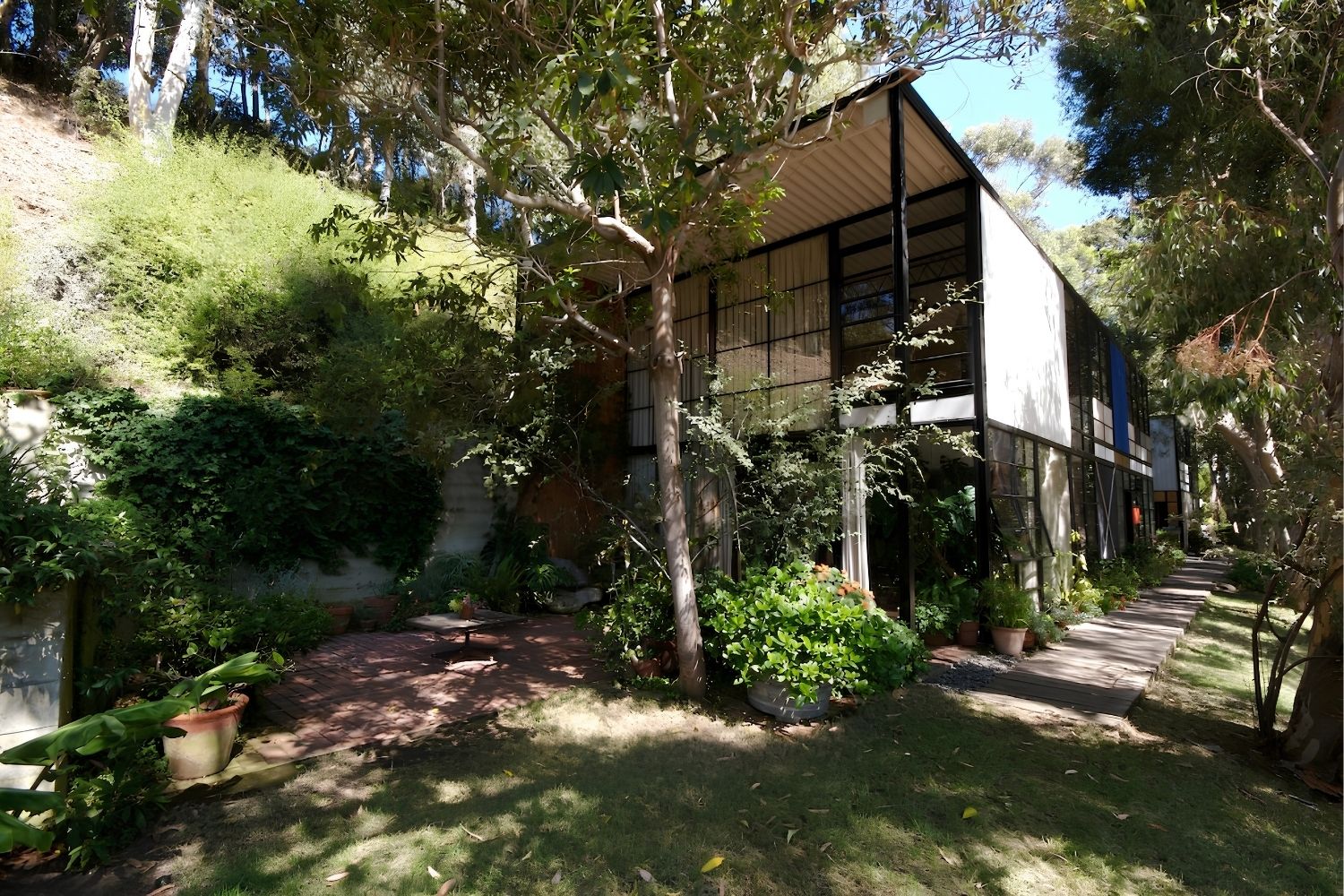
Eames House (Case Study House #8) by Charles and Ray Eames (1949)
Charles and Ray Eames built their home in Pacific Palisades, California, using off-the-shelf industrial steel framing, factory-standard glass panels, and a handful of catalog components. The house was part of Arts & Architecture magazine’s Case Study House program, which challenged architects to design modern, affordable homes using mass-produced materials. The entire structural steel frame was erected in just 16 hours.
What sets the Eames House apart from other mid-century residential architecture is its warmth. The colorful panels, eucalyptus trees pressing against the windows, and the lived-in quality of the interiors made it feel personal rather than clinical. The Eameses worked and lived in the house for the rest of their lives, and it has since become one of the most celebrated examples of post-war residential design. The Eames House was designated a National Historic Landmark in 2006.
Casa Malaparte by Adalberto Libera and Curzio Malaparte (1942)
Perched on a narrow cliff on the island of Capri, Casa Malaparte is one of the strangest and most photogenic houses ever built. Its authorship is disputed: architect Adalberto Libera drew the initial plans, but the writer Curzio Malaparte made radical changes during construction, including the famous wedge-shaped staircase that climbs the roof like a ceremonial ramp. The house appeared in Jean-Luc Godard’s 1963 film Contempt, which cemented its place in popular culture.
The building’s rust-red walls, flat rooftop terrace, and dramatic site on the Punta Massullo cliff make it feel more like a sculpture than a residence. There is no formal entrance; visitors approach by a narrow footpath along the rocks. Casa Malaparte is privately owned and not open to the public, which has only added to its mystique among architects and filmmakers.
Row House in Sumiyoshi by Tadao Ando (1976)
Tadao Ando’s Row House in Sumiyoshi (Azuma House) in Osaka occupies the footprint of a single traditional Japanese row house, just 3.3 meters wide. Ando replaced the existing timber structure with poured-in-place concrete and divided the narrow volume into three sections: two enclosed rooms separated by an open-air courtyard. To move from the bedroom to the living area, residents must walk through the rain.
This design choice was deliberate. Ando wanted to force a daily confrontation with weather and natural light, even in the middle of a dense urban neighborhood. The project won the Architectural Institute of Japan Prize in 1979, launching Ando’s international career. The Row House remains a powerful counterpoint to the glass-and-steel transparency of its Western counterparts: it proves that iconic residential architecture can emerge from extreme constraint rather than generous budgets.
🔢 Quick Numbers
- Fallingwater receives over 160,000 visitors per year (Western Pennsylvania Conservancy, 2024)
- The Eames House steel frame was erected in 16 hours using standard catalog parts (Eames Foundation)
- Ando’s Row House measures just 3.3 meters wide and 14.1 meters deep (Architectural Institute of Japan)
- Villa Savoye was designated a UNESCO World Heritage Site in 2016, one of 17 Le Corbusier works on the list (UNESCO)

Video: Inside the Homes of Famous Architects
This short documentary from the This House channel walks through the private residences of Frank Lloyd Wright, Philip Johnson, Richard Neutra, and Charles and Ray Eames, showing how each architect tested ideas at home before applying them to larger commissions.
The Bigger Picture
Every house on this list started as a private commission or personal experiment. None were intended as public monuments. Yet each one ended up rewriting the rules for how architects think about walls, structure, site, and the relationship between a building and the ground it sits on. The fact that a 3.3-meter-wide concrete box in Osaka belongs on the same list as a cantilevered villa over a Pennsylvania waterfall suggests that great residential architecture is less about resources and more about the clarity of a single, stubbornly pursued idea.






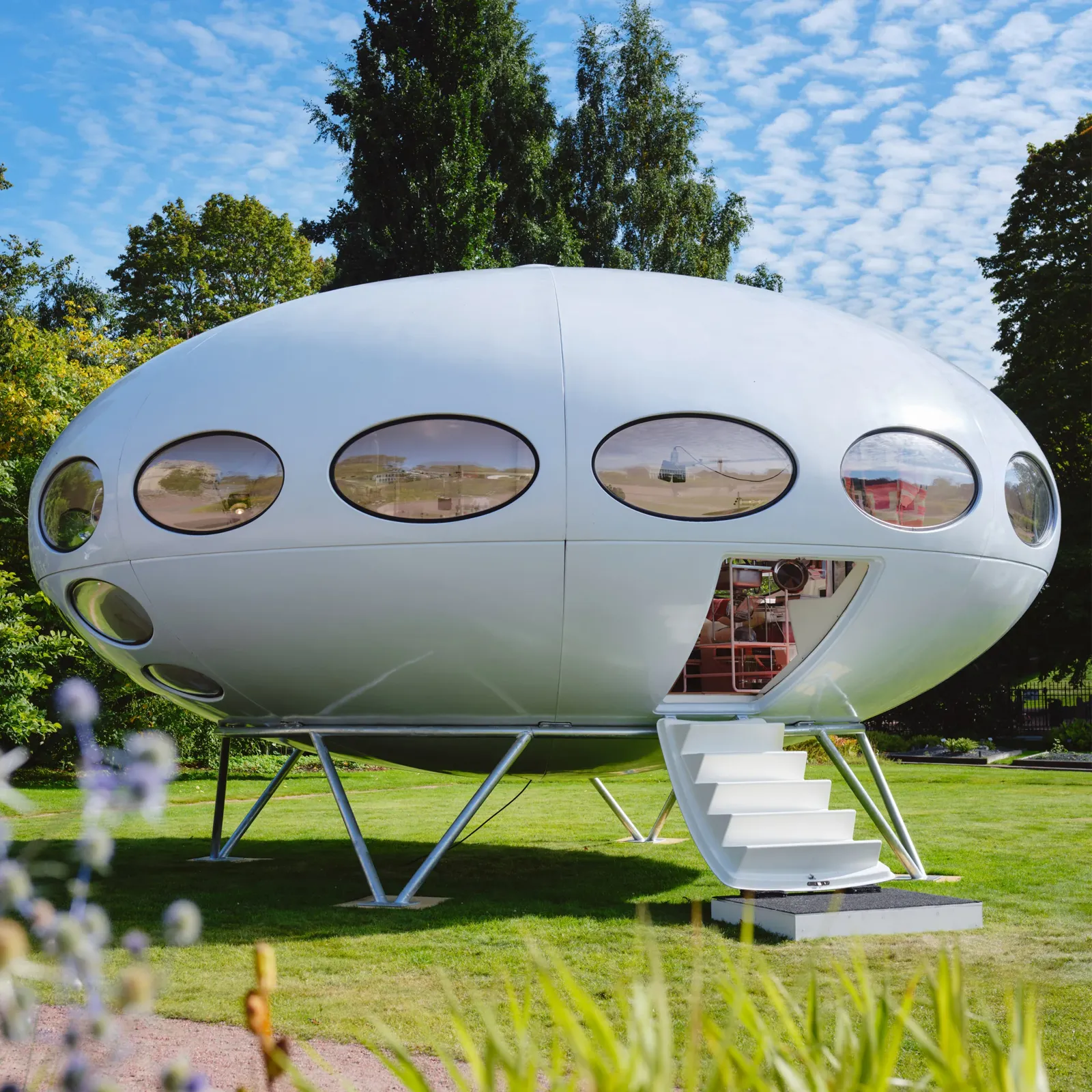
Futuro House Production Revived in Finland After Decades-Long Hiatus
A Facebook listing for abandoned moulds led to the first new Futuro...
 illustrarch Editoral Team3 Mins read

Building Your Dream Home in NSW: What You Should Know About Montgomery Homes
Montgomery Homes has been building across Sydney, Newcastle, the Hunter, Wollongong and...
illustrarch Editoral Team4 Mins read
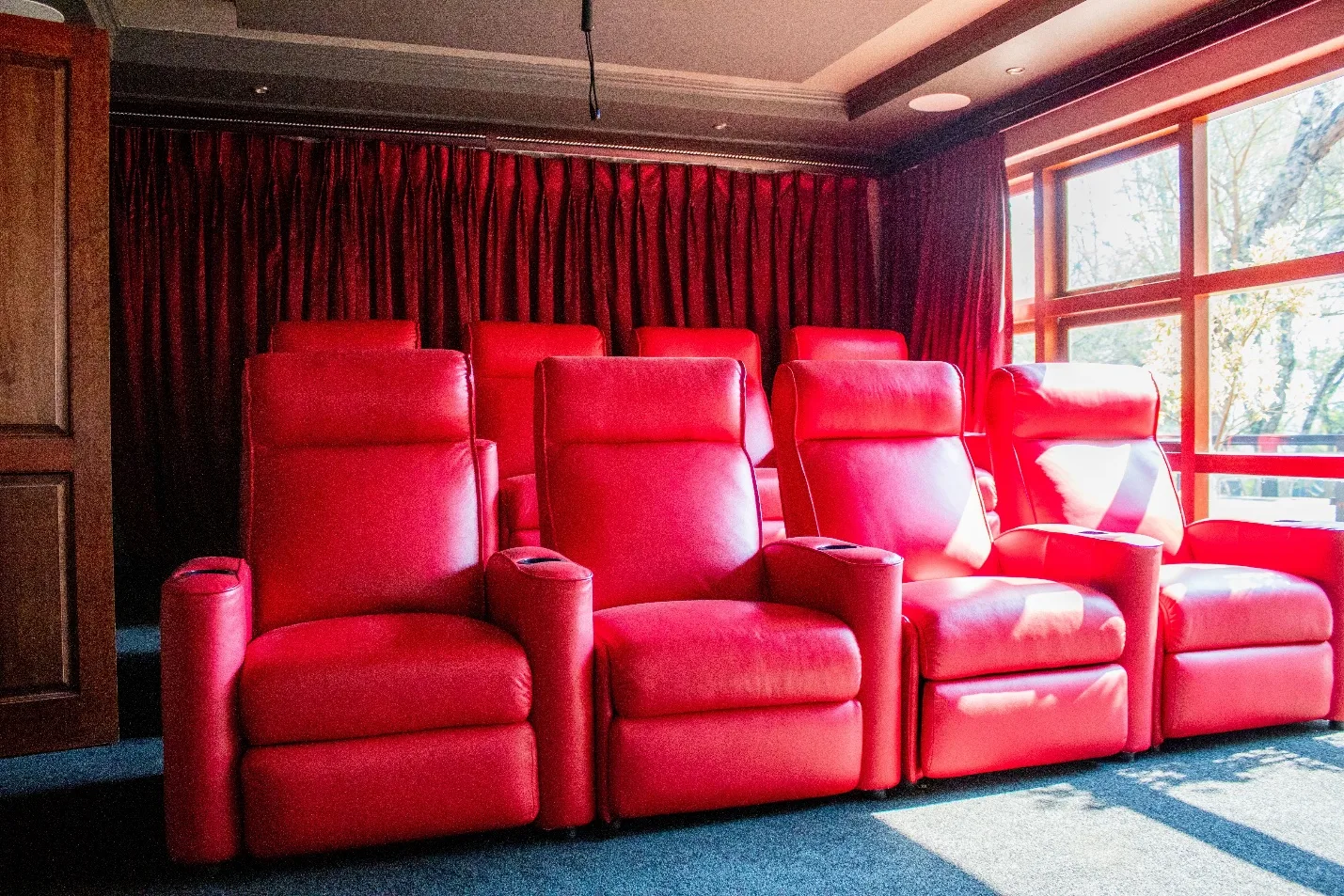
Designing a Home Theater: Where Drapery Fits Into the Plan
In a media room the curtains are a performance layer, not decoration....
illustrarch Editoral Team3 Mins read

Oscar Niemeyer’s Cathedral of Brasília: The Hyperboloid Concrete Hymn
The Cathedral of Brasília reads as a single gesture, yet it stood...
 Furkan Sen7 Mins read


Leave a comment