

Sagrada Familia Lamb of God Glows: Gaudi’s Crowning Vision
A glowing Lamb of God now crowns the Sagrada Familia at 172.5 meters. See how Gaudi's hyperboloid geometry and symbolism finally meet at the world's tallest church. The sagrada familia has always been a building about patience, faith, and the willingness to design for a future you will never see. The lamb glowing at its summit is the smallest piece of the structure and arguably the most loaded, the point where Gaudi's geometry, symbolism, and stubborn optimism finally land. For everyone who watched the cranes circle the temple for decades, the real lesson may be simple.
 Elif Ayse Sen27 June 20267 Mins read211
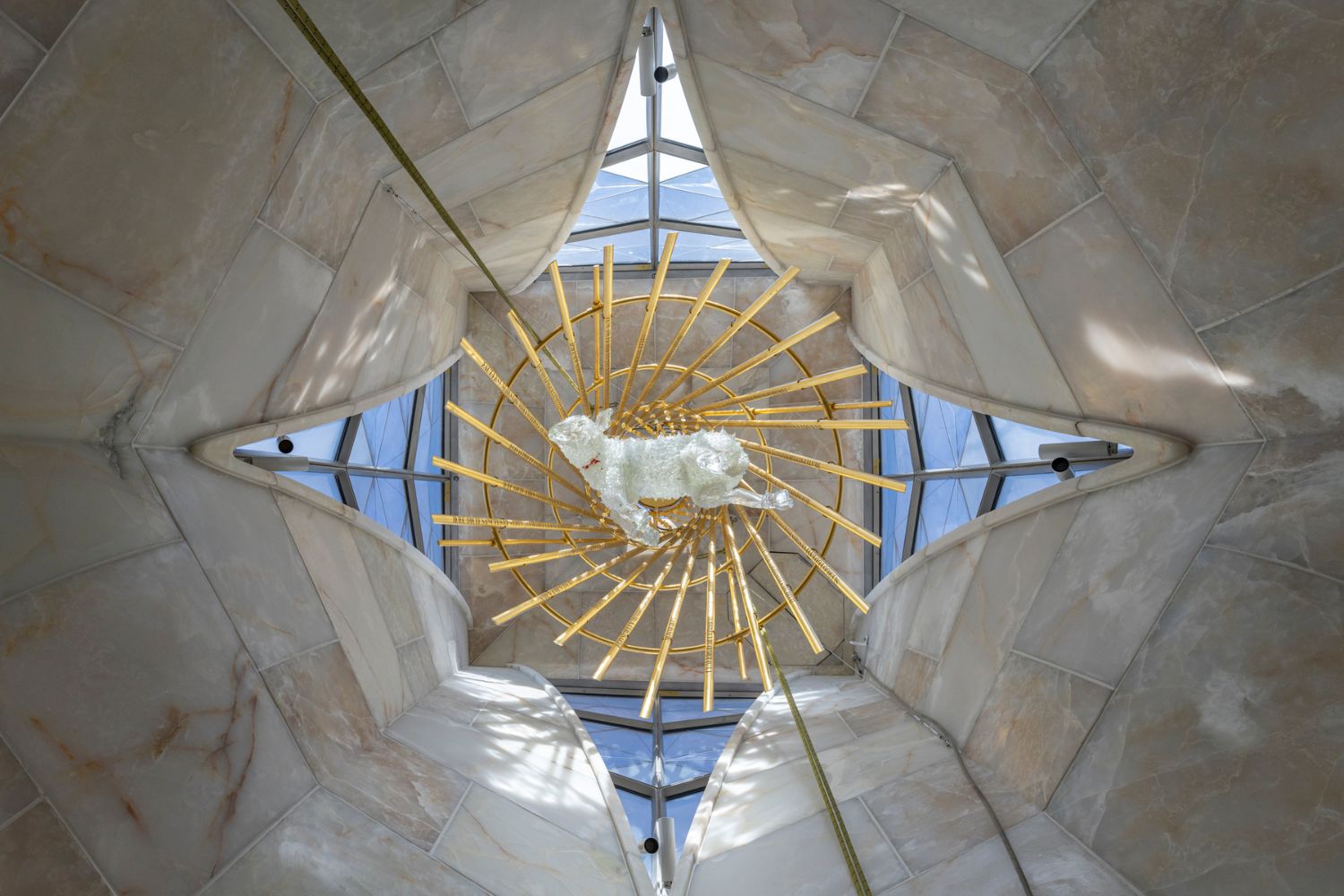
Table of Contents Show
The Sagrada Familia Lamb of God now glows from inside the cross crowning the Tower of Jesus Christ, the basilica’s highest point at 172.5 meters. Sculpted by Andrea Mastrovito and ringed by golden hyperboloid rays, the Agnus Dei catches daylight and artificial light alike, completing the luminous silhouette Antoni Gaudi imagined for Barcelona more than a century ago.
For 144 years, the question hanging over la sagrada familia was whether the building would ever reach the form drawn in Gaudi’s plaster models. On February 20, 2026, workers set the upper arm of the cross in place, and the answer arrived in stone and light. The basilica de la sagrada familia became the tallest church on Earth, and at its summit, a glowing lamb gave Gaudi’s spiritual program its final image. This is the story of that lamb, the cross that holds it, and why the detail matters more than its small size suggests.
What Is the Sagrada Familia Lamb of God?
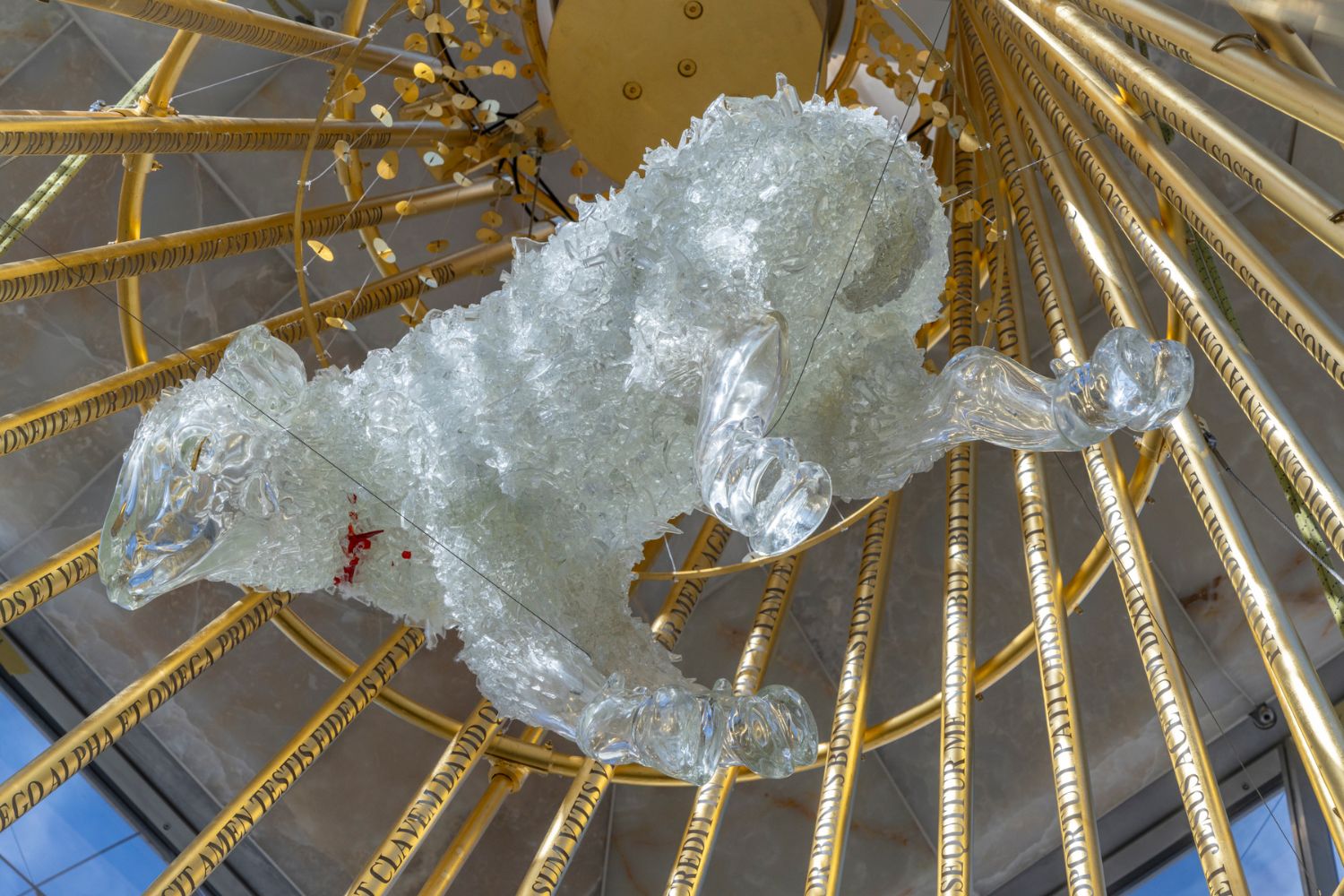
The Lamb of God, or Agnus Dei, is a sculpture placed inside the upper arm of the cross that tops the Tower of Jesus Christ at the sagrada familia barcelona. Created by Italian artist Andrea Mastrovito, the lamb hangs surrounded by slanted golden rays arranged in the hyperboloid geometry Gaudi used throughout the building. The figure is visible through windows cut into the cross arm, so the basilica’s tallest element reads as a lit beacon rather than a solid mass. The official Sagrada Familia construction blog documents how the lamb and its golden ring were lifted into position as the final stage of the tower.
In Christian symbolism, the lamb stands for the sacrifice of Christ. Placing it at the literal peak of the structure was no accident. Gaudi designed the temple as a vertical narrative, with the carved facades at street level rising through the towers toward a single theological point. The lamb is that point. Everything below, from the Nativity facade Gaudi finished in his lifetime to the choir of stained glass inside, leads the eye upward to this small, glowing figure.
Mastrovito’s commission extends beyond the lamb. He is also producing scenes from the life of Christ for the four tips of the cross arms, depicting the Transfiguration, the Crucifixion, the Resurrection, and the Final Judgement. Read together, the cross becomes a compact gospel set against the Barcelona sky, echoing the dense storytelling Gaudi packed into the lower facades.
🏗️ Real-World Example
Tower of Jesus Christ, Sagrada Familia (Barcelona, 2026): The four-armed cross measures roughly 4.5 by 4.5 by 4.9 meters and was built in Germany from fourteen prefabricated concrete and stainless steel pieces, then clad in white enamelled ceramic so it shines day and night. The Agnus Dei sits inside the upper arm, lit through the cross windows.
How Does the Cross Make the Lamb Glow?

The glow is engineered, not incidental. The cross was manufactured in Germany as fourteen prefabricated sections of concrete and stainless steel, then covered in white enamelled ceramic. That ceramic skin reflects sunlight during the day and holds illumination at night, which is why the summit of barcelona’s sagrada familia reads as a bright point from across the city. The lamb sits behind windows in the upper arm, so light passing through the structure frames the sculpture rather than hiding it.
The golden rays around the lamb follow the same hyperboloid surfaces Gaudi tested obsessively in his workshop. A hyperboloid is a doubly ruled surface, meaning it can be built from straight structural members even though it curves. Gaudi favored it because it scatters and softens light, an effect visible in the basilica’s interior columns and window openings. Carrying that geometry up to the cross ties the newest element of the building to its oldest design logic.
📐 Technical Note
A hyperboloid of one sheet is a ruled surface, so it can be generated by straight lines despite its curved appearance. Gaudi used this property to build flowing forms with linear stone and tile members, a method later studied in shell-structure engineering and still referenced in parametric design today.
The placement also solves a practical problem. A solid finial at 172.5 meters would have read as a dark cap against the sky. By making the cross a perforated, ceramic-clad lantern, the design team kept the summit visually light, matching the open, skeletal quality Gaudi gave the towers below. The lamb becomes the focal jewel inside a structure built to transmit rather than block light.
Why Did Gaudi Place the Lamb at the Summit?

Gaudi conceived the temple in the early 1880s and took charge of the project in 1883, devoting the last decades of his life to it until his death in 1926. The Encyclopaedia Britannica entry on the basilica records that he reworked the original neo-Gothic scheme into something closer to his own organic language, a shift that set the building on its long and unusual course. He never separated structure from meaning. The eighteen planned towers were ranked by religious hierarchy, with the central Tower of Jesus Christ rising above the towers of the Virgin Mary, the four Evangelists, and the twelve Apostles. The summit was always reserved for Christ, and the lamb is the emblem that carries that idea to its highest physical point.
You can trace this logic across the building. The Nativity facade, the only facade substantially built in Gaudi’s lifetime, sets the story in motion at ground level with its dense carvings of the birth of Christ. The geometry of the interior, with its tree-like columns and filtered colored light, was meant to feel like a forest pulling the visitor upward. The sagrada familia church reads from bottom to top as a single argument, and the lamb is its closing line.
Our coverage of the sacred geometry behind the basilica explains how Gaudi turned hyperboloids, helicoids, and catenary curves into both a structural system and a spiritual language. The lamb sits at the convergence of those curves, the moment where the mathematics and the message finally meet.
🎓 Expert Insight
“There are no straight lines or sharp corners in nature.”, attributed to Antoni Gaudi
Gaudi’s conviction shaped every level of the basilica, from the branching columns inside to the curved rays framing the lamb. The summit detail follows the same rule he set for himself decades earlier, which is why the newest work still reads as his.
How the Tower of Jesus Christ Was Finished

The central tower came together in stages over several years, with prefabricated sections lifted and assembled piece by piece. The cross alone arrived as fourteen separate components, assembled into a lower arm, a horizontal arm, a core, and finally the upper arm that holds the lamb. That last piece, installed on February 20, 2026, marked the external completion of the Tower of Jesus Christ and pushed the basilica de la sagrada familia past Germany’s Ulm Minster to claim the title of tallest church in the world.
The milestone carried a symbolic weight beyond engineering. On June 10, 2026, Pope Leo XIV blessed and inaugurated the tower during a visit to Spain, a date chosen to mark the centenary of Gaudi’s death. The man who spent his final years living on the construction site finally saw his silhouette completed, a hundred years to the year after he was gone. Vatican News reported the cross completion in February, framing it as the moment the temple reached its planned height.
🔢 Quick Numbers
- 172.5 meters: final height of the Tower of Jesus Christ, per the Sagrada Familia construction office
- 11 meters: how much taller the basilica stands than Ulm Minster, the previous record holder at 161.5 meters
- 14: prefabricated concrete and stainless steel pieces used to build the cross, manufactured in Germany
Coverage from designboom traced the inauguration and the cross detailing, underlining how digital fabrication carried a century-old design to its conclusion. The achievement closes a structural chapter, though not the entire project. Interior work is set to continue through 2027 and 2028, including the controversial main entrance on the Glory facade. For the exterior silhouette, however, the lamb at the summit signals that the shape is complete. Readers tracking the building’s record can see the full milestone in our report on how the basilica became the world’s tallest church after 144 years, and the engineering of the peak in our piece on the Tower of Jesus Christ reaching 172.5 meters.
Where the Lamb Fits in Gaudi’s Wider Work
The glowing lamb is the latest expression of ideas Gaudi worked out across Barcelona for forty years. His other buildings, from Casa Batllo to Park Guell, share the same refusal of straight lines and the same instinct to pull structure from natural form. Anyone studying his method can read the lamb as a final entry in a long catalog of light, geometry, and symbolism. Our overview of Gaudi’s Barcelona buildings traces that vocabulary across his major works, and our look at his architecture style and design secrets explains the trencadis tile, catenary arches, and hyperboloid forms that reappear at the summit.
The barcelona church sagrada de familia also belongs to a longer architectural lineage. It draws on the verticality of medieval cathedrals while breaking almost every rule those buildings followed. Where a Gothic cathedral relies on flying buttresses to carry its loads, Gaudi engineered his towers to stand without them, using inclined columns and ruled surfaces instead. For context on that tradition, our survey of Gothic cathedrals that reach for heaven places the sagrada familia basilica barcelona within the wider story of churches built to lift the eye upward.
What sets the lamb apart from a purely historical reference is its timing. It was installed in an era of digital fabrication, with sections cut in Germany and lifted by modern cranes, yet it executes a design intent set in plaster a century earlier. The continuity between Gaudi’s models and the finished cross is one of the rare cases in architecture where a building’s author and its completion are separated by generations, and the result still reads as one voice.
What the Glowing Lamb Means for Barcelona

For the city, the lit summit changes the skyline at a practical level. The sagrada familia barcelona was already the dominant vertical landmark, but a finished, glowing cross gives the silhouette a fixed crown that reads from the hills, the harbor, and the streets below. Barcelona’s planning rules historically kept new towers from competing with the basilica, so the completed peak now sits as the agreed high point of the cityscape, a reference the rest of the skyline defers to.
There is a visitor dimension as well. The basilica funds its construction almost entirely through ticket revenue and donations rather than public money, so each milestone draws fresh attention and, with it, the resources to keep building. The glowing lamb is both the spiritual capstone and a quiet piece of the funding engine, a new reason for travelers to climb the towers and look up. For anyone planning a visit, the official Sagrada Familia basilica website publishes current access details for the towers and the nave.
The detail also resets expectations for what a finished Gaudi building looks like. Generations of visitors knew the basilica de la sagrada familia as a permanent work site, wrapped in cranes and scaffolding. Seeing the lamb in place, lit against the sky, offers the first real sense of the completed object Gaudi had in mind, even as interior work continues. It is the difference between reading a description of a building and finally seeing its face.
The Bigger Picture
The sagrada familia has always been a building about patience, faith, and the willingness to design for a future you will never see. The lamb glowing at its summit is the smallest piece of the structure and arguably the most loaded, the point where Gaudi’s geometry, symbolism, and stubborn optimism finally land. For everyone who watched the cranes circle the temple for decades, the real lesson may be simple. Some visions are worth handing down, even when finishing them takes a century and a half.
- Agnus Dei
- Antoni Gaudí
- Barcelona Architecture
- barcelona church sagrada de familia
- barcelona's sagrada familia
- Basilica
- basilica de la sagrada familia
- basílica de la sagrada família
- Catalan modernism
- la sagrada familia
- religious architecture
- Sagrada Familia
- sagrada família
- sagrada familia barcelona
- sagrada familia basilica barcelona
- sagrada familia church
- Tower of Jesus Christ



MoMA’s Full Disclosure Exhibition Traces Information Design from Hand-Drawn Data to AI Memories
Full Disclosure: The Edge of Information Design, curated by Paola Antonelli, is...
 illustrarch Editoral Team2 Mins read
Zumthor’s Three New Buildings Open at Fondation Beyeler in Riehen
Peter Zumthor's Wyss Museum, Ammann Pavilion and Erlen Torhaus open at Fondation...
illustrarch Editoral Team4 Mins read

Benthem Crouwel Completes the Afsluitdijk Revamp with a Fish Passage and Domed Pumping Stations
The 32 km Afsluitdijk in the Netherlands has been raised, armoured and...
illustrarch Editoral Team2 Mins read
Luxembourg Pavilion Tackles the Overconsumption of Living Space at the 2027 Venice Biennale
Curated by Céline Zimmer and Exutoire, the Luxembourg Pavilion's Excess! will compare...
illustrarch Editoral Team2 Mins read


Leave a comment