

Core Modules in an Architecture Degree: What You Actually Study
Design studio, history and theory, building technology, structures, environmental design, representation and professional practice form the core of an architecture degree. This breakdown covers what each module teaches and how it is assessed.
 Sinan Ozen3 August 20266 Mins read187

Table of Contents Show
An architecture degree is organized around seven core modules that nearly every accredited program shares: design studio, history and theory, building technology, structures, environmental design, representation, and professional practice. Studio carries the most weight, while the other six supply the technical and cultural knowledge every project draws on.
Course catalogs rarely explain what a module actually involves. You see a title like “Building Technology II” next to a credit value, and nothing tells you whether you will be sizing a beam or writing a 3,000-word essay. The seven below turn up under different names in almost every school. Our overview of architectural education covers how programs are put together.

What Counts as a Core Module in an Architecture Degree?
A core module is a course every student has to pass, as opposed to an elective you pick yourself. In the United States, the National Architectural Accrediting Board groups these under professional studies, courses with architectural content required of all students, and treats them as the heart of a degree that leads to licensure.
Accreditors do not hand schools a course list. They set outcomes, and each program builds its own modules to hit them. NAAB’s accreditation criteria ask programs to show that graduates understand design synthesis, technical knowledge, professional practice, regulatory context, and health and safety. Across architecture schools in the US, module titles shift while the requirements hold steady.
💡 Pro Tip
Ask a school for its module handbook, not the brochure. Two numbers tell you most of what you need: how many credits go to studio each year, and whether technology and structures run alongside studio or in a separate track. Programs that run them in parallel expect real construction logic in your studio project by third year.

The Seven Core Modules Every Program Teaches
The order below follows the way most curricula stack them.
1. Design Studio
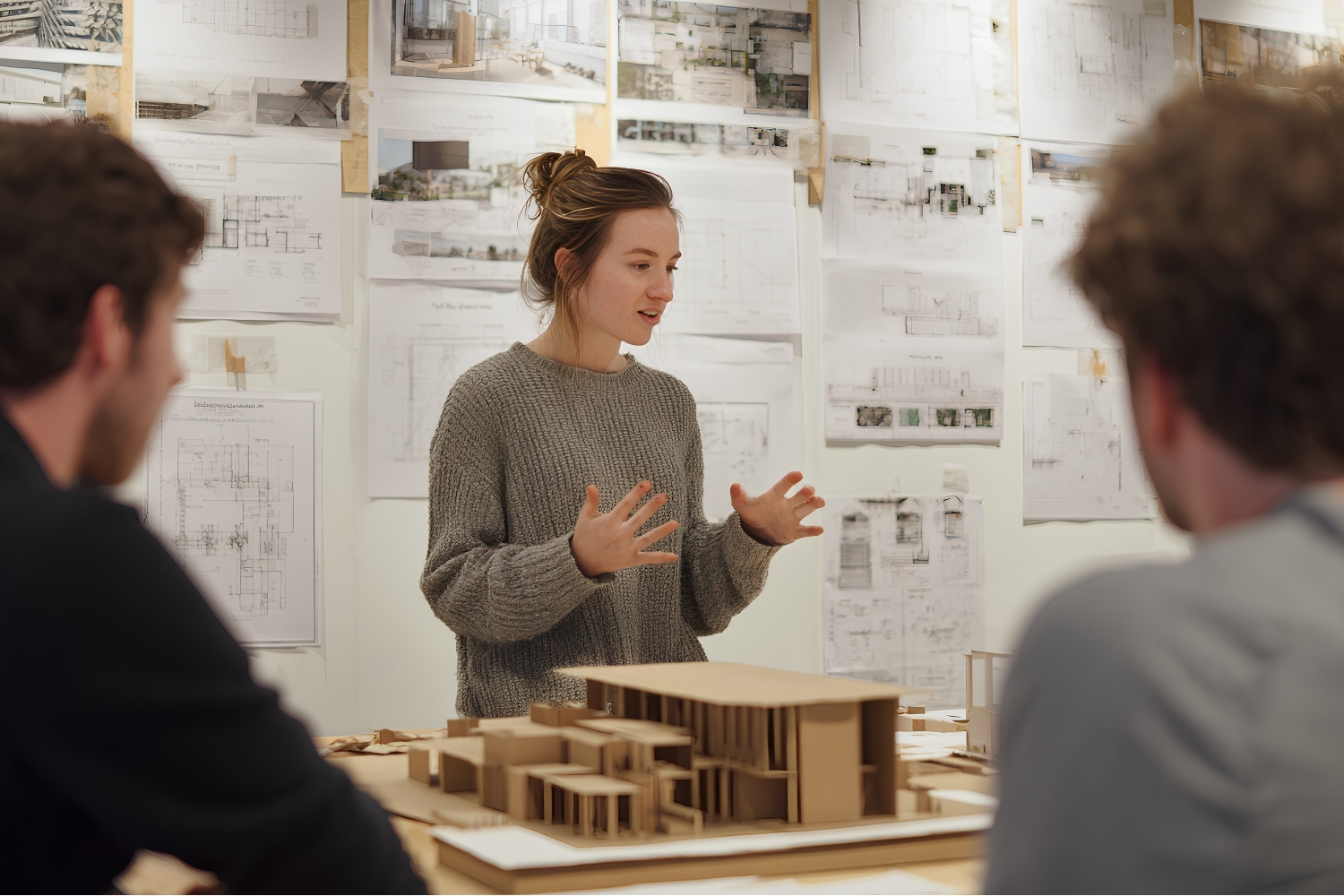
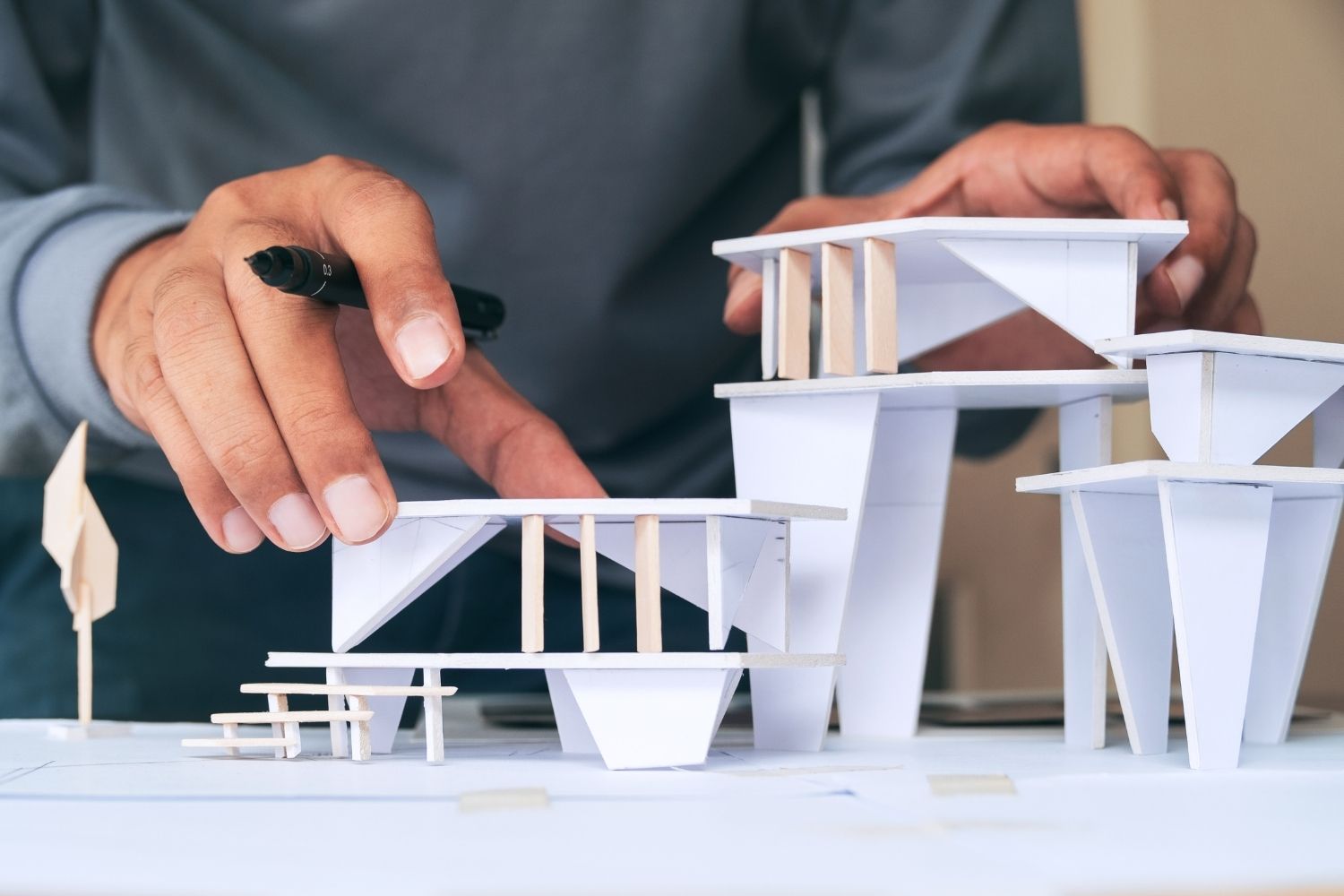
Studio is where you design buildings, and it usually takes more credit hours than every other module combined. You work from a brief, test ideas through sketches, models and drawings, then defend the result at a crit, an open review in front of tutors and peers. Assessment is by portfolio, not by exam, which is why the first year of architecture school catches so many students off guard.
🎓 Expert Insight
Leonie Bunte, Assistant Professor of Architecture at the University of Idaho: “Architecture brings together art, history, technology, ecology and social questions.”
That breadth is why the module list runs long. Bunte notes that most days revolve around studio, with lecture courses feeding straight into the projects developed there.
2. Architectural History and Theory
This module gives you the reference library you design from. You cover movements, periods and key buildings, then move into theory, where you learn to argue about what architecture is for. Assessment is written: essays, seminar papers and, later, a dissertation. Students often treat it as the module to coast through. That is a mistake, because the vocabulary you pick up here is what you use to defend your own work.
3. Building Technology and Construction
Here you learn how a building is actually put together: foundations, envelopes, roofs, junctions, materials and the order in which trades arrive on site. Expect to draw wall sections at 1:5 and specify what each layer does. This is the module that turns a nice massing model into something buildable, and our guide to architectural detail drawings shows the output it expects.
4. Structures
Structures teaches you how loads travel from roof to ground, and which system suits which span. You meet beams, columns, frames, trusses and cores, plus enough statics to size an element roughly and know when to call an engineer. The aim is judgement rather than calculation. Our breakdown of structure in architecture covers the systems involved.

5. Environmental Design and Building Performance
This module covers heat, light, air and energy: orientation, thermal mass, daylighting, ventilation, insulation and the standards that measure them. It has grown fast, because codes and clients now want performance evidence rather than good intentions. Start with the principles behind passive design, since everything else here builds on them.
6. Representation: Drawing, CAD and BIM
Representation is how you make an idea legible to someone else. Programs begin with hand drawing and model making, then add CAD, 3D modeling, BIM and rendering. Software fluency is not the point. Drawing a building forces you to settle what you had left vague, as our walkthrough of how to draw an architectural section shows.
7. Professional Practice and Ethics
Taught late in most programs, this module covers contracts, fees, procurement, liability, planning law and building regulations. It is the least glamorous course in an architecture degree and the one your first employer will notice you skipped. Guidance from bodies such as the American Institute of Architects fills in what lectures tend to skim.

How the Modules Are Weighted and Assessed
Credit weighting tells you what a school values. Design studio almost always takes the largest single share, and everything else is sized around it. Studio is judged on a portfolio and a live review, technology and structures on coursework or exams, history and theory on writing. If you are strong in one mode and weak in another, that mix matters more than any ranking.
🏗️ Real-World Example
MIT School of Architecture and Planning (Cambridge, 1865): William Robert Ware was appointed in 1865 to plan the first collegiate architecture curriculum in the United States, and classes opened in 1868. According to MIT Libraries, his course rested on three strands: drawing and design, architectural history, and construction and practice. Still the same three pillars, more than 150 years later.
Core Module Map
The table lines up each module against the work it produces and the way it is graded.
| Module | What You Do | Typical Output | How It Is Assessed |
|---|---|---|---|
| Design Studio | Design buildings from a brief | Drawings, models, portfolio | Crit and portfolio review |
| History and Theory | Study movements and ideas | Essays, seminar papers | Written coursework |
| Building Technology | Learn assemblies and materials | Detail drawings, specifications | Coursework, technical report |
| Structures | Trace loads, compare systems | Calculations, structural diagrams | Exam or integrated project |
| Environmental Design | Model heat, light, air, energy | Simulations, performance report | Report tied to studio project |
| Representation | Draw, model, render, use BIM | Plans, sections, 3D models | Submitted drawing sets |
| Professional Practice | Contracts, law, fees, ethics | Case studies, short answers | Exam or written assignment |
Do Architecture Degree Modules Differ by Country?
The subjects are close to universal. The structure around them is not. In the United States, a five-year Bachelor of Architecture packs all seven modules into one accredited degree, while the four-plus-two route splits them across a pre-professional bachelor’s and a Master of Architecture.
The United Kingdom spreads the same modules across RIBA Part 1, Part 2 and Part 3 plus two years of practical experience. That model is being rebuilt right now, so check what a UK program will look like when you graduate, not what it looks like today.
📌 Did You Know?
The UK is dropping the requirement for an undergraduate architecture degree. The Architects Registration Board will stop accrediting Part 1 qualifications from December 2027, with Part 2 and Part 3 ending in December 2028. Registration will then rest on an accredited master’s-level qualification plus an accredited practice qualification, as set out in the ARB transition guidance.
What Sits Outside the Core
Beyond the seven, most programs add electives, a dissertation, and a final integrated studio that pulls every module into one resolved building. Urban design, landscape, conservation and computational design usually appear as options, and that is where you shape the degree toward the work you want.
No module teaches you how to present the results. Your portfolio is assembled from studio output across all five years, and it is the document that gets you hired, so learn early how to present your work in a portfolio interview.

Putting It All Together
Quick Recap:
- Seven modules recur almost everywhere: studio, history and theory, building technology, structures, environmental design, representation, and professional practice.
- Accreditors set outcomes, not course lists, so titles vary while requirements stay the same.
- Studio takes the largest share of credits and is assessed by portfolio, not by exam.
- Compare credit weighting and assessment methods before choosing a school.
Accreditation rules and module requirements vary by country and are changing, particularly in the UK. Confirm current requirements with the relevant accrediting body and with the schools you are considering.
Frequently Asked Questions
What subjects do you study in an architecture degree?
You study design studio, architectural history and theory, building technology, structures, environmental design, representation (drawing, CAD and BIM), and professional practice. Most programs add electives and a dissertation. Studio takes the most time, and every other subject feeds the decisions you make in it.
Is math required in an architecture degree?
Yes, though less than most applicants fear. Structures and environmental design need applied math and basic physics, so be comfortable with geometry, trigonometry and algebra. Some schools list calculus as an entry requirement. The goal is judgement about spans, loads and energy, not the math an engineering degree demands.
How many years is an architecture degree?
In the United States, an accredited Bachelor of Architecture usually runs five years, while the four-plus-two route combines a four-year bachelor’s with a two-year Master of Architecture. Licensure then adds documented practice hours and the licensing exam.
What is design studio in architecture school?
Design studio is the module where you develop building projects from a brief, working through sketches, models and drawings with regular tutor feedback. Work is presented at a crit, an open review in front of tutors and guests. It is assessed by portfolio.






Why Do Architecture Students Struggle With Time Management?
Architecture students rarely run out of discipline. They run out of schedule....
Sinan Ozen6 Mins read
Why Is the Architecture Physical Model Still Taught in Schools?
Digital tools run modern architecture, yet schools still put students at the...
 Furkan Sen6 Mins read

15 Wellness Essentials to Survive Architecture School Stress
Architecture school is physically and mentally demanding, with long studio hours, constant...
Furkan Sen15 Mins read

The Power of Networking in Architecture School: 7 Tips for Building Real Connections
Strong networking in architecture school goes far beyond exchanging business cards at...
Sinan Ozen7 Mins read


Leave a comment