

Sustainable Landscape Design Balancing Artificial Turf Cost, Artificial Grass in Los Angeles, and Turf Installation for Modern Outdoor Spaces
Artificial grass in Los Angeles has become a practical part of sustainable landscape design as homeowners look for outdoor spaces that stay attractive without demanding constant watering, mowing, fertilizing, and seasonal lawn repairs.
 illustrarch Editoral Team23 August 20266 Mins read67
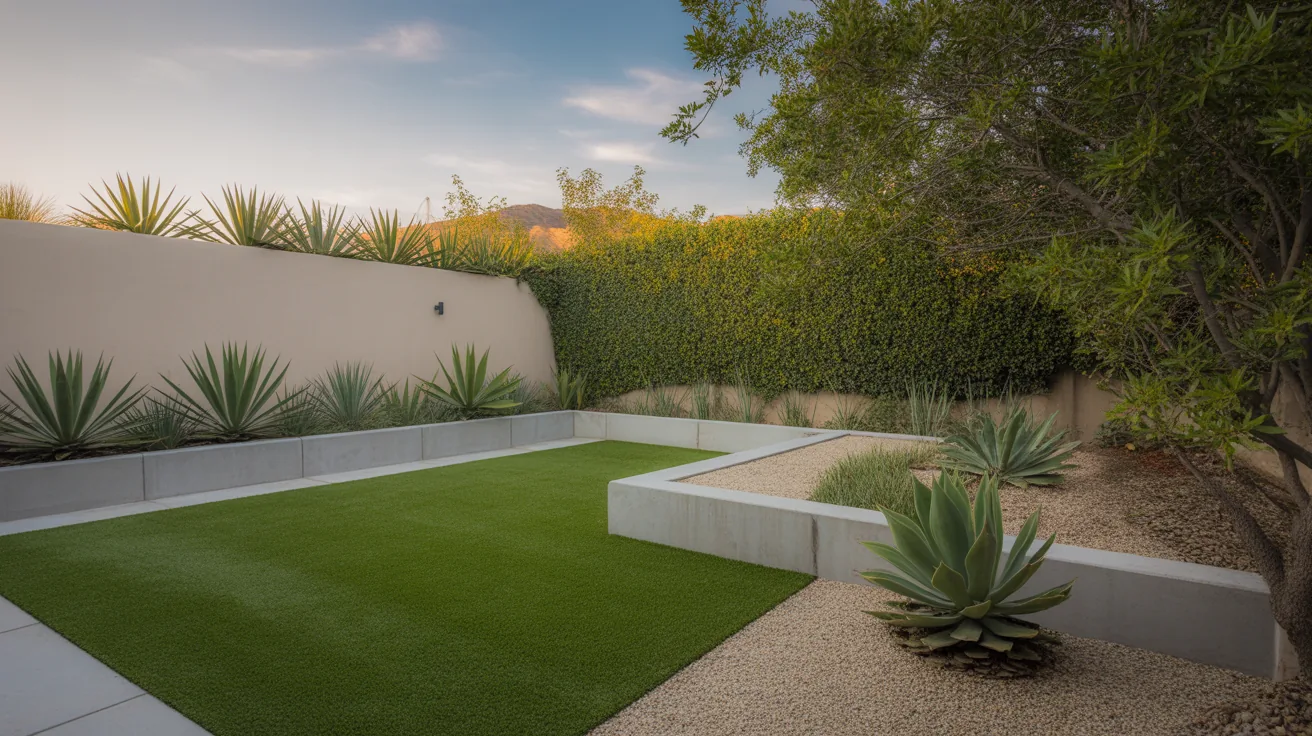
Table of Contents Show
Artificial grass in Los Angeles has become a practical part of sustainable landscape design as homeowners look for outdoor spaces that stay attractive without demanding constant watering, mowing, fertilizing, and seasonal lawn repairs.
The decision, however, involves more than replacing a struggling lawn with something permanently green.
For homeowners comparing water use, maintenance, artificial turf cost, drainage, appearance, and long-term durability, understanding how synthetic turf fits into the larger landscape is what separates a smart renovation from an expensive shortcut.
A well-planned installation of artificial grass in Los Angeles can create a cleaner, more usable yard while reducing many of the recurring demands associated with maintaining natural grass.
Why Los Angeles Lawns Are Being Rethought
A traditional lawn can look simple, but keeping it healthy in Southern California often requires more work than the finished yard suggests.
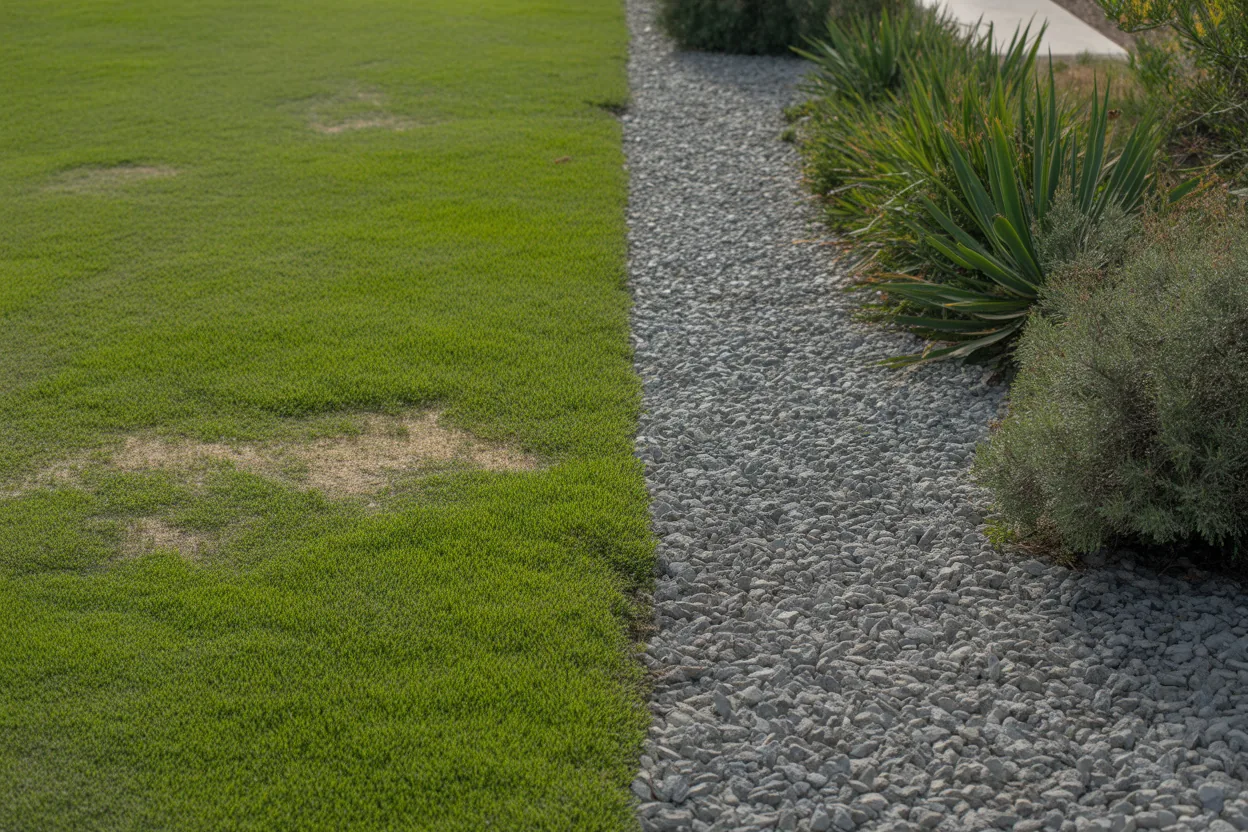
Heat, dry periods, irrigation restrictions, heavy foot traffic, pets, uneven shade, and compacted soil can all affect how natural grass performs.
Imagine a family with a modest backyard where children play after school and a dog follows the same route from the patio to the side gate every day.
Even with regular watering, those high-traffic sections may become thin, muddy, or discolored while less-used areas remain healthy.
Synthetic turf changes that maintenance equation because its appearance does not depend on rainfall, mowing schedules, or the condition of the underlying soil.
That does not automatically make it the right material for every square foot of a property, but it explains why it has become increasingly relevant to modern landscape planning.
Sustainable Landscaping Is About More Than Saving Water
Water conservation is usually the first environmental benefit associated with synthetic lawns, but sustainable landscape design is broader than irrigation alone.
A well-designed outdoor space considers how much maintenance it requires, how long materials will last, whether surfaces drain properly, and how effectively different areas serve the people using them.
Replacing a water-intensive lawn can eliminate routine mowing and reduce the need for fertilizers and other lawn-care products.
At the same time, homeowners should consider surface temperature, material quality, drainage, surrounding vegetation, and eventual replacement when evaluating the complete environmental picture.
The strongest designs often combine several approaches rather than relying on one material everywhere.
Artificial turf might cover a play area, while drought-tolerant plants, native shrubs, gravel paths, shade trees, and permeable surfaces handle the rest of the property.
Think in Zones Instead of Covering the Entire Yard
One of the easiest ways to create a more thoughtful landscape is to divide the property according to how each area is actually used.
The patch beside a swimming pool has different requirements from a dog run, a decorative front lawn, or a narrow side yard that receives little sunlight.
A homeowner might install turf across a 500-square-foot entertainment area while keeping planting beds around the perimeter for lavender, succulents, ornamental grasses, or other climate-appropriate plants.
This approach provides the clean appearance of a lawn without turning the entire property into one continuous synthetic surface.
It can also make the finished landscape feel more intentional because textures, heights, colors, and materials naturally change as someone moves through the yard.
Understanding Artificial Turf Cost
Artificial turf cost can vary considerably because homeowners are paying for much more than the visible rolls of grass.
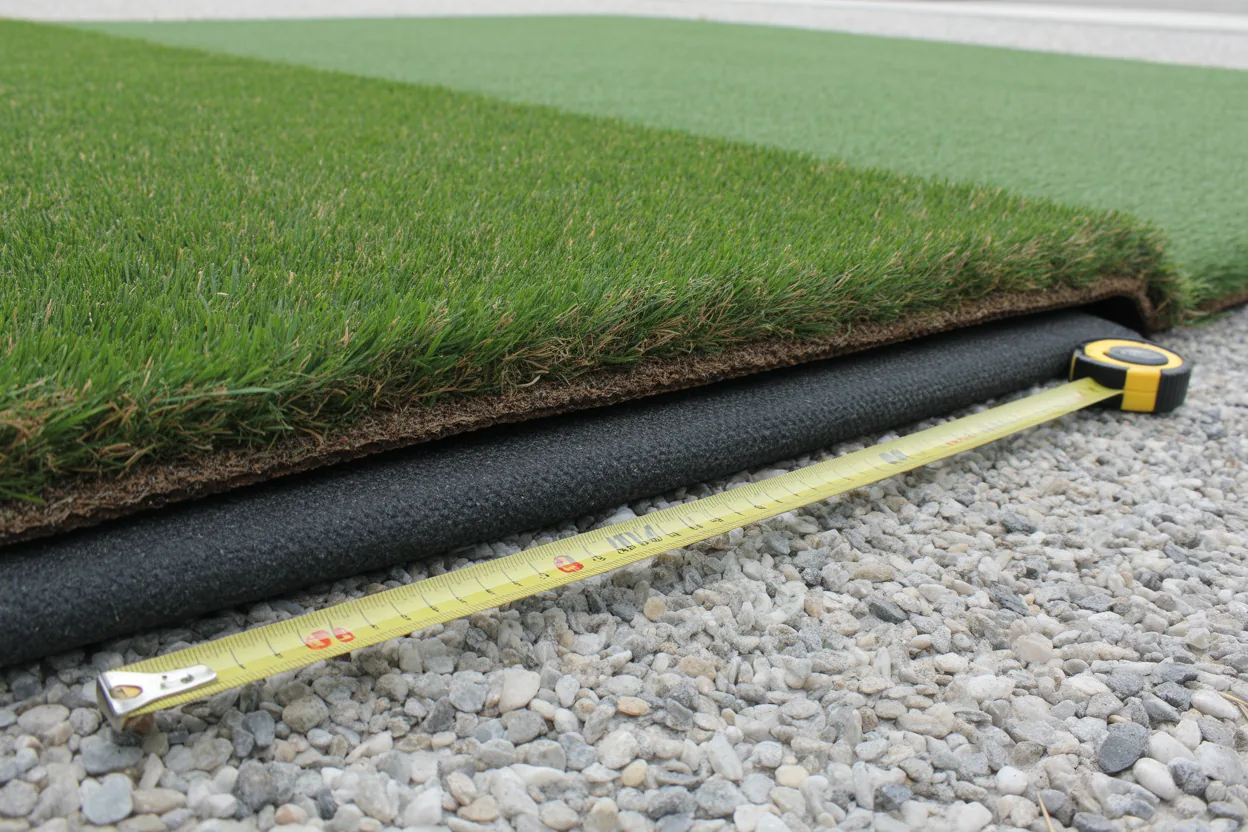
Site preparation, excavation, disposal of existing material, base construction, grading, drainage improvements, edging, infill, turf quality, access conditions, and labor can all influence the final price.
A flat, easily accessible rectangular backyard will generally be simpler to install than a sloped property with curved planting beds, tree roots, stairs, or narrow access between neighboring homes.
That difference matters when comparing estimates.
A cheaper quote may look attractive until it becomes clear that important preparation work, drainage improvements, or higher-quality materials were excluded.
Rather than focusing exclusively on the initial price per square foot, homeowners should look at what is included in the complete installation.
The Base Is Just as Important as the Grass
Most people naturally pay attention to how realistic a turf sample looks because that is the part they will see every day.
Yet much of the installation’s long-term performance depends on what sits underneath it.
The existing surface generally needs to be removed and the area prepared so the finished lawn has a stable, properly graded foundation.
Poor preparation can contribute to dips, wrinkles, drainage problems, visible seams, or sections that feel uneven underfoot.
Consider a backyard that receives runoff from a patio during a heavy rainstorm.
If grading and drainage were treated as an afterthought, water may collect in low areas even though the turf itself is designed to drain.
Good turf installation therefore begins below the finished surface, not with the final roll of synthetic grass.
Choosing Turf for the Way the Space Will Be Used
There is no single turf product that works equally well for every outdoor area.
Pile height, blade shape, density, backing, drainage characteristics, softness, resilience, and infill requirements can vary between products.
A decorative front yard may prioritize a natural-looking blend of blade colors and textures.
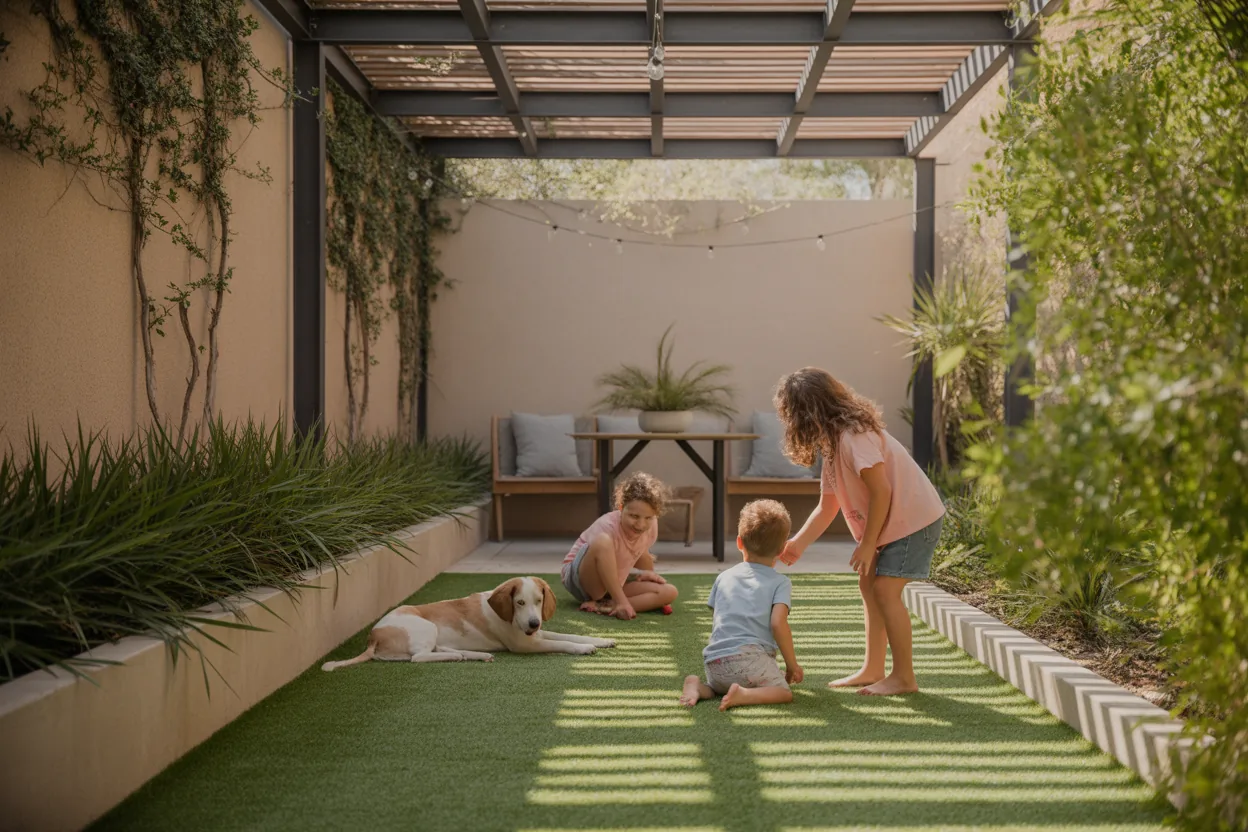
A backyard used for football, running, or children’s games may need a surface capable of handling frequent activity without flattening quickly.
Pet owners have another set of considerations because drainage and routine cleaning become particularly important in areas used regularly by dogs.
The useful question is not simply, “Which turf looks best?”
It is, “Which turf performs best for what happens here every day?”
Heat and Shade Should Influence the Design
Los Angeles homeowners also need to think about how different surfaces behave in direct sunlight.
Synthetic grass can become warmer than natural grass, particularly during hot weather and in yards with limited shade.
Landscape design can help manage that issue by combining turf with shade structures, trees, planting beds, covered patios, or strategically positioned seating areas.
For example, a family that frequently entertains between 2 p.m. and 5 p.m. may get more value from placing a pergola over the main seating zone than from covering every available foot with turf.
Material selection should support the way the yard is used throughout the day rather than simply creating a visually uniform surface.
Turf Installation Should Connect With the Entire Landscape
A successful installation rarely looks like a rectangle of synthetic lawn dropped into an unrelated backyard.
Transitions matter.
Where turf meets concrete, pavers, decking, garden beds, fences, or pool coping, the edges should feel deliberate and visually clean.
Curved borders can soften a small urban yard, while straight lines often complement contemporary architecture and modern hardscaping.
A narrow strip of decorative stone between turf and a wall can also add texture while preventing the landscape from feeling overly uniform.
These details may seem minor during planning, but they often determine whether the completed yard feels custom-designed or simply resurfaced.
Drainage Cannot Be an Afterthought
Los Angeles is associated with dry weather, but occasional heavy rain makes drainage an important part of landscape construction.
Water needs somewhere to go when it moves through the turf backing and reaches the prepared base underneath.
Existing slopes, downspouts, patios, retaining walls, and neighboring surfaces should all be considered before installation begins.
A low section beside a retaining wall, for instance, may require additional drainage planning rather than simply another layer of base material.
Addressing those conditions before turf is installed is usually much easier than trying to correct them after the entire surface has been secured.
Maintenance Is Lower, Not Zero
One of the biggest attractions of synthetic turf is reduced routine maintenance, but “low maintenance” should not be confused with “no maintenance.”
Leaves, dust, pet hair, and other debris can still accumulate on the surface.
High-traffic areas may occasionally need brushing to help the fibers remain upright, while pet areas require regular cleaning appropriate to how frequently they are used.
The maintenance difference becomes clearer when compared with a natural lawn.
There is no weekly mowing cycle, no reseeding bare patches, and no need to adjust irrigation simply to keep the surface green.
For homeowners who rarely use their lawn but spend significant time maintaining it, that trade-off can be particularly appealing.
A Better Way to Evaluate Long-Term Value
The best landscape investment is not necessarily the option with the lowest upfront price.
Homeowners should compare installation cost with expected maintenance, irrigation requirements, repair needs, usable lifespan, and how often the space will actually be enjoyed.
A small backyard used every weekend for family meals, pets, and entertaining may justify a higher-quality installation more easily than a large side lawn nobody walks across.
Long-term value is ultimately connected to usefulness.
If a landscape becomes easier to maintain and more functional throughout the year, the renovation has accomplished more than simply changing what covers the ground.
Creating a Balanced Modern Outdoor Space
Sustainable landscaping works best when every material has a clear purpose.
Synthetic turf can provide a consistent lawn surface, native and drought-tolerant plants can introduce biodiversity and seasonal texture, hardscaping can define circulation, and shade can make outdoor areas more comfortable during hotter parts of the day.
The goal does not have to be an entirely artificial yard or an entirely natural one.
For many Los Angeles properties, the more practical solution sits somewhere between those extremes.
When artificial turf cost, installation quality, drainage, climate, maintenance, and everyday use are considered together, homeowners can create outdoor spaces that look polished without becoming unnecessarily demanding.
A thoughtful landscape is ultimately one that works on an ordinary Tuesday afternoon just as well as it does when the backyard is cleaned up for guests.




Building Your Dream Home in NSW: What You Should Know About Montgomery Homes
Montgomery Homes has been building across Sydney, Newcastle, the Hunter, Wollongong and...
illustrarch Editoral Team4 Mins read
Oscar Niemeyer’s Cathedral of Brasília: The Hyperboloid Concrete Hymn
The Cathedral of Brasília reads as a single gesture, yet it stood...
 Furkan Sen7 Mins read
What Technology Does a Modern Workplace Need?
A modern workplace needs more than fast computers. A framework covering network,...
illustrarch Editoral Team8 Mins read
How Do You Choose Durable Shutters That Suit Your Budget?
Shutters can look identical in a showroom and perform very differently after...
illustrarch Editoral Team8 Mins read


Leave a comment