

Zaha Hadid Design Secrets: Style, Projects & Interior Vision
Explore the design secrets behind Zaha Hadid's revolutionary architecture. From her iconic fluid style and parametric techniques to her influential interior design work and award-winning projects like the Heydar Aliyev Center and London Aquatics Centre, discover what made Hadid the most visionary architect of our time.
 Furkan Sen22 October 20259 Mins read1.6k

Table of Contents Show
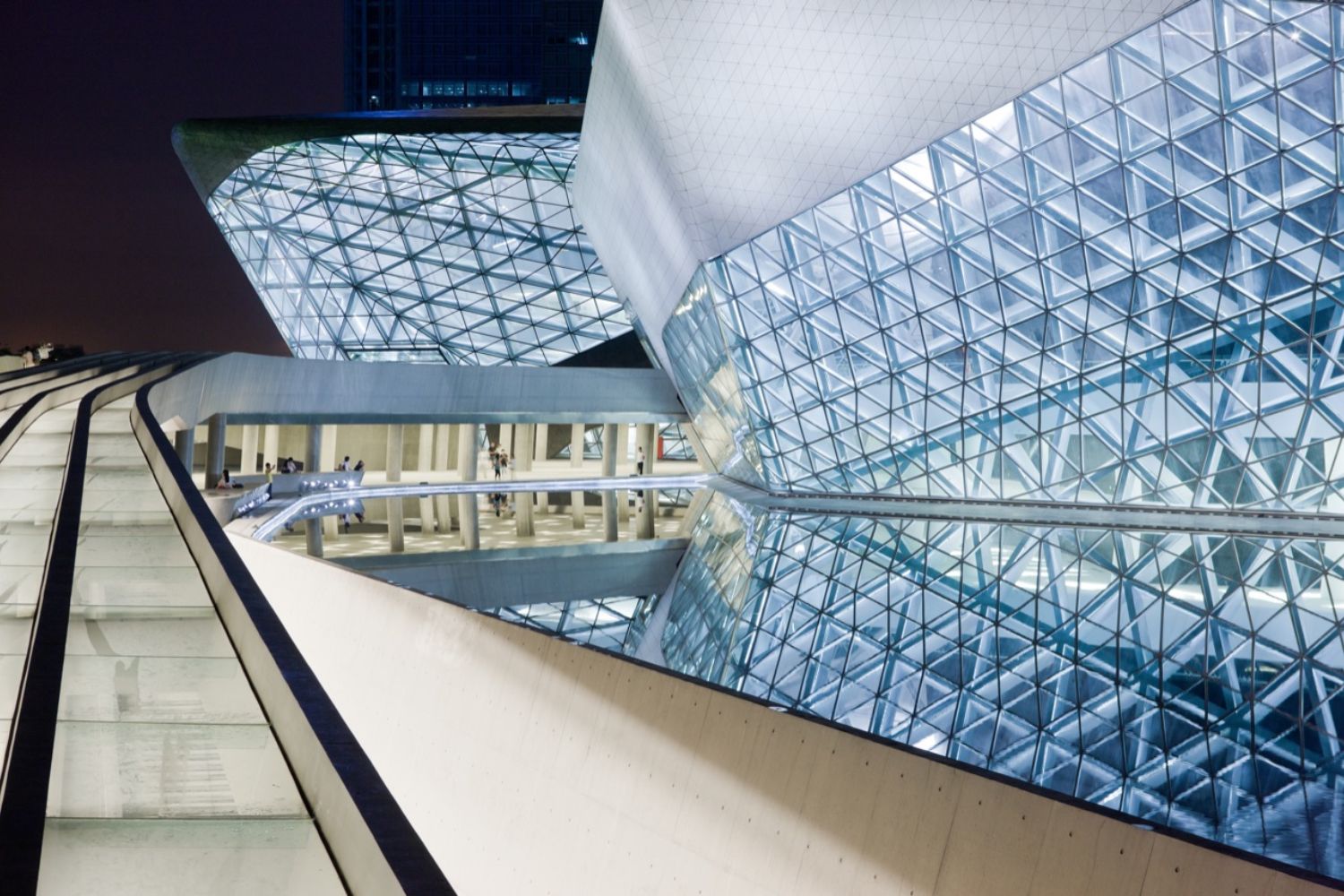
Quick answer: Zaha Hadid was a British Iraqi architect and the first woman to win the Pritzker Prize. Her style, often called parametric or neo futurist, is defined by sweeping curves, fluid concrete and glass forms, and dynamic geometry, seen in buildings such as the Heydar Aliyev Center and the Guangzhou Opera House.
Zaha Hadid’s design secrets lie in a distinct combination of parametric computation, abstract art influences, and a refusal to accept conventional architectural limits. From her early studies of Russian Constructivism to her final built projects, every decision she made was rooted in a philosophy that treated buildings as dynamic landscapes rather than static objects. This article breaks down the core principles behind her work, the projects that defined her career, and the legacy that continues to shape architecture today.
When we think of Zaha Hadid design philosophy, her name inevitably comes to mind. As a visionary architect, her futuristic creations and bold structures have redefined skylines across the globe. But what makes her work, from sweeping public buildings to striking Zaha Hadid interior design pieces, so uniquely captivating?
In this article, we will look at the design secrets that set Hadid apart from her contemporaries. From her innovative use of geometry to her visionary approach to urban spaces, we will uncover the elements that made her a true icon in the world of architecture. We will also examine the distinctive Zaha Hadid style that influenced everything from large-scale cultural centers to furniture and interior spaces.
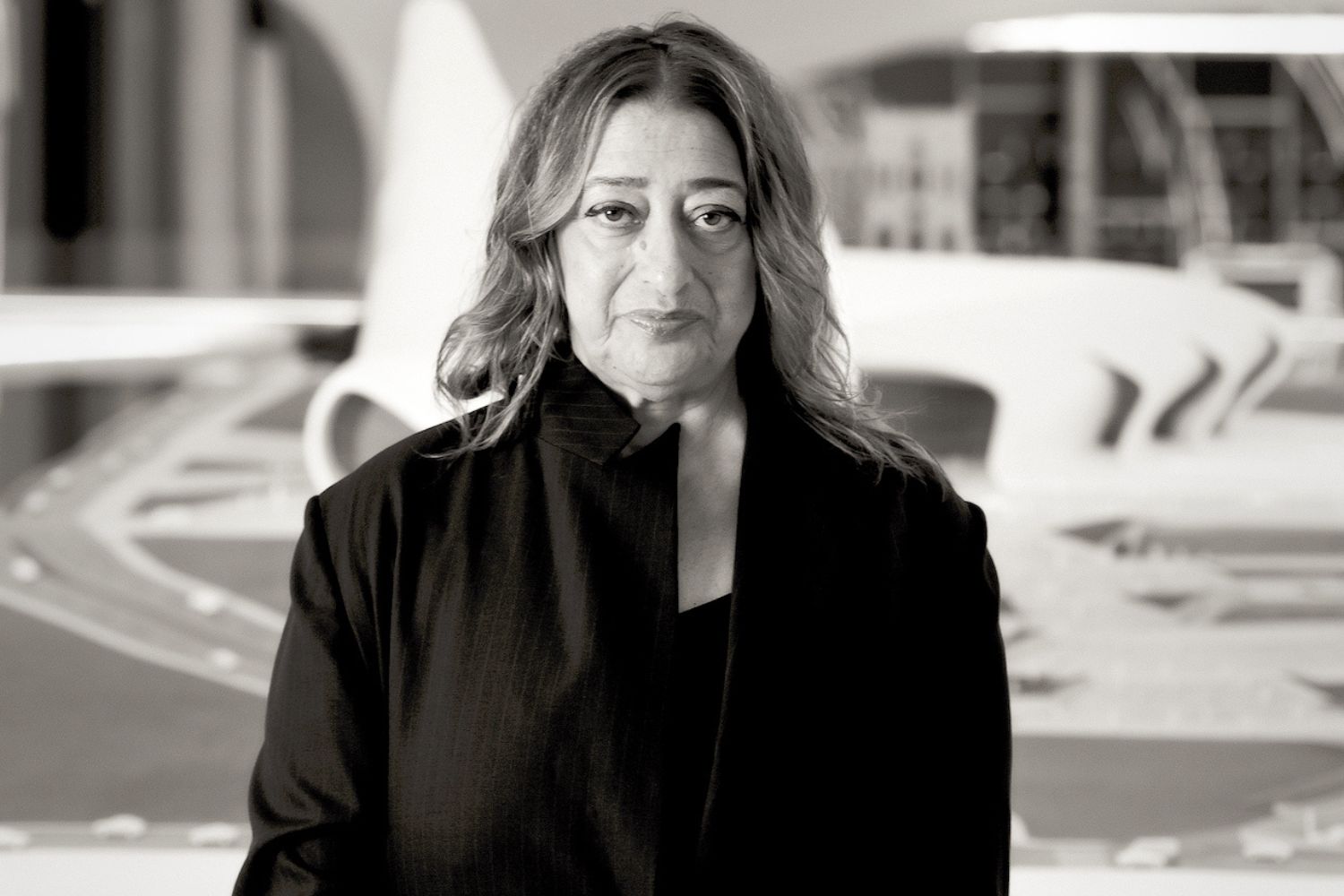
Early Life and Education of Zaha Hadid
Zaha Hadid was born on October 31, 1950, in Baghdad, Iraq. Her father, Mohammed Hadid, was a wealthy industrialist and leader in the Iraqi National Democratic Party, and her mother, Wajiha Sabunji, was an artist. Zaha’s upbringing in an intellectual and progressive environment shaped her early worldview and inspired her passion for innovation.
In the 1960s, she attended boarding schools in England and Switzerland, exposing her to diverse cultures and ideas. Moving to London in 1972, she enrolled at the Architectural Association School of Architecture (AA). At AA, she studied under influential figures like Rem Koolhaas and Elia Zenghelis. This period shaped her approach to design and laid the groundwork for the Zaha Hadid style the world would come to recognize.
Hadid’s graduation project, “Malevich’s Tektonik,” drew attention for its unconventional forms and geometric rigor. During this time, she studied the Russian Avant-Garde movement, which profoundly influenced her architectural style. By embracing bold geometric shapes and spatial experimentation, she sought to challenge traditional architecture.
In 1977, she joined the Office for Metropolitan Architecture (OMA), founded by Koolhaas and Zenghelis. These early experiences, collaborations, and her academic foundation paved the way for her illustrious career as an innovative architect.
🔢 Quick Numbers
- 950+ completed projects across 44 countries, as listed by Zaha Hadid Architects’ official archive (ZHA, 2025)
- First woman to win the Pritzker Architecture Prize, in 2004 (Pritzker Prize Foundation)
- Stirling Prize won twice consecutively, in 2010 and 2011 (RIBA)
- ZHA staff represents 55 nationalities across approximately 400 people (ZHA, 2025)
What Inspired Hadid’s Iconic Style?
Zaha Hadid’s architectural style is a testament to her unique vision and creative influences. Her designs always pushed the boundaries of conventional architecture, forging a path that would later influence disciplines ranging from industrial design to interior architecture. Understanding what drove those choices helps explain why her buildings feel so distinct, decades later.
Influence of Abstract Art
Hadid’s fascination with abstract forms deeply influenced her work. She drew from Russian Constructivism and Suprematism, movements that emphasized geometric abstraction. Kazimir Malevich‘s work, in particular, shaped her approach significantly. She transformed these abstract principles into dynamic architectural forms, producing buildings that appear to defy gravity. Through fragmented geometry, she created structures that challenged how people perceive space and form. For a deeper look at how these movements compare, see our article on Constructivism vs. Deconstructivism in Architecture.
Integration of Nature and Geography
Nature and geography played vital roles in Hadid’s design philosophy. She regularly incorporated the fluidity and organic forms found in nature into her projects. For instance, the design of the Guangzhou Opera House mimics the pebbles smoothed by river currents. This approach allowed her to create buildings that resonate with their surroundings while standing out as unique landmarks. By blending natural elements with advanced technology, she achieved a balance between built structures and their environments. This integration reveals Hadid’s ability to merge the natural world with the man-made, creating architecture that feels both futuristic and grounded.
📌 Did You Know?
Hadid studied mathematics at the American University of Beirut before switching to architecture in London. That mathematical background was not incidental. It directly informed her ability to translate abstract geometric ideas into buildable structures, long before computational tools could do the heavy lifting for her.
Zaha Hadid Interior Design: From Buildings to Spaces
While Hadid is best known for her large-scale buildings, her influence on Zaha Hadid interior design is equally significant. She approached interiors with the same fluid, deconstructivist vision she applied to exteriors, blurring the boundaries between architecture, furniture, and spatial experience. Her interior projects featured sweeping curves, unconventional material combinations, and a sense of movement that transformed static rooms into dynamic environments.
Hadid designed interiors for commercial spaces, restaurants, and private residences that reflected her signature aesthetic. Her furniture collections, produced with brands like Sawaya & Moroni and Citco, translated her architectural language into sculptural chairs, tables, and lighting. Every piece embodied the same parametric principles she used at the building scale, proving that the Zaha Hadid style could be experienced at every level of design, from a cityscape down to a single armchair. The Zaha Hadid Design studio, established in 2006, continues this product design work today as part of the Zaha Hadid Foundation.
Pioneering Techniques in Architecture
Zaha Hadid changed how architecture is conceived and constructed, blending technology and creativity to push what was structurally and spatially possible. Her approach introduced methods that set new standards across the profession.
🎓 Expert Insight
“Her designs are amongst the most recognizable on the world stage. Her designs are an inspiration to architects and designers everywhere.”
Shaz Maharaullee, Director, The Furniture People
This recognition from the furniture and interiors industry underlines a key point: Hadid’s influence did not stop at the building envelope. Her design language permeated product design, retail environments, and interior specification in ways that few architects have matched.
Use of Parametric Design
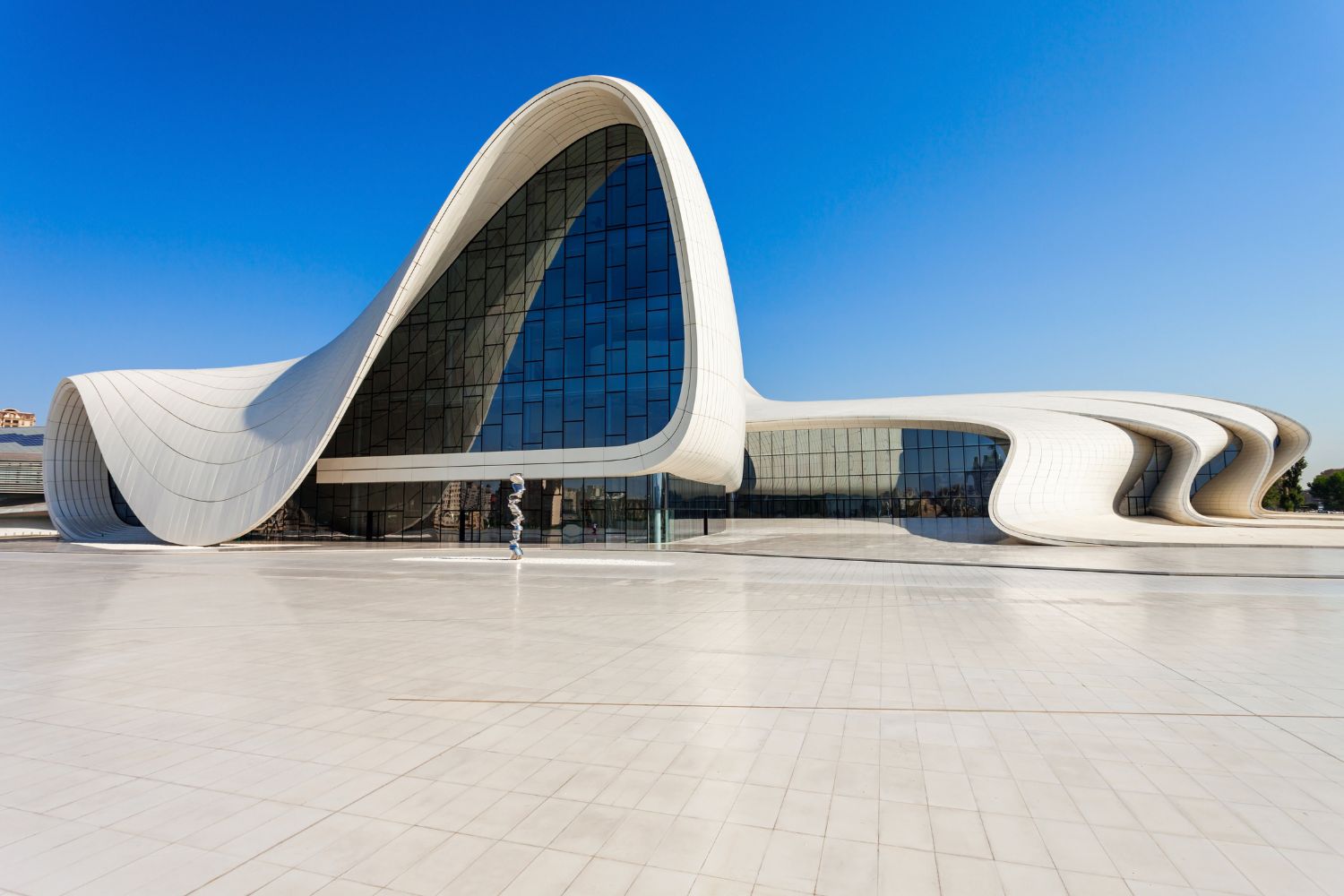
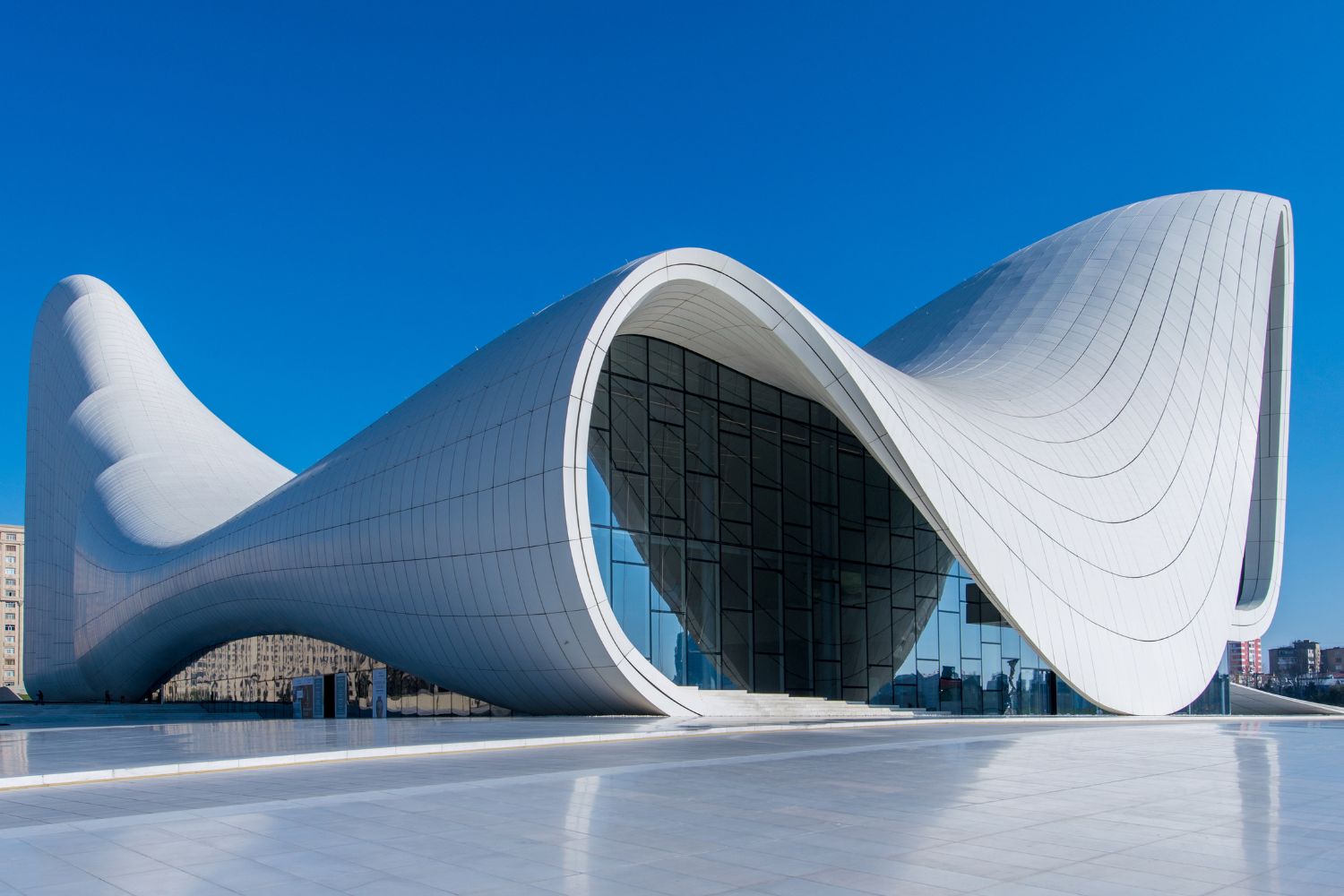
Hadid’s extensive use of parametric design allowed her to produce complex, fluid forms that would be impossible to draft by hand. This method uses algorithms and computational processes to generate designs, enabling precise control over curvature, volume, and surface. The Heydar Aliyev Center in Baku is the clearest illustration of this: its continuous, undulating surfaces were only achievable through digital parametric tools. Parametric design also became central to her interior work, where digitally generated forms shaped everything from ceiling panels to reception desks. For a broader view of architects using this approach, see 10 Notable Architects Who Excel in Parametric Design.
💡 Pro Tip
If you are studying parametric design and want to work in the tradition Hadid established, start with Rhinoceros 3D combined with the Grasshopper plugin. This is the primary software environment used at ZHA and most parametric-focused studios. Learning to build definition scripts, not just model shapes, is the skill that separates parametric thinkers from parametric imitators.
Innovations in Structural Engineering
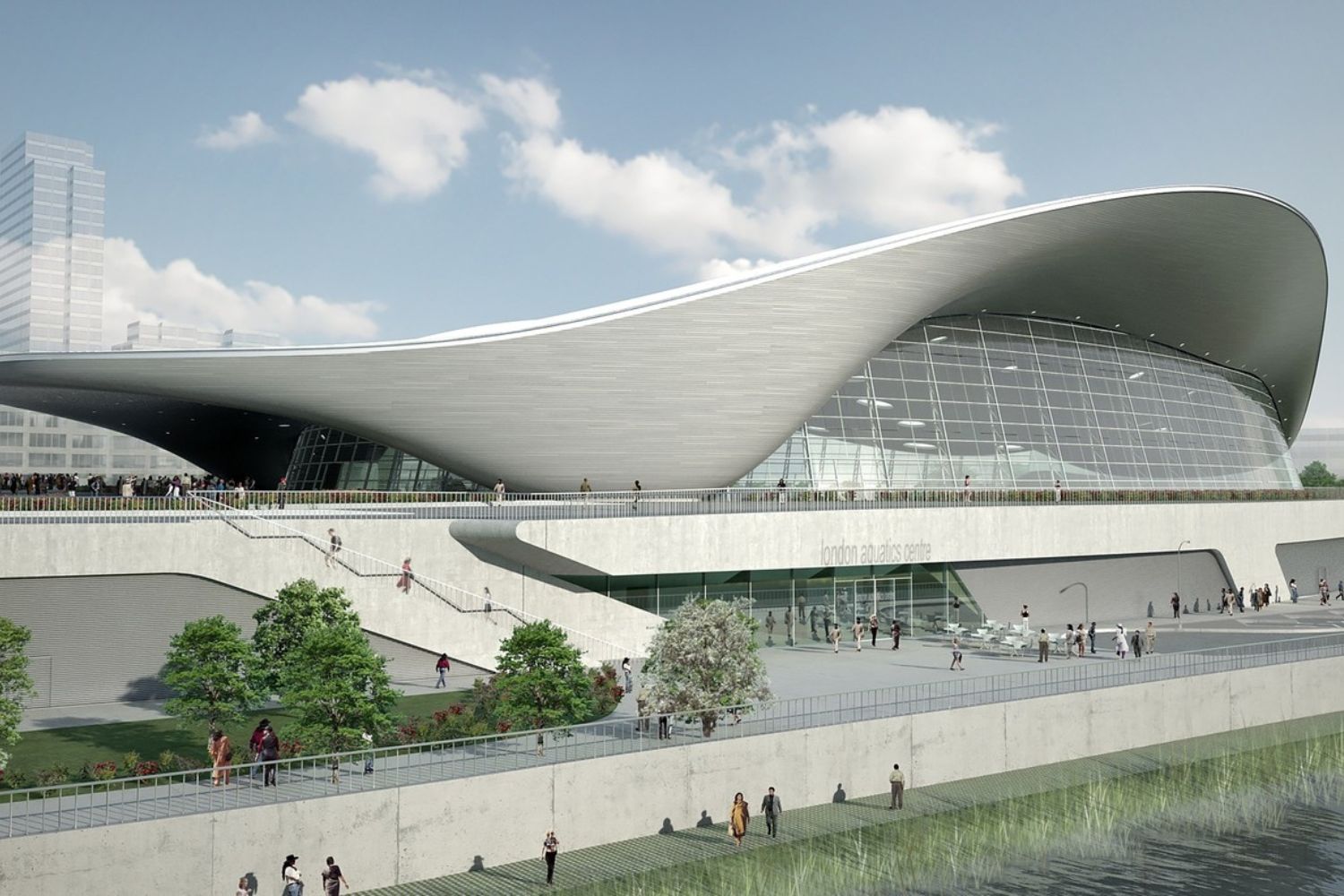
Hadid’s work also features significant advances in structural engineering. She regularly collaborated with engineers to push the limits of materials and construction methods. The London Aquatics Centre exemplifies this, incorporating a wave-like roof structure that required careful engineering to achieve both aesthetic and functional goals. Her use of glass fiber-reinforced concrete (GFRC) and advanced steel frameworks became defining characteristics of her construction approach.
What Are the Most Iconic Projects of Zaha Hadid?
Zaha Hadid’s work is best understood through the buildings themselves. The following projects represent different phases of her practice and show how her ideas evolved from theory into built form. For a broader survey, see our list of Top 10 Iconic Buildings by Zaha Hadid.
The Heydar Aliyev Center in Azerbaijan
The Heydar Aliyev Center, located in Baku, represents the fullest expression of Hadid’s fluid, dynamic approach. The building’s curved forms, free of sharp angles, create a continuous transition between plaza and structure. Its design relied heavily on parametric modeling, producing complex geometries that required advanced computational design techniques. Covering 57,519 square meters, the center functions as a cultural hub containing a museum, auditorium, and gallery spaces, contributing significantly to Azerbaijan’s cultural landscape. The combination of glass fiber-reinforced concrete and steel made the undulating form structurally possible.
London Aquatics Centre
The London Aquatics Centre, built for the 2012 Olympics, shows Hadid’s ability to merge aesthetics with performance requirements. The wave-like roof, inspired by the motion of water, required precise structural engineering to achieve. Designed to seat 17,500 spectators during the Games, the structure transitioned to a smaller community capacity afterwards, which required flexible planning from the outset. The building also incorporated natural ventilation and extensive daylighting, reflecting a commitment to sustainability within a high-profile public brief.
MAXXI Museum in Rome
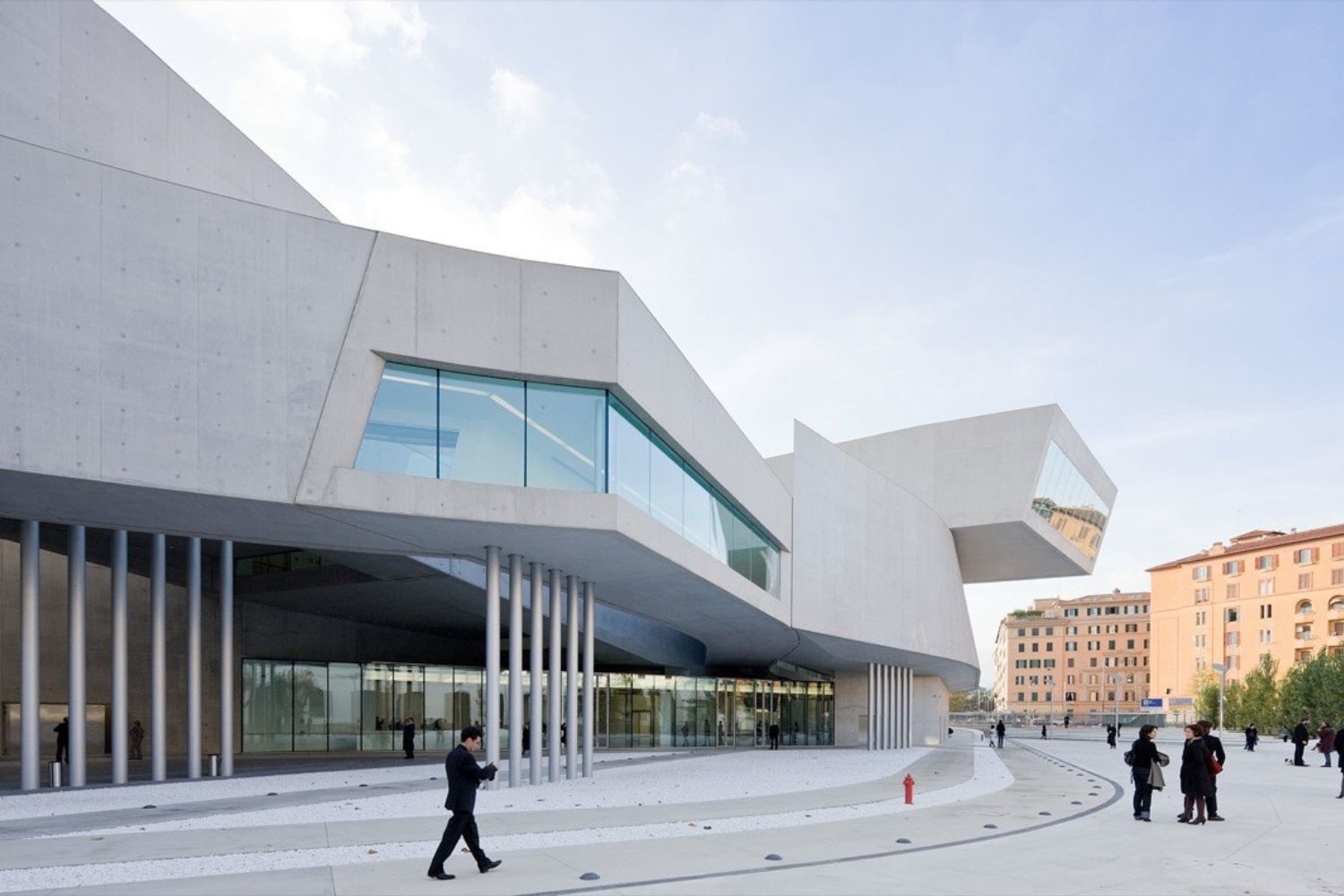
The MAXXI National Museum of 21st Century Arts in Rome is another defining example of Hadid’s spatial thinking. Completed in 2010, it won the Stirling Prize for its reinterpretation of museum space. The building features interconnecting galleries with flowing concrete walls that move visitors through the interior without conventional corridors. This project demonstrates how Zaha Hadid design principles reshape not just exteriors but the entire spatial experience within a structure.
These projects not only illustrate Hadid’s signature style but also highlight her contributions to advancing architectural techniques and materials, leaving a lasting mark on the built environment.
💡 Pro Tip
When studying Hadid’s projects for design inspiration, do not focus only on the exterior form. The interior spatial sequences, especially in the MAXXI Museum and the Heydar Aliyev Center, show how her architectural language works at the human scale. Visiting the buildings in person, or studying detailed section drawings, reveals design thinking that photographs rarely capture.
The Legacy of Zaha Hadid Style in Contemporary Architecture
The Zaha Hadid style continues to shape contemporary architecture long after her passing in 2016. Zaha Hadid Architects (ZHA), now led by Patrik Schumacher, carries her design principles forward in projects across the world. According to ZHA’s official archive, the firm has delivered over 950 projects across 44 countries, with a staff of approximately 400 representing 55 nationalities. The ongoing work, spanning airports, skyscrapers, and cultural institutions, demonstrates how deeply the Zaha Hadid designer ethos has been embedded into the practice.
Her influence extends beyond her own firm. A new generation of architects, many of whom studied her work at institutions like the AA and architecture schools globally, now incorporate parametric and fluid design principles into their own projects. The impact of Zaha Hadid design can be seen in everything from public buildings to high-end residential interiors. She was also a defining role model for women in architecture, becoming the first woman to receive the Pritzker Prize and, according to ZHA’s own reporting, helping build a firm where women made up 47% of the upper middle salary quartile by 2024.
Challenges and Achievements
Zaha Hadid faced significant obstacles throughout her career. Her perseverance and talent led to achievements that changed the trajectory of architecture as a profession.
Overcoming Industry Barriers
Hadid regularly encountered resistance in a traditionally male-dominated field. Early in her career, many considered her designs radical and impractical. Despite these obstacles, she proved critics wrong through her built work. Her Vitra Fire Station project (1993) demonstrated her vision clearly and broke from conventional architectural norms, opening doors to larger commissions. As an architect who refused to compromise, she became a role model for women in architecture worldwide.
Awards and Recognition
Zaha Hadid’s work earned wide institutional recognition. In 2004, she became the first woman to receive the Pritzker Architecture Prize, one of the field’s highest honors. Her accolades also include the Stirling Prize in 2010 and 2011 for the MAXXI Museum in Rome and the Evelyn Grace Academy in London, respectively. In 2012, she was made a Dame Commander of the Order of the British Empire by Queen Elizabeth II. She received the Royal Institute of British Architects’ Gold Medal in 2016, recognizing her as a world-renowned architect. TIME magazine also named her the world’s top thinker in 2010.
✅ Key Takeaways
- Zaha Hadid’s design philosophy drew directly from Russian Constructivism, Suprematism, and the organic forms found in nature
- Parametric design was the core technical tool that made her most complex forms buildable, from the Heydar Aliyev Center to the MAXXI Museum
- Her design language applied consistently from the building scale to furniture and interior design, through studios like Zaha Hadid Design
- She broke significant professional barriers, becoming the first woman to win the Pritzker Architecture Prize in 2004
- ZHA continues her work with 950+ projects across 44 countries, applying the same parametric and fluid design principles she established
Conclusion
Zaha Hadid’s journey reveals the mark she left on architecture. Her early fascination with abstract art and nature translated into designs that forced the construction industry to develop new materials and methods to keep up. Signature projects of Zaha Hadid like the Heydar Aliyev Center, London Aquatics Centre, and MAXXI Museum show her command of parametric design and structural engineering.
Her ability to blend technology and creativity reshaped architectural norms, from monumental building forms to refined Zaha Hadid interior design pieces. Challenges in a male-dominated field did not stop her; the Vitra Fire Station alone was enough to change how the profession regarded her. Awards including the Pritzker Architecture Prize, Stirling Prize, and RIBA Gold Medal recognize her achievements formally, but the broader legacy is visible in how architects around the world now think about form, computation, and space.
The Zaha Hadid style continues to inspire architects and designers globally, setting benchmarks in design and demonstrating that a clear architectural vision, pursued consistently, can reshape the built environment at every scale.
Frequently Asked Questions
What is Zaha Hadid’s architecture style?
Zaha Hadid’s style is often described as parametric and neo futurist, marked by flowing curves, fragmented geometry, and fluid concrete and glass forms. She used computational design to create dynamic shapes that seem to be in motion.
What buildings did Zaha Hadid design?
Her notable buildings include the Heydar Aliyev Center in Baku, the Guangzhou Opera House, the London Aquatics Centre, the MAXXI museum in Rome, and Galaxy SOHO in Beijing.
Was Zaha Hadid the first woman to win the Pritzker Prize?
Yes. In 2004 Zaha Hadid became the first woman to receive the Pritzker Prize, architecture’s highest honor, recognizing her bold and original body of work.


4 Comments




Interior Design for Commercial Spaces: Enhancing Functionality and Brand Identity
Commercial interior design has to serve brand, function and regulation at once....
 Begum Gumusel4 Mins read
Futuro House Production Revived in Finland After Decades-Long Hiatus
A Facebook listing for abandoned moulds led to the first new Futuro...
 illustrarch Editoral Team3 Mins read
Building Your Dream Home in NSW: What You Should Know About Montgomery Homes
Montgomery Homes has been building across Sydney, Newcastle, the Hunter, Wollongong and...
illustrarch Editoral Team4 Mins read
Designing a Home Theater: Where Drapery Fits Into the Plan
In a media room the curtains are a performance layer, not decoration....
illustrarch Editoral Team3 Mins read


Zaha Hadid did some interesting things in architecture. It’s nice to see how her background influenced her designs.
The article gives a decent overview of Zaha Hadid’s work. I didn’t know she faced so many challenges in her career.
Hadid’s designs are unique, and it’s cool that she used nature as inspiration. The projects mentioned sound impressive.
I love how Zaha Hadid’s buildings look like they’re about to take off into space! The Heydar Aliyev Center seems like a UFO that decided to land in Azerbaijan. Who needs sharp angles when you can have curves that make you feel dizzy just looking at them? It’s like she took geometry class and said, ‘Nah, let’s do the opposite!’