

How to Write an Architect CV With No Experience
A practical guide to writing an architect CV with no experience, covering format choices, the sections that matter most, how to describe academic projects, and ways to tailor each application to a firm.
 Furkan Sen18 July 20266 Mins read183

Table of Contents Show
To write an architect CV with no experience, lead with your education, studio projects, and software skills instead of job history. A focused one page layout, clear academic achievements, and tailored keywords help your architect CV pass screening and reach a hiring reviewer who decides on interviews.
Searching for a cv architect template is a good start, but a template only works once you know what belongs in each section. Most graduates and students apply with the same gap: limited paid work. The firms reading your application already expect that. What they look for is evidence that you can think spatially, use the right tools, and finish what you start. Your job is to present that evidence in a way a busy reviewer can read in under a minute.
What Makes an Architect CV Different With No Experience?

An architect CV is part document, part design sample. The person reading it judges your typography, spacing, and hierarchy before they read a single word. With no professional history to fill the page, you shift the weight toward what you do have: coursework, design studios, competitions, and software fluency. The structure stays the same as any architect CV, but the content order changes.
Put education and academic projects near the top, ahead of any short part time roles. A reviewer scanning a stack of applications wants to see your degree, your tools, and one or two projects with your specific contribution. Keep the file to a single page in most cases, since early career applications rarely justify two. For broader formatting choices, the University of Pennsylvania career services resume and CV guide offers section by section advice that transfers well to architecture.
⚠️ Common Mistake to Avoid
A frequent error is dumping every software icon and skill onto the page to look busier. Reviewers read this as padding. List only the tools you can actually use in a studio setting, and group them by category so the page stays readable rather than crowded.
Choosing the Right Architect CV Format
Three formats work for entry level applicants. A reverse chronological layout still suits you if you have internships or part time roles to date. A skills based format moves software, modeling, and design abilities to the top, which helps when work history is thin. A hybrid blends both and is the safest default for students.
Whichever you pick, treat the layout as a design exercise. Use one or two typefaces, a consistent grid, and generous white space. Many applicants start from a ready made structure and adapt it, and there are plenty of architectural resume templates built for this purpose. A clean architect CV template saves time, but always edit the placeholder text so the document sounds like you and not the sample.
💡 Pro Tip
Before you export, open the job listing and copy the exact software and skill terms it names, such as Revit, Rhino, or BIM coordination. Many firms filter applications through tracking systems, so matching their wording word for word raises the odds your CV reaches a human reviewer.
What to Include on an Architect CV With No Experience

Every strong architect CV covers the same core sections. The difference for a beginner is how you fill them. For a deeper section by section breakdown, this architecture resume guide is worth a read. Below is a quick reference for what each part should hold when you have little or no paid work to list. A good cv architect example always keeps these parts visible and balanced.
Architect CV Sections at a Glance
The table maps each section to content that works for students and recent graduates:
| Section | What to Include With No Experience |
|---|---|
| Professional Profile | Two or three lines on your focus, main software, and the role you want |
| Education | Degree, school, expected graduation, strong GPA, named studio projects |
| Technical Skills | Revit, AutoCAD, Rhino, SketchUp, Adobe suite, physical model making |
| Experience | Internships, competitions, volunteering, part time work, leadership roles |
| Projects | Two to four academic or competition projects with your specific role |
| Extras | Languages, awards, study abroad, student memberships |
Education and Academic Projects
Your degree carries the most weight right now, so give it room. List your school, program, and expected graduation date. If your grades are strong, include them. Name the design studios that produced your best work, and describe one or two with a single line on the brief and your outcome. This section often does the job a work history would do for an experienced applicant.
Technical Skills and Software
Firms hire juniors partly for production speed, so software fluency matters. Group your tools into categories such as BIM and CAD, modeling, and visualization. Be honest about your level. Listing a program you touched once invites questions you cannot answer in an interview. If you have logged any practical hours toward licensure, mention it, since the NCARB Architectural Experience Program is a milestone many firms track for early career staff in the United States.
Internships, Volunteering, and Transferable Work
No design job yet does not mean no experience. A summer building survey, a volunteer community project, a campus fabrication lab role, or a retail job that taught you client patience all belong here when framed well. Describe what you did and what resulted, not just the title. If you are still hunting for placements, a focused read on architecture student internships can help you build this section faster.
📌 Did You Know?
According to NCARB data cited in 2024, architecture licensure takes an average of 13.3 years from the start of education to completion. Early internships and logged experience hours shorten that path, which is why firms value candidates who already understand the process.
How to Describe Projects When You Have No Job History
Project descriptions are where a beginner architect CV wins or loses attention. Skip vague phrases like took part in a group design. State the brief, your role, the tools you used, and a measurable result. A line such as led structural modeling for a 1,200 square meter community center in a four person studio team tells a reviewer far more than a job title would.
Pair this with a portfolio link, since the CV earns the click and the portfolio closes the case. The two documents should match in tone and typography. If you need to strengthen the visual side, this guide on building a strong architecture portfolio walks through project selection and layout in detail.
💡 Pro Tip
Quantify academic projects the way you would professional ones. Note the floor area, the team size, the timeline, and any award or shortlist. Numbers give a reviewer a sense of scope and signal that you think in real project terms, even on a student brief.
How to Tailor Your Architect CV to Each Application
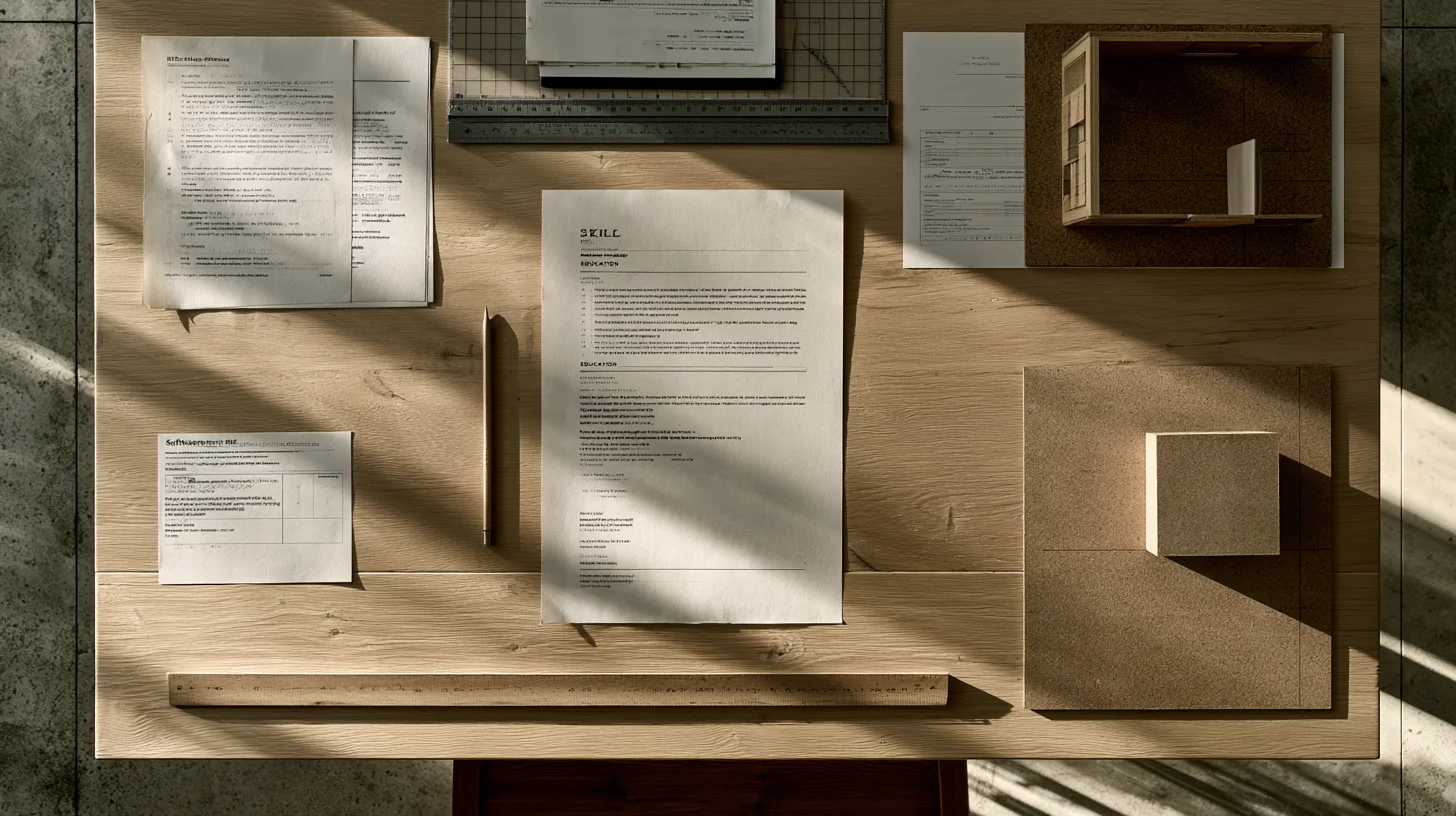
A single generic CV sent to twenty firms rarely works. Each studio has a different focus, so adjust the profile line, reorder your projects, and match the software list to what the role needs. A firm doing heavy parametric work wants Rhino and Grasshopper near the top; a residential practice may care more about documentation and Revit detailing.
Read the firm before you write. Look at their built work, their stated values, and the language in the listing. Professional bodies are a useful reference here, since the AIA career resources and the RIBA careers guidance both outline what employers expect from early career applicants. For a wider view of the first job search, this guide for newly graduated architects covers salary expectations and networking alongside the document itself.
Career guidance and licensure requirements vary by country and jurisdiction. Always confirm the rules with your local architecture registration board before relying on them.
Frequently Asked Questions

How long should an architect CV be with no experience?
Keep it to one page. Without years of work history, a single well organized page reads stronger than a stretched two page document. Use the space for education, software, and two to four academic or competition projects with your specific role described clearly.
What skills should I put on an architect CV as a beginner?
List the software you can genuinely use, such as Revit, AutoCAD, Rhino, SketchUp, and the Adobe suite, then add model making, hand drawing, and any BIM coordination exposure. Group them by category. Honesty matters, since you may be asked to prove any tool you claim during an interview.
Do I need a portfolio along with my architect CV?
Yes. The CV gets you the click and the portfolio earns the interview. Include a link to a clean digital portfolio that matches your CV in typography and tone. Two or three strong projects there will do more than ten weaker ones.
What is the difference between a CV and a resume in architecture?
In much of Europe the terms are used the same way for a short one to two page document. In the United States a resume is brief while a CV can run longer for academic roles. For most firm applications, treat your architect CV as a concise one page summary of education, skills, and projects.
Where to Go From Here
Your Next Step: Open a blank one page document today, build the six sections from the table above, then rewrite one academic project description using a real number for scope, team size, or timeline before you send a single application.








Can You Become a Licensed Architect Through Experience Only?
Twenty-one US jurisdictions let candidates qualify for licensure with documented experience instead...
 Sinan Ozen5 Mins read

InDesign Alternatives for Architects: 6 Tools That Handle Portfolios and Boards
Adobe InDesign is still the default layout tool in architecture, but the...
Furkan Sen7 Mins read

How to Get Work Experience in Architecture Before Graduation
Waiting on one summer internship is the slowest way into practice. This...
Sinan Ozen6 Mins read

What It’s Like Working as an Architect: 5 Things Architecture School Doesn’t Teach You
Architecture school teaches design. Practice runs on construction documents, fee phases, consultant...
Furkan Sen7 Mins read


Leave a comment