

How Long Does an Architecture Degree in the UK Take? RIBA Parts 1, 2 and 3 Explained
Thinking about studying architecture in Britain? This guide breaks down the standard seven-year route, from a three-year Part 1 degree through a Part 2 masters and the Part 3 professional exam, including practical experience and alternative routes.
 Sinan Ozen28 July 20268 Mins read369

Table of Contents Show
An architecture degree in the UK takes around seven years to qualify as a registered architect. The standard path runs through three stages set by RIBA and the ARB: a three-year Part 1 degree, a two-year Part 2 masters, and the Part 3 professional exam, plus at least two years of practical work experience.
That seven-year figure surprises a lot of people who assume architecture works like most other degrees, where you graduate in three or four years and start the job. In Britain, the academic study is only part of the story. You also need supervised experience inside a real practice and a final professional exam before you can legally call yourself an architect and join the official register.
This guide breaks the timeline into its real parts, shows where the extra years come from, and looks at the faster routes that now exist. If you are weighing up the commitment before applying through UCAS, knowing the full shape of the journey helps you plan finances, gap years, and which course to pick.

How long does an architecture degree in the UK take, stage by stage?
The most direct route to qualifying takes a minimum of seven years, according to the Architects Registration Board (ARB). That total splits into five years of full-time university study and a minimum of two years of supervised practical experience. Many people take longer, often eight or nine years, because the year-out placements rarely line up perfectly and some students pause between stages.
It helps to think of the qualification as two tracks running in sequence rather than one long degree. The academic track gives you the design ability, the technical knowledge, and the theory. The practical track teaches you how a project survives contact with budgets, planning officers, contractors, and clients. Neither track alone makes you an architect in the UK, which is why the timeline is longer than a single university course.
Here is how a typical architecture degree in the UK is structured across the three RIBA parts:

The Seven-Year Qualification Timeline
The table below summarises each stage, the qualification it leads to, and the usual time it takes.
| Stage | What it is | Qualification | Typical time |
|---|---|---|---|
| RIBA Part 1 | Undergraduate degree | BA or BSc (Hons) Architecture | 3 years |
| Year out | Practical experience in a practice | Logged on a PEDR record | 1 year |
| RIBA Part 2 | Postgraduate degree | MArch, MA or Diploma | 2 years |
| Further experience | More practice time before the final exam | 1 year (minimum) | |
| RIBA Part 3 | Professional practice exam | Leads to ARB registration | 12 to 24 months |
Add the academic study and the experience together and you reach the seven-year minimum. The final exam often overlaps with paid work, so it does not always add a clean extra year on top.
🔢 Quick Numbers
- The UK Architects Register lists more than 43,000 architects (Architects Registration Board)
- Women make up 31.9% of architects on the Register (Architects Registration Board)
- A minimum of 24 months of practical experience is required before sitting the Part 3 exam (Architects Registration Board)
The three RIBA stages explained
The whole system is built around three checkpoints, known as Parts 1, 2 and 3. They are set by the Royal Institute of British Architects and overseen for registration purposes by the ARB. You can read the official framework on the RIBA become an architect pages, but here is what each stage actually involves.

RIBA Part 1: the undergraduate degree
Part 1 is the first university stage and usually runs for three years full time. You earn a BA or BSc in Architecture and spend most of your time in design studio, supported by modules in history, technology, structures, and environmental design. This is where you learn to think spatially, build models, and present schemes to tutors in regular crit sessions.
Entry normally asks for strong A-level results and a portfolio of creative work. Most courses do not demand specific subjects, though maths, physics, and art all help. If you are still choosing your A-levels, our guide to what subjects you need to study architecture covers the academic mix that admissions tutors look for.
RIBA Part 2: the masters stage
Part 2 is the postgraduate stage and takes two more years of full-time study, normally an MArch, MA, or Diploma. The work becomes more demanding, with complex briefs, larger urban projects, and a stronger focus on design research and theory. A master degree in architecture in the UK at this level is what pushes your design thinking from competent student work toward professional standard.
Many students complete a year of practice between Part 1 and Part 2, which is why the calendar stretches beyond a simple five years of back-to-back study. Some return to the same university, while others move to a different school to study under particular tutors or design units.
💡 Pro Tip
Start logging your hours on the PEDR (Professional Experience and Development Record) from your very first day in practice, even during a summer placement. Examiners review this record at Part 3, and students who track experience early almost always reach the 24-month requirement faster than those who scramble to backfill it later.

RIBA Part 3: the professional practice exam
Part 3 is the final stage and it is not another degree. It is a professional exam covering law, contracts, management, and ethics, sat while you work in a practice. Most candidates complete it within 12 to 24 months depending on their job and study pace. Passing Part 3 is the moment you can apply to join the register and use the protected title of architect.
Because Part 3 sits alongside paid employment, it rarely adds a clean extra year to the calendar. Most candidates are already working and earning while they prepare, so the exam runs in parallel with the experience requirement rather than after it.
Why practical experience adds years to the journey
The reason a UK architecture qualification takes seven years rather than five is the supervised experience built into it. You need at least 24 months of logged practice, and the ARB requires that at least 12 of those months fall within the two years directly before your Part 3 exam. At least 12 months should also be completed in the UK, the EEA, Switzerland, the Channel Islands, or the Isle of Man.
This experience is not optional padding. It is where you learn how buildings are actually procured, how contracts work on site, and how to handle clients and budgets. The classic structure places one year of practice after Part 1 and a further year after Part 2, which is exactly where the extra time comes from.
📌 Did You Know?
The Architects Registration Board is changing the rules for qualification. Its reforms move away from the long-standing Part 1, 2 and 3 labels toward a set of competency outcomes, so the exact shape of UK architecture education is set to shift over the coming years. The seven-year benchmark, however, remains the realistic expectation for new entrants.

How long does a master degree in architecture in the UK take?
If you already hold a Part 1 degree, the Part 2 stage on its own takes two years full time. An architecture master degree in the UK is the postgraduate piece of the puzzle, not a standalone route to becoming an architect. You still need Part 1 behind you and Part 3 ahead of you for it to count toward registration.
Related fields run on their own timelines. A masters degree in landscape architecture in the UK, for example, typically takes one to two years and leads toward a different professional body, the Landscape Institute, rather than the ARB. If your interest sits between buildings and the wider environment, that is a separate but parallel path worth checking before you commit.
Are there faster or alternative routes?
The seven-year route is the traditional one, but it is no longer the only option. A few alternatives can change the timeline or the way you fund it.
Architecture apprenticeships
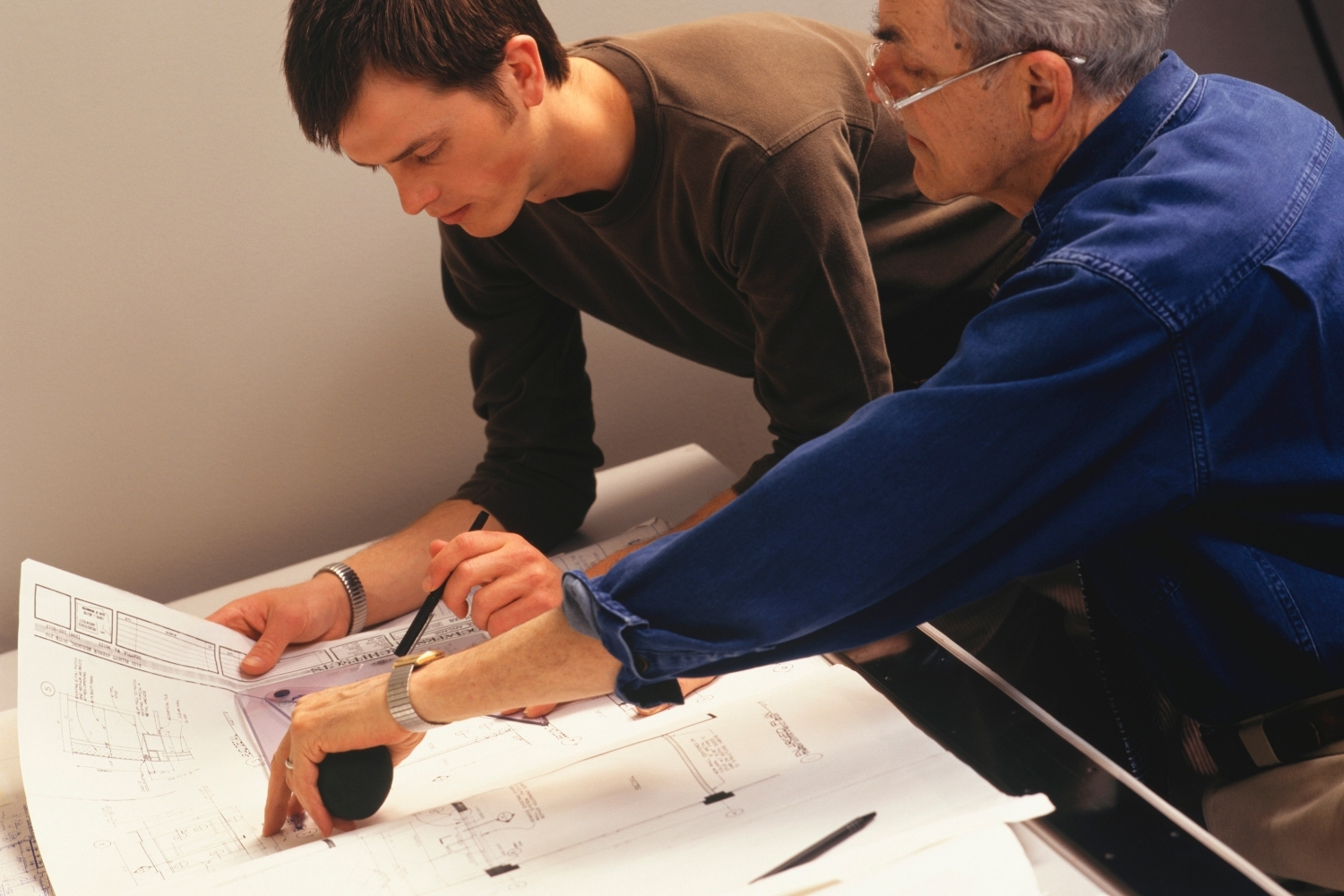
The architect apprenticeship lets you earn a salary while you study, with your employer and a university sharing your training. It still covers Part 1, Part 2, and Part 3 content, and it still takes roughly the same number of years, but you avoid much of the tuition debt because the apprenticeship is funded through the employer. For many people this is the single biggest change to architecture education in a generation.
Online and part-time architecture degrees
A fully online degree in architecture in the UK is rare at the qualifying level, because studio teaching and physical model-making are hard to replicate remotely. Some providers offer blended or part-time study, and an online masters degree in architecture in the UK may suit those already working in practice. Part-time study spreads the workload over more years, so the calendar gets longer even as the weekly pressure eases. Always confirm that any course holds ARB and RIBA recognition before enrolling, since an unrecognised qualification will not count toward registration.
For those who want to work in the built environment without the full licence, there are other doors in. Our look at how to become an architect without a degree explains the limits and the realistic alternatives, including architectural technologist and assistant roles.
What does the time cost in money and effort?
Time is only one part of the commitment. Across five years of tuition, living costs, model materials, software, and exam fees, an architecture education is a serious financial decision. The apprenticeship route removes most tuition costs, while the traditional route can leave graduates with substantial student debt before they earn a full architect salary.
For a fuller picture of the spending involved, our breakdown of how much it costs to become an architect sets out tuition, registration, and exam fees alongside the long-term return. Reading it next to this timeline gives you both halves of the decision, the years and the pounds.
Cost and salary figures vary by university, region, and year of study. Always check current fees with individual institutions and confirm course recognition with the ARB before committing.
Where to Go From Here
Choosing the right school matters as much as understanding the timeline, since the studio culture you train in shapes how you design for years afterward. If you want to compare options and routes in more depth, our guides to how to become an architect and the wider education and career path walk through each step in detail.
Your Next Step: Use the UCAS architecture and planning subject guide to shortlist three or four ARB-recognised courses, then check each one against the seven-year route so you know exactly where your year-out placements will fall before you apply.
Frequently Asked Questions
How many years is an architecture degree in the UK?
The university study alone is five years, made up of a three-year Part 1 undergraduate degree and a two-year Part 2 masters. To fully qualify and register as an architect, you add at least two years of practical experience and the Part 3 exam, reaching a minimum of seven years in total.
Can you become an architect in the UK in less than seven years?
Seven years is the minimum recognised route set by the ARB, so qualifying faster is difficult. Apprenticeships run on a similar timeline but remove most tuition costs. The main way the journey shortens is through holding existing recognised qualifications, not by skipping the practical experience or the Part 3 exam.
Do I need a masters to be an architect in the UK?
Yes. The Part 2 stage is a postgraduate qualification, usually an MArch or equivalent, and it is required for ARB registration. A bachelor’s degree on its own only completes Part 1, which is not enough to call yourself an architect or join the register.
Is a UK architecture degree recognised abroad?
Many UK architecture qualifications are respected internationally, but recognition depends on the destination country and its own registration body. If you plan to practise overseas, check the local regulator’s requirements early, as some countries ask for extra exams or experience before they accept a UK qualification.
What is the difference between RIBA and ARB?
The ARB is the statutory regulator that holds the official register and protects the title of architect by law. RIBA is a membership organisation that sets education standards, validates courses, and supports the profession. You must register with the ARB to practise, while RIBA membership is professional but voluntary.






Can You Become a Licensed Architect Through Experience Only?
Twenty-one US jurisdictions let candidates qualify for licensure with documented experience instead...
Sinan Ozen5 Mins read

InDesign Alternatives for Architects: 6 Tools That Handle Portfolios and Boards
Adobe InDesign is still the default layout tool in architecture, but the...
 Furkan Sen7 Mins read

What It’s Like Working as an Architect: 5 Things Architecture School Doesn’t Teach You
Architecture school teaches design. Practice runs on construction documents, fee phases, consultant...
Furkan Sen7 Mins read
Architecture Competitions for Students: Are They Worth Your Time?
A practical look at whether architecture competitions are worth a student's time,...
Sinan Ozen6 Mins read


Leave a comment