

Vizafogó Kindergarten Budapest by Archikon Architects
Vizafogó Kindergarten in Budapest by Archikon Architects reimagines a socialist-era prefabricated building through sensitive expansion, wooden architecture, and sustainability-focused educational design.
 Begum Gumusel18 December 20253 Mins read208

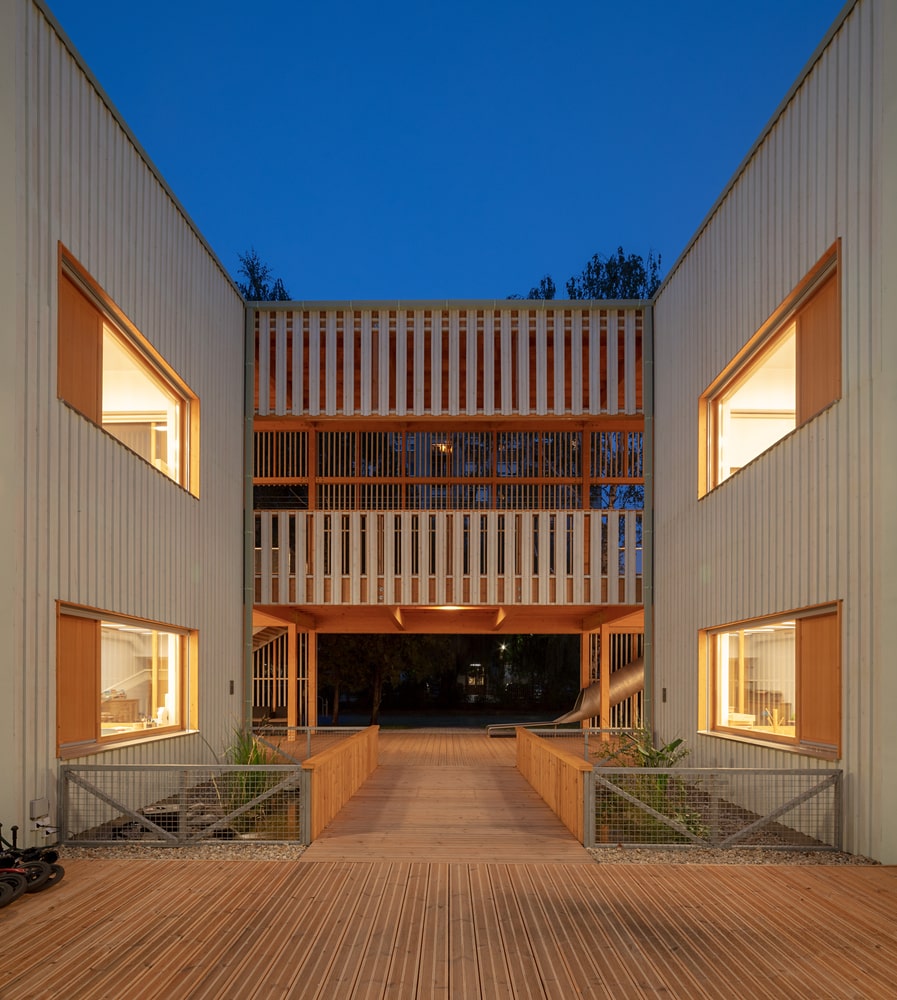

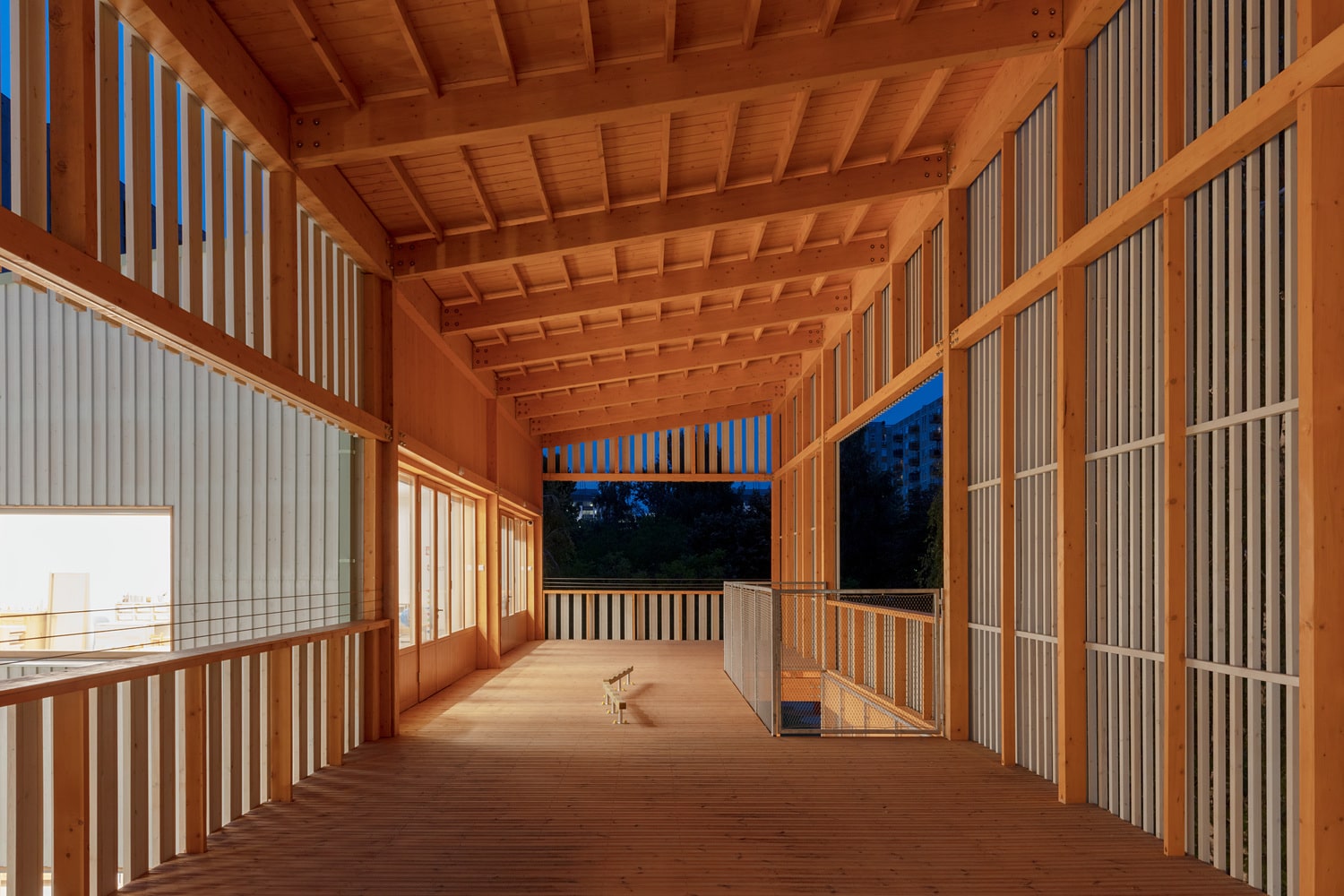
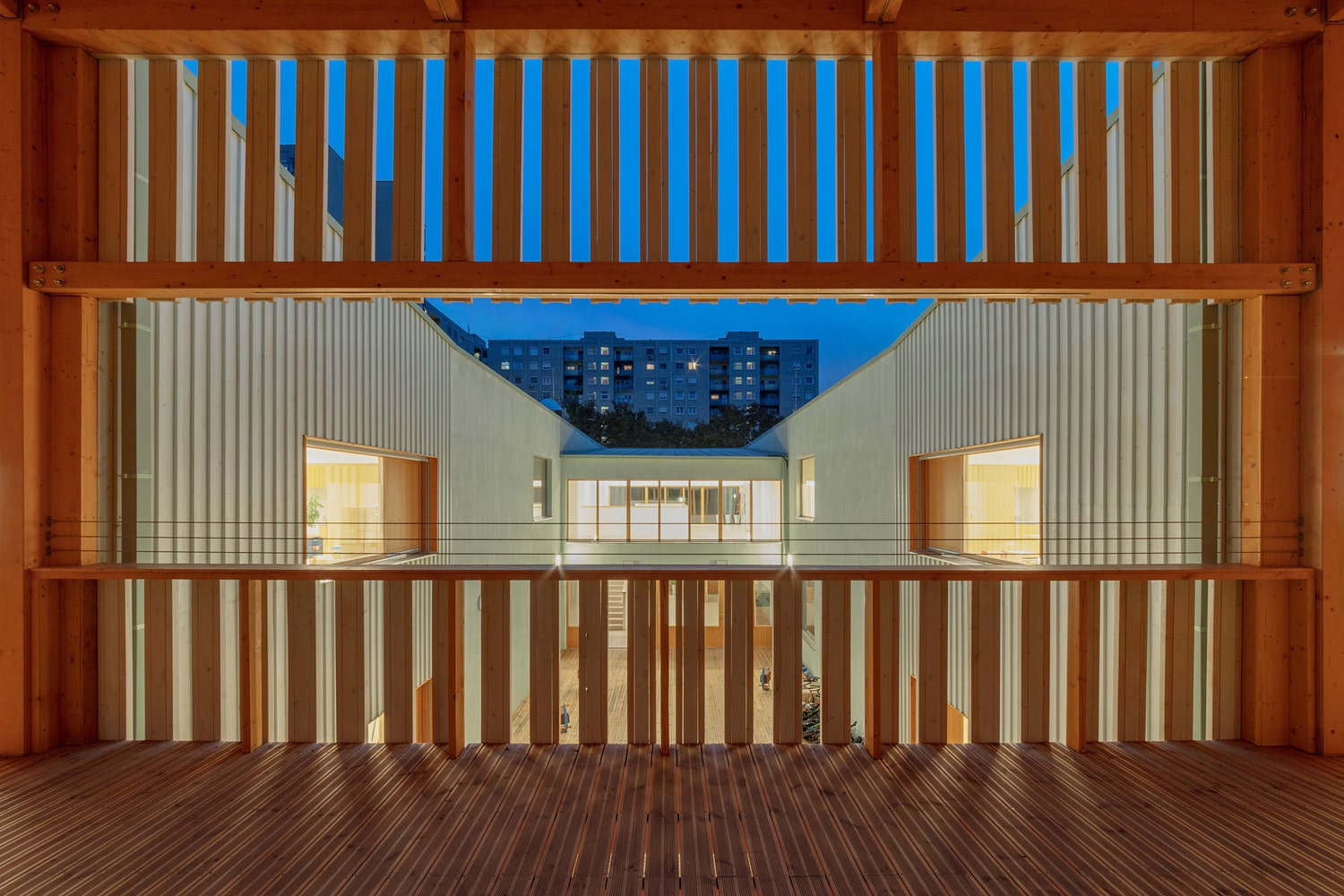
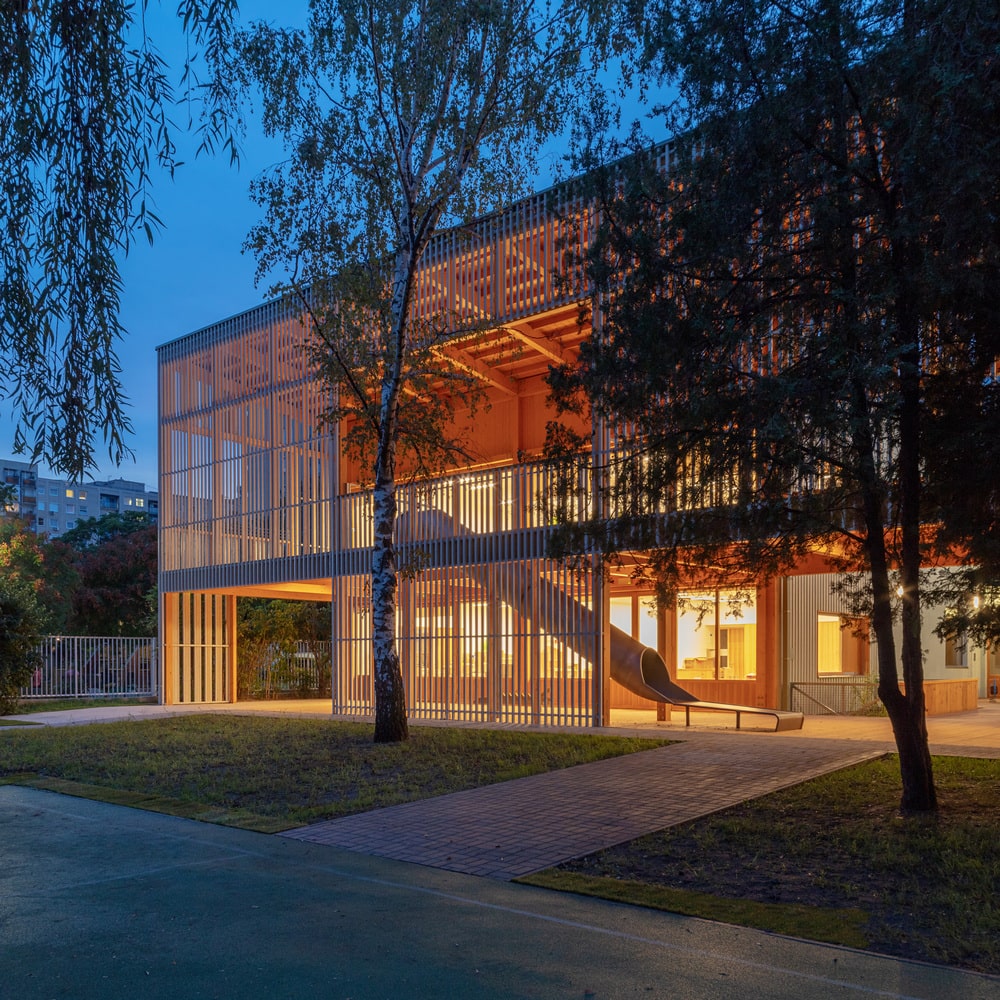
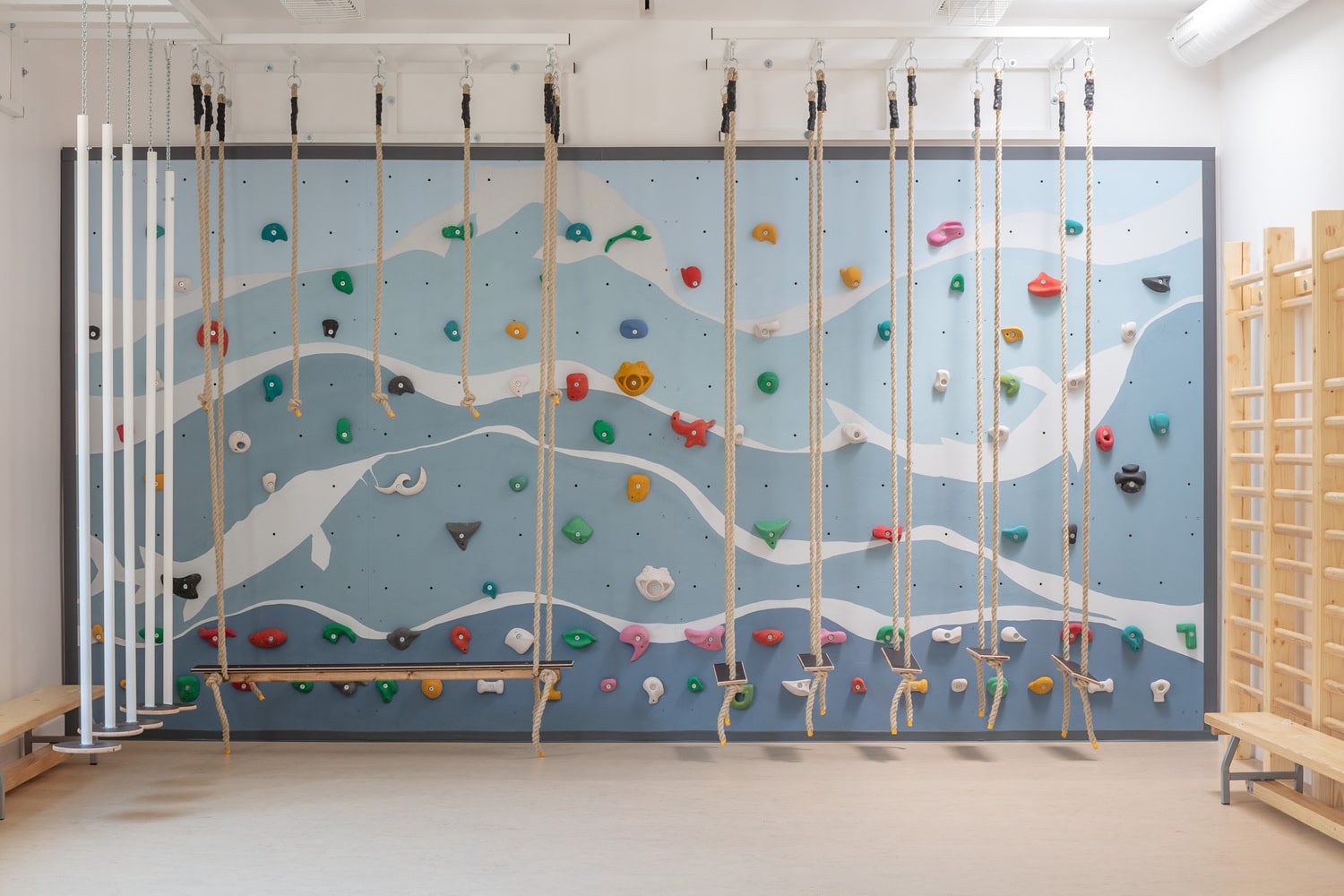
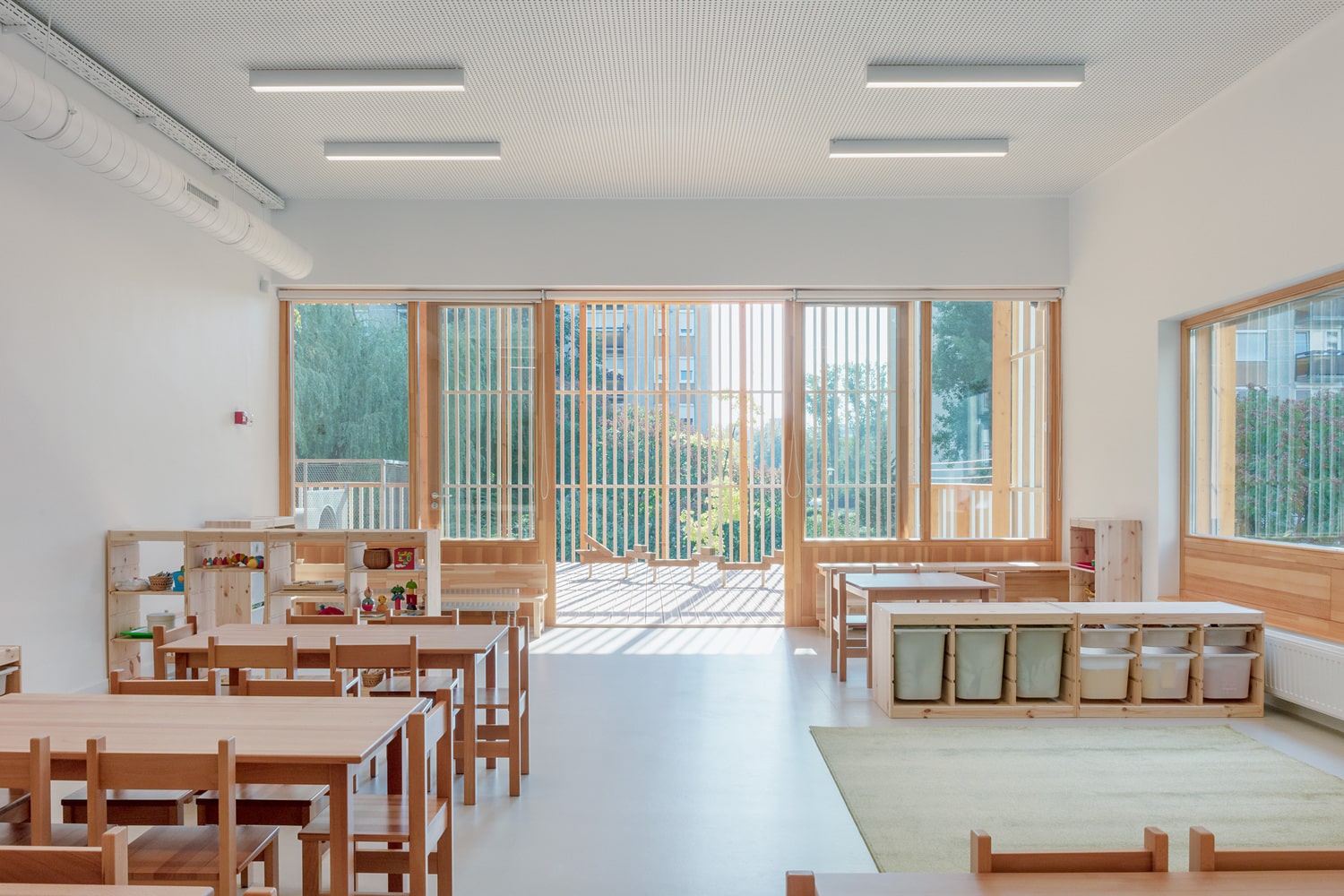


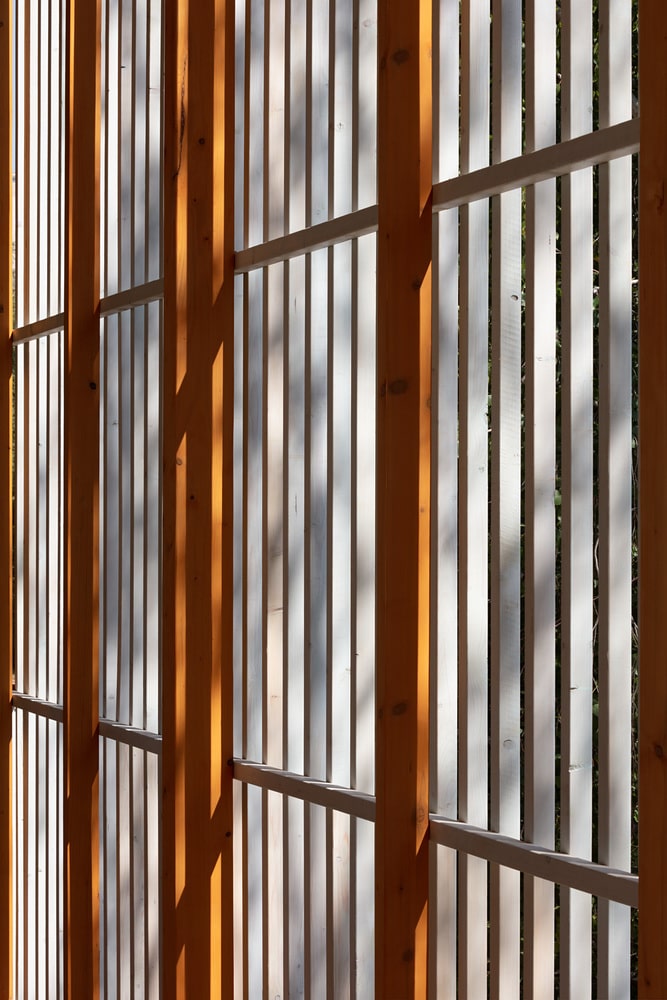

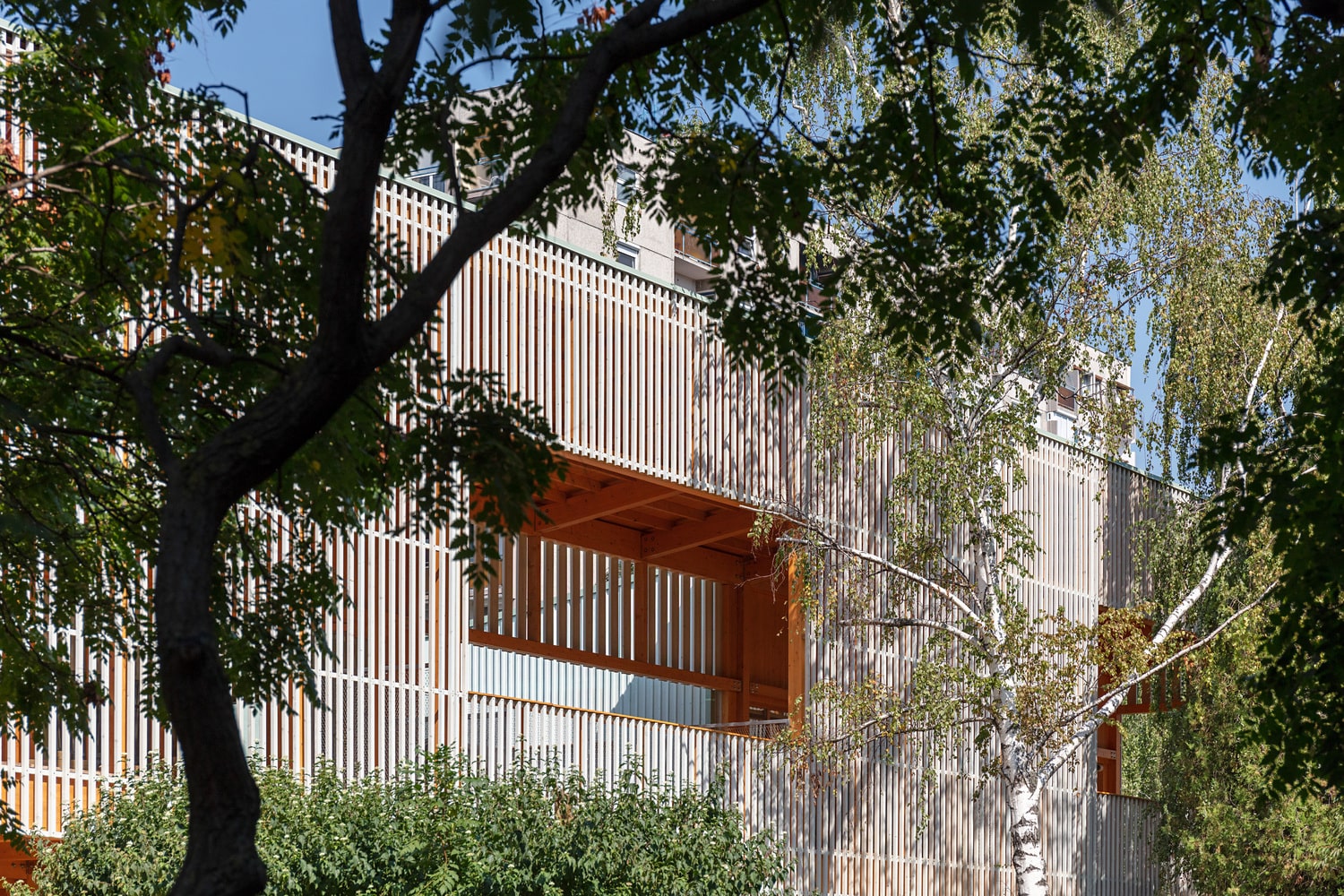

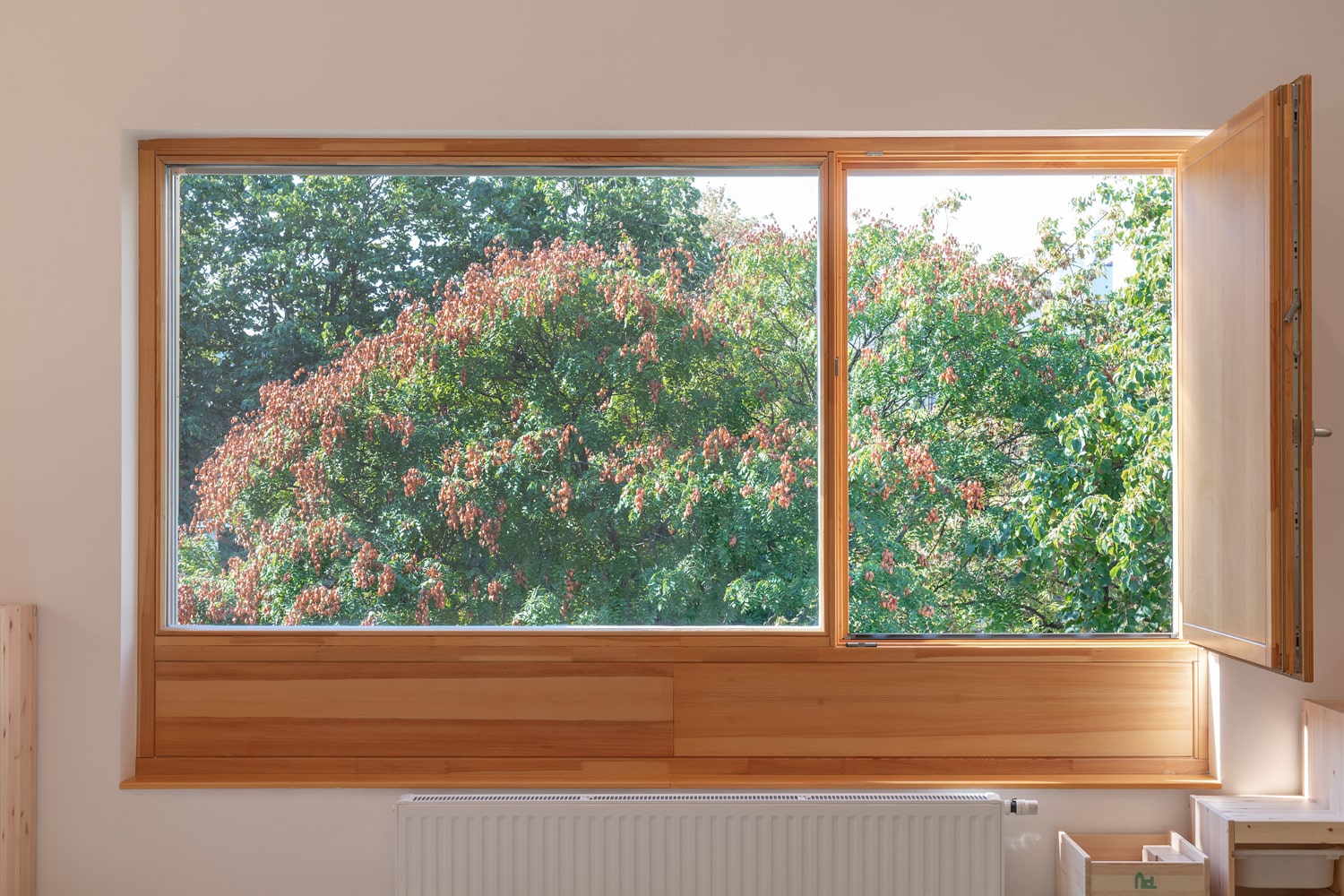
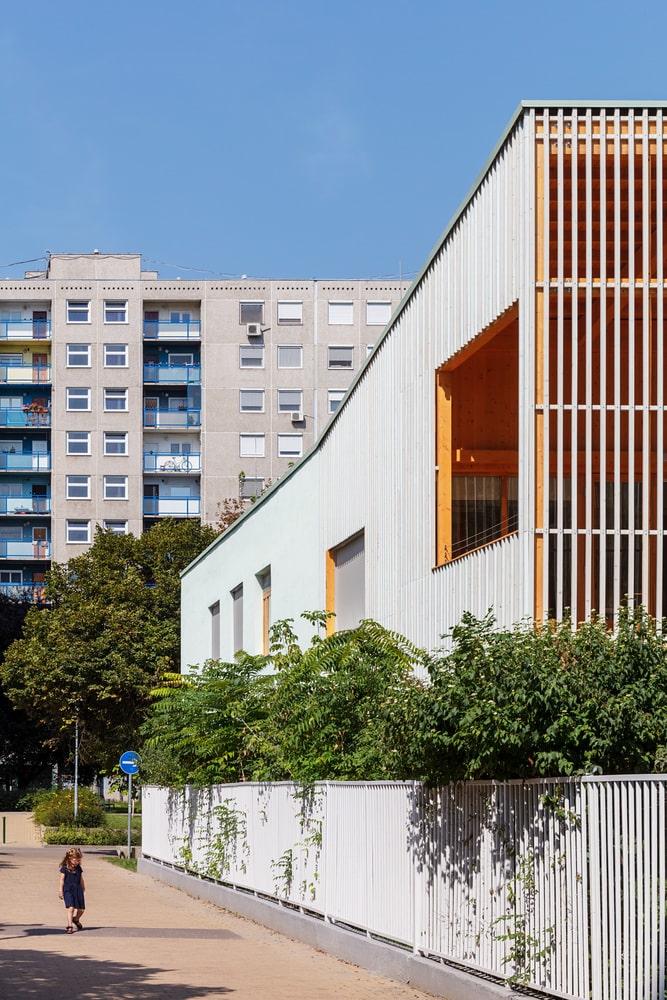
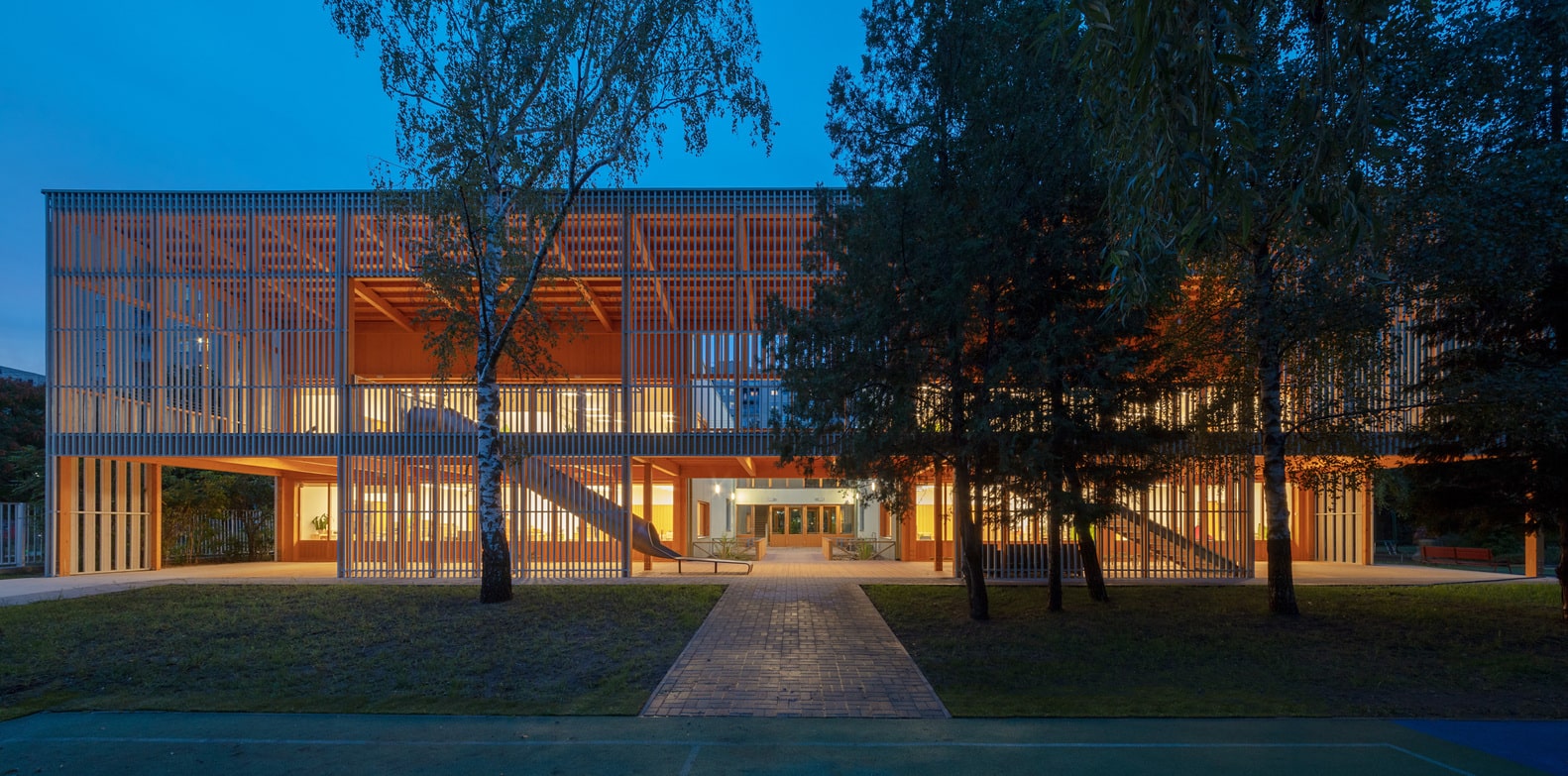
Table of Contents Show
Located near the Danube River in northern Budapest, the Vizafogó Kindergarten by Archikon Architects is a thoughtful modernization and expansion of a 1980s prefabricated building set within a dense socialist-era housing estate. Surrounded by repetitive ten-story panel blocks, the project transforms an inward-looking, rigid structure into an open, warm, and educational environment for children—one that balances architectural renewal, sustainability, and pedagogical values without erasing the past.
A Challenging Urban Context Near the Danube
The kindergarten sits at the heart of a large housing estate constructed in the second half of the 1980s as part of Hungary’s socialist prefabricated panel program. Public institutions such as schools and kindergartens were centrally positioned and isolated from car traffic, enclosed by uniform residential towers. While functional, this urban configuration often resulted in closed-off, introverted spaces with limited architectural identity.
Rather than opposing this context through contrast alone, Archikon Architects chose to work with the existing structure, carefully redefining its relationship to the surrounding environment. The proximity of the Danube became a conceptual anchor for the project, informing both architectural decisions and the kindergarten’s broader educational focus on sustainability and water awareness.
Preserving and Transforming a Standardized Building
The original kindergarten was a two-story, eight-classroom structure, built entirely from prefabricated reinforced concrete panels—a type repeated throughout the country during the socialist period. While technically sound, the building’s spatial limitations and dated service areas no longer met contemporary educational needs.
Importantly, the municipality did not require an increase in capacity. Instead, the expansion addressed critical spatial deficiencies, including undersized restrooms, changing rooms, and missing support spaces. This allowed the architects to focus on improving quality rather than quantity—enhancing comfort, usability, and atmosphere.
Expansion Toward the Courtyard and a New Sense of Openness
One of the key architectural gestures was expanding the rooms toward the original internal courtyard, allowing more daylight to enter the classrooms and establishing stronger visual and physical connections with outdoor spaces. To the front, a covered wooden outdoor playground was added, creating a transitional zone between inside and outside.
Under the new roof outline, the building opens up deliberately—an architectural response to the otherwise closed, rigid environment of the surrounding panel blocks. This move introduces softness, permeability, and spatial generosity, transforming the kindergarten into a welcoming and legible place within the estate.
Architecture as a Tool for Environmental Education
Thanks to its location near the Danube, the Vizafogó Kindergarten became an opportunity to link architecture, sustainability, and pedagogy. Water utilization and environmental awareness are not treated as abstract ideas but are embedded into everyday spatial experience.
Natural light, ventilation, and visual connections to outdoor play areas encourage children to perceive the environment as an integral part of learning. The building itself becomes a teaching tool, demonstrating how architecture can respond responsibly to its natural and urban context.
Collaborative Design Shaped by Pedagogy
A defining aspect of the project was the close collaboration with kindergarten teachers and the pedagogy leader during the development phase. This ensured that architectural and interior decisions directly supported daily routines, learning methods, and child-centered spatial use.
Rather than imposing a predetermined aesthetic, the architects allowed educational needs to shape circulation, room sizes, transitions, and furniture placement. The result is a building that feels intuitive and adaptable, supporting both structured activities and free play.
Material Strategy: Softening Concrete with Wood
Inside, the strict and restrained character of the existing concrete structure is carefully softened through the extensive use of wooden finishes. Openings, built-in furniture, handrails, and accents introduce warmth and tactility, creating a calm and friendly atmosphere suited to young children.
The most distinctive architectural element is the wooden play terrace opening toward the backyard. Equipped with a slide and outdoor games, this structure extends the learning environment outdoors and adds a sense of adventure and movement to daily life.
A Distinct Identity Within the Housing Estate
On the exterior, the redesign intentionally sets the kindergarten apart from its monotonous surroundings. Large openings, wooden windows, and a newly introduced color palette break away from the dominant gray tones of the neighboring prefabricated towers.
This transformation does more than improve one building—it subtly enriches the entire housing estate by introducing a new architectural language rooted in care, playfulness, and human scale. The formerly rigid, block-like appearance of the kindergarten is replaced by a more articulated and expressive form that communicates its civic and educational role.
Reimagining Post-Socialist Educational Architecture
The Vizafogó Kindergarten demonstrates how post-socialist architecture can be renewed without erasure. By preserving the existing structure and thoughtfully expanding it, Archikon Architects create a layered architectural narrative—one that acknowledges history while responding to contemporary expectations of sustainability, pedagogy, and child well-being.
In doing so, the project stands as a model for how aging prefabricated public buildings across Central and Eastern Europe can be transformed into meaningful, forward-looking social infrastructure.
A Kindergarten That Opens, Teaches, and Belongs
More than a renovation, the Vizafogó Kindergarten is an architectural statement about openness, responsibility, and care. It transforms a standardized building into an inspiring learning environment, reconnects architecture with nature through its relationship to the Danube, and proves that even within the most rigid urban frameworks, thoughtful design can create places of warmth, identity, and joy for future generations.
Photography: Tamás Bujnovszky




Kinderoase Daycare by Kéré Architecture and HK Architekten
On a former car park wedged against the TUM campus, Kere Architecture...
 illustrarch Editoral Team2 Mins read

Noventa Vicentina Blue Kindergarten by MD41
Discover the Noventa Vicentina Blue Kindergarten by MD41, a vibrant NZEB-certified educational...
Begum Gumusel2 Mins read

Beijing Gaoliying Kindergarten by MAT Office
MAT Office’s circular Beijing Gaoliying Kindergarten fosters freedom, play, and discovery through...
Begum Gumusel3 Mins read
Al Fanar School by EMKAAN
Al Fanar School in Dubai by EMKAAN symbolizes resilience, inclusivity, and cultural...
Begum Gumusel3 Mins read


Leave a comment