

The Whole World Prayed for a Building to Stand; Notre-Dame de Paris
 Begüm Şardan25 April 20195 Mins read346
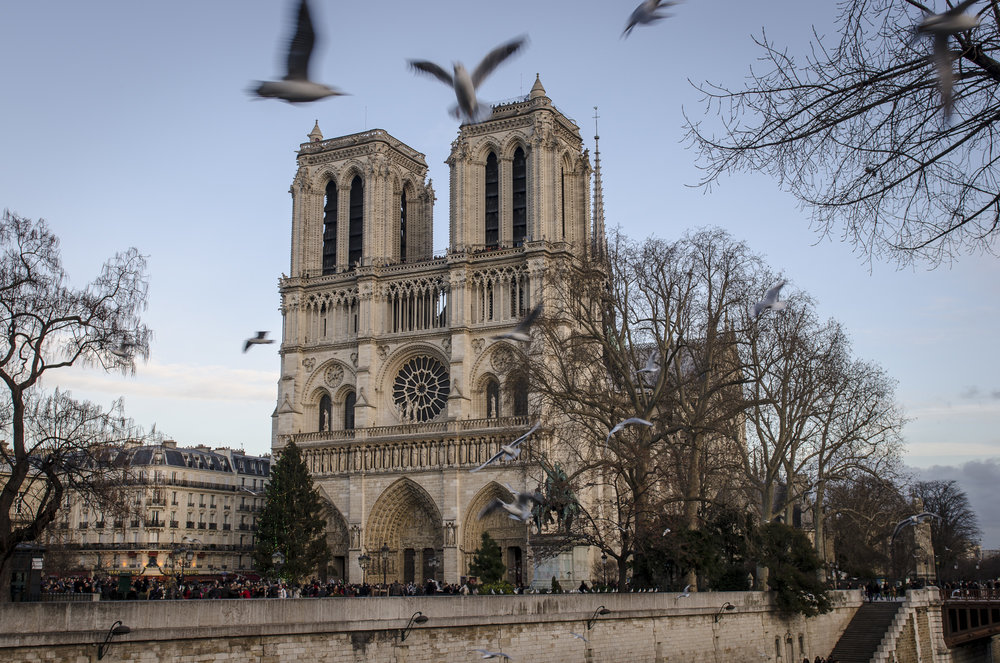
Table of Contents Show
Notre-Dame de Paris, the medieval Gothic cathedral on the Ile de la Cite, came close to total loss on 15 April 2019 when fire tore through its timber roof and spire. The building survived because its centuries-old stone vaulting held, and a five-year restoration returned the cathedral to the public in December 2024.
That April evening, the world watched live as flames climbed the famous spire and the roof of Notre-Dame Cathedral collapsed in a shower of sparks. For many people, the cathedral was more than a monument. It was a symbol of Paris, a backdrop to novels and films, and a place tied to memory and identity. The fear that night was simple and shared across continents: would the building still be standing in the morning?
A Gothic Masterpiece Built Over Two Centuries
Construction of Notre-Dame de Paris began in 1163 and continued in stages until roughly 1345, a span of almost two hundred years that involved several generations of masons and master builders. The cathedral is widely regarded as one of the finest examples of French Gothic architecture. Its early use of the rib vault and the flying buttress allowed the walls to rise higher and open up for large windows, while its enormous rose windows and the naturalism of its sculptural decoration set it apart from the heavier Romanesque churches that came before.
Those same structural ideas appear across the great cathedrals of the period. The way light, height, and stone work together at Notre-Dame echoes the system explored at Chartres Cathedral, and the political and civic weight carried by such buildings is visible in other landmarks like the Doge’s Palace in Venice. Understanding this background helps explain why the 2019 fire felt like a loss for architectural history itself, not only for France.
How the 2019 Fire Unfolded
The fire broke out in the roof space during early evening and spread fast through the dry medieval timber. By the time crews from the Paris fire brigade brought it under control, around fifteen hours had passed. According to the detailed account on Wikipedia’s record of the fire, the spire and most of the roof were destroyed and the upper walls were severely damaged, yet the worst interior damage was prevented by the stone vaulted ceiling. The two pipe organs and the three thirteenth-century rose windows came through with little to no damage, and only three people were injured.
🔢 Quick Numbers
- The fire was brought under control after roughly 15 hours, on 15 April 2019 (Wikipedia, Notre-Dame fire).
- More than 840 million euros in donations were pledged for the rebuild by September 2021 (Wikipedia, Notre-Dame fire).
- About 2,000 craftspeople and 250 companies took part in the restoration, which cost close to 900 million dollars (ArchDaily, 2024).

Why the Stone Vaults Saved the Cathedral
The main reason Notre-Dame did not suffer total interior loss was the behaviour of its medieval masonry. Gothic builders relied on a self-supporting system of ribbed stone vaults that span the nave below the timber roof. When the burning roof and spire collapsed, most of the flaming debris was caught by these vaults rather than falling straight into the sanctuary. A few sections of vaulting failed under the impact and heat, but the majority held, shielding the floor, the choir, and many fixtures from the worst of the fire. The event is a clear demonstration of how Gothic structural logic separates the protective masonry shell from the combustible roof carpentry above it.
📐 Technical Note
The high vaults of Notre-Dame are a sexpartite ribbed design, where each bay is divided into six cells by crossing ribs. This geometry channels loads toward the piers and buttresses, so even when heavy debris struck the webs from above, the ribs continued to carry weight along defined paths rather than failing all at once.
The Forest: The Lost Medieval Roof Timbers
The roof structure that burned was known affectionately as the Forest, because it was built from hundreds of oak beams, many of them dating back to the thirteenth century. Each beam was said to have come from an individual tree, and the dense lattice of ancient wood was one of the oldest surviving timber frameworks in Paris. Once fire took hold in this dry, centuries-old oak, it spread quickly and was very hard to fight from below. The loss of the Forest is one reason debates about reconstruction focused so heavily on whether to rebuild with traditional oak framing or to use modern materials.
Proposals and the Restoration Decision
In the days after the fire, President Emmanuel Macron promised that the cathedral would be restored, and he announced an international competition to redesign the spire. That call opened the door to bold contemporary ideas. The first widely discussed proposal came from Foster + Partners. As reported by The Times, Foster put forward a glass and steel replacement described as light and airy for the cathedral’s ruined roof.

🎓 Expert Insight
“We will rebuild Notre-Dame even more beautifully and I want it to be completed within five years.”
Emmanuel Macron, President of France, national address, April 2019
The five-year target shaped every later decision, pushing the project toward methods that could deliver a faithful restoration on a tight schedule rather than a long experimental redesign.
The clip below captures the mood of that first night and Macron’s early commitment to rebuild, which helps explain why the recovery moved so quickly.
The Restoration and Reopening Timeline
Despite the early appetite for contemporary spires, French authorities decided to restore Notre-Dame to its pre-fire appearance, recreating the nineteenth-century spire designed by Eugene Viollet-le-Duc using traditional oak and lead. The choice put historical continuity ahead of radical redesign. Carpenters, stonemasons, and conservators worked with techniques close to those used by the original builders, and forests across France supplied fresh oak for the new framework. As documented in ArchDaily’s running coverage of the project, the cathedral reopened to the public in December 2024, roughly five years after the fire.
🏗️ Real-World Example
Notre-Dame de Paris (Paris, reopened 2024): The rebuilt spire stands once more at its original height, sheathed in lead over a new oak frame cut to match the lost medieval Forest. Surrounding the cathedral, a landscape redesign led by Bas Smets reworks the public space along the Seine for the millions of visitors expected each year.
Lessons for Heritage Fire Protection
The Notre-Dame fire pushed heritage institutions worldwide to re-examine fire safety in historic buildings. Common takeaways include fitting discreet fire-detection and misting systems in concealed roof voids, keeping detailed digital documentation such as laser scans so any structure can be accurately rebuilt, and rehearsing emergency plans for moving irreplaceable artworks. The fast removal of treasures from Notre-Dame during the blaze showed how valuable such plans can be. For owners and custodians of older buildings, the event is a reminder that prevention, monitoring, and documentation matter as much as any single architectural feature.
The Bigger Picture
There is a quiet lesson in the way Notre-Dame de Paris was saved. The spire that everyone watched fall was a nineteenth-century addition, while the part that actually held was the medieval stone built nearly nine hundred years ago. The oldest engineering on site, not the newest, kept the cathedral standing. For anyone who designs or cares for buildings meant to last, that is worth sitting with.








Oscar Niemeyer’s Cathedral of Brasília: The Hyperboloid Concrete Hymn
The Cathedral of Brasília reads as a single gesture, yet it stood...
 Furkan Sen7 Mins read

What Technology Does a Modern Workplace Need?
A modern workplace needs more than fast computers. A framework covering network,...
 illustrarch Editoral Team8 Mins read
How Do You Choose Durable Shutters That Suit Your Budget?
Shutters can look identical in a showroom and perform very differently after...
illustrarch Editoral Team8 Mins read
How Can Window Coverings Improve Indoor and Outdoor Comfort?
Window coverings work as a home’s adjustable climate layer. A practical guide...
illustrarch Editoral Team9 Mins read




Leave a comment