

Deconstructivist Dreams: Architecture Breaking All Rules
From the Guggenheim Bilbao to the Jewish Museum Berlin, deconstructivist dreams reshaped what buildings could look and feel like. This article traces the movement's origins in philosophy and the 1988 MoMA exhibition, profiles seven defining structures across three continents, and explains why controlled chaos became one of the most debated ideas in modern architecture.
 Sinan Ozen24 June 20266 Mins read114
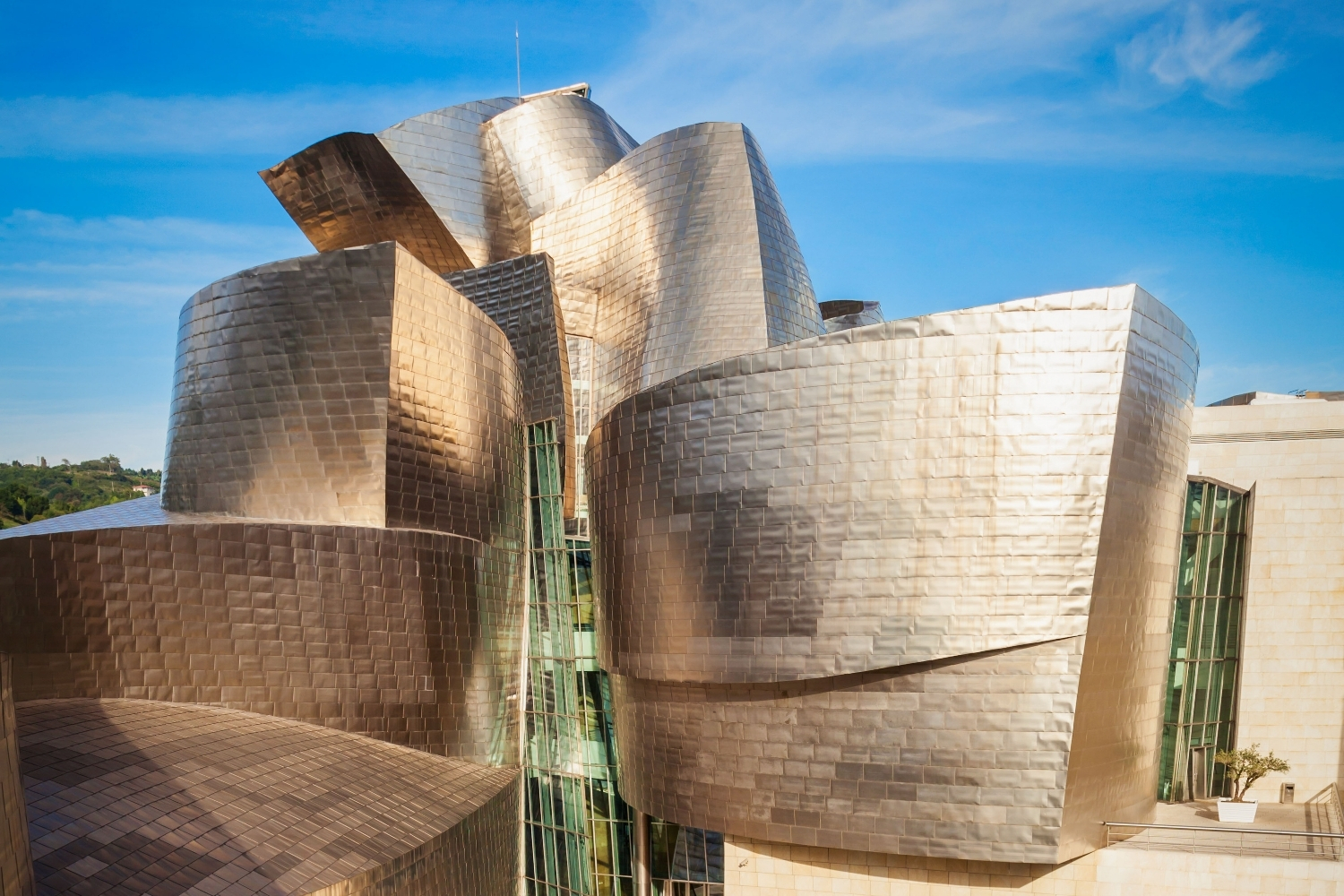
Table of Contents Show
Deconstructivist dreams describe the radical late 20th-century movement that turned fragmentation, asymmetry, and visual tension into legitimate architectural principles. Rooted in the philosophy of Jacques Derrida and launched internationally by a 1988 MoMA exhibition, deconstructivism architecture produced some of the most provocative buildings ever constructed, from the titanium curves of Bilbao to the angular voids of Berlin.
Most architectural movements promise order. Deconstructivist dreams promised the opposite. Beginning in the 1980s, a small group of architects scattered across different countries arrived at a shared conviction: that buildings did not need to resolve into harmony. Walls could lean. Roofs could fracture. Entire facades could appear to collapse mid-motion. The result was not chaos for its own sake but a deliberate interrogation of every assumption about what a building should be. The structures that came out of this period remain polarizing decades later, which is precisely the point.
Where Deconstructivist Dreams Began
The philosophical groundwork came from French thinker Jacques Derrida, whose concept of deconstruction challenged the idea that any system of meaning is stable or self-contained. Derrida argued that texts, institutions, and structures always contain internal contradictions waiting to be exposed. Architects like Peter Eisenman, who had direct contact with Derrida during the Parc de la Villette project in Paris, saw an opportunity to apply these ideas to physical space.
The movement crystallized publicly in June 1988 when Philip Johnson and Mark Wigley organized the Deconstructivist Architecture exhibition at MoMA in New York. The show featured seven architects: Frank Gehry, Daniel Libeskind, Rem Koolhaas, Zaha Hadid, Peter Eisenman, Coop Himmelb(l)au, and Bernard Tschumi. None of them formed a unified group or signed a manifesto. What connected their work was a shared rejection of visual order and a willingness to treat instability as a design tool rather than a flaw. That single exhibition gave the movement a name and a global audience almost overnight.
📌 Did You Know?
The 1988 MoMA exhibition ran for only ten weeks, yet it permanently changed architectural discourse. Philip Johnson, who co-organized the show, had done something similar 56 years earlier: the 1932 International Style exhibition that defined modernism for an entire generation. Both shows demonstrated how a single curatorial act can redirect the profession.
Guggenheim Bilbao: The Building That Changed a City
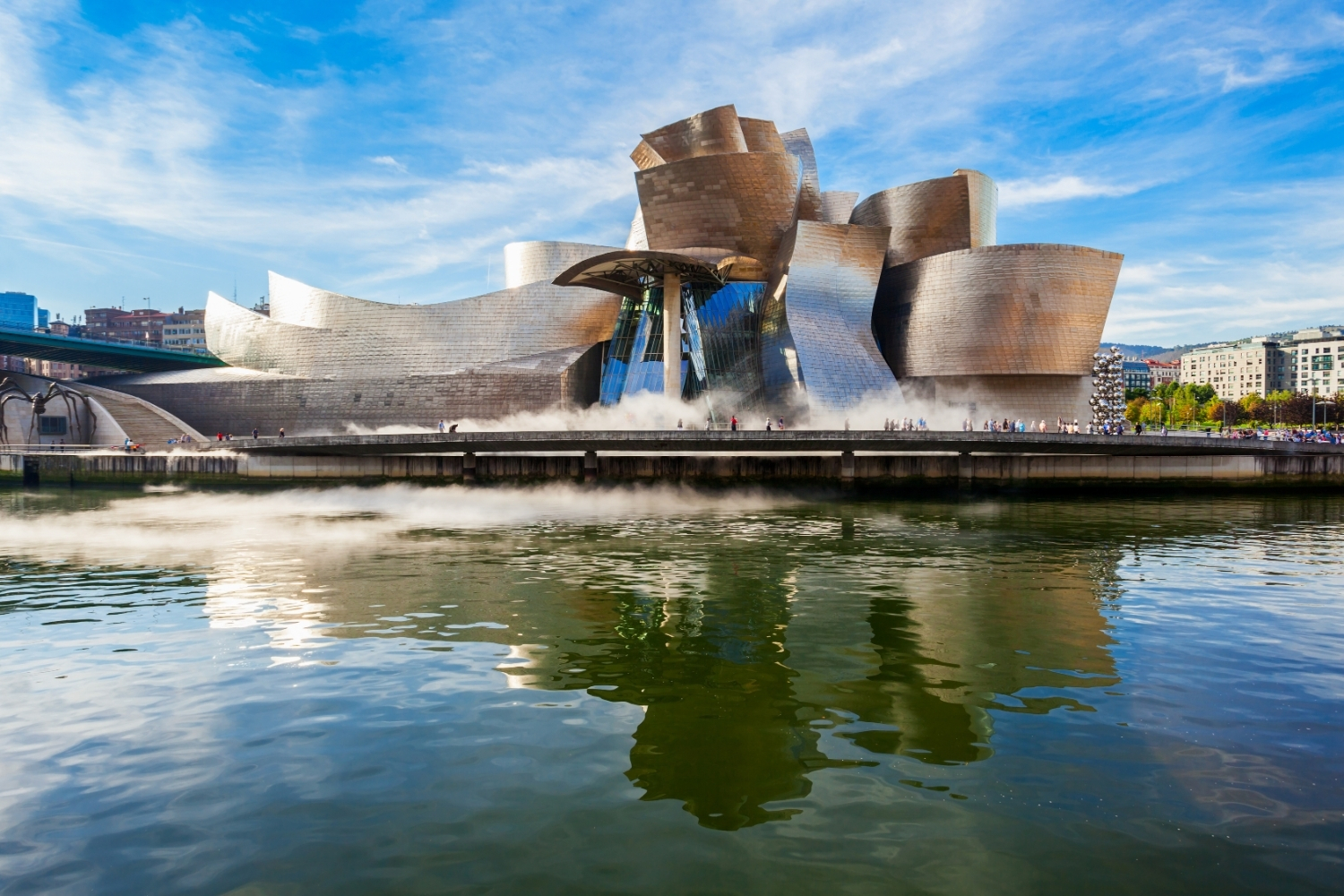
No building represents deconstructivist dreams more visibly than the Guggenheim Museum Bilbao. Designed by Frank Gehry and opened in 1997, the museum sits along the Nervion River in Spain’s Basque Country, its exterior clad in roughly 33,000 titanium panels, each only 0.38mm thick. Frank Gehry architecture had always leaned toward sculptural forms, but Bilbao took that instinct to an unprecedented scale. The building’s curves were designed using CATIA, software originally developed for the aerospace industry, allowing Gehry’s team to translate hand-made paper models into buildable geometry with millimeter precision.
The economic impact was equally dramatic. In its first three years, the museum attracted nearly 4 million visitors and generated an estimated 500 million euros in economic activity. Urban planners coined the term “Bilbao Effect” to describe how a single building can shift the cultural and financial trajectory of an entire city. The Guggenheim Bilbao proved that deconstructivism architecture was not just an intellectual exercise; it could reshape urban economies.
Walt Disney Concert Hall and the Sound of Fragmentation
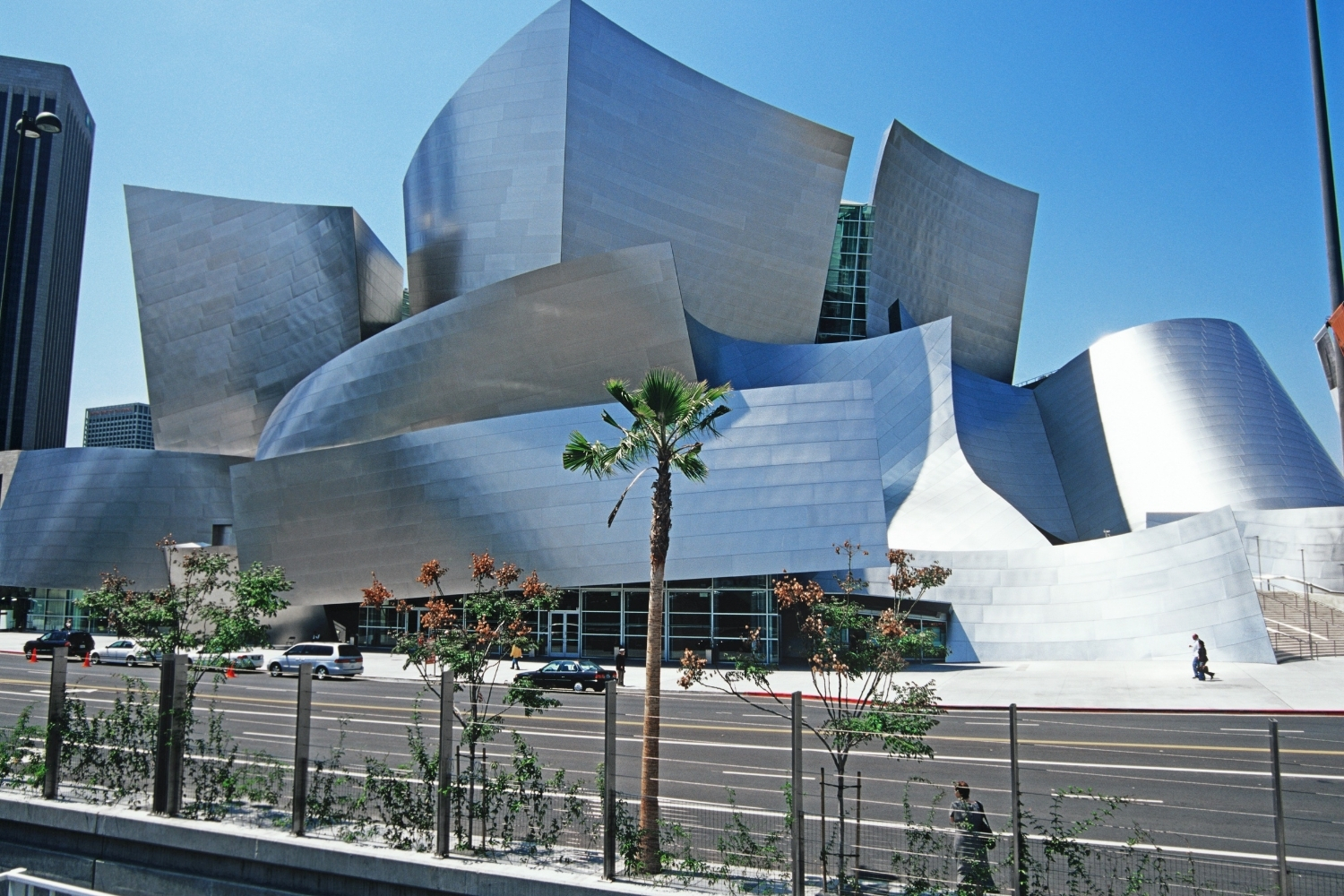
Six years after Bilbao, Gehry completed the Walt Disney Concert Hall Los Angeles in 2003. Where the Guggenheim used titanium, the concert hall wraps its auditorium in curved stainless steel panels that catch and scatter sunlight across downtown LA’s Grand Avenue. The exterior appears to billow outward in every direction, as if the building were mid-explosion, frozen in place.
Inside, the vineyard-style auditorium seats 2,265 people surrounded by Douglas fir walls shaped to optimize acoustics. The hall is widely considered one of the finest performance venues in the world. Yasuhisa Toyota, the acoustician behind the interior, worked alongside Gehry to ensure that the building’s visual drama did not come at the expense of sound quality. For architecture enthusiasts wanting to trace Gehry’s full body of work, a detailed look at his most important buildings shows how each project pushed the previous one further.
Dancing House Prague: Deconstructivism Meets Historic Context
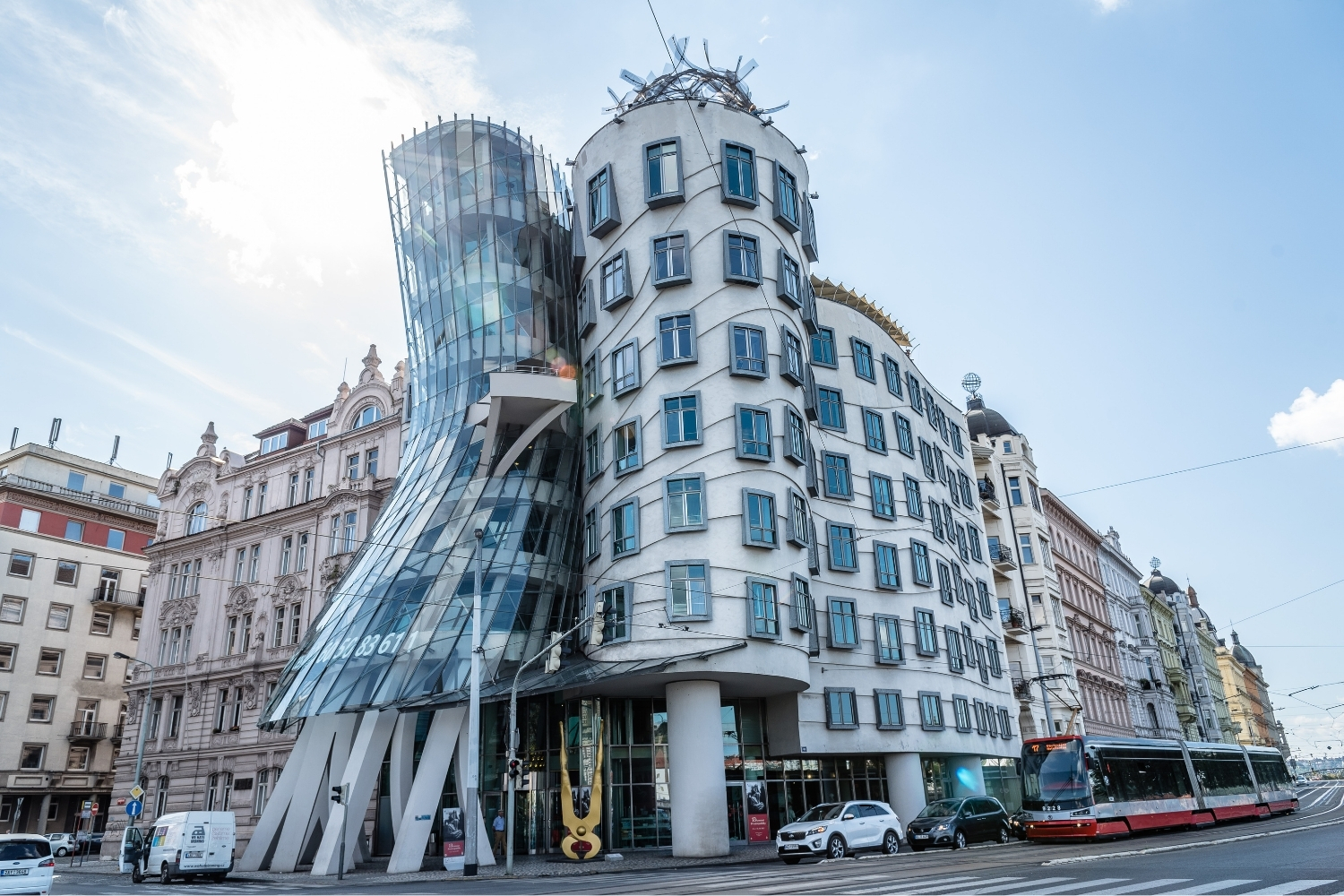
Not all deconstructivist dreams required massive budgets or cultural institutions. The Dancing House Prague, completed in 1996, occupies a modest riverside lot among Baroque and Art Nouveau neighbors. Designed by Czech architect Vlado Milunic in collaboration with Gehry, the building earned its nickname from its two towers: one rigid and upright, the other curved and leaning, resembling a pair of dancers mid-step.
The project was controversial from the start. Czech President Vaclav Havel, who lived next door for decades, championed the design as a symbol of post-Communist creative freedom. Critics argued it clashed with Prague’s historic fabric. That tension, between preservation and provocation, made the Dancing House Prague one of the most discussed buildings of the 1990s. Today it houses offices, a restaurant, and a rooftop bar with views across the Vltava River, and it has become one of the most photographed structures in the city.
🎓 Expert Insight
“The finished form of the building is not the most important thing. It is the way the building makes you rethink what architecture can be.” — Mark Wigley, Architectural Theorist and Co-curator of the 1988 MoMA Exhibition
Wigley’s observation captures why deconstructivism continues to generate debate. The movement’s real contribution was not a set of formal tricks but a shift in how architects and the public thought about the purpose of built form.
CCTV Headquarters Beijing: Rethinking the Skyscraper
Rem Koolhaas and his firm OMA asked a radical question when designing the CCTV Headquarters Beijing, completed in 2012: what if a skyscraper did not compete for height? The answer was a 234-meter tower that loops back on itself, forming a continuous ring of horizontal and vertical sections connected by a dramatic 75-meter cantilever at the top. The building’s structural solution, an external diagonal grid visible across its glass facade, distributes gravitational and lateral forces in a way that makes the seemingly impossible overhang work.
The CCTV Headquarters Beijing rejected the logic of the conventional tower, where status rises with floor count. Instead, it created a continuous workflow loop housing all stages of television production under one connected structure. Koolhaas’s broader portfolio shows a consistent interest in buildings that question inherited typologies rather than simply refining them.
🏗️ Real-World Example
Vitra Fire Station (Weil am Rhein, 1993): Zaha Hadid’s first completed building was a small fire station for the Vitra furniture campus in Germany. Built from exposed reinforced concrete, the Vitra Fire Station Germany used sharp angles and forced perspectives to create a sense of frozen movement. Although it functioned as an active fire station for only a few years before being converted to an exhibition space, it proved that Hadid could translate her famously unbuildable drawings into real structures. The project launched a career that would produce landmarks like the Heydar Aliyev Center and the London Aquatics Centre.

Jewish Museum Berlin: Architecture as Emotional Narrative
Daniel Libeskind’s Jewish Museum Berlin, completed in 1999 and opened to the public in 2001, is among the most emotionally charged buildings of the past century. Libeskind titled his competition-winning design “Between the Lines,” and the building’s floor plan traces two intersecting paths: a visible zigzagging line and an invisible straight line. Where the two cross, vertical voids cut through the structure from basement to rooftop, creating empty spaces that visitors cannot enter but can feel pressing against the occupied galleries.
The exterior is clad in zinc and slashed with angular windows that follow no apparent pattern. From outside, it is impossible to distinguish individual floors. The disorientation is intentional. Libeskind, born to Holocaust survivors in Poland, designed the museum to make absence physically present. The building drew over 350,000 visitors before any exhibits were even installed, a rare case where architecture alone was considered sufficient reason to visit. For those interested in how classical and deconstructivist approaches sit at opposite ends of the design spectrum, the Jewish Museum Berlin is a defining reference point.
Why Deconstructivist Architecture Still Matters
Deconstructivism architecture never became a mainstream building style. Most cities are still built from rectangular grids and right angles, and for practical reasons they probably always will be. But the movement’s influence runs deeper than form. It taught an entire generation of architects that structural honesty does not require visual simplicity, that discomfort can be a valid spatial experience, and that buildings carry meaning beyond their program.
Today, the techniques pioneered by deconstructivist architects like Zaha Hadid and Gehry, particularly parametric modeling and complex geometry, have become standard tools in firms worldwide. The philosophical provocation may have faded, but the technical vocabulary it produced is now part of how buildings get designed and built everywhere from Shanghai to São Paulo. The relationship between deconstructivism and the movements it reacted against, specifically postmodernism and modernism, continues to inform architectural debate. And the core question the movement raised, whether a building’s purpose includes challenging the people who use it, remains unanswered and worth asking.
The Bigger Picture
Deconstructivist dreams were never really about breaking rules for shock value. They were about exposing the fact that the rules were choices, not laws. Every column, every right angle, every symmetrical facade is a decision someone made, and decisions can be made differently. That realization did not just produce a handful of famous buildings. It permanently expanded the range of what architecture is allowed to attempt.









Florence Renaissance Architecture: How Building Became an Authored Art
Florence Renaissance architecture is usually told as a list of buildings. The...
 Furkan Sen6 Mins read
Architectural Styles History: Why Some Styles Fail and Others Endure
A look at architectural styles history through the decisions that actually keep...
Furkan Sen6 Mins read
Architectural Styles: Why Some Endure and Others Fade
Some architectural styles last for centuries while others are demolished within a...
Furkan Sen5 Mins read
Postmodern Architecture vs Deconstructivism: Playful Irony or Radical Disruption?
Postmodern architecture and deconstructivism both rejected modernism but took opposite paths. This...
Sinan Ozen5 Mins read




Leave a comment