

Regionalism vs Parametric Design: Cultural Roots or Digital Futures?
Regionalism draws on local materials, climate, and culture to shape buildings rooted in place, while parametric design uses algorithms and computational tools to generate data-driven forms. This article compares their philosophies, methods, strengths, and limitations with real project examples.
 Sinan Ozen1 June 20269 Mins read176
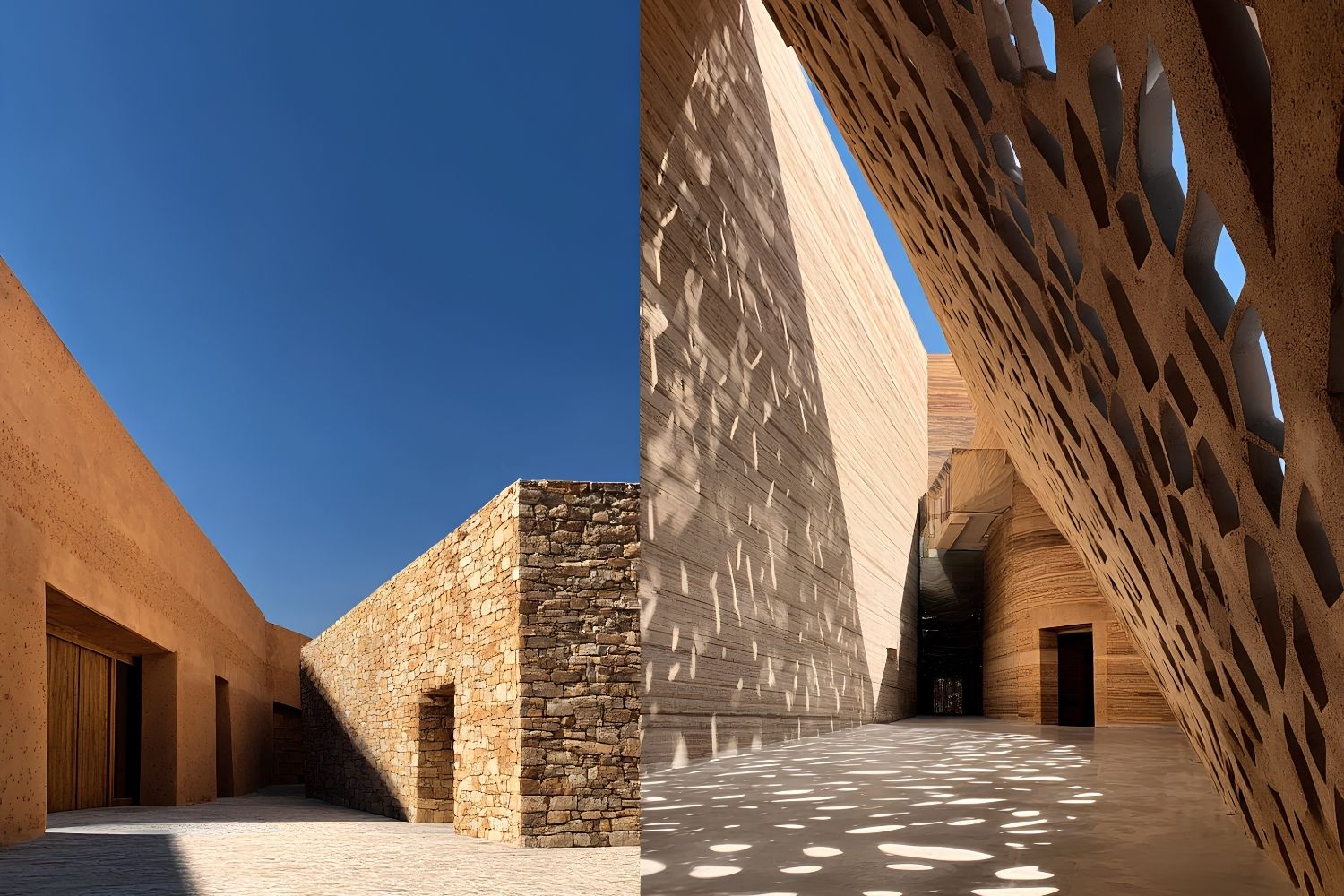
Table of Contents Show
Regionalism vs parametric design defines one of the most active tensions in contemporary architecture. Regionalism grounds buildings in local materials, climate, and cultural memory, while parametric design generates form through algorithms and variable data inputs. One asks a building to belong to its place; the other asks a building to perform according to computed logic. Understanding where these two approaches overlap and where they diverge helps architects, students, and design enthusiasts make sharper decisions about how buildings should relate to people, landscape, and technology.
What Is Regionalism in Design?
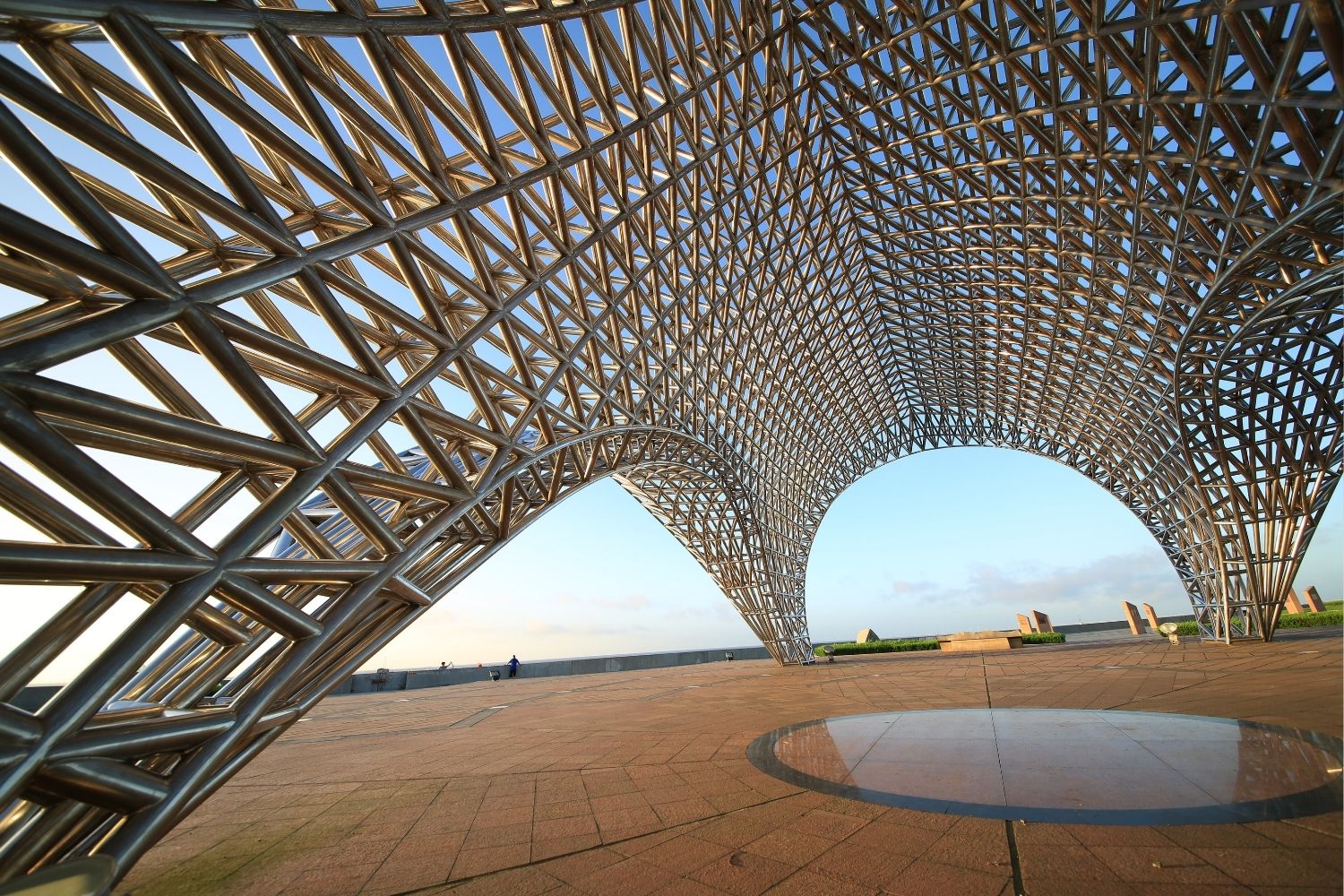
Regionalism in design is the practice of shaping architecture around the specific conditions of a site: its climate, available materials, construction traditions, and cultural patterns. Rather than applying a universal style, regionalist architects study the geography, history, and social habits of a place and let those factors drive structural and spatial choices. A regionalist building in Kerala, for example, will respond to monsoon rains with deep overhangs and open courtyards, using laterite stone and timber because those materials are local, tested, and culturally familiar.
The theoretical backbone of this approach was sharpened by Kenneth Frampton in his 1983 essay “Towards a Critical Regionalism: Six Points for an Architecture of Resistance.” Frampton argued that architecture should resist both the homogeneity of the International Style and the superficial decoration of postmodernism. Instead, he proposed that buildings should engage with topography, light, tectonics, and local climate as primary design drivers. Critical regionalism architecture does not copy vernacular forms. It reinterprets the logic behind those forms using modern construction methods.
💡 Pro Tip
When designing with a regionalist approach, start by documenting the site’s prevailing wind direction, sun path, and rainfall data before sketching any form. Experienced architects find that these environmental baselines shape 60-70% of the massing decisions, reducing the need for energy-intensive mechanical systems later.
Regionalism architecture extends beyond rural or traditional settings. Urban projects in Ahmedabad, Bogotá, and Kigali have used local brick, rammed earth, and community labor patterns to produce public buildings that feel anchored to their neighborhoods. The approach also connects to sustainability: sourcing materials locally shortens supply chains, cuts embodied carbon, and supports regional economies. Architects like Alvaro Siza, Tadao Ando, and Geoffrey Bawa have demonstrated that regionalism can produce globally recognized work without sacrificing local identity.
What Is Critical Regionalism in Architecture?
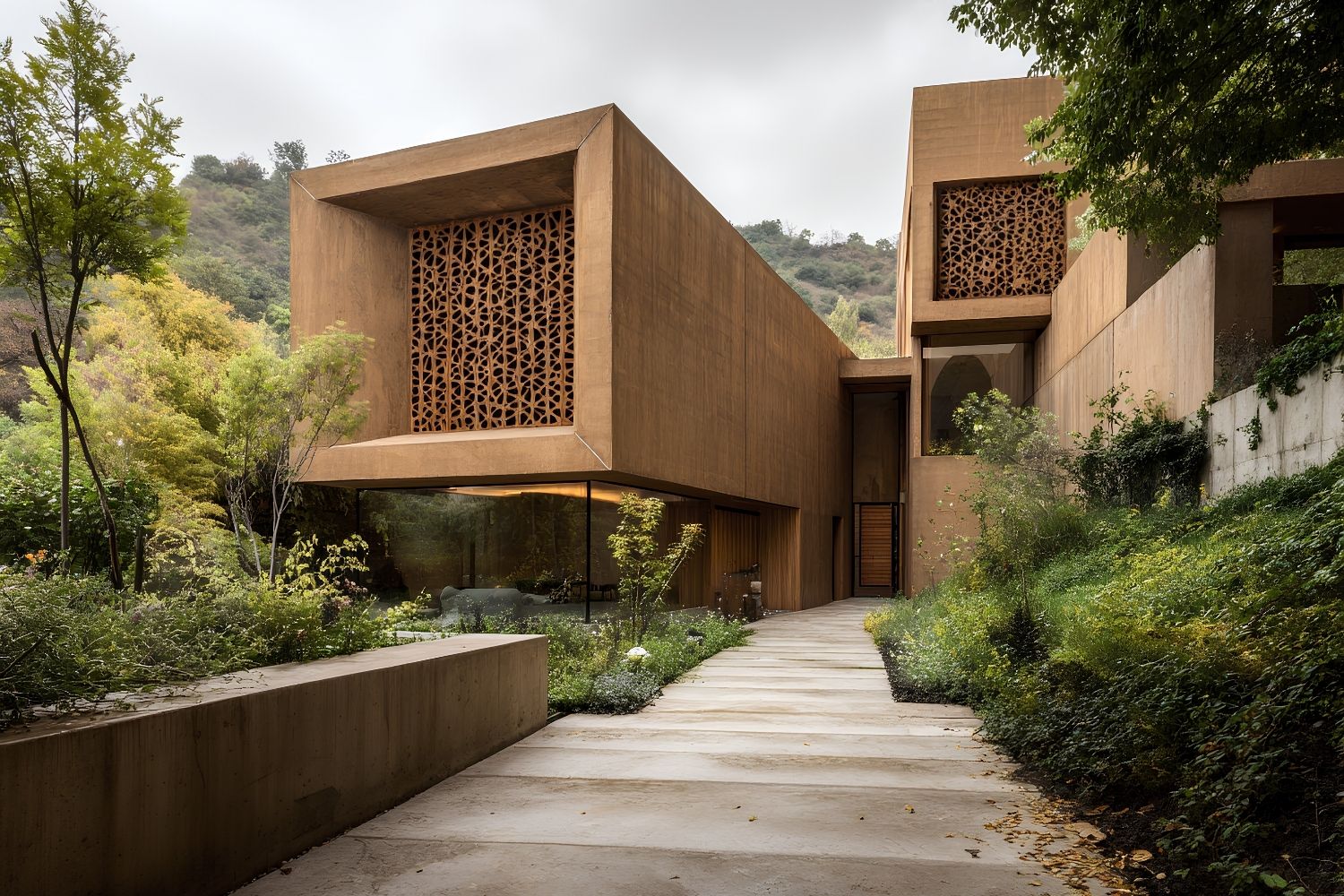
Critical regionalism is an approach to architecture that keeps the methods of modernism but ties them to the geography and culture of a specific place. The phrase first appeared in 1981, in “The Grid and the Pathway,” an essay by the architectural theorists Alexander Tzonis and Liane Lefaivre published in Architecture in Greece. They used it to describe the work of the Greek architects Suzana and Dimitris Antonakakis, whose buildings combined rational grids with paths that follow the terrain.
Kenneth Frampton gave the idea its best-known form two years later in “Towards a Critical Regionalism: Six Points for an Architecture of Resistance,” published in The Anti-Aesthetic: Essays on Postmodern Culture (1983), edited by Hal Foster. Frampton borrowed a question from the philosopher Paul Ricoeur: how to become modern and return to sources at the same time. His answer was an architecture that accepts modern construction for its progressive qualities while resisting the placeless sameness of global building culture. Tzonis and Lefaivre later objected to the way the theory was turned into a set of design rules, but both readings share one starting point: regionalism has to be critical, not sentimental about the past.
The word “critical” is what separates the theory from vernacular revival. A critical regionalist building does not copy pitched roofs or folk ornament. It reads the site and lets a few concrete conditions shape the design:
- Topography: the building works with the ground it sits on instead of flattening it into a generic platform.
- Climate and light: openings, overhangs and sections respond to local sun, heat and rain rather than relying on mechanical systems alone.
- Tectonic form: the way materials are joined and carried is expressed openly instead of being hidden behind scenographic decoration.
- Touch over image: Frampton stressed the tactile experience of a building, the texture of a stair or the give of a floor, over its value as a photograph.
Frampton’s own examples remain the clearest. In Jørn Utzon’s Bagsværd Church near Copenhagen, completed in 1976, a modular, partly prefabricated concrete exterior encloses a sculpted concrete vault that turns daylight into a sacred interior, a combination Frampton read as universal civilization meeting world culture. Alvar Aalto’s red brick Säynätsalo Town Hall in Finland (1952) is his example of tactile resistance: he points to the contrast between the friction of the brick stair and the springy timber floor of the council chamber. Architects often discussed under the same label include Álvaro Siza, Tadao Ando, Mario Botta, Glenn Murcutt, Geoffrey Bawa and B. V. Doshi. For the history of the idea before Frampton’s essay, Stylianos Giamarelos’s open-access book Resisting Postmodern Architecture: Critical Regionalism before Globalisation (UCL Press) traces its Greek origins in detail.
What Is Parametric Design in Architecture?
Parametric design is a computational method where architectural form is generated through algorithms that respond to variable inputs called parameters. Instead of drawing a fixed shape, a designer defines relationships between elements: structural load, sun exposure, wind pressure, material thickness, floor area, and program requirements. Software tools like Grasshopper for Rhino and Autodesk Dynamo process these variables and produce geometries that would be difficult or impossible to conceive manually.
What is parametric design at its core? It is a system where changing one input automatically updates every connected element. If a facade panel’s angle is linked to solar gain data, adjusting the latitude parameter recalculates every panel across the entire surface. This makes parametric architectural design highly efficient for complex geometries, performance optimization, and rapid iteration. Patrik Schumacher formalized the term “parametricism” in 2008, proposing it as the dominant style after modernism and postmodernism, though that claim remains debated.
🎓 Expert Insight
“Parametricism implies that all elements of the design become parametrically variable and mutually adaptive.”
Patrik Schumacher, Zaha Hadid Architects
This principle explains why parametric designs often appear as continuous, flowing surfaces rather than discrete parts. Every component responds to its neighbors, producing a cohesive formal language driven by data rather than intuition alone.
Parametric designs range from facade panels and roof structures to entire urban master plans. The Heydar Aliyev Center in Baku, the Beijing National Aquatics Center, and the Metropol Parasol in Seville all rely on parametric logic to resolve complex structural and environmental challenges. The approach is not limited to organic curves; parametric methods also produce gridded, angular, and modular outputs depending on the input rules.
How Do Regionalism and Parametric Design Differ?
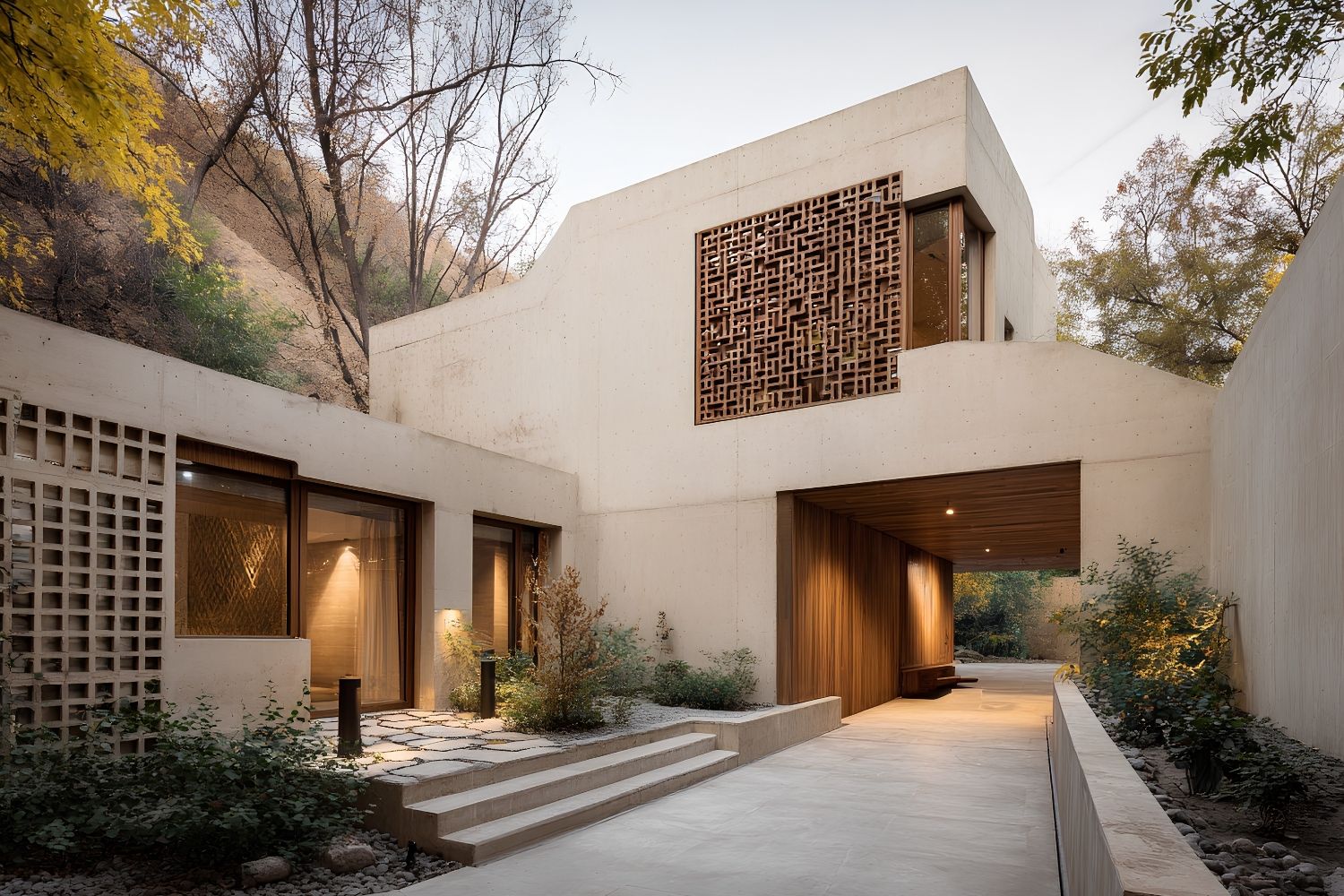
The divide between regionalism and parametric design starts with their source of authority. Regionalism asks: what does this place demand? Parametric design asks: what does the data allow? One is anchored in geography and memory; the other in mathematics and computation. This difference shapes every decision from material selection to the tools used on the drafting table.
Regionalist architects typically begin with site visits, material surveys, and conversations with local craftspeople. Their design process is iterative but grounded in physical, sensory experience: how light enters a courtyard, how wind moves through a narrow street, how a particular stone weathers over decades. Parametric architects begin with data sets, algorithms, and digital simulations. Their process is also iterative, but iterations happen inside a software environment where thousands of options can be tested in hours.
Comparison of Regionalism vs Parametric Design
The table below outlines the core differences between these two approaches across key design dimensions:
| Dimension | Regionalism | Parametric Design |
|---|---|---|
| Design Driver | Place, climate, culture | Algorithms, data, parameters |
| Primary Tools | Hand sketches, physical models, site analysis | Grasshopper, Dynamo, Rhino, scripting |
| Material Selection | Local, traditional, low-carbon sourcing | Performance-optimized, often industrial |
| Form Language | Grounded, contextual, tectonic | Fluid, complex, computationally derived |
| Scalability | Site-specific, harder to replicate | Highly scalable through script adjustment |
| Cultural Connection | Strong local identity and heritage ties | Weaker unless explicitly programmed |
| Construction | Often uses local labor and craft skills | Requires digital fabrication, CNC, robotics |
⚠️ Common Mistake to Avoid
Many designers assume regionalism means copying old buildings and parametric design means making curved shapes. Regionalism is about extracting the logic of place and applying it with modern methods. Parametric design is about algorithmic relationships, not a specific visual style. A parametric output can be angular, gridded, or flat, and a regionalist project can use advanced engineering.
Can Regionalism and Parametric Design Work Together?
The most interesting work today happens where these two approaches meet. Architects are feeding local climate data, traditional proportions, and vernacular material properties into parametric scripts. The result is buildings that are both computationally optimized and deeply tied to their surroundings. This hybrid method treats cultural context not as decoration but as a design parameter.
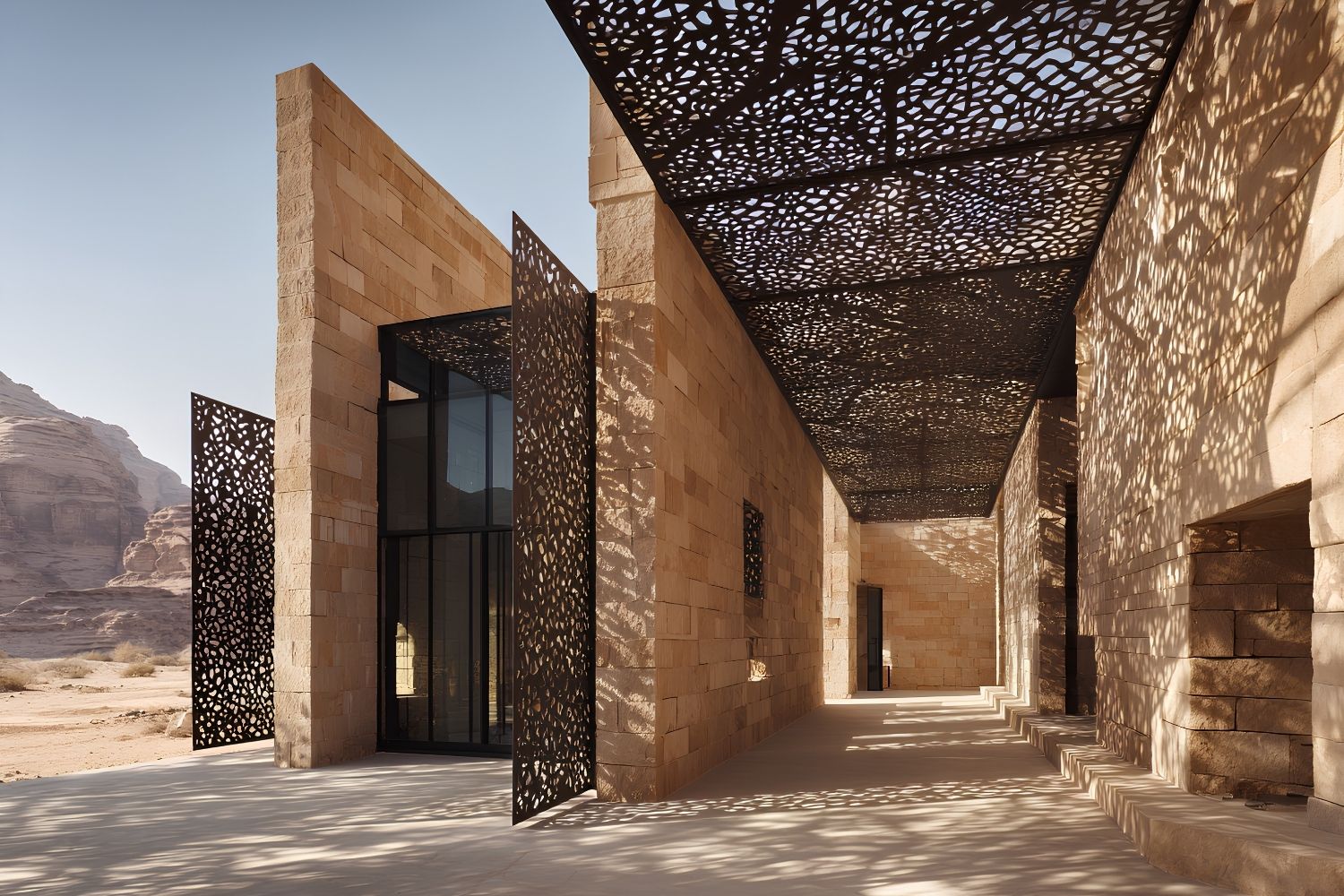
Consider a contemporary vernacular project in a hot-arid climate. A parametric script can calculate the optimal depth, angle, and spacing of shading fins based on solar geometry, while the material palette draws entirely from locally quarried stone and earth plaster. The algorithm handles performance; the regionalist sensibility handles meaning. Neither approach alone would produce the same result.
🏗️ Real-World Example
Masdar Institute (Abu Dhabi, 2010): Designed by Foster + Partners, this campus used parametric wind-flow simulations to shape narrow, shaded streets inspired by traditional Arabian urban fabric. The computational models optimized airflow and reduced outdoor temperatures by up to 20°C compared to the surrounding desert, while the overall layout drew directly from the spatial logic of historic Gulf settlements.
Firms like Studio Mumbai, Francis Kéré’s practice, and several emerging studios in South Asia and Africa are exploring this intersection. They use digital tools for structural analysis and environmental simulation, then execute with local brick, timber, bamboo, and community-driven construction processes. The question is no longer regionalism or parametric design but how to calibrate the balance between the two for each project.
Strengths and Limitations of Each Approach
Regionalism’s greatest strength is relevance. Buildings designed through a regionalist lens tend to age well because they work with their environment rather than against it. They reduce energy consumption through passive strategies, support local economies through material sourcing, and build cultural continuity. The limitation is speed and scalability. Regionalist design requires deep site knowledge that takes time to acquire, and its solutions are hard to transfer from one location to another without significant rethinking.
Parametric design excels at complexity and optimization. It can resolve structural problems involving thousands of unique components, optimize building performance across multiple variables simultaneously, and produce forms that push the limits of what is structurally possible. The limitation is cost, accessibility, and cultural disconnect. Parametric buildings often require expensive fabrication technologies, specialized software skills, and factory-produced components shipped from distant manufacturers. Without intentional effort, parametric designs can look the same whether they sit in Oslo or Osaka.
⚖️ Pros & Cons at a Glance
✔️ Regionalism Pros: Strong cultural identity, passive climate response, lower embodied carbon, local economic support
✖️ Regionalism Cons: Slower design process, limited scalability, requires deep local expertise
✔️ Parametric Pros: High precision, rapid iteration, complex geometry resolution, performance optimization
✖️ Parametric Cons: High fabrication costs, steep learning curve, risk of placelessness
The Future: Cultural Data as a Design Parameter
The trajectory of both movements points toward integration. As computational tools become cheaper and more accessible, even small regional firms can run environmental simulations and generative scripts. At the same time, the global push for sustainable architecture is forcing parametric practitioners to account for local materials, local labor, and embodied carbon, factors that regionalism has always prioritized.
Several architecture schools now teach “parametric regionalism” as a studio topic, where students code scripts that accept cultural and climatic data alongside structural loads. The idea is that culture, like wind speed or floor area, can be encoded as a design variable. Whether that encoding captures the full depth of a place’s identity is still an open question, but the direction is clear: future architecture will likely draw from both camps, treating local knowledge and computational logic as equal inputs in the design process.
Video: Critical Regionalism Revisited by Kenneth Frampton
In this lecture at The New School, architectural historian Kenneth Frampton reflects on the relationship between place, cultural identity, and resistance to architectural homogeneity, themes central to the regionalism side of this debate.
✅ Key Takeaways
- Regionalism in design grounds architecture in local climate, materials, and cultural traditions, producing buildings that belong to their specific place.
- Parametric design architecture uses algorithms and variable inputs to generate computationally optimized forms, excelling at complex geometries and performance tuning.
- The two approaches differ fundamentally in their source of authority: place-based knowledge versus data-driven computation.
- Hybrid methods that feed local climate, material, and cultural data into parametric scripts are producing some of the most compelling contemporary projects.
- Future architecture will likely treat cultural context and computational logic as equally valid design parameters rather than opposing forces.
Final Thoughts
Regionalism vs parametric design is not a contest with a winner. It is a spectrum. At one end, a rammed-earth house in Burkina Faso shaped entirely by wind, sun, and community labor. At the other, a digitally fabricated pavilion in London where every joint was calculated by a script. Most real projects sit somewhere in between, borrowing the rigor of computation and the depth of place-based thinking. The strongest buildings of the coming decades will be those that refuse to choose one side entirely, using algorithms to sharpen cultural insight and using cultural insight to give algorithms purpose.






The Five Points of Architecture by Le Corbusier Explained
Le Corbusier published the five points of architecture in 1927: pilotis, free...
 illustrarch Editoral Team8 Mins read
What Is Minimalist Architecture? Principles, Origins, and Iconic Buildings
Minimalist architecture strips a building to its essentials so space, light and...
illustrarch Editoral Team9 Mins read

Georgian Architecture: Features, History & Examples
Georgian architecture (1714-1830) is defined by strict symmetry, classical proportion, sash windows...
illustrarch Editoral Team9 Mins read
Neoclassical Architecture: Features, History & Examples
Neoclassical architecture emerged in the mid-18th century, reviving Greek and Roman forms...
illustrarch Editoral Team8 Mins read


Leave a comment