

Streamline Moderne vs Futurism: Speed, Curves, and the Machine Age Compared
Streamline Moderne and Futurism both drew power from the machine age, but expressed that obsession in opposite ways. This comparison breaks down how curved American optimism and angular Italian aggression each redefined architecture, industrial design, and the visual language of speed during the early 20th century.
 Sinan Ozen2 June 20267 Mins read188
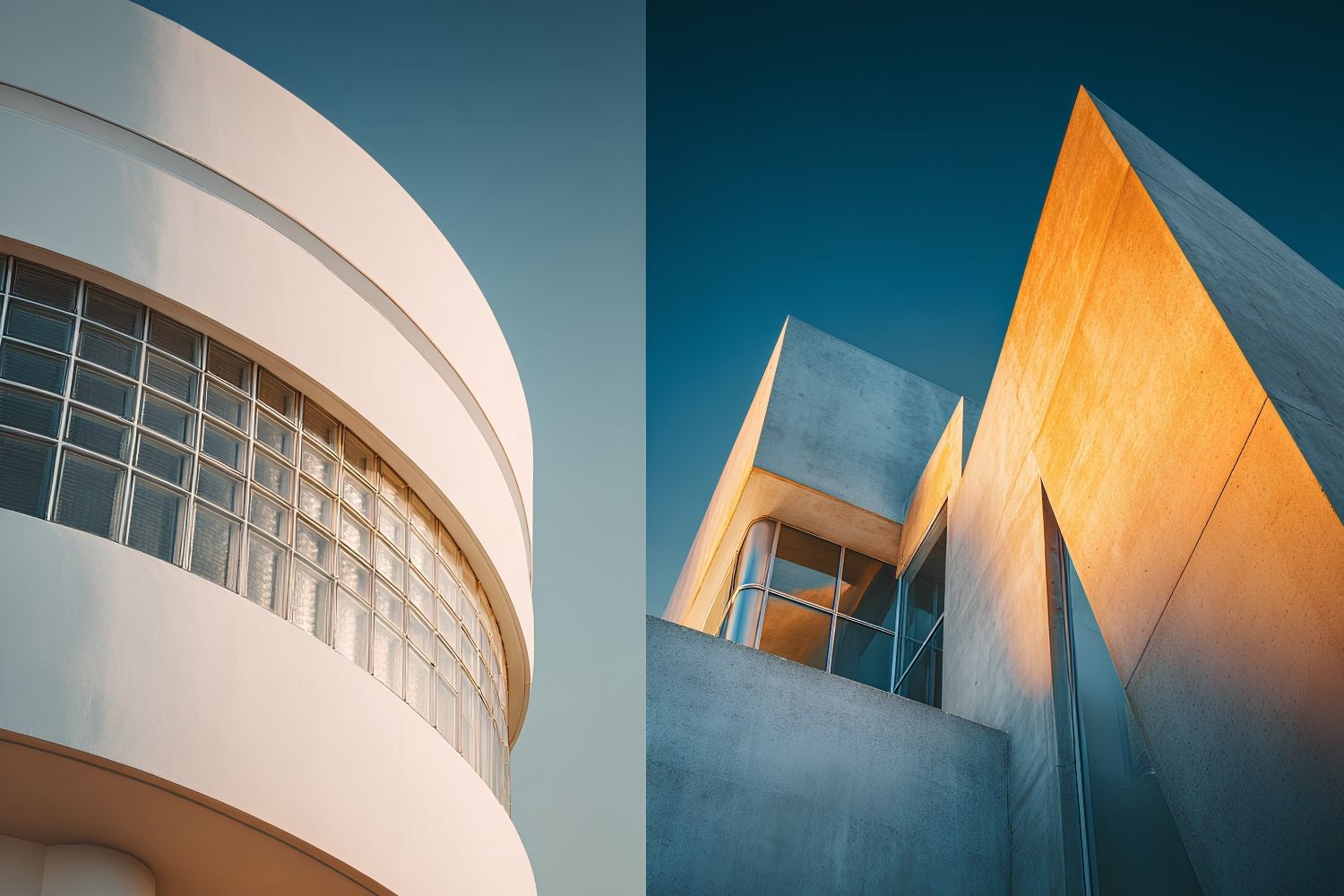
Table of Contents Show
Streamline Moderne vs Futurism represents a clash between two early 20th-century movements that worshipped speed and the machine, yet expressed that worship through radically different architectural forms. Futurism erupted in Italy before World War I with aggressive angles and industrial bravado, while Streamline Moderne emerged in 1930s America with smooth curves, horizontal lines, and aerodynamic grace. Together, they defined how architecture absorbed the energy of modern transportation, industry, and mass production.
What Is Streamline Moderne Architecture?
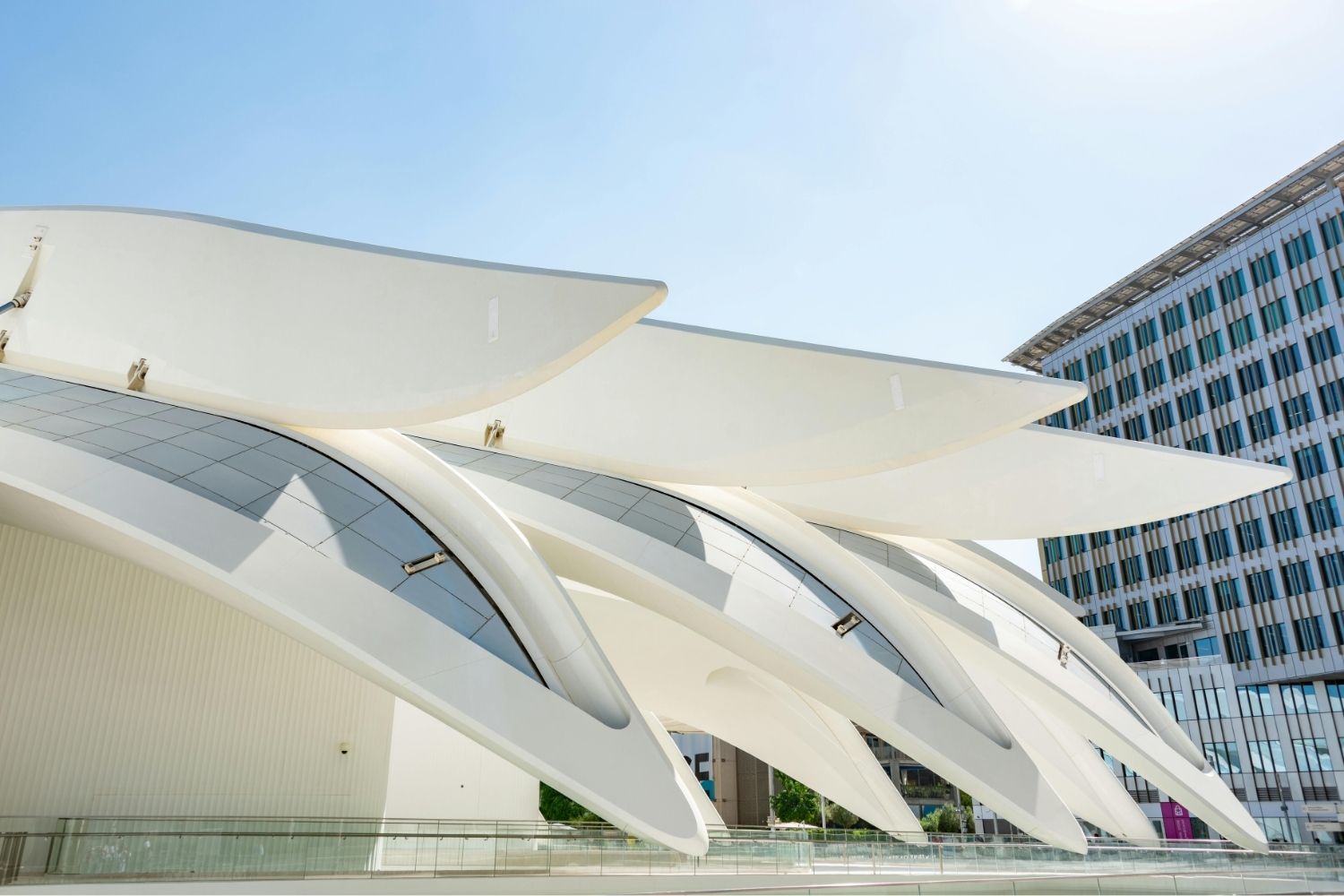
Streamline Moderne architecture is a late evolution of Art Deco that stripped away ornamental excess in favor of clean, aerodynamic forms. Where Art Deco celebrated geometric decoration and vertical drama, streamline moderne buildings emphasized horizontal movement, rounded corners, and smooth surfaces. The style took direct inspiration from the shapes of trains, ocean liners, and aircraft that were reshaping how people moved through the world during the 1930s.
The style rose during the Great Depression, when industrial designers like Raymond Loewy, Norman Bel Geddes, and Walter Dorwin Teague began applying aerodynamic principles to everything from locomotives to toasters. In architecture, this translated into buildings with curved glass block walls, flat roofs, chrome trim, and porthole windows. A streamlined modern building looked as though it could slice through wind, even while standing perfectly still.
💡 Pro Tip
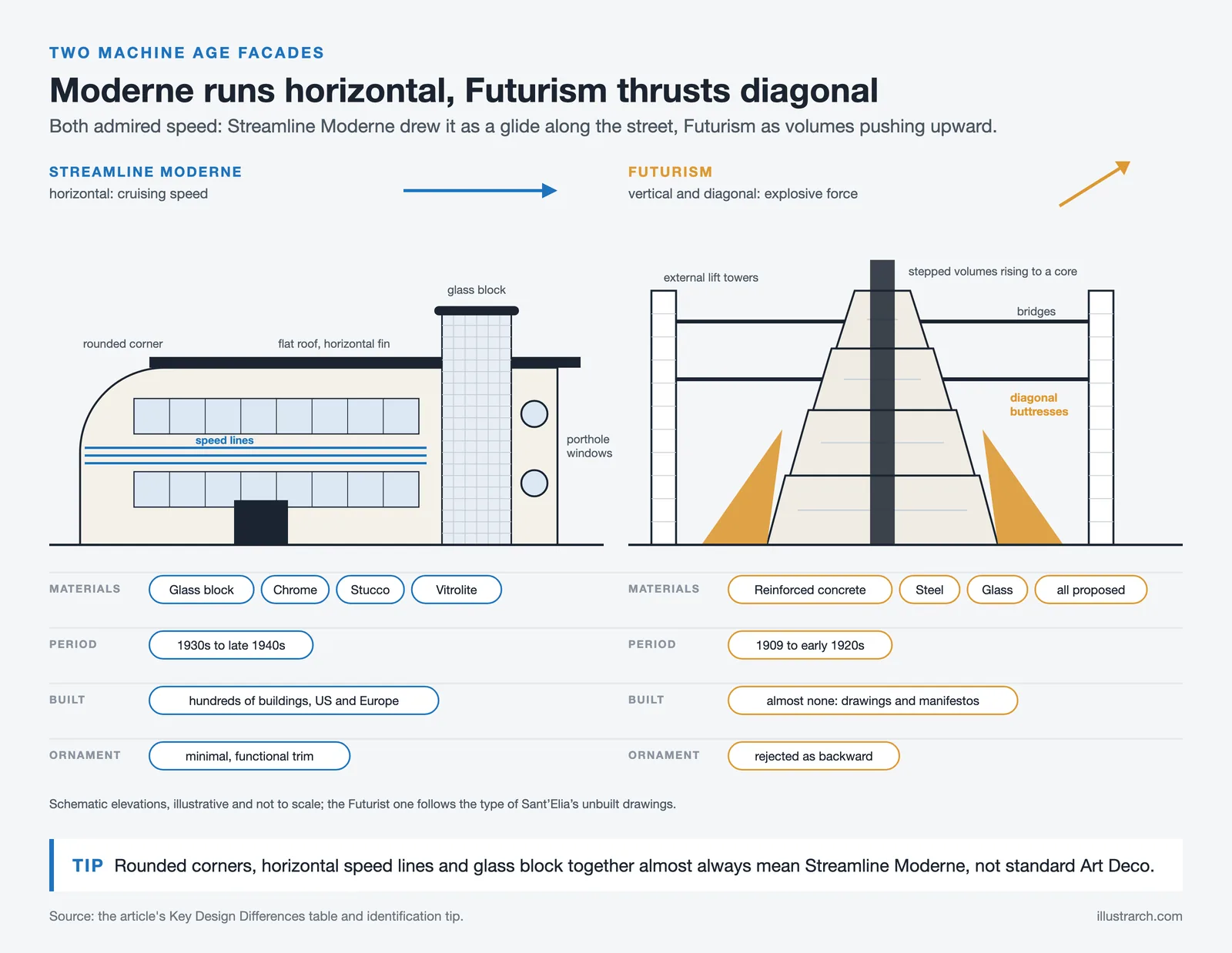
When identifying a streamline moderne house or commercial building in the field, look for three telltale details: rounded corners at wall junctions, horizontal “speed lines” scored into the facade, and glass block panels used as windows or stairwell enclosures. If all three are present, you are almost certainly looking at Streamline Moderne rather than standard Art Deco.
Key streamline moderne buildings include the Coca-Cola Building in Los Angeles (1939), the Pan-Pacific Auditorium (1935), and the Greyhound bus terminals designed by W.S. Arrasmith across the United States. In France, the style was known as style paquebot (ocean liner style), reflecting the influence of ships like the SS Normandie on architectural form.
What Is Futurism in Architecture?
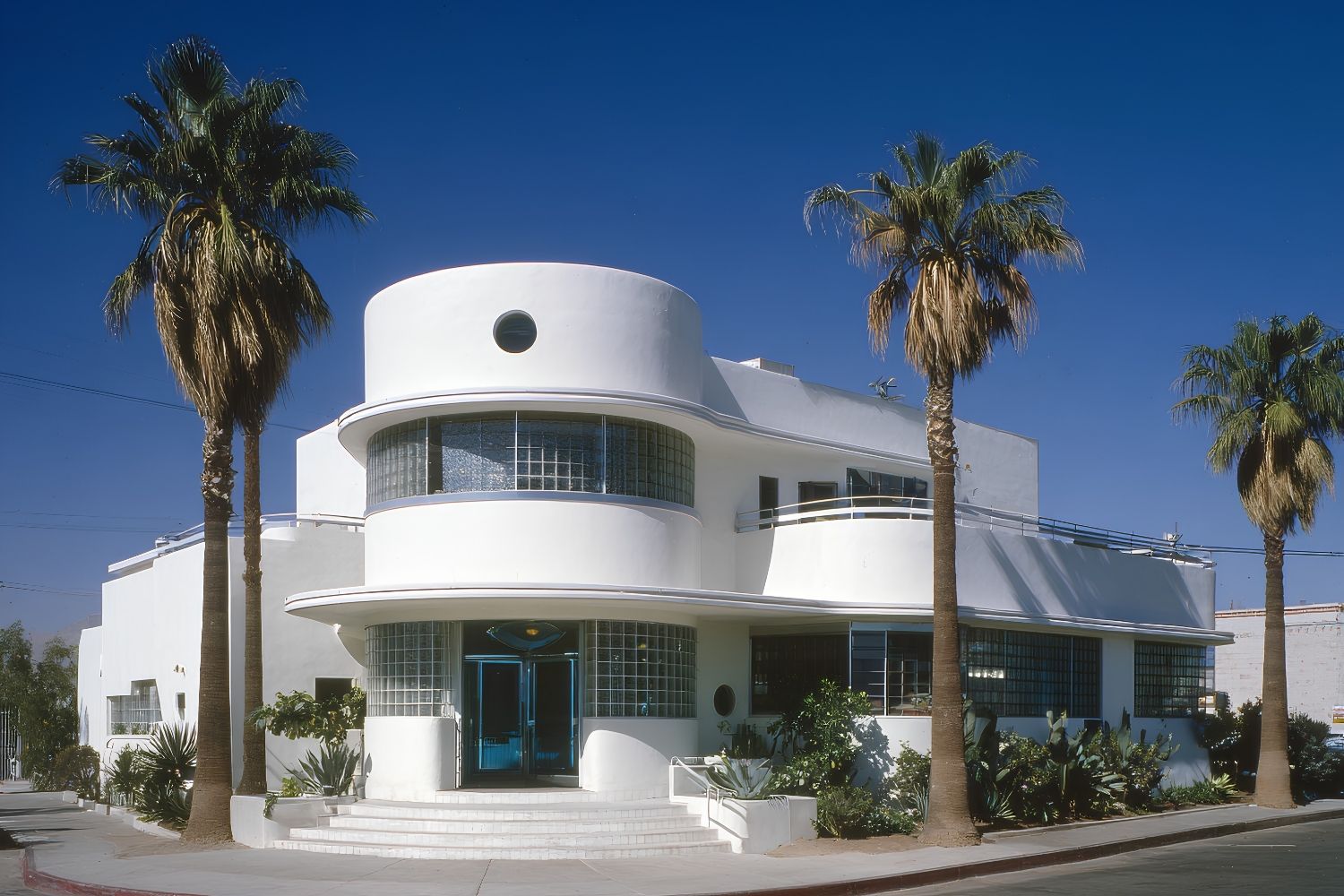
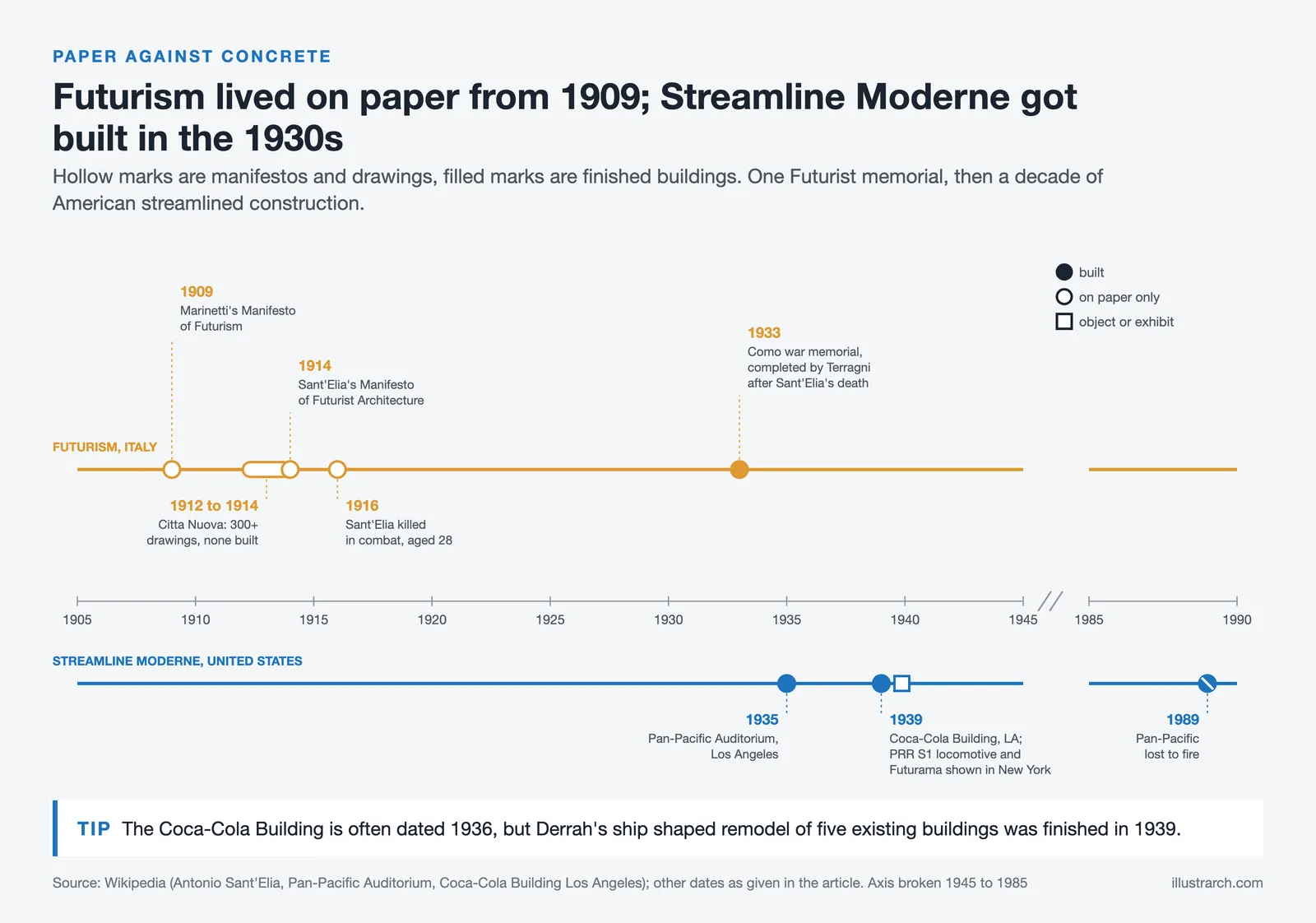
Futurism began not as a building style but as a cultural explosion. Founded by poet Filippo Tommaso Marinetti with his 1909 Manifesto of Futurism, the movement glorified speed, technology, violence, and the destruction of tradition. Architect Antonio Sant’Elia extended these ideas into architecture with his 1914 Manifesto of Futurist Architecture, calling for cities built around motion, with multi-level streets, elevated walkways, and buildings that expressed mechanical power through angular, thrusting forms.
Sant’Elia’s drawings imagined towers connected by aerial bridges and transport corridors, power stations with soaring chimneys, and residential blocks stepped upward like industrial ziggurats. None of these designs were ever built during his lifetime. He died in combat in 1916 at age 28. But his vision became one of the most influential unbuilt portfolios in architectural history, directly shaping later movements from Bauhaus modernism to contemporary futuristic architecture.
The futurism style prioritized dynamism over comfort, ideology over practicality, and provocation over refinement. Where Streamline Moderne smoothed the machine into something approachable, Futurism wanted the machine to feel dangerous.
🎓 Expert Insight
“We will sing of the great crowds in the excitement of labour, pleasure and rebellion… the gluttonous railway stations swallowing smoky serpents.”
Filippo Tommaso Marinetti, Manifesto of Futurism (1909)
Marinetti’s manifesto reveals how Futurism framed the machine as an object of almost religious devotion. This aggressive, movement-obsessed worldview became the philosophical engine that Sant’Elia translated into architectural form just five years later.
Streamline Moderne vs Futurism: Design Philosophy
The core difference between streamline moderne and futurism style sits in how each movement processed its admiration for machines. Futurism treated machines as weapons against the past. Its philosophy was destructive by design, calling for the demolition of museums, libraries, and classical architecture. Speed was not just desirable; it was a moral imperative. Buildings had to look aggressive, temporary, and constantly in motion.
Streamline Moderne took the opposite emotional tone. Born during the economic devastation of the 1930s, the style used aerodynamic curves to project optimism. A streamlined building or product suggested that the future would be smooth, efficient, and accessible to ordinary people. The curves were comforting, not confrontational. Raymond Loewy famously summarized this approach: good design sells, and people respond to forms that suggest forward motion without anxiety.
Futurism was politically entangled from the start. Marinetti aligned with Italian Fascism, and the movement’s celebration of war and aggression made it inseparable from the political upheavals of early 20th-century Europe. Streamline Moderne had no such political agenda. It was commercial, democratic, and consumer-facing, shaped by the needs of American industrial capitalism rather than ideological manifestos.
Comparing Forms, Materials, and Visual Language
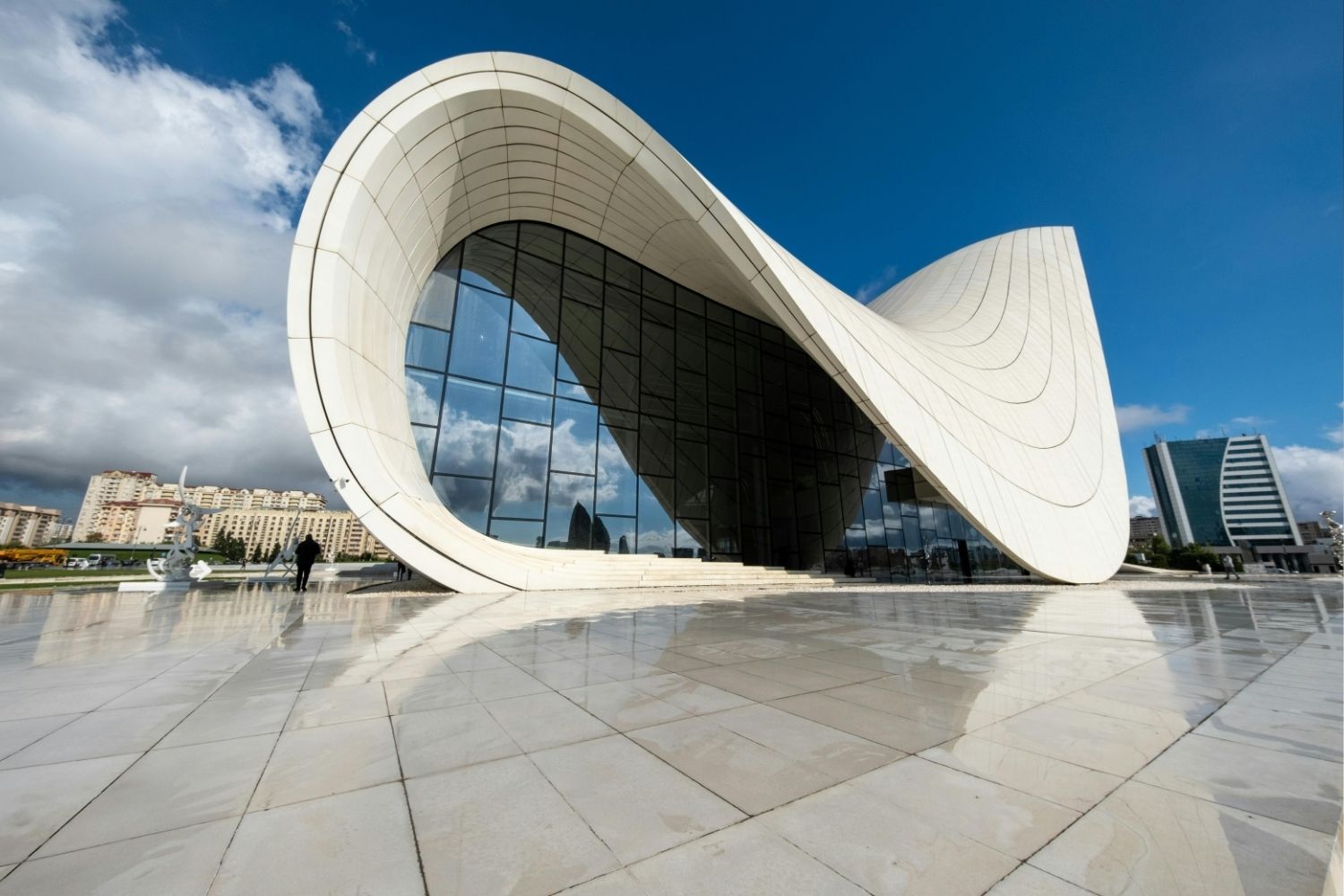
Visually, these two movements look nothing alike, despite sharing a fascination with speed. The following table breaks down how their design languages diverge across key categories.
Streamline Moderne vs Futurism: Key Design Differences
The comparison below highlights where each movement’s approach to architecture and design splits most clearly:
| Feature | Streamline Moderne | Futurism |
|---|---|---|
| Primary forms | Curves, rounded corners, horizontal bands | Diagonal lines, angular thrusts, stepped volumes |
| Dominant direction | Horizontal (suggests cruising speed) | Vertical and diagonal (suggests explosive force) |
| Materials | Glass block, chrome, stucco, Vitrolite | Reinforced concrete, steel, glass (proposed) |
| Emotional tone | Optimistic, smooth, consumer-friendly | Aggressive, confrontational, ideological |
| Built examples | Hundreds of buildings across the US and Europe | Almost none (mostly drawings and manifestos) |
| Relationship to ornament | Minimal, functional trim (chrome bands, porthole windows) | Rejected all ornament as backward |
| Time period | 1930s to late 1940s | 1909 to early 1920s |
Streamline moderne buildings survive in large numbers today, particularly in Miami Beach (where they form the core of the Art Deco Historic District), along Route 66, and in Southern California. Futurist architecture, by contrast, exists almost entirely on paper, making it one of the most influential unbuilt movements in design history.
📌 Did You Know?
Antonio Sant’Elia produced over 300 architectural drawings for his visionary Città Nuova (New City) project between 1912 and 1914, yet not a single structure from these plans was ever constructed. His small built legacy includes Villa Elisi in Brunate and a war memorial in Como, Italy, completed posthumously in 1933 by architect Giuseppe Terragni.
How Did the Machine Age Shape Both Movements?
Both Futurism and Streamline Moderne owe their existence to the rapid mechanization of daily life between 1900 and 1940. Automobiles, aircraft, ocean liners, and electric trains changed how people experienced speed, distance, and time. But each movement absorbed these changes differently.
Futurism worshipped the power of the machine. Sant’Elia’s drawings show buildings that look like engines, turbines, and factories. The machine was raw, loud, and violent. Futurist architects wanted buildings to feel like they were generating energy, not just sitting on a plot of land. This industrial intensity connected Futurism to the factory aesthetic that later fed into Industrial Revolution architecture and its successors.
Modern streamline design worshipped the efficiency of the machine. Loewy, Teague, and their peers studied wind-tunnel data and applied drag-reducing curves to everything from pencil sharpeners to gas stations. The machine was sleek, quiet, and friendly. A streamlined moderne building whispered progress rather than shouting it.
This difference maps directly onto the cultural contexts of each movement. Italy in 1909 was a young nation hungry for modernization and global relevance. America in 1933 was a wounded economy desperate for visible signs that better days were ahead. Architecture reflected these contrasting emotional needs with precision.
⚠️ Common Mistake to Avoid
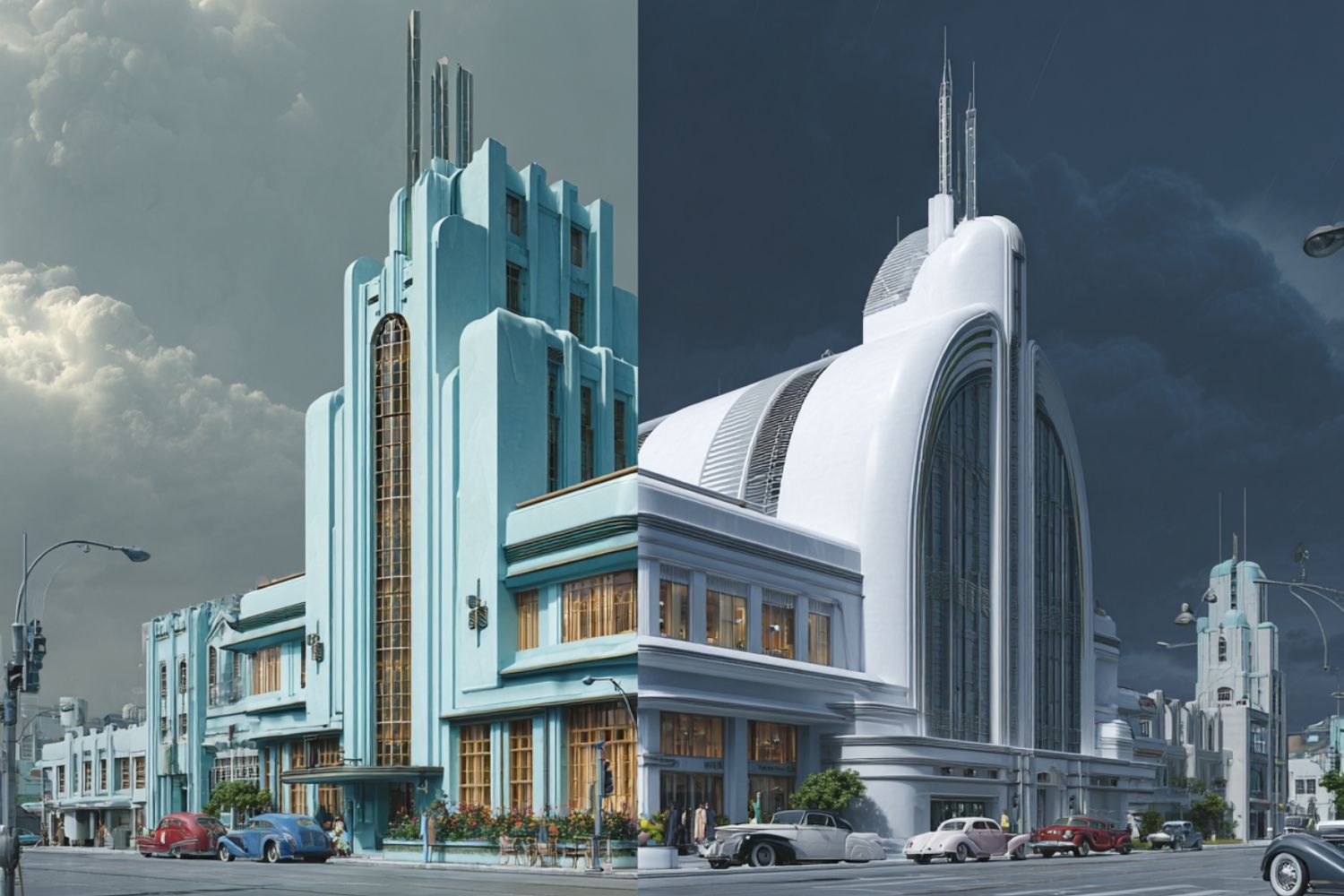
Many people use “Streamline Moderne” and “Art Deco” interchangeably, but they are distinct styles. Art Deco (1920s peak) favors vertical lines, zigzag patterns, and rich ornamentation. Streamline Moderne (1930s peak) strips those decorations away in favor of horizontal curves and smooth surfaces. Think of the Chrysler Building as quintessential Art Deco, and a 1930s Greyhound bus terminal as quintessential Streamline Moderne.
Iconic Projects and Designers
Futurism’s architectural legacy rests almost entirely on Antonio Sant’Elia and, to a lesser extent, Mario Chiattone. Sant’Elia’s Città Nuova drawings remain the movement’s defining visual output. After his death, architect Giuseppe Terragni carried Futurist and Rationalist ideas into built form with projects like the Casa del Fascio in Como (1936), though Terragni’s work is more accurately classified as Italian Rationalism than pure Futurism.
Streamline Moderne produced far more built work. In architecture, the style shaped diners, bus stations, movie theaters, and commercial buildings across America. Notable examples include the Marine Air Terminal at LaGuardia Airport (1940), the former Coca-Cola Building in Los Angeles by Robert V. Derrah (1939), and countless roadside structures along American highways.
In industrial design, the streamlined modern approach produced some of the 20th century’s most recognizable objects: Loewy’s Pennsylvania Railroad S1 locomotive (1939), Bel Geddes’s Futurama exhibit at the 1939 New York World’s Fair, and Henry Dreyfuss’s 20th Century Limited train interiors. These designs brought the principles of modern streamline thinking directly into public consciousness.
🏗️ Real-World Example
Pan-Pacific Auditorium (Los Angeles, 1935): Designed by Wurdeman and Becket, this building’s entrance featured four massive streamlined pylons with horizontal fins that resembled the intake vents of a jet engine, years before jet aircraft were commercially available. The structure became one of the most photographed Streamline Moderne buildings in America before its destruction by fire in 1989. It demonstrated how the style could turn a civic building into a symbol of speed and optimism.
Legacy and Influence on Later Architecture
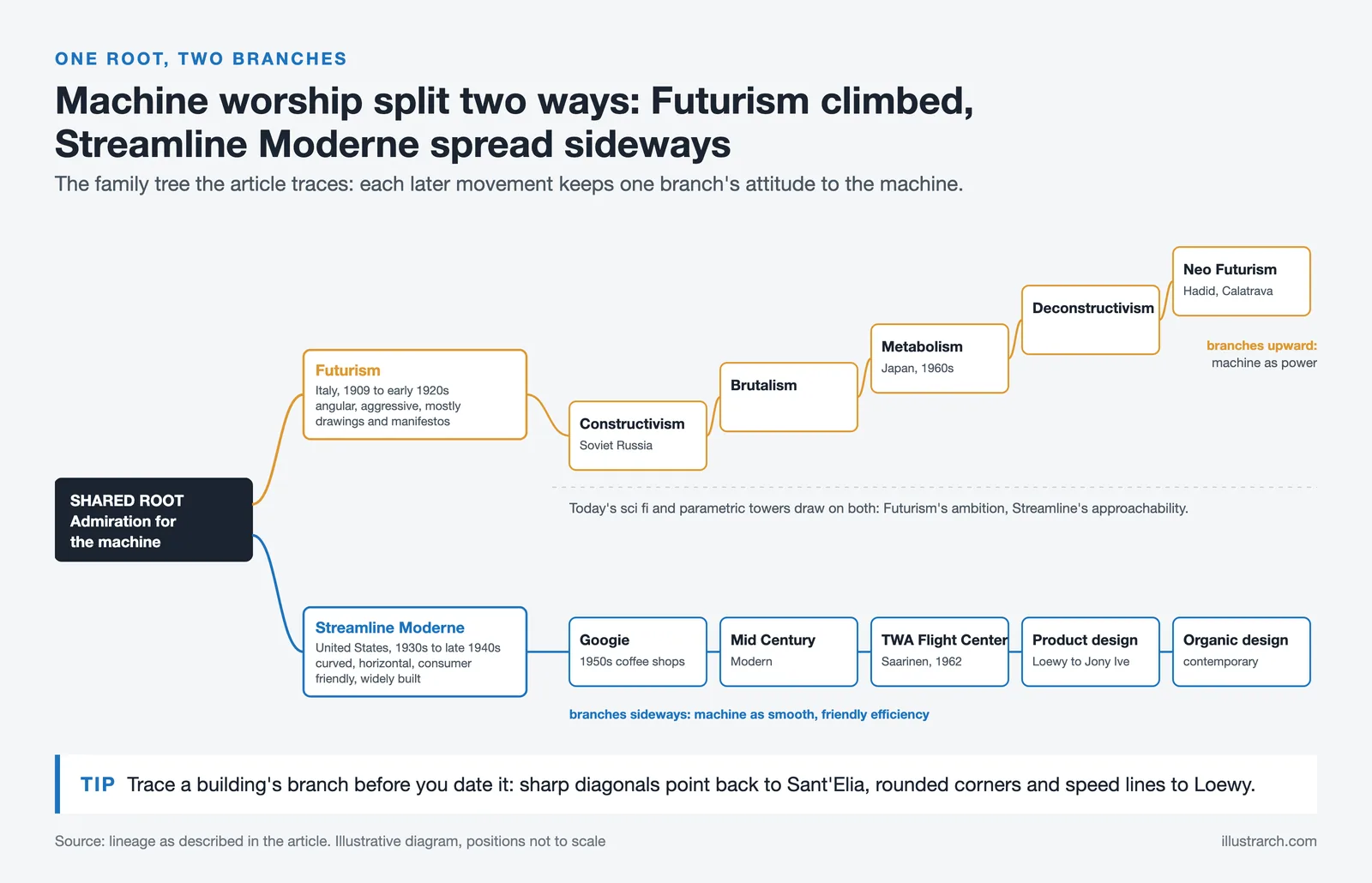
Both movements cast long shadows across 20th and 21st-century design. Futurism’s aggressive, machine-worshipping energy fed directly into later movements: Constructivism in Soviet Russia, the Metabolist movement in 1960s Japan, and the Neo-Futurism practiced by architects like Zaha Hadid and Santiago Calatrava. The idea that architecture should look dynamic, temporary, and technologically charged traces a direct line from Sant’Elia’s 1914 drawings to today’s parametric skyscrapers.
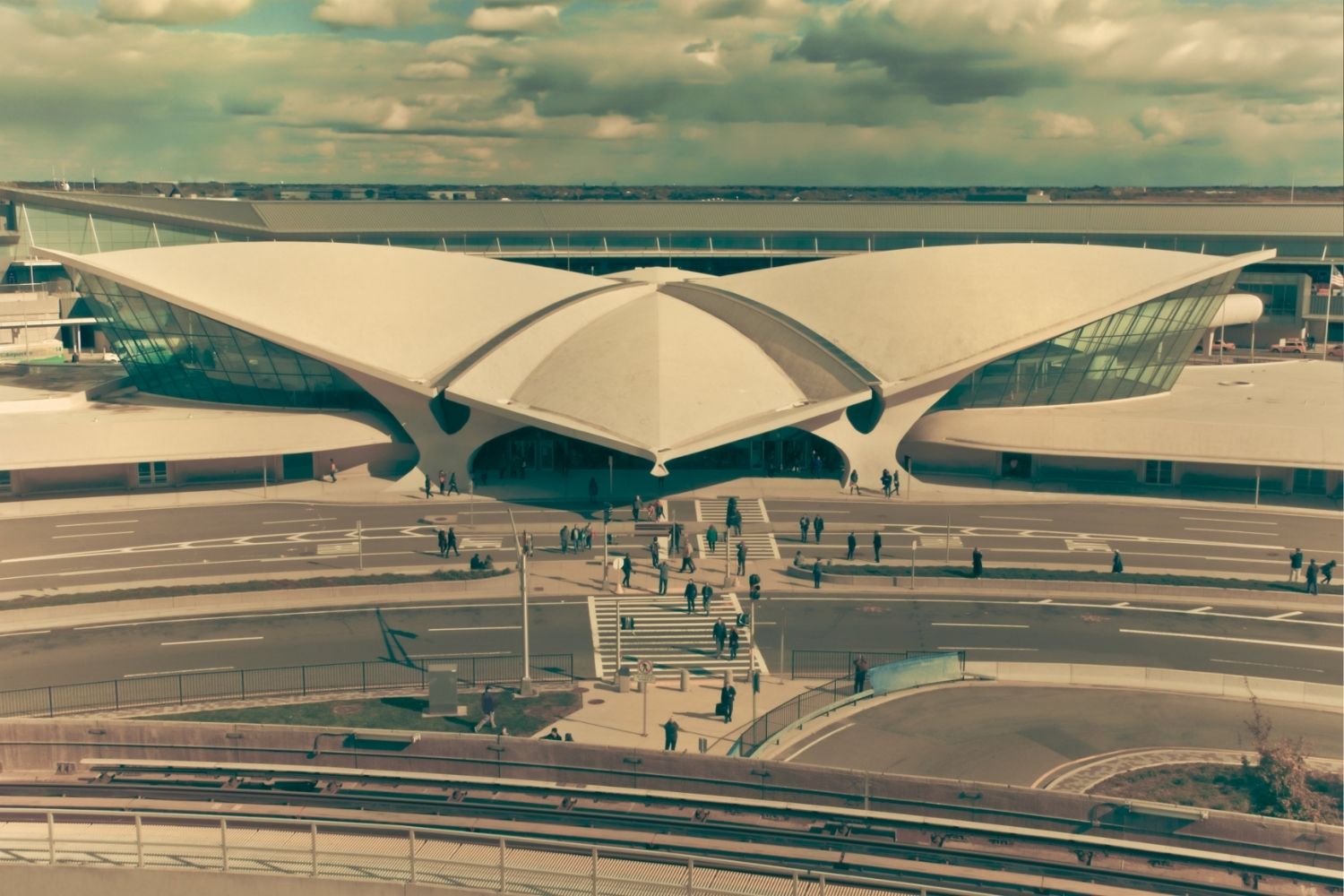
Streamline Moderne’s influence took a different path. Its smooth curves and consumer-friendly aesthetic reappeared in the Googie architecture of the 1950s (think California coffee shops and car washes), the space-age designs of Eero Saarinen’s TWA Flight Center (1962), and even contemporary automotive design. Apple’s early product language under Jony Ive, with its rounded aluminum forms and smooth radii, owes a debt to the same aerodynamic sensibility that shaped Loewy’s locomotives.
The sci-fi architecture visible in today’s most ambitious buildings combines DNA from both movements: Futurism’s ambition to make buildings look like machines of the future, and Streamline Moderne’s instinct to make those machines feel approachable and beautiful.
💡 Pro Tip
If you are studying the genealogy of modern architectural movements, map Futurism and Streamline Moderne as two parallel branches growing from the same root: admiration for the machine. Futurism branches upward into Brutalism, Metabolist, and Deconstructivist architecture. Streamline Moderne branches sideways into Googie, Mid-Century Modern, and contemporary organic design. Tracing these family trees helps clarify why buildings from different eras can feel related despite looking very different.
Final Thoughts
Streamline Moderne vs Futurism is not a question of which movement “won.” Both reshaped how architects and designers think about speed, technology, and the relationship between buildings and machines. Futurism provided the ideological spark: the idea that architecture should abandon history and embrace the industrial future without apology. Streamline Moderne provided the practical application: real buildings, real products, and a real audience of millions who encountered aerodynamic design in their daily lives.
What makes this comparison especially relevant today is how both movements anticipated the central question of 21st-century architectural design: how do we express technology in built form without losing human comfort? Futurism leaned too far toward aggression. Streamline Moderne leaned too far toward commercial appeal. The best contemporary architecture sits somewhere between these poles, drawing on the ambition of one and the accessibility of the other.



Georgian Architecture: Features, History & Examples
Georgian architecture (1714-1830) is defined by strict symmetry, classical proportion, sash windows...
 illustrarch Editoral Team9 Mins read
Neoclassical Architecture: Features, History & Examples
Neoclassical architecture emerged in the mid-18th century, reviving Greek and Roman forms...
illustrarch Editoral Team8 Mins read

Craftsman Architecture: Features, History & Examples
Craftsman architecture emerged in early 1900s America as a response to Victorian...
illustrarch Editoral Team10 Mins read
Florence Renaissance Architecture: How Building Became an Authored Art
Florence Renaissance architecture is usually told as a list of buildings. The...
 Furkan Sen6 Mins read


Leave a comment