

Postmodern Architecture vs Deconstructivism: Playful Irony or Radical Disruption?
Postmodern architecture and deconstructivism both rejected modernism but took opposite paths. This comparison breaks down their philosophies, signature buildings, and the architects who defined each movement, from Robert Venturi's playful historicism to Frank Gehry's fractured geometries.
 Sinan Ozen26 June 20265 Mins read154
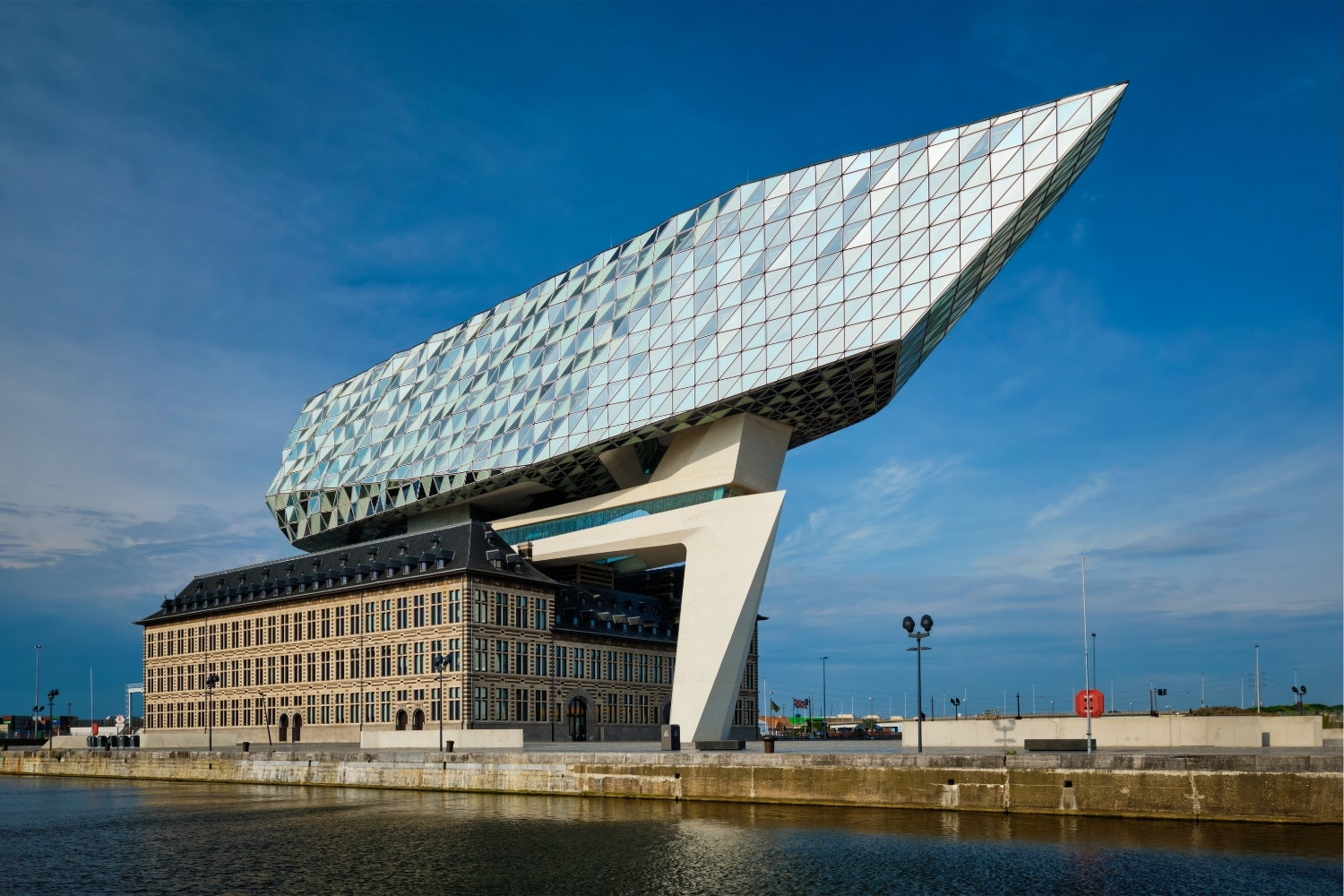
Table of Contents Show
Postmodern architecture vs deconstructivism represents one of the most significant splits in late 20th-century design. Both movements rejected modernism’s rigid formalism, but they did so for different reasons and with opposite visual results. Postmodernism reintroduced historical ornament, color, and wit; deconstructivism broke buildings apart into fragmented, tension-filled compositions that questioned stability itself.
Architecture after modernism did not follow a single path. By the mid-1960s, architects had grown frustrated with the glass-and-steel uniformity of the International Style, but the alternatives they proposed could not have looked more different from one another. On one side stood postmodern architecture, a movement that raided history for columns, arches, and bright facades, often with a knowing wink. On the other stood deconstructivism, a movement that shattered conventional geometry and treated instability as a design principle. Understanding the gap between postmodern architecture vs deconstructivism helps clarify why late 20th-century buildings look so wildly different from one another and why both movements still influence practice today.
What Defines Postmodern Architecture?
Postmodern architecture emerged in the 1960s as a direct reaction to what Robert Venturi famously called the “less is a bore” quality of modernism. Where the International Style stripped buildings down to functional volumes, postmodernism added layers back. Architects pulled references from classical, vernacular, and pop-culture sources, mixing them freely on a single facade. The Portland Building by Michael Graves (1982) stacked painted keystones, ribbons, and oversized garlands onto a concrete office block. Charles Moore’s Piazza d’Italia in New Orleans (1978) turned Roman columns into neon-lit stage scenery.
The core idea was communication. Venturi and Denise Scott Brown argued in Learning from Las Vegas (1972) that buildings should speak to the public through recognizable symbols rather than abstract form. Postmodernism valued context, historical memory, and above all, playful irony in architecture. A column did not need to support a load; it could simply remind viewers of classical order while winking at its own decorative purpose.
Color returned in force. Facades featured salmon pink, teal, and terra cotta. Rooflines broke away from the flat slab, reintroducing pediments and barrel vaults. The movement peaked commercially in the 1980s, when corporate clients embraced its accessible imagery for headquarters, hotels, and shopping centers across the United States, Europe, and Japan.
What Drives Deconstructivism?
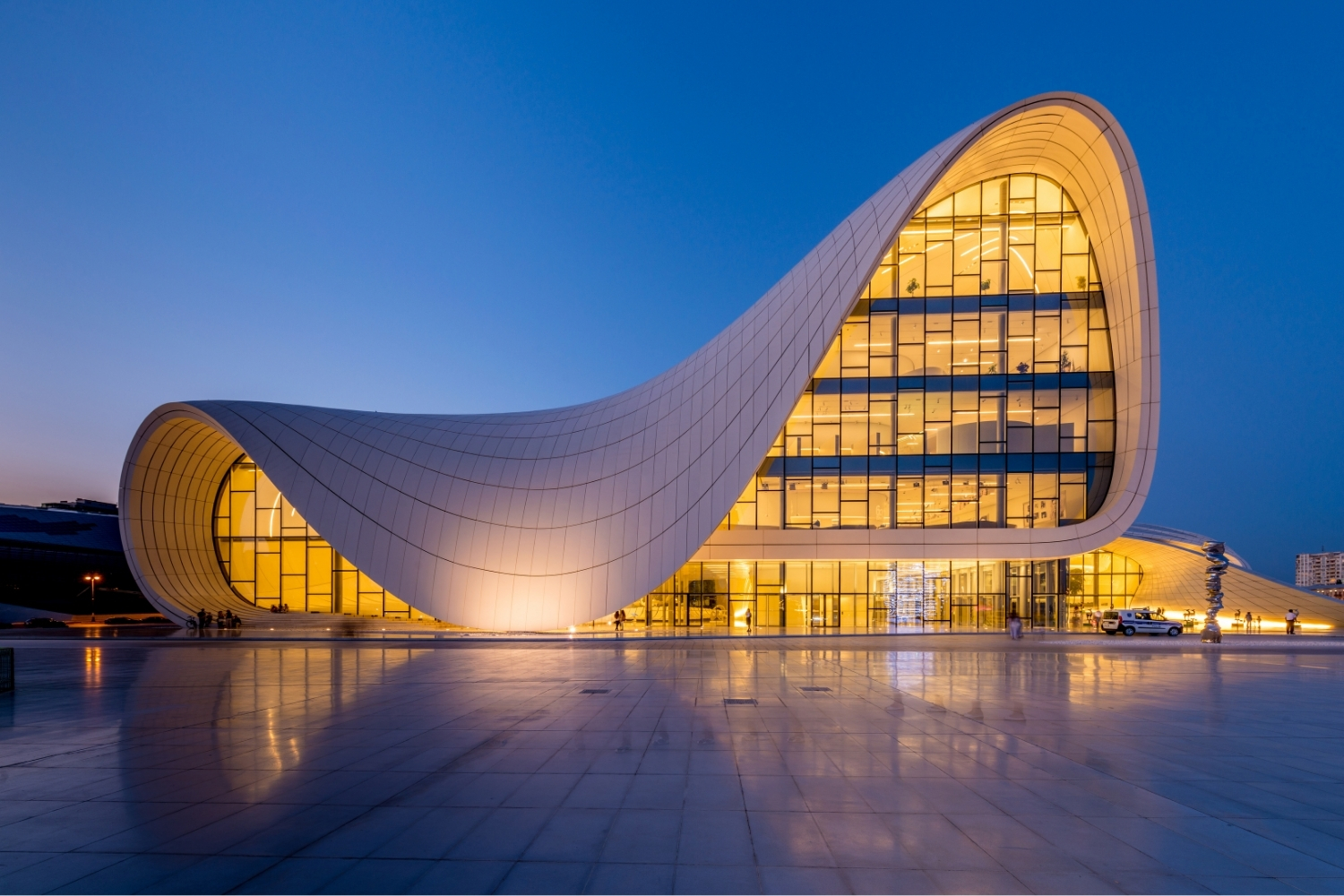
Deconstructivism architecture took shape in the 1980s from a very different set of frustrations. While postmodernists criticized modernism for being cold, deconstructivists criticized it for being too orderly. Drawing on philosopher Jacques Derrida’s concept of deconstruction and on the formal experiments of early Soviet Constructivism, architects like Frank Gehry, Zaha Hadid, Daniel Libeskind, and Peter Eisenman pursued forms that looked unstable, colliding, or mid-explosion.
The movement’s public debut came at the 1988 “Deconstructivist Architecture” exhibition at MoMA in New York, organized by Philip Johnson and Mark Wigley. The show featured work by seven architects whose projects shared fragmented geometries and a rejection of right angles, though each arrived at those qualities through different processes. Gehry worked from sculptural intuition; Eisenman from diagrammatic logic; Hadid from dynamic painting.
💡 Pro Tip
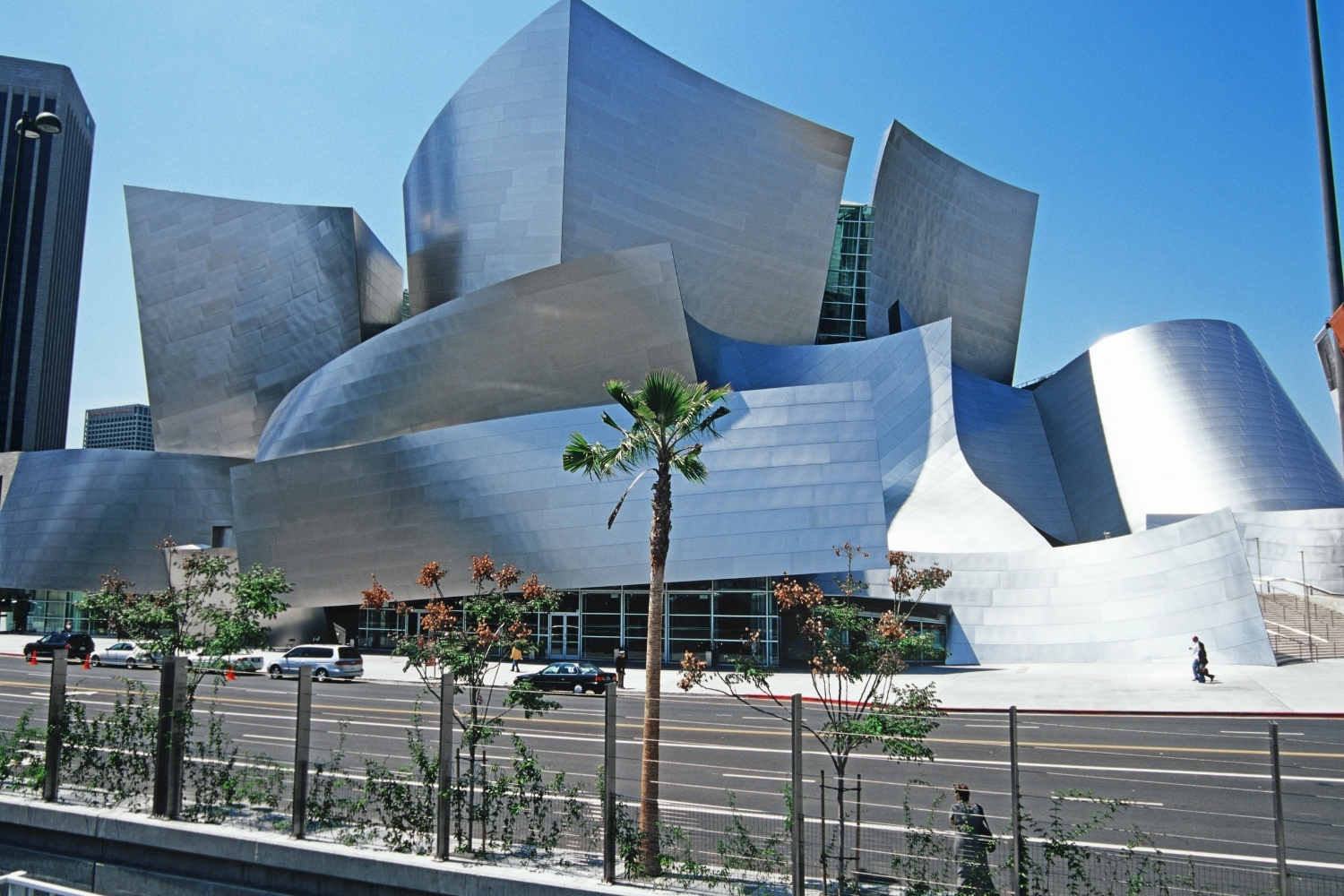
When studying deconstructivist projects, look past the exterior photographs. The interior spatial experience often contradicts the aggressive outside form. Gehry’s Walt Disney Concert Hall, for instance, feels warm and acoustically intimate inside, despite its jagged stainless-steel shell. Judging these buildings from images alone misses much of their architectural intent.
Radical disruption architecture, as critics sometimes labeled it, did not aim to comfort or communicate through familiar symbols. Instead, it aimed to provoke questions about how we experience space, gravity, and structural logic. Walls tilted. Floors sloped. Windows appeared where structural openings would normally be forbidden. The result was buildings that forced occupants to reconsider assumptions they had never thought to question.
How Do Postmodern and Deconstructivist Buildings Differ?
The gap between postmodernism vs deconstructivism becomes clearest when you line up their priorities. One movement looked backward to history for vocabulary; the other looked inward to structure for disruption. The following table breaks down the major contrasts across seven categories.
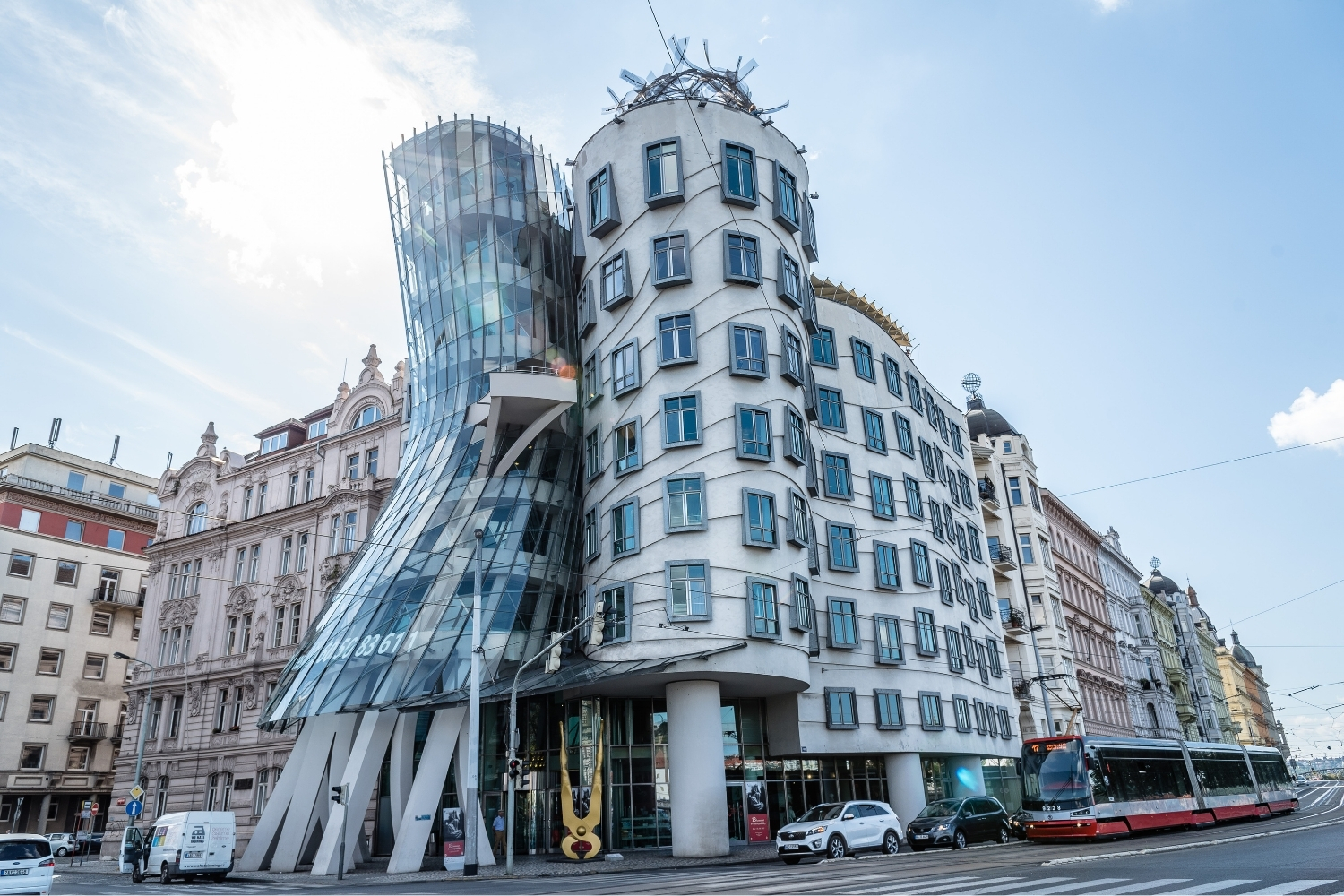
Comparison of Postmodern vs Deconstructivist Buildings
The table below highlights where these two architecture styles comparison diverges most sharply:
| Feature | Postmodern Architecture | Deconstructivism Architecture |
|---|---|---|
| Philosophical root | Reaction to modernism’s austerity; Venturi’s “complexity and contradiction” | Derrida’s deconstruction theory + Soviet Constructivist formal experiments |
| Attitude toward history | Borrows and reinterprets classical and vernacular motifs | Largely ignores historical reference; focuses on form and structure |
| Dominant visual quality | Color, ornament, symmetry references, recognizable symbols | Fragmentation, angular collision, visual tension, apparent instability |
| Communication goal | Speak to the public through familiar imagery and wit | Provoke disorientation and critical questioning of spatial norms |
| Typical materials | Painted concrete, tile, stone veneer, colored stucco | Titanium, stainless steel, exposed concrete, glass at sharp angles |
| Peak period | Late 1970s to early 1990s | Late 1980s to 2010s |
| Key figures | Robert Venturi, Michael Graves, Charles Moore, Aldo Rossi | Frank Gehry, Zaha Hadid, Daniel Libeskind, Peter Eisenman, Rem Koolhaas |
⚖️ Pros & Cons at a Glance
✔️ Postmodern Pros: Visually accessible to the public, context-sensitive, celebrates local identity and humor
✖️ Postmodern Cons: Often dismissed as superficial pastiche, aging commercial examples look dated, ornament can mask poor planning
✔️ Deconstructivist Pros: Pushes structural and spatial boundaries, generates iconic cultural landmarks, encourages new fabrication technologies
✖️ Deconstructivist Cons: High construction costs, difficult to maintain, can feel hostile to everyday users
Key Figures and Iconic Projects
The architects behind each movement reveal how personal philosophy shaped built results. Robert Venturi’s Guild House (1964) in Philadelphia used a plain brick facade with a gold-anodized TV antenna on top, a deliberate commentary on the building’s elderly residents and their daily habits. Michael Graves turned the Portland Building (1982) into a polychrome billboard of garlands and pilasters that divided critics sharply. Philip Johnson, who had championed modernism decades earlier, switched allegiances and designed the AT&T Building (1984) in New York with a broken pediment crowning a granite tower, a postmodern gesture visible across the Manhattan skyline.
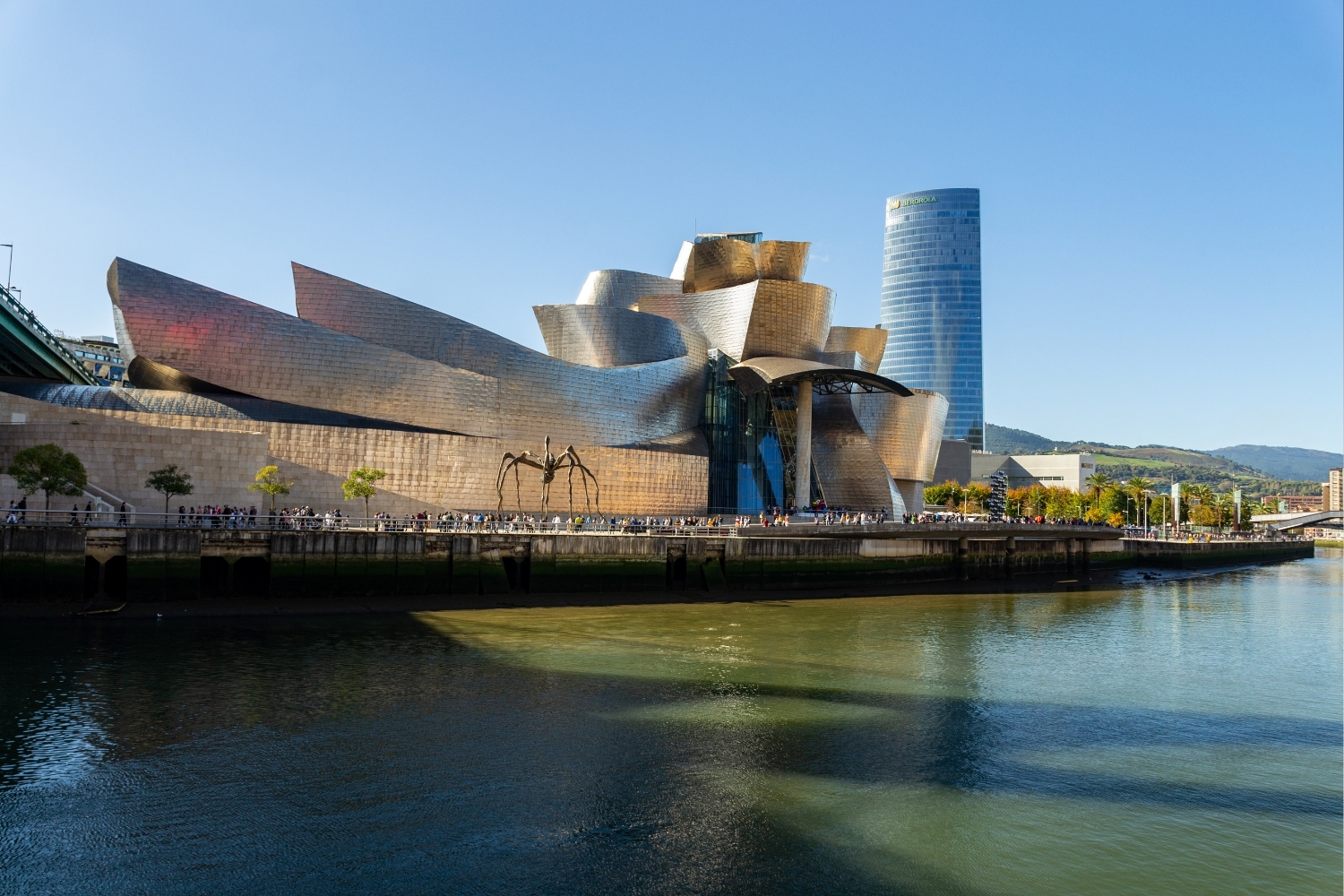
On the deconstructivist side, Frank Gehry’s Guggenheim Museum Bilbao (1997) became the movement’s most recognized building. Its titanium panels, generated through aerospace software called CATIA, curve and fold in ways that conventional drafting could not have produced. Daniel Libeskind’s Jewish Museum Berlin (2001) used sharp zinc-clad volumes slashed by voids to physically express absence and trauma. Zaha Hadid’s Vitra Fire Station (1993) turned a small industrial building into a series of concrete planes that seem to slide past each other, as if frozen mid-movement.
🏗️ Real-World Example
Guggenheim Museum Bilbao (Bilbao, 1997): Gehry’s titanium-clad museum cost approximately $89 million to build and generated an estimated $500 million in economic activity for the Basque region within its first three years, a phenomenon economists later called the “Bilbao Effect.” The building demonstrated that deconstructivist form could function as an economic engine, not just an architectural statement.
Why the Distinction Matters for Architects Today
Both movements have faded as dominant forces, but their DNA is everywhere. Contemporary firms routinely blend postmodern sensitivity to context and symbolism with deconstructivist ambition in geometry and fabrication. MVRDV’s Markthal in Rotterdam (2014) wraps a traditional market hall in an enormous residential arch covered in a giant food mural, combining postmodern populism with structural daring. BIG’s VIA 57 West in New York (2016) twists a conventional apartment block into a pyramid shape that references both historical typology and parametric logic.
For students and practitioners, understanding postmodern architecture vs deconstructivism is not about picking a side. It is about recognizing two distinct toolkits for responding to modernism’s limitations. One toolkit emphasizes meaning, humor, and legibility. The other emphasizes form, tension, and spatial experience. Knowing when to reach for each, or when to combine them, is a skill that separates thoughtful design from formulaic repetition.
The relationship between constructivism and deconstructivism adds another layer to this conversation, tracing how early 20th-century Russian experiments with geometric abstraction directly informed the fragmented vocabularies of the 1980s. Meanwhile, the 1988 MoMA exhibition catalogue remains a primary document for anyone researching where deconstructivism drew its intellectual boundaries. For a broader view of how these movements sit within the full arc of architectural history, the Wikipedia entry on deconstructivism provides a solid starting point with links to key architects and projects. Dezeen’s retrospective on the seven original MoMA buildings also traces what happened to each project after the exhibition closed.
The Bigger Picture
The real takeaway from comparing postmodern vs deconstructivist buildings may be this: both movements proved that architecture becomes most interesting when it refuses to settle for a single correct answer. Postmodernism said buildings could be funny, contradictory, and still serious. Deconstructivism said buildings could be unstable, fractured, and still stand. The tension between those two positions has not been resolved, and perhaps that is exactly the point.







Florence Renaissance Architecture: How Building Became an Authored Art
Florence Renaissance architecture is usually told as a list of buildings. The...
 Furkan Sen6 Mins read
Architectural Styles History: Why Some Styles Fail and Others Endure
A look at architectural styles history through the decisions that actually keep...
Furkan Sen6 Mins read
Architectural Styles: Why Some Endure and Others Fade
Some architectural styles last for centuries while others are demolished within a...
Furkan Sen5 Mins read

Scandinavian Design vs Japanese Minimalism: Nordic Light Meets Zen Simplicity
A side-by-side comparison of Scandinavian and Japanese minimalism covering origins, color palettes,...
Furkan Sen7 Mins read


Leave a comment