

Scandinavian Design vs Japanese Minimalism: Nordic Light Meets Zen Simplicity
A side-by-side comparison of Scandinavian and Japanese minimalism covering origins, color palettes, materials, architectural strategies, lighting approaches, and the Japandi hybrid. Includes a detailed feature table, real-world project examples, and practical guidance for applying either tradition to residential interiors.
 Furkan Sen26 June 20267 Mins read239

Table of Contents Show
Scandinavian design vs Japanese minimalism represents one of the most discussed comparisons in contemporary architecture and interior design. Both traditions strip away the unnecessary, but they do so for different reasons and through different cultural lenses, with Nordic design chasing warmth and democratic comfort while Japanese minimalism pursues spiritual clarity and spatial awareness.
Two design philosophies born thousands of kilometers apart share an obsession with simplicity, yet the spaces they produce feel remarkably different. Walk into a Copenhagen apartment and you will notice pale wood floors, soft textiles, and candlelight bouncing off white walls. Step into a Kyoto machiya townhouse and the mood shifts: tatami mats absorb sound, shoji screens filter daylight into a soft glow, and every object occupies its position with quiet intention. The contrast tells a story not just about taste, but about climate, philosophy, and the way each culture defines a good life.
Origins and Cultural Roots of Each Tradition
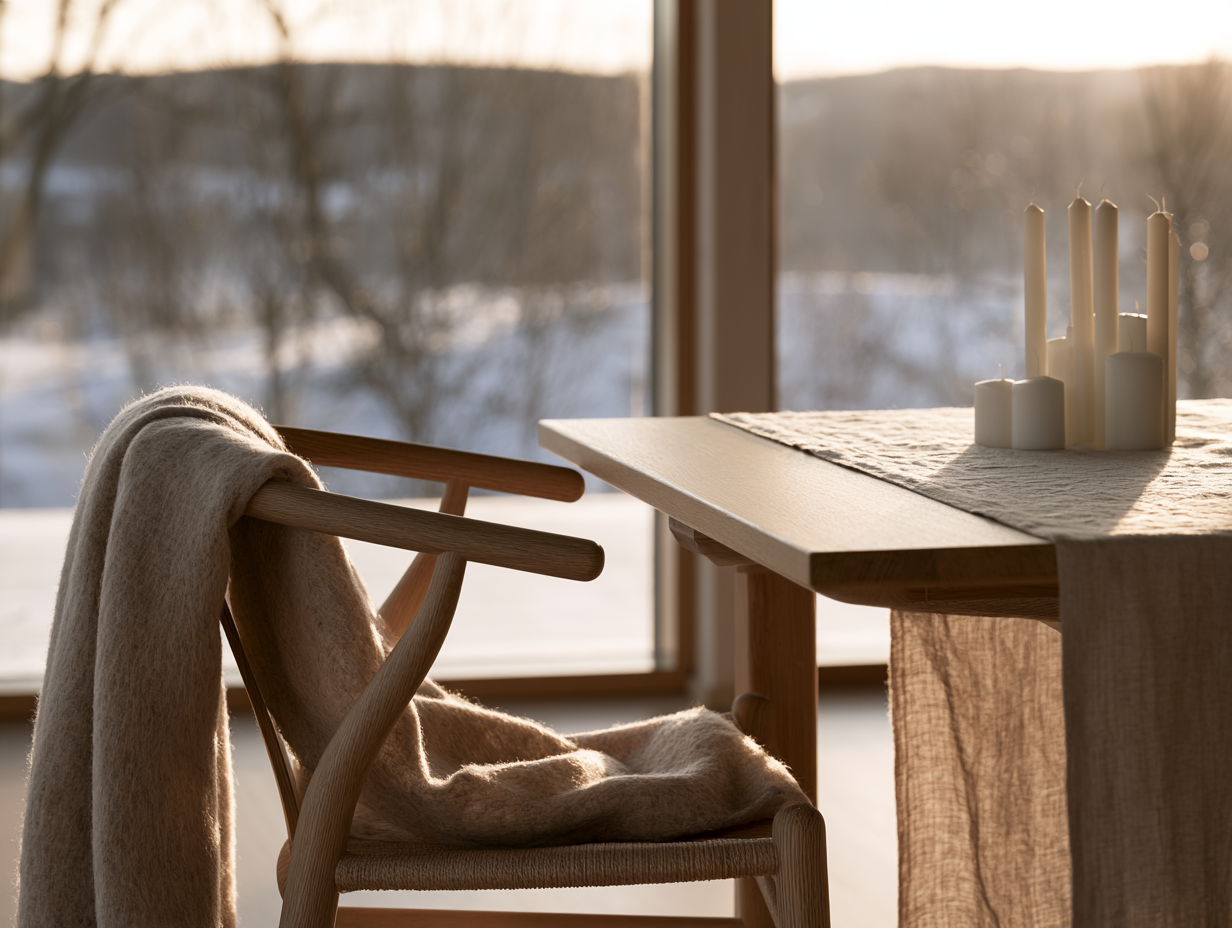
Scandinavian design emerged in the 1930s across Denmark, Finland, Norway, Sweden, and Iceland. Long winters with limited daylight pushed designers to create interiors that maximized brightness and warmth. The 1954 Design in Scandinavia exhibition at the Brooklyn Museum introduced the movement to American audiences, and figures like Alvar Aalto, Hans Wegner, and Arne Jacobsen became household names. The core idea was democratic design: beautiful, functional objects should be affordable and available to everyone, not reserved for the elite.
Japanese minimalism design traces its roots much further back, to Zen Buddhist philosophy and the aesthetic principle of wabi-sabi, which finds beauty in imperfection and impermanence. The concept of ma (negative space) treats emptiness as an active design element rather than something to be filled. While Scandinavian design responded to harsh winters, Japanese spatial thinking responded to a different set of pressures: earthquakes, typhoons, and the need for flexible, multipurpose rooms in densely populated cities. Architects like Tadao Ando carried these principles into modern concrete structures that use light and shadow as primary materials.
🏗️ Real-World Example
Koshino House (Ashiya, 1984): Tadao Ando’s residential project in Hyogo Prefecture uses bare concrete walls with narrow slit windows to control exactly how sunlight enters each room. The house demonstrates how Japanese minimalism treats light as a building material, a fundamentally different approach from Nordic design, which tries to capture as much daylight as possible through oversized glazing.
Scandinavian Design Principles: Warmth Through Simplicity
Scandinavian design principles center on the idea that a home should feel like a refuge from the cold and dark outside. The Danish concept of hygge (cozy togetherness) and the Swedish lagom (just the right amount) are not marketing slogans; they describe real lifestyle priorities that directly shape how rooms are furnished. A typical Nordic interior uses a restrained palette of whites, grays, and muted pastels, paired with natural materials like birch, pine, ash, and wool. Furniture sits on visible legs, keeping the floor plane open and airy. For a closer look at how these principles play out in real homes, our guide to Scandinavian modern houses covers 12 standout Nordic residential projects.
Functionality is non-negotiable. Every piece of furniture must earn its place, but unlike the Japanese approach, Scandinavian spaces openly invite comfort. Thick sheepskin throws on chairs, knitted blankets draped over sofas, and clusters of candles on windowsills are standard. The goal is not austerity but a kind of edited abundance, where fewer objects of higher quality create a calm, lived-in atmosphere. This balance between restraint and coziness is what separates Scandinavian interiors from other minimalist styles.
Japanese Minimalism Design: Emptiness as Expression

Where Nordic rooms aim for warmth, Japanese minimalism design aims for clarity. The traditional Japanese room is defined by what is absent: permanent furniture, heavy curtains, wall decorations. A tatami room can function as a bedroom, dining room, or living area depending on which objects are brought in and removed throughout the day. This flexibility is not a compromise; it reflects a philosophical commitment to impermanence and adaptability.
Materials in Japanese interiors tend toward darker, more earthy tones. Hinoki cypress, cedar, bamboo, washi paper, and natural stone create surfaces with visible grain, texture, and age. The influence of Japanese minimalism on global tile aesthetics has been significant, with European manufacturers now producing entire collections inspired by the irregular surfaces of Japanese ceramics. Where a Scandinavian designer might sand and lacquer a timber surface to a smooth finish, a Japanese craftsperson often preserves or emphasizes natural irregularities.
💡 Pro Tip
If you are designing a room with Japanese minimalist principles, start by removing items rather than adding them. Experienced interior designers working in this tradition often begin a project by clearing the space completely, then reintroducing only the objects that serve a clear functional or contemplative purpose. Each item that re-enters the room should answer the question: does this improve the experience of being here?
How Do Scandinavian and Japanese Aesthetics Compare?
The most visible difference between scandinavian vs japanese interior design appears in color. Nordic palettes lean cool and bright, built around white walls that reflect scarce winter sunlight. Japanese palettes run warmer and deeper, using charcoal, moss green, indigo, and earth tones that absorb light and create a sense of enclosure. Both approaches use neutral foundations, but the emotional effect is opposite: one expands space, the other compresses it.
Lighting strategies also diverge. Scandinavian rooms treat natural light as something precious to be maximized through large windows, reflective surfaces, and transparent furniture legs. Artificial lighting in Nordic homes is warm and layered, with multiple table lamps, floor lamps, and pendant fixtures creating pools of glow. Japanese interiors treat light as something to be controlled and filtered. Shoji screens diffuse incoming daylight into a soft, even wash. Paper lanterns and recessed fixtures produce indirect illumination that avoids harsh shadows.
Comparison of Scandinavian vs Japanese Design
The following table outlines the key differences between these two approaches:
| Feature | Scandinavian Design | Japanese Minimalism |
|---|---|---|
| Color Palette | Whites, pale grays, soft pastels | Earth tones, charcoal, moss green, indigo |
| Primary Materials | Light woods (birch, pine, ash), wool, linen | Dark woods (cedar, cypress), bamboo, washi paper, stone |
| Guiding Philosophy | Hygge (cozy togetherness), lagom (balance) | Wabi-sabi (beauty in imperfection), ma (negative space) |
| Approach to Light | Maximize natural light, layered warm artificial lighting | Filter and control light, diffused indirect illumination |
| Furniture Style | Visible legs, organic curves, upholstered comfort | Low-profile, floor-level seating, minimal and portable |
| Textures | Soft, tactile (sheepskin, knits, wool) | Natural and raw (stone, unfinished wood, clay) |
| Spatial Concept | Open, airy, and bright | Enclosed, contemplative, and flexible |
| Attitude to Imperfection | Smooth finishes, refined craftsmanship | Celebrated through wabi-sabi, visible aging valued |
Nordic vs Japanese Minimalism in Architecture

Scandinavian minimalism architecture tends to emphasize transparency. Large glass walls connect interior spaces to the landscape, and structural elements are often exposed honestly rather than concealed. The work of firms like Snøhetta and BIG (Bjarke Ingels Group) shows how Nordic architects use generous glazing and white or light-toned cladding to create buildings that appear to merge with snow-covered terrain or reflect summer skies. Our article on the power of minimalism in architecture covers this in greater detail.
Japanese architectural minimalism takes a different path. Tadao Ando’s concrete volumes, Kengo Kuma’s layered timber screens, and SANAA’s ethereal glass pavilions all share a concern with controlling sensory experience. Walls are not just enclosures; they are instruments for directing light, framing views, and shaping silence. The relationship between brutalism and minimalism in Japanese architecture is especially interesting, since Ando’s raw concrete work sits at the intersection of both movements. Where Nordic architects often dissolve the boundary between inside and outside, Japanese architects define it with precision.
What Is Japandi Design?
Japandi design is the hybrid style that fuses Scandinavian warmth with Japanese restraint. The term emerged around 2016, but the cross-pollination between these two traditions goes back much further. Danish furniture designer Kaare Klint studied Japanese joinery techniques in the early 20th century, and Finnish architect Alvar Aalto drew on Japanese spatial planning for several residential projects. The connection was always there; the label simply gave it a name.
A japandi room typically pairs light Scandinavian wood tones with darker Japanese accents, creating a richer palette than either tradition uses alone. Low-profile furniture, handmade ceramics, and a strict no-clutter policy are standard. For anyone considering this approach, our Japandi style guide breaks down furniture, color, and room-by-room decisions. The Japandi concept on Wikipedia provides additional historical context on how the fusion evolved.
⚖️ Pros & Cons at a Glance
✔️ Scandinavian Pros: Bright and uplifting spaces, high comfort factor, widely accessible furniture options, easy to adapt for families
✖️ Scandinavian Cons: Can feel sterile without enough texture, white palettes show wear quickly, limited darker mood options
✔️ Japanese Pros: Deep sense of calm, flexible multipurpose rooms, ages gracefully through wabi-sabi philosophy
✖️ Japanese Cons: Floor-level living is uncomfortable for some, requires strict discipline to maintain, fewer ready-made furnishing options in Western markets
Applying These Styles to Your Own Space

Choosing between scandinavian design vs japanese minimalism often comes down to climate and lifestyle. If you live in a region with long, dark winters and want your home to feel like a warm cocoon, the Nordic approach gives you a tested formula: light walls, soft textures, layered lighting. If you are drawn to quiet, contemplative spaces and are willing to edit your possessions aggressively, the Japanese path offers a deeper sense of spatial awareness. Both styles reward quality over quantity, and both look better with age when the right materials are selected.
For those who cannot pick one, japandi offers a middle ground. Start with a Scandinavian base of light wood and neutral walls, then introduce Japanese elements: a low coffee table, handmade stoneware, a single branch arrangement in place of a flower bouquet. Our article on the Scandinavian perspective in home decor can help you build the Nordic foundation. If the Japanese garden tradition interests you, our guide to designing a Japanese garden extends these principles outdoors. The key is to respect the underlying philosophy of whichever tradition you lean on, rather than treating it as a surface-level aesthetic to copy.
The Bigger Picture
The real lesson behind nordic vs japanese minimalism may be that simplicity is never simple. Each tradition spent centuries arriving at its own version of “less,” shaped by weather, belief systems, and social values that have nothing to do with trending Pinterest boards. The most interesting projects happening today are the ones that understand this depth and borrow from both traditions with genuine respect, not just for the look, but for the ideas behind it.





Florence Renaissance Architecture: How Building Became an Authored Art
Florence Renaissance architecture is usually told as a list of buildings. The...
Furkan Sen6 Mins read

Architectural Styles History: Why Some Styles Fail and Others Endure
A look at architectural styles history through the decisions that actually keep...
Furkan Sen6 Mins read
Architectural Styles: Why Some Endure and Others Fade
Some architectural styles last for centuries while others are demolished within a...
Furkan Sen5 Mins read
Postmodern Architecture vs Deconstructivism: Playful Irony or Radical Disruption?
Postmodern architecture and deconstructivism both rejected modernism but took opposite paths. This...
 Sinan Ozen5 Mins read


Leave a comment