

Brutalism vs Modernism: Concrete Ideals or Sleek Simplicity in Architectural Design?
Dive into the clash of architectural titans: brutalism and modernism. Explore their unique philosophies, from the raw power of brutalism's bold concrete forms to modernism's sleek minimalism. Discover how these styles embody contrasting ideals and continue to shape contemporary design through their innovative use of materials and enduring influence on architecture.
 Sinan Ozen14 November 202514 Mins read846
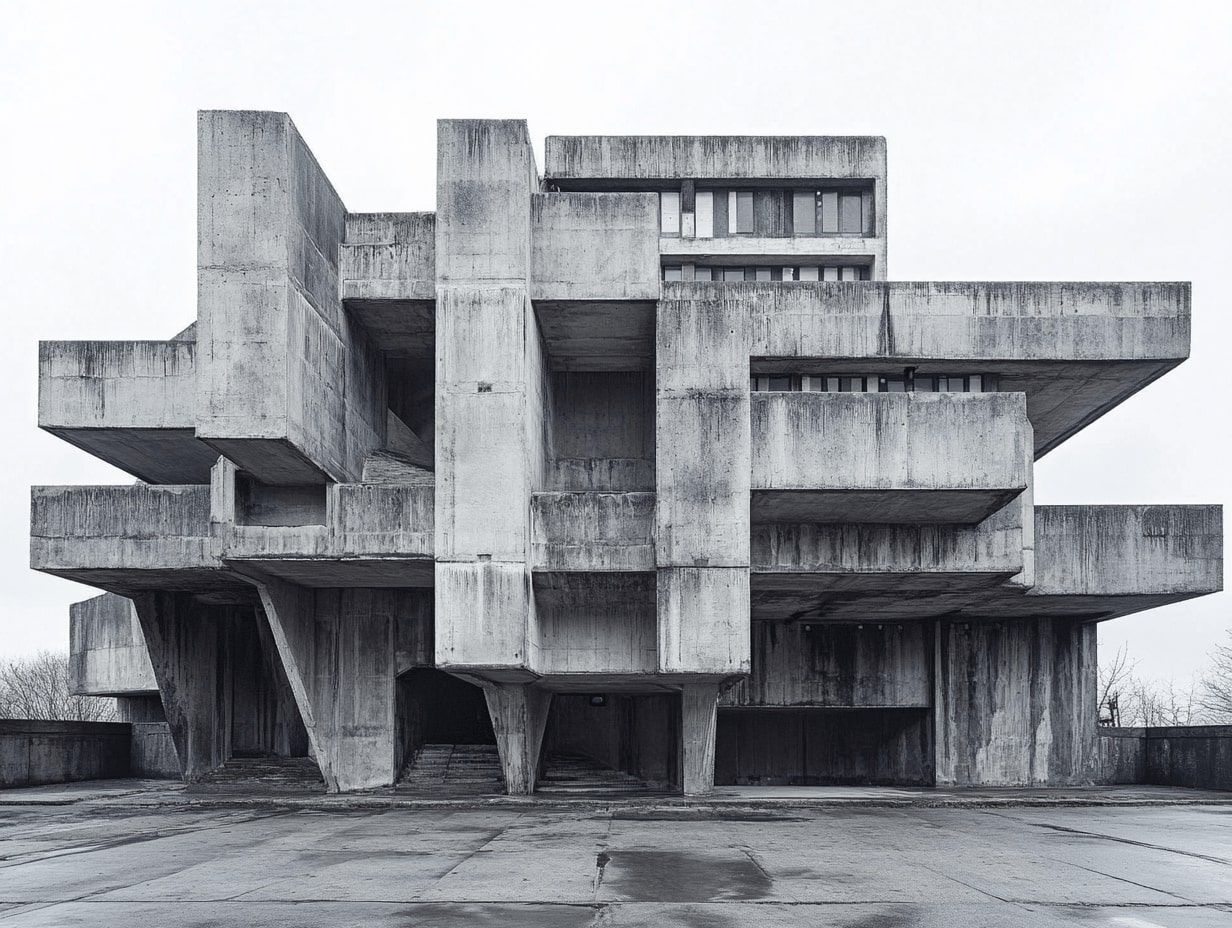
Table of Contents Show
Brutalism vs modernism represents one of architecture’s most enduring debates: two movements that share modernist DNA yet diverge radically in form, material, and philosophy. Brutalism, rooted in raw exposed concrete, champions structural honesty and monumental presence. Modernism pursues clean lines, transparency, and minimal ornamentation. Both continue shaping how buildings are designed, experienced, and preserved today.
Few styles spark as much debate as brutalism vs modernism. Both movements transformed the way we think about design, yet they couldn’t be more different in their approach. Brutalism, with its raw concrete and unapologetically bold structures, demands attention as a defining chapter of the brutalist art movement. Modernism, on the other hand, leans into clean lines and understated elegance, prioritizing simplicity above all else. Understanding how these two philosophies diverge, and where they occasionally overlap, is essential for anyone interested in the evolution of the built environment.
I’ve always been fascinated by how these styles reflect not just aesthetic preferences but also deeper philosophies about function, form, and humanity’s relationship with space. Are brutalist buildings a testament to practicality and honesty, or do they feel cold and imposing? Does modernism’s sleek minimalism inspire serenity, or does it lack warmth? These questions reveal how much more there is to architecture than meets the eye.
Understanding Brutalism: Concrete Ideals and the Brutalist Art Movement
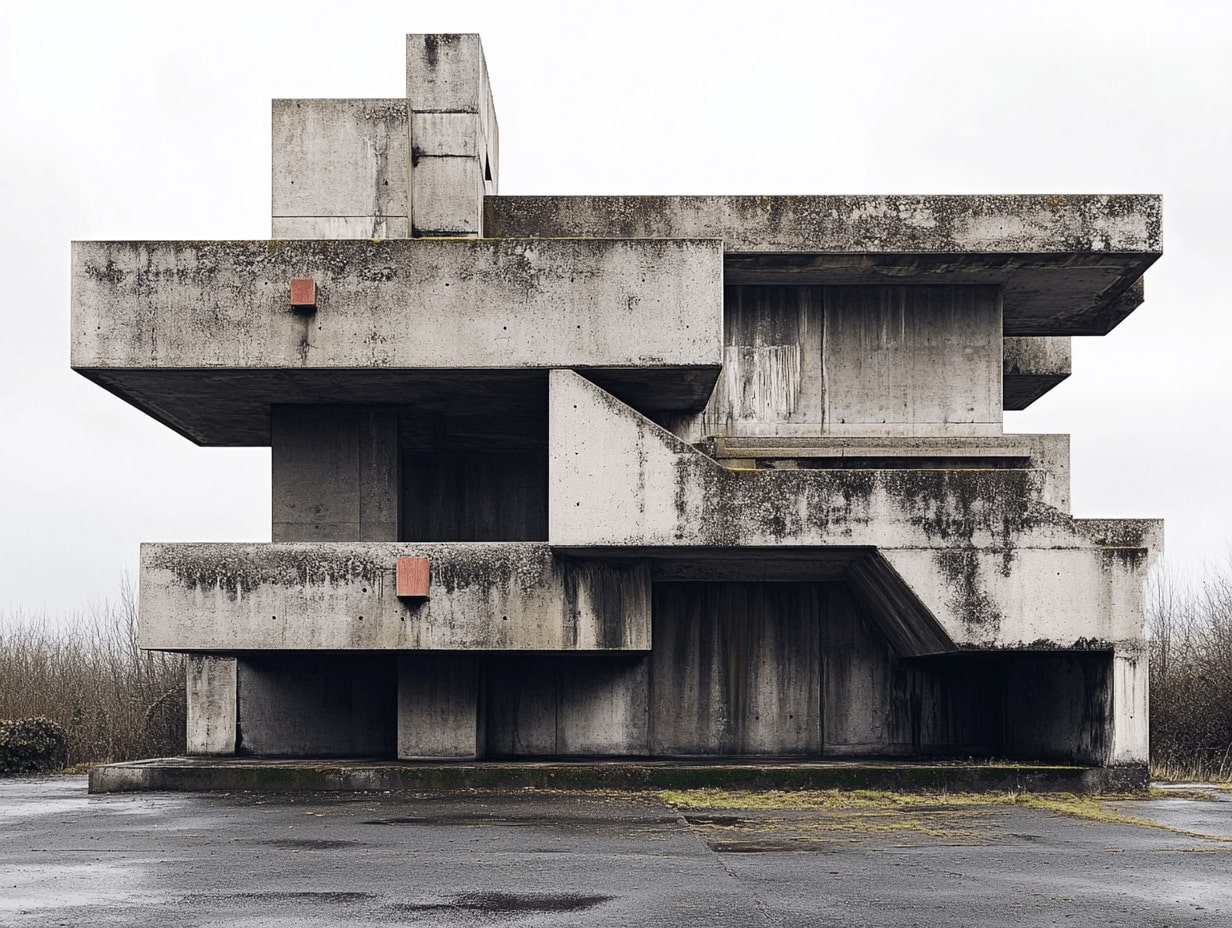
Brutalism embodies the raw power of architectural expression, relying on concrete brutalism as both a material choice and a philosophy. Its unapologetically stark designs convey function, form, and authenticity. To brutalism define it simply: this is architecture that refuses to hide its structural truth behind decorative facades.

Origins and Philosophy of Brutalism
Emerging post-World War II, brutalism reflected a response to widespread urban reconstruction needs. Coined from the French term “béton brut” (raw concrete), brutalism prioritized practicality and accessibility. Architects like Le Corbusier and Alison and Peter Smithson championed the style, believing it symbolized honesty and functionality. The philosophy centered on exposing a building’s structural elements rather than concealing them, emphasizing form as an expression of purpose. This ethos connected brutalism to the broader brutalist art movement, which valued rawness and directness across creative disciplines. For a deeper look at how modern architecture evolved from Bauhaus to Brutalism, the shift in post-war material values is central to understanding both movements.
💡 Pro Tip
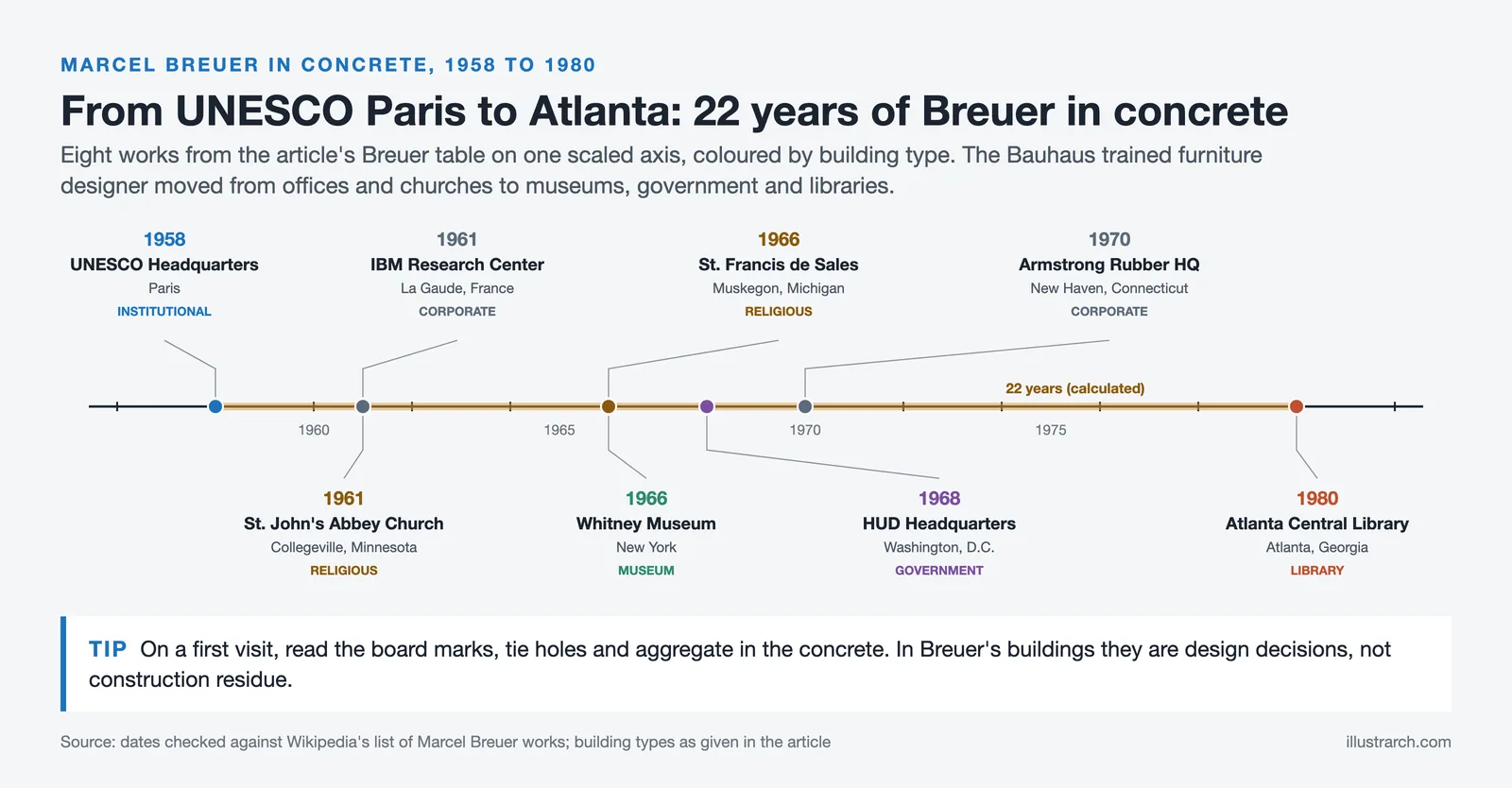
When studying a brutalist building for the first time, look at the formwork patterns pressed into the concrete surface. These board marks, tie-hole patterns, and aggregate textures are intentional design decisions, not construction residue. Understanding this shifts your reading of the building from “unfinished” to “precisely crafted.”
Key Characteristics of the Architecture Brutalist Style
The architecture brutalist style features raw concrete exteriors, modular design, and functional layouts. Their geometric forms are often blocky and imposing, with surfaces left unfinished to accentuate texture. Repeated structural elements, such as exposed beams and angular shapes, define the visual rhythm. Buildings like Boston’s City Hall and London’s Barbican Complex highlight these traits, emphasizing durability over ornamentation. The influence of Marcel Breuer is particularly notable in this context, his work at the Whitney Museum of American Art (later the Met Breuer, now Sotheby’s headquarters) stands as one of the finest examples of Marcel Breuer works that bridged sculptural form with functional architecture.
What Is the Brutalist Style of Architecture?
One of the most common questions people ask is: what is the brutalist style of architecture? At its core, the architecture brutalist style is defined by the unapologetic use of raw, exposed concrete, typically left unfinished to reveal the building’s construction process. The style rejects decorative elements in favor of expressing structural logic and material truth. Heavy massing, repetitive modular units, and bold geometric forms are characteristic. Unlike modernism’s pursuit of lightness and transparency, brutalism embraces weight and permanence, making each building feel like a monument carved from the earth itself. This contrast is explored further in our comparison of brutalism vs minimalism in contemporary architecture.
Influence on Urban Landscapes
Brutalism reshaped post-war urban environments, prioritizing public needs. It appeared in government buildings, public housing, and cultural centers, including several notable brutalist cathedral designs that brought the movement’s monumental aesthetic into sacred architecture. Many brutalist structures aimed to maximize utility in densely populated spaces, often influencing city skylines. Housing projects like Marseille’s Unité d’Habitation provided functional communal living spaces. Though the style’s starkness drew mixed reactions, its legacy persists in urban planning and public infrastructure.
The following table highlights some of the world’s most iconic brutalist buildings, their architects, and key features:
| Building | Location | Architect(s) | Year | Notable Feature |
|---|---|---|---|---|
| Unité d’Habitation | Marseille, France | Le Corbusier | 1952 | Self-contained “vertical city” with internal streets every three floors |
| Barbican Centre | London, UK | Chamberlin, Powell and Bon | 1982 | Grade II listed; elevated “highwalks” separating pedestrians from vehicles |
| Boston City Hall | Boston, USA | Kallmann McKinnell & Knowles | 1968 | Coffered overhangs expressing governmental transparency |
| Habitat 67 | Montreal, Canada | Moshe Safdie | 1967 | 354 interlocking prefabricated concrete boxes up to 12 stories |
| National Theatre | London, UK | Denys Lasdun | 1976 | Layered terraces inspired by ancient Greek amphitheaters |
| Whitney Museum (now Sotheby’s Breuer Building) | New York, USA | Marcel Breuer | 1966 | Inverted ziggurat form with granite-clad facade |
| Geisel Library | San Diego, USA | William Pereira | 1970 | Inverted pyramid fusing brutalism and futurism |
| Trellick Tower | London, UK | Ernő Goldfinger | 1972 | Separated elevator/stair tower connected by walkways |
| Palace of Assembly | Chandigarh, India | Le Corbusier | 1962 | One of the earliest examples of brutalism at urban-planning scale |
| Robin Hood Gardens | London, UK | Alison & Peter Smithson | 1972 | Pioneered the concept of “streets in the sky” |
Marcel Breuer and the Sculptural Side of Brutalism
No discussion of the architecture brutalist style is complete without examining Marcel Breuer work in depth. Originally trained at the Bauhaus, Breuer transitioned from furniture design to monumental architecture, becoming a pivotal figure in concrete brutalism. His Marcel Breuer works include the UNESCO Headquarters in Paris, the IBM Research Center, and St. John’s Abbey Church in Minnesota, a remarkable brutalist cathedral where massive concrete walls and honeycomb-shaped stained glass create an atmosphere of contemplative power. The Marcel Breuer Digital Archive at Syracuse University holds nearly 80,000 digitized objects documenting every phase of his career. Breuer’s approach demonstrated that the brutalist art movement could produce structures of profound emotional and spiritual depth, not merely functional austerity.
📌 Did You Know?
Marcel Breuer was a partial inspiration for the character of László Tóth in Brady Corbet’s 2024 film The Brutalist, a fictional architect whose life mirrors the arc of many European emigres who shaped American modernism and brutalism after World War II.
The following table presents a selection of Marcel Breuer’s most significant architectural works, showcasing his evolution from Bauhaus-trained designer to master of monumental concrete brutalism:
| Project | Location | Year | Type | Significance |
|---|---|---|---|---|
| UNESCO Headquarters | Paris, France | 1958 | Institutional | Y-shaped “three-pointed star” plan; collaboration with Nervi and Zehrfuss |
| St. John’s Abbey Church | Collegeville, Minnesota, USA | 1961 | Religious | Iconic bell banner; honeycomb stained glass wall; a landmark brutalist cathedral |
| IBM Research Center | La Gaude, France | 1961 | Corporate/Research | Double-Y plan nestled into hillside landscape |
| Whitney Museum of American Art | New York, USA | 1966 | Museum | Inverted stepped granite facade; Breuer’s most famous building |
| St. Francis de Sales Church | Muskegon, Michigan, USA | 1966 | Religious | Trapezoidal plan with dramatic hyperbolic paraboloid roof |
| HUD Headquarters | Washington, D.C., USA | 1968 | Government | Curved, sweeping concrete facade on pilotis |
| Armstrong Rubber HQ (now Hotel Marcel) | New Haven, Connecticut, USA | 1970 | Corporate (now Hotel) | Striking “empty belly” design; converted into eco-friendly boutique hotel |
| Atlanta Central Library | Atlanta, Georgia, USA | 1980 | Library | Breuer’s last building; evolution of Whitney’s sculptural cube forms |
Exploring Modernism: Sleek Simplicity and Bauhaus Architecture
Modernism prioritizes minimalism and streamlined designs, reflecting a departure from traditional ornamentation. Its emphasis on functionality and aesthetic clarity defines its global architectural influence, with roots deeply embedded in Bauhaus architecture and its design principles.

The Foundations of Modernist Design and Bauhaus Architecture
Modernist design emerged in the early 20th century, drawing inspiration from industrialization and technological advancements. The Bauhaus school, founded in 1919 by Walter Gropius, became the crucible for modernist thought, unifying art, craft, and technology under one pedagogical roof. Bauhaus architecture championed the idea that design should serve society, with form always following function. Gropius and Ludwig Mies van der Rohe sought to integrate function and form, rejecting unnecessary decoration. The movement embraced materials like steel, glass, and concrete for their versatility and efficiency, aligning with the ethos of mass production and urbanization. Our detailed guide to the clash between Bauhaus architecture and Brutalism traces exactly how these shared roots produced such divergent results.
Hallmarks of Modernist Architecture
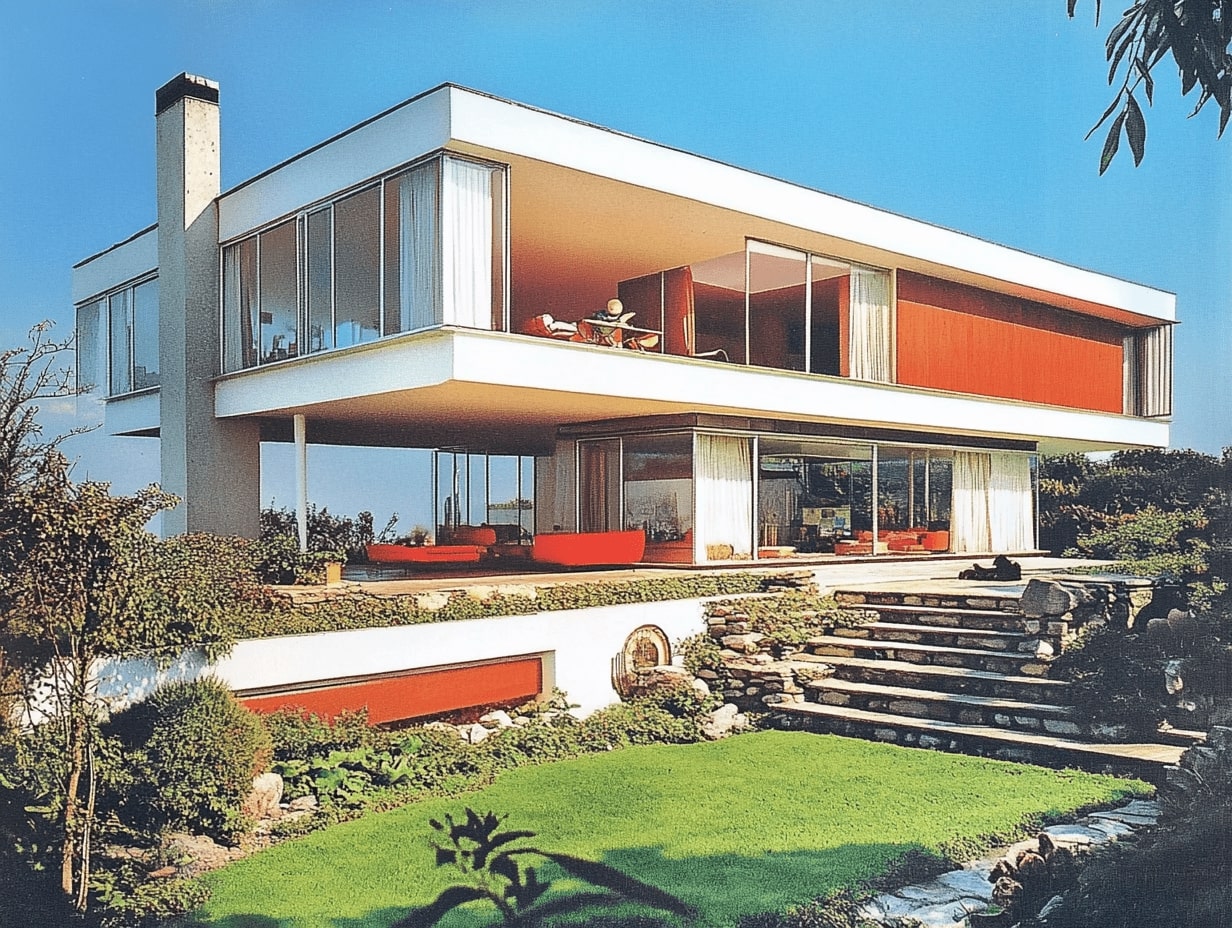
Modernist architecture is characterized by open floor plans, geometric forms, and large windows. Clean lines dominate, creating a sense of order and simplicity. Flat roofs, grid-like facades, and a focus on natural light are defining features. For instance, the Farnsworth House by Mies van der Rohe exemplifies these principles with its transparent walls and minimalist structure. These hallmarks directly trace their lineage to Bauhaus architecture, where the integration of industrial materials and rational design first took shape.
The following table presents some of the world’s most iconic modernist buildings that defined the movement:
| Building | Location | Architect | Year | Notable Feature |
|---|---|---|---|---|
| Bauhaus Building | Dessau, Germany | Walter Gropius | 1926 | Glass curtain walls; asymmetrical wings serving different functions |
| Villa Savoye | Poissy, France | Le Corbusier | 1931 | Embodies Le Corbusier’s “Five Points of Architecture”; pilotis and roof garden |
| Barcelona Pavilion | Barcelona, Spain | Mies van der Rohe | 1929 | Open flowing spaces; use of luxury materials like onyx and marble |
| Fallingwater | Pennsylvania, USA | Frank Lloyd Wright | 1937 | Cantilevered concrete slabs over a natural waterfall |
| Farnsworth House | Plano, Illinois, USA | Mies van der Rohe | 1951 | Glass-walled minimalist box; icon of “less is more” philosophy |
| Guggenheim Museum | New York, USA | Frank Lloyd Wright | 1959 | Continuous spiral ramp; revolutionary museum circulation design |
| Seagram Building | New York, USA | Mies van der Rohe | 1958 | Bronze and glass tower; set the standard for corporate modernism |
| Sydney Opera House | Sydney, Australia | Jørn Utzon | 1973 | Expressionist shell-shaped roof; UNESCO World Heritage Site |
| Eames House (Case Study #8) | Los Angeles, USA | Charles & Ray Eames | 1949 | Prefabricated steel and glass; experiment in post-war modern living |
| Chapel of the Holy Cross | Sedona, Arizona, USA | Anshen and Allen | 1956 | Built into red rock buttes; dramatic integration of architecture and nature |
Modernism’s Lasting Legacy
Modernism continues influencing contemporary architecture and design. Its emphasis on sustainable materials and energy efficiency aligns with current priorities in urban development. Iconic modernist works, like Le Corbusier‘s Villa Savoye, remain benchmarks for innovation. Today, modernism’s principles echo in minimalist interiors, urban planning, and adaptive reuse projects, bridging historical ideals with modern needs.
Comparing Brutalism and Modernism: Key Differences
Brutalism and modernism stand apart in their approaches to both design and ideology. Each style reflects unique principles that influence how spaces function and feel. The question “is brutalism modernism?” often arises, and the answer is nuanced: brutalism emerged from the modernist tradition but diverged radically in aesthetics and material expression. For a focused breakdown of the material and philosophical differences, see our article on 10 key differences between Bauhaus and Brutalism.
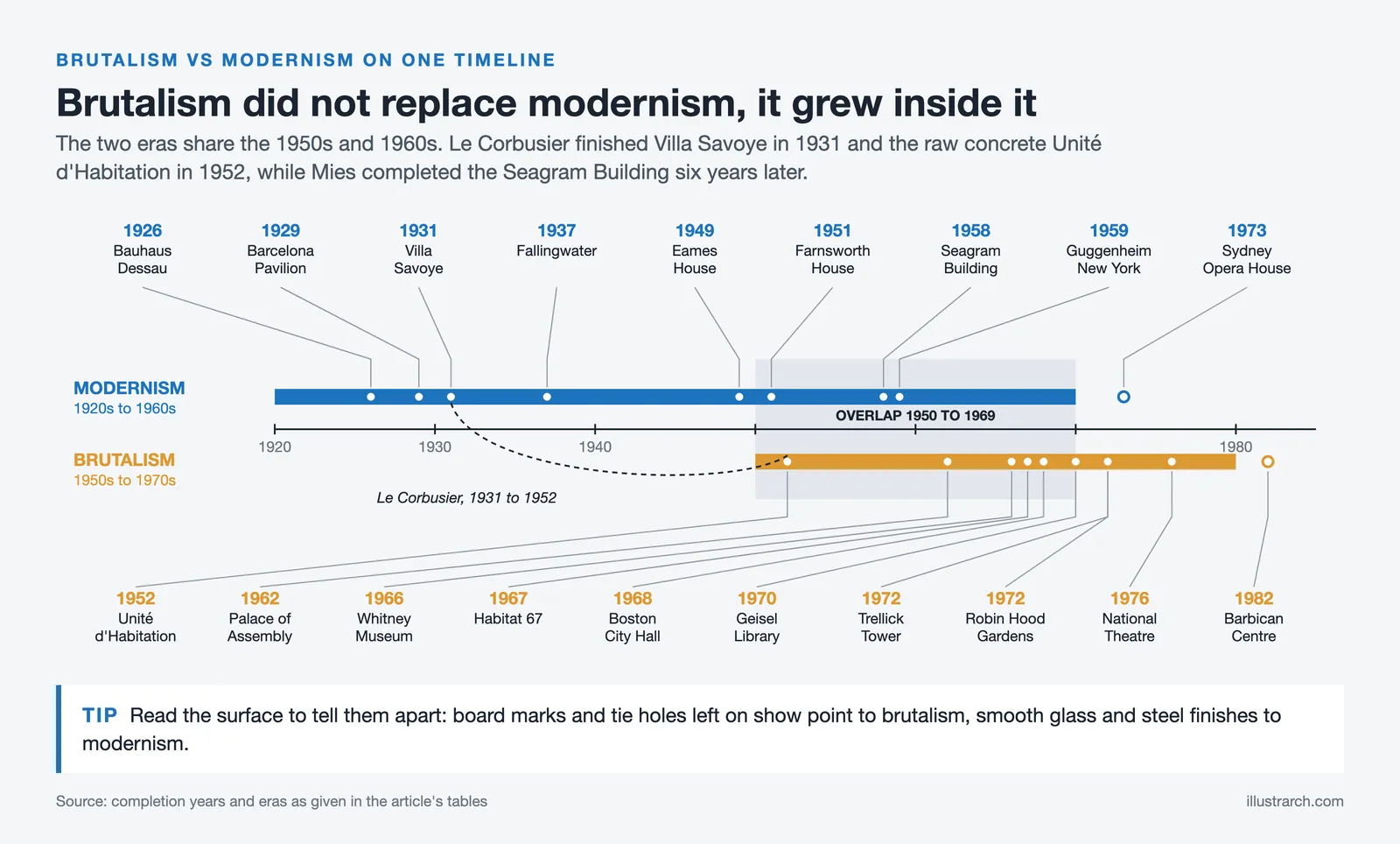
Brutalism vs Modernism: A Comparison Table
The following table summarizes the key differences between the architecture brutalist style and modernist design:
| Feature | Brutalism | Modernism |
|---|---|---|
| Era | Post-WWII (1950s-1970s) | Early 20th century (1920s-1960s) |
| Primary Materials | Raw concrete (béton brut) | Steel, glass, reinforced concrete |
| Aesthetic | Bold, blocky, monumental | Sleek, minimal, refined |
| Surface Treatment | Exposed, unfinished textures | Smooth, polished finishes |
| Key Figures | Le Corbusier, Marcel Breuer, Smithsons | Mies van der Rohe, Gropius, Bauhaus school |
| Philosophy | Structural honesty, egalitarian access | Form follows function, universal design |
| Typical Use | Government, housing, cultural centers | Corporate, residential, institutional |
| Public Perception | Polarizing: powerful or oppressive | Broadly appealing: elegant or sterile |
Concepts and Ideals: A Philosophical Clash
Brutalism embraces utilitarian principles, expressing structures’ raw essence and prioritizing function over form. It highlights the honesty of materials like exposed concrete, seeing beauty in imperfection. Originating after World War II, brutalism mirrors post-war egalitarian ideals, emphasizing accessibility and utility in public architecture.
Modernism, shaped by industrialization and the Bauhaus architecture movement, pursues a tight integration of form and function. It champions minimalism, stripping away ornamentation and emphasizing clarity through geometric precision. Emerging in the early 20th century, modernism reflects optimism in progress, technology, and universal design principles.
⚠️ Common Mistake to Avoid
Many people treat “brutalism” and “modernism” as opposites when they are more accurately parent and offspring. Brutalism grew directly from the modernist tradition. Le Corbusier, for example, built canonical modernist works in the 1920s and 1930s before shifting to raw concrete brutalism with Unité d’Habitation in 1952. Calling them opposites erases how one evolved from the other.
Architectural Aesthetics: Bold vs. Minimal
Brutalist structures convey raw power with imposing, often blocky forms featuring exposed concrete. Their textures, modularity, and bold geometry create an unpolished, monolithic appearance, exemplified in designs like London’s Barbican Center.
Modernist aesthetics emphasize sleek, streamlined designs with clean lines and open spaces. Glass, steel, and simple geometric shapes dominate its palette. Iconic works like the Farnsworth House demonstrate modernism’s focus on functionality through minimalist beauty.
Key Architects: Brutalism vs Modernism
The following table compares the pioneering architects of both movements, their philosophies, and their most celebrated works:
| Architect | Movement | Active Period | Signature Works | Design Philosophy |
|---|---|---|---|---|
| Le Corbusier | Both (Modernism → Brutalism) | 1920s-1960s | Villa Savoye, Unité d’Habitation, Chandigarh | Five Points of Architecture; “machine for living” |
| Marcel Breuer | Both (Bauhaus → Brutalism) | 1920s-1970s | Whitney Museum, UNESCO HQ, St. John’s Abbey | Sculptural concrete forms; material intuition |
| Alison & Peter Smithson | Brutalism | 1950s-1970s | Hunstanton School, Robin Hood Gardens | “New Brutalism”; streets in the sky |
| Ernő Goldfinger | Brutalism | 1960s-1970s | Trellick Tower, Balfron Tower | Social housing as monumental architecture |
| Denys Lasdun | Brutalism | 1950s-1970s | National Theatre, UEA Ziggurats | Terraced forms; architecture as urban landscape |
| Walter Gropius | Modernism | 1910s-1960s | Bauhaus Building, Fagus Factory | Unity of art, craft, and technology |
| Ludwig Mies van der Rohe | Modernism | 1920s-1960s | Barcelona Pavilion, Farnsworth House, Seagram Building | “Less is more”; glass and steel purity |
| Frank Lloyd Wright | Modernism | 1890s-1950s | Fallingwater, Guggenheim Museum | Organic architecture; harmony with nature |
| Moshe Safdie | Brutalism | 1960s: present | Habitat 67 | Prefabricated modular living; suburban ideals in urban form |
| Tadao Ando | Modern Brutalism | 1970s: present | Church of the Light, Chichu Art Museum | Meditative concrete; interplay of light and space |
Public Perception and Criticism
Brutalism often meets polarizing reactions; some see it as powerful and authentic, while others perceive it as oppressive and cold. Its heavy use in institutional buildings, like public housing, has contributed to its association with austerity. The Royal Institute of British Architects (RIBA) has documented the ongoing debate around brutalist preservation, noting that many once-maligned structures now carry listed status. A broader examination of how raw concrete still divides opinion is covered in our analysis of brutalist architecture.
Modernism enjoys broader appeal due to its clean, adaptable nature. Critics, however, sometimes fault it for sterility and a lack of warmth. Despite this, modernism finds enduring relevance in sustainable and energy-efficient designs.
The Evolution of Concrete in Design
Concrete’s role in architecture has transformed dramatically, shaping the distinct identities of brutalism and modernism. Its adaptability has allowed architects to explore both imposing monumentality and sleek minimalism.


From Monumentality to Minimalism
Brutalist architecture emphasized concrete’s raw potential, using it to craft bold, geometric structures like London’s Barbican Centre or Boston City Hall. The material’s durability and flexibility enabled large-scale urban projects that prioritized functionality and egalitarian ideals. Exposed surfaces and heavy forms highlighted its structural honesty, creating a sense of permanence.
Modernism took a different approach, applying concrete to achieve clean lines and open spaces. Architects like Le Corbusier employed reinforced concrete to blur boundaries between form and function, integrating it with glass and steel. Examples include Villa Savoye, where concrete contributed to a minimalist, floating aesthetic. The focus was on simplicity and smooth finishes, reflecting modernism’s embrace of industrial materials.
The following table illustrates how concrete has been used differently across brutalist and modernist approaches:
| Aspect | Brutalist Use of Concrete | Modernist Use of Concrete |
|---|---|---|
| Surface Finish | Raw, unfinished (béton brut); board-marked textures | Smooth, painted, or rendered; polished finishes |
| Structural Role | Primary material: both structure and facade | Reinforced concrete as structural frame, often hidden behind glass or cladding |
| Visual Weight | Heavy, monolithic, earth-bound | Light, floating, elevated on pilotis |
| Form Expression | Blocky masses; cantilevered volumes; sculptural massing | Thin slabs; flat planes; open floor plates |
| Combined Materials | Minimal combination: concrete dominates | Freely combined with steel, glass, and wood |
| Emotional Effect | Permanence, power, confrontation | Lightness, transparency, serenity |
| Example | Barbican Centre: hammered cast concrete facades | Villa Savoye: smooth white concrete on pilotis |
Adaptations of Brutalism and Modernism in Contemporary Architecture
Contemporary architecture continues to reinterpret brutalist and modernist principles by using concrete in innovative ways. For brutalism, architects now pair rough concrete textures with softer design elements to balance the aesthetic, such as Tadao Ando‘s projects that emphasize light and space alongside concrete’s solidity. This modern adaptation softens brutalism’s starkness while preserving its bold identity.
Modernism’s influence persists in sleek, sustainable designs. Architects prioritize energy-efficient techniques and eco-friendly materials like high-performance concrete. Transparent facades and fluid layouts enhance modernism’s timeless appeal. Both styles continue to evolve, driven by advances in material science and changing societal needs. Concrete remains central to this evolution, bridging monumentality and minimalism across architectural trends.
💡 Pro Tip
If you’re designing with exposed concrete today, specify the formwork pattern early in the design process. Board-marked timber, steel, or rubber formwork each produce radically different surface textures. A common mistake on site is leaving this decision to the contractor, which results in unintentional, and often inconsistent, finishes across the facade.
Modern Brutalism: How the Movement Lives On Today
Modern brutalism represents a fascinating revival and reinterpretation of mid-century concrete brutalism for the 21st century. Today’s architects draw on the original brutalist art movement’s emphasis on material honesty while incorporating sustainable technologies, mixed materials, and human-centered design. Projects by firms like Herzog & de Meuron and Tadao Ando demonstrate that the architecture brutalist style can feel warm, contemplative, and even inviting when combined with careful attention to light, landscape, and spatial flow. The broader conversation between brutalist and other bold styles is covered in our piece on neo-futurism vs brutalism.
London’s Tate Modern, housed in a converted power station, is often cited in discussions about whether major cultural landmarks qualify as brutalist. While the Tate Modern is more accurately described as industrial modernism, its raw concrete interiors and monumental scale resonate strongly with the brutalist aesthetic, showing how blurred the boundaries between these movements can become. Modern brutalism is not about replicating the past, it is about carrying forward the honesty and boldness of concrete brutalism into an era that demands sustainability and inclusivity.
Brutalist Cathedrals: Sacred Concrete
Among the most striking applications of the architecture brutalist style are brutalist cathedral designs that bring monumental concrete forms into sacred spaces. Clifton Cathedral in Bristol, the Cathedral of St. Mary of the Assumption in San Francisco, and Marcel Breuer’s St. John’s Abbey Church all demonstrate how concrete brutalism can evoke spiritual transcendence through sheer material presence. These structures use light, scale, and raw surfaces to create atmospheres of reverence that rival ornate Gothic design, proving that the brutalist art movement extends far beyond civic infrastructure into the realm of the sublime. The Encyclopaedia Britannica’s biography of Marcel Breuer traces how his religious commissions represent the most spiritually demanding application of concrete brutalism in his career.
The following table presents notable brutalist religious buildings around the world:
| Building | Location | Architect | Year | Distinctive Feature |
|---|---|---|---|---|
| St. John’s Abbey Church | Collegeville, Minnesota, USA | Marcel Breuer | 1961 | Freestanding concrete bell banner; honeycomb stained glass wall |
| Clifton Cathedral | Bristol, UK | Percy Thomas Partnership | 1973 | Hexagonal plan; abstract stained glass illuminating raw concrete |
| Cathedral of St. Mary of the Assumption | San Francisco, USA | Pietro Belluschi & Pier Luigi Nervi | 1971 | Hyperbolic paraboloid roof; soaring 190-foot cupola |
| Wotruba Church | Vienna, Austria | Fritz Wotruba & Fritz Gerhard Mayr | 1976 | 152 asymmetric concrete blocks stacked as a sculptural composition |
| St. Francis de Sales Church | Muskegon, Michigan, USA | Marcel Breuer | 1966 | Trapezoidal concrete walls with dramatic roof geometry |
| Iglesia El Rosario | San Salvador, El Salvador | Rubén Martínez | 1971 | Parabolic concrete arches with rainbow-colored interior light |
Key Takeaways
✅ Key Takeaways
- Brutalism and modernism share modernist DNA but diverge sharply in material, mass, and philosophy.
- Brutalism uses raw, exposed concrete (béton brut) as both structure and surface; modernism hides concrete behind glass and cladding.
- The same architects, Le Corbusier, Marcel Breuer, worked across both movements, showing the evolutionary link between them.
- Brutalism was built primarily for public and civic use; modernism served corporate and residential programs.
- Modern brutalism continues today through architects like Tadao Ando, who retain raw concrete while integrating light, nature, and human scale.
- Brutalist cathedrals prove the movement was never limited to civic infrastructure, sacred concrete produces profound emotional spaces.
Conclusion
The debate between brutalism and modernism highlights the diverse ways architecture can shape our environments and experiences. These styles, though distinct in form and philosophy, both demonstrate the versatility of concrete as a medium for innovation and expression. From Bauhaus architecture‘s rationalist foundations to the bold Marcel Breuer works that defined the brutalist art movement, the interplay between these two traditions continues to inspire new generations of designers.
As architecture continues to evolve, the principles of brutalism and modernism remain relevant, inspiring new interpretations that balance aesthetics, functionality, and sustainability. Each approach offers valuable insights into the relationship between design and society. The rise of modern brutalism proves that these ideals are not relics, they are living philosophies that continue to shape the future of architecture.


2 Comments



Futuro House Production Revived in Finland After Decades-Long Hiatus
A Facebook listing for abandoned moulds led to the first new Futuro...
 illustrarch Editoral Team3 Mins read
Building Your Dream Home in NSW: What You Should Know About Montgomery Homes
Montgomery Homes has been building across Sydney, Newcastle, the Hunter, Wollongong and...
illustrarch Editoral Team4 Mins read
Designing a Home Theater: Where Drapery Fits Into the Plan
In a media room the curtains are a performance layer, not decoration....
illustrarch Editoral Team3 Mins read
Oscar Niemeyer’s Cathedral of Brasília: The Hyperboloid Concrete Hymn
The Cathedral of Brasília reads as a single gesture, yet it stood...
 Furkan Sen7 Mins read


This article talks about brutalism and modernism in architecture. I learned that they have different styles. Brutalism uses a lot of concrete and looks strong, while modernism is simpler and cleaner. Both styles have their own ideas about design.
This article talks about two types of architecture, brutalism and modernism. I learned some new things about how they are different and what they mean. Both styles have their own look, and it’s interesting to see how they affect buildings today.