

Zaha Hadid Architects Wins Modular Hospital Design Competition in Italy
Zaha Hadid Architects has won an international competition to design a new modular hospital in northern Italy. The Malpensa Hospital will combine advanced medical technology with flexible, human-centered architecture, offering a sustainable and adaptable healthcare model for the Lombardy region.
 Elif Ayse Sen23 December 20252 Mins read385
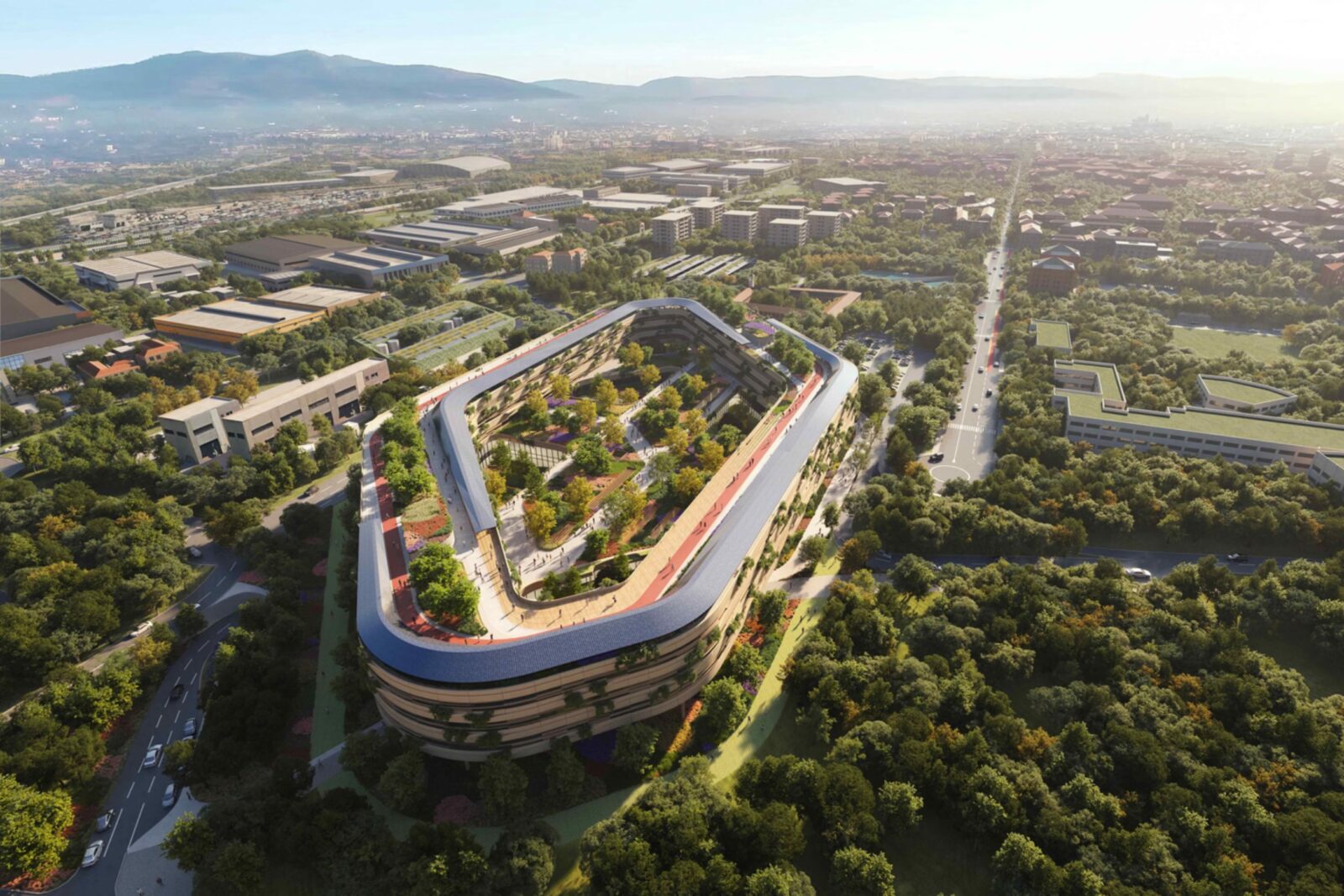


Table of Contents Show
Zaha Hadid Architects has won an international competition to design a large modular hospital campus in northern Italy. The project brings together a multidisciplinary team including engineers, consultants, and local design studios. The new hospital will become a major healthcare center for the region and reflects a growing focus on flexible, future-ready medical architecture.
The project was commissioned by the Lombardy Regional Health Authority to merge two existing hospitals in Gallarate and Busto Arsizio into one modern medical campus. The new Malpensa Hospital is planned as a unified facility that can serve a larger population while improving the quality and efficiency of healthcare services.
The design is guided by three main goals: responding to increasing healthcare needs, combining advanced medical technology with human-focused spaces, and ensuring long-term access to high-quality care for local communities.
Modular Design for Flexibility and Future Needs
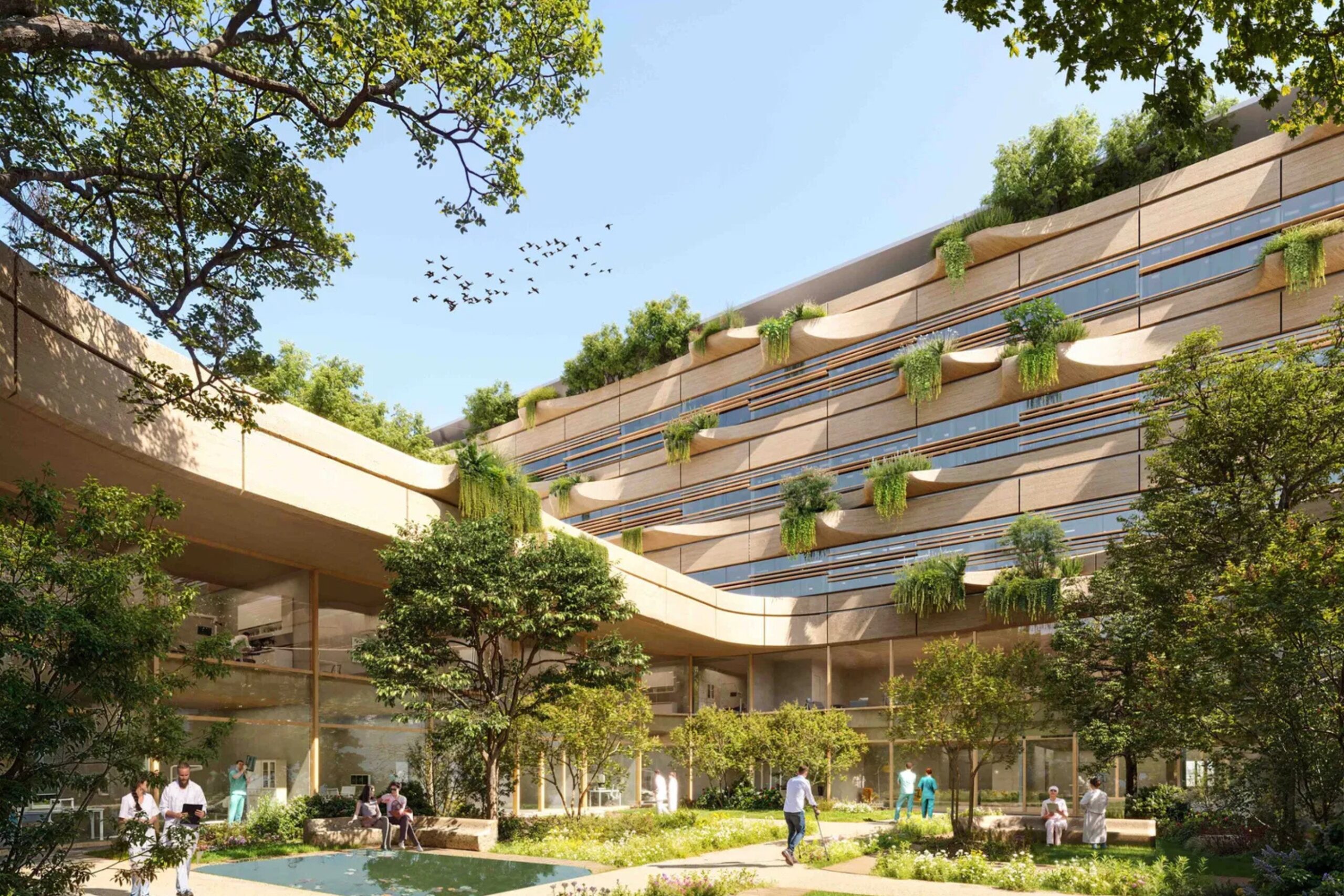
One of the key features of the hospital is its modular construction system. Each department is designed to be easily adapted, allowing spaces to change as medical needs, technologies, or emergency conditions evolve. The hospital will cover nearly one million square feet and consist of five above-ground floors plus a basement. Spaces are organized based on levels of care, helping staff work efficiently while supporting patient comfort and safety.
Clear Circulation and Smart Hospital Operations
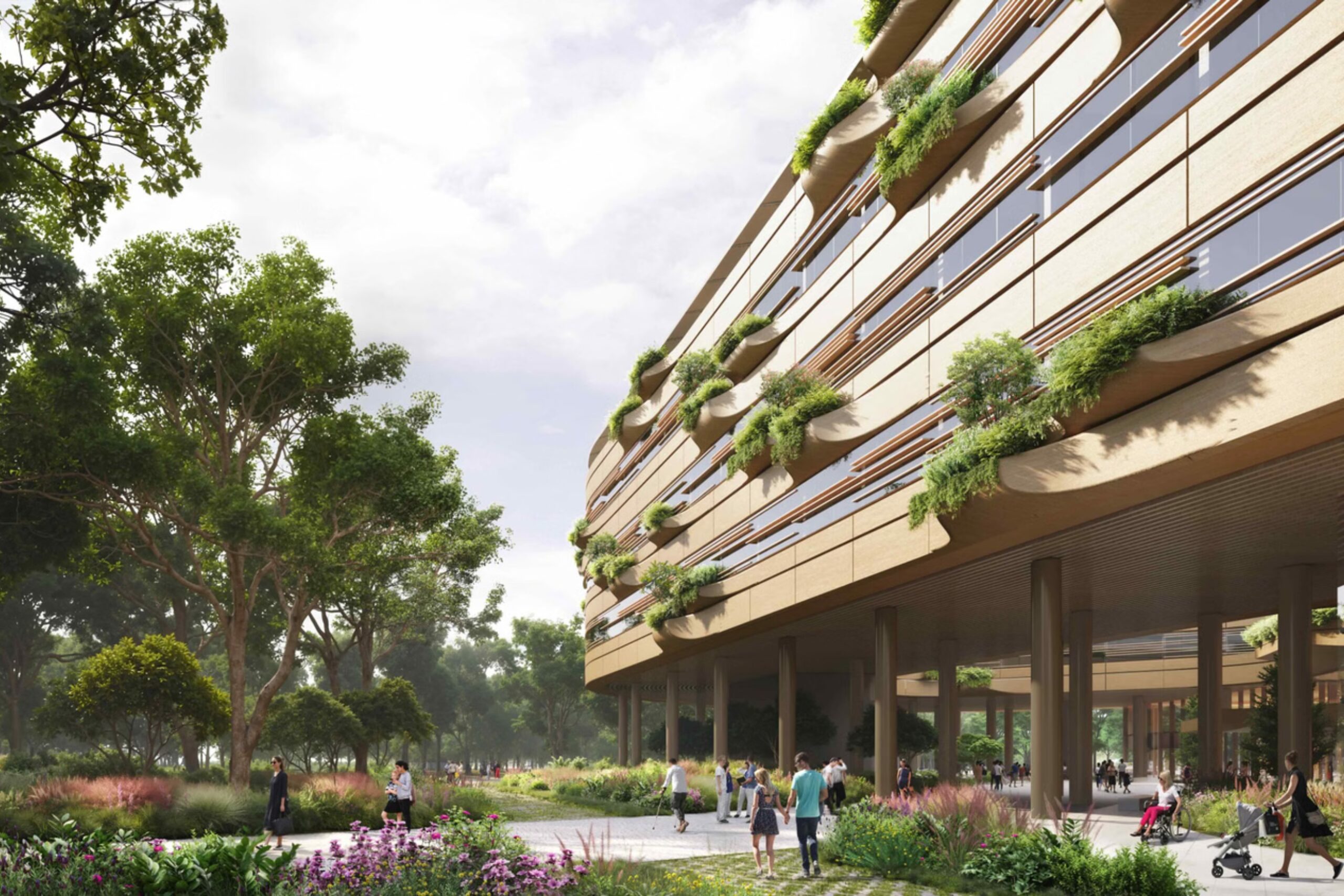
The hospital layout separates movement routes for patients, visitors, staff, and logistics. This reduces unnecessary overlap, improves hygiene, and lowers the risk of contamination. An automated delivery system will support daily operations by transporting goods and supplies efficiently throughout the building, helping medical staff focus more on patient care.
Community-Oriented Interior Spaces
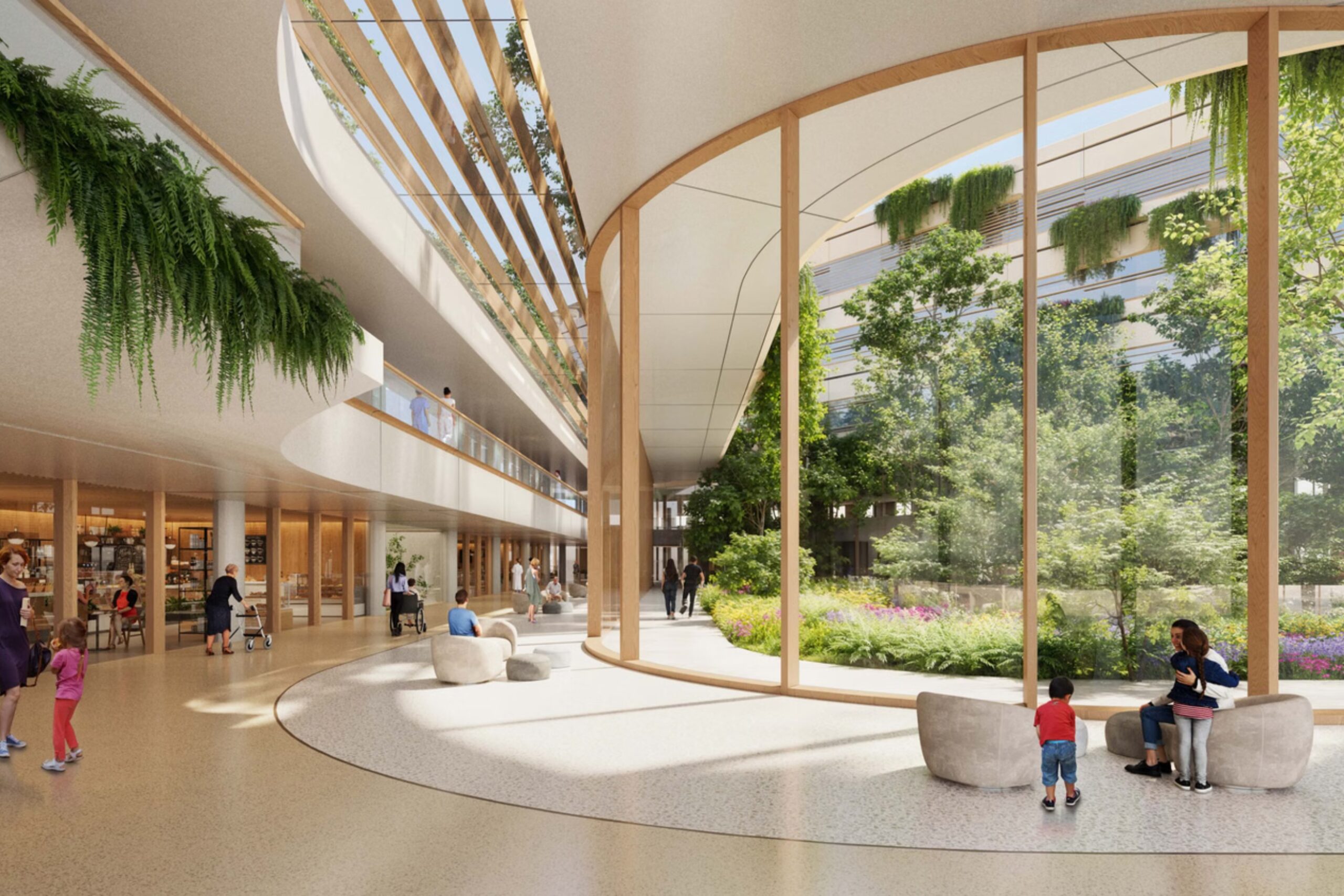
At ground level, the hospital includes a central internal street that connects the main entrance with landscaped outdoor areas. This public spine improves orientation and strengthens the connection between the hospital and its surrounding community.
Interior spaces are designed to receive ample natural light and provide good acoustic comfort. Natural materials such as wood and soft textiles are used to create calm, welcoming interiors that support healing and well-being.
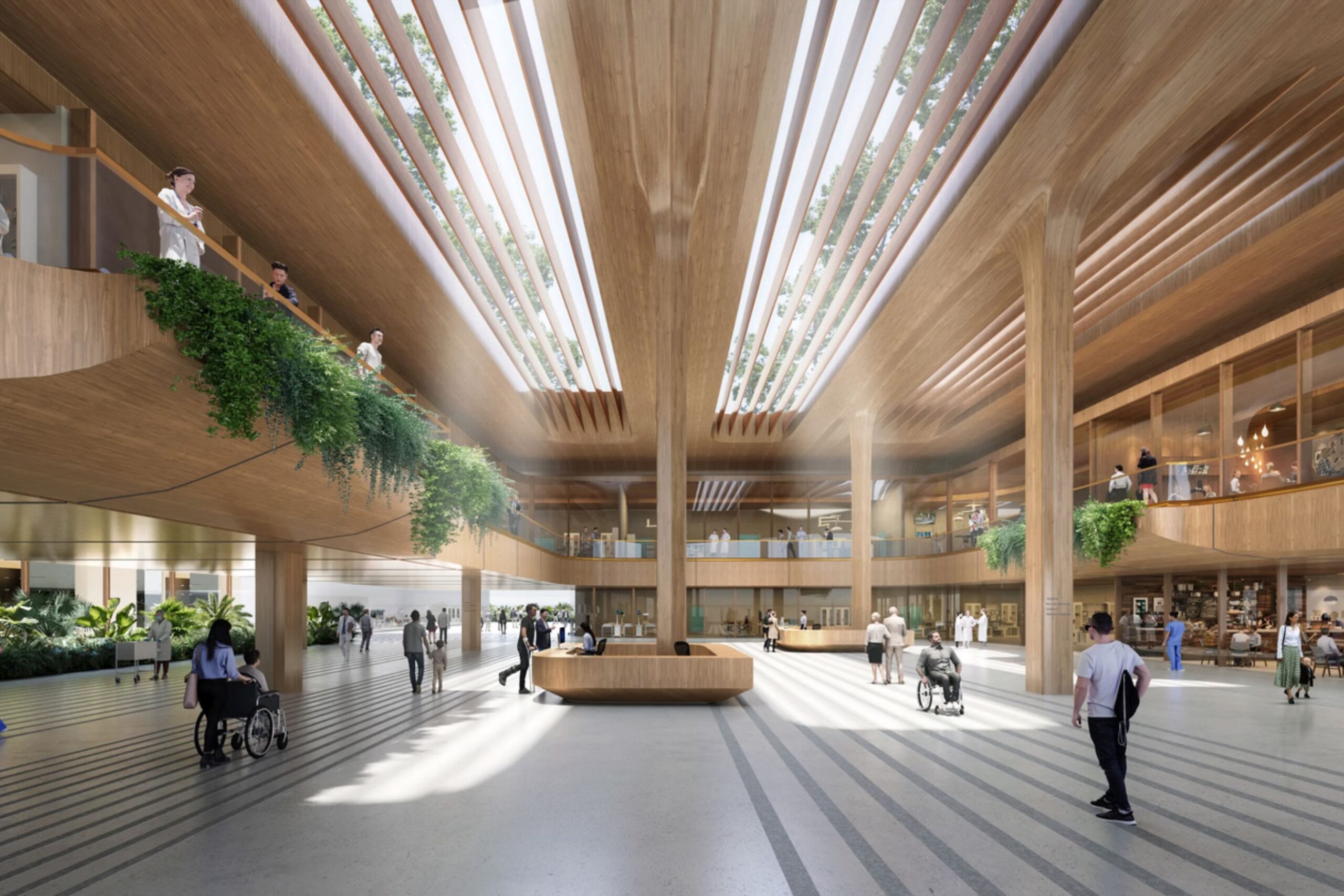
Nature, Landscape, and Healing Environments
Gardens, courtyards, and green rooftop terraces are distributed throughout the hospital. These outdoor spaces are intended for rehabilitation, rest, and relaxation for patients, visitors, and staff. The site is located near forests and agricultural land within a protected ecological network close to the Ticino Valley regional park. The design respects this sensitive landscape by preserving existing ecosystems and carefully managing water impact. A historic rural structure, Cascina dei Poveri, is also integrated into the campus, linking the project to local heritage.

Sustainable Envelope and Energy Strategy
The hospital’s exterior is built with modular aluminum panels that include planters and solar shading. These elements are selected for durability, recyclability, and low carbon impact.
A photovoltaic system will provide around 25 percent of the hospital’s electricity demand. Prefabricated construction methods are expected to reduce material waste, shorten construction time, and lower overall costs.
Connected to the City and Its People
Malpensa Hospital is designed to be easily accessible through public transport, cycling routes, and pedestrian paths. A network of public access routes connects the campus with nearby communities, reinforcing the hospital’s role as both a medical and social infrastructure.
With its modular structure, sustainable approach, and human-centered design, the new hospital represents a forward-looking model for healthcare architecture in Italy and beyond
Renderings: X Universe by ZHA



Restorers Uncover 16th-Century Murals Hidden by Nuns in Villa Silvestri Rivaldi
Conservators in Rome are uncovering 16th-century murals hidden for 300 years inside...
 illustrarch Editoral Team3 Mins read

A New Book Records the 1970s Interiors of Ebony and Jet’s Chicago Headquarters
820 Ebony/Jet collects Barbara Karant's photographs of the empty Johnson Publishing Company...
illustrarch Editoral Team2 Mins read

A 2,500-Year-Old Solar Observatory in Puebla Is the First Group E Complex Found Outside the Maya Area
Archaeologists working for Mexico's INAH have confirmed that two platforms at Teteles...
illustrarch Editoral Team2 Mins read
India Art, Architecture & Design Biennale 2026: Ministry of Culture Opens Delhi Monuments
Delhi's monuments, including Purana Quila and the Red Fort, will host the...
illustrarch Editoral Team2 Mins read


Leave a comment