

Storage Unit Sizes Explained: How to Pick the Right Space for Your Stuff
Understanding the dimensions and capacities of various storage unit sizes can help individuals select the appropriate space for their belongings, avoiding costly mistakes.
 Muhammad Abdullatef - Tifa Studio25 November 20254 Mins read207
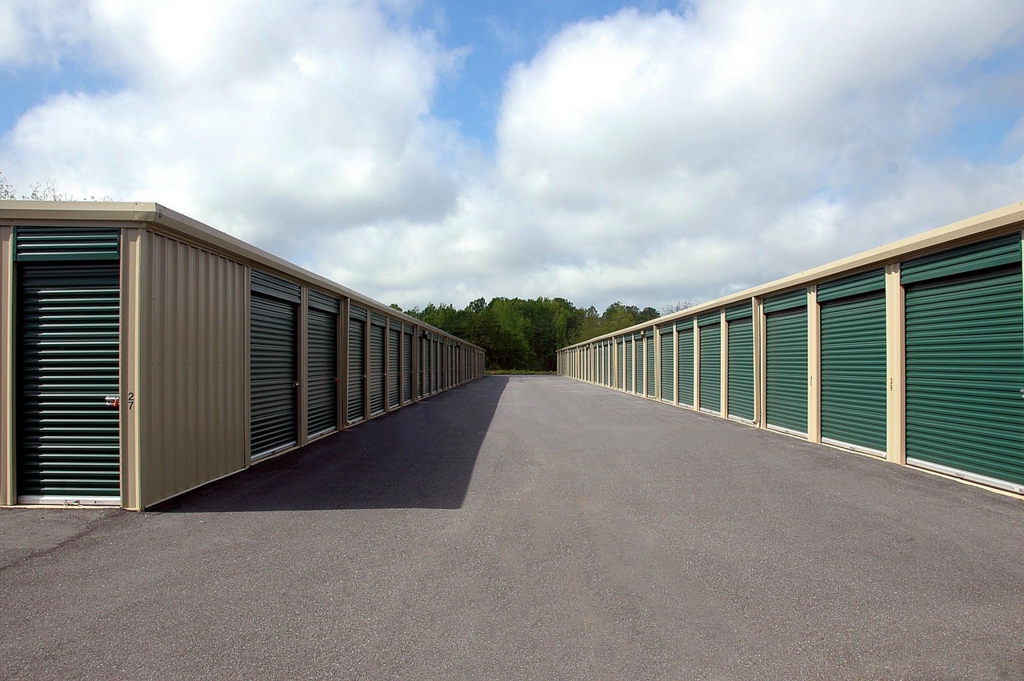
Table of Contents Show
Standing in front of a row of storage doors, it’s hard to picture what actually fits behind each one. A 5×5 sounds tiny until you start doing the math. A 10×20 sounds huge until you imagine a whole house’s worth of furniture stacked floor to ceiling.
Most people guess. They eyeball a size, sign the contract, and only realize their mistake when they start loading the unit. Either everything feels crammed and unsafe, or the space looks half empty and they’re paying for square footage they don’t use.
You don’t need a professional move coordinator to avoid that. With a bit of planning and a basic understanding of common unit sizes, you can match your stuff to the right space with a lot more confidence.
Why Storage Unit Size Is So Easy to Misjudge
The first trap is thinking in rooms instead of volume. “This is just a one-bedroom apartment; a medium unit is probably fine.” That one sentence ignores the number of boxes, how your furniture stacks, and whether you’ll need to access anything while it’s stored. If you’re using storage for decluttering between remodels, life changes, or a move, options like storage for decluttering can help, but you still have to choose the right size so you’re not squeezing boxes into every inch.
The second trap is trying to save on monthly cost by going as small as possible. On paper, that looks smart. In practice, an undersized unit can force you into tight stacks, blocked walkways, and a second unit when everything doesn’t fit. On the other end of the spectrum, a unit that’s too large might feel comfortable on move-in day, but if half of it is air for the next twelve months, you’re simply overpaying for breathing room.
What Common Storage Sizes Really Hold
It helps to translate the dimensions you see online into something your brain can actually picture. Many large self-storage operators publish size guides. One widely used storage unit size guide explains that a 5×10 unit (about 50 square feet) is similar to a medium walk-in closet, while a 10×10 (about 100 square feet) is closer to a small bedroom, usually enough for the contents of a one- to two-bedroom apartment when packed well.
From there, it’s easier to match real scenarios. A 5×5 unit, think of a standard closet, works for a few pieces of small furniture, several boxes of clothes and books, and some seasonal items. Good if you’re clearing out a home office or staging a place for sale. Step up to a 5×10 if you’re emptying a studio or packing up one room that has both furniture and boxes.
A 10×10 is the classic “I’m between apartments” size. You can fit a couch, a bedroom set, appliances like a washer and dryer, and a stack of boxes if you use the height of the unit. Larger spaces like 10×15, 10×20, and 10×30 move you into “small house,” “mid-size house,” and “full home” territory. The key is to think in chunks: if you know you’re storing the contents of a living room plus one bedroom, you’re roughly in 5×10-10×10 range; a whole multi-bedroom house usually needs at least 10×20.
A Simple Process to Estimate Your Space
You don’t need perfect measurements, but you do need more than a guess. Start by grouping items by room and type: living room furniture, bedroom set, kitchen gear, boxes, odd-shaped items like bikes or tools. If you’re already packing, count your boxes as you go and note which ones are heavy, fragile, or extra bulky.
Next, give yourself a visual: imagine everything stacked on a parking spot. If your furniture and boxes would fill roughly half a one-car garage, you’re in that 10×10 range. If you can’t picture that, walk around your current home. A small bedroom is a good stand-in for 10×10. Ask yourself honestly: if all of this stuff was stacked wall to wall in that room, would it fit with some vertical stacking?
Finally, factor in access. Are you storing items you don’t expect to touch for a year, or will you be visiting the unit every month to pull out files, inventory, or seasonal gear? If you’ll be in and out, plan for at least a narrow aisle from front to back. That usually adds the equivalent of another column of boxes or a shelving unit, which nudges you up a size. It feels like a luxury at first; after a few visits where you can reach what you need without climbing over furniture, it feels like a solid decision.
Packing Habits That Stretch Every Square Foot
Once you land on a size, the way you pack can make that choice feel generous or tight. Use consistent box sizes when you can, especially for heavier items like books or dishes. This lets you stack them cleanly without odd gaps. Heavier boxes go on the bottom, lighter ones on top. Furniture that comes apart, bed frames, tables with removable legs, shelving, should be broken down to reduce wasted air.
Think vertically. Most units have at least eight feet of height. A couch standing on its end against the wall uses far less floor space than one resting on its feet. Mattresses slide neatly onto their side. Sturdy items like dressers can act as a base layer with lighter boxes stacked above. Just make sure you’re not building anything so tall that it becomes unstable when you pull a box from the middle.
Access is the last piece. Reserve the front of the unit for items you’ll want sooner: kids’ clothing for the next season, work files, occasionally used tools. Less urgent items, holiday decorations, archived paperwork, spare furniture, can live in the back corners. Label each box on at least two sides with both contents and room. Future-you will be grateful when you can grab “Kitchen, everyday dishes” without opening six boxes that say “misc.”
Conclusion: Choose Size With Intention
Picking a storage unit size isn’t about memorizing dimensions; it’s about matching real-world stuff to a realistic amount of space. If you group your belongings, picture how they’d fill a bedroom-sized unit versus a closet-sized one, and allow room for safe stacking and access, you’ll land on a size that fits both your things and your budget, and you won’t be standing in a hallway wondering how it all went wrong once the truck doors open.






Futuro House Production Revived in Finland After Decades-Long Hiatus
A Facebook listing for abandoned moulds led to the first new Futuro...
 illustrarch Editoral Team3 Mins read
Building Your Dream Home in NSW: What You Should Know About Montgomery Homes
Montgomery Homes has been building across Sydney, Newcastle, the Hunter, Wollongong and...
illustrarch Editoral Team4 Mins read
Designing a Home Theater: Where Drapery Fits Into the Plan
In a media room the curtains are a performance layer, not decoration....
illustrarch Editoral Team3 Mins read

Oscar Niemeyer’s Cathedral of Brasília: The Hyperboloid Concrete Hymn
The Cathedral of Brasília reads as a single gesture, yet it stood...
 Furkan Sen7 Mins read


Leave a comment