

Top 10 Examples of Dynamic Facade Designs Around the World
Dynamic facades are transforming contemporary architecture with systems that move, react, and adapt to environmental conditions. This article highlights ten innovative projects from around the world that showcase kinetic shading, responsive envelopes, and cutting-edge facade engineering.
 Elif Ayse Sen12 December 20258 Mins read432

Table of Contents Show
Dynamic facades have emerged as one of the most innovative expressions of contemporary architecture, redefining how buildings interact with their environment and how users experience space. Unlike static envelopes of the past, today’s facades behave more like adaptive skins—systems that respond to light, climate, movement, and human activity. This shift reflects a broader transformation in architectural thinking, one driven by environmental performance, digital fabrication, parametric modeling, and the demand for intelligent building systems. As cities confront rising temperatures, energy consumption, and the need for more efficient design strategies, dynamic facades present a compelling solution that merges aesthetics with environmental responsibility.

These advanced systems can open and close, twist, inflate, flutter, or illuminate based on real-time conditions, creating a continuous dialogue between architecture and nature. Across the world, architects have embraced kinetic components, computational engineering, and cultural reinterpretations to design facades that evolve throughout the day. From climate-responsive mashrabiyas in the Middle East to LED-driven media surfaces in East Asia, each project demonstrates how motion—whether mechanical, digital, or passive—can enhance performance and deliver an iconic architectural identity. This article explores ten exemplary projects that showcase the potential of dynamic facade design, offering insight into the future of adaptive architecture and its growing impact on global design practice.
| Project | Architect | Year | Location | Facade Type | Kinetic Mechanism | Primary Material |
|---|---|---|---|---|---|---|
| Al Bahar Towers | Aedas | 2012 | Abu Dhabi, UAE | Climate-Responsive Mashrabiya | Mechanical (Linear Actuators) | PTFE-Coated Fiberglass |
| Kiefer Technic Showroom | Ernst Giselbrecht + Partner | 2007 | Austria | Motorized Shading | Mechanical (Motorized Panels) | Perforated Aluminum |
| One Ocean Pavilion | SOMA | 2012 | Yeosu, South Korea | Biomimetic Kinetic | Mechanical (Actuators) | Fiberglass Lamellas |
| Institut du Monde Arabe | Jean Nouvel | 1987 | Paris, France | Mechanized Diaphragm | Mechanical (Light-Sensitive Apertures) | Metal Diaphragms |
| Media-TIC Building | Enric Ruiz-Geli / Cloud 9 | 2010 | Barcelona, Spain | Pneumatic Adaptive | Pneumatic (Air Pressure) | ETFE Cushions |
| Brisbane Terminal Car Park | Hassell | 2008 | Brisbane, Australia | Passive Kinetic | Passive (Wind-Driven) | Aluminum Panels |
| SDU Campus Kolding | Henning Larsen Architects | 2014 | Kolding, Denmark | Sensor-Controlled Shading | Mechanical (Motorized Shutters) | Perforated Steel |
| Galleria Centercity | UNStudio | 2010 | Cheonan, South Korea | LED Media Facade | Digital (Programmable LED) | Glass + LED Nodes |
| Riyadh Adaptive Mashrabiya Facades | Various Firms | 2018–Present | Riyadh, Saudi Arabia | Adaptive Mashrabiya | Mechanical (Motorized Geometric Panels) | Motorized Metal Panels |
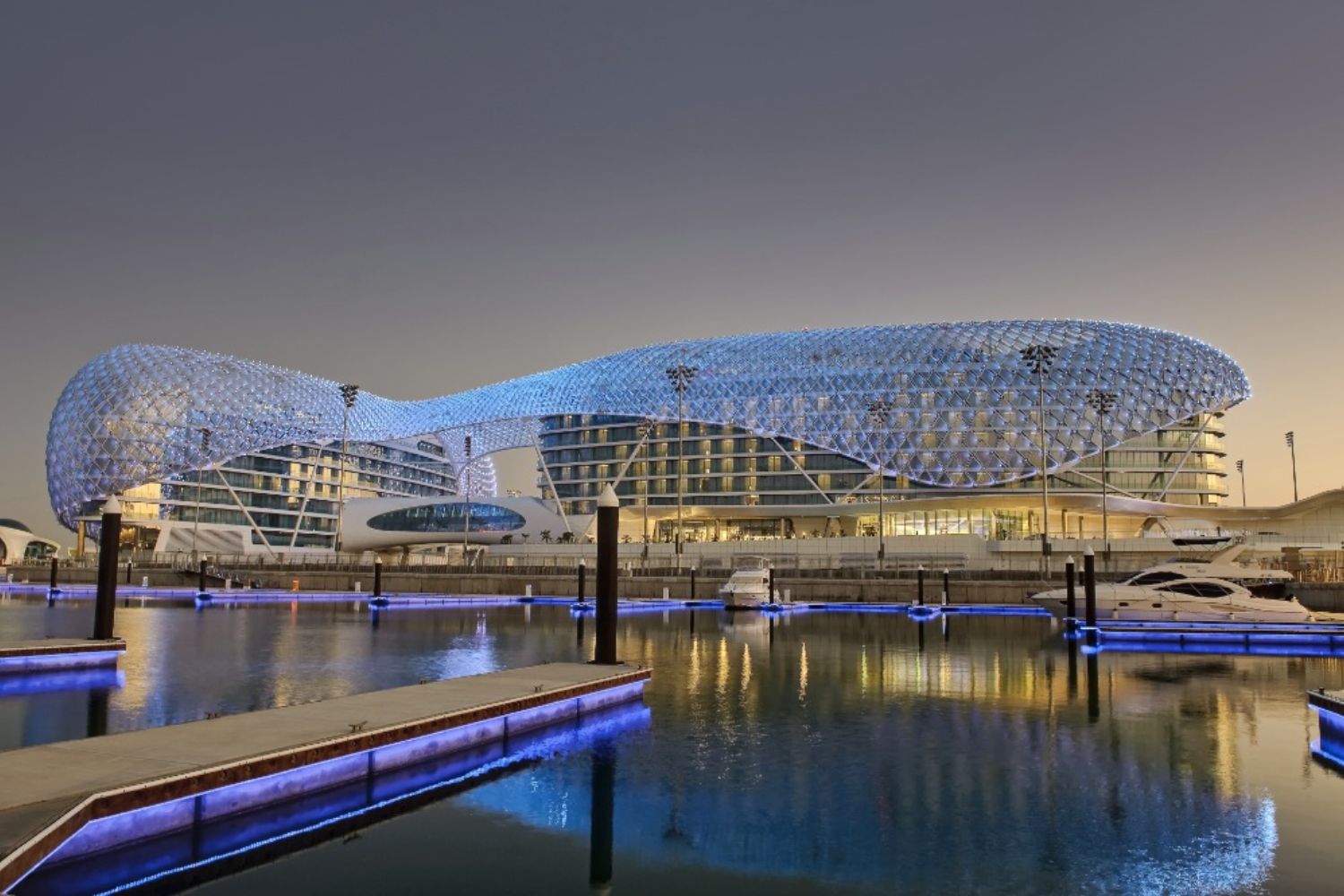
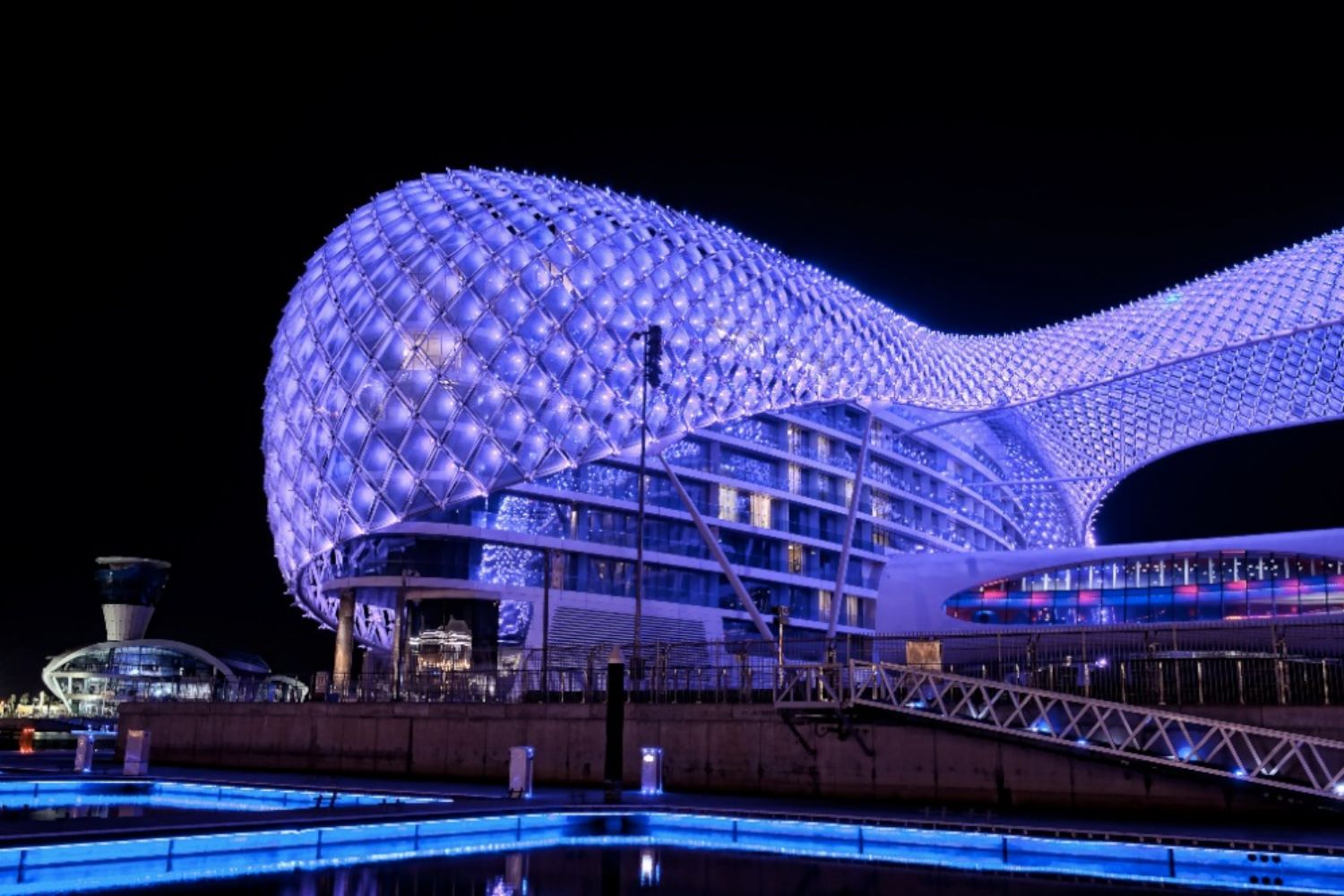
| Yas Hotel (W Abu Dhabi) | Asymptote Architecture | 2009 | Abu Dhabi, UAE | Digital Kinetic (LED Grid-Shell) | Digital (Programmable LED) | Steel, Glass + 5,000 LED Nodes |
Al Bahar Towers – Abu Dhabi, UAE
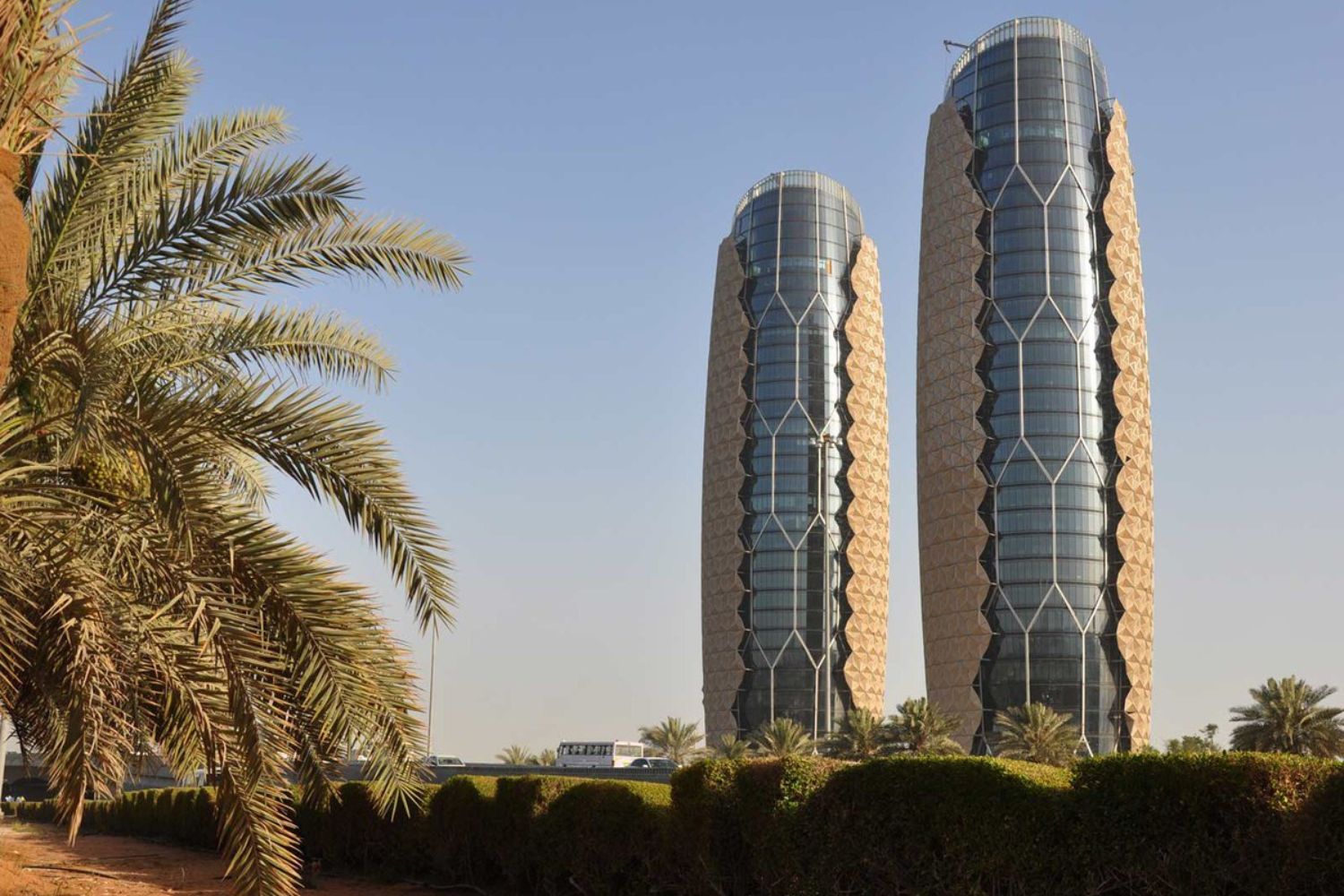
Designed by Aedas and completed in 2012, Al Bahar Towers features one of the world’s most iconic climate-responsive façades inspired by traditional Islamic mashrabiya screens. The building’s exterior is composed of over 1,000 umbrella-like units that open and close automatically throughout the day based on sun angle and solar intensity. These PTFE-coated fiberglass elements reduce heat gain by up to 50% while maintaining natural daylight. The façade behaves like a kinetic skin—contracting to block harsh sunlight and expanding to provide outward views—demonstrating how contemporary architecture can reinterpret cultural heritage through advanced computational design.
Kiefer Technic Showroom – Austria
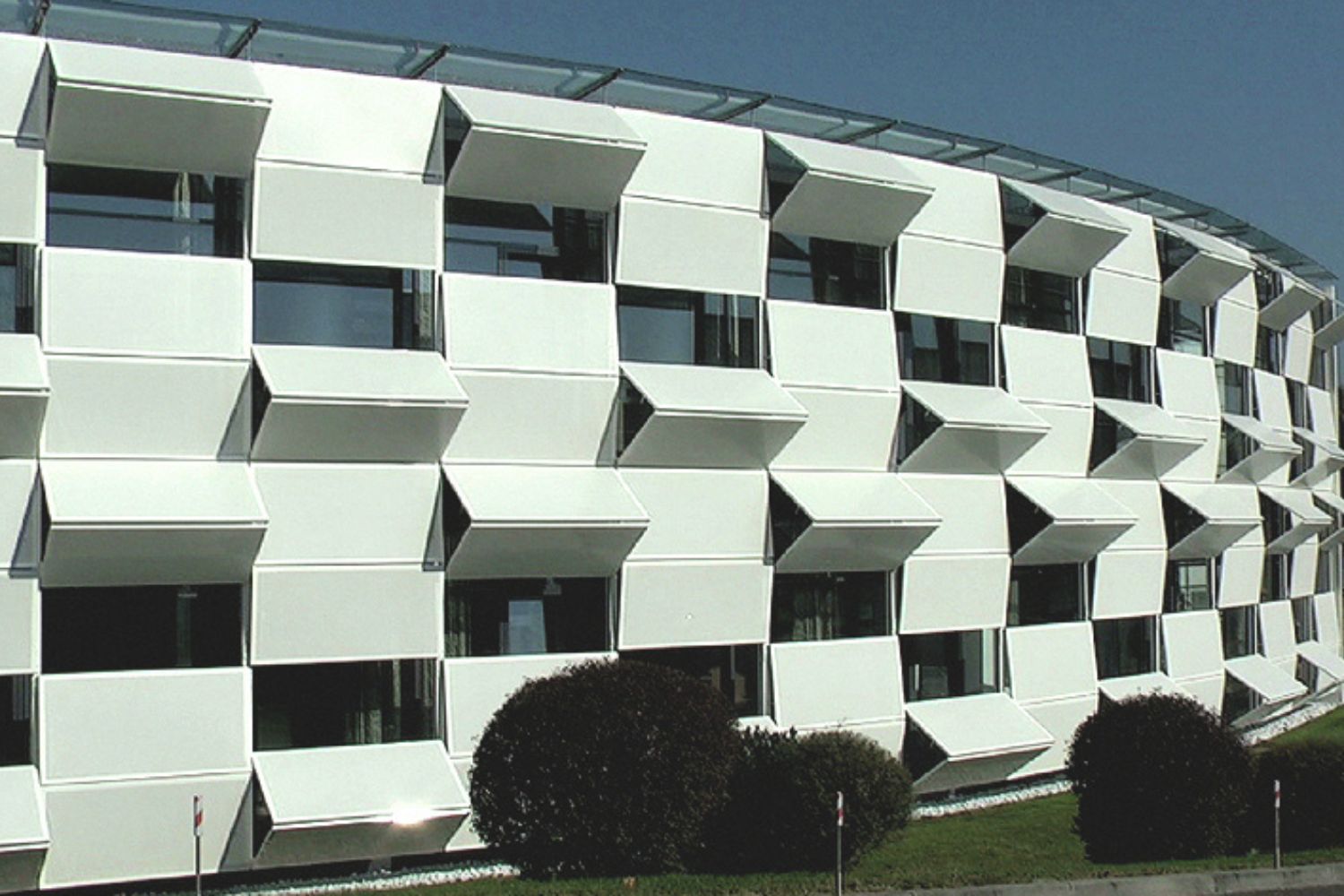
Completed in 2007 by Ernst Giselbrecht + Partner, the Kiefer Technic Showroom is renowned for its motorized façade composed of perforated aluminum panels. Each panel moves independently in vertical and horizontal directions to regulate light, privacy, and temperature inside the building. The façade shifts continuously throughout the day, creating a rhythmic, sculptural appearance that transforms the building into a dynamic object. Driven by automation and controlled via preset programs, the movement of these shading elements makes the showroom a benchmark for kinetic architectural envelopes in Central Europe.
One Ocean – South Korea
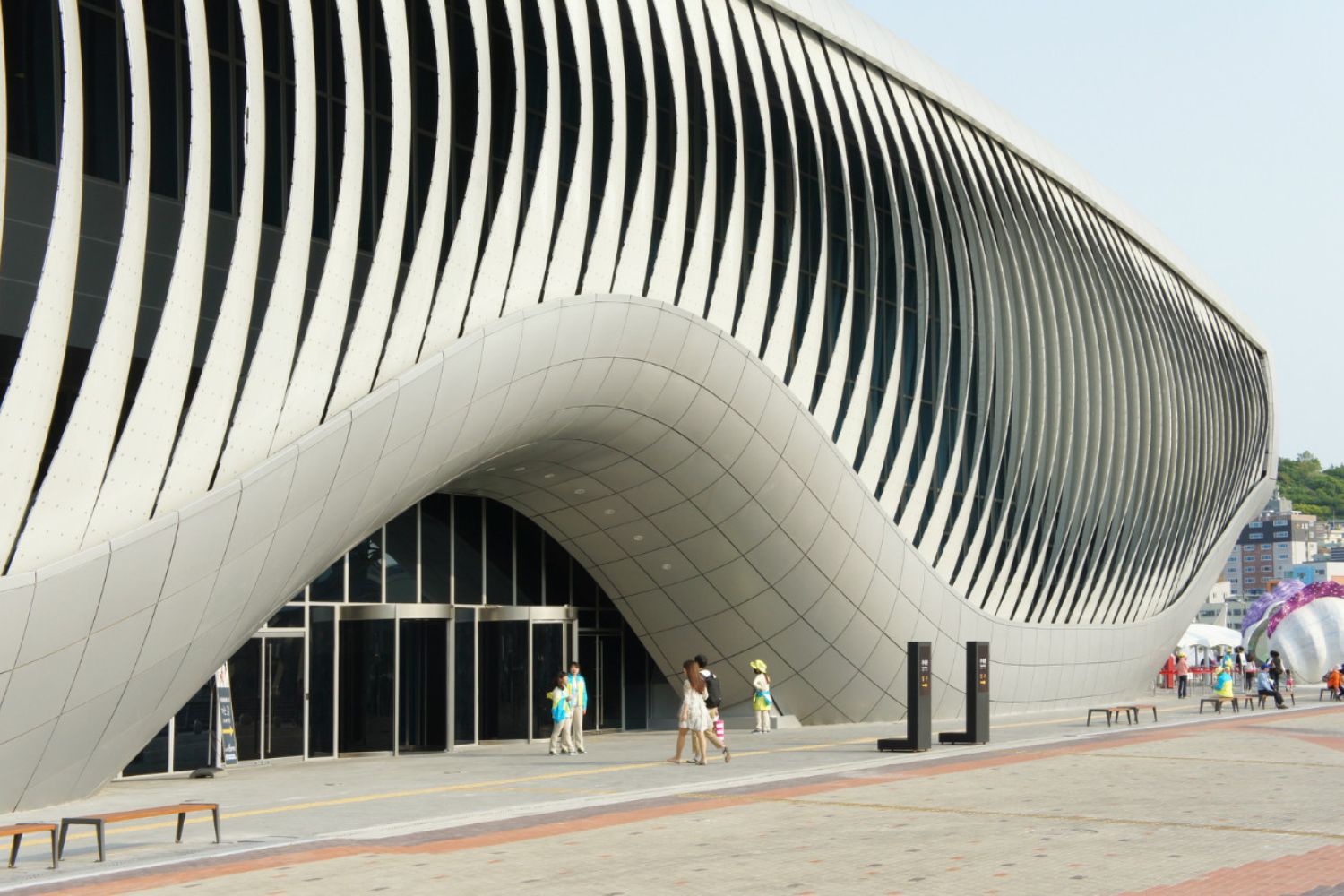
Designed by SOMA for the 2012 Expo in Yeosu, One Ocean Pavilion features a biomimetic façade system consisting of fiberglass lamellas that twist and change position in response to environmental conditions. This kinetic mechanism is inspired by the movement of ocean waves, reflecting the pavilion‘s maritime theme. The lamellas are connected to actuators that gradually adjust their angle to alter daylight penetration and create fluid motion across the building’s exterior. The result is a façade that appears alive, merging parametric design with natural behavior to produce a visually captivating and energy-responsive architecture.
Institut du Monde Arabe – Paris, France
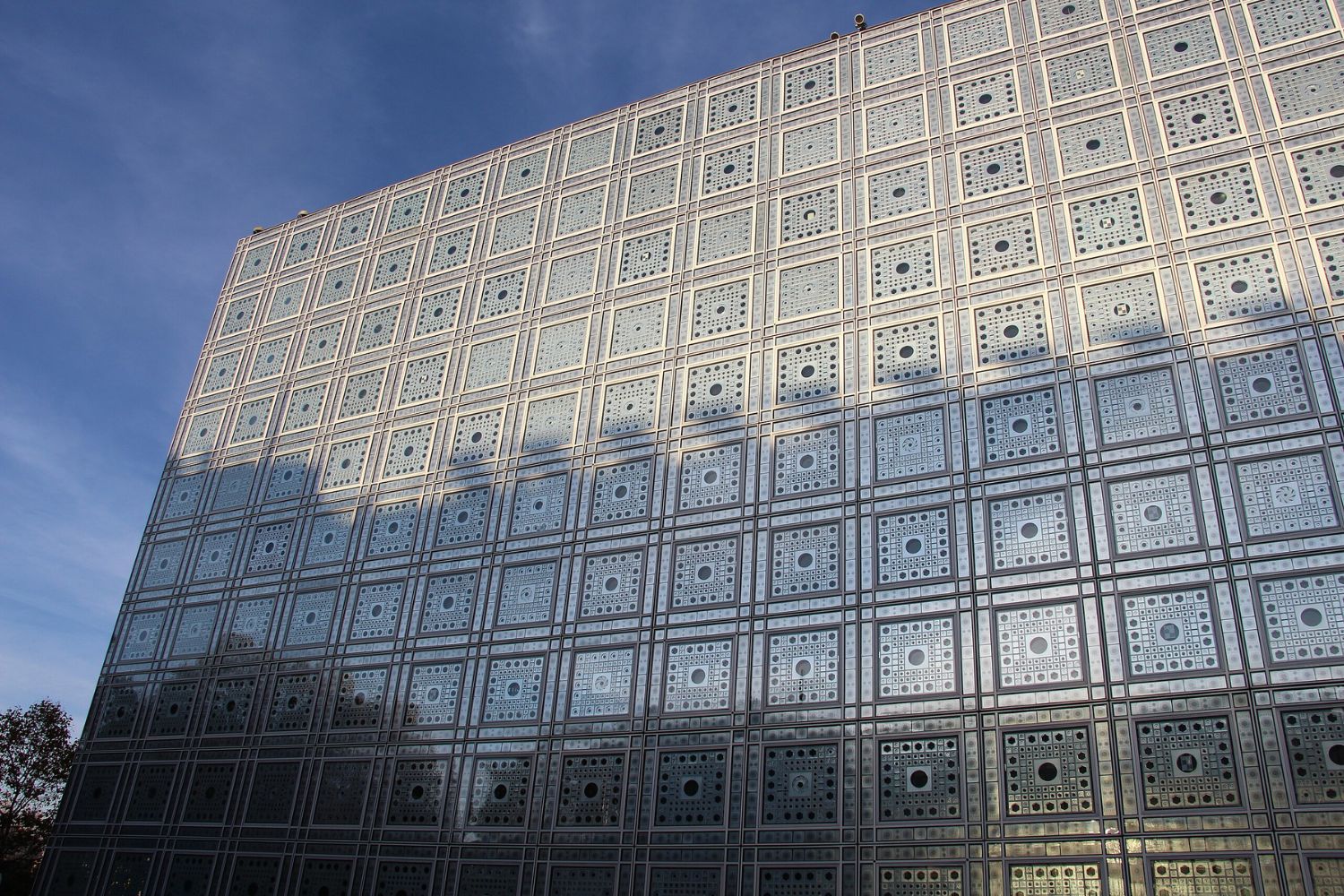
Completed in 1987 by Jean Nouvel, the Institut du Monde Arabe pioneered the concept of a mechanized façade long before kinetic architecture became mainstream. The south façade is composed of 240 light-sensitive diaphragms modeled after Arabic geometric patterns. These metal apertures open and close like camera lenses to control the amount of daylight entering the museum’s interiors. Although originally intended to operate automatically, today many components are manually controlled, yet the façade remains one of the most influential examples of kinetic architecture. Its integration of cultural symbolism, technology, and environmental performance continues to inspire designers worldwide.
Media-TIC Building – Barcelona, Spain
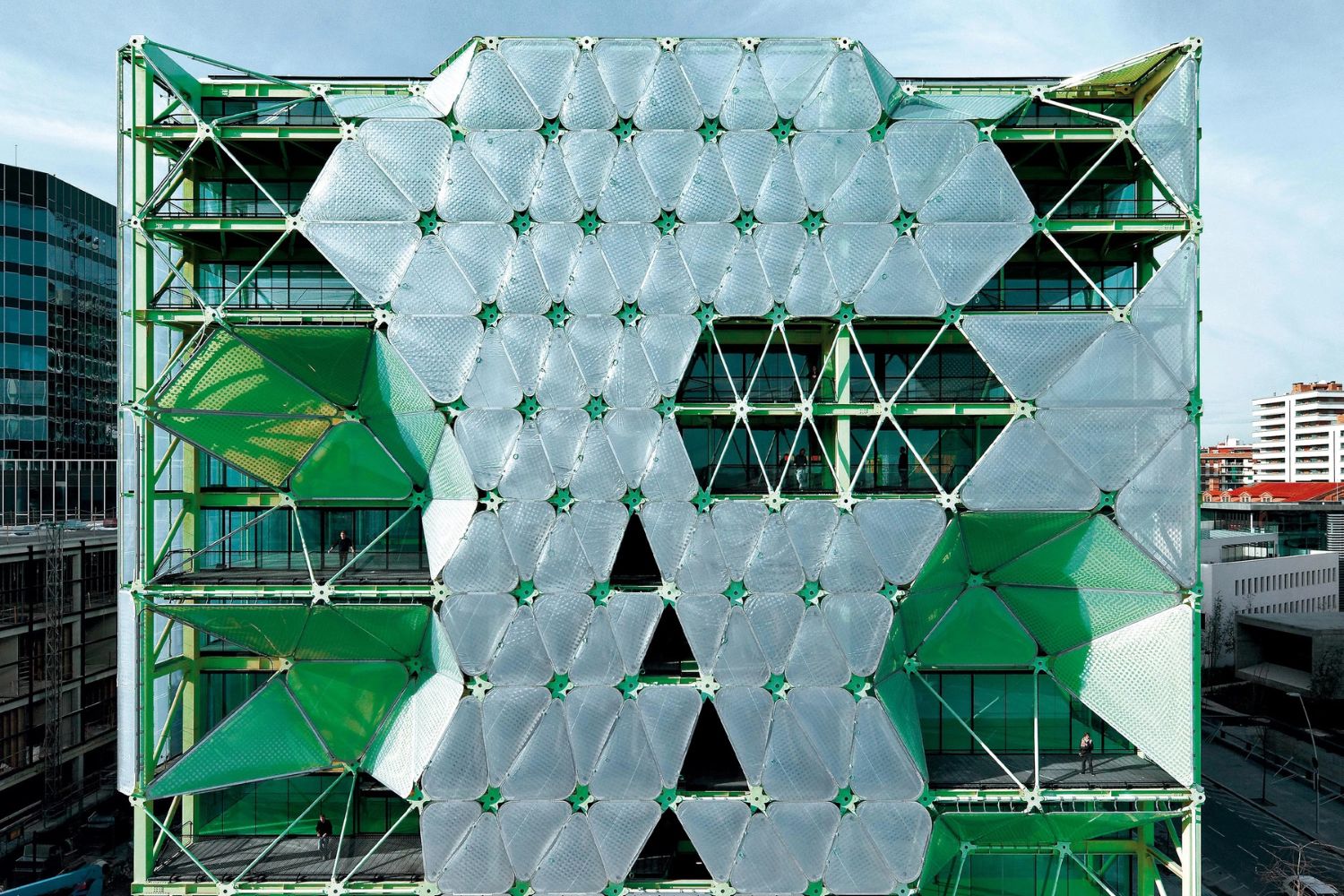
Completed in 2010 by Enric Ruiz-Geli’s Cloud 9, the Media-TIC building utilizes ETFE cushions that expand and contract depending on solar exposure. The façade’s inflatable panels are strategically placed on the southeast and southwest sides, where they respond to sunlight by adjusting air pressure inside the cushions. This kinetic reaction helps regulate thermal gain, reduce cooling loads, and maintain indoor comfort in Barcelona’s Mediterranean climate. Acting as a lightweight, adaptive membrane, the façade demonstrates how pneumatic systems can serve as sustainable and visually distinctive architectural elements.
Brisbane Domestic Terminal Car Park – Australia
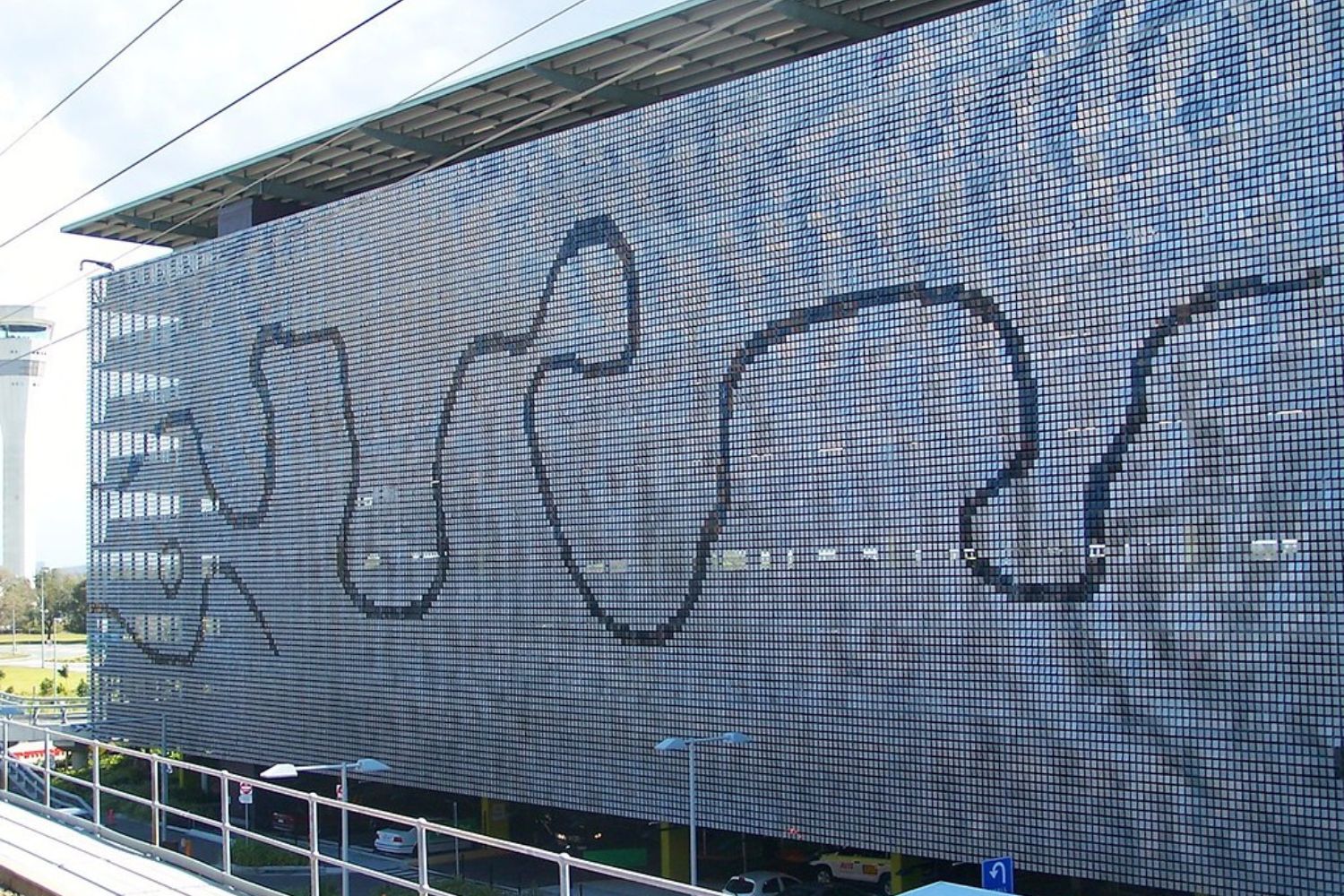
Designed by Hassell and completed in 2008, the Brisbane Domestic Terminal Car Park is famous for its wind-responsive kinetic façade made of more than 250,000 aluminum panels. Attached loosely to the structure’s exterior, these small rectangular elements flutter and ripple with the natural movement of wind, creating a shimmering texture that constantly shifts throughout the day. While the panels do not actively respond through mechanical systems, their passive kinetic performance produces a dynamic visual effect that reduces the perceived mass of the parking structure and introduces a form of environmental art into everyday infrastructure.
SDU Campus Kolding – Denmark
Henning Larsen Architects completed the SDU Campus Kolding in 2014, featuring a dynamic façade composed of 1,600 triangular shutters. Each shutter is connected to sensors that detect sunlight levels and adjust its angle accordingly to optimize daylight intake. The system operates automatically, ensuring that interior spaces remain well-lit without overheating. The façade performs like a living organism, continuously adapting to changing light conditions while creating a striking geometric aesthetic. This project stands as a prime example of how kinetic shading can be integrated seamlessly into an architectural identity.

The Galleria Centercity – Cheonan, South Korea
Designed by UNStudio and completed in 2010, the Galleria Centercity features a massive LED media façade that transforms the building into a dynamic digital canvas. Although not kinetic in a mechanical sense, the façade’s lighting sequences create the illusion of movement through animations, gradients, and fluid transitions. The programmable LED system allows the building to display artistic content, seasonal themes, and commercial visuals, making it an important landmark in the evolution of media architecture. Its ability to shift mood and form visually reinforces the idea that façades can communicate and interact with urban environments.

Riyadh Adaptive Mashrabiya Facades – Riyadh, Saudi Arabia
A new wave of public and cultural buildings in Riyadh has adopted adaptive mashrabiya-inspired façades that reinterpret the region’s vernacular design. Built between 2018 and the present by various architectural firms, these structures use motorized geometric panels that respond to solar intensity and rotation. The panels open to allow filtered light and ventilation or close to provide shade during peak heat. These kinetic systems combine tradition, technology, and climate-responsive performance, creating façades that celebrate cultural identity while improving environmental comfort.
Yas Hotel (W Abu Dhabi) – UAE
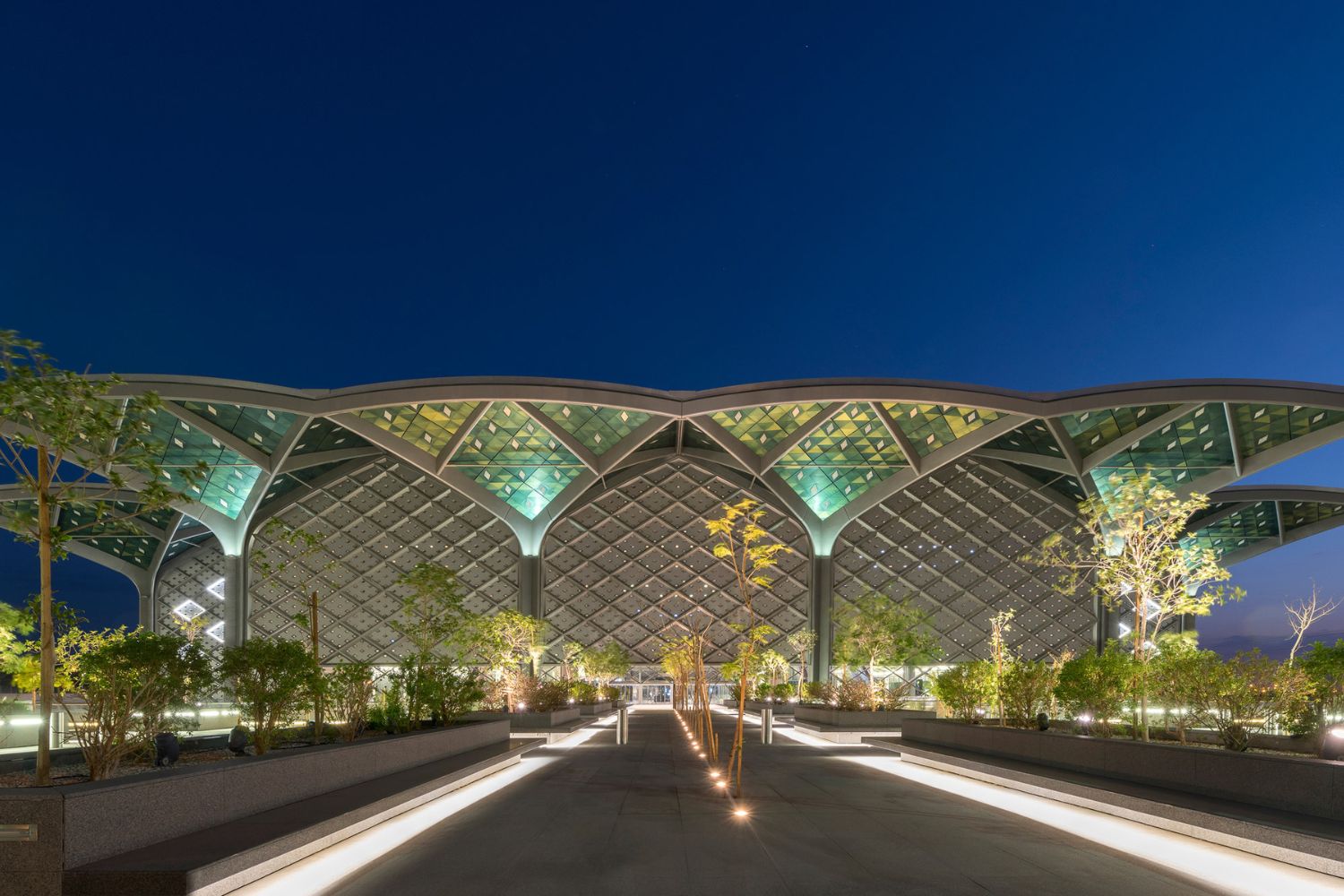
Designed by Asymptote Architecture and completed in 2009, the Yas Hotel features a striking grid-shell façade made of more than 5,000 LED lighting nodes embedded within a steel-and-glass canopy. Although the façade does not physically move, its programmable LED system creates dynamic visual effects that ripple across the surface like waves. The kinetic lighting sequences respond to events, time of day, and curated programs, turning the building into a glowing landmark over the Yas Marina Circuit. The design represents one of the earliest and most influential examples of digital kinetic architecture in the Middle East.
| Project | Number of Facade Elements | Control System | Energy / Performance Benefit | Design Inspiration |
|---|---|---|---|---|
| Al Bahar Towers | ~2,098 umbrella-like units (1,049 per tower) | Computer-controlled via BMS with sun-tracking software | 50%+ reduction in solar heat gain; reduced cooling loads; LEED Silver certified; ~1,750 tonnes CO₂ reduction/year | Traditional Islamic Mashrabiya |
| Kiefer Technic Showroom | 112 motorized aluminum panels | Automated preset programs | Optimized daylight; reduced cooling and heating demands | Rhythmic / Sculptural Motion |
| One Ocean Pavilion | 108 fiberglass lamellas | Actuator-driven with parametric control | Reduced daylight penetration; energy-responsive envelope | Biomimicry – Ocean Waves |
| Institut du Monde Arabe | 240 light-sensitive diaphragms (30,000 individual apertures) | Originally automatic; now partially manual | Daylight regulation; glare reduction | Arabic Geometric Patterns / Camera Lens |
| Media-TIC Building | ETFE inflatable cushion panels on SE & SW facades | Pneumatic air-pressure system with solar sensors | Significant reduction in cooling loads; thermal gain control | Adaptive Membrane / Cloud-like Skin |
| Brisbane Terminal Car Park | 250,000+ aluminum panels | Passive – no active control (wind-driven) | Visual mass reduction; natural ventilation; environmental art effect | Wind & Natural Movement |
| SDU Campus Kolding | ~1,600 triangular shutters (~4,500 m² perforated steel) | Sensor-controlled motors with manual override; 0–90° range | 20–25% less energy than comparable buildings; first to meet Denmark 2015 energy code | Triangular Geometry / Reptilian Scales |
| Galleria Centercity | Full-surface LED media facade | Programmable digital LED system | Dynamic branding and visual communication; urban engagement | Media Architecture / Digital Canvas |
| Riyadh Adaptive Mashrabiya Facades | Motorized geometric panel arrays (varies by project) | Solar intensity and rotation sensors | Shade during peak heat; filtered light and ventilation | Vernacular Mashrabiya Heritage |
| Yas Hotel (W Abu Dhabi) | 5,000+ LED nodes on steel-and-glass grid-shell | Programmable LED system (event/time-based) | Iconic nighttime visual identity; dynamic event branding | Wave Motion / Digital Kinetics |
| Category | Mechanism Description | Projects in This Article | Key Advantages |
|---|---|---|---|
| Mechanical Kinetic | Motorized or actuator-driven components that physically open, close, rotate, or fold based on sensor input or preset programs. | Al Bahar Towers, Kiefer Technic Showroom, One Ocean Pavilion, Institut du Monde Arabe, SDU Campus Kolding, Riyadh Adaptive Mashrabiya Facades | Precise solar control; measurable energy savings; real-time climate responsiveness |
| Pneumatic Adaptive | Air-pressure-controlled inflatable elements (typically ETFE) that expand or contract to modify solar transmission. | Media-TIC Building | Lightweight; high transparency; reduced structural load; sustainable thermal regulation |
| Passive Kinetic | Loosely attached lightweight elements that respond to natural forces (wind) without mechanical or digital control. | Brisbane Domestic Terminal Car Park | Zero energy consumption; minimal maintenance; organic visual effect; low cost |
| Digital Kinetic (LED/Media) | Programmable lighting systems that create the illusion of movement through animated LED sequences and light patterns. | Galleria Centercity, Yas Hotel (W Abu Dhabi) | Dynamic visual identity; programmable content; urban engagement; iconic nighttime presence |
Dynamic facades show how contemporary architecture can become smarter, more efficient, and more expressive. These projects reveal that a building’s envelope can do far more than provide shelter—it can respond to climate, enhance energy performance, and create a constantly evolving aesthetic. Whether through kinetic shading, adaptive panels, or digital lighting, each example demonstrates the value of designing façades that interact with their environment rather than remaining static. As technology advances and sustainability becomes even more essential, dynamic facades will continue to shape the future of architectural design, offering innovative solutions that merge performance, beauty, and environmental intelligence.




Studio RAP Clads Beverwijk Substation with 3D Printed Ceramic Facade
Studio RAP and Powerhouse Company clad a Dutch 150 kV switchstation with...
 illustrarch Editoral Team2 Mins read

Facade Design: 10 Ways to Design an Impressive Building Facade
Building facade design is a critical aspect of architecture that goes beyond...
Elif Ayse Sen9 Mins read

Step-by-Step Process for Crafting Dynamic Facade Designs
This practical guide breaks down the full process of crafting dynamic facade...
Elif Ayse Sen16 Mins read

How Facades Tell Cultural Stories
How facades tell cultural stories—decode symbols, materials, and climate cues with regional...
 Sinan Ozen4 Mins read


Leave a comment