

Best Facades Designs: Architectural Marvels You Need to See
Best facade designs integrate aesthetics with functionality, using materials and light to create a building's character while managing environmental factors effectively.
 Furkan Sen16 June 20245 Mins read718

Table of Contents Show
The best facade designs blend strong visual identity with real performance, using materials, light, and structure to give a building its character before you ever step inside. From titanium-clad museums to ETFE-wrapped sports halls, the projects below show how a facade can act as both a billboard and a working climate skin.
A building’s facade often makes the first and longest-lasting impression. Take the Guangzhou Opera House, with tessellated triangular glass sections that pour daylight into public areas and sharpen its crystalline look. Or picture a small home with an inset wooden entrance lit by golden afternoon light, proof that compact projects can shine with the right choices. The examples here cover landmark cultural buildings, sustainable experiments, and quiet residential work, so you can borrow ideas at any scale.

What Makes a Facade Design Stand Out?
A standout facade does three things at once: it signals the building’s purpose, it manages light and weather, and it fits its surroundings. The strongest examples treat the exterior wall as a system rather than a decorative layer, which is why the best facade designs hold up technically as well as visually.
Why facade design matters in architecture
Facade design defines a building’s exterior and sets its immediate visual impact. A well-resolved facade communicates what a building is for and how it wants to be read in the street, often becoming a local landmark. Good work pulls aesthetics, daylighting, and durability into a single coherent envelope instead of treating each as a separate problem.
Key elements of successful facade design
A handful of factors decide whether a facade reads as considered or arbitrary. Balance these and the result tends to perform as well as it looks:
- Material selection: The choice of granite, glass, steel, timber, or composite panels drives durability, weathering, and thermal behavior over decades.
- Lighting: Natural and artificial light reshape a facade through the day. Tessellated glass can brighten interiors while highlighting a building’s form.
- Structural integrity: Steel frames, folded plates, and proper fixings keep large cladding systems stable and safe in wind and seismic loads.
- Environmental fit: Responsive geometry and self-shading details help a facade cut solar gain and sit comfortably in its climate and context.
- Visual connection: Semi-transparent membranes or gridded panels link inside and outside, softening the line between public space and interior.
💡 Pro Tip
When specifying a rainscreen or panelized facade, design the joint pattern and panel module before you finalize the elevation. Retrofitting a grid onto an already-fixed window layout almost always forces awkward cuts and visible misalignments that no amount of detailing can hide.

Standout Facade Designs Around the World
Modern and contemporary styles
Modern and contemporary facade designs stretch what an exterior wall can do. The Guggenheim Museum Bilbao, designed by Frank Gehry, wraps its curving volumes in roughly 33,000 thin titanium tiles that shift color with the weather and the angle of the sun. As ArchDaily’s study of the building notes, those panels are only about 0.38 mm thick, working with limestone and glass to produce one of the most recognized structures of the past thirty years.
The Guangzhou Opera House, by Zaha Hadid Architects, carries a dual-structure facade. Charcoal granite gives the larger volume a rough, monumental texture, while lighter white granite clads the smaller form. Over 75,000 granite panels cover roughly 24,700 m², producing a pebble-like surface, and the tessellated glass sections feed daylight into the foyers. The project documentation on ArchDaily details how the twin-boulder geometry shaped both the cladding and the structure behind it.
Standout facades at a glance
The table below compares four landmark exteriors by their signature material and authorship, a useful shortcut when you are matching a material strategy to a building type.
| Project | Location | Signature Material | Architect |
|---|---|---|---|
| Guggenheim Museum Bilbao | Bilbao, Spain | Titanium cladding | Frank Gehry |
| Guangzhou Opera House | Guangzhou, China | Granite and glass | Zaha Hadid Architects |
| Beijing National Aquatics Center | Beijing, China | ETFE pillows | PTW Architects |
| The Broad | Los Angeles, USA | GFRC honeycomb veil | Diller Scofidio + Renfro |
🔢 Quick Numbers
- Guggenheim Bilbao’s skin uses about 33,000 titanium panels around 0.38 mm thick (ArchDaily, AD Classics).
- The Guangzhou Opera House is clad in over 75,000 granite panels across roughly 24,700 m² (Zaha Hadid Architects).
- Beijing’s Water Cube is wrapped in more than 100,000 m² of ETFE pillows about 0.2 mm thick (Wikipedia, Beijing National Aquatics Center).
Historical and cultural facade designs
Some of the most rewarding facades respond to history rather than ignore it. A 1920s Spanish-mission home, carefully renovated, can keep its arches and tile cues while taking on a calmer contemporary gray exterior, holding the balance between past and present. Decisions like this draw directly on the language of earlier architectural styles.
A grander example is a European-inspired property by Rob Mills Architecture and Interiors, where custom rendering and wrought-iron gates reflect the owners’ Italian heritage. Folding cultural narrative into the exterior gives a facade meaning that pure styling rarely reaches, while still meeting modern comfort and code expectations.
Innovative Materials and Technologies in Facade Construction
Sustainable materials and green facades
Material choices increasingly carry environmental weight. The Beijing National Aquatics Center, known as the Water Cube, uses ETFE film that works as a translucent daylight channel and an insulating layer, helping passively warm the pool hall below. The detailed record of the Water Cube describes how the cushioned envelope cut both weight and energy demand compared with a conventional glazed wall.
Stone can be sustainable too when sourced well. One Kleomenous in Athens uses locally quarried marble, with around 2,000 CNC-cut pieces that echo the site’s topography and trim transportation emissions. Local sourcing and digital fabrication together let a heavy traditional material meet current environmental goals without losing its tactile quality.
📌 Did You Know?
ETFE film weighs roughly one percent of equivalent glass, which is why the Water Cube could span huge areas with a far lighter supporting frame. That weight saving ripples down through the whole structure, reducing steel tonnage and foundation size.

Technology behind modern facades
Computational tools have widened what a facade can be. Parametric modeling made the Guggenheim Bilbao’s flowing titanium surface buildable, translating a sculptural idea into thousands of uniquely shaped panels. The same logic drives the tessellated glass of the Guangzhou Opera House, where geometry and daylight were resolved together rather than in sequence.
Glass-fiber reinforced concrete (GFRC) pushed the idea further at The Broad in Los Angeles, where a porous honeycomb veil filters daylight into the galleries. Diller Scofidio + Renfro document the system on the museum’s official site, and the project sits within a wider move toward expressive structural skins, a theme covered in our look at high-tech buildings that turn structure into spectacle.
Practical Aspects of Facade Design
Balancing aesthetics and functionality
Every memorable facade resolves a tension between looking good and working well. The Guangzhou Opera House reads as a crystalline sculpture, yet its glazed sections also handle daylight and public circulation. Bilbao’s titanium is striking and durable at once, shrugging off Atlantic weather while catching the light. Strong design treats appearance and performance as one brief, not as a trade-off settled at the end.
How do regulations shape facade design?
Building codes and energy standards set hard limits on materials, fire performance, and construction methods, and those limits often push designers toward smarter solutions. The Water Cube’s ETFE envelope met energy targets while still delivering daylight, and The Broad’s GFRC veil satisfied structural and safety rules without dulling its form. Constraints, handled early, tend to sharpen a facade rather than flatten it.
Building codes and facade regulations vary by jurisdiction. Always confirm material, fire, and structural requirements with local authorities and a licensed professional for your specific project.
The Bigger Picture
Looked at together, these projects suggest the most interesting facade work is moving from surface decoration toward exteriors that earn their keep, shading interiors, carrying cultural meaning, and cutting energy use at the same time. The next wave of standout facades will likely be judged less on how dramatic they look on opening day and more on how gracefully they perform, and weather, over the decades that follow.


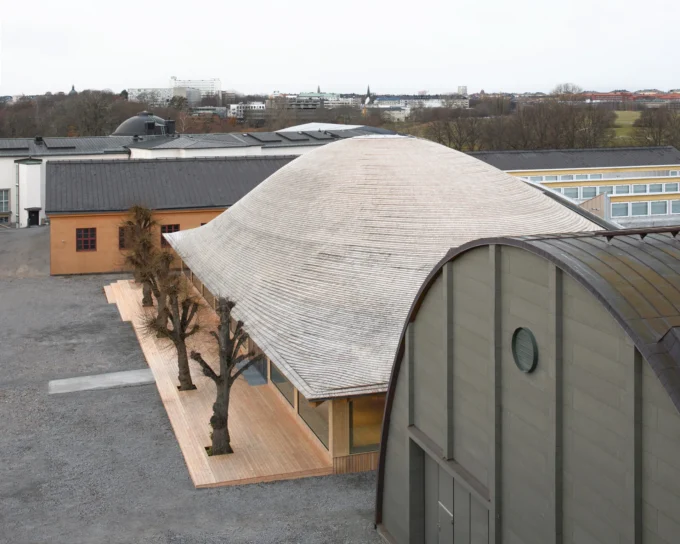


Warm Minimalism in Architecture: How Facades Are Getting Warmer in 2026
Minimalist facades spent a decade looking cold. In 2026 that flips: charred...
 illustrarch Editoral Team7 Mins read
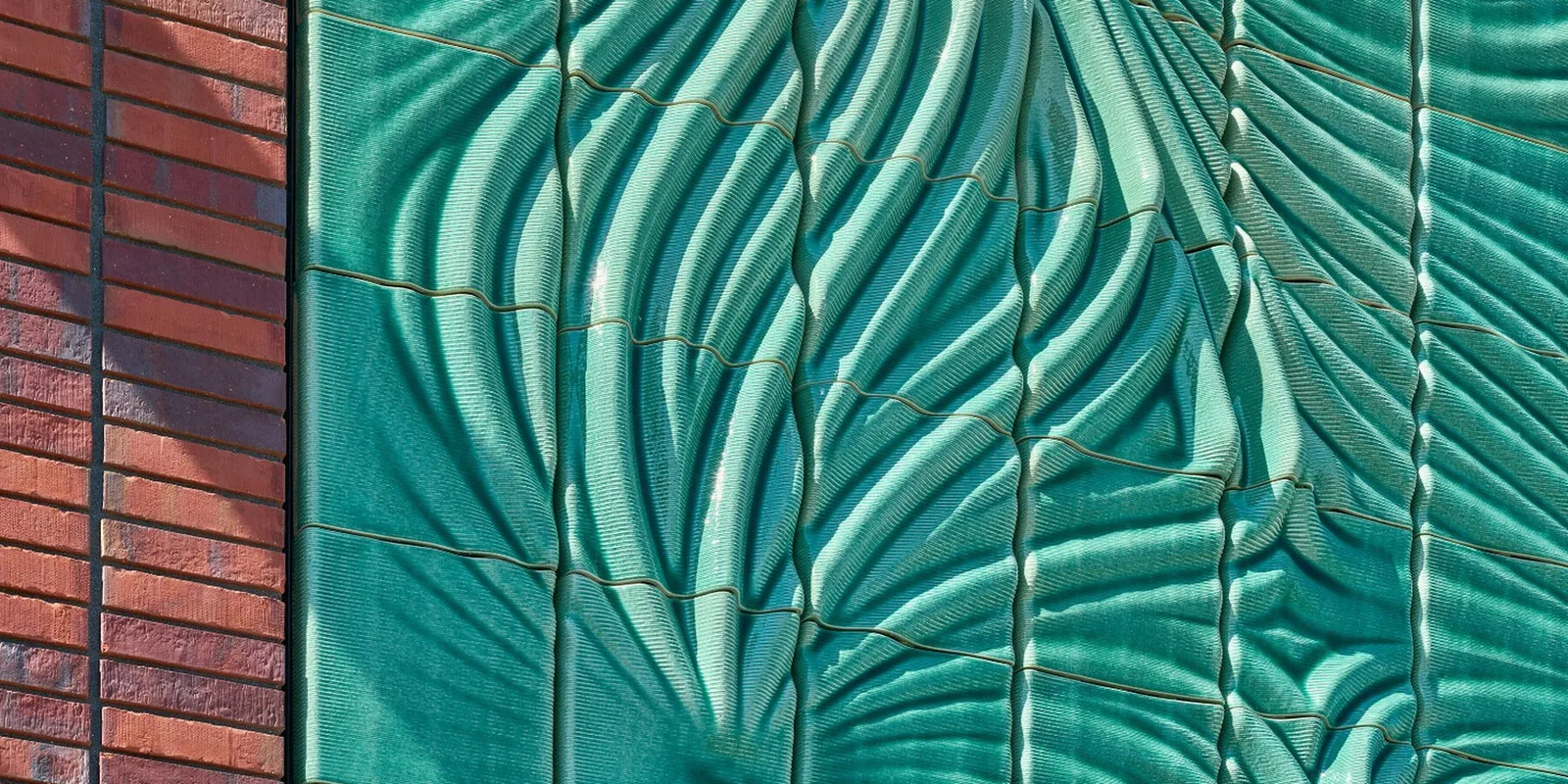
Studio RAP Clads Beverwijk Substation with 3D Printed Ceramic Facade
Studio RAP and Powerhouse Company clad a Dutch 150 kV switchstation with...
illustrarch Editoral Team2 Mins read

Facade Design: 10 Ways to Design an Impressive Building Facade
Building facade design is a critical aspect of architecture that goes beyond...
 Elif Ayse Sen9 Mins read

Step-by-Step Process for Crafting Dynamic Facade Designs
This practical guide breaks down the full process of crafting dynamic facade...
Elif Ayse Sen16 Mins read


Leave a comment