

Café del Río by TAP Arquitectura
On a flood-prone stretch of the Río Negro in Rionegro, Colombia, a café, a steel birdwatching lookout and a raised native garden let visitors share the riverbank with its birds and its seasonal floods.
 illustrarch Editoral Team28 September 20262 Mins read32
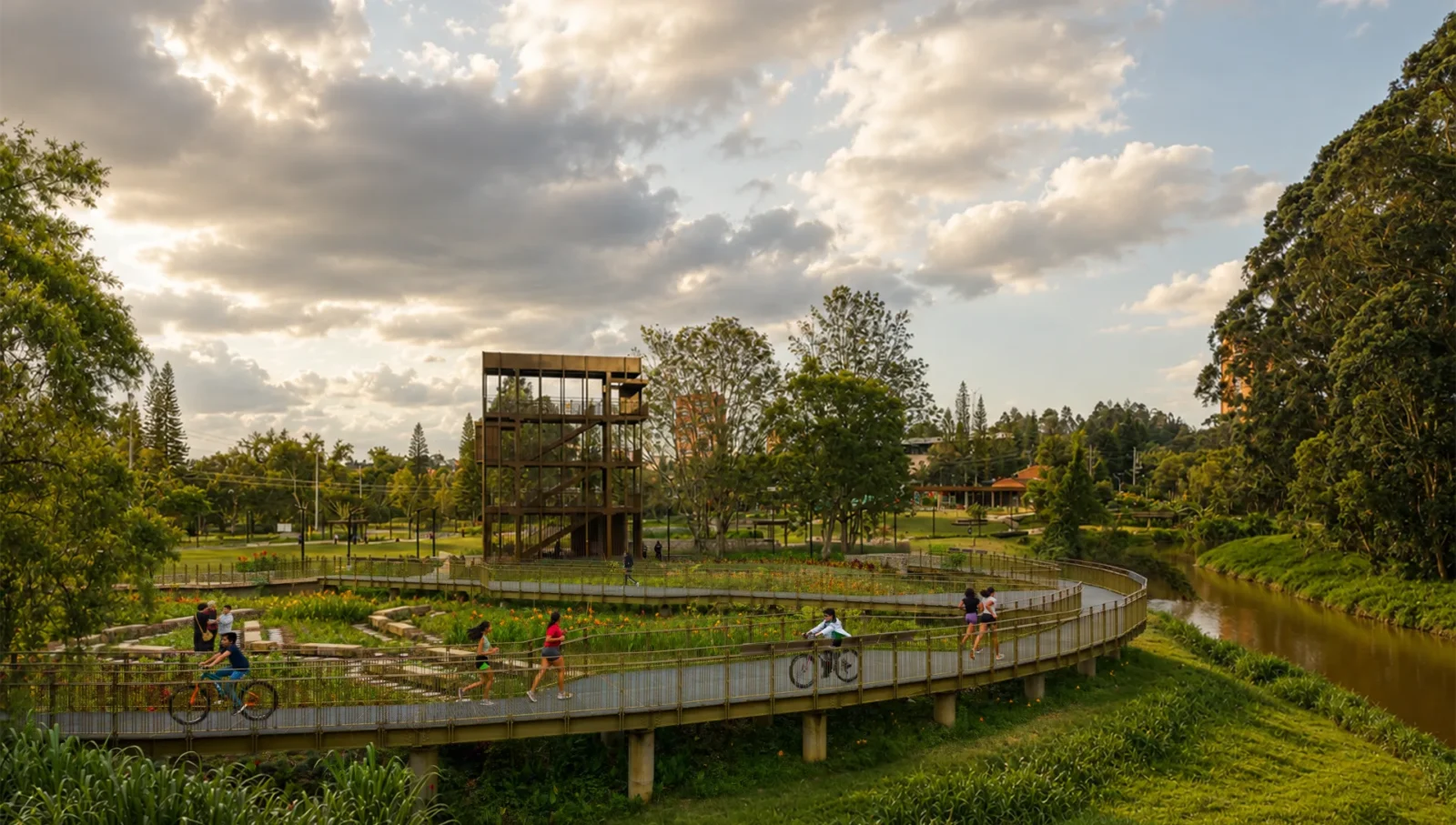


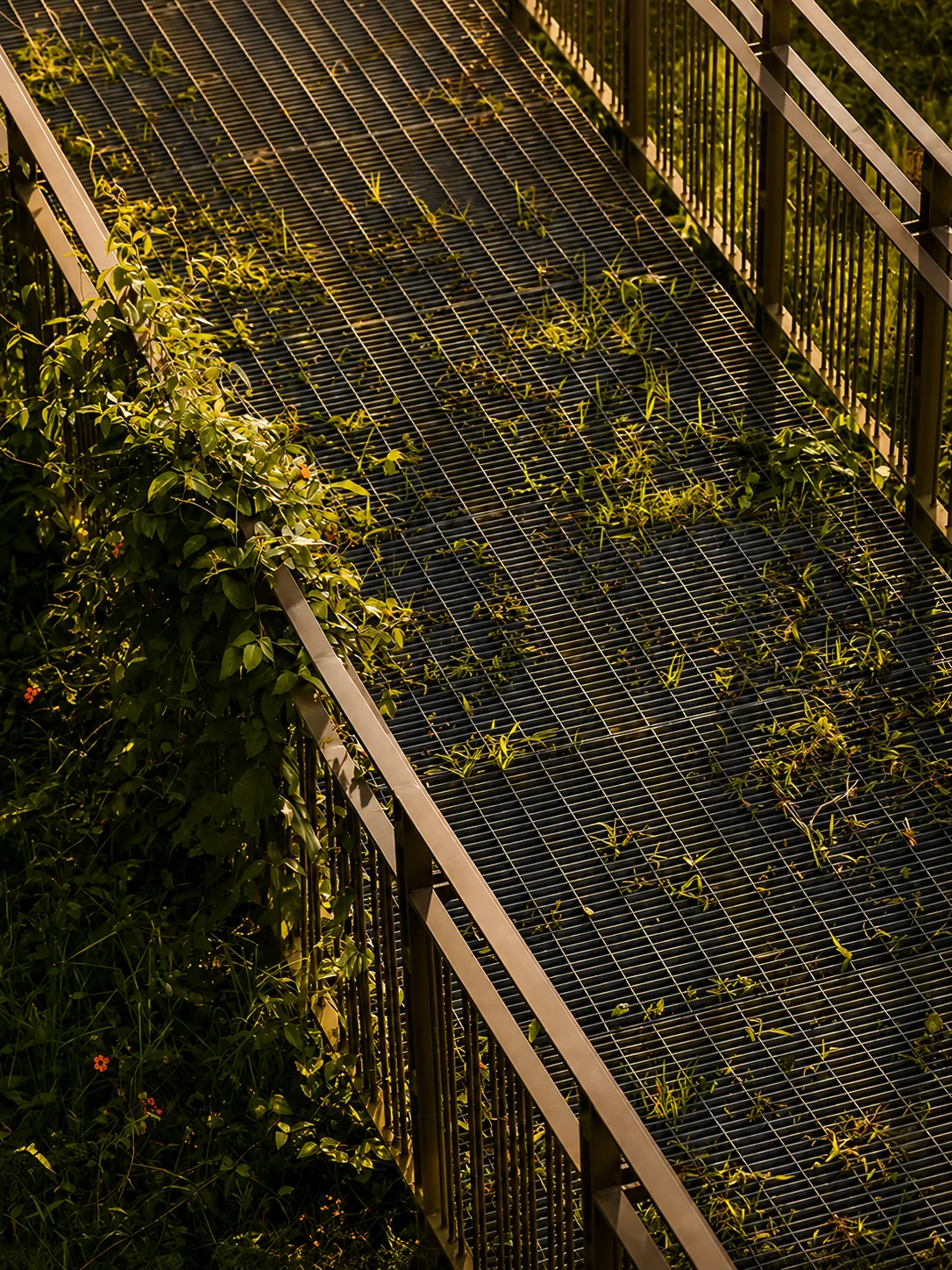


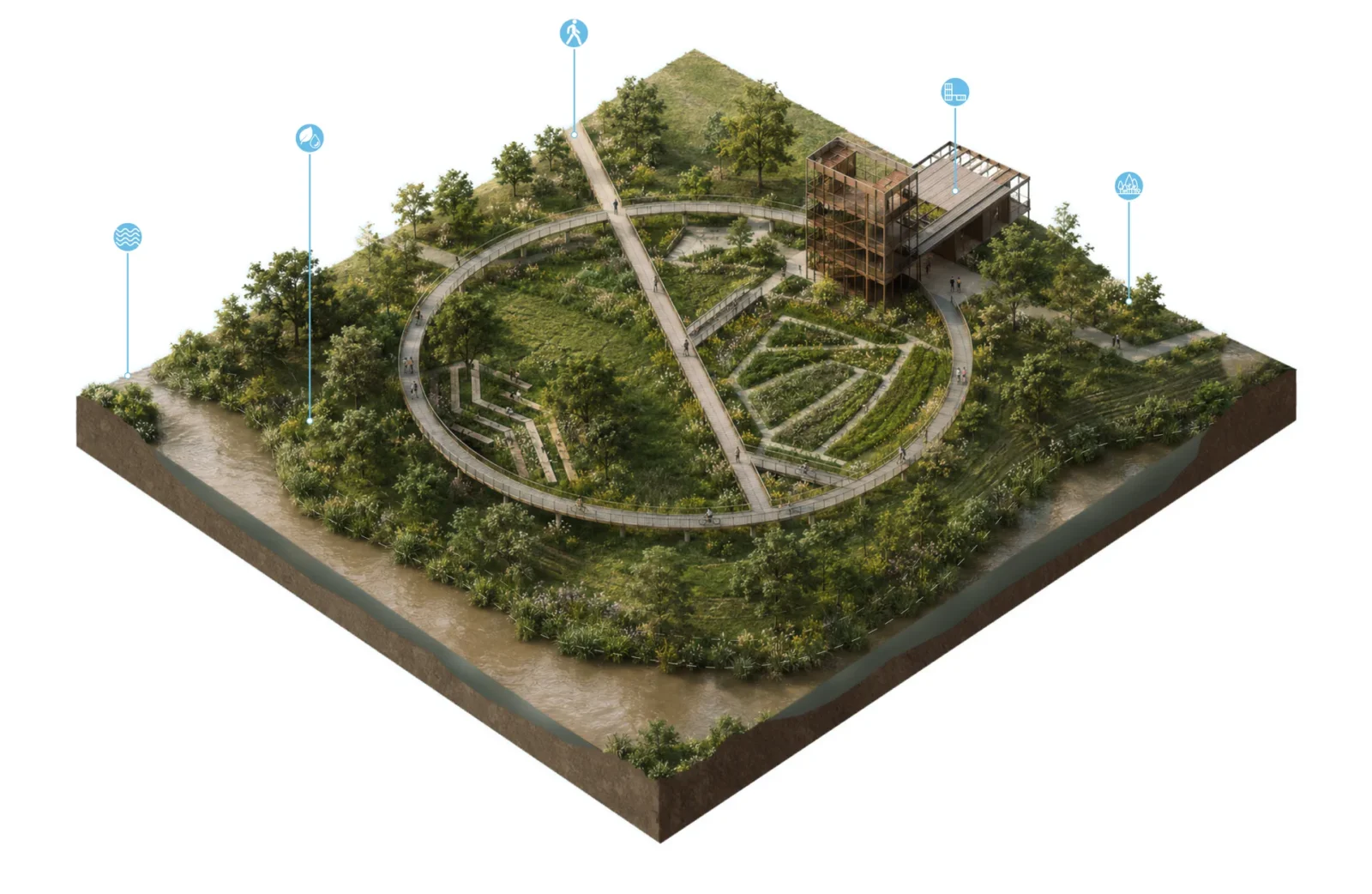

Table of Contents Show
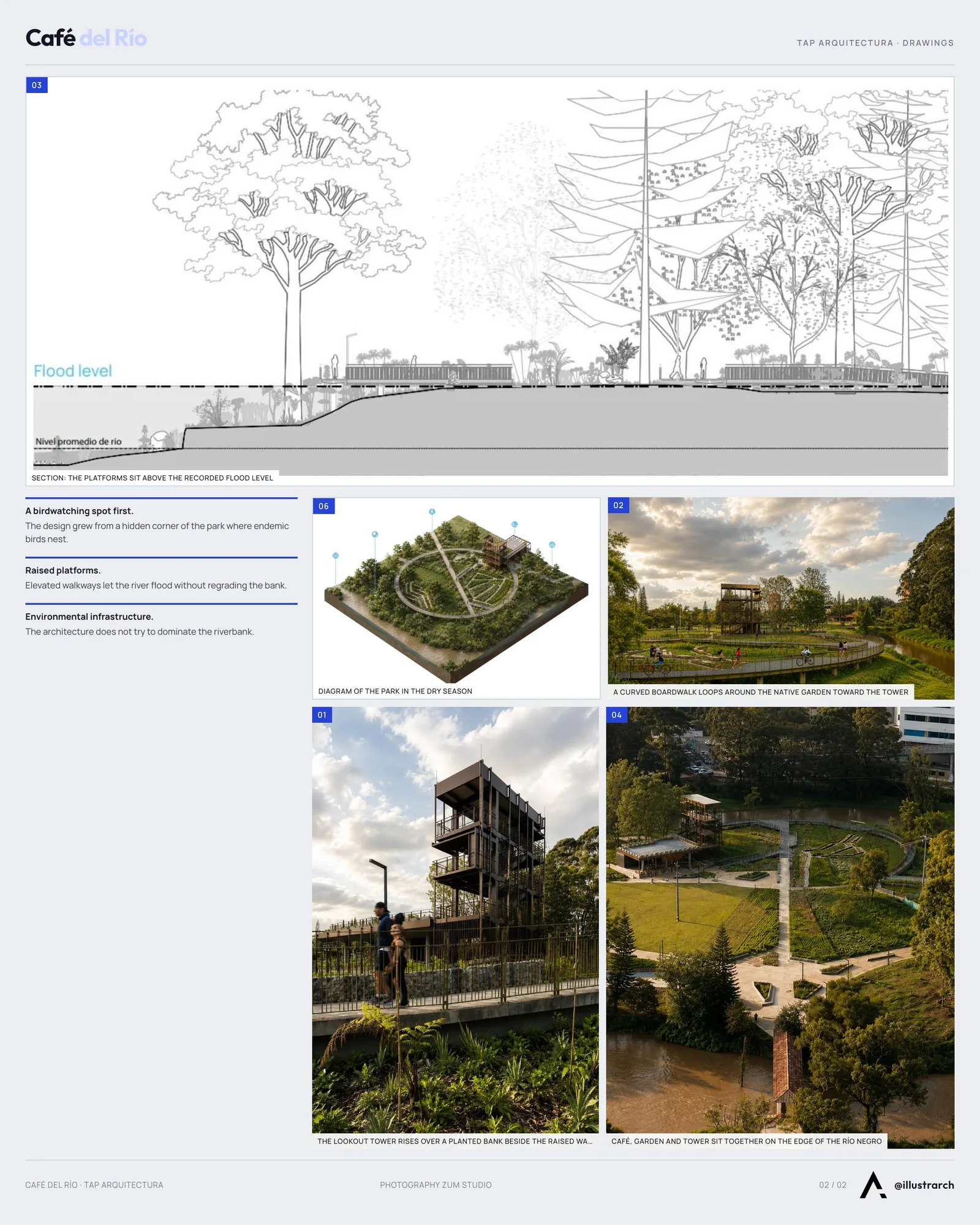
Café del Río sits on a stretch of the Río Negro in Rionegro, Colombia, where the river regularly spills over its banks. TAP Arquitectura, working with Geográfica Sur, Cosme Arquitectura y Paisaje, Rojas Arquitectura and EMS Arquitectos, answered a brief from the Municipality of Rionegro not by holding the water back but by lifting a café, a birdwatching lookout and a native garden above it. The 1,200 square metre project was completed in 2025.
A café that started as a birdwatching spot
The team is candid that the café was never the point of departure. While studying the site, and walking it with local birdwatchers, they found a particular corner of the park where trees hold nests and endemic species can be seen at close range. Most people crossing the park would never notice it. The design grew from the idea of making that hidden wildlife part of an ordinary visit.
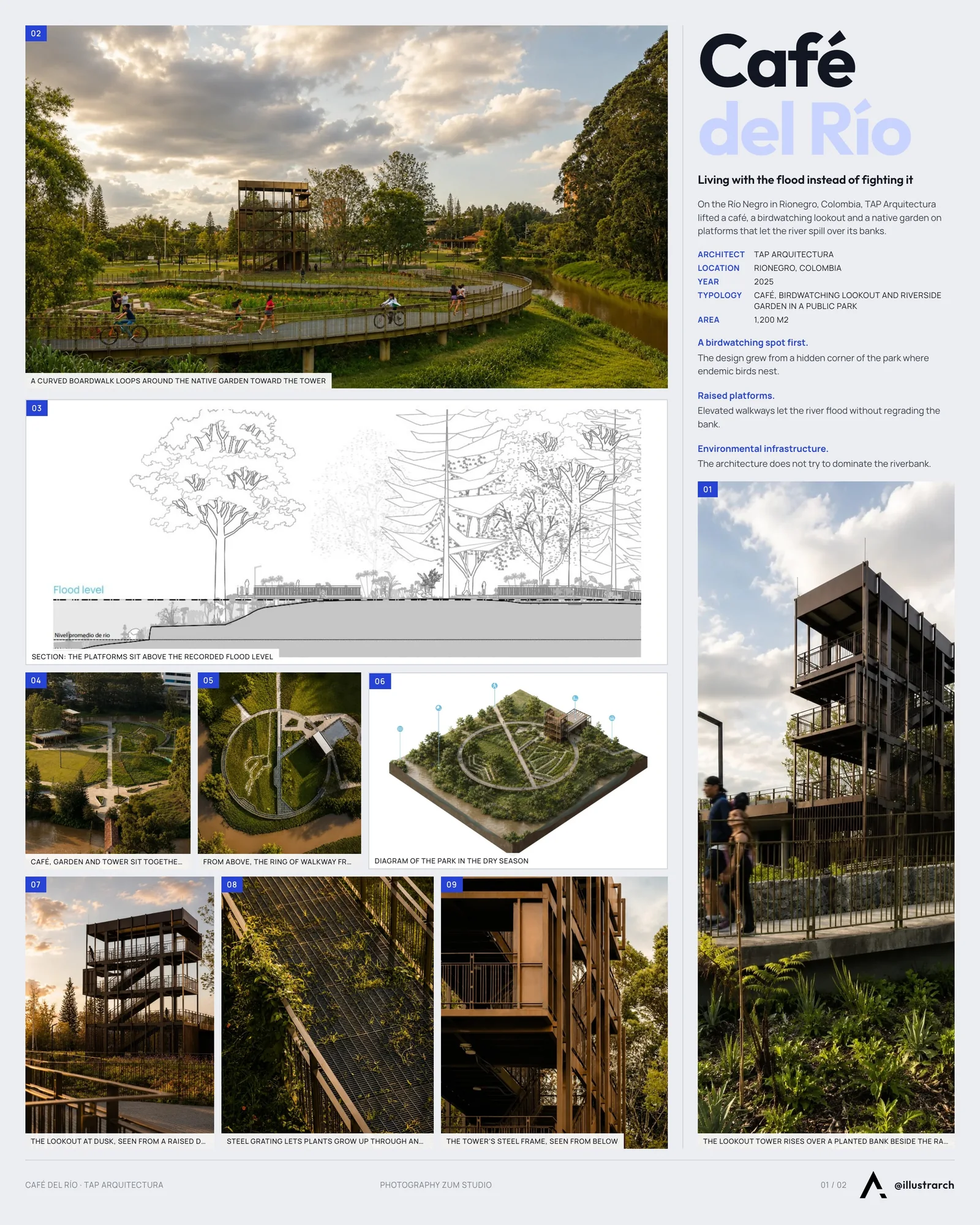
So the programme reads as a sequence rather than a single building. The café is the place to arrive and stay a while. The steel lookout tower pulls the eye outward to the river and the birds in the canopy. The garden, planted with native species, works as an outdoor laboratory where plants and animals become the subject. Having a coffee, the architects suggest, can turn into a lesson in the local ecology without anyone being lectured.
Living with the flood instead of fighting it
The more radical decision concerns water. Instead of regrading the bank or building defences, the project stands on elevated platforms and raised walkways that let the river rise and fall underneath. The land is allowed to flood, and the visitor is allowed to watch it happen. Markers along the site record changing water levels, so the difference between the dry and wet seasons becomes something people can actually read on the ground.
Keeping the structures off the ground also keeps disturbance to a minimum. Native planting fills the spaces between and beneath the walkways, helping small habitats recover, and the steel grating lets vegetation climb through rather than being cleared. The ring shaped boardwalk and the straight path that crosses it give the park a clear order, while everything around them is left to the river’s own rhythm.
Architecture as environmental infrastructure
TAP describes itself as a studio built on research, concept and place, and Café del Río shows that approach plainly. The architecture does not try to dominate the riverbank; its job is to make natural processes visible, from nesting birds to the seasonal swell of the Río Negro. It is the same instinct explored in our look at how nature shapes building design, applied here to a municipal park rather than a single building.
The project also adds to the Colombian civic work we have covered, such as the MOVA innovation hub in Medellín. In Rionegro, that civic ambition takes the form of a coffee counter, a tower and a garden that together teach visitors how to share a riverbank with the water that shapes it.




Villa Argentina by 3LHD
3LHD reconstructs Villa Argentina in Dubrovnik, tying a 1920 villa, later villas...
illustrarch Editoral Team3 Mins read

55 Albert Street by Jackson Clements Burrows
55 Albert Street by Jackson Clements Burrows is a 51 apartment building...
illustrarch Editoral Team2 Mins read
Good Habits Smoothie Bar by XN32 Studio
XN32 Studio turns a 55 m² smoothie bar in Mexicali into a...
illustrarch Editoral Team3 Mins read
Cottage by archicraft
The most interesting architectural opportunities often emerge from the strictest constraints. This...
illustrarch Editoral Team2 Mins read


Leave a comment