

Why Do Architecture Students Struggle With Time Management?
Architecture students rarely run out of discipline. They run out of schedule. This piece looks at why studio work resists planning, how deadlines cluster, and what a realistic six-week project timeline looks like in practice.
 Sinan Ozen30 August 20266 Mins read140

Table of Contents Show
Architecture students struggle with time management because design work has no natural finish line. A studio project can always be pushed further, deadlines cluster around review dates, and production time gets underestimated almost every semester. The result is a familiar cycle of late starts, overnight work, and exhaustion that better planning habits can break.
The workload itself is real. Indiana University’s 2016 National Survey of Student Engagement, reported by ArchDaily, found architecture majors spent 22.2 hours per week preparing for class, about 2.5 hours more than the next major on the list, and NSSE’s own comparison of study time by major shows how far ahead that sits. Hours are only half the story. Plenty of students work them and still finish at 4 a.m. the night before a review.

Why Time Management for Architecture Students Works Differently
Most academic work has a defined end. A problem set is done when the answers are right. An essay is done at the word count. Design has no equivalent. You stop when the time runs out, not when the work is complete, and that single difference breaks planning methods built for other subjects. Most architecture school time management tips fail for the same reason: they assume the task has an edge.
Three problems follow from it. Research expands to fill whatever space you give it, because there is always one more precedent worth finding. Concept work feels unproductive, so students delay committing. And production time, the drawings and model and board layout, sits at the end of the schedule where nothing absorbs a mistake.
💡 Pro Tip
Set a personal deadline two days before the actual review and treat that gap as production insurance, not free time. Studio tutors watch the same pattern repeat every semester: the students who finish calmly are rarely the fastest workers, they are the ones who stopped designing early enough to draw.
Starting earlier helps, but only if you decide in advance what a finished project includes. Writing the deliverables down in week one, five drawings, two models, one board, turns an open-ended project into a countable list. The back-to-school habits experienced students build usually start with that reset.
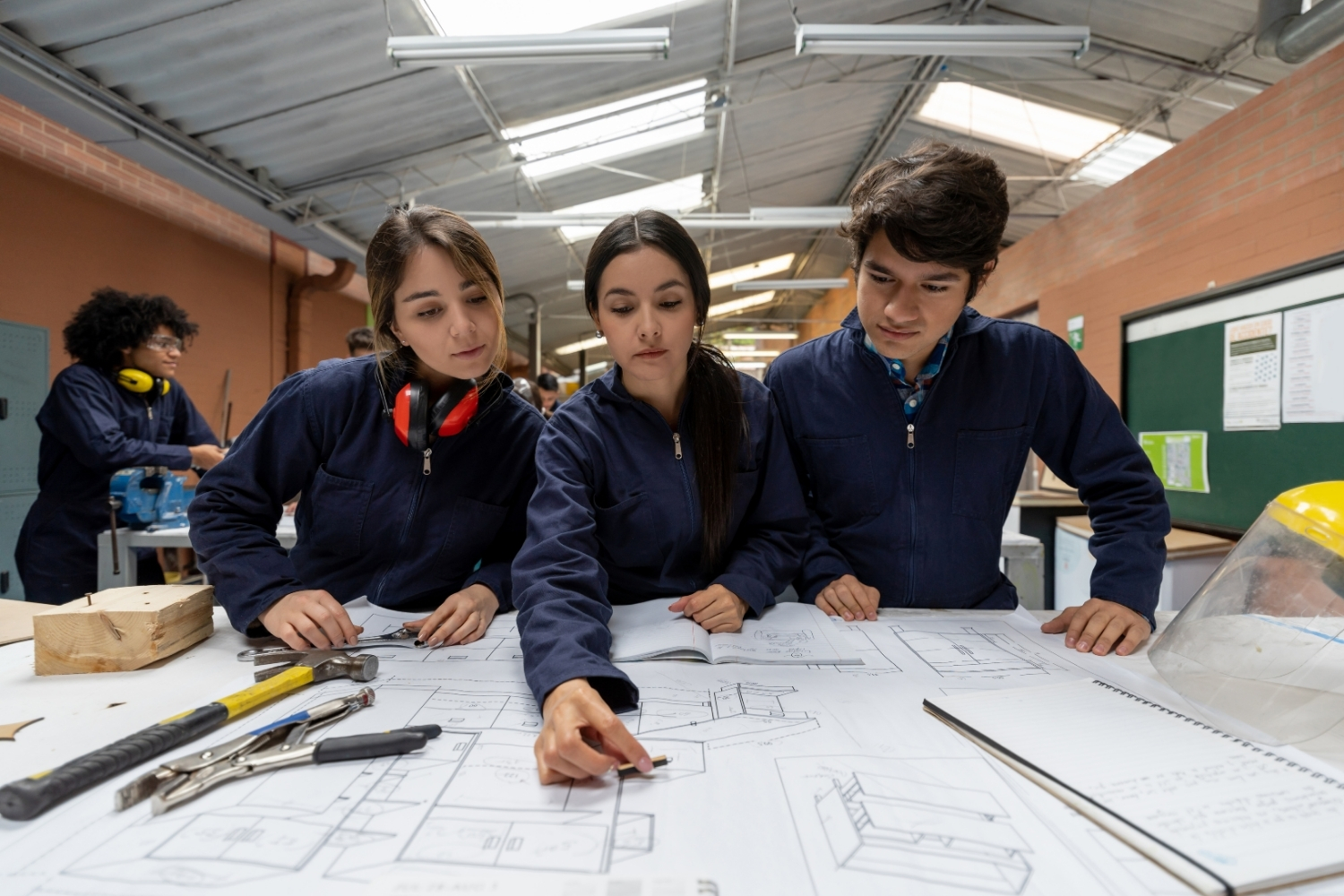
What Makes Architecture Deadlines Harder Than They Look?
Architecture deadlines are harder because they arrive in clusters and the final week carries the heaviest, least flexible work. Structures assignments, history essays, and studio reviews tend to land inside the same two weeks of a semester, and the studio component is the one you cannot finish quickly. When a history essay and a studio review fall in the same week, some students turn to an essay writing service so they can keep their hours for the studio work.
This is where most schedules quietly fail. Students plan around the review date and forget that printing, materials, and file exports need lead time they do not control. A printer queue at 2 a.m. is not a failure of that night. It is a decision made three weeks earlier.
A Realistic Timeline for a Six-Week Studio Project
The table below maps a common six-week studio cycle against the point where each phase usually breaks down.
| Phase | When | Common failure | What to do instead |
|---|---|---|---|
| Research and site analysis | Weeks 1 to 2 | Research expands to fill all available time | Set its end date before you begin |
| Concept and iteration | Weeks 2 to 3 | Waiting for the right idea before testing anything | Produce three rough options fast, then choose |
| Design development | Weeks 3 to 4 | Redesigning after production has already started | Freeze the plan before drawings begin |
| Production and model making | Weeks 4 to 6 | Time estimates made without counting revisions | Book twice the hours you first estimate |
| Layout and printing | Final two days | Printing problems discovered after midnight | Test print one sheet 48 hours early |
Working backwards from the review date, instead of forwards from today, exposes the phases you have been quietly borrowing time from.
⚠️ Common Mistake to Avoid
Treating the all-nighter as a scheduling tool rather than a warning sign is the most common mistake in studio. Sleep loss degrades spatial reasoning, judgment, and your ability to evaluate your own work, which are the exact skills a review demands. If a plan needs a night without sleep, it broke several days earlier, and the correction belongs in week two.
How to Manage Time in Architecture School Without All-Nighters
Separate design hours from production hours, then protect them differently. Design needs uninterrupted blocks of three to four hours. Cleaning line weights, cutting model parts, and laying out sheets all survive interruption and fit the gaps between classes. Students who mix the two spend their sharpest hours on tasks that never needed them.
Five habits carry most of the weight:
- Set a design freeze date, after which nothing new enters the project, only refinement.
- Book production time the way you would book a class, with a start and an end.
- Run one test print and one test cut early, when failure costs an hour instead of a night.
- Keep a list of small tasks for the twenty-minute gaps you would otherwise lose.
- Protect two full nights of sleep a week, including during a sprint.
None of this reduces the workload. It moves the work into hours when you are awake and the print shop is open. For the physical side of it, the habits that make long studio hours survivable matter as much as the calendar.

Architecture Student Burnout Is a Scheduling Problem Too
Architecture student burnout gets described as an emotional issue, but the mechanics are often calendar driven. When production is underestimated, the shortfall gets paid for with sleep, and that debt compounds across a fifteen-week semester until the work itself suffers.
Survey data is consistent on this. In the Architects’ Journal 2018 student survey of 469 UK-based students, 77 percent had worked through the night at some point and 35 percent did so regularly. A 2018 SONA survey, cited in a 2025 systematic review in TPM: Testing, Psychometrics, Methodology in Applied Psychology, found 86 percent of architecture students sometimes or always went without sleep to finish a project. That review links repeated overnight work to reduced attention and weaker creative output.
📌 Did You Know?
Studio culture has been an accreditation matter in the United States for two decades. After the American Institute of Architecture Students published The Redesign of Studio Culture in 2002, it won a studio culture condition in the NAAB Conditions for Accreditation, and accredited programs have kept a written policy on it since 2004. The policy was renamed Learning and Teaching Culture in 2019.
If you have been telling yourself that you work best under pressure, check whether that belief produces the work you actually want or only the work you can finish. The research behind architecture student mental health shows how widely the same cycle repeats across programs and countries.
These figures describe patterns across student populations, not any individual situation. If workload stress is affecting your health, your school’s counseling service is the right first stop.
How to Survive Architecture School With a Weekly System
You survive architecture school by planning weeks rather than days. Daily to-do lists collapse the moment a review runs long or a model breaks, while a weekly view shows which deadline is genuinely fixed and which one has slack in it.
Twenty minutes on a Sunday is enough. List every deadline in the next three weeks, mark the ones that need materials or printing, block your design hours first, then fit everything else around them. Leave one afternoon empty. Something will go wrong, and that afternoon absorbs it.
💡 Pro Tip
Track your real hours for two weeks before trying to fix anything. Most students find their estimates are wrong in a repeatable way, usually underestimating production and overestimating how much useful design happens after midnight. Once you know your own margin of error, you can correct for it instead of guessing.
Recovery belongs in the same schedule. Concentrated rest beats spreading short nights across a whole week, and protecting two of them is one of the wellness habits that hold up under studio pressure.

Where to Go From Here
Your Next Step: Open your current studio brief, write down the exact deliverables due at the next review, and mark a design freeze date three days before printing. The rest of your schedule can be built backwards from that one line.
Frequently Asked Questions
How many hours a week do architecture students actually work?
Indiana University’s 2016 National Survey of Student Engagement recorded 22.2 hours per week of out-of-class preparation for architecture majors, the highest of any major surveyed. That covers studying, drawing, and studio work outside timetabled hours, so scheduled classes sit on top of it.
Is it possible to get through architecture school without all-nighters?
Occasional late nights are hard to avoid, but regular all-nighters are a symptom of a scheduling problem rather than a feature of the degree. Freezing the design early, booking production time explicitly, and testing prints in advance remove most of the reasons students work through the night.
How early should you start a studio project?
Start in the first week the brief is issued, even if only to write down the deliverables and block out production time. Starting early does not mean finishing early. It means giving ideas room to fail while there is still time to change direction.
Why does design work always take longer than planned?
Design is iterative rather than linear, so progress arrives in uneven jumps and the work has no clear completion point. Estimates also cover the drawing itself and ignore revisions, file setup, printing, and materials. Counting those steps separately makes the estimate far more accurate.







Core Modules in an Architecture Degree: What You Actually Study
Design studio, history and theory, building technology, structures, environmental design, representation and...
Sinan Ozen6 Mins read
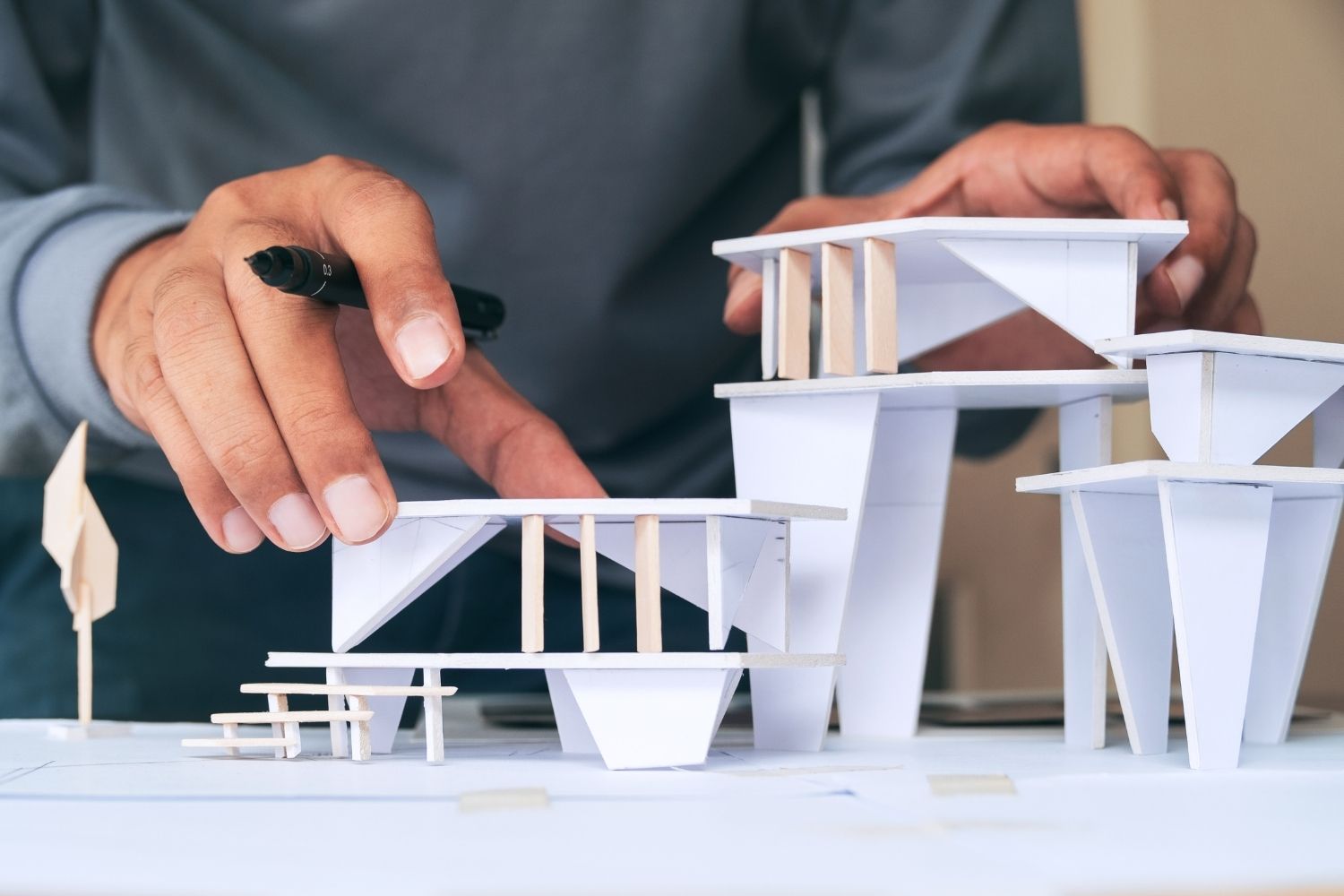
Why Is the Architecture Physical Model Still Taught in Schools?
Digital tools run modern architecture, yet schools still put students at the...
 Furkan Sen6 Mins read

15 Wellness Essentials to Survive Architecture School Stress
Architecture school is physically and mentally demanding, with long studio hours, constant...
Furkan Sen15 Mins read

The Power of Networking in Architecture School: 7 Tips for Building Real Connections
Strong networking in architecture school goes far beyond exchanging business cards at...
Sinan Ozen7 Mins read


Leave a comment