

Zaha Hadid Architects Opens Songshan Lake Cultural Center
Zaha Hadid Architects opened the Songshan Lake center in Dongguan a decade after the founder's death, with flaring roofs drawn from the silk water sleeves of Cantonese Opera. The 45,000-square-metre complex tests whether the studio, now rebranded as ZHA, can still produce work that reads as authentically its own.
 Elif Ayse Sen29 June 20268 Mins read201
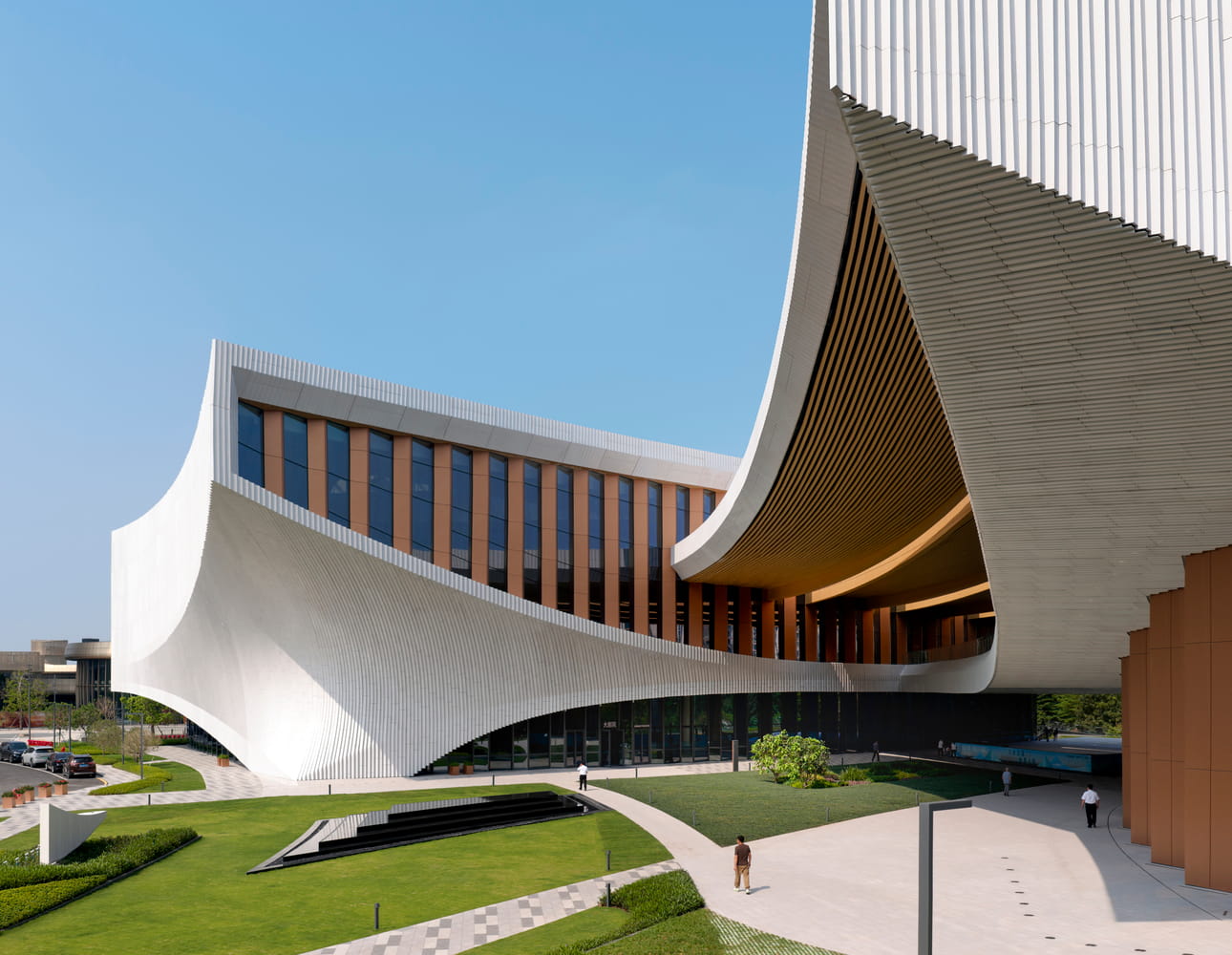
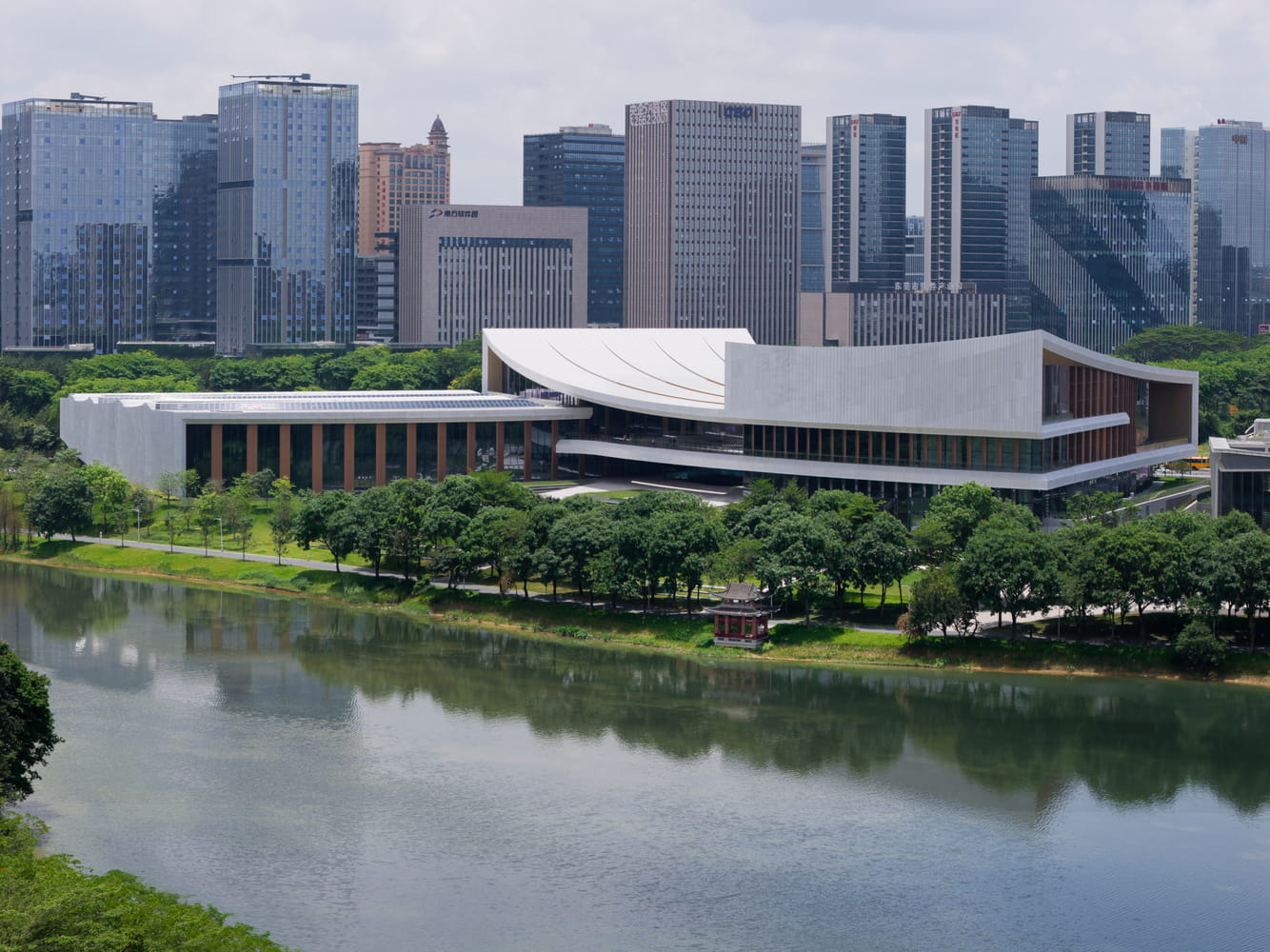
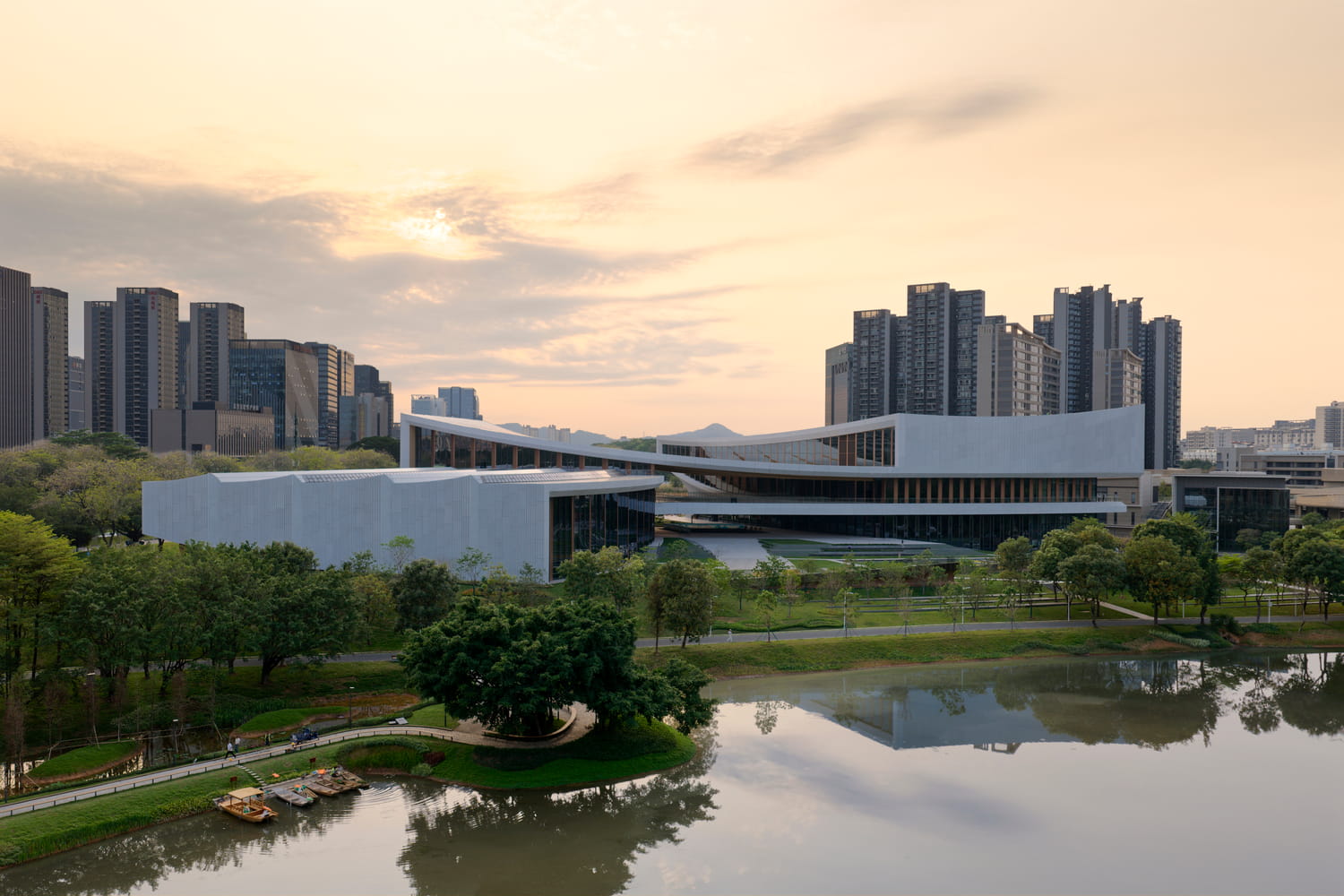
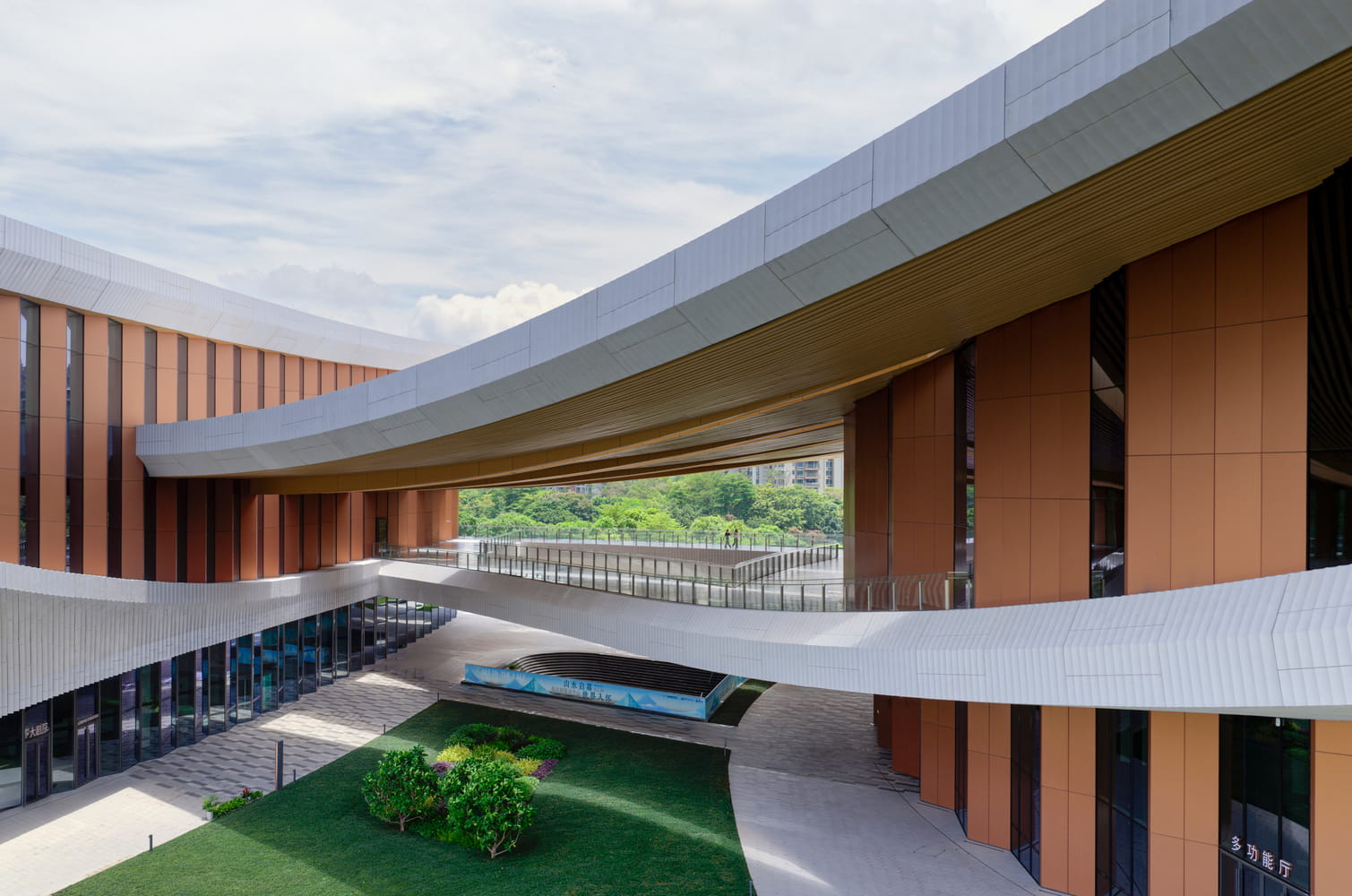
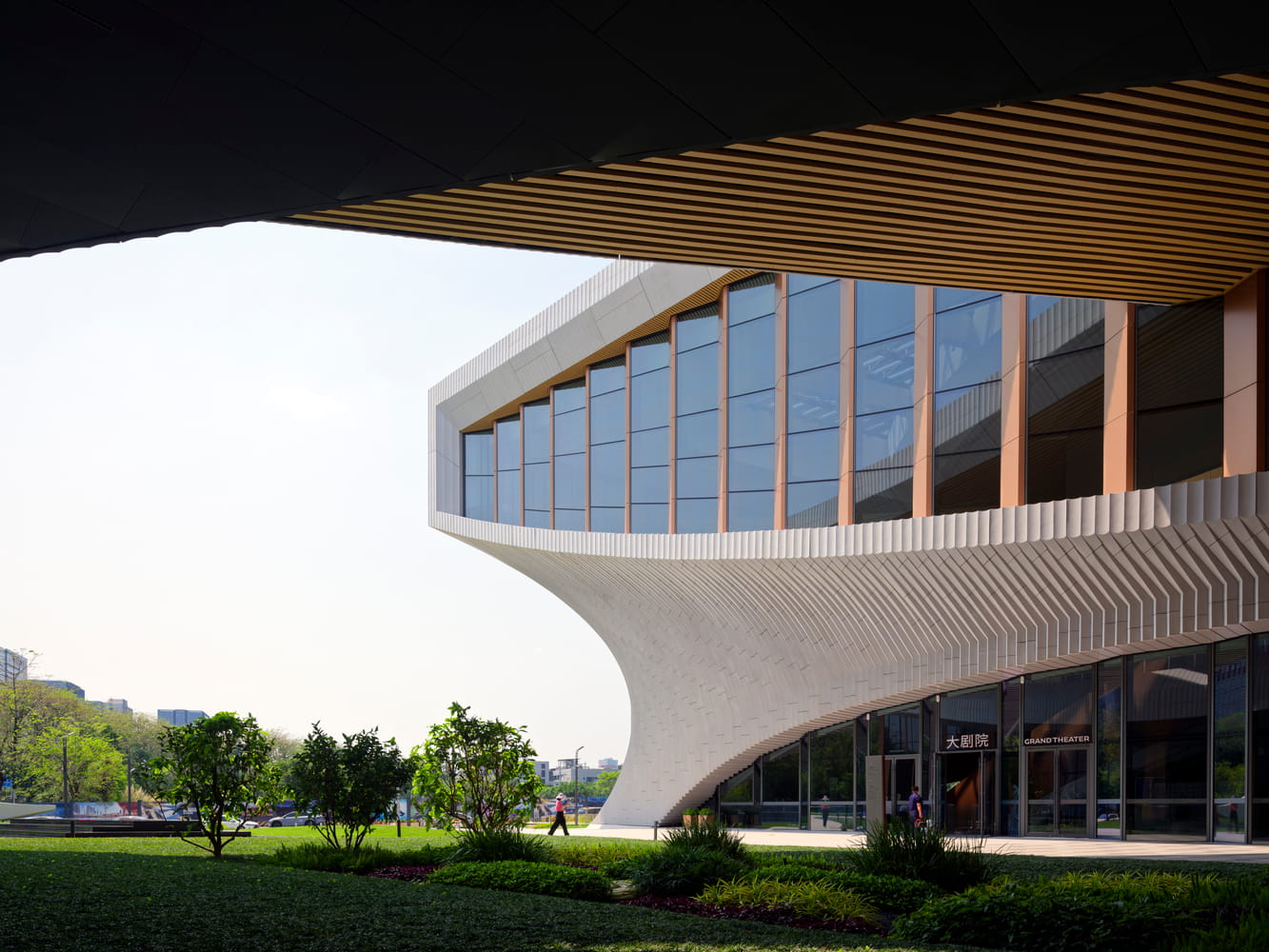
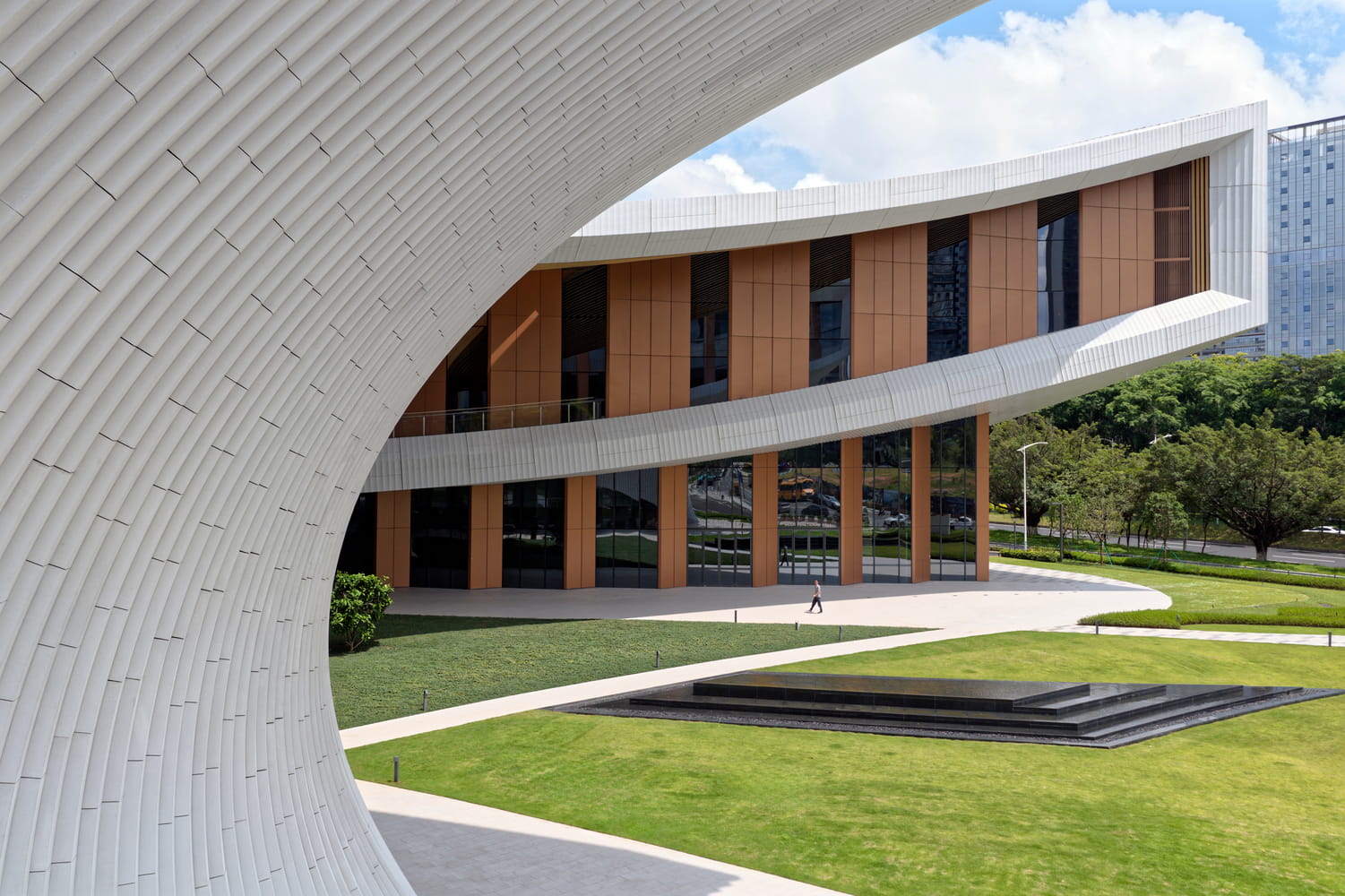
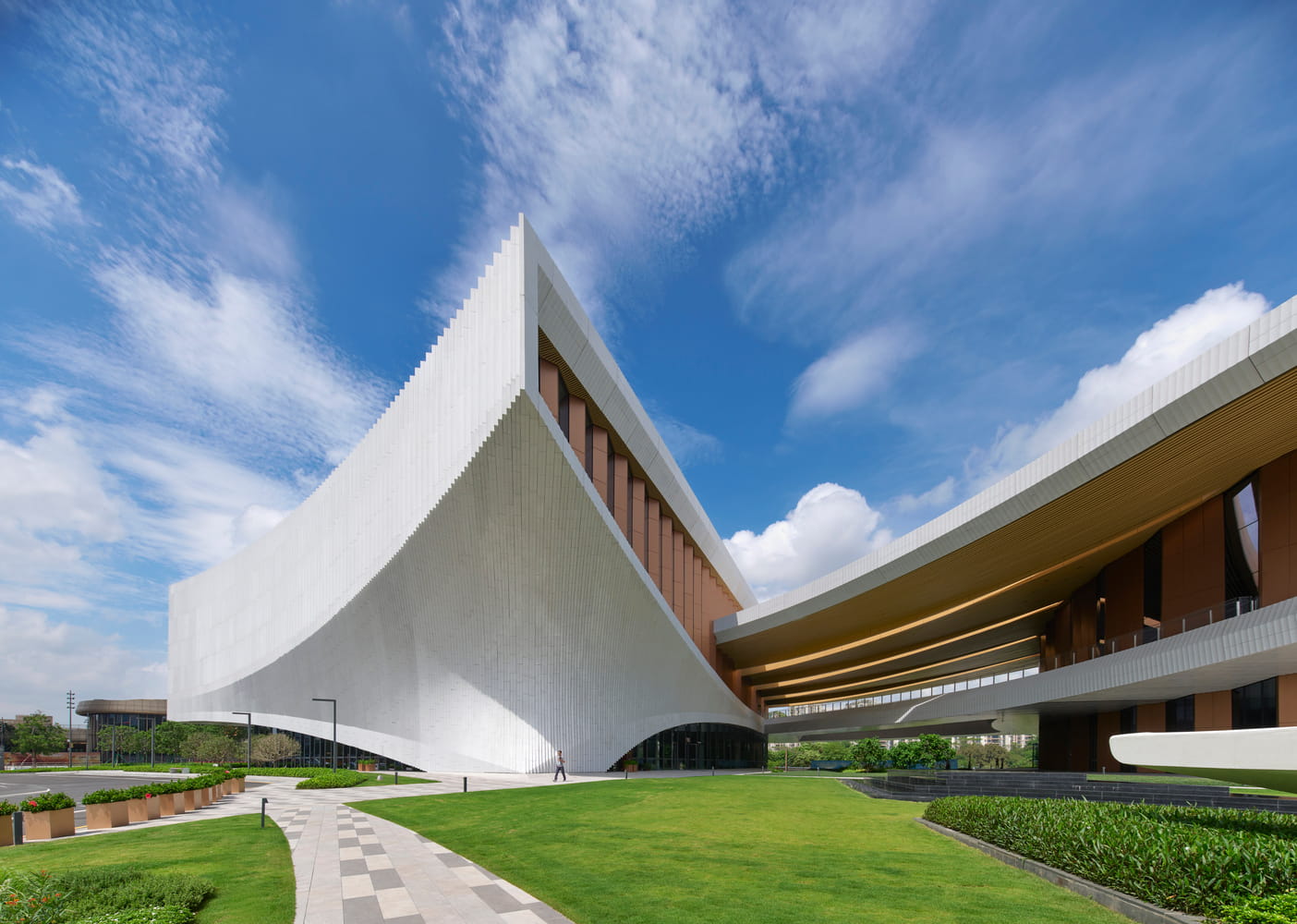
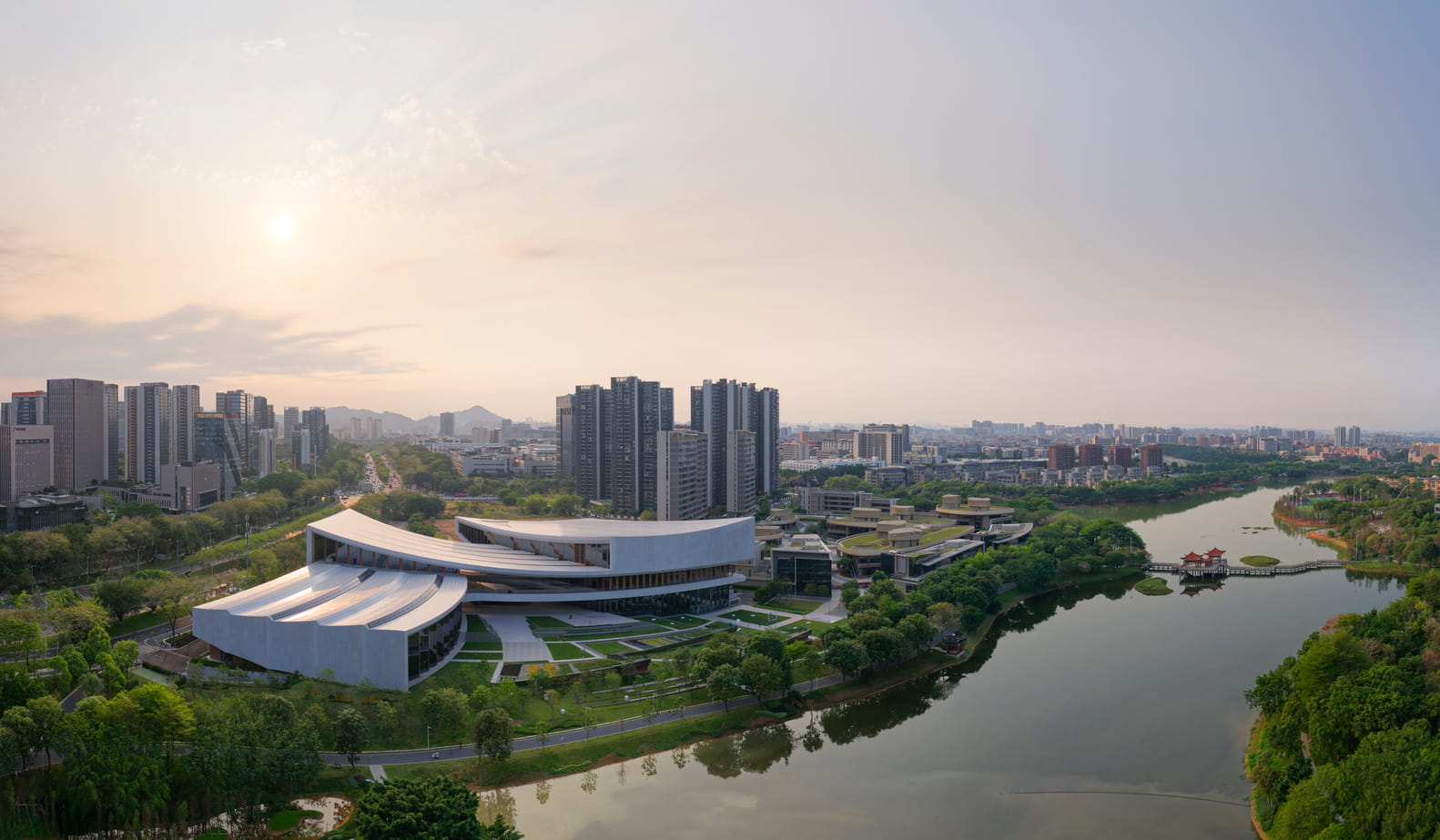
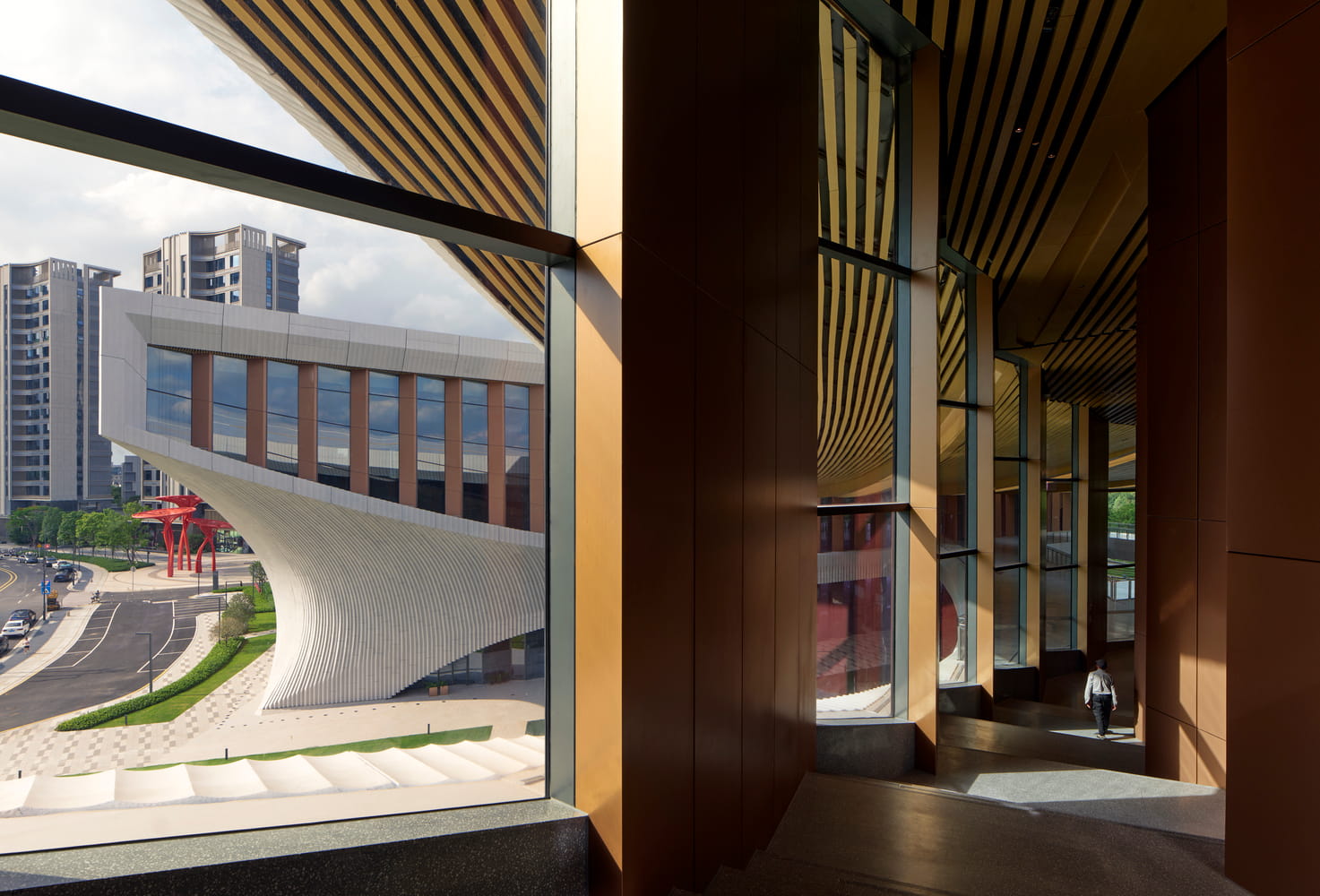
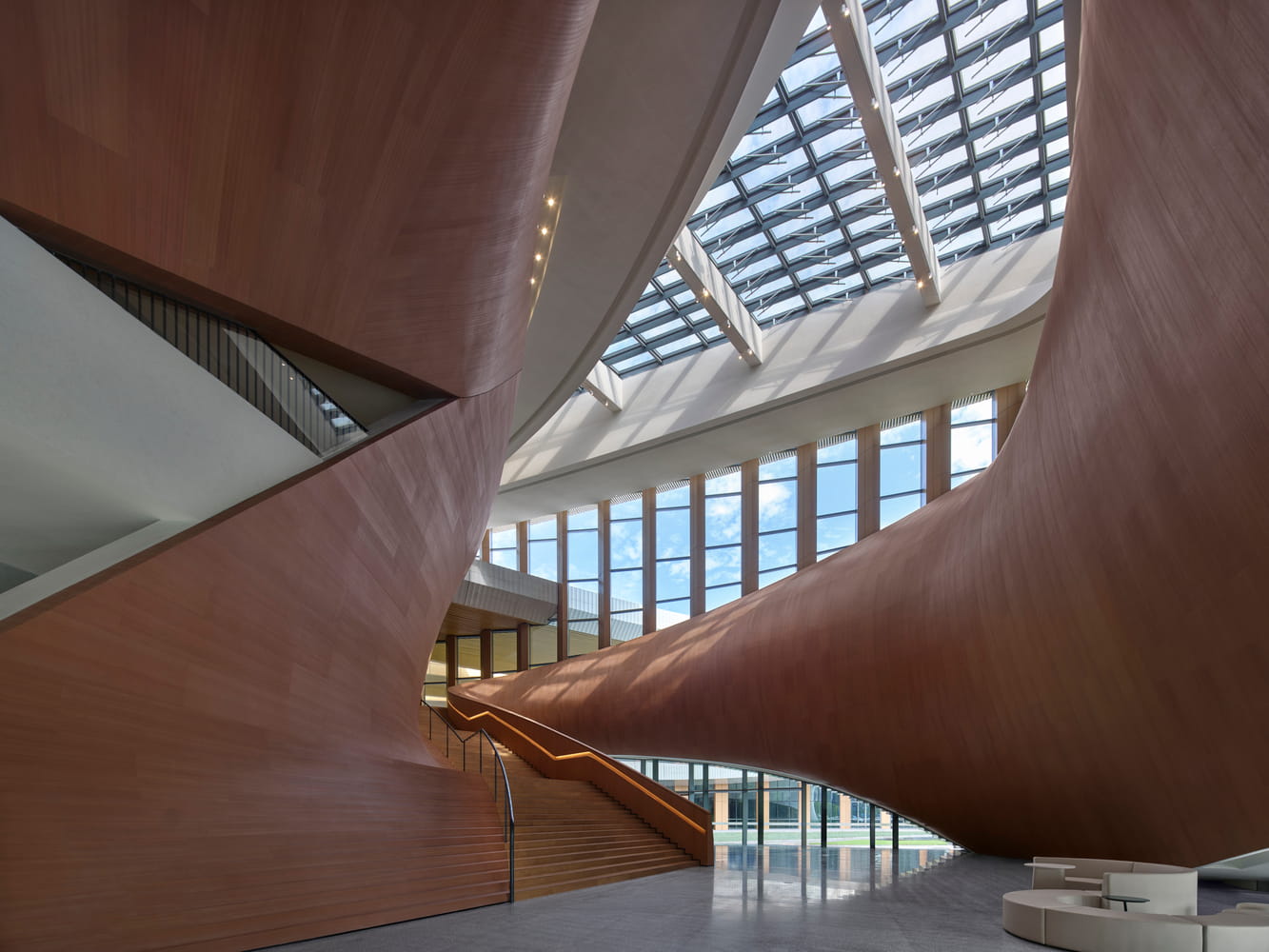
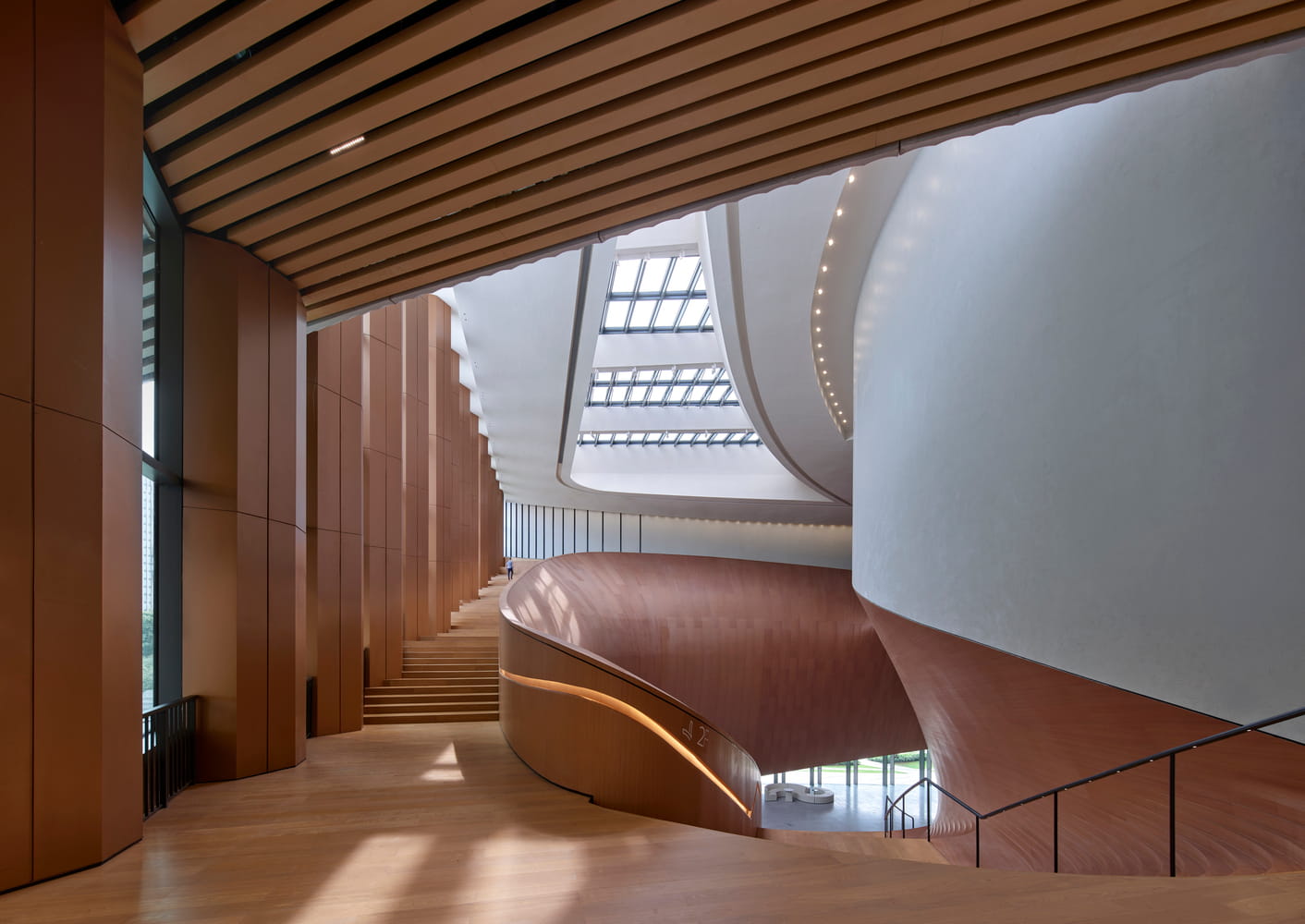
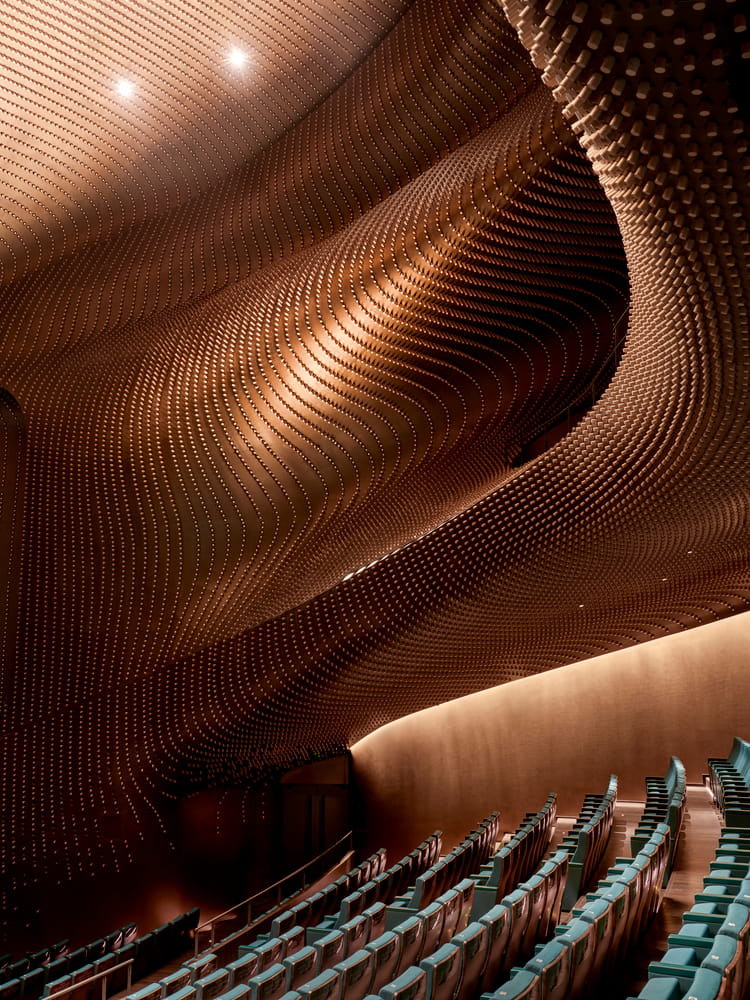
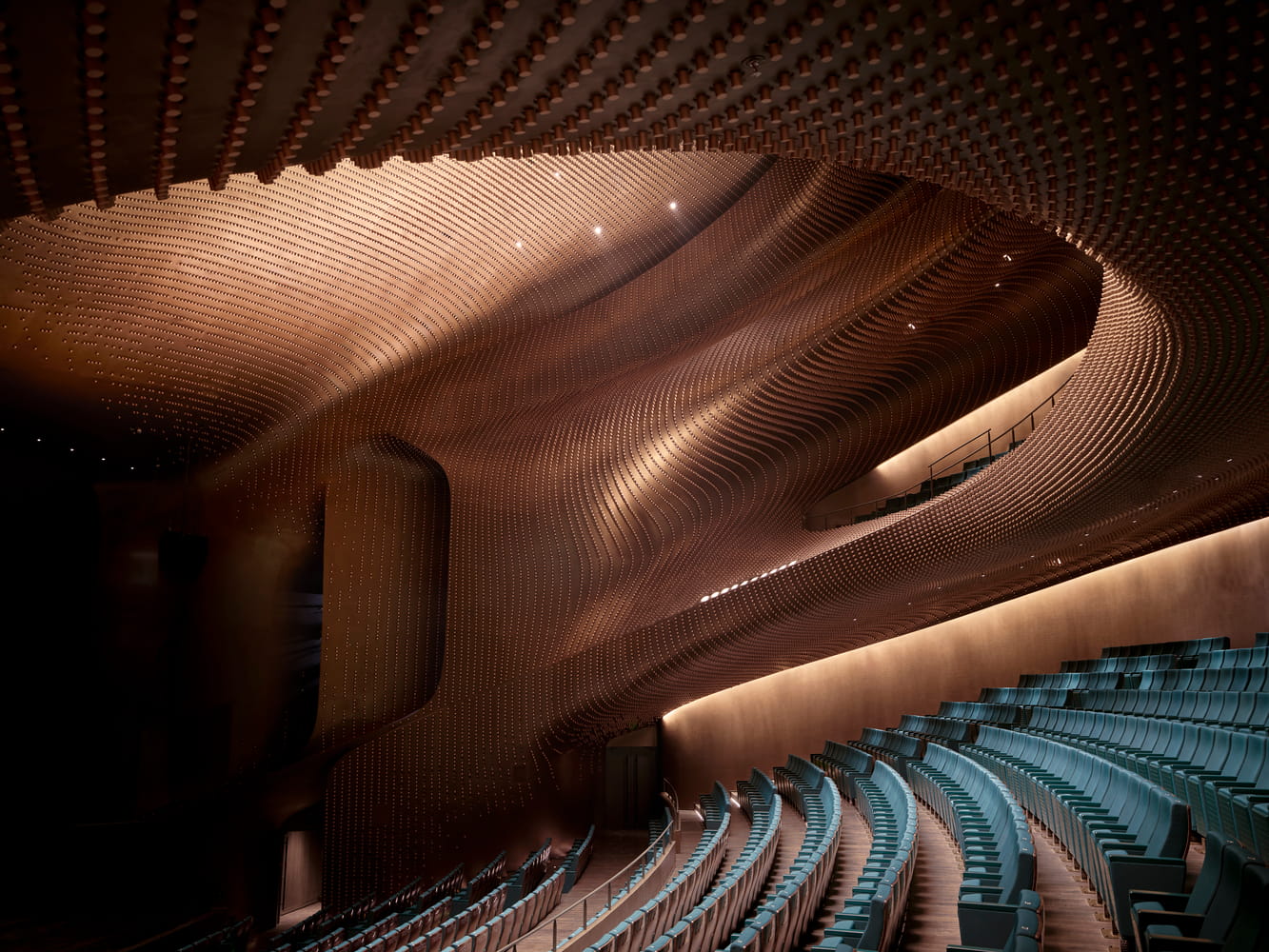
Table of Contents Show
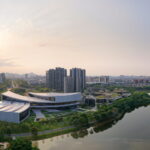
Zaha Hadid Architects opened the Songshan Lake Exhibition and Performance Center in Dongguan, China on 30 March 2026, almost exactly ten years after the death of its founder. The 45,000-square-metre cultural complex, designed with the Beijing Institute of Architectural Design, anchors the Guangdong-Hong Kong-Macao Greater Bay Area with a 1,200-seat Grand Theatre and a flowing form drawn from Cantonese Opera, as documented by the practice on the official ZHA project page.
The opening carries weight beyond a single ribbon-cutting. It arrives in the same season the practice formally rebranded from Zaha Hadid Architects to ZHA, closing one chapter of the studio and beginning another as a 500-person employee-owned collective. For anyone tracking how Zaha Hadid architect buildings continue to take shape long after her passing, Dongguan is a clear marker of where the work stands now.
What makes the Songshan Lake project significant a decade after Zaha Hadid?
Hadid died in March 2016. The Songshan Lake center, which began construction in 2021 and opened in spring 2026, is one of the first major cultural buildings to be conceived, detailed, and delivered almost entirely by the team that carried on without her. It tests a question the firm has faced since 2016: can a studio built around one of the most recognisable design voices of the last fifty years keep producing work that reads as authentically its own?
The answer in Dongguan is a building that holds the fluid language people associate with the practice, while leaning hard into local culture. Rather than a sculptural object dropped onto a site, the design grew from a regional reference, the silk “water sleeves” of Cantonese Opera. That choice signals a studio still willing to root its forms in place, not just in geometry.
🏗️ Real-World Example
Songshan Lake Exhibition and Performance Center (Dongguan, 2026): The 45,000-square-metre complex pairs a 1,200-seat Grand Theatre with a 400-seat Multifunction Hall and a large Exhibition Hall. Its opening concert, “The Sound of Songhu,” was led by the China National Symphony Orchestra, marking the venue’s first public programme, as reported by ArchDaily.
The project also fits a longer arc. Many Zaha Hadid architects buildings completed after 2016, from cultural venues to transport hubs, were already in design or under construction when she died. Songshan Lake belongs to a newer wave, where the brief, the form, and the engineering all reflect the studio’s current direction under principal Patrik Schumacher.
How does the design draw on Cantonese Opera and Lingnan culture?
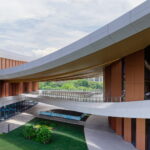
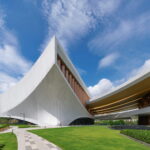
The most striking move at Songshan Lake is the roofline. Several distinct structures crescendo and flare, rising toward the western edge of the site to frame the main theatre and exhibition volume. According to Zaha Hadid Architects, the forms evoke the silk “water sleeves,” the white extensions of robes that Cantonese Opera performers flick and ripple to express emotion through movement. Cantonese Opera itself is recognised by UNESCO as intangible cultural heritage, which gives the reference real cultural standing in the region.
That reference does real work. Cantonese Opera is part of the living culture of the Greater Bay Area, and tying the building’s silhouette to it gives the form a meaning beyond style. The design also draws on traditional Lingnan architecture, the regional building tradition of Guangdong, with deep roof overhangs that shade interiors and manage the subtropical climate.
📌 Did You Know?
Cantonese Opera was inscribed on UNESCO’s Representative List of the Intangible Cultural Heritage of Humanity in 2009. The “water sleeve” technique that inspired the building’s flaring roofs is one of its signature gestures, used by performers to convey feeling without words.
The result reads differently from the practice’s earlier cultural work. Where the Guangzhou Opera House, finished in 2010, used twin pebble-like volumes, Songshan Lake stretches and folds into a continuous landscape of plazas, garden terraces, and a waterfront promenade. The building wants to be walked around and through, not just photographed from a distance. Readers tracking the evolution of the studio’s cultural projects can compare it with the firm’s earlier landmarks in our roundup of iconic buildings by Zaha Hadid.
Cultural specificity has become a recurring theme for the studio’s work in Asia. Instead of importing a fixed visual signature, the design team studied how local performance, climate, and waterfront life shape daily use, then let those findings drive the form. The flaring roofs are not decoration applied at the end. They organise the plan, mark the main entrances, and lift toward the lake so the largest volumes catch the most light. That logic, where a single gesture handles symbolism and function at once, has long sat at the centre of Zaha Hadid architect works.
How does Songshan Lake compare with earlier ZHA cultural venues?
Placing the project alongside two well-known predecessors shows both the continuity and the shift in the studio’s thinking. The table below sets out a few markers across three of the firm’s cultural buildings.
| Project | Location | Completed | Defining idea |
|---|---|---|---|
| Guangzhou Opera House | Guangzhou, China | 2010 | Twin pebble volumes shaped by river erosion |
| Heydar Aliyev Center | Baku, Azerbaijan | 2012 | Continuous surface folding ground into roof |
| Songshan Lake Center | Dongguan, China | 2026 | Flaring roofs evoking Cantonese Opera water sleeves |
The through-line is clear. Each building takes a single organising metaphor and pushes it across structure, skin, and landscape. What changes at Songshan Lake is the depth of local reference and the way the public realm wraps the venue, signs of a practice adapting its approach without abandoning it. For a closer read on how these ideas first took shape, see our look at the design secrets behind Zaha Hadid’s work.
What are the key technical and acoustic features inside the Grand Theatre?
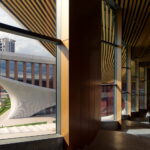
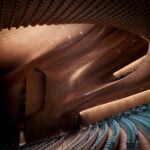
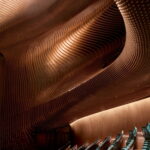
The 1,200-seat Grand Theatre is the acoustic heart of the complex. Its walls and ceiling are defined by roughly 100,000 slender spines of varying length and density. These spines diffuse sound and help control reverberation, shaping how music and voice carry to every seat without harsh echoes. The approach turns acoustic performance into a visible design feature rather than hidden engineering.
📐 Technical Note
The theatre interior combines aluminium and glass-reinforced gypsum, while the exterior uses prefabricated ultra-high-performance concrete (UHPC) cladding with aluminium soffits and roof panels in a light grey opalescent finish. UHPC allows thin, strong panels that hold the curved geometry the design depends on.
Beyond the Grand Theatre, a 400-seat Multifunction Hall is set up for smaller productions and children’s theatre, giving the venue range across audience sizes. The Exhibition Hall and Grand Theatre are built to host large-scale productions by local, national, and international performers, along with conferences, industry forums, art exhibitions, and even sporting competitions. That flexibility matters for a regional cultural anchor expected to stay busy year-round.
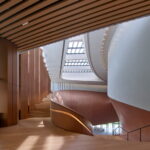
The choice of materials supports both the look and the long life of the building. Prefabricated UHPC panels can be cast off-site to tight tolerances, then assembled into the curved facade with fewer joints and less on-site labour. The light grey opalescent finish shifts with the daylight, so the same surface can read as soft and matte at midday or luminous near dusk. Inside, the pairing of aluminium with glass-reinforced gypsum lets the team carry the flowing geometry from the exterior into the foyers and theatre without a hard visual break.
Acoustics drove many of these decisions. A 1,200-seat hall has to serve symphonic concerts, opera, and amplified events, each with different sound needs. The dense field of spines gives engineers a way to tune diffusion across a large surface area, scattering reflections so the sound stays even rather than concentrating in hot spots. It is a reminder that the most sculptural Zaha Hadid architects buildings usually hide a layer of precise performance engineering beneath the curves.
The technical program reflects how Zaha Hadid architects projects have changed since the studio’s early days of hand-drawn paintings and competition boards. Complex curved geometry now relies on prefabrication, parametric coordination, and close work with engineers, an approach the firm helped define. For context on that design lineage, see our overview of parametric architecture and its core ideas.
How does the building perform on sustainability and its civic role?
Songshan Lake is positioned as more than a performance venue. The design includes photovoltaic arrays on the roof, a rainwater harvesting system, permeable surfaces, and replanted wetlands that help with flood mitigation in a region prone to heavy seasonal rain. The extended roof overhang, borrowed from Lingnan tradition, doubles as climate protection by shading the facade and reducing solar gain.
🔢 Quick Numbers
- 45,000 square metres of total floor area (Zaha Hadid Architects / ArchDaily, 2026)
- 1,200 seats in the Grand Theatre, plus 400 in the Multifunction Hall (ZHA, 2026)
- About 100,000 acoustic spines lining the Grand Theatre’s walls and ceiling (ZHA, 2026)
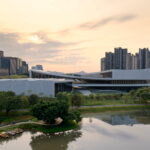
The civic ambition is just as clear. Public plazas, garden terraces, and a waterfront promenade tie the building into the High-Tech Industrial Development Zone around it, with the aluminium-clad center acting as an anchor for the wider redevelopment of the lakefront. The brief treats culture as infrastructure for the Greater Bay Area, a fast-growing cluster of cities that includes Guangzhou, Shenzhen, Hong Kong, and Macao.
This dual role, performance hall plus public landscape, is a thread running through much of the studio’s recent work. For a wider look at how the firm’s projects balance form and public function, our profile of Zaha Hadid and her design philosophy sets out the principles the practice still works from.
The environmental measures are practical rather than ornamental. Permeable paving and replanted wetlands give heavy rain somewhere to go before it floods the plazas, while rainwater harvesting cuts the load on municipal supply for irrigation and other non-potable uses. Pairing rooftop photovoltaics with the deep overhangs means the building both generates power and reduces the cooling demand it has to meet. In a subtropical climate, shading the glass before the sun reaches it does more for comfort than mechanical systems working alone.
What does the ZHA rebrand mean for the firm’s next decade?
The opening landed in the same year the practice dropped the full Zaha Hadid Architects name in favour of ZHA. The rebrand followed a February 2026 Court of Appeal ruling that ended a long licensing dispute with the Zaha Hadid Foundation, which had collected a share of the firm’s revenue for use of the founder’s name. Operating now as an employee-owned collective of around 500 people, the studio manages more than 100 active projects across six continents, a transition also covered by Dezeen alongside its report on the Dongguan opening.
🎓 Expert Insight
“Architecture is really about well-being. I think that people want to feel good in a space.”, Zaha Hadid, founder of Zaha Hadid Architects
Hadid’s framing of architecture around how a space makes people feel still guides the studio. At Songshan Lake, that shows in the public promenade, the shaded terraces, and an interior tuned for sound, all aimed at the experience of being there.
For the firm, Dongguan is proof of continuity. The Songshan Lake project was led by Patrik Schumacher as principal with Johannes Schafelner as project director, the same leadership steering the studio’s rebrand. Buildings of this scale, delivered a decade after the founder’s death, suggest the practice can keep its identity while operating as a collective rather than a single-name office. Readers following the corporate side of the story can read our report on the rebrand from Zaha Hadid Architects to ZHA.
It also reframes how to read the studio’s output. Future Zaha Hadid architects projects will carry the ZHA name, yet the design DNA, fluid geometry, cultural references, and a strong public dimension, traces straight back to the works that made the architect famous. For newcomers to that legacy, our look at the most noteworthy works of Zaha Hadid offers a useful starting point.
Looking Ahead
Ten years on, the question around Zaha Hadid Architects was never whether the firm could keep building. It was whether the work would still mean something without her hand on it. Songshan Lake answers by rooting a fluid, instantly recognisable form in Cantonese Opera and Lingnan tradition, then backing it with serious acoustic and environmental engineering. The studio’s name has changed, but the ambition behind the buildings has not.





Affordable Housing Design at 730 Stanyan: OMA’s First 100% Affordable Project in the US
OMA's first 100% affordable housing project in the United States replaces a...
Elif Ayse Sen8 Mins read
Le Corbusier Inspired Villa: The Five Points in a Tropical Climate
The five points of a Le Corbusier inspired villa were written for...
Elif Ayse Sen7 Mins read

The Frida Kahlo Apartment Building in San Francisco Is Listed for $8 Million
The San Francisco apartment building where Frida Kahlo and Diego Rivera lived...
Elif Ayse Sen9 Mins read
MVRDV Brings the Vertical Village to Shenzhen: Inside the Bihailou Art Village
MVRDV is building the Bihailou Art Village in Shatoujiao, a 6,500 m2...
Elif Ayse Sen9 Mins read




Leave a comment