

Listening the Sound of Architecture; Zadar Sea Organ
 Begüm Şardan24 February 20203 Mins read415

Table of Contents Show
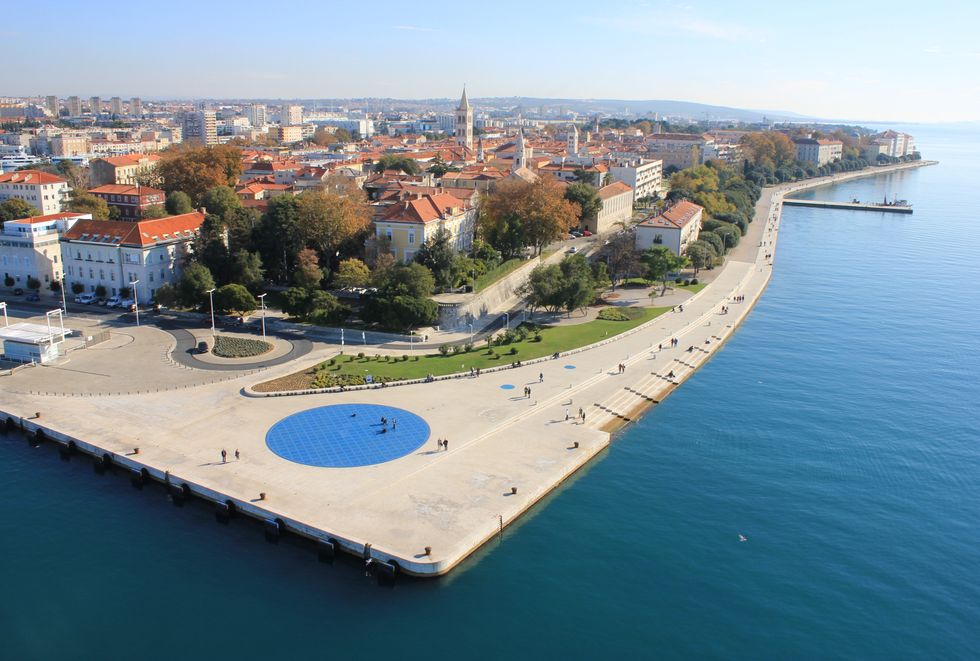 In 2005, architect, Nikola Bašić , proposed a design for seawalls in Zadar, Croatia. Until that time, it was only a concrete wall, however with a clever touch, now, seawall is ‘singing’ for the people with ocean waves. But how?
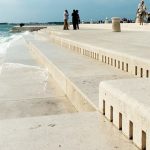
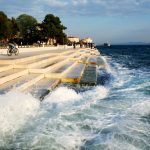
 There are 35 musical pipes, which are hidden in marble staircase. The movement of the waves pushes air through the pipes and depending on the movement of the waves or wind, each pipe makes another sound, in fact, sometimes it can be very loud.
You can see plan and section of sea organ below.
There are 35 musical pipes, which are hidden in marble staircase. The movement of the waves pushes air through the pipes and depending on the movement of the waves or wind, each pipe makes another sound, in fact, sometimes it can be very loud.
You can see plan and section of sea organ below.

 On top of the pipes, there are tiny hollows which make a speaker effect.
 Coming to the sounds…
Compared to other public space projects, that one creates a communication between architecture, nature and people in a really different way. To be honest, I don’t know if I spend a full day with that sound how I feel, but the atmosphere is worth to see without any doubt!
Coming to the sounds…
Compared to other public space projects, that one creates a communication between architecture, nature and people in a really different way. To be honest, I don’t know if I spend a full day with that sound how I feel, but the atmosphere is worth to see without any doubt!
 You can also find more technical information here.





How the Sea Organ Turns Waves into Music
The principle behind the Sea Organ is acoustic and surprisingly low-tech. Each of the 35 pipes is tuned to a specific note, and the pipes are grouped into a sequence of musical chords. As a wave rolls in, it forces a column of air up through a submerged channel and into a pipe, producing a tone much like blowing across the top of a bottle. Because the sea never moves with mechanical regularity, the result is a slowly shifting, harmonically related drone that changes with the tide, the wind, and passing boats. No two minutes ever sound exactly the same.
This is what makes the installation an instrument rather than a recording. The sea supplies the energy and the rhythm, while the architecture supplies the tuning. Visitors often describe the sound as meditative, ranging from soft whale-like calls on calm days to fuller, more resonant tones when the swell builds.
Context: Rebuilding the Zadar Waterfront
The Sea Organ did not appear in isolation. Much of Zadar’s seafront was damaged during the Second World War and later rebuilt with a plain concrete embankment that cut residents off from the water. Nikola Basic’s intervention reframed that hard edge as a place to gather. The broad marble steps double as seating, drawing people to sit at the water’s edge, watch the sunset, and listen. In 2008 a companion piece, the Greeting to the Sun, was installed nearby, using solar panels to create a glowing light show after dark. Together the two works transformed a neglected promenade into one of the city’s most visited public spaces.
Lessons for Public Space Design
The Sea Organ offers a few clear takeaways for designers working with public realms. First, sensory experience matters as much as visual form. By engaging sound, the project gives people a reason to slow down and stay. Second, integration with natural forces can make a place feel alive without ongoing energy costs, since the waves and sun do the work. Third, multifunctional design adds value, as the same steps serve as an instrument, an amphitheater, and an informal beach.
For students and practitioners, it is a reminder that small, well-considered interventions can carry as much civic weight as large buildings. A seawall is purely functional infrastructure, yet here it became a cultural landmark simply by inviting nature to participate in the design.
Planning a Visit
The Sea Organ sits at the tip of the Zadar peninsula and is free to visit at any hour. The experience changes dramatically with conditions, so it is worth returning more than once. Calm mornings produce gentle, sparse notes, while a windy afternoon or an approaching storm brings out the deeper, louder voices of the pipes. Many visitors time their trip for sunset, when the music pairs with the Greeting to the Sun light display just steps away.






Petronas Towers: Islamic Geometry Meets Modern Skyscraper Design
Designed by Cesar Pelli and completed in 1998, the Petronas Twin Towers...
 Sinan Ozen5 Mins read
Fractals in Architecture: How Nature’s Patterns Shape Design<
Fractals appear everywhere in nature, from fern leaves to coastlines, and architects...
 Elif Ayse Sen9 Mins read
La Casa Milà Barcelona: Gaudí’s Stone Quarry Turned Architectural Icon
Casa Milà, nicknamed La Pedrera for its rough stone exterior, stands on...
 Furkan Sen6 Mins read

Architecture Design Brief: What to Include and Examples
A design brief turns a client's goals into clear instructions a design...
Elif Ayse Sen9 Mins read


Leave a comment