

Open Plan vs Closed Plan: Which Layout Works Better for Modern Living?
Open plan and closed plan layouts each bring distinct advantages to modern homes. This comparison covers natural light, acoustic privacy, entertaining, energy costs, and the rising hybrid approach that blends elements of both. Practical questions and real data help you match the right layout to your household.
 Sinan Ozen12 June 20266 Mins read187
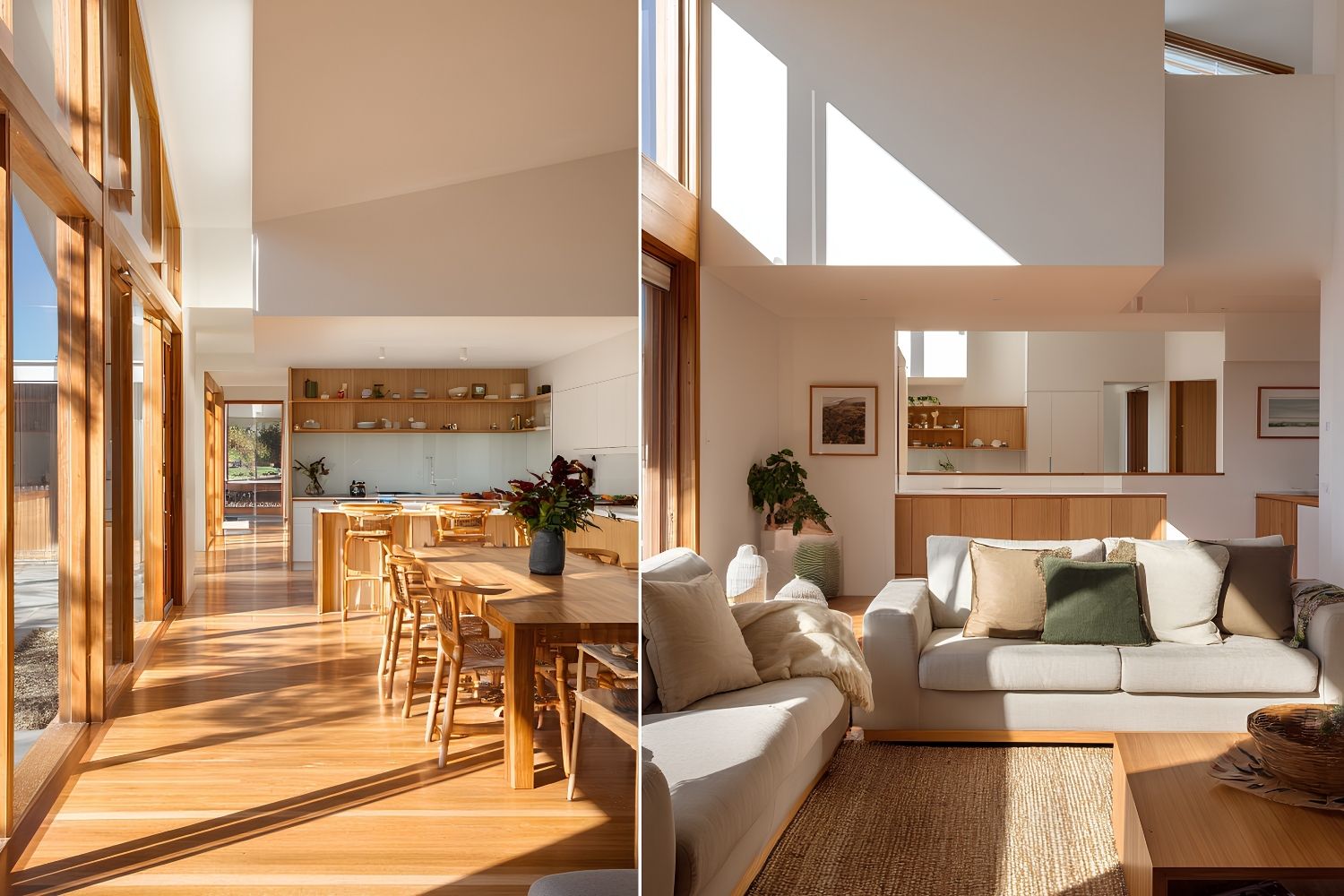
Table of Contents Show
Open plan vs closed plan is the central layout question facing homeowners, architects, and interior designers today. Open plans remove walls between the kitchen, dining, and living areas to create one connected space, while closed plans keep each room separate behind doors and partitions. The right choice depends on household size, lifestyle habits, noise tolerance, and how you actually use your home every day.
What Is an Open Floor Plan?
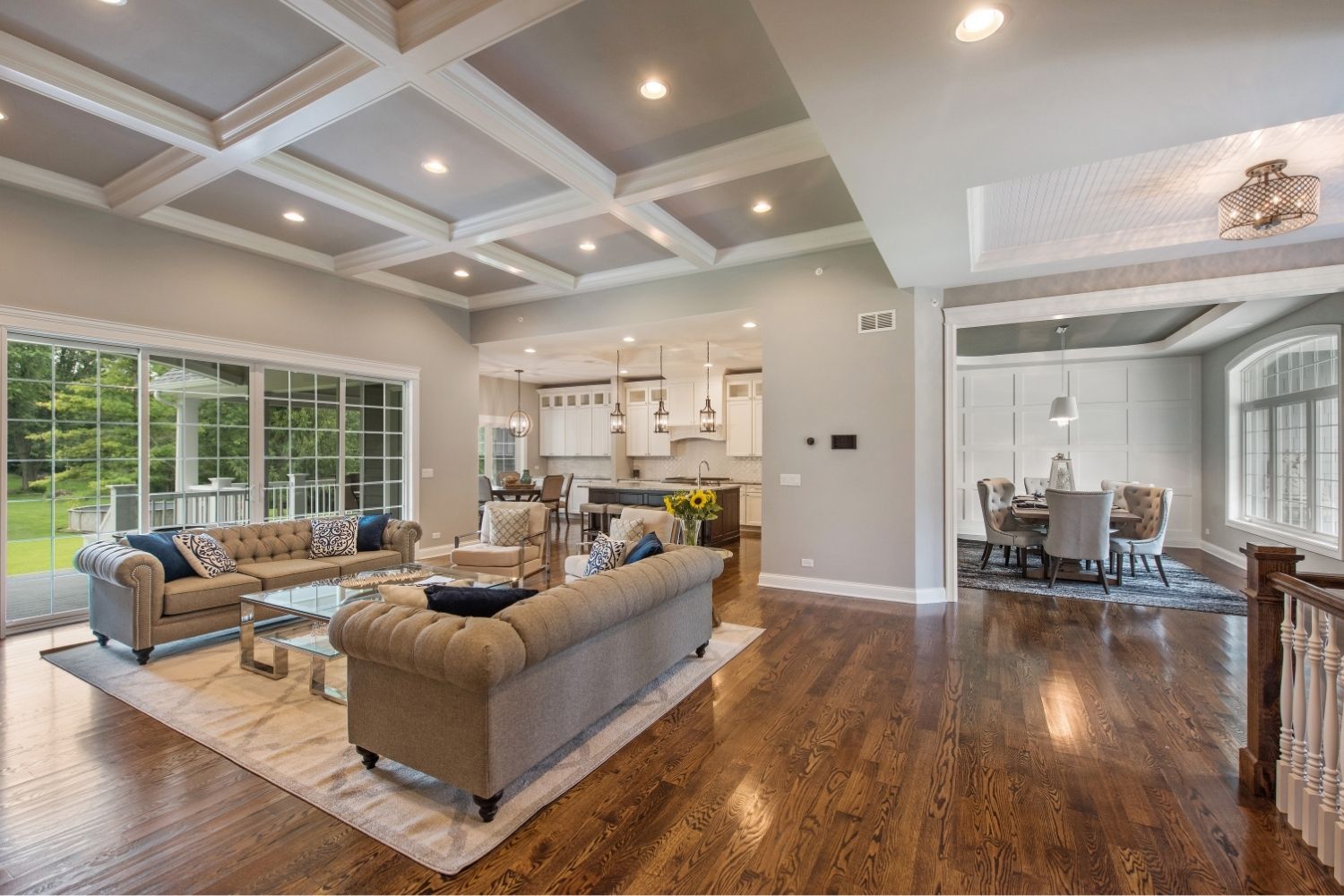
An open floor plan combines two or more traditionally separate rooms into a single, shared space. In most open plan homes, the kitchen flows directly into the dining and living areas without any walls or doorways in between. The concept traces back to mid-century modern architects like Frank Lloyd Wright, who pushed for spatial continuity and a stronger connection between the interior and the surrounding landscape.
Today, open floor plan house designs dominate new construction. Builders favor them because they make homes feel larger than their actual square footage, improve sightlines, and allow natural light to travel deeper into the interior. For families with young children, open layouts also make supervision easier, since the kitchen, play area, and living room all share the same visual field.
Open floor plan ideas have also expanded beyond the classic kitchen-dining-living combination. Some homeowners merge home offices with living spaces or connect indoor areas to covered patios through large sliding doors, blurring the line between inside and out. For a closer look at how natural light moves through wall-free interiors, our guide on maximizing natural light through architectural design covers orientation and opening strategies in detail.
What Is a Closed Floor Plan?
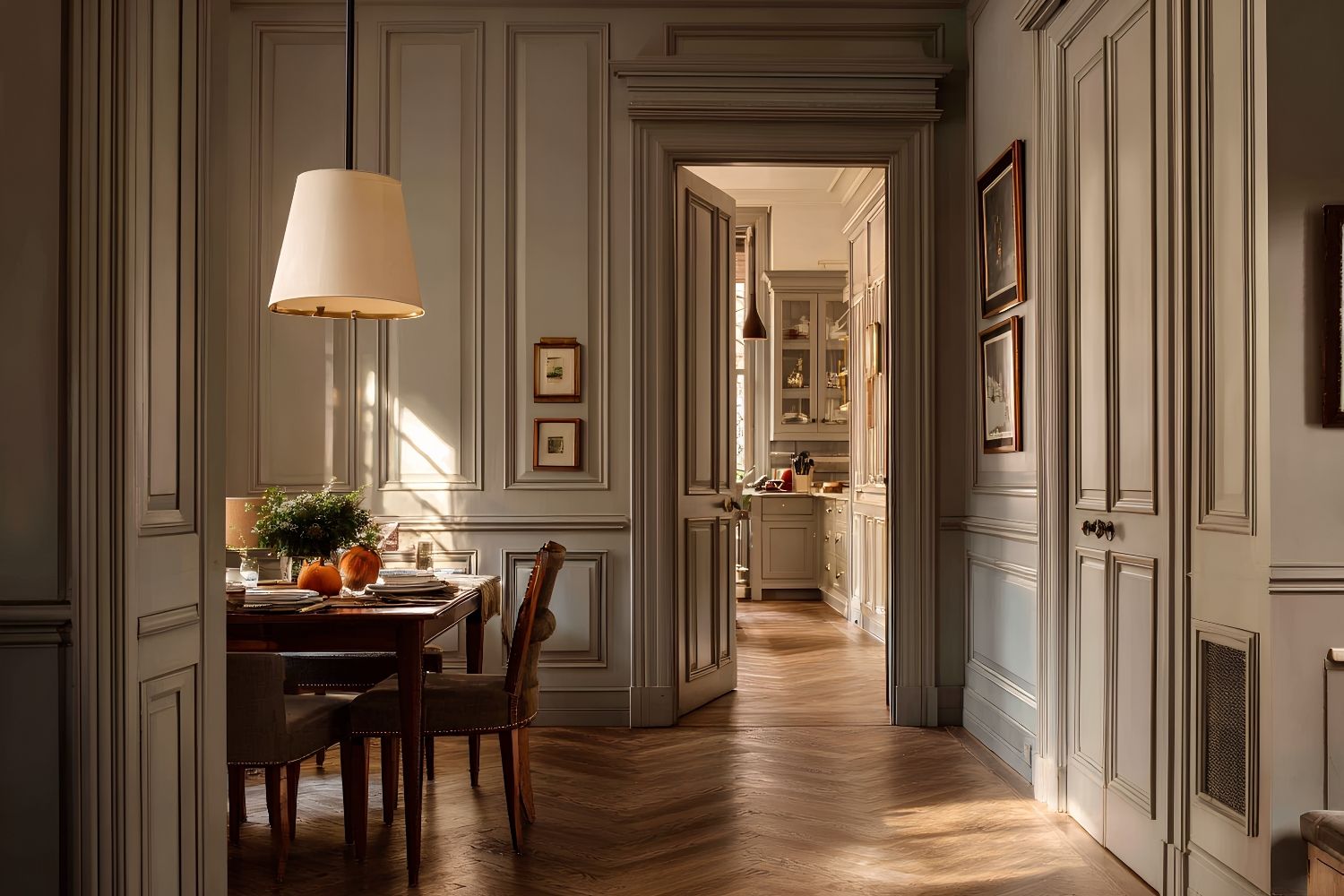
A closed floor plan uses walls, doors, and hallways to separate each room into its own defined space. Kitchens, dining rooms, and living rooms each have four walls and a door. This was the standard residential layout for centuries before the open concept trend gained traction in the 1950s and 1960s.
Closed layouts offer something open plans cannot: acoustic privacy. Cooking noise stays in the kitchen. A television in the living room does not compete with a conversation in the dining room. For households where multiple people work from home, study, or simply need quiet time, this separation becomes a practical advantage rather than a design limitation.
Closed plans also give each room a distinct identity. A dining room with its own walls can carry a formal atmosphere, while a kitchen can be purely functional without worrying about how the mess looks from the sofa. According to Wikipedia’s overview of open plan design, the traditional closed layout dominated residential architecture well into the 20th century, and its principles still inform many European and Asian home designs today.
💡 Pro Tip
Before committing to either layout, test your daily routine in the existing space for two weeks. Track where noise bothers you, where clutter builds up, and where you naturally gather with family. These observations will tell you more about the right layout than any floor plan sketch.
How Do Open and Closed Layouts Compare?
The open plan vs closed plan debate comes down to a handful of concrete factors. The table below breaks them down side by side so you can weigh each one against your own priorities.
Open Plan vs Closed Plan: Key Differences
The following table summarizes how the two layout types compare across the factors that matter most in daily living:
| Factor | Open Plan | Closed Plan |
|---|---|---|
| Natural Light | Light flows freely across the entire space | Each room depends on its own windows |
| Noise Control | Sound carries everywhere; no acoustic separation | Walls absorb and block noise between rooms |
| Privacy | Minimal; activities are visible from all areas | High; each room can be closed off |
| Entertaining | Ideal for hosting; cook and socialize at once | Guests are separated from kitchen activity |
| Heating/Cooling | Larger volume requires more energy to condition | Individual rooms can be heated or cooled as needed |
| Perceived Space | Feels spacious even in smaller homes | Rooms feel defined but can seem smaller |
| Clutter Visibility | Kitchen mess is always visible from living area | Mess stays contained behind closed doors |
For a deeper look at how layout choices affect everything from traffic flow to furniture placement, our article on essential factors in floor plan design covers additional considerations worth reviewing.
🔢 Quick Numbers
- 51% of Americans prefer open layouts, while 49% prefer closed, according to a 2023 Rocket Mortgage survey
- Buyers now want an average of 2,067 sq ft of finished area, down from 2,260 sq ft in 2003, per NAHB’s 2024 What Home Buyers Really Want report
- Natural light ranks as the top interior feature desired by homebuyers in 2024, driving demand for open floor plans, per Zonda/NAHB research
Why Are Some Designers Moving Away from Open Plans?
The post-pandemic shift in how people use their homes has put the open floor plan under pressure. With remote work becoming a permanent fixture for millions of households, the lack of acoustic separation in open plan homes has turned from a minor inconvenience into a daily frustration. Video calls, school homework, and kitchen activity all competing in the same space simply does not work for many families.
Real estate agent Emily Waldmann of Douglas Elliman has noted that buyers are increasingly looking for living spaces built around socializing and entertaining, kept separate from television areas and kitchens. This marks a shift from the fully open layouts that dominated new construction over the past two decades.
Some homeowners are even spending money to add walls back into homes that were previously opened up. The appeal of defined rooms, where you can close a door and focus, has returned with force. Our architecture floor plan guide discusses how modern plans increasingly layer open social zones with defined private clusters, rather than committing to one extreme.
🏗️ Real-World Example
Century Communities (U.S., 2024-2025): One of America’s largest homebuilders, Century Communities has responded to shifting preferences by offering “flexible zoning” within their open floor plan homes. Their updated designs use half-walls, sliding barn doors, and pocket partitions to let homeowners open or close sections of the main living area depending on the activity. This approach avoids forcing buyers to choose between a fully open or fully closed layout.
The Hybrid Approach: Getting the Best of Both
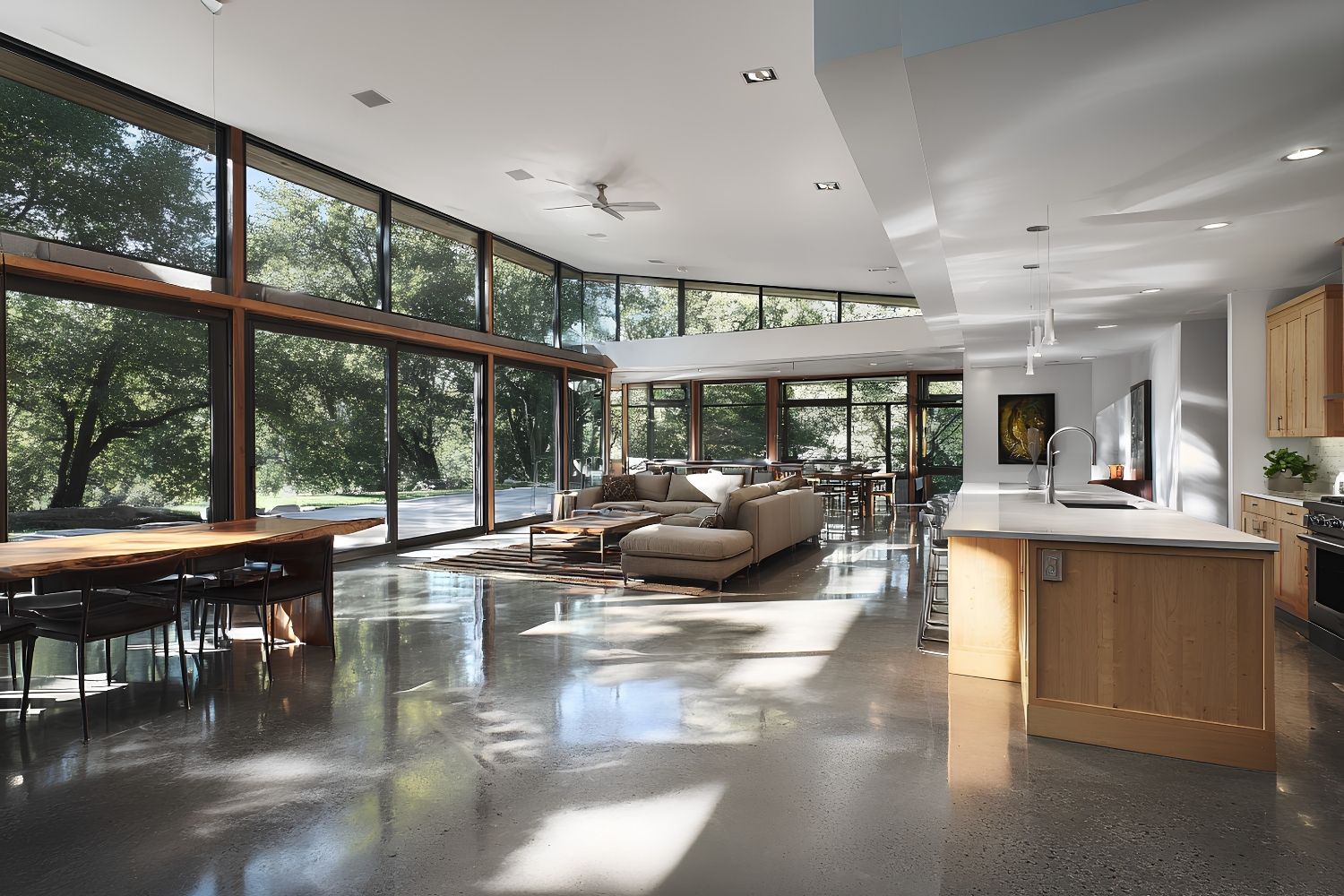
The most practical answer to the open plan vs closed plan question might be neither in its pure form. Architects and builders are increasingly designing homes that borrow from both approaches. A kitchen layout can connect visually to the dining area through a wide pass-through or a half wall, while still containing cooking smells and noise. Sliding partitions or glass pocket doors allow a room to function as open or closed depending on the moment.
This “broken plan” or “semi-open” concept keeps the spaciousness and light flow that people love about open floor plans while reintroducing the boundaries that make daily life more comfortable. Zoning through floor level changes, ceiling height variations, or different flooring materials can also signal transitions between areas without adding full walls.
For homeowners working with an existing open floor plan home, simple changes like placing a tall bookshelf as a room divider, adding a kitchen island with a raised back panel, or installing curtain tracks on the ceiling can provide flexible separation. These solutions cost far less than structural changes and can be adjusted over time.
⚖️ Pros & Cons at a Glance
✔️ Pros of open plans: Better natural light distribution, stronger social connection, increased perceived space
✖️ Cons of open plans: No noise separation, visible clutter, higher energy costs for heating and cooling
Video: Open Concept vs. Closed Floor Plan
Interior designer Julie Khuu shares her personal experience with both layouts, including why she is reconsidering her own open concept home after having children:
Which Layout Fits Your Lifestyle?
Choosing between open and closed comes down to three questions. First, how many people live in your home, and do they need to do different things at the same time? Households with remote workers, teenagers studying, and young children playing will benefit from some degree of separation. A couple who entertains regularly and cooks together may prefer everything open.
Second, how do you feel about visible mess? Open floor plan homes demand constant tidiness because the kitchen and living area share one visual field. If you are comfortable with that, an open layout works. If a pile of dishes stresses you out while you are trying to relax, a closed or semi-open kitchen will serve you better.
Third, consider your home’s climate and energy costs. Closed rooms are easier and cheaper to heat or cool individually, especially in regions with extreme temperatures. Open volumes require more powerful HVAC systems and tend to have uneven temperature distribution. For insights into how spatial flow and layout decisions affect broader residential design, the NAHB’s What Home Buyers Really Want report provides data-driven context on current buyer priorities.
The Bigger Picture
The open plan vs closed plan conversation has moved past the point of one being objectively better than the other. What has changed is awareness. Homeowners now understand the trade-offs that come with removing every wall, and architects are responding with designs that let people adjust their spaces instead of locking them into a single mode. The most successful homes going forward will likely be the ones that treat walls not as permanent fixtures or obsolete barriers, but as optional elements that can appear or disappear depending on how life unfolds inside them.








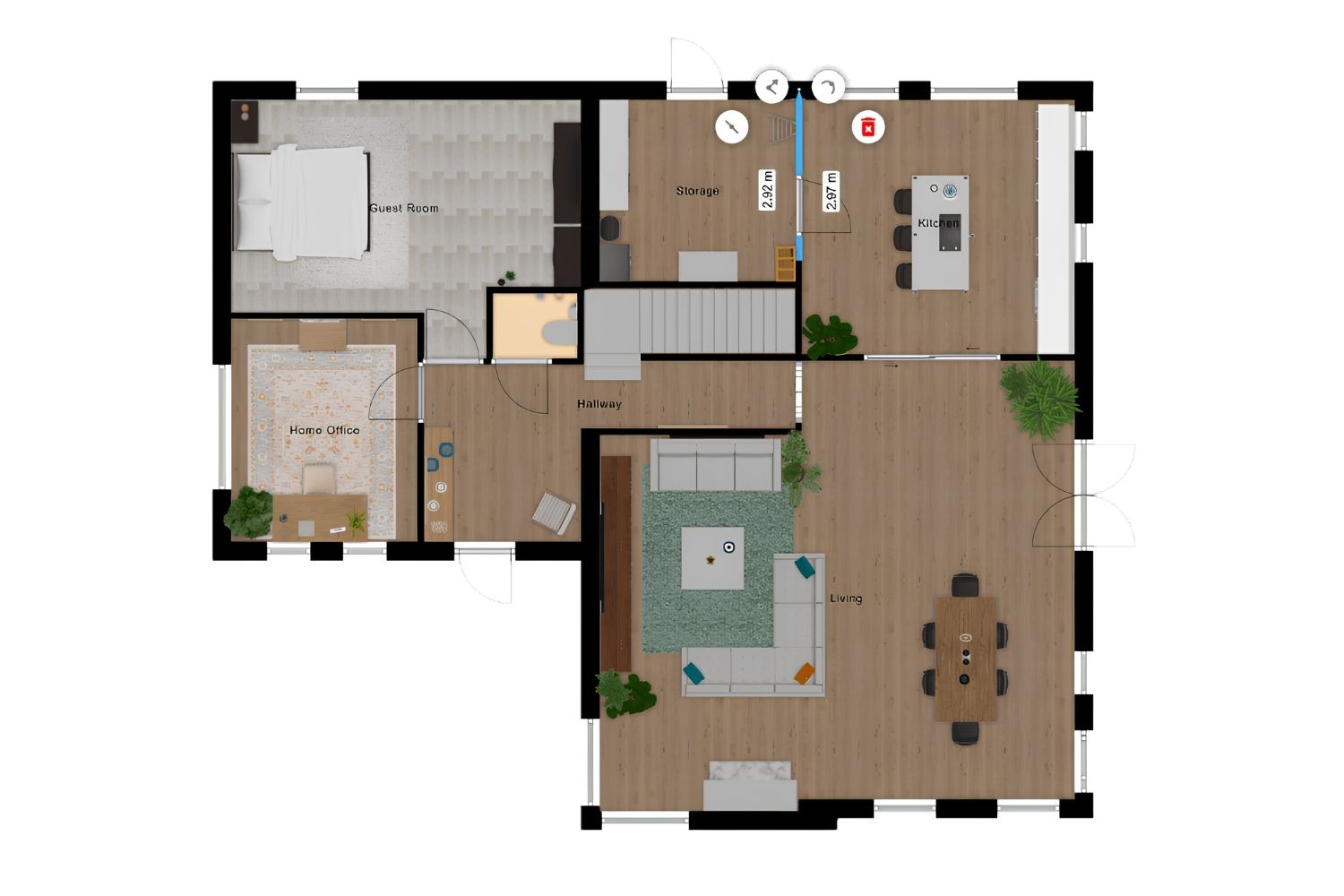
Floorplanner Review: Easy 2D to 3D Floor Plan Creation for Non-Designers
Floorplanner turns a 2D layout into a 3D render in the browser...
 Elif Ayse Sen9 Mins read
Architecture Floor Plan Guide: Types, Elements & How to Read
An architectural floor plan is a scaled, top-down drawing that shows the...
 Furkan Sen10 Mins read

AI Floor Plan Generator: Top 8 Tools for Architects & Designers
This guide compares the top AI floor plan generators available in 2026,...
Furkan Sen12 Mins read

Architecture Plan: Tips for Creating & Presenting Plans
Learn how to create and present professional architectural plans with this comprehensive...
Elif Ayse Sen13 Mins read


Leave a comment