

Fractals in Architecture: How Nature’s Patterns Shape Design<
Fractals appear everywhere in nature, from fern leaves to coastlines, and architects borrow their self-similar logic. This guide explains what fractal architecture is and how famous buildings use fractal geometry.
 Elif Ayse Sen22 June 202610 Mins read207
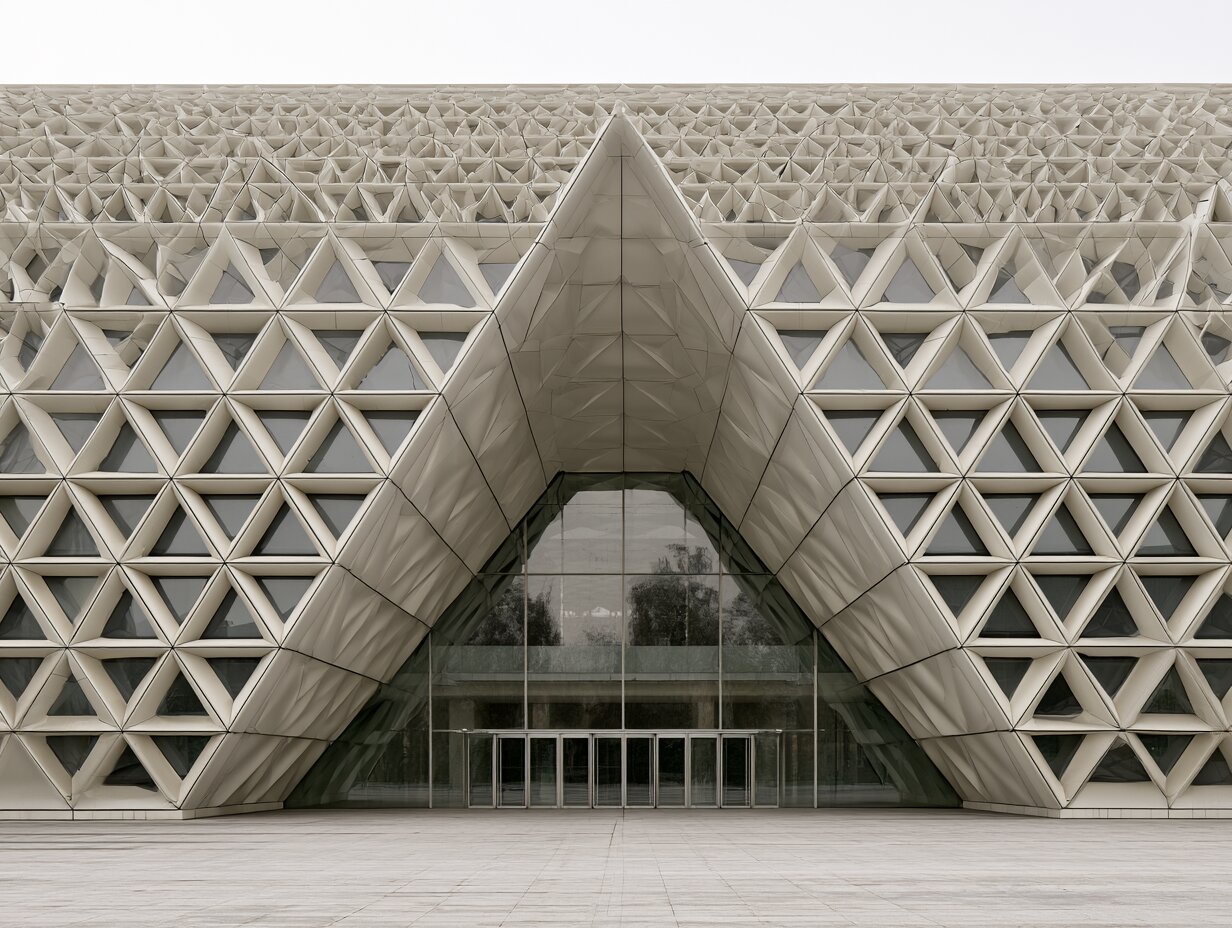
Table of Contents Show
Fractals in architecture are self-similar geometric patterns that repeat at different scales, echoing the structures found in nature like ferns, trees, and coastlines. Architects use fractal geometry to create forms that feel complex yet ordered, linking buildings to the visual logic of the natural world.
Look closely at a fern, a snowflake, or the branching of a river system and you see the same idea repeated: a small part resembles the whole. This pattern, called a fractal, has shaped how some of the most memorable buildings in history were designed. From the rising towers of Hindu temples to the tiled courtyards of the Alhambra, fractal thinking guided builders for centuries, long before anyone had a name for it. Today, architects use digital tools to bring these natural patterns into facades, floor plans, and entire structures.
This guide looks at what fractals are, how nature inspires fractal design, the principles that hold it together, and the buildings that put fractal geometry to work.
What Are Fractals in Architecture?
A fractal is a shape that contains the same pattern at every level of magnification. Zoom in on one part and you find a smaller copy of the larger form. Fractals in architecture appear when a design repeats a motif, a shape, or a structural rule across several scales, from the overall massing of a building down to the smallest detail on its surface.
Mathematician Benoît Mandelbrot coined the term fractal in 1975, drawing on the Latin word for “broken.” He used it to describe the rough, fragmented shapes that classical geometry could not explain. A coastline is not a smooth curve. A mountain is not a clean triangle. These forms hold detail at every scale, and that endless detail is the heart of fractal geometry.
Three ideas define a fractal: self-similarity, iteration, and a fractal dimension that sits between the whole numbers we use for lines, planes, and solids. Self-similarity means the parts echo the whole. Iteration means a simple rule gets repeated again and again. The result is a form that looks organic and ordered at the same time. This connection between numbers and form is part of the wider role of math in architecture, where geometry shapes both how a building looks and how it stands up.
📌 Did You Know?
The word “fractal” comes from the Latin “fractus,” meaning broken or fractured. When Benoît Mandelbrot introduced the term in 1975, the shapes he described were so unusual that earlier mathematicians had called them “monsters” and largely avoided studying them. Those same shapes now help model coastlines, galaxies, and architectural facades.
How Does Nature Inspire Fractal Design?
Nature builds with fractals because they are efficient. A tree spreads its branches to catch the most sunlight with the least material. Our lungs pack an enormous surface area into a small space through repeated branching. Architects study these patterns and turn them into buildings that share the same balance of complexity and order. The bond between the built world and the natural one runs deep, as explored in this look at how nature inspires building design.
Fern leaves, romanesco broccoli, snowflakes, lightning, and the spiral of a nautilus shell all follow fractal rules. So do the proportions tied to the Fibonacci sequence in architecture, which appears in everything from sunflower seeds to spiral staircases. When a building borrows these patterns, it tends to feel familiar and calm, because our eyes are used to reading them in the landscape.
💡 Pro Tip
When translating a natural pattern into a design, resist copying its appearance literally. Study the rule behind it instead. A pinecone does not teach you to draw scales; it teaches you how a surface can open and close in response to humidity. Mapping the underlying logic, rather than the look, keeps fractal-inspired design from sliding into pure decoration.
Fractal patterns also carry meaning. In many traditions, repeating geometry stood for infinity and the order of the cosmos. That symbolic weight is one reason fractal forms appear so often in sacred buildings, where the same shape multiplied across scales suggested something larger than the structure itself.
Core Principles of Fractal Geometry in Architecture
Fractal architecture rests on a few clear ideas that set it apart from simple repetition or random ornament.
Self-similarity is the first. A fractal building repeats a shape at large, medium, and small sizes. In a Gothic cathedral, the pointed arch of the main entrance reappears in the windows, then again in the smaller niches and tracery. The eye reads the same form at several scales, which creates rhythm without monotony.
Scaling and hierarchy come next. Strong fractal design links its scales so that each level relates to the one above and below it. This works differently from proportion systems such as the golden ratio in architecture, though the two often pair up to produce balanced, harmonious results. Where the golden ratio sets a single pleasing proportion, a fractal applies a rule of detail across many levels at once.
Iteration is the third principle. A simple rule, repeated, generates surprising depth. Iteration is what lets a few lines of logic grow into a facade pattern with thousands of parts, and it is the reason computers handle fractal generation so well.
📐 Technical Note
Researchers measure the visual complexity of a facade using its fractal dimension (D), calculated with the box-counting method. For built form, D usually falls between 1.0 (a plain, smooth elevation) and 2.0 (an extremely detailed one). Analyses of historic architecture suggest that elevations with a fractal dimension around 1.3 to 1.5 are often read as the most visually engaging, holding order and detail in balance.
Examples of Fractals in Architecture

Fractal patterns show up across many cultures and eras, sometimes by intention and sometimes by instinct. Some of these buildings were designed with fractal mathematics in mind, while older ones followed the same logic by feel.
Notable Fractal Buildings at a Glance
The table below highlights buildings where fractal geometry plays a clear role.
| Building | Location and Year | Fractal Feature |
|---|---|---|
| Sagrada Família | Barcelona, begun 1882 | Branching, tree-like columns and self-similar surfaces drawn from natural geometry |
| Lotus Temple | New Delhi, 1986 | Twenty-seven marble petals arranged in three repeating concentric rings |
| Federation Square | Melbourne, 2002 | Facade built from a self-replicating triangular tiling system |
| Lideta Mercato | Addis Ababa, 2017 | Fractal facade pattern adapted from traditional Ethiopian textile motifs |
| Gothic cathedrals (e.g. Cologne, Milan) | Europe, medieval | Pointed arches and tracery repeated at multiple scales |
Fractals in Historic and Sacred Architecture
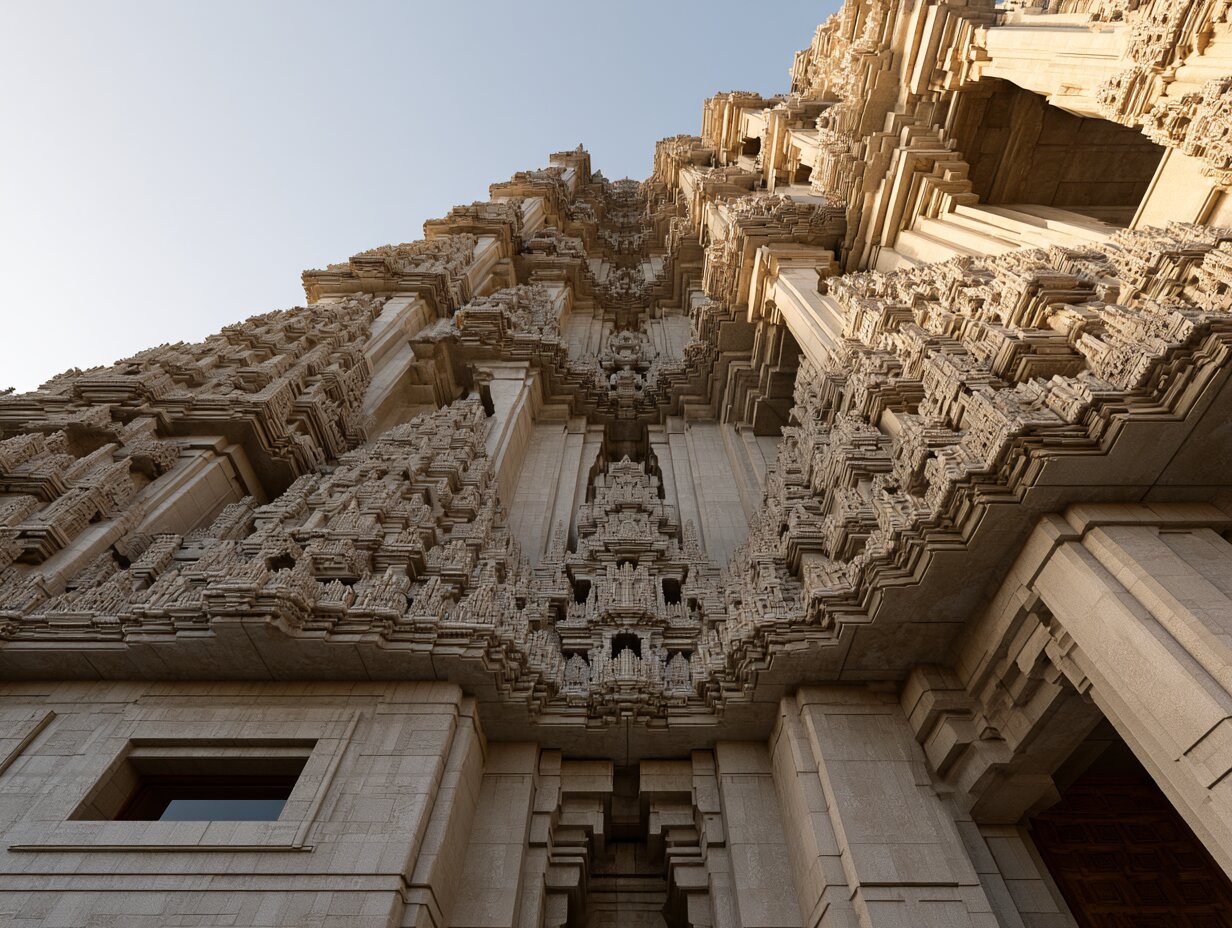
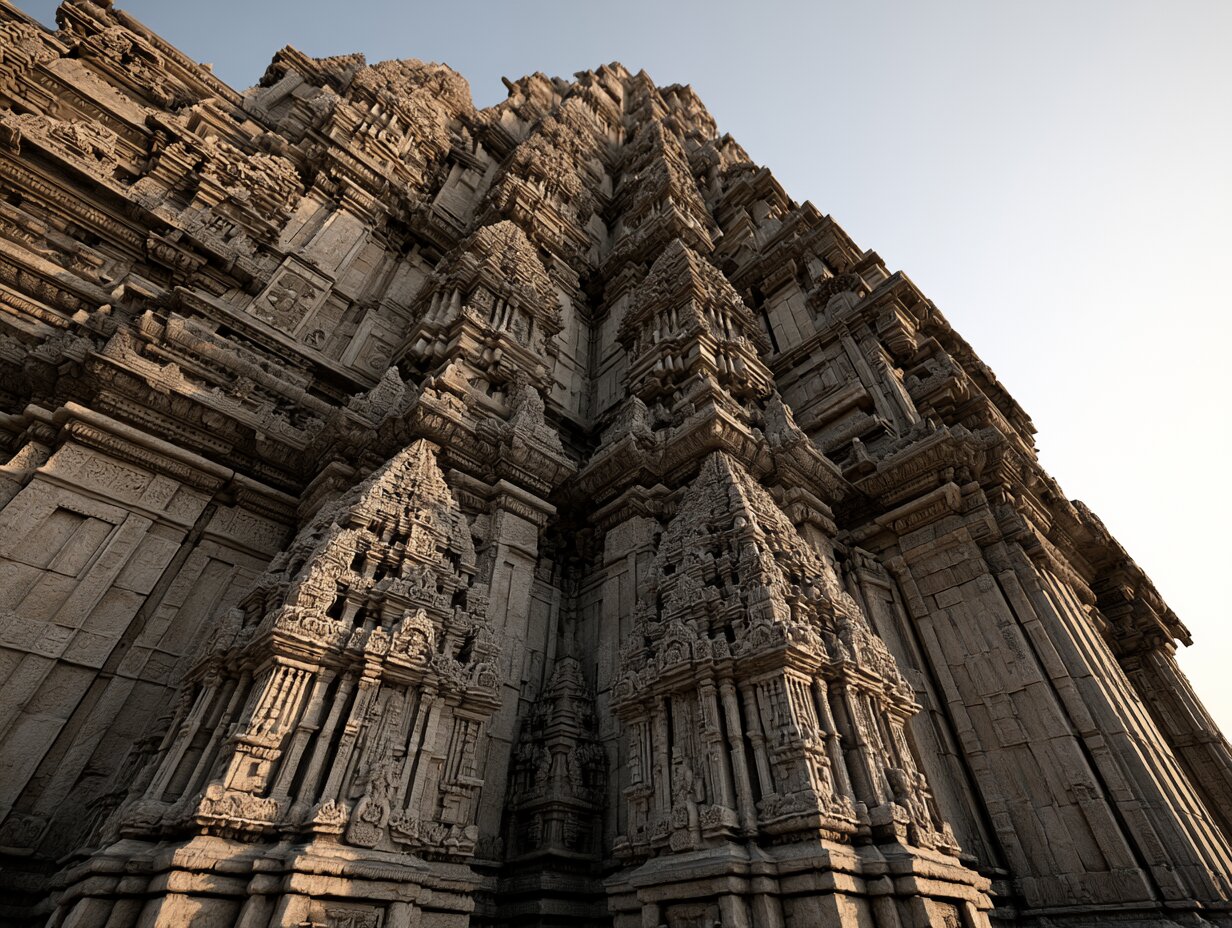
Hindu temple architecture offers some of the clearest historic fractals. The shikhara, the rising tower over the sanctuary, often repeats its own silhouette in smaller and smaller copies as it climbs, a pattern visible at temples like Khajuraho and the Meenakshi temple. The closer you look, the more the whole tower seems to be made of miniature versions of itself.
Islamic architecture took a different route. Rather than stacking a shape upward, it spread geometric tiling across walls, ceilings, and floors to suggest a pattern that could stretch on forever. The tilework of the Alhambra in Spain is the famous case, where stars and polygons interlock without a clear center or edge. The cultural and structural side of this tradition, set against the Gothic approach, is covered in our look at Islamic and Gothic sacred geometry.
Antoni Gaudí pushed fractal thinking as far as anyone before the computer age. The Sagrada Família uses hyperboloids, catenary curves, and branching columns that Gaudí derived from studying trees and bones. He treated nature as an engineering manual, not just a source of pretty shapes, and the result is a building whose structure and ornament follow the same self-similar rules.
🏗️ Real-World Example
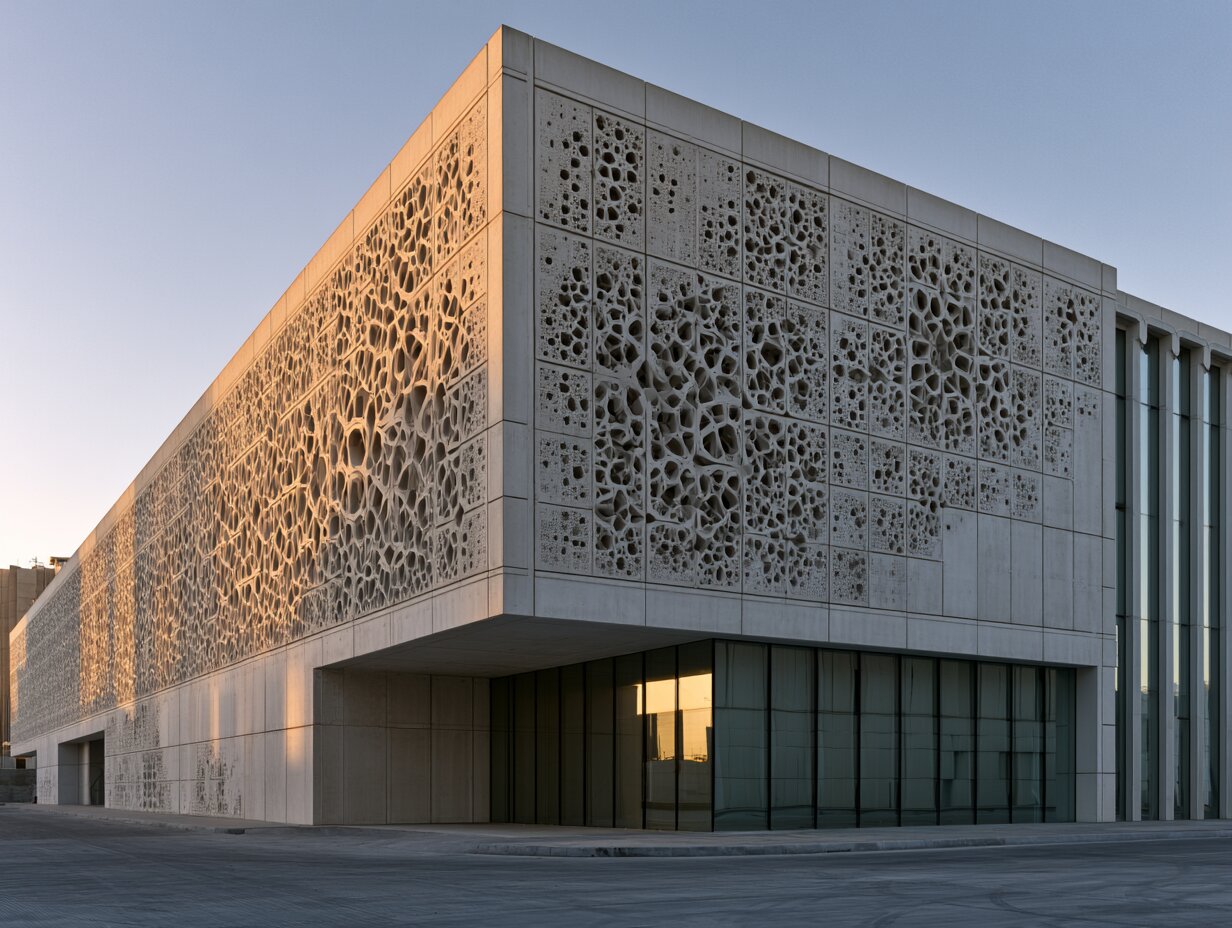
Lideta Mercato (Addis Ababa, 2017): Designed by Xavier Vilalta, this mixed-use building wraps its concrete facade in a fractal pattern adapted from traditional Ethiopian fabric designs. The perforated geometry is more than cultural reference. It filters direct sunlight and aids natural ventilation, cutting cooling demand in a hot climate while giving each interior a shifting play of light and shadow.
Why Do Fractals Matter in Modern Architecture?
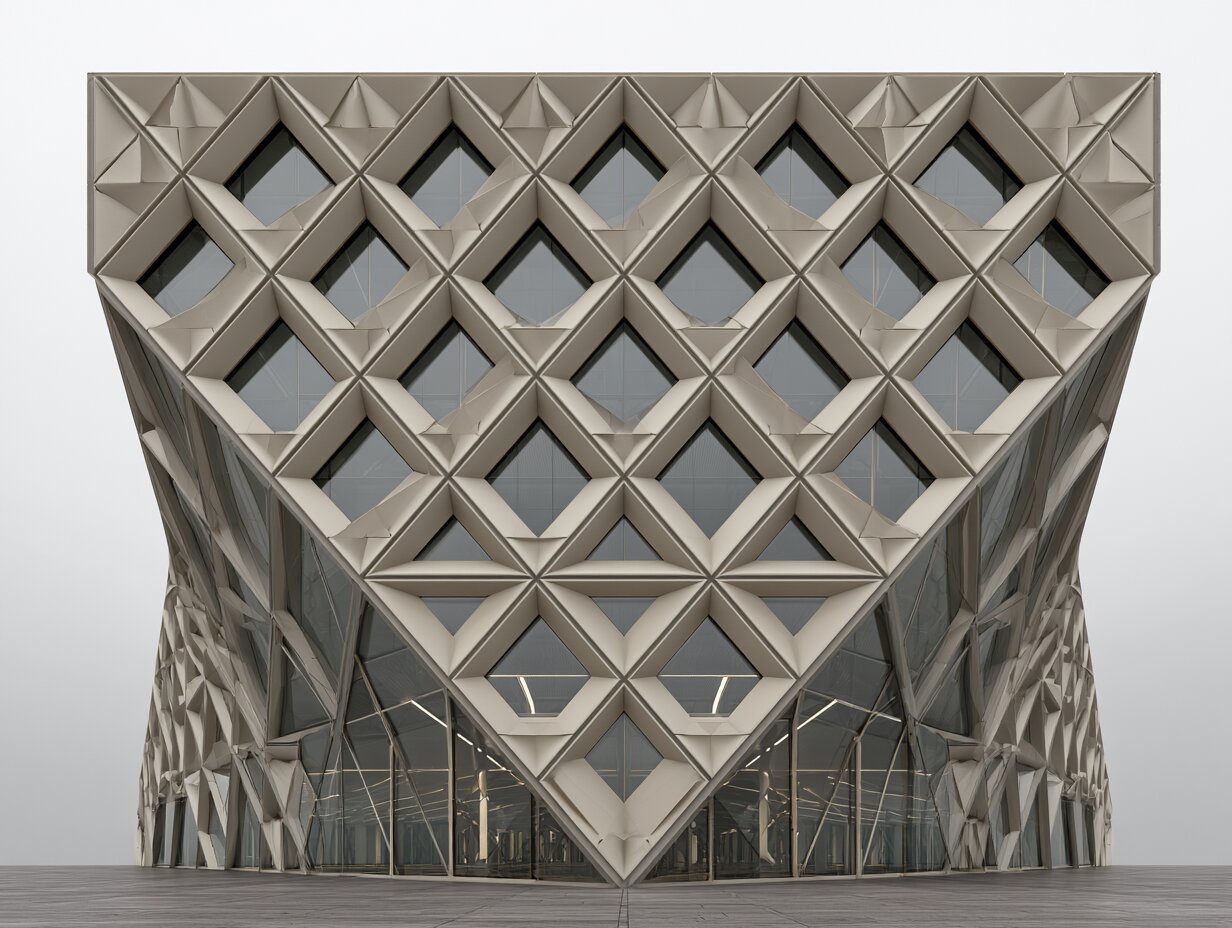
Fractals matter because they connect three things architects care about: how a building looks, how it makes people feel, and how it performs. Repeating patterns at several scales give a structure visual depth and a sense of human scale, so even a large building does not read as blank or overwhelming.
There is growing evidence that fractal patterns affect wellbeing. Writers and researchers studying fractals and the built environment point to studies showing that looking at natural fractal patterns can lower stress, an effect linked to the way our visual system evolved to read the patterns of nature. Buildings that bring these patterns indoors may carry some of the calming quality of a walk through a forest.
🎓 Expert Insight
“Clouds are not spheres, mountains are not cones, coastlines are not circles, and bark is not smooth, nor does lightning travel in a straight line.” These words come from Benoît Mandelbrot, mathematician and author of The Fractal Geometry of Nature.
Mandelbrot’s observation reframed how designers see the world. The smooth shapes of classical geometry rarely occur in nature, and buildings that acknowledge that roughness often feel more alive than ones built only from flat planes and clean curves.
Fractal geometry also supports performance. Branching structures distribute loads efficiently, and fractal facade patterns can manage light and shade across a surface. This ties fractal design to broader work in biomimicry and parametric design, where natural strategies and computational form-finding meet.
The mathematician and theorist Nikos Salingaros has argued for years that traditional buildings feel satisfying partly because they are fractal, carrying detail at every scale, while many plain modern buildings strip that detail away. His writing for ArchDaily makes the case that fractal structure sits closer to what humans have evolved to appreciate.
How Do Architects Create Fractal Forms Today?
Modern architects generate fractal forms with computational tools. Software lets a designer set a rule and repeat it across scales automatically, producing patterns that would be almost impossible to draw by hand. This sits at the center of parametric architecture, where algorithms and adjustable parameters drive the shape of a building.
The process usually starts with a base geometry and a recursive rule. The designer defines a motif, sets how it should shrink and repeat, then lets the software run the iterations. Because every part is tied to the same logic, changing one input updates the whole pattern at once, which makes it fast to test many versions before settling on a final form.
The harder part is buildability. A pattern that looks elegant on screen has to be fabricated, supported, and maintained in the real world. Architects work closely with engineers and fabricators to decide how deep the fractal detail can realistically go before cost and complexity outweigh the visual payoff.
How to Apply Fractal Principles in Your Own Designs
You do not need advanced software to bring fractal thinking into a project. A few habits help:
- Choose one motif and repeat it at three scales: the building’s massing, its facade, and its details.
- Link the scales so each one relates to the next, instead of placing different patterns at random.
- Study a natural pattern and extract its rule, not just its look.
- Aim for a middle level of complexity, enough detail to hold the eye without tipping into visual chaos.
- Test the design at real scale early, since patterns that work on paper can overwhelm at building size.
Even a single well-chosen repeating element, carried through from the plan to the smallest fitting, can give a design the coherence that fractal architecture is known for.
✅ Key Takeaways
- Fractals are self-similar patterns that repeat at different scales, found throughout nature and across architectural history.
- Self-similarity, scaling hierarchy, and iteration are the core principles that separate true fractal design from simple repetition.
- Buildings from Gothic cathedrals and Hindu temples to the Sagrada Família and Lideta Mercato use fractal geometry, by design or by instinct.
- Fractal patterns can support wellbeing, structural efficiency, and a human sense of scale.
- Today architects create fractal forms mainly through parametric and computational design.
Research on fractal patterns and wellbeing is based on available studies, and individual responses to visual environments vary.
Frequently Asked Questions

What is a fractal in simple terms?
A fractal is a shape that repeats the same pattern at every scale. If you zoom in on any part, you see a smaller version of the whole. Ferns, snowflakes, and coastlines are common natural examples, and the same idea appears in many buildings.
Which famous buildings use fractal geometry?
The Sagrada Família in Barcelona, the Lotus Temple in New Delhi, Federation Square in Melbourne, the Lideta Mercato in Addis Ababa, and many Gothic cathedrals and Hindu temples all use fractal patterns. Some were designed with fractals in mind, while older examples followed the logic instinctively.
Are Gothic cathedrals really fractal?
Yes, in the sense that they repeat forms at several scales. The pointed arch of a cathedral’s main door reappears in its windows, then in smaller niches and tracery, creating self-similar detail from the large structure down to the fine ornament.
Why do fractal patterns feel pleasing?
Our visual system evolved while reading the fractal patterns of nature, so these patterns feel familiar. Studies suggest that viewing natural fractals can reduce stress and hold attention comfortably, which may explain why fractal-rich buildings often feel calming.
Bringing Fractal Thinking Into Architecture
Fractals link the oldest buildings to the newest design tools. The same self-similar logic that shaped a medieval cathedral or a temple tower now runs inside the software that generates today’s parametric facades. What connects them is a simple observation: nature rarely works in straight lines and clean circles, and buildings that follow nature’s repeating patterns tend to feel grounded and alive. For any designer, learning to see and apply fractal geometry is a way to make architecture that resonates on an almost instinctive level.
- fractal architecture design
- fractal design architecture
- fractal design in architecture
- fractal geometry architecture
- fractal geometry in architecture
- fractal geometry in architecture and design
- fractal geometry in architecture examples
- fractals architecture
- fractals in architecture
- fractals in architecture and design
- fractals in art and architecture



Building Your Dream Home in NSW: What You Should Know About Montgomery Homes
Montgomery Homes has been building across Sydney, Newcastle, the Hunter, Wollongong and...
 illustrarch Editoral Team4 Mins read
Oscar Niemeyer’s Cathedral of Brasília: The Hyperboloid Concrete Hymn
The Cathedral of Brasília reads as a single gesture, yet it stood...
 Furkan Sen7 Mins read

What Technology Does a Modern Workplace Need?
A modern workplace needs more than fast computers. A framework covering network,...
illustrarch Editoral Team8 Mins read

How Do You Choose Durable Shutters That Suit Your Budget?
Shutters can look identical in a showroom and perform very differently after...
illustrarch Editoral Team8 Mins read


Leave a comment