

Mediterranean Tile Patterns: Why They Are Returning Worldwide
Mediterranean tile patterns are experiencing a strong global comeback driven by demand for handcrafted surfaces, earthy color palettes, and heritage-inspired design. This article covers why these tiles are trending, where to use them, and how to select the right pattern for kitchens, bathrooms, floors, and pool areas.
 Furkan Sen12 June 20267 Mins read200
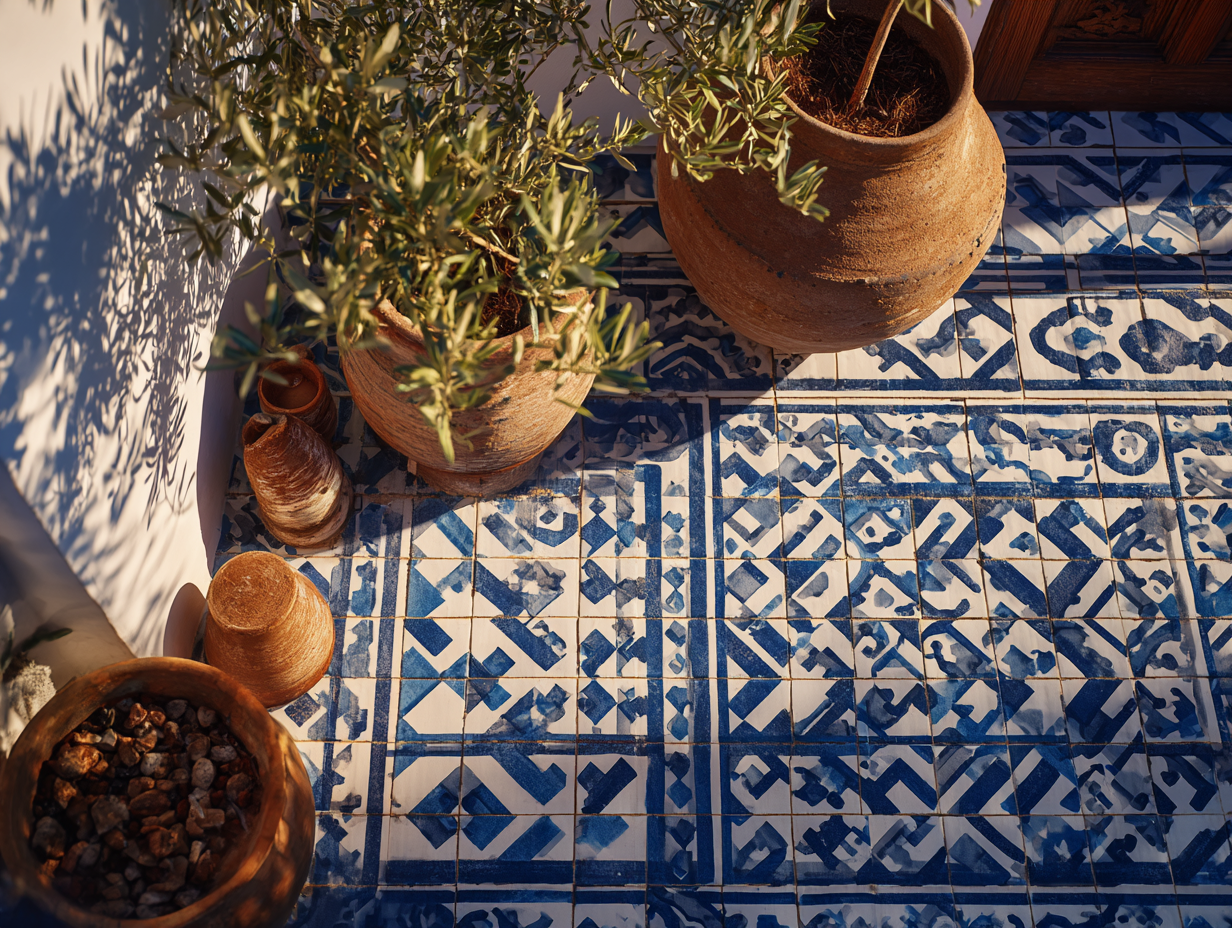
Table of Contents Show
Mediterranean tile refers to a family of hand-glazed, patterned, and earth-toned ceramic and cement tiles rooted in the craft traditions of Spain, Morocco, Portugal, Italy, and Greece. These tiles are making a strong global comeback in 2026 as designers and homeowners move away from uniform, mass-produced surfaces toward materials that carry visible signs of human craftsmanship and regional identity.
The History Behind Mediterranean Tile Patterns
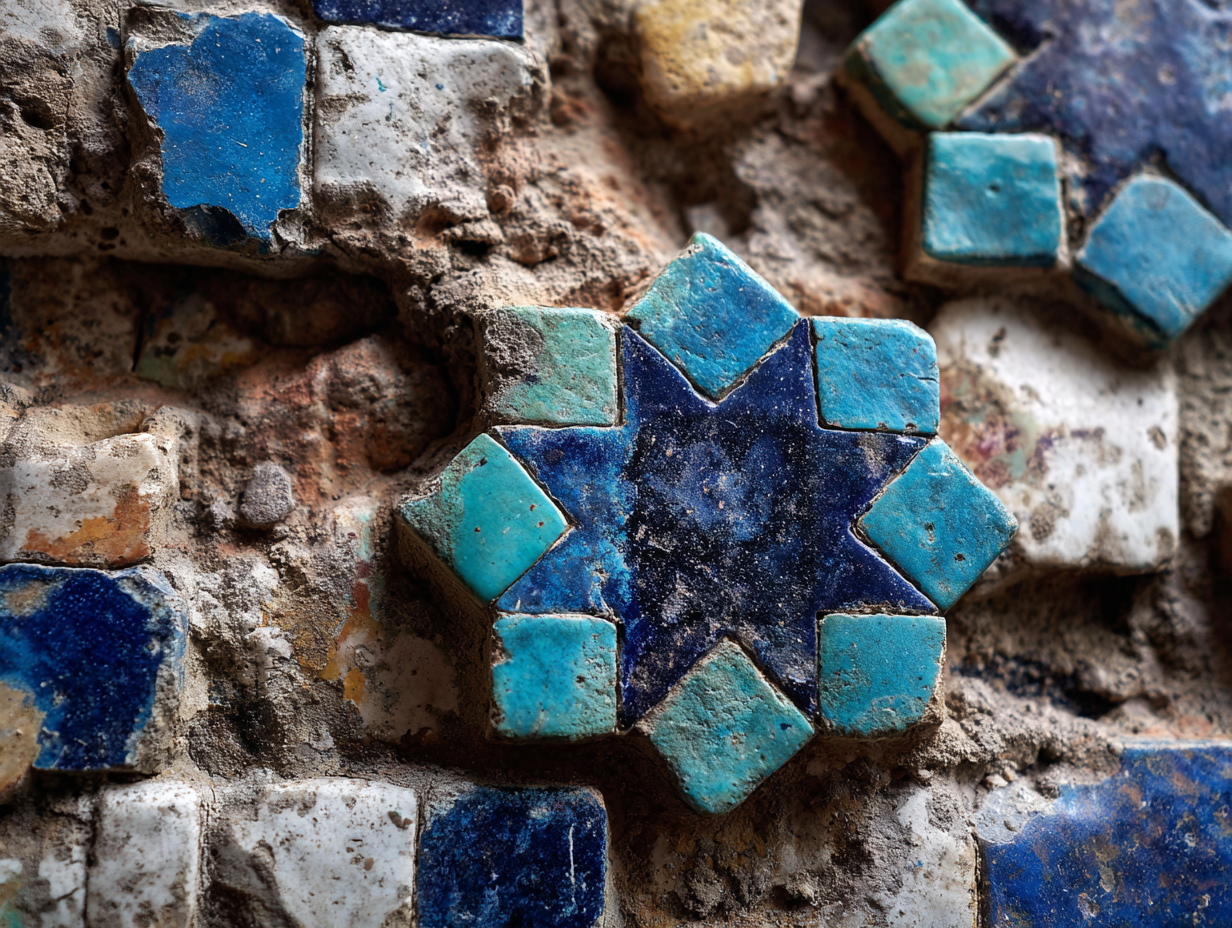
The story of mediterranean tiles begins in the mosaic workshops of the Roman Empire, where small stone and glass pieces were arranged into geometric floor compositions across villas, baths, and public buildings. As Roman influence spread along the Mediterranean coast, local artisans absorbed these techniques and adapted them to their own materials and aesthetic traditions. The result was a diverse family of tile-making practices that shared a common thread: geometric precision, bold color, and a deep connection to place.
By the 10th century, Moorish craftsmen in Fez and Meknes had developed zellige, a technique in which hand-cut, individually glazed clay tiles are assembled into star-and-polygon compositions on walls and floors. The word “zellij” comes from the Arabic root meaning “to slide,” referring to the smooth glazed surface of each piece. When Moorish artisans migrated to Andalusia, they brought zellige with them, and its influence became visible across southern Spain, from the Alhambra in Granada to neighborhood courtyards in Seville. Portugal developed its own parallel tradition in the form of azulejo, a painted tin-glazed tile that covered entire building facades in blue-and-white narratives. Meanwhile, encaustic cement tiles emerged in southern France and Catalonia during the 19th century, offering bold geometric patterns through pigmented cement rather than surface glaze.
📌 Did You Know?
For the full picture, see our complete guide to concept ideas for interior design.
Zellige tile-making is recognized as a national art form in Morocco. Artisans known as “maalem” train for years in specialized schools before they are considered masters of the craft. The clay used for traditional zellige still comes from the hills around Fez, where it has been sourced for over a thousand years.
Each of these traditions produced tiles that were meant to be seen and touched. Unlike modern industrially printed porcelain, traditional Mediterranean tile carries visible surface variation. No two pieces are identical, and that imperfection became a defining aesthetic quality rather than a flaw.
What Makes Mediterranean Tile Unique?
Several characteristics separate mediterranean tile patterns from mass-produced alternatives. First, the color palette draws heavily from the natural environment: cobalt and cerulean blues from the sea, terracotta and ochre from the earth, olive green from local vegetation, and warm whites from limestone cliffs. Second, the geometric patterns follow mathematical principles inherited from Islamic art, where religious tradition discouraged figurative imagery and instead encouraged abstract compositions of stars, arabesques, and interlocking polygons. Third, the handmade production process gives each tile subtle variations in thickness, glaze depth, and color saturation. This imperfection creates a textured surface that catches light differently throughout the day, something a perfectly uniform factory tile cannot replicate.
Why Mediterranean Tiles Are Trending Again in 2026
The resurgence of mediterranean tile patterns in 2026 is not accidental. It sits at the intersection of several larger design shifts happening across residential and commercial interiors worldwide.
The first driver is a reaction against digital uniformity. After a decade of clean-lined, gray-toned minimalism dominated by large-format porcelain slabs, many designers and homeowners are actively seeking surfaces that feel human. According to the Coverings 2025 Global Tile Trends report, there is a renewed interest in handcrafted textures and artisan-style production across the tile industry. Surfaces inspired by corrugated paper, torn fabric, and hand-formed clay are replacing the polished perfection that defined the previous era.
🎓 Expert Insight
“The irregularity of zellige is what makes it beautiful. No two tiles are the same, and that variation is what gives a surface its soul.” Alena Capra, Coverings Spokesperson and Tile Designer
Capra’s observation reflects a broader shift in interior design toward materials that show the hand of the maker, moving away from pixel-perfect uniformity toward surfaces with genuine character.
The second driver is the warm color palette shift. The interior design trends shaping 2026 show a decisive move away from cool grays toward nature-inspired tones: muted greens, soft terracottas, sand tones, and warm ochres. Mediterranean tiles naturally deliver this palette without any effort because these are the colors they have always used.
Third, the global ceramic tile market continues to grow. According to Fortune Business Insights, the global ceramic tiles market was valued at approximately $86.97 billion in 2025 and is projected to reach $130.13 billion by 2034, growing at a CAGR of 4.60%. Within that market, patterned and handcrafted tile segments are growing faster than plain formats, driven by consumer demand for individuality and character in living spaces.
Finally, social media has played a role. Images of sun-washed Mediterranean courtyards, Moroccan riads, and Portuguese tile facades consistently perform well on visual platforms. This steady stream of inspiration keeps the aesthetic front of mind for homeowners planning renovations. As Original Mission Tile’s 2026 floor trend analysis notes, Mediterranean and Spanish-style tile layouts already carry a 100-plus-year design legacy, so they never look “trendy” in the disposable sense. They look established. The style has moved from “vacation inspiration” to “something I want in my own kitchen.”
Where to Use Mediterranean Tiles in Your Home
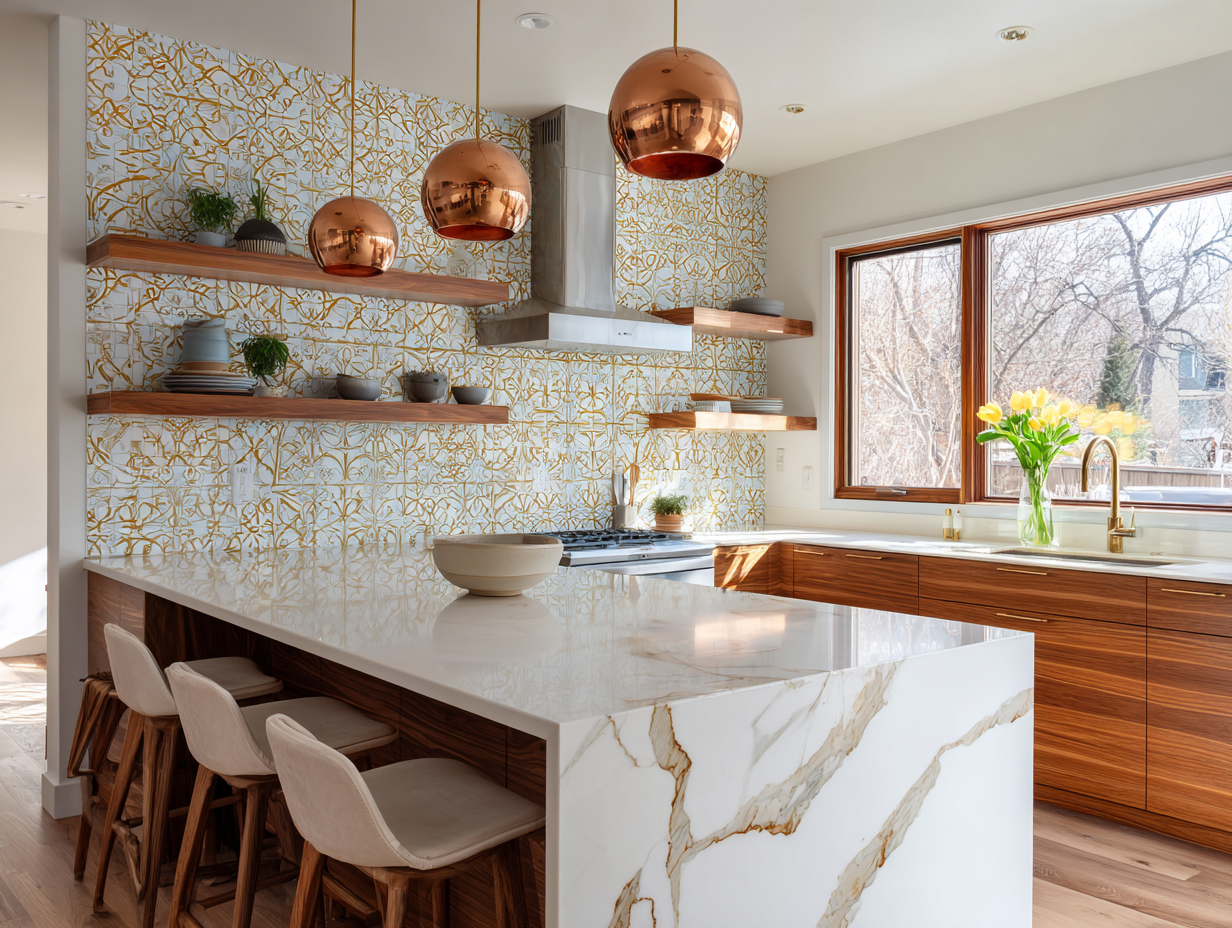
Mediterranean tile patterns work across nearly every room, but certain applications bring out their strengths more effectively than others. The key is matching the right tile type to the right surface and function.
Mediterranean Floor Tiles for Living Spaces
Encaustic cement tiles and terracotta are the most common choices for mediterranean floor tiles. Encaustic tiles offer bold geometric patterns in a thick, durable format that ages gracefully under foot traffic. The pigment runs through the full depth of the tile rather than sitting on the surface, which means the pattern does not wear away over time. Terracotta tiles provide a warmer, more rustic alternative, and their earthy red-orange tones pair well with white plaster walls, natural wood furniture, and linen textiles.
For an in-depth look at how tile patterns influence the feel and flow of a space, consider how the direction, scale, and rhythm of your chosen pattern will affect the visual proportions of each room. A large-scale geometric on a narrow hallway floor, for example, can make the space feel wider than it actually is.
Mediterranean Tiles for Kitchen and Bathroom
Kitchens and bathrooms are where mediterranean tiles for kitchen and mediterranean bathroom tiles applications are strongest. A patterned encaustic or zellige backsplash behind the stove or sink creates a natural focal point without competing with cabinetry or countertops. The top kitchen design ideas consistently rank bold backsplash treatments among the most effective ways to add personality to a kitchen.
In bathrooms, hand-glazed zellige tiles work well on shower walls and behind vanities. Their reflective, slightly uneven surface catches bathroom lighting in a way that feels warm rather than clinical. The 2026 bathroom trends from Porcelanosa confirm that the most popular bathroom tiles this year are those inspired by limestone, travertine, and handmade textures, all of which align with the Mediterranean aesthetic. For bathroom floors, smaller-format patterned tiles (often called patchwork layouts) combine several mediterranean tile patterns within a single field, creating a carpet-like effect that adds visual richness to compact rooms. For layout ideas that maximize visual impact, the guide to tile patterns and layouts for bathrooms covers herringbone, chevron, basket weave, and mosaic options in detail.
💡 Pro Tip
When selecting mediterranean tiles for wet areas like showers and pool decks, always confirm the tile’s slip resistance rating. Glazed zellige tiles look stunning on walls but can be dangerously slick underfoot when wet. For floors, choose a honed, matte, or textured finish with a minimum R10 slip rating (or a Dynamic Coefficient of Friction above 0.42 per ANSI A326.3 standards).
Blue Mediterranean Tile for Pool Areas
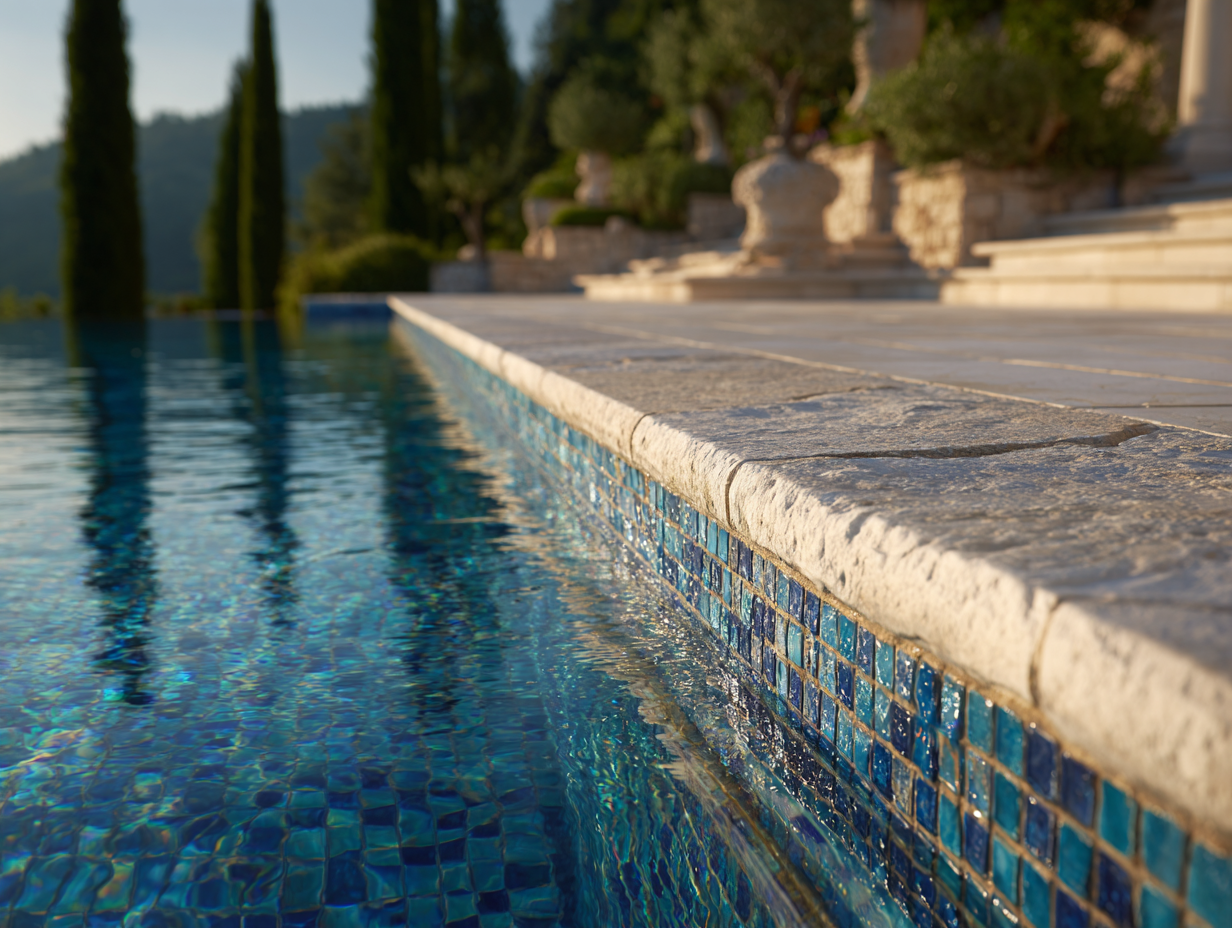
Blue mediterranean tile is one of the most searched variations of this category, and for good reason. The combination of cobalt, turquoise, and aquamarine glazes against water creates a visual effect that is difficult to achieve with standard pool finishes. Mediterranean pool tiles often draw from Moroccan zellige or Spanish azulejo traditions, using hand-glazed squares or small mosaics along the waterline, pool steps, or surrounding deck.
Glass mosaic tiles in Mediterranean blue tones are another popular choice for pools, offering UV resistance and color stability that glazed ceramic cannot always match in direct sunlight. If you are planning a pool that matches your home, the tile selection should connect visually with any adjacent terrace or patio flooring for a cohesive outdoor living area.
How to Choose the Right Mediterranean Tile Pattern
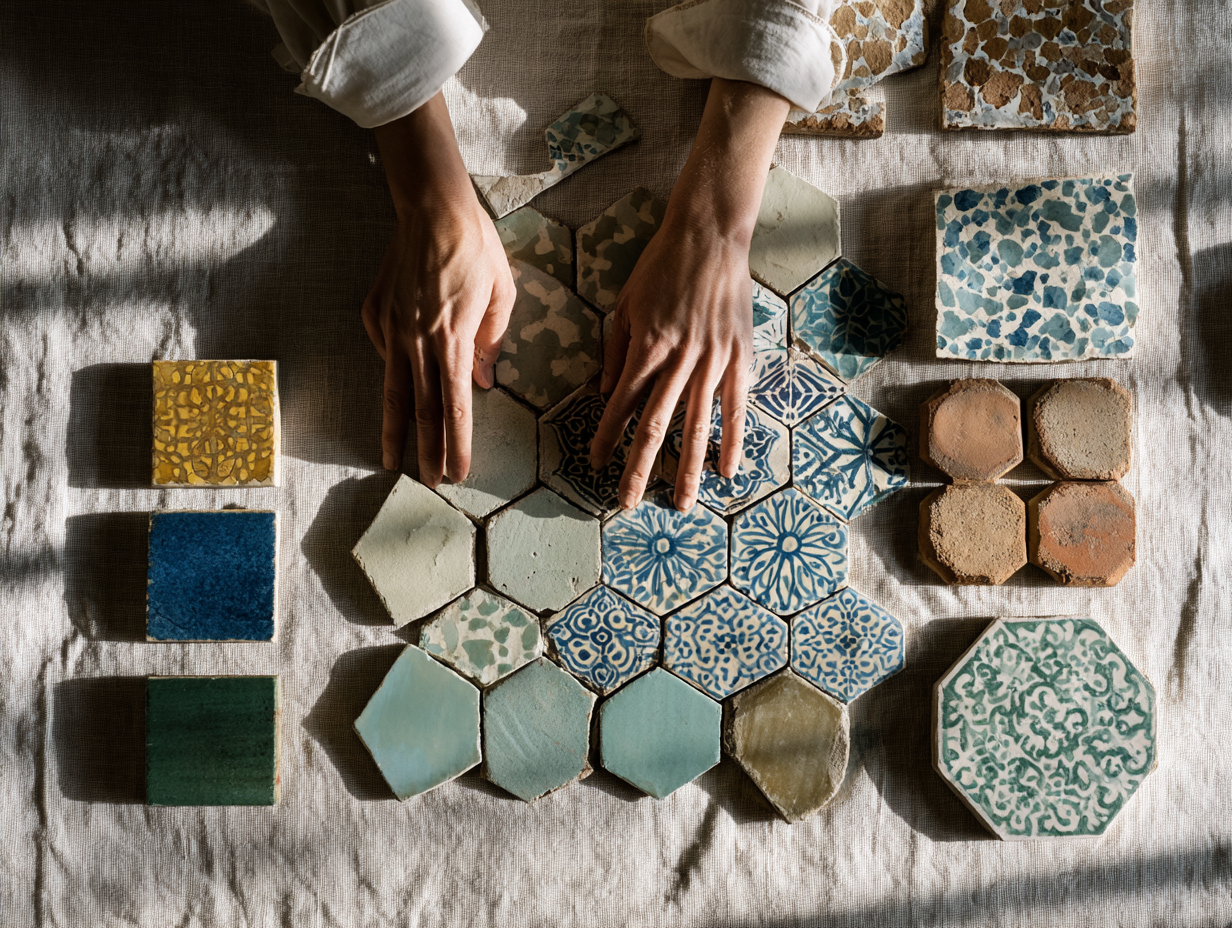
Selecting the right mediterranean tile pattern starts with understanding the scale of the space and the role the tile will play in the overall design. In rooms where the tile is the star, such as a kitchen floor or a bathroom feature wall, bold geometric patterns with high contrast (cobalt on white, terracotta on cream) make the strongest statement. In rooms where the tile supports other design elements, a subtler approach works better: tone-on-tone patterns, soft color variations, or a simple running bond layout with handmade zellige squares.
🏗️ Real-World Example
La Muralla Roja (Calpe, Spain, 1973): Ricardo Bofill’s apartment complex on the Spanish coast reinterprets the Mediterranean casbah tradition through modular geometry and bold color. Inspired by North African fortress architecture, the building uses vivid blues, pinks, and reds that reference both the sea and the surrounding cliffs, demonstrating how Mediterranean color and pattern can operate at an architectural scale far beyond individual tiles.
Consider these practical questions when narrowing your choices. How much pattern can the room support without feeling overwhelming? Will the tile be a background texture or a primary design element? Is the space exposed to heavy moisture or foot traffic? Cement tiles need sealing and periodic resealing, while glazed porcelain tiles printed with Mediterranean patterns require almost no maintenance. For areas that receive heavy daily use, porcelain reproductions of traditional mediterranean tiles floor patterns offer the visual effect with significantly less upkeep.
The most popular tile colors in U.S. homes are shifting toward warm neutrals, but accent areas remain the perfect opportunity for the richer blues, greens, and terracottas that define the Mediterranean palette. A neutral main floor with a patterned Mediterranean tile inset at the entryway, for instance, creates a strong first impression without committing the entire house to a bold pattern. Current kitchen floor tile trends confirm that encaustic and zellige formats are being specified in smaller footprints like galley kitchens and breakfast nooks, where the pattern reads as intentional and premium rather than overwhelming.
The Bigger Picture
The return of mediterranean tile patterns says something larger about where design is heading. After years of chasing uniformity and digital perfection, the spaces people actually want to live in are ones that feel handmade, layered, and connected to a specific place and tradition. A zellige wall in a Brooklyn kitchen or an encaustic floor in a Melbourne entryway does not pretend to be something it is not. It carries centuries of craft history in its surface, and that is exactly what makes it feel fresh again.



How Integrated Furniture Can Shape the Architecture of Urban Interiors
Most people treat furniture as the last decision in interior architecture, yet...
 illustrarch Editoral Team2 Mins read
Architecture and Interior Design: Can Architects Specialize in Both?
Architects hold most of the skills interior design needs, from space planning...
Furkan Sen5 Mins read
How to Make an Architecture Mood Board: A Step-by-Step Guide
A practical walkthrough for building an architecture mood board, covering how to...
Furkan Sen6 Mins read
The Power of Ambience: Role of Restaurant Design on Customer Experience
A restaurant's ambience, its lighting, layout, and decor, quietly shapes how guests...
illustrarch Editoral Team3 Mins read


Leave a comment