

World Cup 2026 Iconic Buildings: A Guide to the Host Stadiums
World Cup 2026 brings the tournament to 16 host stadiums across the USA, Mexico, and Canada, with a building-by-building look at their architects and design.
 Elif Ayse Sen26 June 20269 Mins read4
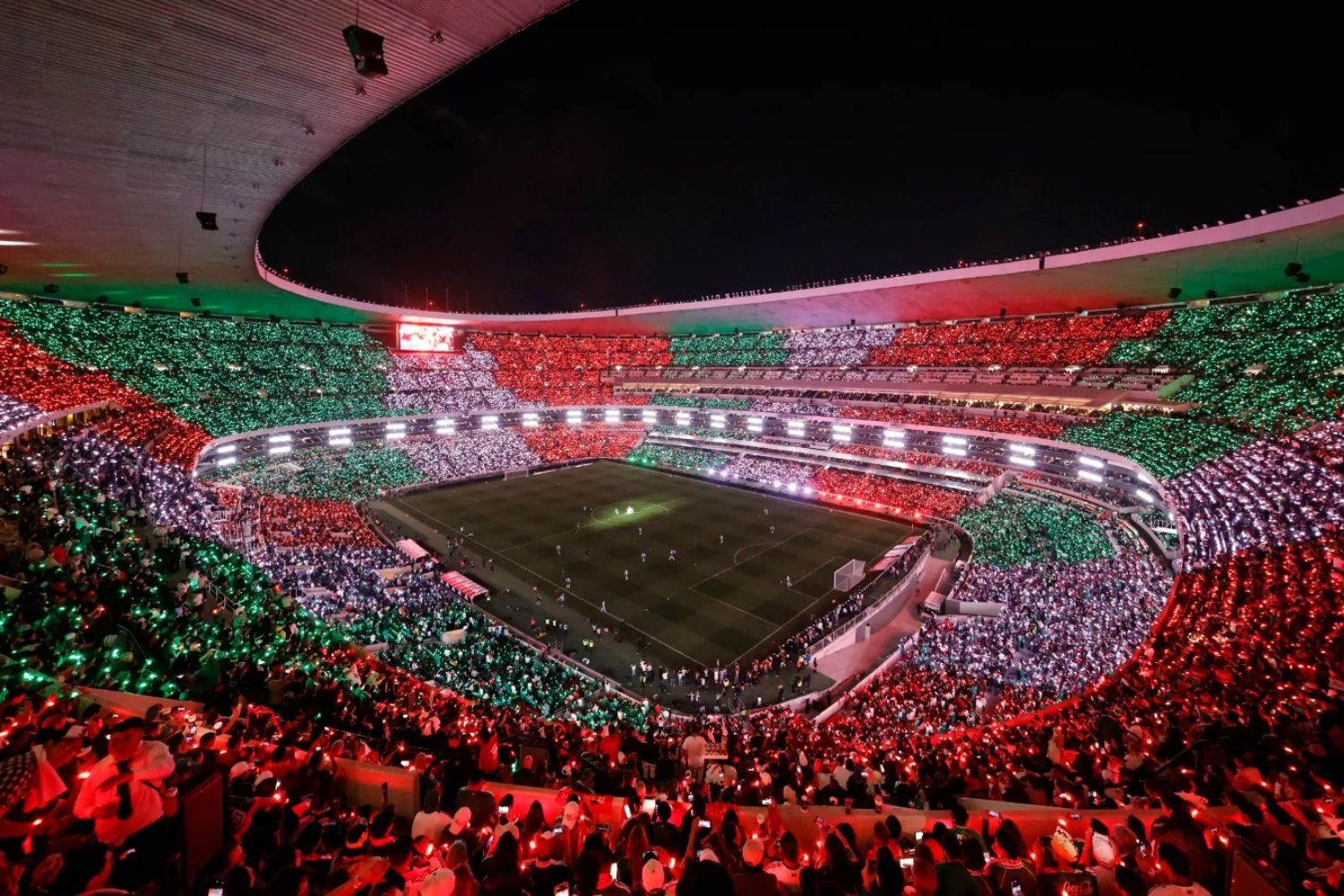
Table of Contents Show
The World Cup 2026 brings the tournament to 16 stadiums across the United States, Mexico, and Canada, each a piece of architectural history in its own right. From the cable-net canopy of SoFi Stadium to the 1966 elliptical bowl of Estadio Azteca, these venues map decades of structural and design ambition.
This is the first time the FIFA World Cup will be co-hosted by three countries, and the first to field 48 teams. That expansion spreads matches across a set of buildings that range from Roman-inspired retractable roofs to open-air bowls engineered for North American winters. For anyone reading these stadiums as architecture rather than scoreboards, the 2026 edition is the richest the tournament has offered.
The lineup splits 11 venues in the United States, three in Mexico, and two in Canada. Some opened only a few years ago, others carry more than half a century of football memory. What follows is a building-by-building look at the most architecturally significant of the world cup 2026 stadiums, the firms behind them, and the engineering decisions that define how each one feels from the stands.
What makes the World Cup 2026 stadiums architecturally significant?
The World Cup 2026 venues stand out because they were built or renovated to balance four competing demands at once: enormous capacity, multi-sport flexibility, climate control across vastly different regions, and a recognizable civic identity. No single roof type or structural system dominates, which is why the tournament reads like a survey of contemporary stadium design rather than a repeated template.
Spread across three countries and several climate zones, the buildings answer different problems. A stadium in Vancouver handles rain and cool temperatures. One in Dallas or Houston manages extreme summer heat with retractable roofs and air conditioning. The Mexican venues sit at high altitude on volcanic ground. These site conditions, more than any stylistic trend, shaped the engineering. For a broader sense of how the typology reached this point, the architectural evolution of stadiums traces the line from Roman amphitheaters to today’s tech-loaded arenas.
📌 Did You Know?
The 2026 tournament uses 16 stadiums, the most since the 2002 World Cup in Korea and Japan, according to FIFA. AT&T Stadium in Arlington and Mercedes-Benz Stadium in Atlanta are tied for the most matches at any single venue, with nine each.
SoFi Stadium: The Cable-Net Canopy in Los Angeles
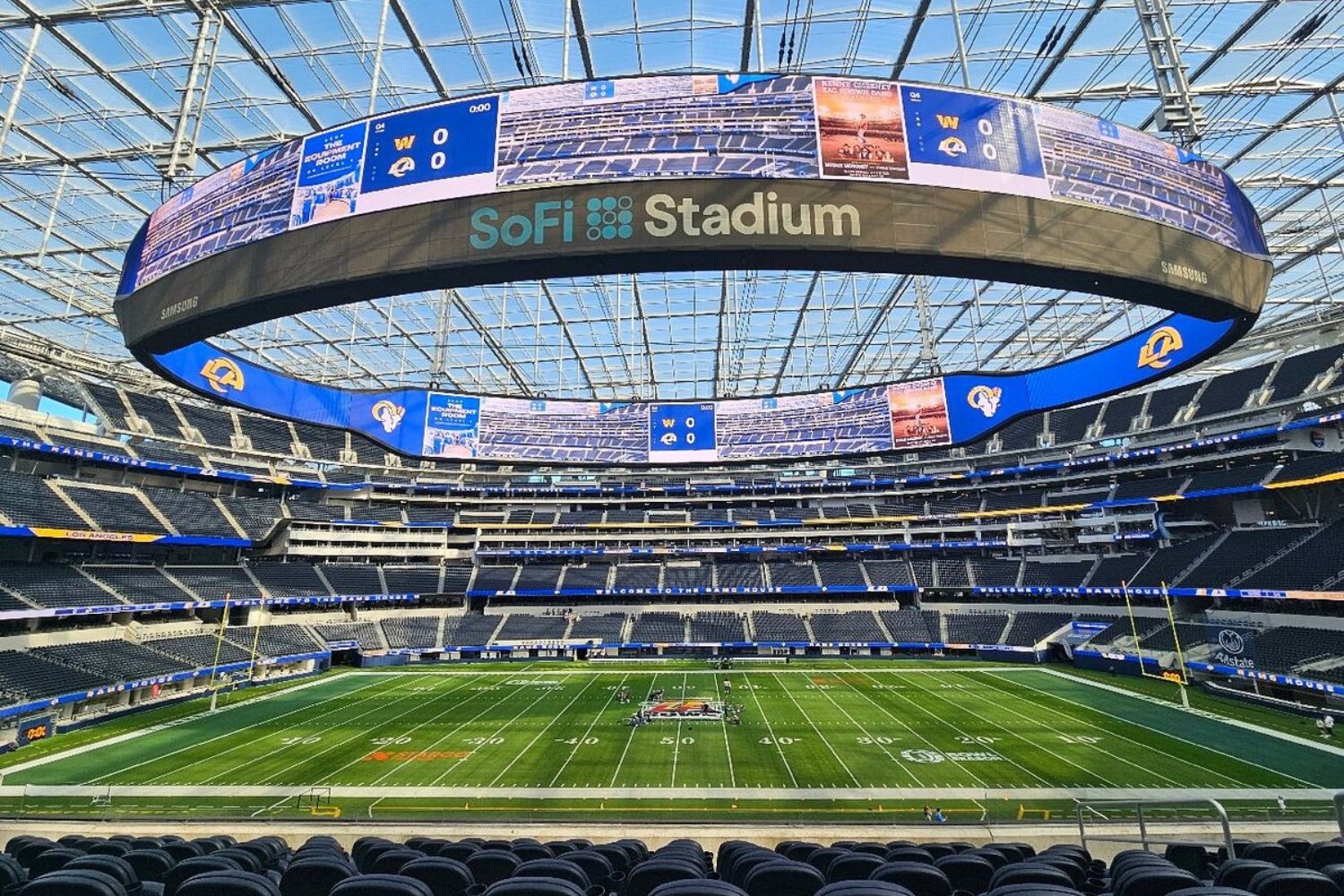
SoFi Stadium in Inglewood, California, is one of the defining buildings of the tournament. Designed by HKS Architects and opened in 2020, it sits roughly 100 feet below the surrounding grade, a decision that let the design team keep the roofline low enough to clear flight paths from nearby Los Angeles International Airport while still enclosing a vast volume.
The roof is its signature move. According to ArchDaily, the translucent ETFE canopy covers the seating bowl, an adjacent 6,000-seat performance venue, and a 2.5-acre plaza, built from tens of thousands of individually shaped and perforated panels. The canopy rests on one of the largest cable-net systems ever built, supported by a ring of tall precast concrete columns. Because the roof is detached on three sides, ocean breezes move through the bowl, and the structure can shift independently in response to the nearby Inglewood fault.
The stadium hosts eight matches during the tournament. Its planning anchors the 298-acre Hollywood Park redevelopment, a reminder that large venues rarely exist alone; they reshape the districts around them. The bowl seats around 70,000 for football and can scale up for major events, and a second 6,000-seat performance hall shares the same canopy, so the building works as an entertainment district rather than a single arena.
What gives SoFi its character from inside is the dual-sided Infinity Screen, a 70,000-square-foot oval video board suspended over the field. It is the first of its kind, and it changes how the volume of the bowl reads, pulling the eye upward toward the translucent roof rather than out toward the seats. For a tournament built around television and global audiences, the building was designed from the start around how it photographs and broadcasts, not only how it holds a crowd.
🏗️ Real-World Example
SoFi Stadium (Inglewood, 2020): The City of Inglewood accepted a stamped digital Model of Record in place of paper drawings, the first time a U.S. project was permitted this way. It marked a shift in how complex stadium geometry gets documented and approved.
Mercedes-Benz Stadium: A Roman Oculus in Atlanta
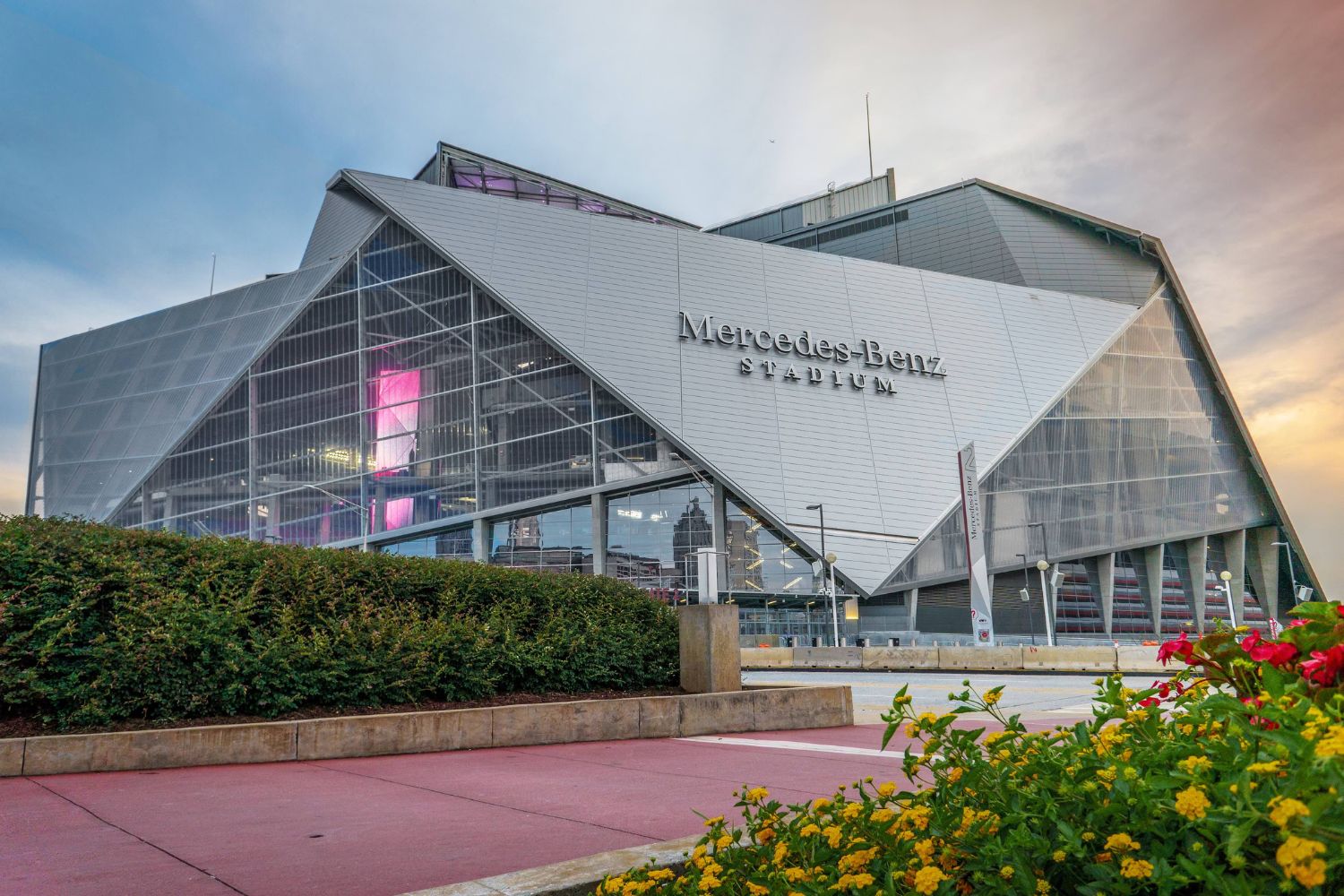
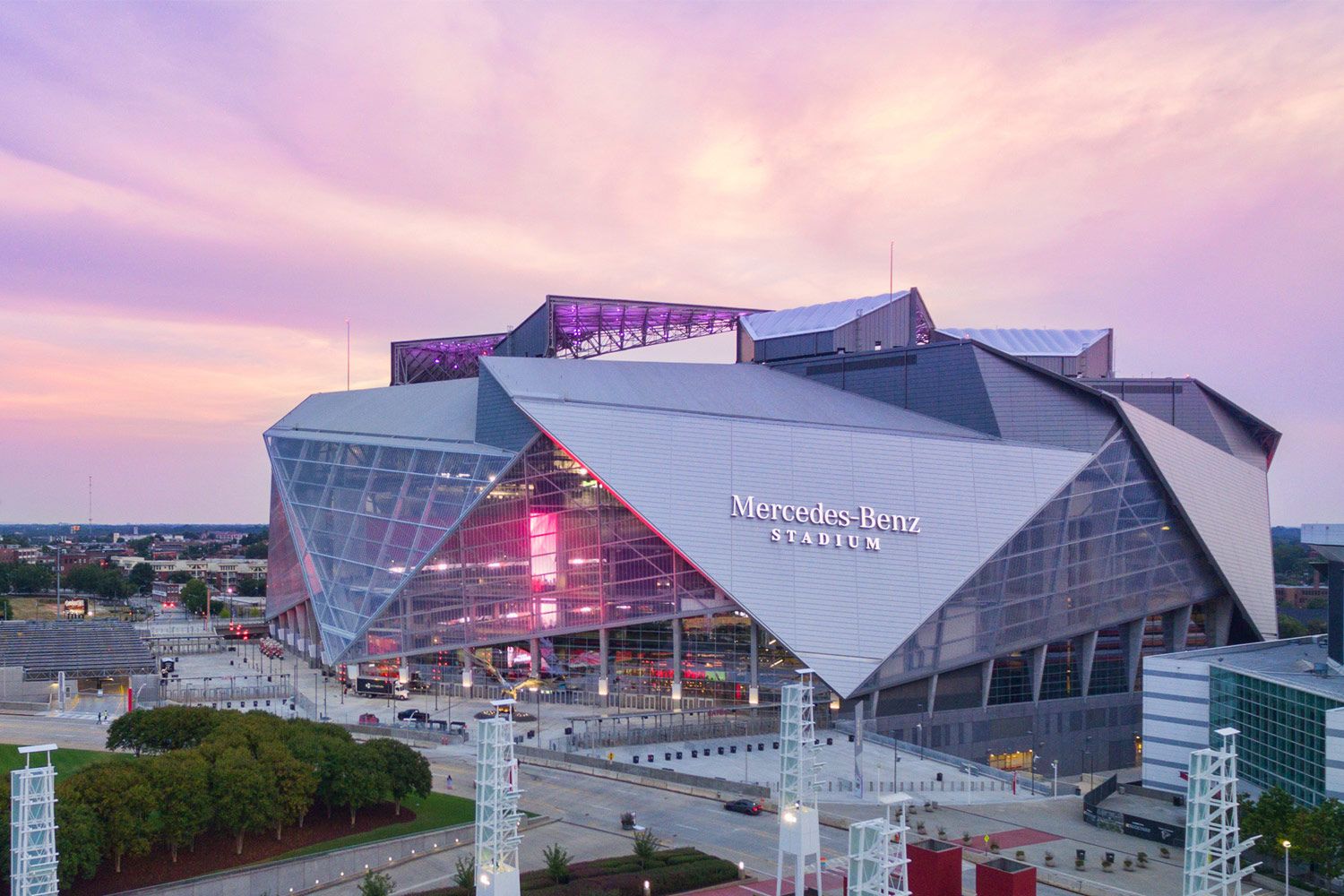
Mercedes-Benz Stadium in Atlanta, designed by HOK with structural engineering by Buro Happold, opened in 2017 and ranks among the most distinctive roofs in the sport. Its eight triangular steel petals slide open and closed like a camera aperture, a form the design team drew from the oculus of the Roman Pantheon. According to HOK, the petals can open in roughly ten minutes, creating a pinwheel pattern overhead.
Ringing the inside is the Halo video board, a 360-degree screen more than 1,000 feet in circumference built directly into the roof structure. Below ground, a 600,000-square-foot cistern captures rainwater to ease flooding in Atlanta’s Westside neighborhood, part of why the building became the first LEED Platinum certified stadium in North America. With nine matches, it carries one of the heaviest schedules of the tournament.
The petal roof shows how far stadium engineering has moved beyond the simple sliding panel. Each petal is a long cantilevered steel structure clad in translucent ETFE, and the eight of them meet at the center to seal the building, then retract outward to leave the open oculus. Coordinating that motion, the loads it places on the supporting ring, and the way daylight falls across the field took close work between architect and structural engineer from the earliest design stages.
Sustainability was treated as a design driver here, not a label added at the end. Beyond the rainwater cistern, more than 4,000 photovoltaic panels generate solar energy on site, and the building’s water and energy systems were engineered together rather than bolted on. For more on how computational design enables these complex moving geometries, see this look at top parametric architecture projects shaping current practice.
AT&T Stadium and MetLife: Engineering for the Final Stages
Two venues carry the heaviest competitive weight in the United States. AT&T Stadium in Arlington, Texas, designed by HKS Architects with structural engineering by Walter P Moore, opened in 2009 and hosts nine matches. A pair of nearly 300-foot box trusses spans the dome, among the longest single-span roof structures of its kind, anchored to the ground at each end. Twin sliding roof panels and giant end-zone doors let operators switch between a sealed, air-conditioned interior and an open-air feel depending on Texas heat.
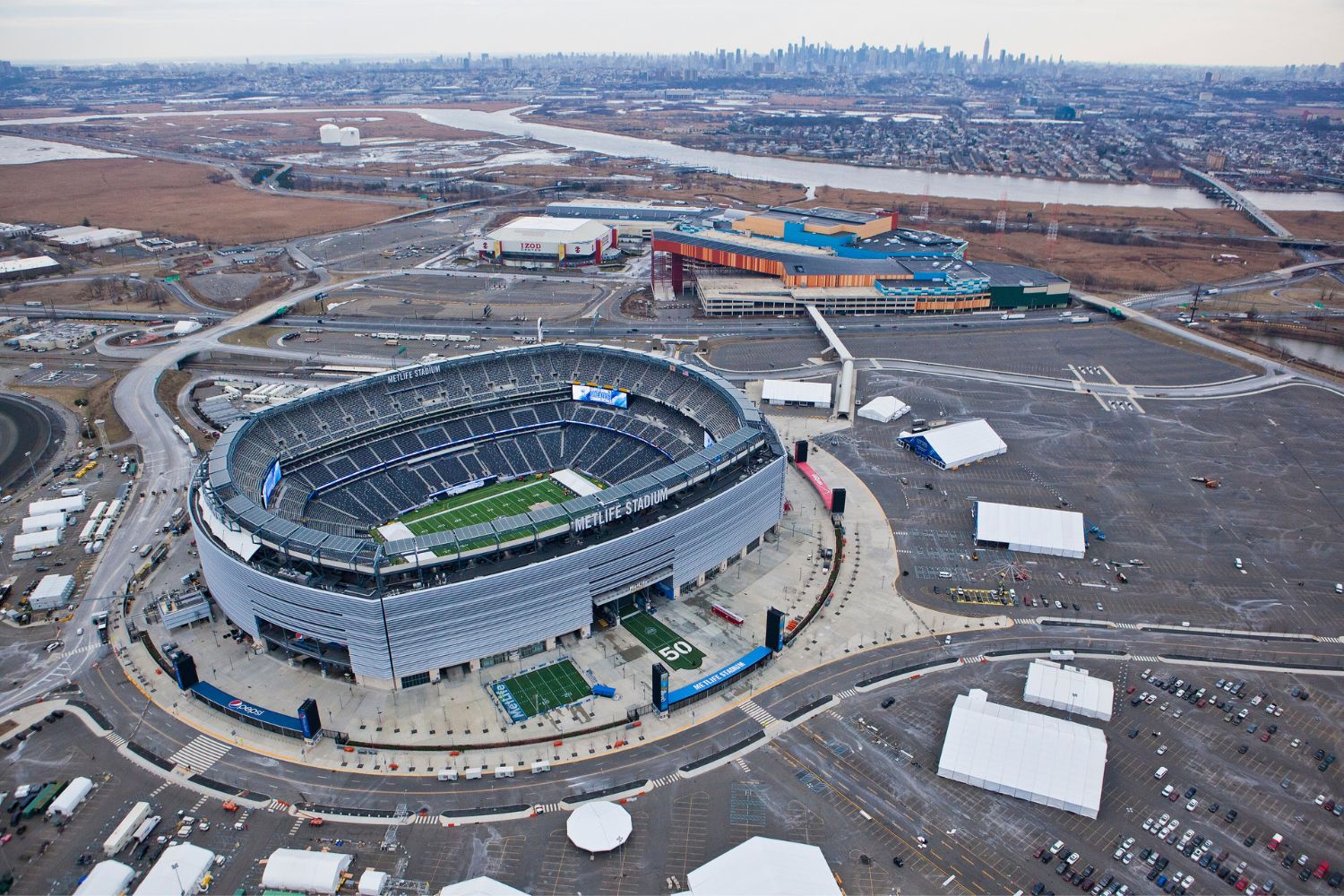
MetLife Stadium in East Rutherford, New Jersey, hosts the World Cup 2026 final on July 19. Designed by 360 Architecture, now part of HOK, it is an open-air bowl wrapped in an aluminum louvre facade that can be lit in changing colors. Unlike many of the southern venues, MetLife carries no roof, a choice suited to its function as a shared home for two NFL teams and now the stage for the tournament’s closing match. When it opened it was the most expensive stadium built in the United States, and its restrained, almost industrial exterior was a deliberate counterpoint to the spectacle of the field inside.
The decision to stage the final in an uncovered stadium says something about the tournament’s geography. A July match in the New York metropolitan area does not need the heat management that drives the Texas and Atlanta designs, so the building leans on cross-ventilation and an exposed bowl rather than mechanical cooling. The contrast between MetLife and AT&T Stadium, two venues carrying the heaviest match loads, captures the range of climate-driven choices across the host country.
How do the major United States World Cup 2026 stadiums compare?
The table below summarizes the architects, opening years, and roof systems of the most significant U.S. venues hosting the tournament.
| Stadium | Architect | Opened | Roof System |
|---|---|---|---|
| SoFi Stadium (Los Angeles) | HKS Architects | 2020 | Fixed ETFE cable-net canopy |
| Mercedes-Benz Stadium (Atlanta) | HOK | 2017 | Eight-petal retractable oculus |
| AT&T Stadium (Dallas) | HKS Architects | 2009 | Twin retractable panels |
| MetLife Stadium (New York/New Jersey) | 360 Architecture (now HOK) | 2010 | Open-air, no roof |
| Lumen Field (Seattle) | LMN Architects | 2002 | Partial cantilevered canopy |
📐 Technical Note
FIFA requires natural grass for World Cup matches. Several covered U.S. venues normally use artificial turf, so grounds teams install temporary natural pitches grown off-site and laid over the existing surface, a recurring requirement across the indoor and retractable-roof world cup 2026 stadiums.
Estadio Azteca: Mexico City’s Three-Time World Cup Host
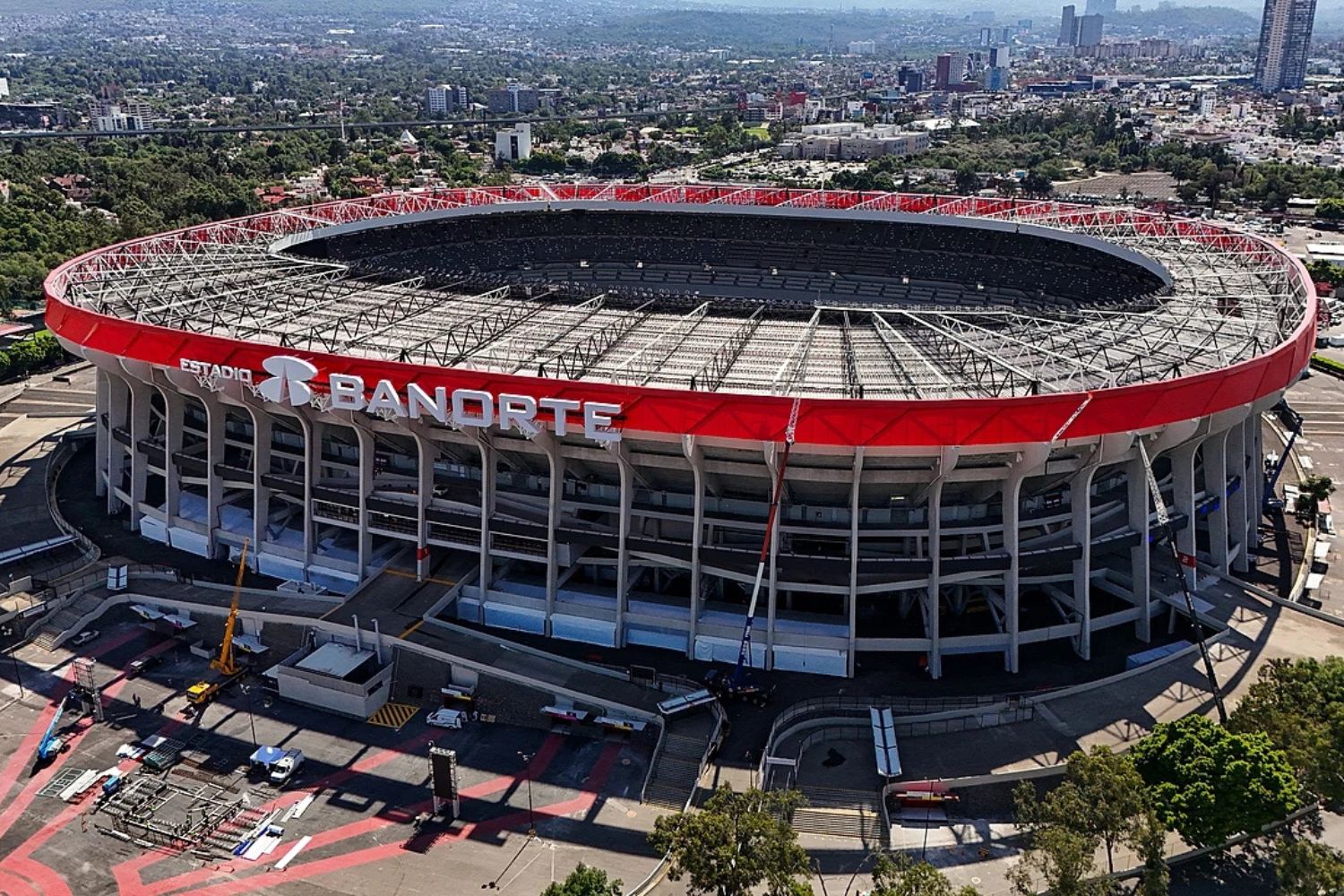
No building in the tournament carries more football history than Estadio Azteca in Mexico City. Designed by Pedro Ramírez Vázquez and Rafael Mijares Alcérreca and inaugurated in 1966, it became the first stadium to host three editions of the FIFA World Cup when the 2026 opening match was played there on June 11.
Built on volcanic ground south of the city, the stadium replaced the typical rectangular layout of its era with a continuous elliptical bowl that removed blind corners. According to its documented history, Ramírez Vázquez and Mijares ran unusually advanced visibility studies for the 1960s, calculating horizontal, vertical, and diagonal sightlines so the pitch stayed clear from nearly every seat. They chose a steep, single-purpose football bowl rather than the multi-use oval common in Europe and the United States at the time. A renovation ahead of 2026 raised capacity and added a hybrid turf pitch and new screens.
Mexico’s other venues, in Guadalajara and Monterrey, round out the southern leg of the tournament, each adapted to high-altitude and warm-climate conditions that shaped their seating geometry and shade strategies.
🎓 Expert Insight
“This should not be just a stadium, but should almost be built like a civic structure.”
Bryan Trubey, lead designer, HKS Architects (AT&T Stadium)
Trubey’s framing captures why these venues read as landmarks rather than utilitarian sheds. The civic ambition behind a stadium often outlasts the team that plays there, which is exactly why buildings like Estadio Azteca remain relevant across three World Cups.
What are the Canadian venues for the tournament?
Canada contributes two host cities, Toronto and Vancouver, with a combined 13 matches. BC Place in Vancouver is the standout for architecture. Its retractable cable-supported roof, a fabric membrane suspended from a central mast and ring of steel masts, was added during a major 2011 renovation and remains one of the largest of its kind. The system lets the venue switch between an enclosed and open configuration to handle the Pacific Northwest’s wet, cool climate.
Toronto’s BMO Field is a more compact open-air ground, expanded for the tournament to meet capacity requirements. Together the two venues show a Canadian preference for adaptable, climate-responsive enclosure rather than the sealed mega-domes of the southern United States. The same instinct toward climate-tuned roofs appears in recent international projects, such as the layered fan-fold canopy on the ZHA waterfront stadium in Guangzhou, which channels heat and ventilation through its form.
How do these buildings reflect modern stadium design?
Read together, the world cup 2026 locations tell a clear story about where large-venue architecture stands now. The priorities have shifted from raw seating capacity toward flexibility, environmental performance, and identity. Retractable roofs, ETFE membranes, and reused rainwater have moved from novelty to expectation, and certification systems like LEED now factor into design briefs from the start.
The contrast between a 2020 building like SoFi and a 1966 building like Estadio Azteca also shows what has not changed. Sightline geometry, crowd flow, and the relationship between the bowl and its surroundings still drive the best designs, just as they did for Ramírez Vázquez. The tools are computational now, and the materials are lighter and more efficient, but the core problem of seating tens of thousands of people with a clear view of the pitch remains the same. For a fuller list of every venue, FIFA’s official host cities page and this guide to the best-designed World Cup 2026 stadiums cover the rest of the lineup, while Dezeen profiles all 16 grounds.
The tournament uses 16 stadiums, the most since 2002. Eleven are in the United States, three in Mexico, and two in Canada. This is the first World Cup co-hosted by three countries and the first to field 48 teams, which is why the match load is spread across so many venues.
MetLife Stadium in East Rutherford, New Jersey, hosts the final on July 19. Designed by 360 Architecture, now part of HOK, it is an open-air bowl and was the most expensive stadium in the United States when it opened. The United States hosts all quarterfinals, semifinals, and the final.
Estadio Azteca in Mexico City, inaugurated in 1966 and designed by Pedro Ramírez Vázquez and Rafael Mijares, is the oldest venue. It became the first stadium to host three editions of the World Cup when the 2026 opening match was played there on June 11.
No. Roof systems vary widely. SoFi Stadium uses a fixed ETFE canopy, Mercedes-Benz Stadium and AT&T Stadium have retractable roofs with air conditioning, and MetLife and several others are fully open-air. The choice tracks each venue's climate rather than a single standard.
Looking Ahead
Spending the tournament watching the architecture rather than only the football changes what these matches feel like. A retractable petal opening over Atlanta or a steep volcanic-ground bowl in Mexico City carries the same design intent as any celebrated museum or tower, just measured in tens of thousands of seats. The real test of these stadiums begins after the final whistle in July, when the question becomes how well each one serves its city for the next fifty years, the way Estadio Azteca already has.






AIA COTE Top 10 Award 2026: 10 Sustainable Projects Setting the Standard
The American Institute of Architects has named the winners of its 2026...
Elif Ayse Sen9 Mins read

Zaha Hadid Architects Rebrand to ZHA: A New Name and a New Chapter
Zaha Hadid Architects has officially become ZHA, ten years after its founder's...
Elif Ayse Sen8 Mins read
Al Maktoum International Airport: Dubai’s 2032 Aviation Megaproject
Dubai's Al Maktoum International Airport has entered large-scale construction, with Phase 1...
Elif Ayse Sen10 Mins read

LOHA Founder Architect Lorcan O’Herlihy Dies at 66
Irish-born architect Lorcan O'Herlihy, founder of Los Angeles firm LOHA, has died...
Elif Ayse Sen8 Mins read


Leave a comment