

LOHA Founder Architect Lorcan O’Herlihy Dies at 66
Irish-born architect Lorcan O'Herlihy, founder of Los Angeles firm LOHA, has died at 66 after a battle with glioblastoma. His work redefined affordable housing, and his belief that architecture is a social act shaped a generation of designers.
 Elif Ayse Sen18 June 20268 Mins read204

Table of Contents Show
Lorcan O’Herlihy, the Irish-born architect who founded the Los Angeles firm LOHA in 1994, died on June 14, 2026, at the age of 66 after a battle with glioblastoma. Known for treating housing as a civic and social project, he reshaped how affordable and supportive housing is designed in Southern California and beyond.
The architecture community is mourning one of its most committed voices on housing and the city. For more than three decades, Lorcan O’Herlihy argued that buildings are never neutral objects, that they sit inside political, economic, and social systems, and that good design carries a responsibility to the people who live with it. His firm, Lorcan O’Herlihy Architects (LOHA), turned that conviction into more than 100 projects across three continents.
Who Was Lorcan O’Herlihy?
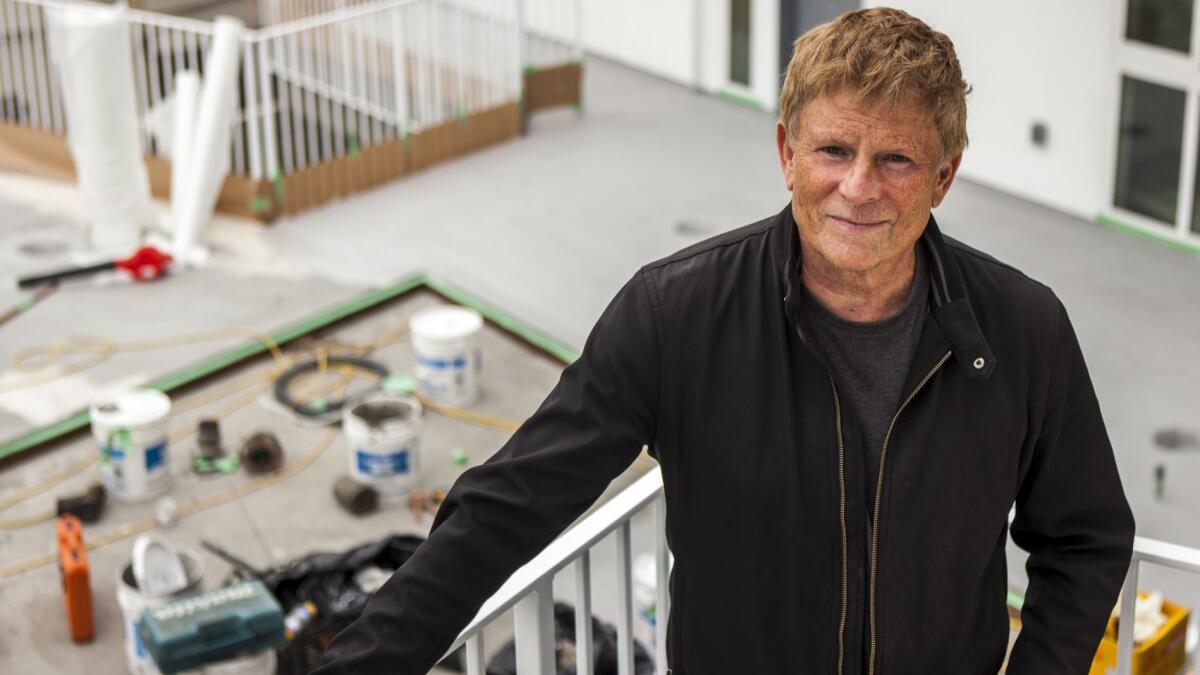
Lorcan O’Herlihy was an Irish-American architect, educator, and urban thinker best known as the founding principal of LOHA, the Los Angeles studio he led for over thirty years. He built his reputation not through single iconic monuments but through housing, the part of the field many architects had long treated as a lesser pursuit. He placed it at the center of his practice.
He was born in Dublin in 1959 into a creative family. His childhood moved between cities in Europe, including London, Rome, and Madrid, an experience he later credited for his lifelong attachment to dense, walkable places with public squares and parks. He returned to Ireland for his school years before studying architecture at California Polytechnic State University in San Luis Obispo, graduating in 1981. He went on to earn a Master of Arts in History and Critical Thinking at the Architectural Association in London, where his research looked at the relationship between film and architecture.
📌 Did You Know?
O’Herlihy grew up surrounded by both design and cinema. His father, Dan O’Herlihy, was an Oscar-nominated actor who had also trained as an architect. Early in his own career, the younger O’Herlihy worked in I.M. Pei’s office on the glass pyramid at the Louvre in Paris, an experience he later called formative, before founding LOHA in Los Angeles.
That mix of art, film, and building stayed with him. He worked as a painter for a period in the mid-1980s, and the sensibility shows in his architecture, particularly in his confident use of color and form. You can see the lineage that shaped him in any survey of the most influential architects of the 20th century, many of whom wrestled with the same questions of housing and the city that would define his own work.
From the Louvre to Los Angeles
O’Herlihy’s early path moved through some of the most respected offices of the late 20th century. His first job was an internship with Kevin Roche John Dinkeloo and Associates in Connecticut, a connection that came through his father’s old friendship with Roche from their student days. He then worked for I.M. Pei and Partners in New York and Paris, joining the team on the Louvre expansion, and later for Steven Holl Architects in New York.
By 1994 he was ready to set out on his own terms. He founded Lorcan O’Herlihy Architects in Los Angeles, a city that became, in his words, both his laboratory and his canvas. In its early years the studio designed single-family houses, but it soon turned toward the multi-unit and mixed-use housing that would make its name. He called the firm’s working method “Amplified Urbanism,” an approach built around fluid connections between public and private space and a reading of the city as a layered set of social and infrastructural patterns.
Architecture as a Social Act
The phrase that best captures O’Herlihy’s career is the one he chose for his 2020 book, Architecture Is a Social Act. He returned to it often. A building, in his view, was an active participant in city life, and housing in particular was a chance to repair and strengthen a neighborhood rather than simply add units to it.
🎓 Expert Insight
“We embrace architecture as a social act. It can enliven a community.”
Lorcan O’Herlihy
This idea ran through his entire body of work and gave his 2020 book its title. For O’Herlihy, a housing block was an opportunity to build civic life, not just a place to stack apartments.
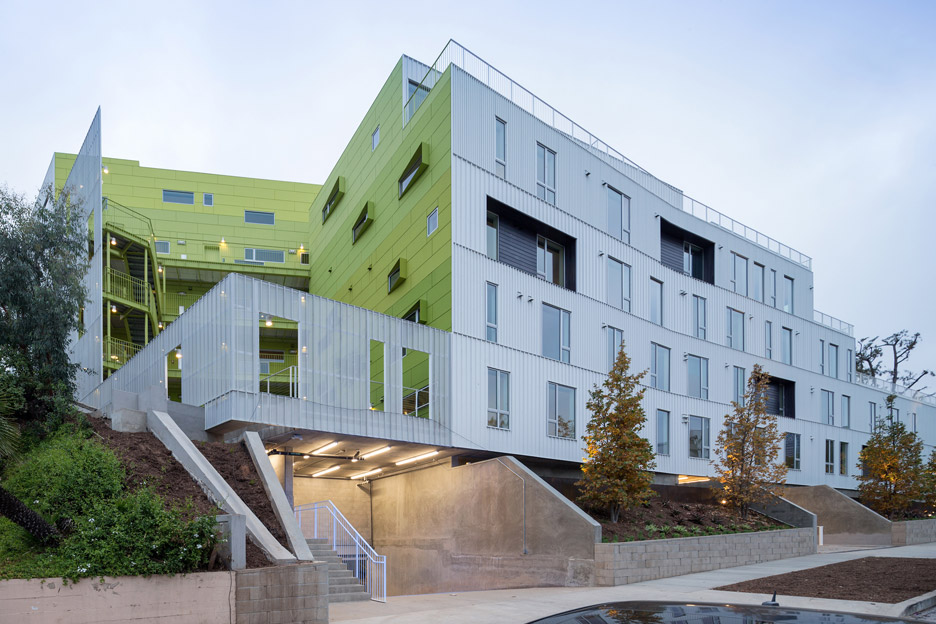
That belief had real design consequences. LOHA became known for pulling circulation, courtyards, terraces, and shared outdoor space to the surface of its buildings, so that the daily routes people took brought them into contact with neighbors. On the tight, often overlooked urban lots the firm favored, these moves treated density as a social asset rather than a problem to be hidden.
His attraction to color was part of the same instinct. A vivid facade made a building legible in the street and gave a housing project a sense of identity and pride. The way he handled hue and material connects to a longer tradition in the field, one that treats color in architecture as a structural and emotional tool rather than decoration.
💡 Pro Tip
When designing dense infill housing on a tight lot, study how LOHA handled circulation. Pulling stairs, walkways, and courtyards to the exterior turns the spaces architects usually tuck away into places for daily contact between residents, often adding social value without adding cost or floor area.
Defining Projects and Housing Innovation
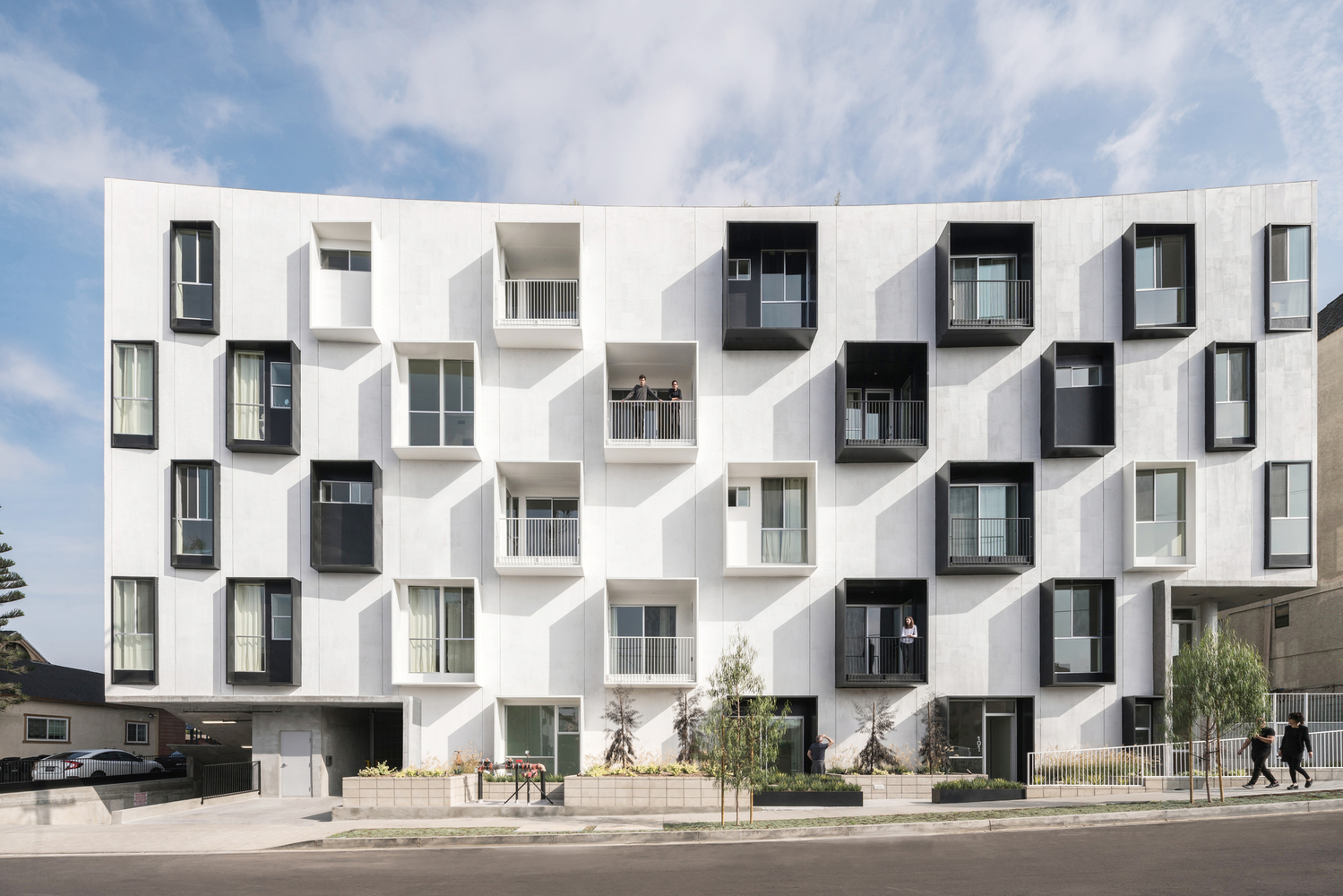
O’Herlihy’s work reads as a sustained argument that affordable housing, supportive housing, and market-rate residential buildings can all hold the same design ambition. Projects such as Formosa1140 in West Hollywood, Habitat 825, Mariposa1038 in Koreatown, and MLK1101 Supportive Housing in South Los Angeles each tested how courtyards, outdoor circulation, and shared space could carry social weight inside increasingly dense neighborhoods.
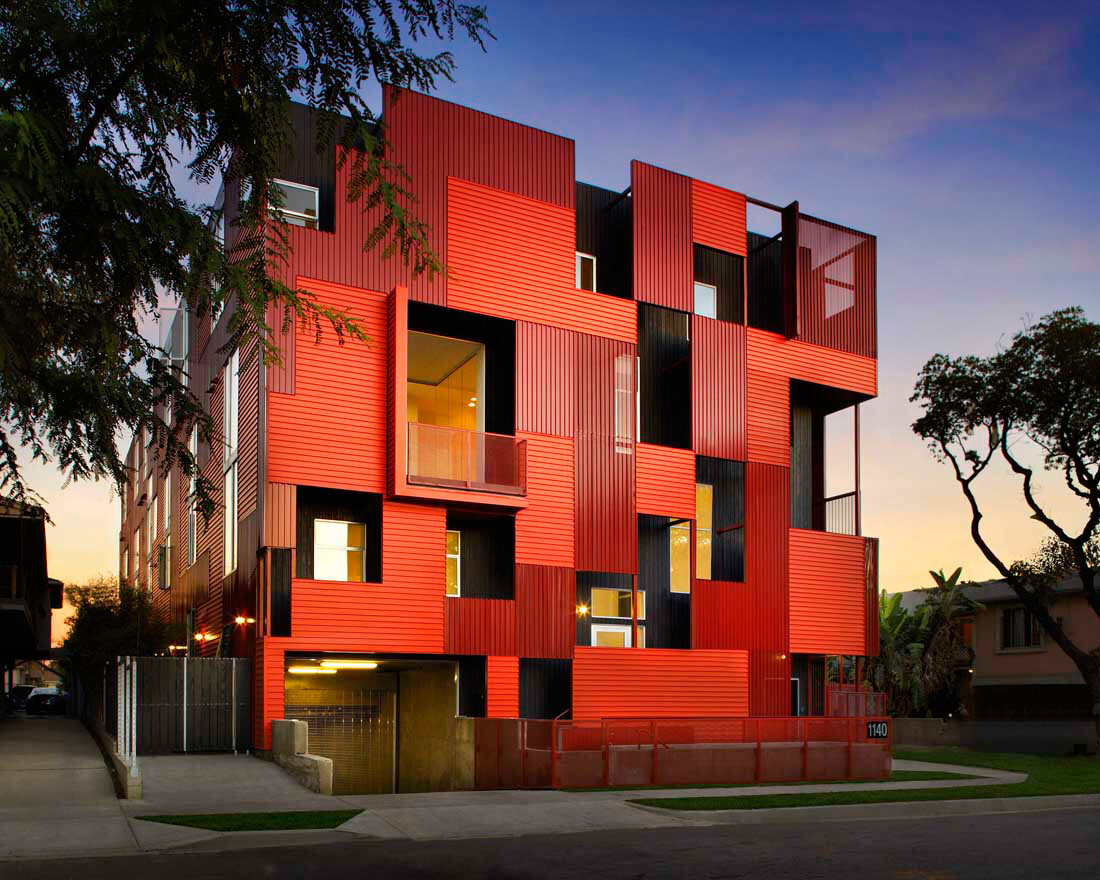
Formosa1140 is a good example of his thinking made concrete. Rather than wrap the building around a private courtyard, LOHA pushed the housing to one side of the lot and gave roughly a third of the privately owned site back to the city as a public pocket park, in an area where parkland was scarce. The result created density and green space at once, and offered a repeatable model for small, community-minded development.
Signature LOHA Projects at a Glance
The following projects give a sense of the range O’Herlihy and his studio covered, from affordable housing to cultural and educational work:
| Project | Location | Focus |
|---|---|---|
| Formosa1140 | West Hollywood, CA | Red multifamily housing with a public pocket park |
| Mariposa1038 | Los Angeles, CA | Monochrome multifamily block, AIA-recognized housing |
| MLK1101 Supportive Housing | South Los Angeles, CA | Affordable and supportive housing with a community center |
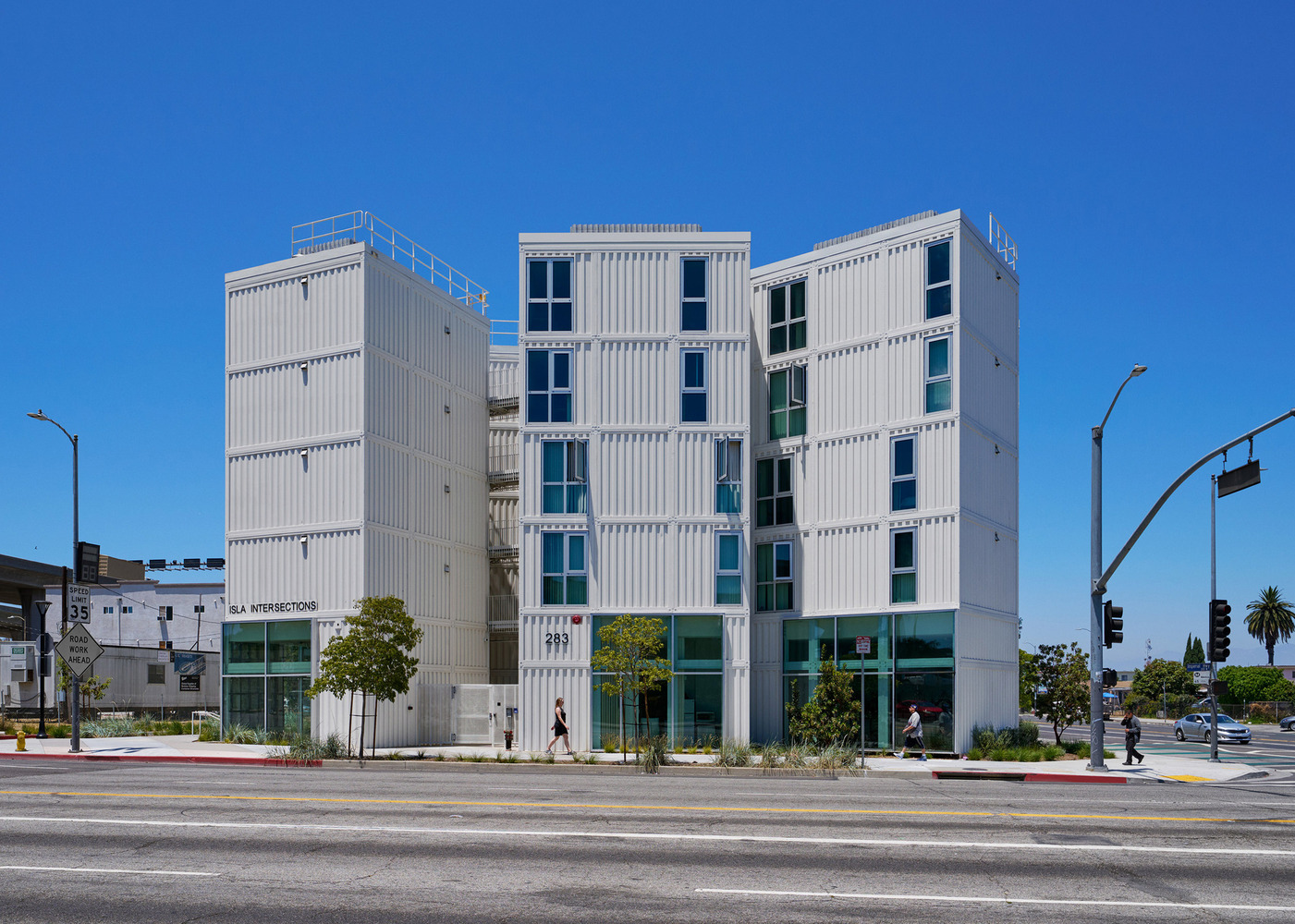
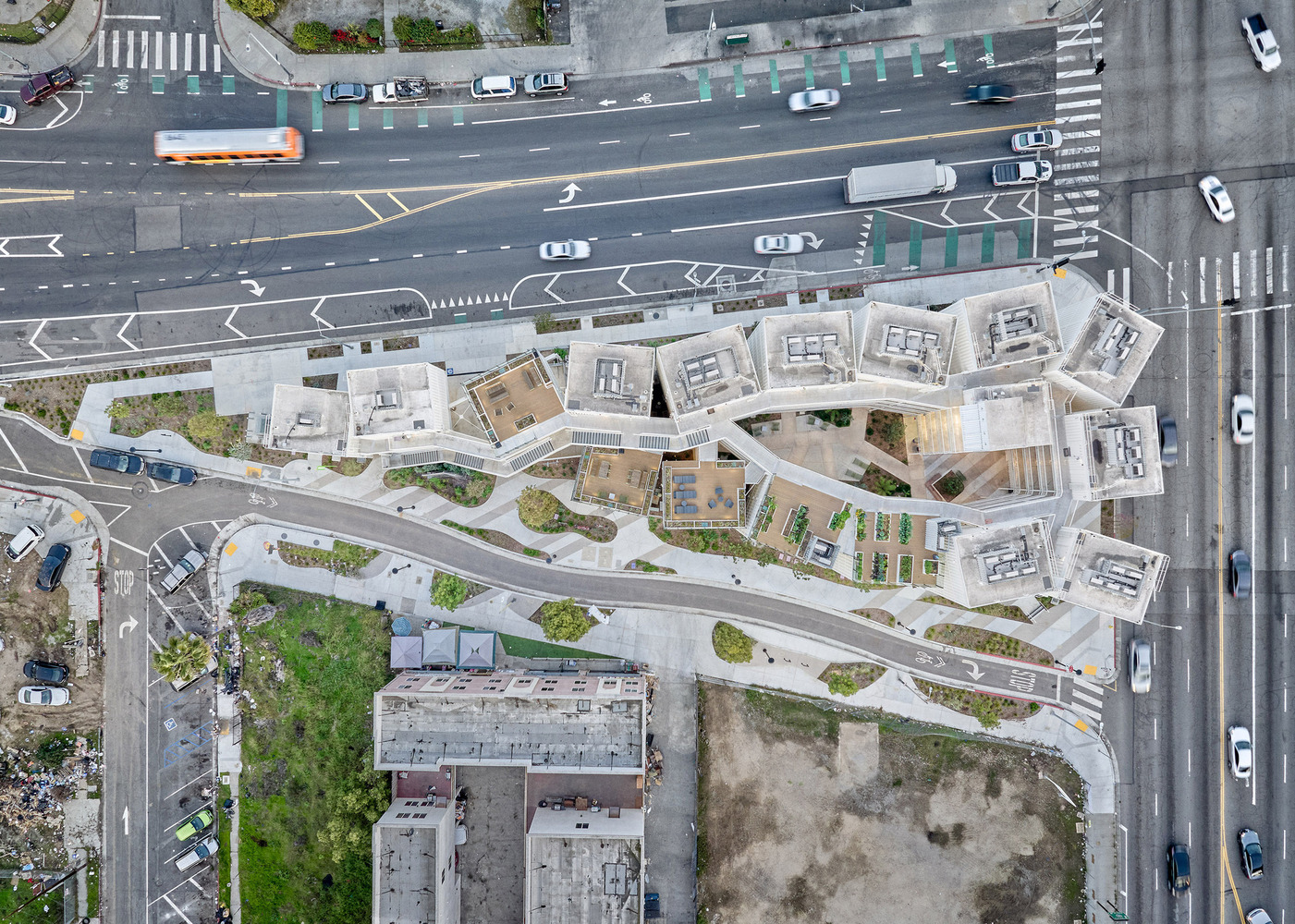
| Isla Intersections | Los Angeles, CA | Prefabricated modular supportive housing on a freeway-edge site |
| Sandi Simon Center for Dance | Orange, CA | Adaptive reuse of a citrus packing facility for Chapman University |
| Little Village | Detroit, MI | Multi-building cultural arts campus |
His student housing was just as inventive, including the stepped SL11024 development and the coastal San Joaquin complex for the University of California, Santa Barbara. Across these buildings, the design problem was rarely just the apartment. It was the relationship between the building and the street, and the small shared moments that turn a group of tenants into a community. For anyone studying these questions today, his career is a working catalogue of innovative approaches to affordable housing.
🏗️ Real-World Example
Isla Intersections (Los Angeles): This 54-unit supportive housing project sits on a pie-shaped lot wedged between the 110 and 105 freeways. LOHA used prefabricated modular units arranged around a sheltered courtyard, turning a leftover scrap of infrastructure into homes for formerly unhoused residents. It won the housing category in the inaugural Architectural Record Awards.
Projects like Isla Intersections show how far prefabrication has come as a tool for fast, dignified housing, a thread that continues in current affordable housing design trends. O’Herlihy treated modular construction not as a cost-cutting shortcut but as a way to achieve unusual geometries on difficult sites.
Expanding to Detroit and Beyond
In 2016, O’Herlihy opened a second LOHA office in Detroit, a move that surprised some observers. He could have spent a comfortable career building for wealthy clients in Los Angeles. Instead he committed the firm to the harder questions of American cities in transition. In the Brush Park neighborhood, LOHA worked with Dan Gilbert’s Bedrock company on a strategy of reinforcing corner lots with new stepped buildings, each clad in a single material such as brick, wood, or metal.
The firm also studied the larger Milwaukee Junction site and designed Baltimore Station, a 138-unit building wrapped in undulating metal around a deep courtyard. Detroit’s Little Village, a multi-acre cultural arts campus with a gallery, performance venue, library, restaurant, and sculpture garden, was named by Time as one of the world’s greatest places of 2025. Across both cities, O’Herlihy’s projects engaged the contrasting conditions of density and vacancy, asking how architecture could respond to shifting economic and social realities while keeping community life at the center.
Awards, Teaching, and Recognition
O’Herlihy’s contributions were widely recognized across his career. In 2004, the Architectural League of New York selected him as one of its Emerging Voices. In 2009, he was elevated to the College of Fellows of the American Institute of Architects. Under his leadership, LOHA completed more than 100 projects and received over 200 national and international awards, including eight AIA National Awards, the World Architecture Festival Housing Prize, the AIA Los Angeles Gold Medal, the AIA California Maybeck Award, and the AIA California Lifetime Achievement Award in 2025. In 2018, the office was ranked first in design in ARCHITECT magazine’s annual Architect 50 survey.
Teaching ran alongside the practice for his entire career. He served as an adjunct professor at the USC School of Architecture in Los Angeles and lectured at institutions including the Architectural Association, SCI-Arc, Columbia University, Carnegie Mellon University, Pratt Institute, and Cranbrook Academy of Art. A generation of younger architects encountered his thinking in lecture halls before they ever saw it built.
What Happens to LOHA Now?
In March 2026, only months before his death, LOHA announced a transition to a collective ownership structure, elevating seven long-time collaborators into leadership roles as director, senior associate, and associate. Presented as a continuation of the studio’s collaborative culture, the move distributed authority across the office rather than concentrating it, and it suggested that succession and continuity had become real concerns for O’Herlihy.
🎓 Expert Insight
He “truly believed in architecture’s ability to build community, equity, and agency.”
Ghazal Khezri, LOHA director
Colleagues describe a studio where younger architects were given room to grow, a culture O’Herlihy protected even as the firm took on larger and more complex civic work.
In many ways the new structure mirrored the values present throughout his architecture. Community, shared ownership, and participation all mattered to him, and the firm he leaves behind is built to carry that work forward. The projects on the boards, and the people he trained to lead them, are perhaps his most durable answer to the question of what comes next.
A Lasting Legacy
O’Herlihy is survived by his wife, Leila, and their twin sons, Daire and Darcy, along with the studio family he built over three decades at LOHA. He had recently returned to Dublin to show his sons the house where he and his siblings grew up, and had completed his first building in Ireland, a richly detailed home on a historic mews lane.
What he leaves the field is a proof of concept. He showed that affordable and supportive housing can be as ambitious, as inventive, and as beautiful as any cultural landmark, and that an architect can take on the unglamorous problems of the contemporary city without losing artistic conviction. His own buildings already point to the broader lesson at the heart of work that aims to deliver real, lasting cost-effective housing solutions for urban development. For a fuller record of his projects and writing, his firm’s site and the tributes published by ArchDaily and Dezeen offer a place to start.
Lorcan O’Herlihy spent his career insisting that architecture answers to people. The cities he worked in are more humane for it.





MoMA’s Full Disclosure Exhibition Traces Information Design from Hand-Drawn Data to AI Memories
Full Disclosure: The Edge of Information Design, curated by Paola Antonelli, is...
 illustrarch Editoral Team2 Mins read
Zumthor’s Three New Buildings Open at Fondation Beyeler in Riehen
Peter Zumthor's Wyss Museum, Ammann Pavilion and Erlen Torhaus open at Fondation...
illustrarch Editoral Team4 Mins read

Benthem Crouwel Completes the Afsluitdijk Revamp with a Fish Passage and Domed Pumping Stations
The 32 km Afsluitdijk in the Netherlands has been raised, armoured and...
illustrarch Editoral Team2 Mins read
Luxembourg Pavilion Tackles the Overconsumption of Living Space at the 2027 Venice Biennale
Curated by Céline Zimmer and Exutoire, the Luxembourg Pavilion's Excess! will compare...
illustrarch Editoral Team2 Mins read


Leave a comment