

Mastering Flexible Housing Solutions: Exploring Alternatives To Long-Term Lease Agreements
Flexible housing solutions provide renters with adjustable terms and options like month-to-month leases and co-living spaces, catering to the needs of a mobile workforce.
 Begum Gumusel27 February 20245 Mins read421

Table of Contents Show
Flexible housing solutions are living arrangements that replace rigid long-term leases with shorter, adjustable terms, letting renters change where and how they live as their needs shift. Common options include month-to-month tenancies, short-term furnished rentals, co-living spaces, and serviced apartments, each trading a long commitment for added mobility.
Long leases once defined renting. A signed contract locked you in for twelve months or more, with penalties for leaving early. That model still suits people who want stability, but it sits awkwardly with remote work, project-based jobs, and the rising cost of moving. The alternatives below give tenants room to adapt without walking away from a place to live entirely.
What Are Flexible Housing Solutions?
At their core, flexible housing solutions shorten the gap between your circumstances and your lease. Instead of committing to a fixed address for a year, you rent on terms that can be renewed, paused, or ended with a few weeks of notice. The category covers a spread of formats, from a privately rented room booked for a month to a fully managed apartment with cleaning and utilities folded into one bill.
The thread connecting them is control. You decide how long to stay, how furnished the space needs to be, and how much service you want bundled in. For people relocating for work, testing a new city, or waiting on a home purchase, that control often matters more than the lower headline rent of a traditional lease.
💡 Pro Tip
Before signing any flexible arrangement, read the notice clause first, not the rent. A place advertised as month-to-month can still require 60 days of notice to leave, which quietly cancels most of the flexibility you paid a premium for.
Why Tenants Are Moving Away From Long-Term Lease Agreements
The shift is driven less by dislike of stability and more by a mismatch with how people now work and move. A periodic tenancy, the legal term for month-to-month and similar agreements, exists only for the length of each rent payment and renews automatically until either side gives notice, as described in this overview of how leases and periodic tenancies work. That structure fits lives that change in months, not years.
Three pressures push tenants toward shorter terms. Job mobility has grown, with contract and remote roles that can relocate someone on short notice. Housing affordability has tightened, making a year-long commitment feel risky. And the experience of renting has improved, since managed flexible options now offer furniture, internet, and maintenance that older short leases never did.
Main Alternatives to Long-Term Lease Agreements
Each alternative answers a different question about commitment, furnishing, and service. The table below sets them side by side before the sections that follow look at each one in detail.
Comparing the Main Flexible Housing Options
| Option | Typical Commitment | Furnished | Best For |
|---|---|---|---|
| Month-to-month tenancy | Renews monthly | Sometimes | Uncertain timelines, home buyers in transition |
| Short-term rental | Days to a few months | Yes | Relocations, project work, trial stays |
| Co-living space | Weeks to months | Yes | Young professionals, newcomers to a city |
| Serviced apartment | Nights to several months | Yes, with services | Business travel, extended corporate stays |
Month-to-Month and Periodic Tenancies
A month-to-month agreement keeps the structure of a normal rental but drops the fixed end date. Rent, deposit, and house rules stay much the same, yet either party can end the arrangement with proper notice. It is the closest flexible option to conventional renting, which makes it the easiest entry point for people leaving a long lease behind. The trade-off is that landlords may charge slightly more or raise rent on shorter cycles.
Short-Term and Furnished Rentals
Short-term rentals cover furnished stays that last from a few nights to a few months, often booked through dedicated platforms. They suit relocations, renovations, and trial periods in a new neighborhood. Because regulation varies widely by city, check local rules before booking, since some places cap how long a short-term let can run. The reference on short-term rental regulation outlines how these limits differ between jurisdictions.
Co-Living Spaces
Co-living offers a private bedroom inside a shared building, with kitchens, lounges, and sometimes coworking areas managed by a single operator. Rent usually bundles utilities, cleaning of common areas, and community events into one monthly figure. The format grew quickly in dense cities where private apartments are scarce or expensive. Architecture and design teams have treated it as a distinct building type, and the projects collected on ArchDaily’s co-living tag show how operators balance private and shared space. For a deeper comparison, see our piece on co-living versus the traditional apartment.
🏗️ Real-World Example
The Collective Old Oak (London, 2016): One of the first large purpose-built co-living buildings, it housed roughly 500 residents in compact private rooms wrapped around shared kitchens, lounges, and event spaces. The project became an early reference point for how flexible community housing could work at scale in a major city.
Serviced Apartments
Serviced apartments sit between a hotel and a rental. You get a self-contained home with a kitchen, plus hotel-style services such as housekeeping and front-desk support. They appeal to business travelers and anyone needing a furnished base for weeks at a time without signing a lease. The history and scope of the format are covered in this background on shared and managed residential models, which trace how operator-run housing spread across cities.

Benefits and Trade-Offs of Flexible Housing Solutions
Flexibility has a clear upside and a real cost. The freedom to leave on short notice, the convenience of furnished and serviced spaces, and the lighter financial commitment all draw tenants in. Against that, per-night or per-month pricing usually runs higher than a long lease, availability can be thin in popular areas, and frequent moves carry their own friction.
⚖️ Pros & Cons at a Glance
✔️ Pros: short notice periods, furnished and serviced options, lower upfront commitment, easy relocation
✖️ Cons: higher cost per month, limited supply in some markets, repeated moving effort, fewer tenant protections in short lets
The right balance depends on how predictable your next year looks. Someone certain of staying put rarely benefits from paying a flexibility premium. Someone who may relocate, buy a home, or change jobs often finds the extra cost worthwhile. Reviewing how unit sizes and prices vary helps set expectations, which our breakdown of average apartment sizes by city covers in detail.
⚠️ Common Mistake to Avoid
Many renters compare only the monthly rent and ignore what is bundled in. A serviced apartment that looks expensive may already cover utilities, internet, furniture, and cleaning, costs that add up fast in a bare long-term unit. Compare the full all-in figure, not the sticker price.
How to Transition to Flexible Housing
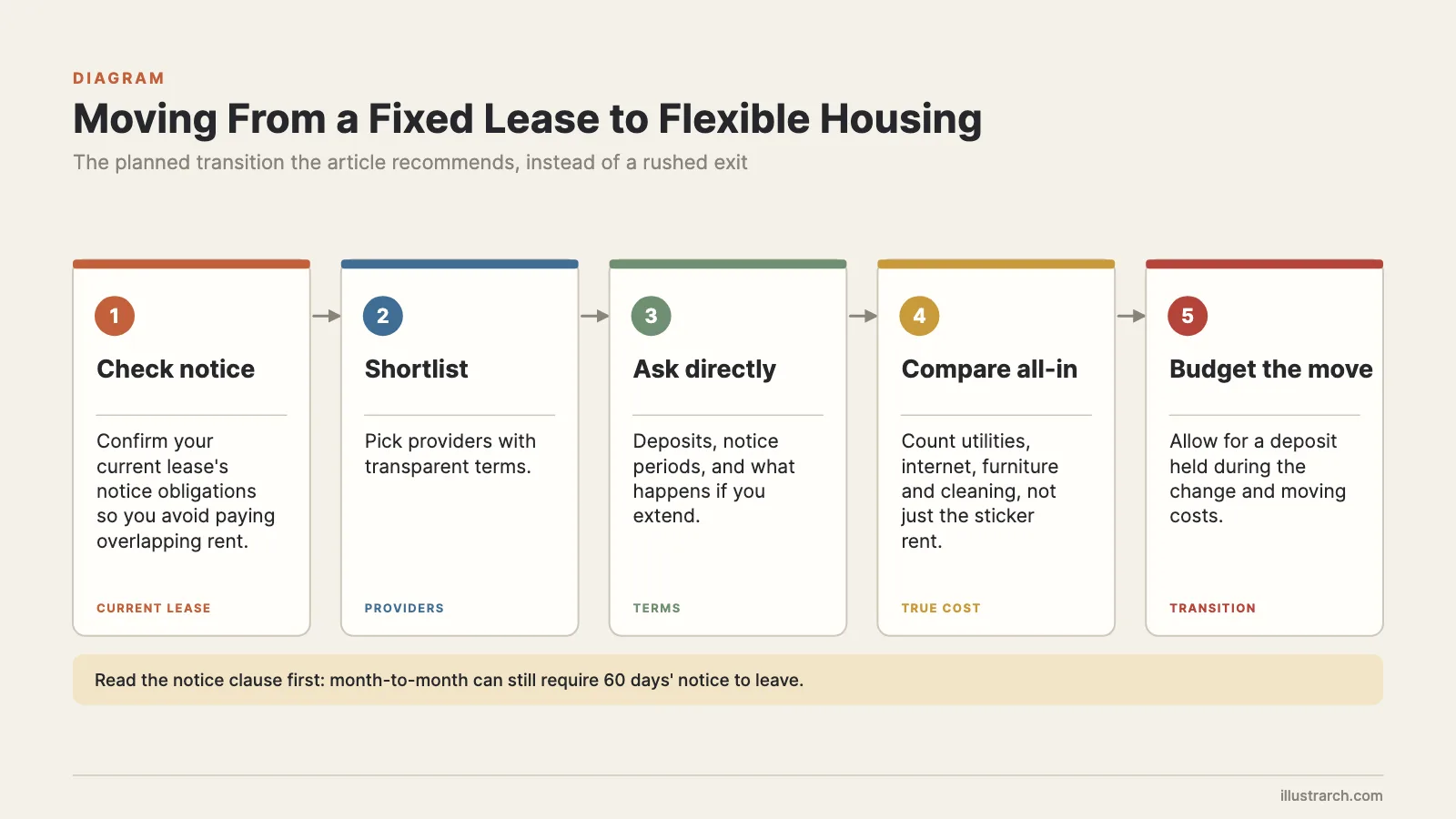
Moving from a fixed lease to a flexible arrangement works best as a planned step rather than a rushed exit. Start by confirming your current notice obligations so you avoid overlapping rent. Then shortlist providers with transparent terms, and ask directly about deposits, notice periods, and what happens if you extend. Reading the agreement closely matters more here than with a standard lease, since terms vary widely between operators.
Budget for the transition itself, including any deposit held during the change and the cost of moving furnished or unfurnished. People weighing smaller footprints often look at minimalist formats too, and our guide to tiny houses versus micro apartments shows how compact living overlaps with flexible renting.
Flexible Housing and Sustainable Urban Living
Beyond convenience, flexible housing connects to how cities use space. Shared buildings put more residents on the same plot, reduce duplicated appliances and furnishings, and keep existing structures in active use through adaptive reuse. Compact, well-occupied housing tends to lower per-person energy demand compared with sprawling low-density alternatives. For renters drawn to lighter living overall, our look at off-grid tiny house living explores how reduced footprints and self-sufficiency fit the same mindset.
The Bigger Picture
Flexible housing solutions are not a replacement for the long lease so much as a wider set of choices around it. The renters who gain most are those who match the format to a clear need, whether that is mobility, furnishing, or a shorter commitment. As remote work and housing pressure keep reshaping cities, the question is shifting from how long you will stay toward how easily your home can change when your life does.
Rental rules, notice periods, and short-term letting limits vary by location. Confirm local regulations and the exact terms of any agreement before signing.








How Developers Are Building Package Rooms Into New Multifamily Properties
Parcel volume now shapes a multifamily ground floor as much as parking...
 illustrarch Editoral Team3 Mins read

How Much Does It Cost to Hire an Architect for a House Extension?
A clear look at the cost to hire an architect for a...
 Sinan Ozen7 Mins read

Top 5 Agencies Competing for the Best Real Estate Company in Boca Raton
Boca Raton real estate agencies are evaluated based on sales performance, client...
illustrarch Editoral Team8 Mins read

The Architecture of Finance: Understanding Real Estate Loan Types for Residential and Commercial Properties
A focused guide connecting the architecture of finance with real estate loan...
Sinan Ozen8 Mins read


Leave a comment