

Functional Furnitures for Small Spaces
Small space design is becoming increasingly important as modern homes and apartments continue to shrink. With the right multifunctional furniture, clever storage solutions, and thoughtful layouts, even the smallest spaces can feel comfortable, organized, and visually appealing. This article explores practical and stylish ways to maximize limited square meters and create a home that feels bigger and more functional.
 Elif Ayse Sen4 March 20235 Mins read648

Table of Contents Show
Functional furniture for small spaces is furniture designed to do more than one job, so a single piece can store, seat, sleep, or work without crowding the room. By choosing items that fold, extend, or hide storage, you can keep a small home open and comfortable while still meeting daily needs. The goal is fewer pieces that each pull more weight.

Why Functional Furniture Matters in a Small Space
Small homes and apartments keep gaining ground, and the math behind it is simple. Rising prices, denser cities, and a move toward simpler living all push people into compact footprints. For context on how living areas differ between cities, see this look at average apartment sizes by city, which shows how tight many urban homes really are.
In a compact home, every piece competes for the same floor. A standard bed, a separate desk, a sofa, and a dining set rarely coexist in a studio without making it feel packed. Functional furniture for small spaces solves that conflict by merging roles. A wall bed clears the floor by day. A storage ottoman replaces both a coffee table and a cabinet. Each item you combine is one less item taking up room.
📌 Did You Know?
The fold-away bed has a small-space origin story. According to Wikipedia, William Lawrence Murphy patented his “Disappearing Bed” in 1912 while living in a one-room apartment in San Francisco, turning his bedroom into a parlor by day. The pivot and counterbalance design he refined is still the basis of modern wall beds.
What Makes a Piece Truly Multifunctional?
Not every product labeled space-saving actually saves space. A good multifunctional piece changes its role quickly, stores something useful, or adjusts to the moment. Look for three qualities: a second genuine function, smooth daily operation, and a closed size that fits your plan. A sofa that converts to a bed in thirty seconds beats one that needs ten minutes and two people.
Quality of the mechanism matters as much as the idea. Hinges, gas struts, and rails take real wear in a small home because you use them every day. Brands that specialize in transforming furniture, such as Resource Furniture, build wall beds and tables around Italian hardware rated for thousands of cycles, which is the difference between a piece that lasts and one that sags within a year.
Multifunctional Furniture Types and What They Solve
Each type of piece earns its place by handling more than one job. The table below maps common options to the problem they fix in a small home.
| Furniture Type | Primary Function | Best Room |
|---|---|---|
| Wall bed (Murphy bed) | Sleeping by night, open floor or desk by day | Studio, guest room, home office |
| Storage ottoman or bench | Seating plus hidden storage | Living room, entryway, bedroom |
| Extendable or nesting table | Compact daily use, expands for guests | Dining area, living room |
| Sofa bed or daybed | Couch plus occasional sleeping | Studio, living room, office |
| Wall-mounted fold-down desk | Work surface that clears away after use | Home office, bedroom, kitchen nook |
| Loft bed with under-bed zone | Sleeping above, desk or storage below | Children’s room, small bedroom |
💡 Pro Tip
Before buying any transforming piece, measure the open footprint, not just the closed one. A wall bed folds flat against the wall, but it still needs clear floor depth when lowered. Tape the open dimensions onto your floor and live with the outline for a day to confirm the walkways still work.
Designing Each Room With Multifunctional Furniture
Functional furniture used in small spaces can suit every room of your home. You can choose multifunctional pieces for smart storage in areas like children’s rooms, kitchens, and bathrooms where space is always short. Pairing the right items with your layout also brings a clear economic benefit, since you buy fewer things and use the same square footage harder.
Living Room and Studio
This is where flexible pieces earn their keep. A sofa bed handles guests, a lift-top coffee table becomes a work or dining surface, and nesting tables tuck away when not in use. If you want a deeper look at arranging seating and storage in a tight footprint, this guide to modern living room furniture covers how to choose and place each piece. For layouts that need to shift through the day, these creative ideas for flexible living spaces show how one room can serve several uses.

Bedroom and Home Office
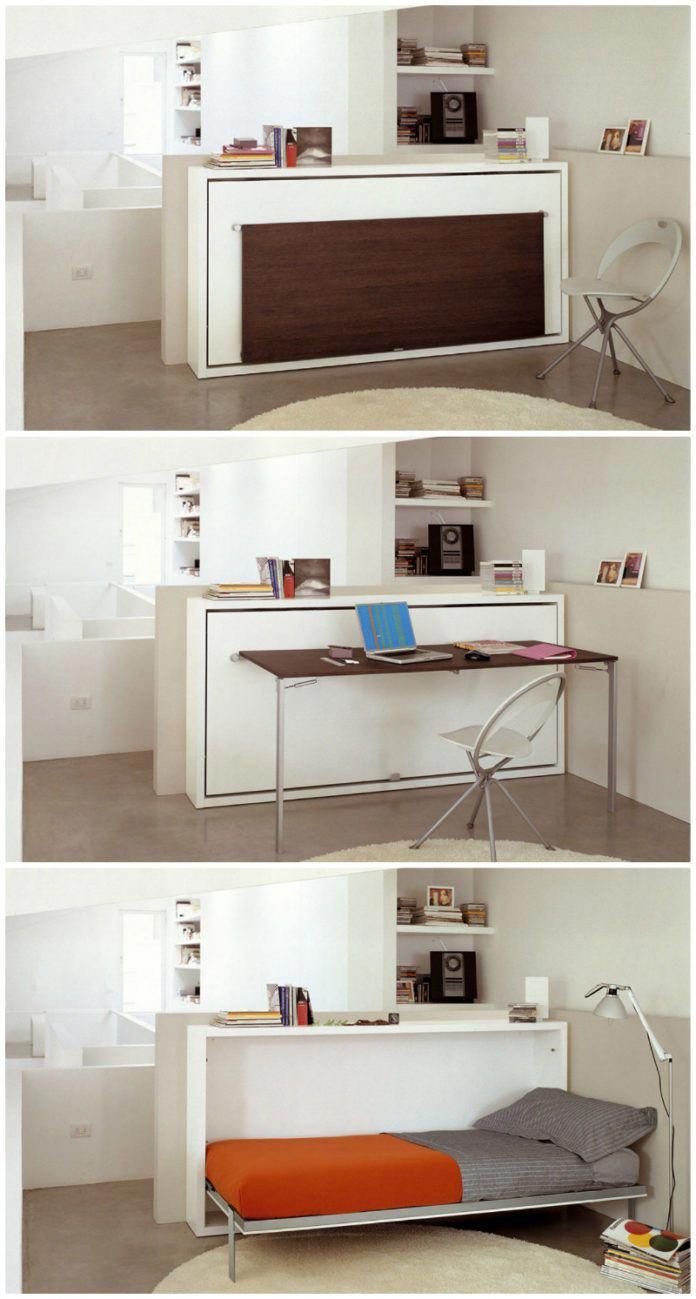
Wall beds are the anchor here. A Murphy bed with an integrated desk lets one room work as both a bedroom and an office, which matters when remote work and sleeping share four walls. Under-bed drawers and loft beds with a desk or wardrobe below add storage without claiming more floor.

Kitchen, Dining, and Kids’ Rooms
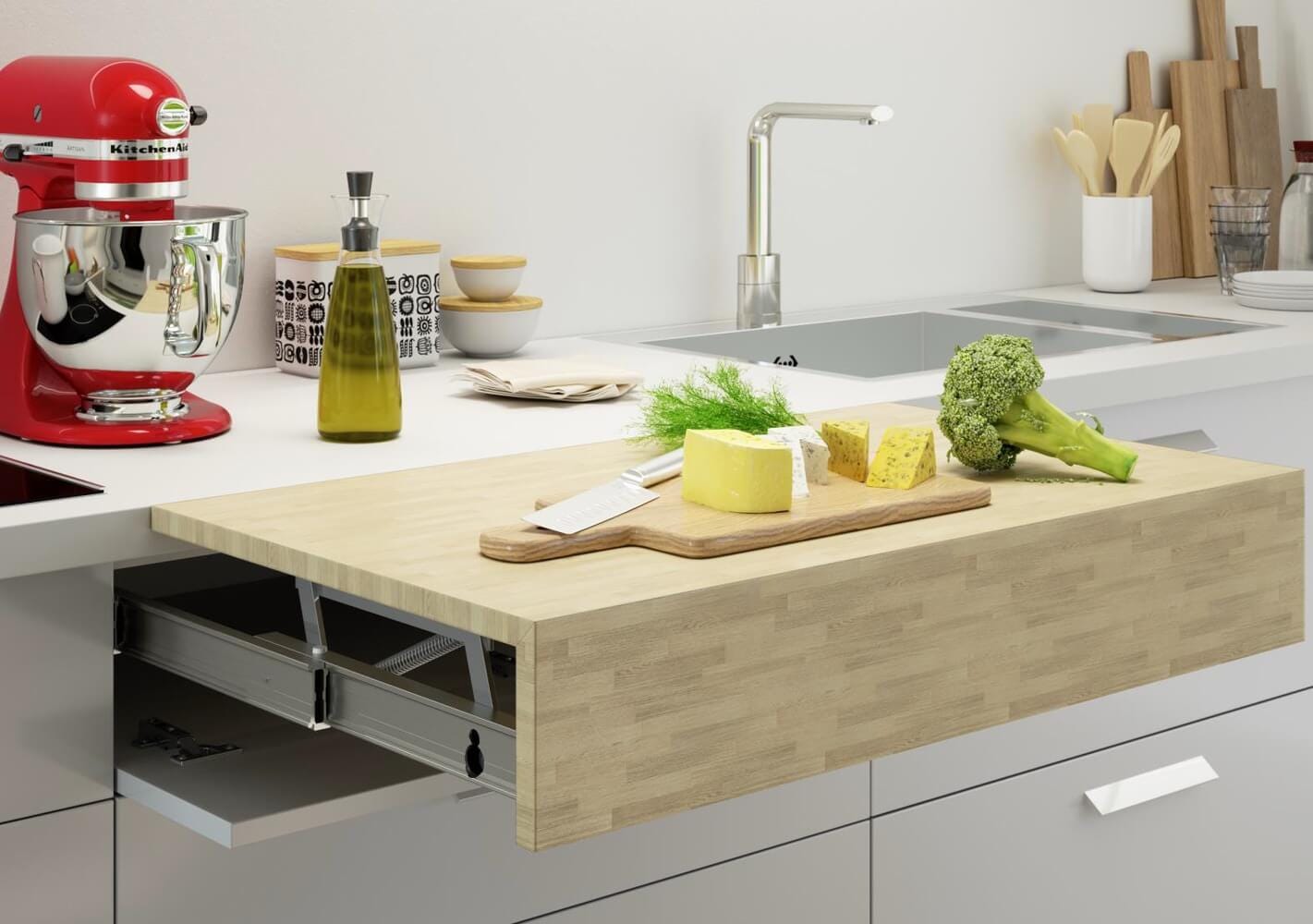
Extendable dining tables stay small for two and open up for six. Fold-down wall tables give a kitchen a work surface that disappears after a meal. In children’s rooms, bunk and loft beds free the floor for play, and benches with hidden bins keep toys out of sight. Compact living is also a core theme in the small house movement, where every fitting tends to do double duty.
Real Examples of Transforming Furniture
Seeing finished pieces makes the idea concrete. The systems below show how far transforming design has come, and how a single product can replace a whole set of separate items.
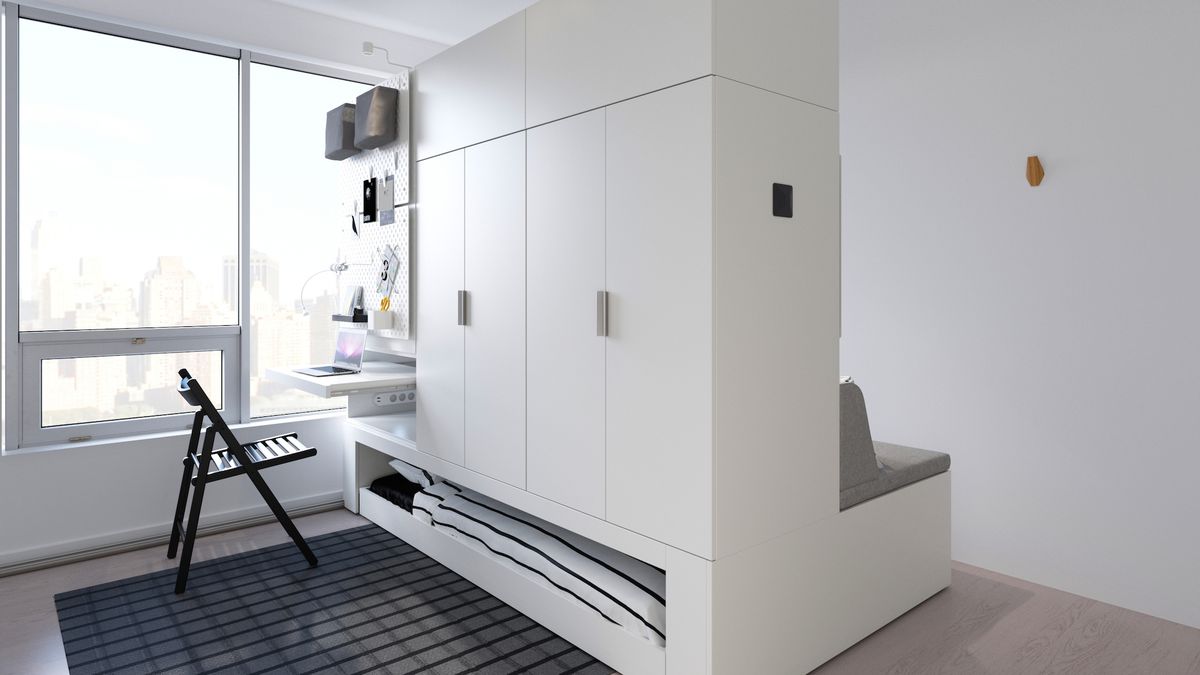
IKEA’s Rognan, developed with Ori, is a robotic unit that slides on a track to convert a tiny apartment from a living room into a bedroom and back. It packs a bed, sofa, wardrobe, and desk into a moving block. IKEA also collects practical compact-living ideas in its small space ideas hub, which is a useful starting point for layouts and product pairings.
The Resource Furniture Nuovoliola is a wall bed that keeps its sofa in place when the bed folds down, so nothing has to be cleared first. Swedish maker Matroshka built an entire compact home, including a bed, sofa, desk, dining table, and storage, into a footprint of roughly four square meters. These projects share one principle: design the room around motion, not around fixed furniture.
⚠️ Common Mistake to Avoid
Filling a small room with several small pieces usually backfires. A scatter of tiny tables, stools, and narrow shelves chops the space into busy fragments and makes it feel smaller. One or two larger multi-purpose items, like a storage bench or a wall bed with an integrated desk, read as calmer and free up more usable floor.
How to Choose Functional Furniture for Your Home
Start with how you actually live, not with a product list. Note which functions a room must cover across a typical day, then look for single pieces that combine the heaviest two or three. Measure twice: once for the closed size and once for the open footprint, since the open size decides whether a path stays clear.
Weigh budget against use. A daily-use wall bed or sofa bed justifies spending on good hardware, while an occasional guest setup can be simpler. If you want furniture shaped exactly to your space, you can commission custom pieces or get interior consultancy to design transforming items that let one room work two or three ways. Small homes reward planning, and the payoff is a place that feels open instead of crowded. For more on compact living trade-offs, compare a tiny house versus a micro apartment before you commit to a layout.
Where to Go From Here
Your Next Step: Walk through your home with a tape measure and mark the one room that fights hardest for space, then identify the two functions it must combine. Match that pair to a single transforming piece from the table above before you buy anything else.







How to Choose Contemporary Italian Furniture for a Home That Feels Timeless
Choosing contemporary Italian furniture enhances a home's timelessness by combining refined design...
 Muhammad Abdullatef - Tifa Studio8 Mins read

Frank Gehry’s Wiggle Chair: How a $7 Cardboard Design Became a Modern Icon
Frank Gehry's Wiggle Chair started as an experiment with scrap cardboard and...
 Sinan Ozen7 Mins read

Budget-Friendly Home Office Furniture Options: 7 Best Tips
From mid century modern bedroom picks to modern industrial desks, this guide...
 Furkan Sen8 Mins read

Japandi Style Guide: Japanese Minimalism Meets Modern Furniture
Learn what japandi style really means and how it brings together Japanese...
Furkan Sen13 Mins read


Leave a comment