

Notre-Dame Cathedral: Why It Remains Gothic Architecture’s Greatest Achievement
Notre-Dame Cathedral stands on the Ile de la Cite in Paris as one of the most significant examples of French Gothic architecture. This article examines the structural innovations, key architectural features, the 2019 fire, and the five-year restoration that returned this 12th-century cathedral to its original brilliance.
 Sinan Ozen20 June 20266 Mins read1
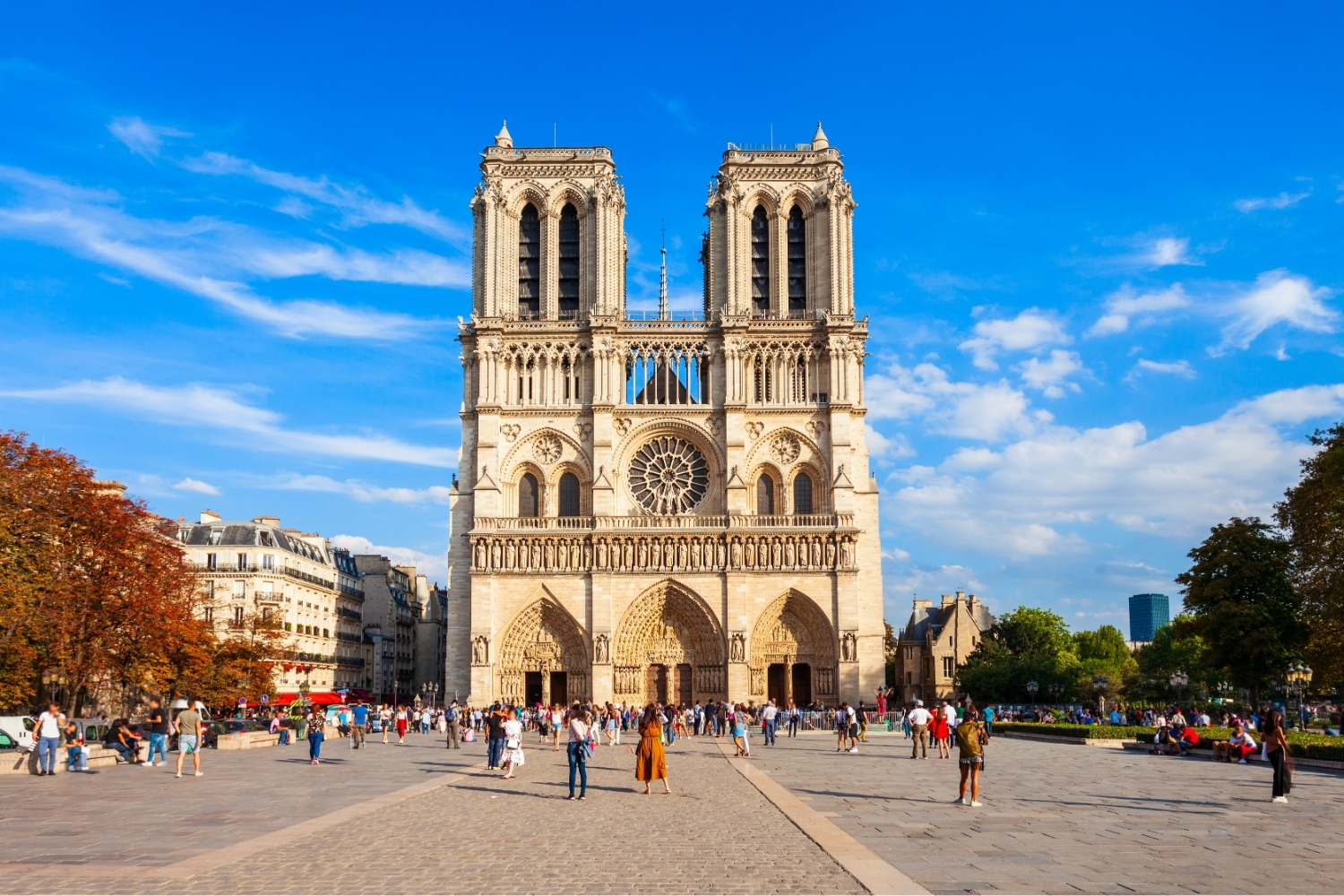
Table of Contents Show
Notre-Dame Cathedral is a French Gothic cathedral on the Ile de la Cite in Paris, built between 1163 and 1345. Its flying buttresses, ribbed vaults, and three rose windows represent some of the most important structural and artistic advances in medieval European architecture, and its 2024 restoration after the 2019 fire confirmed the durability of techniques developed over 800 years ago.
Why Notre-Dame Cathedral Matters in Architectural History
Construction of Notre-Dame Cathedral began in 1163 under Bishop Maurice de Sully, at a time when Paris was growing rapidly as a political and intellectual center. The project took nearly two centuries to complete, with the final elements finished around 1345. During that span, the cathedral became a testing ground for structural ideas that would spread across Europe and shape how churches, civic buildings, and even secular halls were designed for the next 400 years.
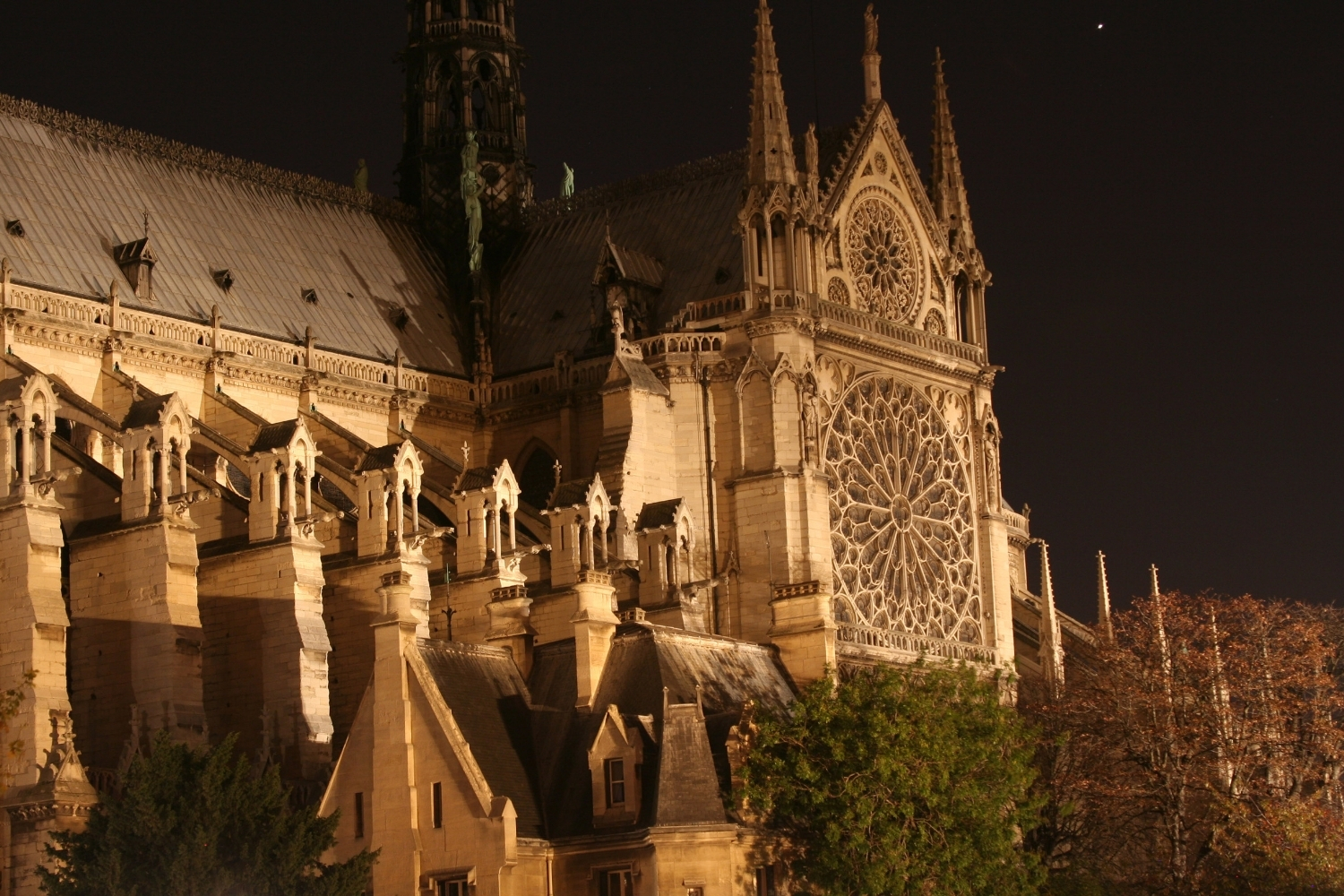
What set Notre-Dame apart from earlier Romanesque churches was the ambition to build higher, thinner walls and fill them with glass. Romanesque buildings depended on thick, load-bearing walls and small windows to stay upright. The builders at Notre-Dame pushed past those limits using a combination of pointed arches, ribbed vaults, and external supports that redirected weight outward and downward rather than straight through the walls. The result was a structure 128 meters long, 48 meters wide, and 33 meters tall at the nave vault, filled with colored light from enormous stained glass windows.
The cathedral is part of the UNESCO World Heritage site “Paris, Banks of the Seine,” inscribed in 1991. It satisfies UNESCO’s criteria for representing a masterpiece of human creative genius and for exhibiting an important interchange of values over a span of time.
Structural Innovations That Changed European Building
Three structural elements at Notre-Dame worked together to make its height and light possible: the pointed arch, the ribbed vault, and the flying buttress. None of these was entirely new when construction began, but Notre-Dame was among the first buildings to combine all three into a single, coherent system at monumental scale.
The pointed arch, unlike the rounded Romanesque arch, distributes weight more efficiently along its curve. This allowed builders to span wider openings and vary the height of adjacent arches without compromising stability. Inside Notre-Dame, the pointed arches of the nave arcade rise uniformly above the piers, creating a rhythm that draws the eye toward the altar.
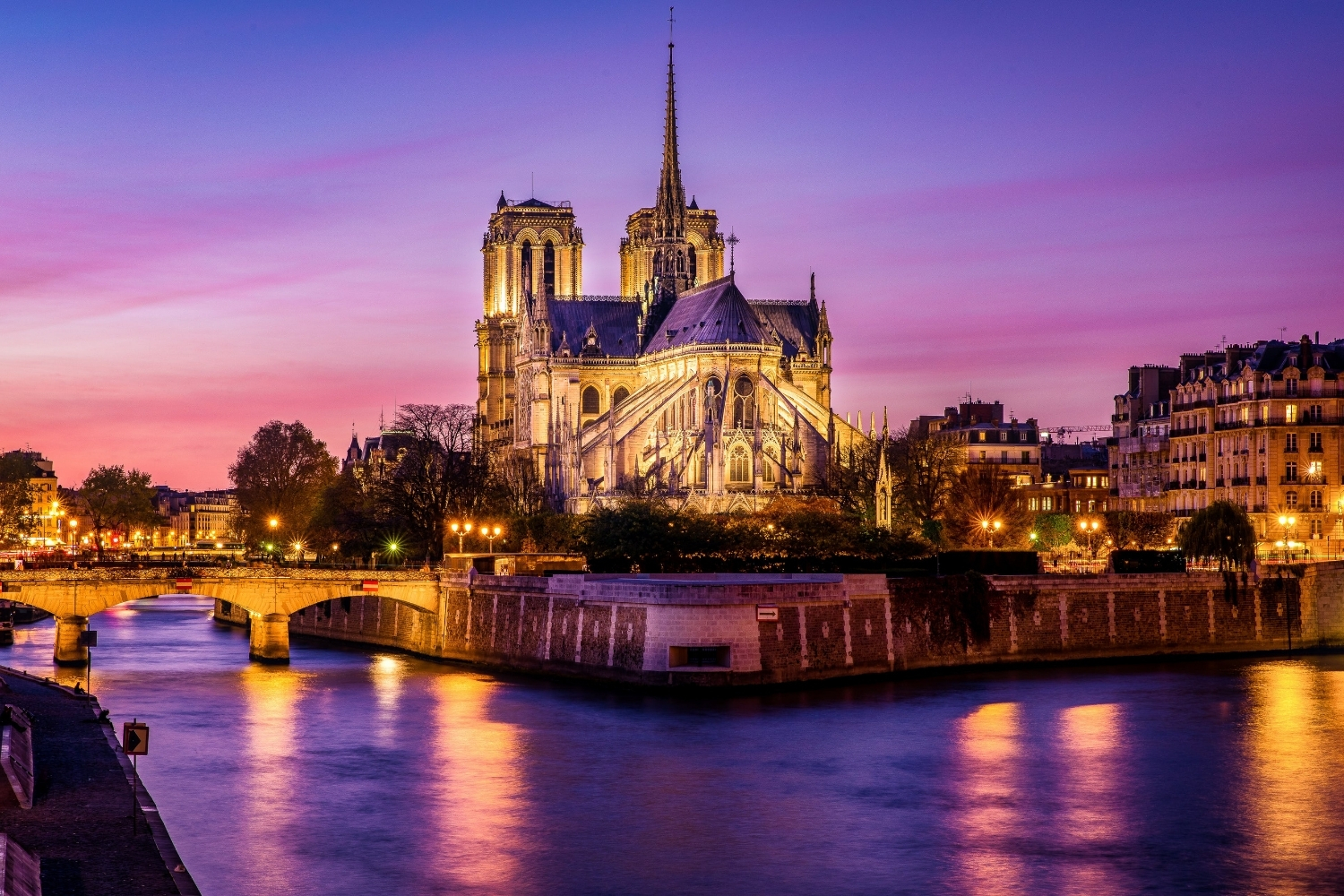
Above the arches, sexpartite ribbed vaults divide each ceiling bay into six triangular sections. The ribs act as a skeleton, concentrating loads at specific points along the walls rather than spreading force evenly. This meant the walls between those points no longer needed to be thick or solid. They could be opened up for windows.
🎓 Expert Insight
“Architecture is the learned game, correct and magnificent, of forms assembled in the light.” — Le Corbusier, Vers une Architecture (1923)
Le Corbusier wrote this after studying Gothic cathedrals, including Notre-Dame. The idea that architecture is fundamentally about how light interacts with structure owes much to the Gothic builders who first dissolved stone walls into glass.
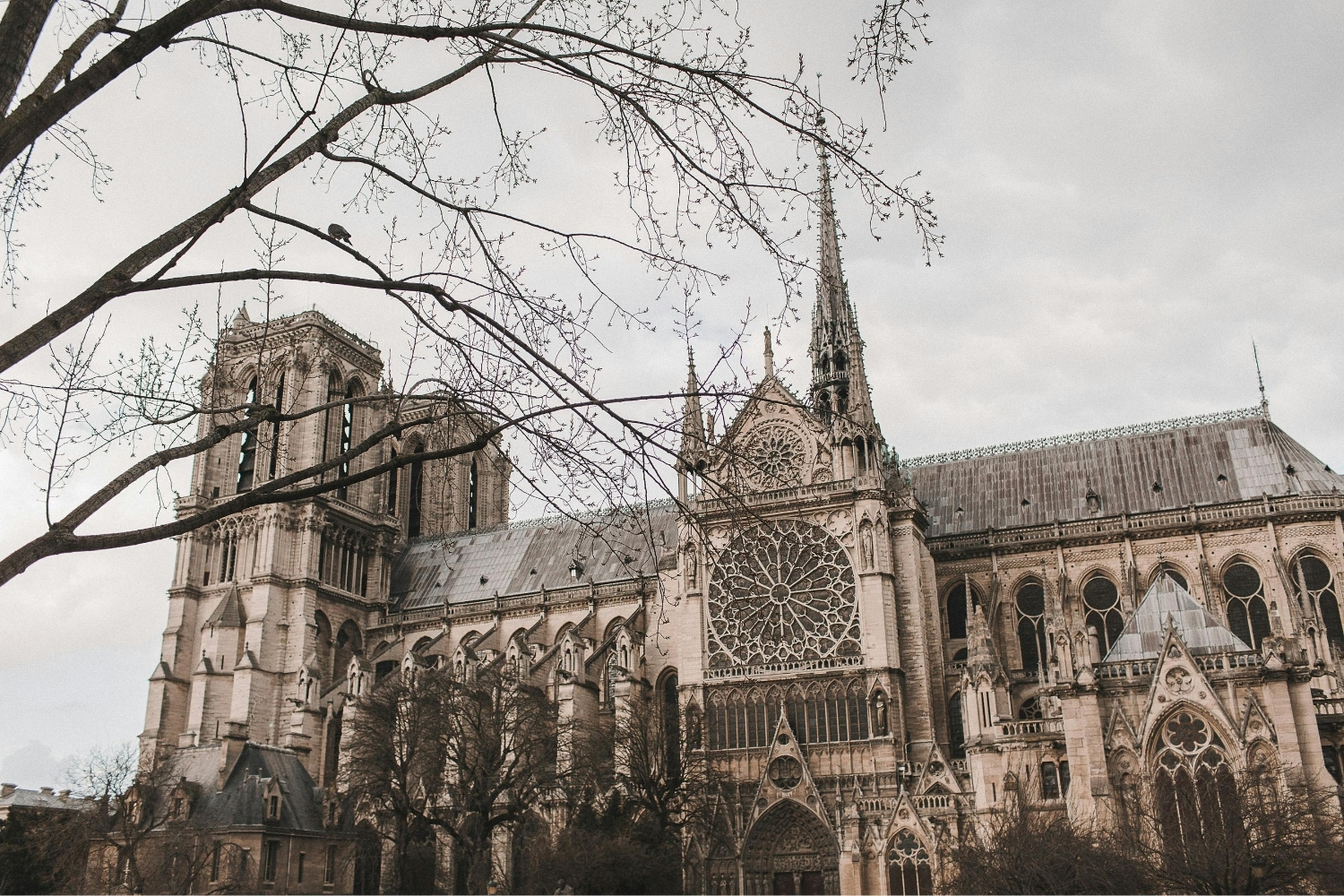
The most visible innovation, however, is the flying buttress. Notre-Dame’s original plans did not include them. When the thin Gothic walls began to crack under lateral thrust from the vaults, builders added arched external supports that carried the outward push away from the walls and down into heavy piers at ground level. This mid-project fix became one of the defining features of Gothic architecture across Europe, copied and refined at Chartres, Reims, Amiens, and Cologne within a generation.
The Rose Windows and the Role of Light
Notre-Dame Cathedral has three major rose windows: the west rose (completed around 1225), the north rose (circa 1250), and the south rose (circa 1260). Each measures roughly 13 meters in diameter, and together they represent some of the finest surviving medieval stained glass in the world.
These windows were not just decorative. For a largely illiterate medieval congregation, the imagery served as visual scripture. The north rose depicts Old Testament figures radiating outward from the Virgin Mary at the center. The south rose, a gift from King Louis IX, illustrates scenes from the New Testament. The west rose, above the main entrance, shows the Virgin surrounded by the zodiac and seasonal labors.
The proportional relationships in Notre-Dame’s facade, including the placement of the rose windows relative to the Gallery of Kings and the twin towers, reflect a careful geometric logic. Whether medieval builders consciously applied the golden ratio remains debated, but the measured proportions align closely with phi-based relationships in the facade’s cross-section.
📌 Did You Know?
Notre-Dame’s west facade holds over 3,000 carved stone figures across its three portals. The Portal of the Last Judgment alone includes a detailed depiction of souls being weighed by the Archangel Michael, a scene designed to be read like a book by medieval visitors who could not read text.
The West Facade and Gothic Proportions
The west facade of Notre-Dame is one of the most studied compositions in architectural history. It organizes three horizontal layers (portals, Gallery of Kings, rose window and twin towers) into a grid that reads clearly from across the Seine and rewards close inspection at the doorstep.
Each layer serves both a structural and a symbolic purpose. The deep-set portals absorb the lateral thrust from the nave vaults. The Gallery of Kings, a row of 28 statues representing the kings of Judah, provides a horizontal datum line that ties the composition together visually. Above it, the rose window acts as a focal point, flanked by paired lancet windows in the tower bases.
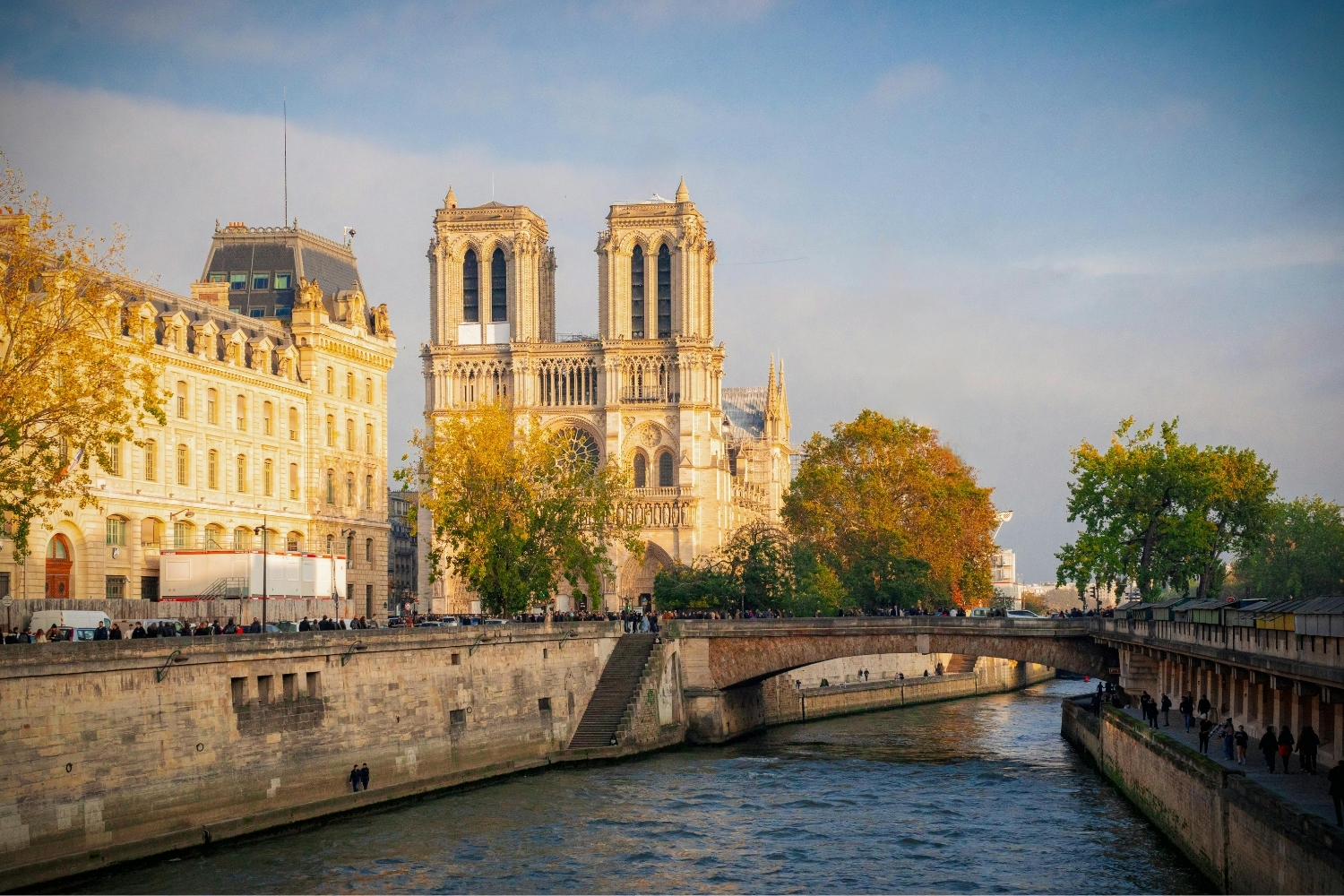
The twin towers rise to 69 meters. Unlike later Gothic cathedrals such as Cologne (157 meters), Notre-Dame’s towers were left without spires, giving the facade a blocky, fortress-like quality that distinguishes it from the more attenuated silhouettes of High Gothic buildings. This reflects the transitional character of early French Gothic, still carrying traces of the Romanesque solidity it was replacing.
Video: The Restoration of Notre-Dame Cathedral
FRANCE 24 followed the five-year reconstruction effort from scaffolding to reopening, documenting the artisan trades that made the restoration possible, from bell restoration to the rebuilding of the oak roof using 13th-century carpentry techniques.
The 2019 Fire and Five-Year Restoration
On the evening of April 15, 2019, a fire broke out in the roof space of Notre-Dame Cathedral, likely caused by an electrical fault during ongoing renovation. The 400-ton timber and lead spire collapsed through the stone vaulting within 90 minutes. Most of the medieval oak roof, known as “the forest” because of the 1,300 oak trees used in its construction, was destroyed.
The stone vaulting, however, held. Despite losing the entire roof and spire, the ribbed vaults largely prevented total collapse, and the flying buttresses continued to support the weakened walls through months of exposure. According to ArchDaily’s coverage of the reopening, this was a real-world demonstration of structural principles first developed in the 12th century.
The five-year restoration of Notre-Dame cost an estimated 700 million euros, funded by 846 million euros in donations from around the world. Carpenters rebuilt the roof framework and spire using traditional scribing techniques and pre-selected French oak. The interior stonework was cleaned using a latex paste technique that removed centuries of soot and grime, revealing a bright limestone surface that surprised visitors accustomed to the cathedral’s formerly dim interior.
🏗️ Real-World Example
Notre-Dame Restoration (Paris, 2019-2024): The restored cathedral introduced modern fire prevention systems invisible to visitors, including thermal cameras, an air suction detection device, and an automated misting system. These technologies sit alongside medieval construction methods, making Notre-Dame one of the best-protected heritage buildings in the world.
The cathedral officially reopened on December 8, 2024, with a ceremony attended by world leaders. The official Notre-Dame de Paris website now manages free timed-entry reservations for up to 40,000 daily visitors. According to church authorities, the cathedral expects to receive 14 to 15 million visitors annually, up from the 12 million who visited before the fire.
How Notre-Dame Influenced Gothic Architecture Across Europe
Notre-Dame was not the first Gothic building. That distinction belongs to the Abbey of Saint-Denis, rebuilt under Abbot Suger around 1140, about 10 kilometers north of Paris. But Notre-Dame was where the Gothic system matured into a repeatable, exportable model. Its combination of flying buttresses, pointed arches, ribbed vaults, and expansive stained glass windows became the template for every major cathedral of Notre-Dame de Paris that followed.
Chartres Cathedral (begun 1194) adopted and refined Notre-Dame’s flying buttress system. Reims Cathedral (begun 1211) pushed the window-to-wall ratio even further. Amiens Cathedral (begun 1220) exceeded Notre-Dame’s height by ten meters. Each of these buildings built directly on lessons learned at Notre-Dame, and each sent those lessons onward. The comparison between Gothic and Islamic sacred architecture also reveals how Notre-Dame’s emphasis on height and directed light contrasts with the horizontal, contemplative spatial model found in mosques.
Even the Doge’s Palace in Venice, a secular Gothic building, inverted Notre-Dame’s structural logic by placing heavy walls above open arcades, proving that Gothic principles could be adapted far beyond their original religious context.
The Bigger Picture
The most telling detail about Notre-Dame may be what the 2019 fire proved rather than what it destroyed. An 800-year-old structural system, designed by builders who had no access to computer modeling or steel reinforcement, held together under conditions those builders never imagined. The vaults caught the falling spire. The buttresses braced walls that had lost their roof. A building that took two centuries to build survived the worst night of its existence because the engineering was sound from the start. That says more about the trajectory of architectural history than any written account could.





From Water Supply to Tourist Attraction: The Evolution of Istanbul’s Basilica Cistern
Built in 532 AD under Emperor Justinian I, the basilica cistern in...
 Elif Ayse Sen11 Mins read
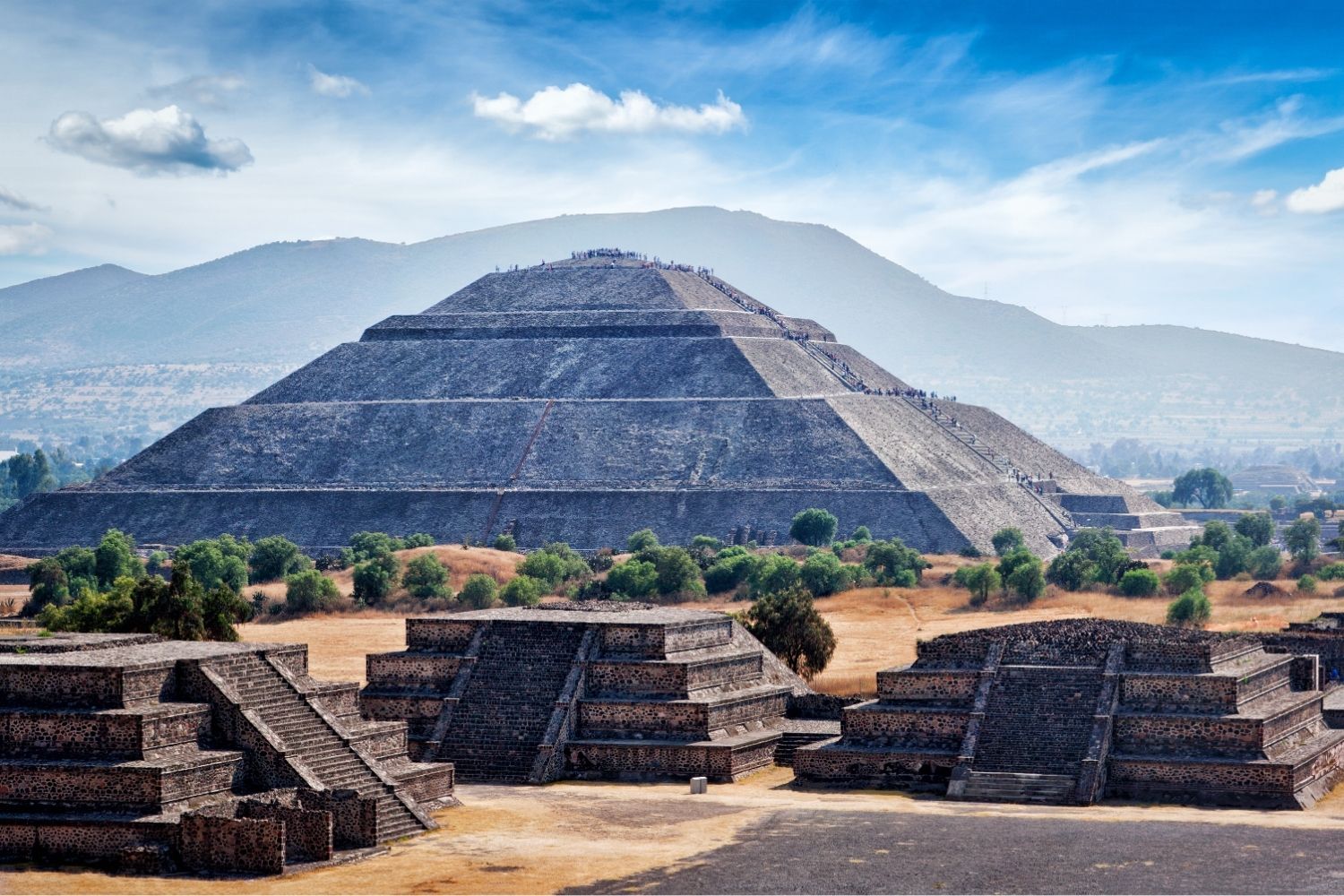
Teotihuacan: Monumental Urbanism of a Lost Civilization
Explore the monumental urbanism of Teotihuacan, from the Pyramid of the Sun...
Sinan Ozen8 Mins read
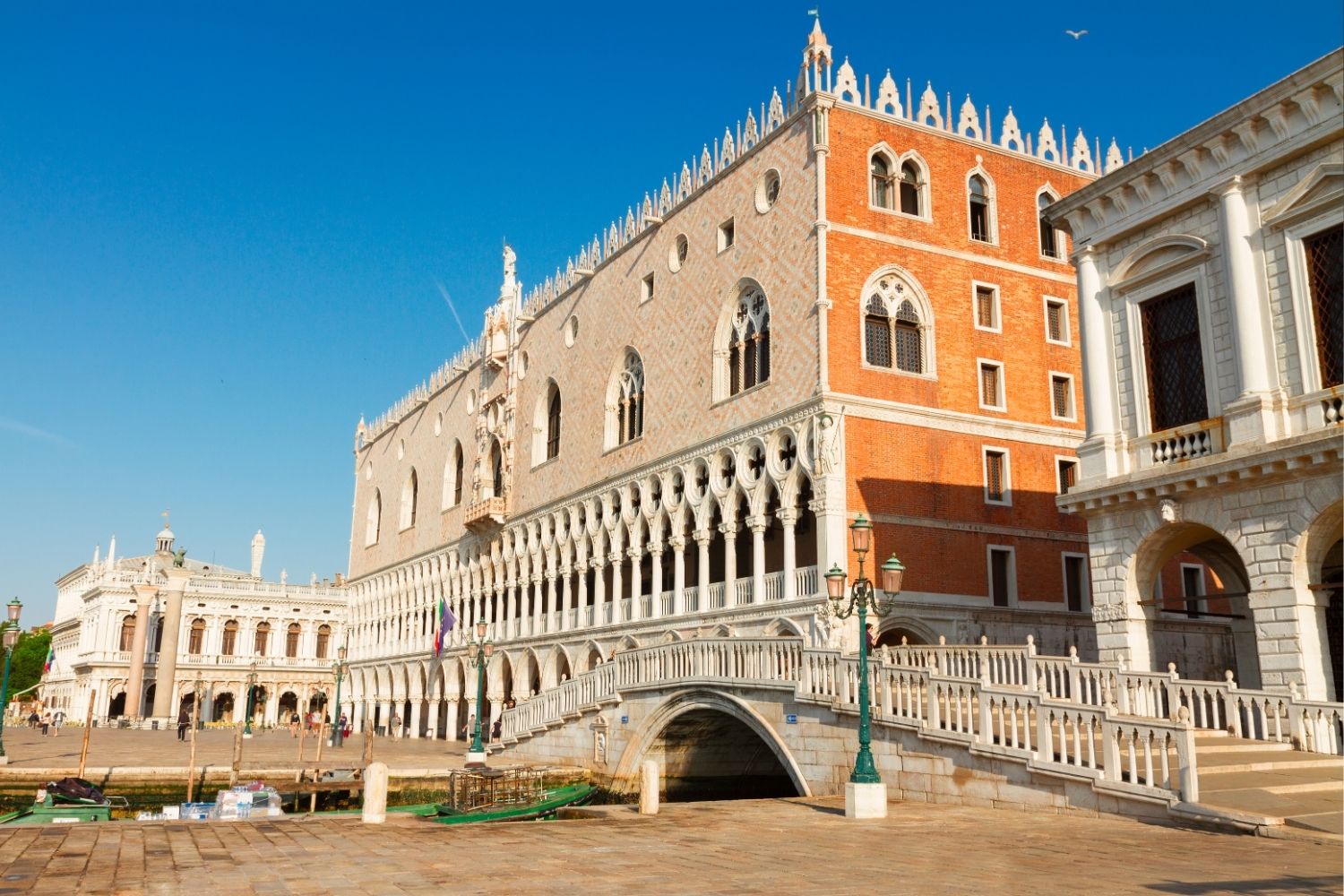
Doge’s Palace: Gothic Architecture and the Architecture of Governance in Venice
Doge's Palace in Venice stands as one of the finest examples of...
Sinan Ozen8 Mins read

Brandenburg Gate: How Architecture Becomes a Political Symbol
Built in 1791 as a neoclassical city gate, the Brandenburg Gate in...
Sinan Ozen8 Mins read


Leave a comment