

5 Cities Must To Visit
Marrakech, Barcelona, Istanbul, Athens, and Rome offer rich architectural experiences that showcase diverse styles and historical influences spanning 2,500 years.
 Elif Ayse Sen12 April 20226 Mins read439
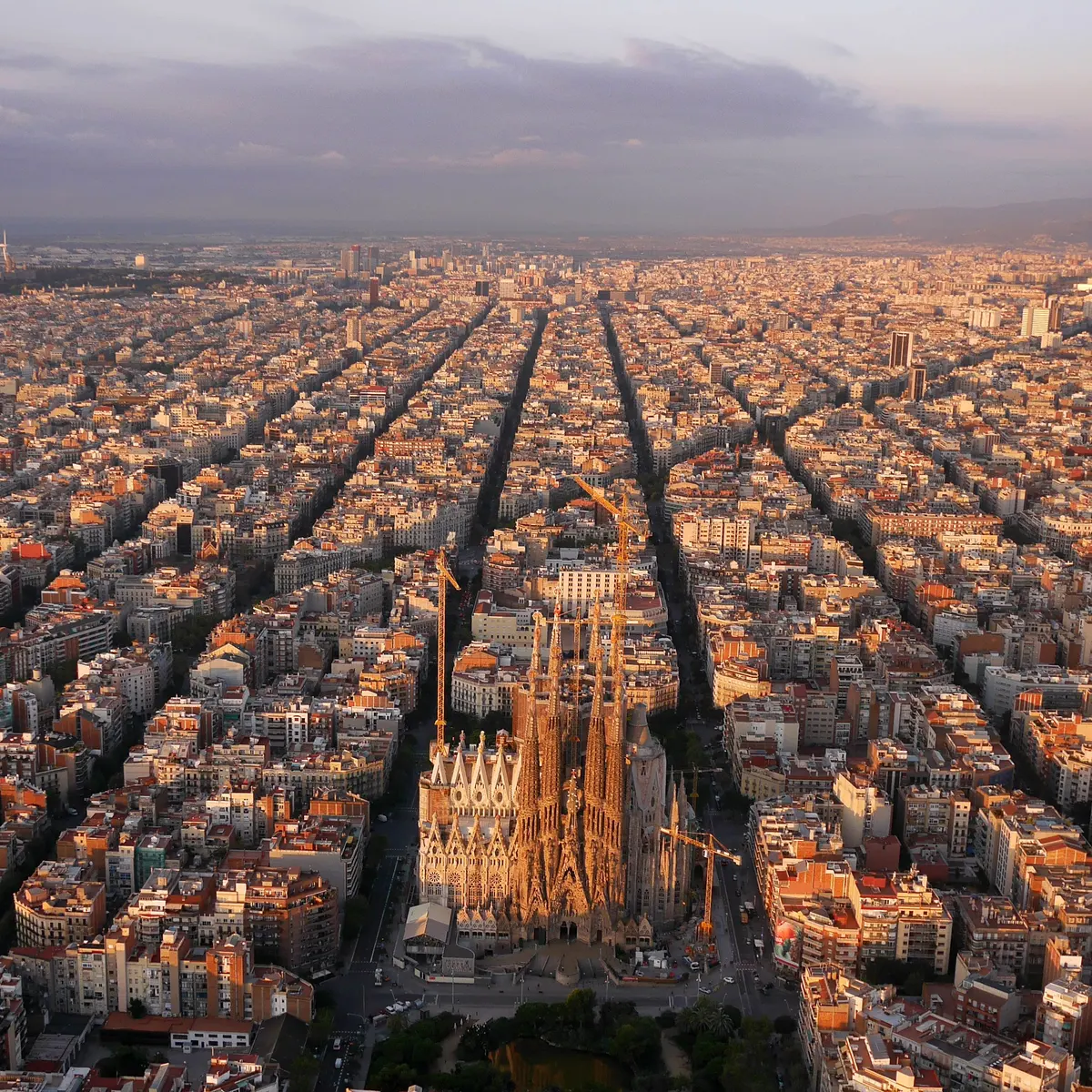
Table of Contents Show
The five cities to visit for architecture, Marrakech, Barcelona, Istanbul, Athens, and Rome, each let you read centuries of design on foot. From Moroccan adobe and Gaudi’s flowing curves to Byzantine domes, classical temples, and Roman engineering, these cities give architects and urban planners a living lesson in how built form shapes a place.
Many things shape a city, yet nothing tells you where you are faster than its buildings. Walk one street and the materials, proportions, and rooflines place you in a specific time and culture. For architects and urban planners, travel is part of the training. Reading buildings in person sharpens how you judge scale, light, and the way streets hold people together. The cities below reward that kind of looking, and they sit near the top of any list of cities for architectural travel.
Why Visit Cities for Their Architecture?
Drawings and photographs flatten a building. Standing inside it gives you the weight of a dome, the cool of a courtyard, and the rhythm of a colonnade that no screen can carry. Cities to visit for architecture work as full-scale archives, where each era left its rules about structure, ornament, and public space. Seeing those rules layered on top of one another teaches you more about urban design than any single monument can.
The five cities here were picked for range. One shows earthen vernacular building, one shows a single architect reshaping a whole city, and three trace a line from classical antiquity through the empires that followed. Together they cover roughly 2,500 years of practice.
💡 Pro Tip
Before any architecture trip, build a route around opening hours and morning light rather than a checklist of names. Visit interiors like Hagia Sophia or the Pantheon early, when crowds are thin and the low sun reaches deep through the openings. You will read the section and the daylight far better than at midday.
Marrakech, Morocco
Marrakech, the first imperial capital of Morocco, is one of the clearest places to study Moroccan architecture in one walk. The historic medina carries the dense pattern of eastern building, with carved cedar, geometric tilework, and inward-facing houses built around shaded courts. Local earth and adobe give the walls their warm tone, which is why people call it the red city.
Look for mashrabiya screens that filter heat and light, slender towers, and riads that turn their backs on the street to protect privacy and stay cool. The contrast between the plain outer walls and the rich inner courts shows how climate and culture drive plan and section together. Two days is enough to read the medina and still see how the newer Gueliz district sits beside it. For wider context on the styles you will spot here, see this overview of major architectural styles.

For deeper Moroccan context, ArchDaily’s Marrakech architecture archive tracks both restored historic projects and contemporary work that draws on the same earthen tradition.
Barcelona, Spain
Say Barcelona and architecture in the same breath and one name arrives first: Antoni Gaudi. The Catalan master left the city a set of buildings that bend stone and tile into shapes most architects only sketch. His work sits inside a larger story of Catalan Modernism, which ran beside the Gothic Quarter and the strict grid of the Eixample district laid out by Ildefons Cerda.
Casa Batllo and Casa Mila show how Gaudi treated facades as living surfaces, while La Sagrada Familia, still rising after more than a century, pushes structure and geometry into territory engineers are only now modeling with software. You can study the official project at the Sagrada Familia site and the restored interiors at Casa Batllo. For a closer look at one icon, read our guide to Casa Mila in Barcelona.

Beyond Gaudi, the Cerda grid itself is a lesson in nineteenth-century urban planning, with chamfered corners that open small plazas at every intersection. Walking from the medieval lanes into that grid in a single afternoon makes the shift in planning logic easy to feel.

📌 Did You Know?
Construction on La Sagrada Familia began in 1882 and is still going. The Fundacio Junta Constructora reports the basilica recently became the tallest church in the world, which makes it one of the few major monuments where you can watch a Gothic-inspired structure being completed in real time.
Istanbul, Turkey
Istanbul carried two of history’s longest-running empires, the Byzantine and the Ottoman, and both left their mark across the city. The historic peninsula of Fatih reads like an open-air museum, where churches turned into mosques sit next to grand public complexes and bazaars. Sitting astride the Bosphorus, the city splits across two continents and stitches them back with bridges, so the skyline reads differently from each shore.
Hagia Sophia is the building every architect should see in person. Its pendentive dome changed what builders thought a roof could do, and the Ottoman minarets and mihrab added later show how one structure can hold two faiths and two design languages at once. The reference page on Hagia Sophia covers its full timeline, and our own piece on Hagia Sophia and sacred geometry looks at how its plan was set out.

Spend time watching how recent towers and waterfront projects hold a conversation with the historic core. The tension between old silhouette and new height is one of the clearest urban design lessons the city offers.
Athens, Greece
Athens is where classical architecture began, and seeing it on the ground changes how you read every column and pediment that came after. The Acropolis crowns the city, and the Parthenon still sets the standard for proportion, refinement, and the optical corrections that keep its lines looking straight. Planning a visit without climbing to it would miss the point of the trip.
Below the rock, the Acropolis Museum displays the sculptures and fragments in daylight aligned with the temple itself, which helps you connect the pieces to the building. You can plan around the collection through the Acropolis Museum. Beyond the Acropolis, the Ancient Agora and the Temple of Hephaestus round out a picture of how a Greek city organized public life around its monuments.

Rome, Italy
Rome rewards a long visit because it preserves so many layers at once. The most populous city in Italy keeps the traces of ancient planning, medieval growth, Renaissance and Baroque set pieces, and modern interventions, often within a few blocks of each other. For anyone studying the history of architecture, it works as a full timeline you can walk.
The Colosseum shows Roman engineering at the scale of public spectacle, while the Pantheon remains the quieter masterclass. Its coffered concrete dome spans 43.3 meters and is still the largest unreinforced concrete dome ever built, almost two thousand years on. The detailed record at the Pantheon reference explains how Roman builders lightened the dome with shifting aggregate and a central oculus.

Walk the relationship between the ancient core and later additions, from Baroque fountains to the wide avenues cut in the modern era. Rome is a study in how a city absorbs new building without erasing what came before.
🔢 Quick Numbers
- The Pantheon in Rome has stood since around AD 126 and still holds the record for the world’s largest unreinforced concrete dome at 43.3 meters (Pantheon documentation).
- Hagia Sophia in Istanbul was completed in 537 CE and held the title of the world’s largest interior space for nearly a thousand years (Hagia Sophia records).
- The Acropolis and Parthenon in Athens date to the 5th century BCE and remain a benchmark for classical proportion (Acropolis Museum).
How Do These Cities Compare for Architecture Travel?
Each city leans toward a different period and building culture, so the table below sums up what defines them and the one landmark to put first.
| City | Dominant Era / Style | Must-See Landmark | Best For |
|---|---|---|---|
| Marrakech | Moroccan vernacular, earthen | Historic medina and riads | Climate-driven courtyard design |
| Barcelona | Catalan Modernism, Gothic | La Sagrada Familia | Form, geometry, urban grid |
| Istanbul | Byzantine and Ottoman | Hagia Sophia | Domes, layered history |
| Athens | Classical antiquity | The Acropolis and Parthenon | Proportion, classical orders |
| Rome | Ancient Roman to Baroque | Pantheon and Colosseum | Engineering, layered planning |
More Architectural Cities Worth the Trip
Five cities cannot hold every great urban story, so a few more deserve a place on a longer itinerary. Vienna pairs grand Ringstrasse boulevards with Otto Wagner’s early modernism. Chicago is the birthplace of the steel-frame skyscraper and a clinic in tall-building design. Brasilia, planned from scratch by Lucio Costa and Oscar Niemeyer, shows what happens when an entire capital follows one modernist diagram. Each adds a chapter the five core cities leave out.
If you have the time, pairing one classical city with one modern city on the same trip makes the contrast sharper. Rome and Brasilia, or Athens and Chicago, teach you how differently two eras solve the same problems of density, movement, and public space.
Where to Go From Here
Your Next Step: Pick one of these cities for your next trip and sketch three buildings by hand on site, noting how light, material, and plan work together. Drawing slows your eye down and fixes the lesson far better than photographs alone, and it turns a holiday into real fieldwork for your practice.







How to Book a Helicopter from Athens to Folegandros
Folegandros has no commercial airport, so ferries can make a short trip...
 illustrarch Editoral Team4 Mins read

Sedona Oak Creek Cabins for Family Vacations: 7 Kid-Friendly Retreats Compared
Seven kid-friendly cabins along Oak Creek Canyon, scored and ranked on amenities,...
illustrarch Editoral Team11 Mins read

Architectural Wonders by Country: An Interactive Map Guide
A continent-by-continent breakdown of the world's most iconic architectural wonders, organized by...
 Furkan Sen11 Mins read

Cultural Architecture Destinations: 8 Stunning Places to Visit Around the World
A focused look at the world's most stunning cultural architecture destinations, covering...
Furkan Sen12 Mins read


Leave a comment