

From Fiction to Reality: Buildings Inspired by Books and Movies
Real buildings inspired by movies and books, including Hobbiton, the Winchester Mystery House, and Gaudí's Barcelona works, plus how designers turn imagined worlds into places you can visit.
 Elif Ayse Sen8 September 20235 Mins read679
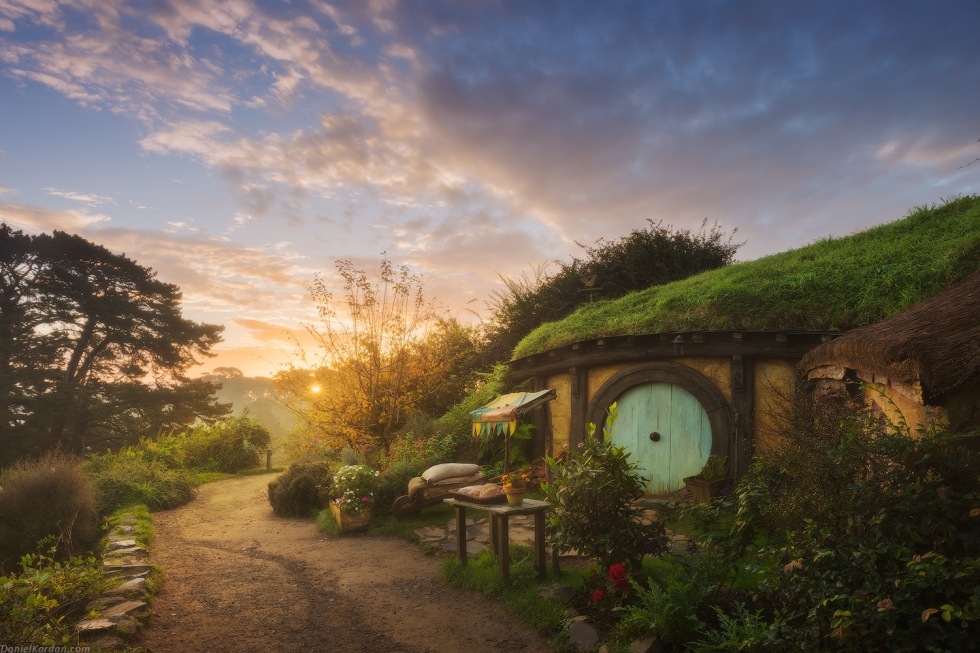
Table of Contents Show
Buildings inspired by movies are real, visitable structures whose form, mood, or story traces back to a film or novel. Some began as film sets that were preserved, others borrow the atmosphere of fantasy and science fiction, turning scenes once locked inside pages and screens into places you can actually walk through.
Step into the pages of a favorite novel or onto the set of a beloved film, and the line between story and structure starts to blur. Architects and designers have long drawn on fiction to build places that carry visitors somewhere else. The examples below show how architecture inspired by fiction moves from imagination into brick, timber, and stone, along with why these stories matter so much to the people who design our physical world.
Why Films and Books Fuel Architectural Imagination
An architect does more than assemble walls and roofs. They shape how people move, feel, and remember a space. Films and books feed that work by offering a constant supply of imagined worlds to study, question, and reinterpret.
Cinema is especially rich here. The rain-soaked megacity of “Blade Runner” and the vertical class divide of Fritz Lang’s “Metropolis” push designers to rethink density, scale, and light. Watching how a set designer stages space gives architects fresh ways to think about proportion and atmosphere, even when the final building looks nothing like the film.
Books work differently but just as strongly. A novel can carry a reader down an ancient Roman street, into a quiet Japanese tea house, or through a floating future city, all without a single drawing. That exposure to distant cultures and eras quietly shapes an architect’s instincts about material, ornament, and mood.
🎓 Expert Insight
“Nothing is invented, for it’s written in nature first. Originality consists of returning to the origin.”
Antoni Gaudí, architect of the Sagrada Família
Gaudí’s point helps explain fiction-driven design too. Fantasy worlds rarely appear from nowhere, they remix nature, myth, and memory, which is exactly what architects do when they build a story into stone.
Real Buildings Inspired by Books and Movies
The following places show the range of what happens when a story leaves the page. Some are literal film sets preserved for visitors, others simply feel like they belong in a novel. Each one proves that buildings inspired by movies and literature can hold real cultural weight.
1. Hobbiton, from ‘The Lord of the Rings’ and ‘The Hobbit’
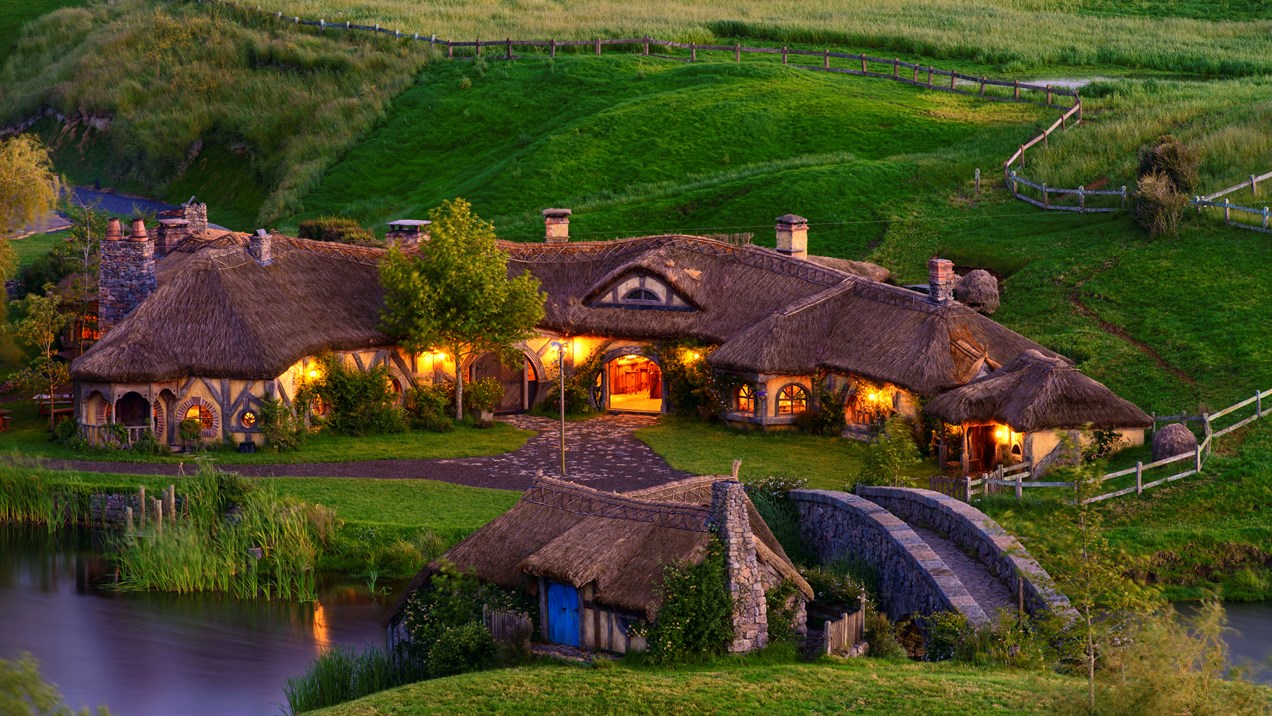
Located in Matamata, New Zealand, Hobbiton is the living version of the Shire described in J.R.R. Tolkien’s sagas. Built as a set for Peter Jackson’s film adaptations, the hobbit holes and rolling green hills were preserved rather than torn down. Visitors now stroll past Bilbo Baggins’ door, pour a pint at the Green Dragon Inn, and stand inside Middle-earth. You can plan a visit through the official Hobbiton Movie Set tours.
📌 Did You Know?
The Hobbiton set holds 44 permanent hobbit holes, each built to a different scale so filmmakers could make actors appear either hobbit-sized or human-sized on camera. That forced-perspective trick, borrowed straight from film craft, is now a permanent design feature of the site.
2. The Winchester Mystery House, shaped by Gothic Fiction
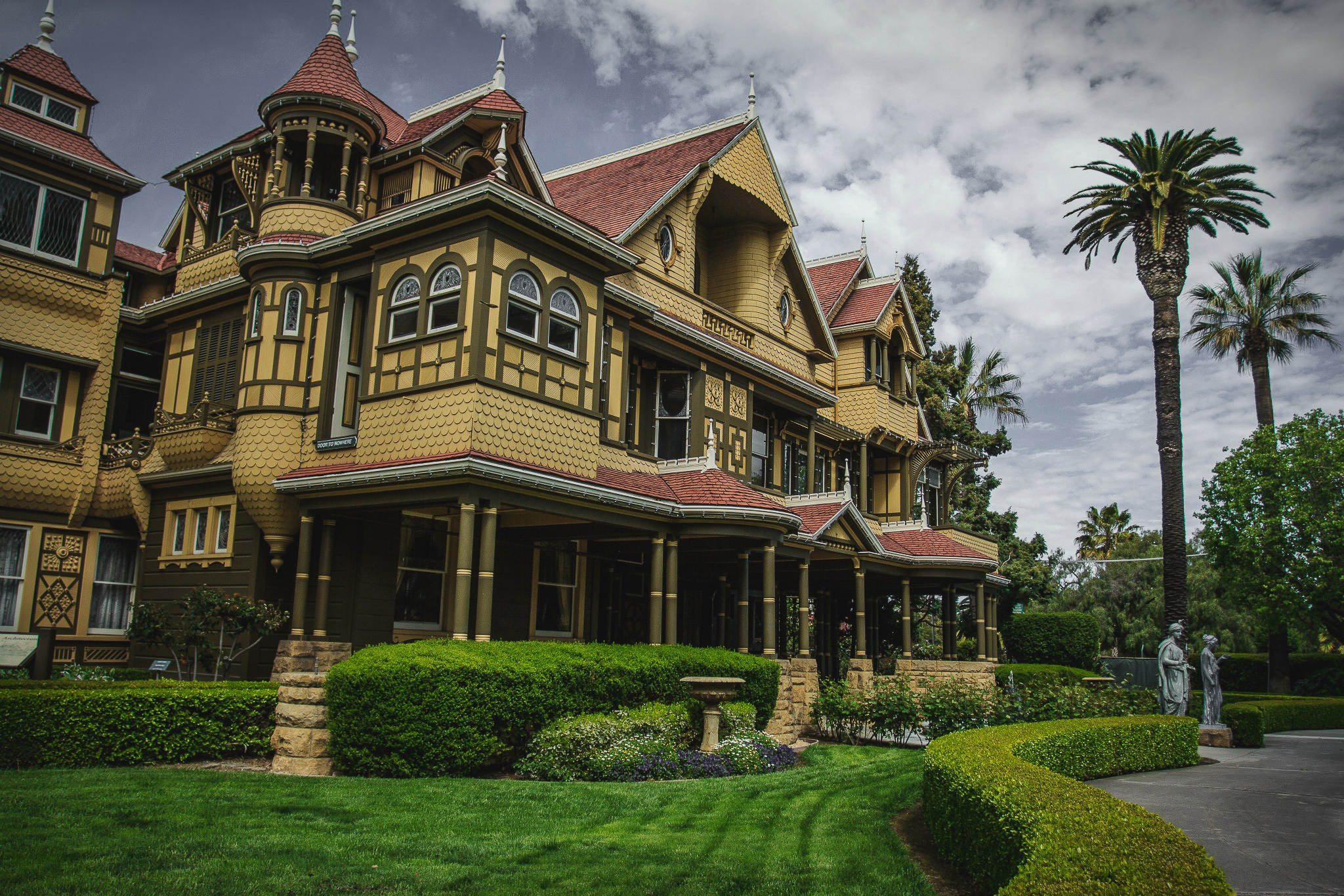
This sprawling mansion in San Jose, California, echoes the eerie, haunted houses of Gothic literature. Staircases climb into ceilings, doors open onto blank walls, and hallways loop back on themselves. Sarah Winchester is said to have kept building continuously to unsettle the spirits linked to the rifles her family produced. No single book directed the design, yet the whole place reads like a Gothic novel made solid. Tours run through the official Winchester Mystery House site.
3. The Gaudí Buildings, fantasy and nature made real
Antoni Gaudí, the Catalan architect, leaned hard on nature and fantasy. His work in Barcelona, from Casa Batlló to the Sagrada Família, could sit comfortably inside a fairy tale. Bone-like columns, scaled rooftops, and flowing stone give his buildings a storybook quality that no film set has matched. For background on his life and influences, the Britannica entry on Gaudí is a solid starting point.
4. The Dark Hedges, from ‘Game of Thrones’
This tunnel of intertwined beech trees in Northern Ireland became famous as the Kingsroad in HBO’s “Game of Thrones”. The trees were planted in the 18th century, long before Westeros existed, yet their link to the series gave them a second life. Fans now travel specifically to walk the same path the show made iconic, a reminder that fiction can turn even a natural landscape into a destination.

5. Frank Lloyd Wright’s Fallingwater, nature as narrative
Fallingwater in Pennsylvania was not lifted from a specific book, yet it carries the spirit of countless stories about people living in harmony with the land. Its cantilevered terraces reach out over a running waterfall, so the house feels less built onto the site than grown from it. You can explore the house and its history through the official Fallingwater site.
6. Star Wars: Galactic Starcruiser, from the ‘Star Wars’ saga
Disney pushed the idea of buildings inspired by movies to a full immersion with its Star Wars: Galactic Starcruiser hotel in Florida, tied to the Galaxy’s Edge parks. Guests moved through a starship-styled interior where windows framed simulated views of space and staff kept a running storyline going for the length of the stay. The concept later closed, but it stands as one of the boldest attempts to build a film world at full scale.

Fiction Source and Its Real-World Counterpart
This table maps each story to the place it inspired and the thread that ties them together.
| Fiction Source | Real Building or Design | The Connection |
|---|---|---|
| The Lord of the Rings, The Hobbit | Hobbiton, New Zealand | Preserved film set of the Shire, open to visitors |
| Gothic haunted-house fiction | Winchester Mystery House, California | Maze-like design echoing the genre’s uneasy mood |
| Fairy tale and fantasy imagery | Gaudí’s Casa Batlló and Sagrada Família | Organic, storybook forms drawn from nature and myth |
| Game of Thrones | The Dark Hedges, Northern Ireland | Filming location that became the fictional Kingsroad |
| Star Wars saga | Galactic Starcruiser hotel, Florida | Full-scale interior built as a lived-in starship |
How Designers Turn Fiction Into Buildings
Translating a story into a structure is rarely about copying a single frame. Designers pull out the emotional core of a world, its light, texture, silence, or sense of scale, then rebuild that feeling with real materials and code-compliant walls. A hobbit hole has to drain, ventilate, and stay dry like any other dwelling, even while it looks like something from a fantasy reference book.
The reference material matters as much as the imagination. Studying how films stage space, or how sci-fi cities in movies like those tracked on ArchDaily’s Blade Runner coverage handle scale and light, gives designers a shared visual language to work from. For anyone building this way, the goal is atmosphere first, literal detail second.
💡 Pro Tip
When drawing on a fictional world, start by naming the two or three sensory qualities that define it, such as the damp neon of a noir city or the low ceilings of a burrow. Design toward those feelings rather than replicating props, and the result reads as inspired rather than as a theme-park copy.
🏗️ Real-World Example
Hobbiton (Matamata, New Zealand, set built 1999, rebuilt permanently in 2011): What started as a temporary film set was reconstructed in lasting materials for tourism, drawing more than half a million visitors a year and showing how a movie world can become a working piece of real estate.
If films fuel your own thinking, a good next move is to study the medium closely. Our roundup of architecture movies every designer should watch is a useful place to see how set design and built space feed each other.
Where Fiction Keeps Shaping Design
Architecture bends to human imagination with almost no ceiling. The worlds we once thought were locked inside pages and screens keep stepping out into the physical realm, letting us stand inside a fantasy for a little while. Whether a designer follows a single story or simply borrows the mood of an imagined place, buildings inspired by movies remind us how far creativity can travel once someone decides to build it. The more interesting question is which of today’s films and novels will become tomorrow’s real addresses.

Ai Weiwei Installs 500 Cast-Iron Helmets Outside Sydney Museum
Ai Weiwei's 500 cast-iron helmets opened outside Sydney's MCA on 25 September,...
 illustrarch Editoral Team2 Mins read

Isamu Noguchi at Lever House Traces Sculptor’s Decades-Long Collaboration with Bunshaft
Lever House's new exhibition pairs Noguchi sculptures with unbuilt garden designs made...
illustrarch Editoral Team2 Mins read
Futuro House Production Revived in Finland After Decades-Long Hiatus
A Facebook listing for abandoned moulds led to the first new Futuro...
illustrarch Editoral Team3 Mins read
Building Your Dream Home in NSW: What You Should Know About Montgomery Homes
Montgomery Homes has been building across Sydney, Newcastle, the Hunter, Wollongong and...
illustrarch Editoral Team4 Mins read


Leave a comment