Table of Contents Show
The modern facade building landscape is undergoing a dramatic transformation. Exploring the nexus of architecture and technology, we’re witnessing an era where facade design has evolved into a masterstroke of art and science. With parametric design at the helm, buildings are no longer mere structures; they’re dynamic entities that meld with their surroundings, optimize energy usage, and enhance the wellbeing of their inhabitants. Today, modern facades for buildings combine cutting-edge computational tools with sustainable principles to create exteriors that are both visually captivating and environmentally responsible.
The OPPO RD Headquarters in Yuhang District is a testament to this shift. Designed by Bjarke Ingels Group, it’s a blend of elegance and modern technologies, resulting in an environmentally, economically, and socially sustainable center for technology. Its unique double cone structure, made possible by a steel space frame, not only supports the curved glass facade but also provides a lightweight yet robust structure.
Incorporating sustainable design features like solar panels and rainwater harvesting, the building becomes an embodiment of futuristic green architecture. The use of parametric design has allowed architects to create visually striking and highly functional buildings, responding aptly to the specific needs of the program and site.

What Is Facade Design in Architecture?
A facade is the exterior face of a building — the frontline where interaction with the public happens. It has been a canvas for architectural expression for centuries. As progress in technology unfurls, facade design in architecture has moved from being just a protective barrier to an innovative platform for aesthetic and sustainable changes. Whether you’re looking at a contemporary house facade design or a commercial high-rise, the facade defines how we experience the built environment.
According to ScienceDirect, building façades are among the most technologically challenging and interdisciplinary components of a building, responsible for both the appearance and sustainable performance of structures. This underscores why mastering facade design is essential for any modern architect. Beyond structure, facades also carry cultural and historical significance — they communicate the era, values, and identity of the communities that create them. To understand how facades serve as cultural storytelling devices, consider how regional materials, motifs, and climate responses all shape the built identity of a place.
Importance of Modern Facade Design
The importance of facade design is dual-sided. For one, it shapes the aesthetic attraction of a structure, making it visually appealing and identifiable. On another end, it serves as a practical regulator of a building’s interaction with the environment. A well-executed modern facade can reduce energy consumption by up to 40% through optimized shading and insulation, according to the American Institute of Architects (AIA). As architecture evolves, so do our methods of facade innovation — with various elements heightening its role in architectural design. For a deeper understanding of these principles, explore our guide on architectural facade design tips for modern, sustainable buildings.
Key Elements of Modern Facade Building Design
Facade design encompasses different elements that contribute to its evolving character in modern architecture. Let’s delve into the most impactful ones:
- 3D facades: These bring about a fresh perspective of depth with three-dimensional designs. Advanced computer modeling software propels the details and complexity of these patterns — creating a spectacle of visual interest and dimensionality. They are versatile, allowing usage of various materials including metal, glass, stone, wood, or even ACP sheets, that offer room for creativity. Learn more about facade design materials in architecture.
- Biophilic facades: Building on our intrinsic connection to nature, these facades incorporate natural materials like wood, stone, and plants delivering a calming influence and sense of connection with nature. Beyond aesthetics, they offer environmental benefits such as improving air quality and fostering biodiversity.
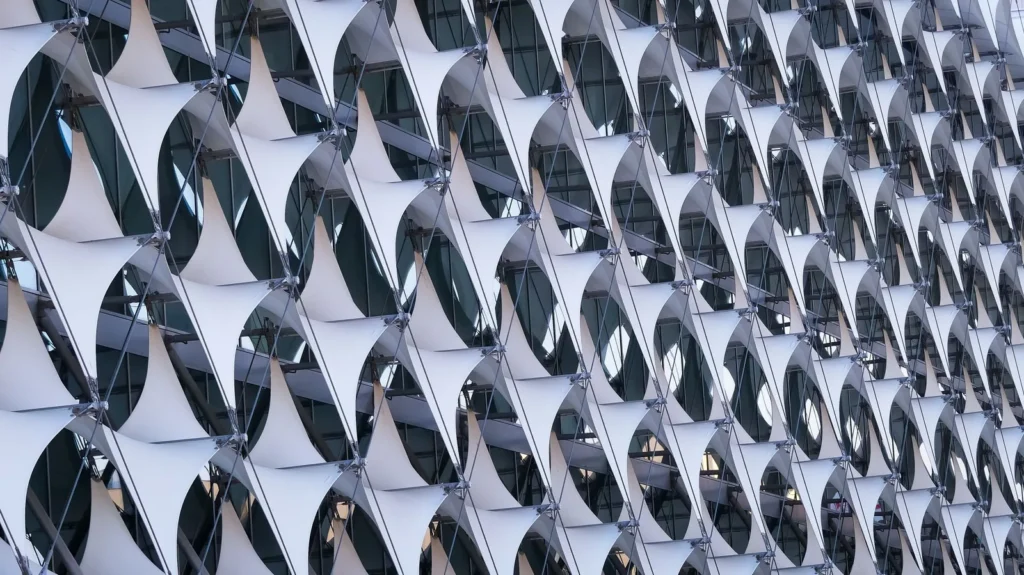
- Parametric facades: These are a product of computer algorithms that determine complex forms and patterns. The computerised approach allows for tailor-made designs when considering specific parameters.
- Dynamic facades: A rising trend in futuristic building designs, dynamic facades respond to environmental conditions in real time — adjusting shading, ventilation, and light transmission through kinetic or sensor-driven elements.
All these elements meld into the fabric of sustainable and visually attractive structures, boosting the overall standard of architecture.

Comparison of Modern Facade Types
Choosing the right facade type depends on project goals, climate, and budget. The following table summarizes the key differences between popular modern facade building systems:
| Facade Type | Primary Benefit | Best Application | Sustainability Impact |
|---|---|---|---|
| Parametric Facade | Custom algorithmic forms | Commercial, cultural | High — optimized shading and airflow |
| Green / Living Wall | Thermal insulation, air quality | Residential, mixed-use | Very High — reduces heat island effect |
| Dynamic / Kinetic | Real-time environmental response | High-performance offices | High — up to 50% solar gain reduction |
| Double-Skin Curtain Wall | Acoustic and thermal buffer | Urban high-rises | Moderate — improved ventilation |
| 3D / Volumetric Facade | Visual depth and texture | Retail, hospitality | Moderate — material-dependent |
| Photovoltaic Facade | On-site energy generation | Net-zero buildings | Very High — produces renewable energy |
Benefits of Innovative Facade Design
The advent of innovative designs in facades has ushered in new possibilities in architecture. These avant-garde ideas not only reshape our buildings but also positively impact our environment. Energy efficiency pops up as a major benefit — smart facades produce energy using solar panels or wind turbines fitted into the design. Eco-conscious ideas like zero-carbon facades and green roofs contribute to mitigating urban heat island effects, and management of stormwater runoff. Beyond environment, aesthetically pleasing facades also improve user experience and maintain a harmonious relation with their surroundings. Discover top 10 examples of dynamic facade designs around the world for real-world inspiration.
From here on, we’ll dig deeper into how the blend of the artistic essence and integral pragmatism of different facade designs helps in crafting sustainable modern architecture.
Parametric Facade Design: The Future of Modern Facades for Buildings
Moving forward in our discussion on the evolution of facade design, let’s delve into an exciting and sustainable trend in modern architecture known as Parametric Facade Design. This innovative discipline combines science, mathematics, and design in an intricate blend, reshaping the face of architecture and defining what a modern facade building can truly achieve.
Understanding Parametric Design
So, what exactly is parametric design? Rooted in the field of parametric modeling, parametric design is a process that uses algorithms and mathematical functions to develop designs. These designs can adjust and adapt to evolving parameters and conditions, providing a dynamic platform for architectural creativity.
In the realm of facade design, this translates into unique shapes, patterns, and textures. Think of morphing surfaces that look like a reflection of natural elements or an undulating pattern inspired by mathematical equations — that’s the impressive range of parametric design. Architects tap into the power of cutting-edge computational tools and digital platforms like Grasshopper for Rhino to create and test wide-ranging solutions for these designs, stirring a new wave of innovation in architecture. Recent developments also include AI-assisted generative design workflows, where machine learning algorithms accelerate the exploration of facade variations based on performance criteria such as solar radiation, wind load, and daylighting levels.

Advantages of Parametric Facade Design
Let’s dig a bit deeper into why parametric design is becoming the chosen route for many architects and building designers. The first and foremost reason is its ability to enhance and optimize building performance. How, you ask?
Well, parametric facade can dramatically improve the energy efficiency of buildings. These innovative facade designs use their distinct textures to capture, store, and dispense heat according to environmental needs, thus regulating building temperatures and reducing the overall energy demand.
Benefits of parametric facade design include:
- Improved energy efficiency
- Visually appealing structures
- Rich building performance
- Enhanced sustainability
Examples of buildings with parametric facade design include the iconic Walt Disney Concert Hall in LA by Frank Gehry and the new OPPO R&D Headquarters in Yuhang District by Bjarke Ingels Group. Both structures exemplify how parametric design blends aesthetics, functionality, and environmental consciousness in architectural brilliance. For additional case studies, see our article on 8 trends in dynamic facade design you need to know. You can also explore inspirational facade designs for more parametric examples from around the globe.
This discussion of parametric facade design further illuminates the vibrant explorations and experiments in modern architecture, with a sharp focus on sustainability and aesthetic appeal. The evolution of facade design is a testament to this fusion of creativity and practicality, potentially shaping the future of global architecture.
Futuristic Building Designs: Facade Trends Shaping Tomorrow
As the world of architecture continues to evolve, we’re seeing a fusion of innovative technology and sustainable practices in our pursuit of more eco-friendly and visually striking buildings. This exciting convergence brings us to futuristic building designs in facade architecture, which are changing the face of modern construction.
Integration of Technology in Facade Design
The inception of computational design tools and the advancement of parametric modelling have unleashed new possibilities in the realm of facade design. Architects now leverage algorithms and digital simulations to produce complex geometries and intricate patterns. This tech-laden approach is leading to customization, optimization, and the introduction of innovative facade systems, which push the boundaries of form and function.
A prominent example of this is the OPPO R&D Headquarters, centrally located in the Yuhang District. This architectural masterpiece, masterminded by the Bjarke Ingels Group, has artfully integrated cutting-edge technology and aesthetic appeal. The building’s unusual form makes it self-shaded, minimizing energy consumption and maximizing natural light, which boosts staff well-being and productivity.

Sustainable Materials for Futuristic Facades
Green architecture isn’t simply a trend — it’s a necessity. Consequently, futuristic facades are being created with sustainability at their core. They often include materials that are recycled, recyclable, or have a minimal environmental impact. Additionally, we’re seeing facades incorporating living walls, solar panels, and rainwater harvesting systems.
Take, for example, Smakkelaarsveld near Utrecht’s central train station. This once-neglected stretch of land is being transformed into a lush green space, housing complex, and urban attraction. Projects like these demonstrate how modern facades for buildings are redefining urban living.
Moreover, besides being eco-friendly, these materials also enhance aesthetic appeal, boosting the overall look and feel of the structure. This is a necessary step towards meeting the sustainability goals in the modern construction industry. To explore materials in more detail, read our comprehensive guide on innovative and sustainable facade materials.
Responsive and Smart Facades
We see this holistic approach stretching into the future of facades. As technology continues to race forward, architects will integrate increasingly smart systems and interactive elements into facades. We envision responsive facades, equipped with sensors and actuators, adapting to changing environmental conditions to optimize energy performance and user experience. The Al Bahar Towers in Abu Dhabi, designed by Aedas, is a landmark example — its kinetic mashrabiya-inspired screen reduces solar gain by up to 50%.
The core parameters casting a shadow on the future of facade design aren’t limited to energy efficiency, innovation, and sustainability. They also encompass the human experience in the built environment and its direct impact on well-being and productivity. These primarily focus on bringing in more natural light, improving air quality, and space utilization.
As the leap towards the future continues, the potential for what facades can achieve is boundless. It’s an evolution that’s reshaping not only buildings but cities and societies. For more on how architects are reimagining the building envelope, explore our feature on futuristic facade design in architecture.
Contemporary House Facade Design: Residential Applications
While much of the conversation around modern facade building design centers on commercial and institutional projects, residential architecture is equally transformed. A contemporary house facade design today goes far beyond simple cladding or paint — it incorporates smart materials, energy-efficient glazing, and biophilic elements that create a seamless connection between indoor and outdoor spaces.
Key trends in contemporary residential facades include the use of composite panels that mimic natural materials like wood and stone without the maintenance demands, double-skin facades that improve thermal performance, and integrated photovoltaic glass that turns the entire facade into a power-generating surface. Homeowners are also embracing vertical gardens and green wall systems to bring nature into urban residences while improving insulation and air quality.
For inspiration on designing standout residential facades, check out our article on ways to design an impressive facade. Additionally, exploring creative ways to draw inspiration for building facade designs can help homeowners and architects identify fresh concepts for residential projects.
Green Facade Solutions
Creating sustainable buildings has been the core of architectural evolution over the years. A key element in achieving this is the use of green façades. As a part of this architectural evolution, buildings imbued with life in the form of climbing plants or integrated green systems are becoming a common sight.
Benefits of Green Facades
Green facades are more than just a visual treat or an architectural aesthetic. They’re a multifunctional solution, providing an array of practical and environmental benefits. Let’s look a little deeper into why they’re becoming a fast-growing trend in sustainable design.
- Don’t let the notions of a facade fool you. Green facades are vibrant, living systems that offer significant environmental benefits. For starters, they’re effective insulators. Acting as a thermos layer, they contribute to temperature regulation in the building, reducing reliance on energy-intensive HVAC systems. In turn, maximizing energy efficiency and promoting significant energy savings.
- Green façades are excellent at managing stormwater runoff. Hospitals, schools, offices, and homes alike will find that these systems absorb and retain rainwater, effortlessly tackling urban flooding.
- Helping to mitigate the effects of urban heat islands, green facades are our protection against the enclosing concrete-and-glass walls of modern skyscrapers. These natural absorbers of sunlight lower the temperature of both the building and its immediate environment.
- Compelling aesthetics are certainly at play when a building is clad with green facade systems. The visual impact isn’t limited to mere beauty; it has a recognized, positive psychological influence on building users.
Implementation of Green Facade Systems
Implementation of green facade systems varies widely depending on the architectural context, climate, facade orientation, and species of plants used. Following are some key features to consider:
- Ground-bound facades: Here, the plants, usually climbers, start from the ground and their growth is guided along the facade. This provides the striking vision of a building utterly imbued with nature.
- Non-ground-bound facades: Also known as ‘living walls’, these systems aren’t reliant on the ground, instead using in-built containers or modules across the facade to sustain plant growth.
- Choosing the right vegetation can make all the difference. Factors to consider include the ability to withstand prevailing weather conditions, light and heat tolerance, maintenance ease, rate of growth and of course, aesthetic appeal.
- Along with the environmental benefits, their implementation demands careful thought. Potential humidity-related issues, maintenance requirements, and potential damage to the facade or drains are all challenges that deserve mindful contemplation.

Potential Challenges with Green Facades
Appreciating the benefits of green facades shouldn’t blind us to the potential challenges that may arise. While these features have a significant role in sustainable buildings, they also come with specific considerations, such as maintenance requirements and potential structural impacts.
Attention to design and construction is crucial for optimizing green facade performance and mitigating potential drawbacks. Thoughtful plant selection, informed by climatic conditions and maintenance capabilities, is a key aspect here. This fact underscores the crucial role of parametric design in creating adaptive, resilient green facades that successfully meet the demands of sustainable construction.
The global success of green buildings reflects their potential to foster a more sustainable built environment. It speaks volumes of the importance of green facades and roofs in enhancing environmental, social, and economic benefits within urban landscapes. By merging these solutions with parametric design techniques, we are setting the foundation for a vibrant, sustainable future. Leading certifications like LEED and BREEAM increasingly reward buildings that incorporate green facade systems into their design.

How Parametric Design Shapes the Lifecycle of Modern Facade Buildings
As we explore the ever-evolving field of sustainable construction, it’s essential to understand the influence of the parametric approach on the entire lifecycle of green buildings. The fusion of green construction techniques such as green facades and the parametric design approach presents innovative methods of building that promote resource efficiency, environmental responsibility, and long-term sustainability.
Parametric design empowers us to create, adapt, and alter green building designs during both the initial stages and throughout the structure’s lifecycle. With an emphasis on health, resource efficiency, and environmentally-friendly practices, this approach invokes designs with reduced energy demands, improved quality of life for users, and minimal impacts on natural resources. For more on finding the right conceptual approach, visit our guide on tips for finding architectural concepts for facade design.
Green buildings are characterized by numerous features that promote a sustainable lifestyle. These include:
- Improved Construction Methods
- Efficient Operation Practices
- Periodic Maintenance and Renovations
- Thoughtful Demolition Planning
In applying the parametric design approach to these features, we enhance our capacity to mitigate environmental impacts, adapt to changing conditions, and ensure the long-term sustainability of our structures.
Choosing the Right Modern Facade for Your Project
Selecting the ideal modern facade for a building project depends on several interconnected factors. Climate, building orientation, budget, and design intent all play a role in determining which facade system best serves the project’s goals. Here’s a practical framework for making this decision:
First, conduct a thorough site analysis. Understanding the solar path, prevailing winds, and microclimate conditions helps determine whether a responsive kinetic facade, a high-performance glazed curtain wall, or a ventilated rainscreen system is most appropriate. Second, align material choices with sustainability targets — materials such as recycled aluminum composite panels, timber cladding, and photovoltaic glass offer both aesthetic versatility and environmental performance.
Third, consider the building’s purpose. A contemporary house facade design may prioritize privacy and warmth through timber and stone elements, while a commercial modern facade building might favor transparency and brand expression through expansive glass systems. Finally, engage with parametric modeling early in the design process to simulate facade performance under real-world conditions before committing to construction. Our article on designing an architectural building facade provides a detailed breakdown of this process.
Current Global Trends in Modern Facade Design
The global facade design landscape in 2025 and 2026 is defined by several converging trends. AI-driven generative design tools now allow architects to iterate through thousands of facade variations in hours, optimizing for thermal performance, structural efficiency, and visual impact simultaneously. Robotic fabrication is enabling unprecedented precision in complex panel geometries, as seen in award-winning projects recognized by the 2025 Architecture MasterPrize.
Across Asia-Pacific, architects are blending advanced parametric modeling with regional craftsmanship, producing facades that honor cultural heritage while pushing technical boundaries. The RIBA Asia Pacific Awards highlighted several projects where modern facades for buildings integrate digital fabrication with traditional material knowledge.
Meanwhile, the growing emphasis on embodied carbon is reshaping material selection for futuristic building designs. Architects increasingly favor bio-based composites, mass timber cladding, and low-carbon concrete panels as alternatives to energy-intensive facade systems. These shifts reflect the industry’s broader commitment to whole-life carbon accountability in facade engineering. For a comprehensive look at current facade design trends worldwide, explore our dedicated feature.
The Road Ahead: Modern Facades Redefining Architecture
The evolution of modern facades for buildings — from static protective shells to intelligent, adaptive systems — represents one of the most exciting chapters in architectural history. Whether through parametric algorithms that generate organic forms, futuristic building designs powered by AI and sensor technology, or green facades that turn structures into living ecosystems, the facade has become the primary interface between human aspiration and environmental stewardship.
As architects, designers, and builders continue to push boundaries, the modern facade building will remain at the forefront of innovation — blending art, science, and sustainability into structures that inspire and endure. The future belongs to facades that think, breathe, and adapt. To explore the latest developments in sustainable facade practices, visit our guide on new facade design trends for sustainable architecture.

This article talks about modern buildings and their facades. It’s interesting how technology and design come together. I like learning about how buildings can help the environment.