

Architecture Inspiration: 6 Sources From Around the World
A clear look at where architecture inspiration comes from, covering nature, history, culture, and technology, with worldwide landmark examples that show how each source shapes real buildings.
 Elif Ayse Sen2 November 20255 Mins read654

Table of Contents Show
Architecture inspiration is the starting point of every design, the source that shapes a building’s form, materials, and meaning. It can come from nature, history, culture, or new technology. Architects draw on these sources to turn an abstract idea into a structure that fits its site, serves its users, and reflects the place it stands in.
The buildings we admire rarely begin with a blank slate. Behind each one sits a reference point, a mountain ridge, a centuries-old ruin, a piece of music, or a structural problem waiting to be solved. Understanding where architecture inspiration comes from helps designers, students, and curious travelers see the built world with sharper eyes.
Why Architecture Inspiration Drives Better Design
Inspiration gives a project its identity. A house shaped by the slope it sits on feels different from one dropped onto a flat pad, and that difference traces back to where the architect looked for ideas. Strong source material pushes designers past habit and into solutions that respond to climate, culture, and the people who will use the space.
It also connects disciplines. Architects borrow from biology, mathematics, art, and engineering, then translate those lessons into walls, roofs, and rooms. This habit of looking outward keeps the work honest. A building rooted in a real reference, whether a local craft tradition or a structural principle, tends to age better than one chasing a passing trend. You can see this thread running through the minds behind iconic architecture across generations.
Where Does Architecture Inspiration Come From?
Architecture inspiration tends to fall into three broad streams: the natural world, history and culture, and technology. Most memorable buildings pull from more than one at once, blending a natural form with a cultural reference or a new construction method.
Nature as a Source of Form
Some of the most enduring buildings echo the shapes and systems found outdoors. Frank Lloyd Wright let landscape lead, embedding Fallingwater directly over a waterfall, while Antoni Gaudí studied branching trees and bone structures for his columns. This approach, often called organic architecture, has grown into the wider practice of biophilic design, where daylight, plants, and natural airflow shape the plan from the start.

🎓 Expert Insight
“Study nature, love nature, stay close to nature. It will never fail you.”
Frank Lloyd Wright, architect of Fallingwater
Wright treated the natural world as a working design manual, not decoration. That mindset still guides architects who want a building to belong to its setting rather than fight it.
History and Culture as Reference Points
Gothic, Renaissance, and Baroque styles all carried forward ideas from earlier builders, and modern designers do the same. Zaha Hadid often referenced the flowing landscapes and calligraphy of her Iraqi background, producing a language that felt both new and rooted. Cultural memory gives a project depth, signaling that it belongs to a specific people and place rather than anywhere at all.
Technology as a Creative Tool
New tools open doors that earlier architects could only imagine. Parametric modeling, Building Information Modeling, and AI-assisted generative design let firms test thousands of options against structural and environmental data. The result is a fresh set of forms, drawn not from a sketchbook alone but from the back-and-forth between a designer and a machine reading real constraints.
Architecture Inspiration From Around the World
Landmarks across the globe show how a single source can anchor an entire building. The table below maps common sources of inspiration to what they offer designers and a built example of each.
| Source of Inspiration | What It Offers | Example |
|---|---|---|
| Nature and organic form | Branching structure, daylight, sense of growth | Sagrada Família, Barcelona |
| Ancient monuments | Scale, precise geometry, permanence | Pyramids of Giza, Egypt |
| Classical order | Proportion, harmony, civic dignity | Parthenon, Athens |
| Roman engineering | Crowd flow, durable structural reuse | Colosseum, Rome |
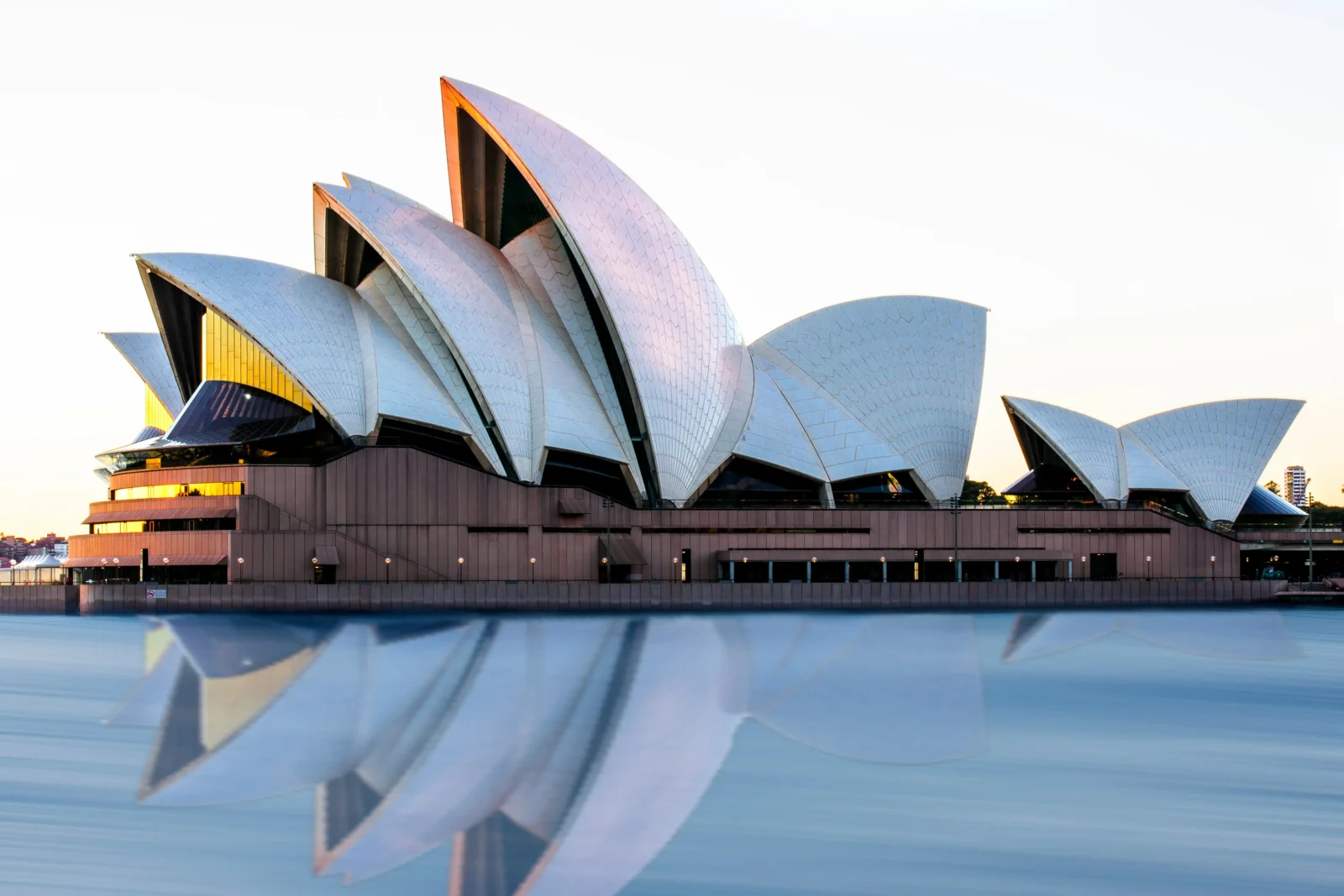
| Mathematics and geometry | Complex curves made buildable | Sydney Opera House, Australia |
| Culture meets technology | National identity through new structure | Bird’s Nest Stadium, Beijing |
The Pyramids of Giza still set a benchmark for monumental form and geometric precision, while the Parthenon gave the world a proportional system that civic buildings copy to this day. Rome’s Colosseum solved the problem of moving tens of thousands of spectators, a lesson modern stadium designers still study.
Herzog and de Meuron designed Beijing’s National Stadium for the 2008 Olympics, weaving a steel lattice that reads as both a bird’s nest and a piece of Chinese ceramic crackle-glaze. It is a clear case of cultural reference and structural daring working together.
📌 Did You Know?
Gaudí began the Sagrada Família in 1882, and it remains under construction today. The basilica’s tallest tower, the Tower of Jesus Christ, is being topped out toward a planned completion in the mid-2020s, making it one of the longest-running building projects in modern history.

The Sydney Opera House shows how a single mathematical idea can carry a whole building. Danish architect Jørn Utzon shaped its sail-like shells from the surface of one sphere, a move that turned an impossible drawing into something a contractor could actually pour.
📐 Technical Note
Every shell segment of the Sydney Opera House derives from the surface of a single sphere with a radius of about 75 meters. Utzon settled on this spherical geometry in 1961 so that all the precast ribs could be made from standardized, repeatable curves rather than hundreds of one-off shapes.
Technology and Sustainability as Modern Architecture Inspiration
Today the strongest design ideas often answer an environmental question. Architects such as Bjarke Ingels and Renzo Piano treat energy performance, daylight, and material reuse as creative drivers, not afterthoughts. A facade that shades itself or a roof that collects rainwater becomes part of the architectural expression, not a bolt-on system.
🔢 Quick Numbers
- Buildings and construction account for roughly 37% of global energy-related CO₂ emissions (UN Environment Programme, 2022 Global Status Report for Buildings and Construction).
- The Sydney Opera House was added to the UNESCO World Heritage List in 2007, one of the youngest cultural sites to earn the status (UNESCO World Heritage Centre).
- The Sagrada Família draws several million visitors a year, ranking among Spain’s most visited monuments (Basílica de la Sagrada Família official figures).
This shift means inspiration now flows from data as much as from drawings. Designers studying sustainable solutions in contemporary architecture are finding form in passive cooling, mass timber, and the reuse of existing structures. According to the International Energy Agency, the building sector remains one of the largest contributors to global emissions, which keeps low-carbon thinking at the center of new work.
How to Find Your Own Architecture Inspiration
Sources of architecture inspiration are everywhere once you learn to collect them. A few habits tend to separate designers with a strong point of view from those who recycle whatever is trending.
- Travel with intent. Visiting notable architectural destinations exposes you to materials, light, and spatial habits you cannot get from a screen.
- Keep a sketch and photo journal. Recording textures, joints, and shadows builds a personal reference library you can return to for years.
- Study movements directly, from Brutalism to Deconstructivism, so you understand why forms emerged rather than just how they look.
- Follow primary sources. Platforms like ArchDaily and Dezeen publish drawings and details, not only finished photos.
- Look beyond the field. Music, textiles, and natural patterns have all sparked buildings that feel genuinely original.
The point is not to copy what already exists but to build a deep enough reference base that your own ideas have somewhere to grow. Sites such as the UNESCO World Heritage Centre are useful for studying why certain buildings carry lasting cultural weight, which sharpens your judgment about what is worth referencing.
The Bigger Picture
The most lasting buildings rarely chase novelty for its own sake. They borrow a clear idea from nature, history, or hard engineering, then carry it through with discipline. Seen this way, architecture inspiration is less about a sudden flash of genius and more about looking closely at the world and asking what it can teach the next structure you draw.
Explore More Famous Landmarks & Wonders

3 Comments



Sydney’s Buildings Are Ageing Faster Than Most Owners Realise
There is a wave of building deterioration moving through Sydney's property stock...
 illustrarch Editoral Team10 Mins read
Famous Buildings in Asia: 6 Imperial Palaces That Shaped a Continent
A focused look at six iconic buildings in Asia, each an imperial...
 Furkan Sen6 Mins read

10 Signs It’s Time to Upgrade Your Property Fence
Table of Contents Show Repairs Keep Piling UpPosts Are LeaningBoards Are Cracked...
illustrarch Editoral Team3 Mins read
Walt Disney Concert Hall: Frank Gehry’s Stainless Steel Symphony in Los Angeles
Frank Gehry's Walt Disney Concert Hall took 16 years from initial design...
Furkan Sen6 Mins read


This article talks about architecture and how it gets inspired by different things. It’s interesting to learn how nature and history play a role in design. The examples of famous buildings are nice, too.
I think architecture is interesting. It shows a lot about different cultures and times. The examples from history are nice to read about.
I found it interesting how the article discusses the different sources of architectural inspiration. The way nature influences designs, like in Frank Lloyd Wright’s work, really shows how closely architecture can connect with the environment. I wonder how architects today balance these inspirations with modern needs like sustainability and urbanization.