

Table of Contents Show
To develop the concept in architecture, start with thorough site analysis, study the building’s program, and read widely about context and precedent. A strong architectural concept grows out of research, sketches, and notes that tie your design ideas to the real conditions of the site and the needs of the people who will use the building.
Many architecture students worry that they cannot find a concept during the early design process. Contrary to a common belief, there is no such thing as failing to find one. The architectural concept is the conceptual approach that sits underneath your project, a kind of meaning that holds the parts together. It appears in the early stages of work, then takes shape and grows as the project moves forward. In a successful project, every decision and every design input answers back to that concept, so learning how to develop the concept steadily is more useful than waiting for sudden inspiration.
Why a Concept Feels Hard to Find
A concept rarely arrives fully formed. It builds up from small observations: a view worth framing, a level change on the site, a routine in how people move through a space. When students feel stuck, the problem is usually a thin research base rather than a lack of talent. Give yourself raw material to react to, and ideas start to connect on their own.
⚠️ Common Mistake to Avoid
A frequent error is locking in a building form first and then searching for a concept to justify it. This reverses the process and leads to designs that feel arbitrary. Let the concept emerge from site, program, and reading, then test forms against it rather than the other way around.
Start With Site Analysis

Site analysis covers deep research across many subjects, from the physical conditions of a project to the social and cultural character of the area, the surrounding urban texture, and the daily life of the people nearby. Working through this research shows you the full potential of the site. It also reveals what the project is missing, regardless of its function, and those gaps and needs point directly to the concept you should focus on.
Each architect needs to treat site analysis as detailed groundwork, not a checkbox. When your research runs deep, a workable concept tends to surface from the findings, and that single idea can then carry through every part of the project, from the facade design to the spatial organization inside. For a broader view of how analysis fits the wider methodology, the Wikipedia overview of site analysis outlines the standard data layers professionals record.
📐 Technical Note
A useful site analysis records measurable conditions: solar path and orientation, prevailing wind, topography and slope, access and circulation, noise sources, and views. Mapping these as separate overlays makes it easier to spot where the site is asking for a specific response, which often becomes the seed of the concept.
Build Knowledge Through Reading
Architects should be strong researchers, and reading is one of the most reliable ways to develop a concept. You can draw on what you read both at the start and throughout the design process. If you plan to design a public building, look at how public buildings have been handled across architectural history, modern architecture, and contemporary practice. Early reading usually falls into three groups: reading the field, reading the context, and reading the function.
Take notes on what you read and return to them often as the project develops. Reading lets you look at your design thinking and the parts of your concept from several angles, which keeps the idea growing instead of stalling. Project briefs are worth studying too, since a clear brief frames what the concept has to achieve; our guide to the architecture design brief shows what to include and why it matters.
💡 Pro Tip
Keep a single running document or sketchbook for each project and date every entry. When you revisit notes from week one against your week-four thinking, the contradictions you spot are often where the sharpest concept ideas hide.
Site Readings
Site readings are the synthesis of your site analysis. They are your own comments and interpretations of the data, turned into design positions. Fill them with sketches and short notes, because these become genuinely useful in later stages and help push the architectural concept forward rather than leaving the analysis as raw information.
Readings on the Context
Context is made up of the external factors that shape architectural form and style in architecture, influence material choices, and let a building relate to concrete or abstract conditions around it. Context is one of the strongest sources for a concept, so develop your context ideas from what you read. Books, articles, and reliable digital resources all help you understand it more fully.
The better you grasp the context, the better you design within it. Reading about context indirectly feeds the concept, which is the part of the project everything else depends on. You produce your best work in a setting you understand, and reading keeps enriching the ideas behind it.
Understand the Program

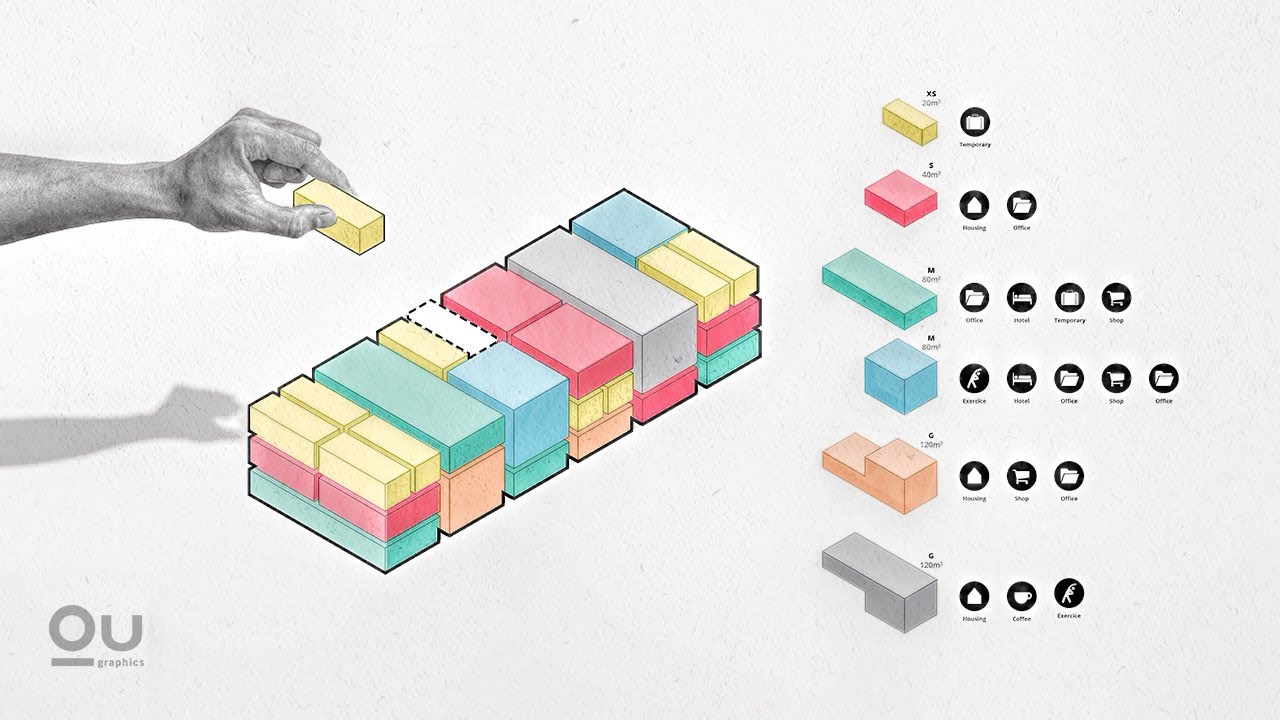
The function of the project and the program inside it carry real weight when you develop the concept. Understanding the program well tells you what people need and how to shape spaces with better circulation. A well-programmed project is easier to give a concept, no matter its function, because the relationships between spaces are already clear. Once you know how the program will work within the spatial organization, the concept you are testing has something solid to attach to.
📌 Did You Know?
Concept development is a formal stage in professional practice. In the RIBA Plan of Work, Stage 2 is named “Concept Design,” which sits between preparation and the more detailed spatial coordination that follows. The framework treats the concept as a defined deliverable, not an optional flourish.
Turn Research Into a Concept Statement
At some point your notes, sketches, and readings need to become a position you can defend. Write a short concept statement of two or three sentences that says what the project is about and how the site, program, and context shaped that idea. A clear statement acts as a filter: any design move that supports it stays, and anything that fights it gets reworked. The RIBA Plan of Work sets out where this thinking belongs in the wider design sequence, which helps you judge how far to push the idea before adding detail.
💡 Pro Tip
Test your concept statement out loud to someone outside the studio. If you cannot explain the idea in plain language without showing drawings, it is usually too vague to guide design decisions, and it needs another round of sketching and reading.
Test and Refine the Concept
A concept is not fixed once you name it. It evolves continuously across the design process as you test it against plans, sections, and models. Use quick diagrams and study models to check whether the idea still holds when it meets real spatial demands. Browsing concept work from practicing studios, such as the projects collected under ArchDaily’s concept design coverage, shows how professionals keep one clear idea legible while the project grows more complex. Hand sketching speeds this loop, and our walkthrough on drawing architectural plans by hand is a good place to build that habit.
Frequently Asked Questions
How do you start developing an architectural concept?
Begin with site analysis and a close read of the program, then collect notes and sketches about context and precedent. The gaps and opportunities you find usually point to the central idea. Write a short concept statement once a clear direction appears.
What makes a strong architectural concept?
A strong concept is specific, tied to the site and program, and able to guide decisions from massing down to detail. You should be able to explain it in a sentence or two, and every major design move should trace back to it.
Can a concept change during the design process?
Yes. A concept evolves as you test it against plans, sections, and models. Refining the idea when new constraints appear is normal and healthy, as long as the core meaning stays consistent across the project.
How long should it take to develop a concept?
There is no fixed timeline, but the concept typically forms in the early design stages and keeps maturing afterward. Rushing it tends to produce weak ideas, while deeper site analysis and reading usually shorten the search.
Where to Go From Here
Your next step: Take your current project, spend one focused session mapping the site as separate overlays, and write a single-sentence concept statement from what stands out. Build every later decision on that line, and revise it only when the site or program gives you a clear reason to.





How to Write an Architecture Concept Statement for Any Project
A practical guide to writing an architecture concept statement, covering what it...
 Sinan Ozen8 Mins read
Architectural Programming: From Brief to Spatial Needs
A practical look at architectural programming, the pre-design phase where architects gather...
 Elif Ayse Sen6 Mins read
Parametric Architecture Design with Grasshopper for Rhino: 2026 Review
A focused 2026 review of Grasshopper for Rhino for parametric architecture design,...
 Furkan Sen7 Mins read

The World’s Most Iconic Supertall Towers: Engineering, Design, and Skyline
From the record-breaking Burj Khalifa to the spiraling Shanghai Tower and the...
Furkan Sen8 Mins read




Leave a comment