

Why Do Old Buildings Last Longer? The Real Reasons Behind Building Longevity
Some buildings stand for centuries while others fall within decades. Here is a look at what drives building longevity: durable materials, load-bearing mass, ongoing maintenance, repairable design, and the survivorship bias that shapes what remains.
 Furkan Sen27 July 20267 Mins read250

Table of Contents Show
Old buildings often last longer than modern ones because they used durable natural materials like stone, brick, and lime mortar, built with thick load-bearing walls and large safety margins. Ongoing maintenance and repairable, adaptable designs extend their life. Survivorship bias matters too, since only the strongest structures survive to be admired today.
Walk through any old European town and you pass churches, houses, and bridges that have stood for 500 years or more. Then you read about a 40-year-old office tower slated for demolition. So why do old buildings last longer than much of what we build today? Part of the answer is the materials and methods of earlier eras, part of it is how these buildings were maintained and repaired, and part of it is a trick of perception. Here are the factors that separate a building that endures from one that does not.
How Long Do Buildings Actually Last?

There is a gap between how long a building is designed to last and how long it actually stands. Most commercial buildings today carry a design life of roughly 50 to 60 years, and as architecture writer Nat Barker notes for Dezeen, it is common for them to come down in half that time. The 19th-century critic John Ruskin once wrote that we should build as if we build forever. In practice, we rarely do.
The numbers back this up. A 2026 study from the Low Carbon Building Initiative that examined 15,000 demolished buildings across nine U.S. and four European cities found an average building lifespan of just 71 years, higher in the U.S. (81) and lower in Europe (65). Crucially, most of those buildings were not torn down because they failed. They came down because land values changed, needs shifted, or maintenance was deferred until repair no longer made financial sense.
That single fact reframes the whole question. If you want a structure that reaches 100 or 500 years, the goal is not only a strong frame. It is a building worth keeping and easy to care for. Our practical playbook on designing buildings for longevity and durability breaks down how to set service-life targets by system, from a 100-year structure down to interiors that turn over every decade.
What Makes a Building Last? The Core Durability Factors
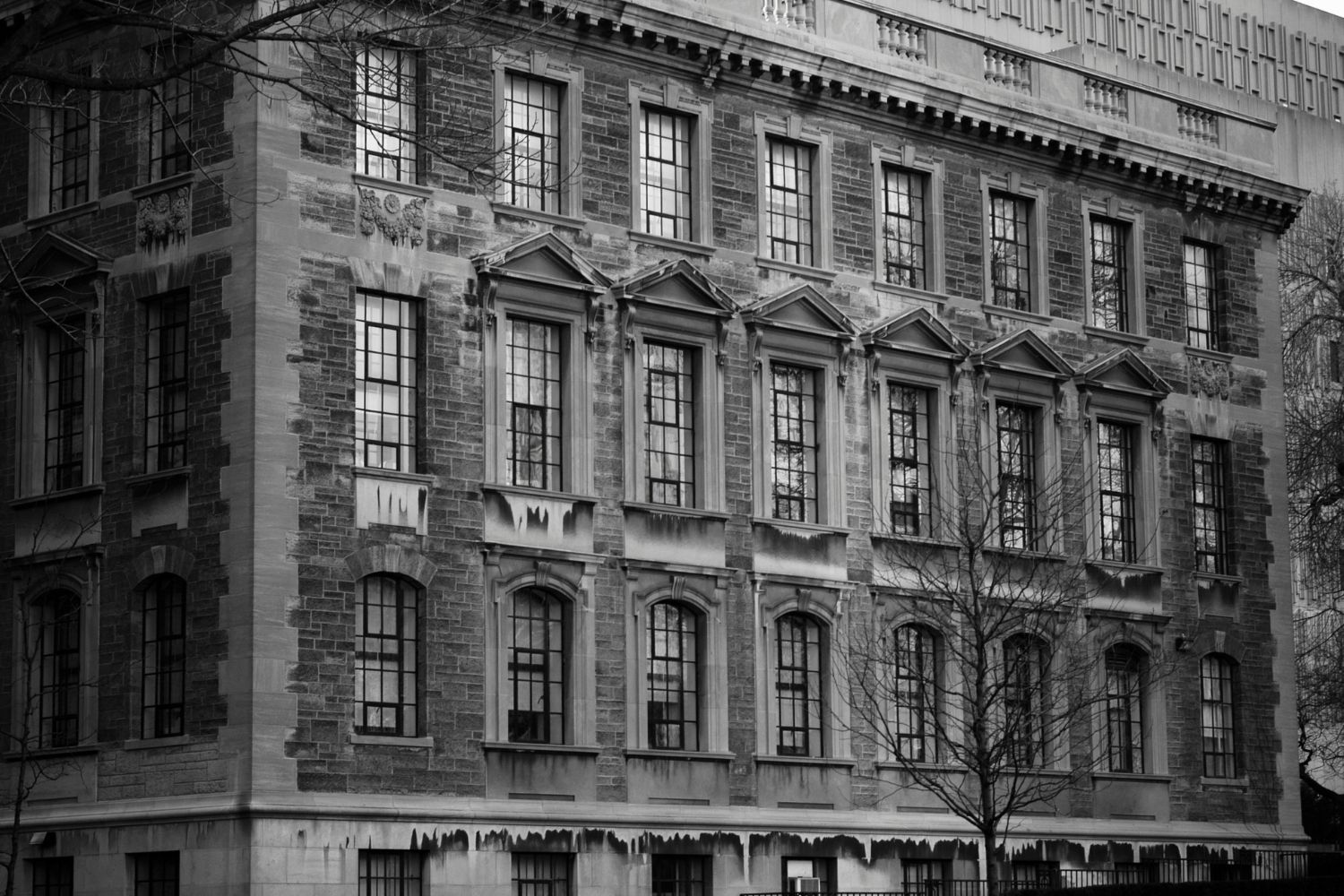
No single feature keeps a structure standing for centuries. Building durability factors work together: what a building is made of, how it carries load, how carefully it was detailed, and how it is looked after over time. The old buildings still standing today usually score well on most of these at once. The five factors below cover what matters most, and why so many historic structures keep outlasting their modern replacements.
1. Durable, Slow-Aging Materials
Solid stone, fired brick, lime mortar, and old-growth timber share one useful trait: they age slowly and often forgive small damage. Lime mortar is soft and breathable, so a wall can flex slightly, shed moisture, and even reabsorb and reseal fine cracks, where rigid modern cement would fracture. Old-growth timber, cut from slow-grown trees with tight rings, is denser and more stable than most fast-grown lumber sold today. This durability at the material level is a large part of why old buildings are so durable in the first place.
Roman concrete is the clearest case. Researchers led by Admir Masic at MIT found that Roman mortar contains small chunks of lime, called lime clasts, that dissolve and recrystallize when water reaches a crack, sealing it from the inside. If you want a sense of how the same choices apply now, our guide to choosing the right building materials weighs durability against cost and sustainability.
🎓 Expert Insight
“Roman cement is durable, it heals itself, and it’s a dynamic system,” says Admir Masic, Professor of Civil and Environmental Engineering at MIT.
His team traced that self-healing to lime clasts created by hot mixing, something ordinary Portland cement does not do. It helps explain how Roman structures have carried load for two thousand years.
2. Mass Walls and Built-In Redundancy
Historic buildings tend to carry load through thick, solid masonry rather than thin systems sized to the bare minimum. All that extra mass spreads forces widely, so no single element is doing critical work on its own. A stone wall can lose a course of blocks, or a timber frame a beam, and the structure still stands while repairs are made.
Modern engineering does the opposite, and for good reasons. Optimizing a structure to use less concrete and steel saves money, weight, and embodied carbon. The trade-off is thinner margins. A building tuned to the edge of what the math allows has less to spare when something corrodes, settles, or gets overloaded. Redundancy is expensive up front, but it is one reason old walls shrug off events that would condemn a leaner structure.
📌 Did You Know?
The dome of the Pantheon in Rome, finished around 126 CE, is still the largest unreinforced concrete dome in the world nearly 1,900 years later. No steel holds it up. Its geometry and the Roman concrete itself carry every load, which is why researchers have studied how it has stayed intact for so long.
3. Craftsmanship and Repairable Detailing
Pre-industrial buildings were put together by hand, piece by piece, in ways that can be taken apart the same way. Mortar joints can be raked out and repointed. Timber pegs and members can be replaced. A single failing stone can be cut out and swapped. That repairability is quietly powerful: a building you can fix one component at a time can be kept going almost indefinitely.
Many modern assemblies work against that. Sealed curtain walls, bonded panels, and integrated systems are fast and cheap to install, but when one part fails you often replace the whole assembly rather than a single piece. Good old detailing also managed water carefully, with overhangs, drip edges, and breathable walls that let moisture escape instead of trapping it. If you are comparing options for a project, our look at how common building materials compare covers where each one tends to fail.
💡 Pro Tip
When repairing historic masonry, match the original mortar. Repointing old lime-mortar walls with hard Portland cement is one of the most common ways to damage them, because the rigid cement traps moisture and pushes decay into the softer brick or stone. A weaker, breathable lime mix protects the units and can be renewed again later.
4. Maintenance That Never Really Stops
This is the least glamorous factor and often the decisive one. Buildings that survive are buildings that were continuously maintained: roofs kept watertight, mortar repointed, timber treated, water kept out year after year. A beautifully built structure with a failed roof rots within a decade, while a modest one under constant care can outlive it many times over. The demolition data makes the same point, since most losses trace back to money or neglect rather than a structural frame giving way.
🏗️ Real-World Example
Horyu-ji Temple (Nara, Japan, rebuilt around 700 CE): its five-story pagoda and main hall rank among the oldest wooden buildings on Earth, roughly 1,300 years old. They survived not because timber lasts forever, but because generations kept up a strict cycle of inspection, repair, and replacement of worn members.
5. Designs That Adapt Instead of Getting Demolished
Buildings that reach old age tend to be adaptable. Simple, regular forms with generous ceiling heights and spare load capacity can take on new lives: a warehouse becomes apartments, a church becomes a concert hall, a bank becomes a restaurant. A structure that accepts a new use is a structure worth saving. Many modern buildings are tuned so tightly to one purpose or one tenant that converting them costs more than knocking them down. Flexibility, in the end, buys decades. You can see this thinking applied at the house scale in our notes on durable design features for a home.
Why Do Many Modern Buildings Have Shorter Lifespans?

Modern buildings are not worse at everything. They are safer in fires and earthquakes, more comfortable, and far more efficient to run. But several forces push their lifespans down. They are usually designed to a fixed service life to control cost, built with thinner and more optimized systems, and made from materials that can fail out of sight, since reinforced concrete suffers from rebar corrosion and steel needs constant protection from rust. On top of that, economics often decides the outcome. When land is valuable and needs change quickly, demolition can make financial sense long before anything is actually failing. Our breakdown of the trade-offs of popular building materials goes deeper on where each one struggles over time.
Traditional vs Modern Buildings: What Changes the Lifespan
The table below sums up why the two approaches tend to age so differently:
| Factor | Traditional / Historic Buildings | Typical Modern Buildings |
|---|---|---|
| Main materials | Solid stone, fired brick, lime mortar, old-growth timber | Reinforced concrete, steel, glass, composites |
| Wall structure | Thick, load-bearing mass walls | Thin curtain walls or framed systems |
| Design intent | Built to endure and be repaired | Often designed to a 50 to 60 year service life |
| Repairability | High, components swapped by hand | Lower, bonded assemblies replaced whole |
| Typical failure | Slow, visible weathering | Faster, sometimes hidden (rebar corrosion) |
| Reason for loss | Rarely demolished if maintained | Often demolished for economics, not failure |
The Survivorship Bias Behind “They Don’t Build Them Like They Used To”
Here is the part most articles skip. We are comparing the best surviving old buildings against average new ones, and that comparison is unfair. For every medieval cathedral still standing, countless ordinary medieval houses, sheds, and halls collapsed, burned, or were pulled down centuries ago. They are simply gone, so we never see them. The old buildings that remain are the survivors: the ones that were built well, valued, and maintained long enough to reach us.
This is survivorship bias, and it colors the whole debate. It does not mean old methods were not durable, because they often were, as the sections above show. It does mean we are looking at a filtered sample. The honest version of the question is not just why do old buildings last longer, but which buildings we chose to keep. Seen that way, the materials behind most construction today may prove perfectly durable. The real test is whether anyone bothers to maintain them for the next five hundred years.
Building lifespans vary widely with climate, soil, use, and construction quality, so the figures here are general guides. For any specific structure, have its condition assessed by a licensed engineer or architect.
The Bigger Picture
There is a quiet lesson in all of this for anyone building now. The longest-lasting building is rarely the one with the most advanced material. It is the one people still want to use, still bother to repair, and still find beautiful enough to save. Durability turns out to be part physics and part affection. Design for both, and a building has a real chance at its own five centuries.








Architecture Beneath the Surface: The Crucial Role of Structural Mechanics and Geotechnical Analysis in Groundwork Design
Bold architecture depends on the ground beneath it. How numerical geotechnical analysis...
 illustrarch Editoral Team1 Mins read

Designing Renovation Projects Around Debris Flow and Site Logistics
Effective renovation planning must prioritize debris flow management. Learn how to integrate...
illustrarch Editoral Team4 Mins read

How Long Does a Building Warranty Typically Last? Coverage Periods Explained
Building warranty cover is layered, not uniform: one year for finishes, two...
 Sinan Ozen5 Mins read

What Is an Architect’s Certificate of Practical Completion?
A practical breakdown of the architect's certificate of practical completion: who issues...
Sinan Ozen6 Mins read


Leave a comment